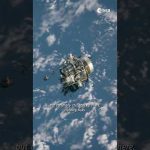
2409 new objects were launched into space in 2022, that’s more than ever before.
Last year though, also saw a record number of satellites reenter Earth’s atmosphere.
The rising number of reentries is not necessarily a bad thing. Disposing of satellites efficiently is one of the most important things for keeping low-Earth orbits safe.
However, most objects reenter in an uncontrolled manner: they are switched off at the end of their mission and left to fall and burn up in Earth’s atmosphere.
There is good news though. Advancing technology has seen a recent increase in “controlled reentries” for rocket bodies. A controlled reentry allows operators to remove their hardware from protected regions more quickly and with greater control over where, when and how it reenters – and even lands – at the cost of allocating some fuel to do so.
By the way, just because an older satellite wasn’t designed to be controlled during its descent doesn’t mean it’s impossible to do so. In July 2023, our teams guided the Aeolus satellite to burn up over uninhabited regions in the Atlantic and Antarctica, even though the satellite was designed in the late 1990s with no intention to control it in this way.
Did you know, the Northern lights or Aurora Borealis are created when the mythical Finnish ‘Firefox’ runs so quickly across the snow that its tail causes sparks to fly into the night sky? At least, that’s one of the stories that has been told in Finland about this beautiful phenomenon. Another that we love comes from the Sámi people of Finnish Lapland (among others), who describe them as plumes of water ejected by whales.
Today’s scientific explanation for the origin of the Aurora wasn’t thought up until the 20th Century, by the Norwegian scientist Kristian Birkeland. Charged particles, electrons and protons, are constantly emitted by the Sun, making up the solar wind. This wind slams into Earth’s ionosphere – sometimes sped up to vast speeds by solar storms – and the charged particles are deflected towards the poles by the magnetosphere.
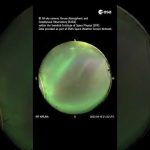
Molecules in our atmosphere then absorb energy from these charged particles from the Sun, and re-release it in their own unique set of colours. Oxygen produces green, but at high altitudes can create red, nitrogen creates blues, and colours can overlap creating purple. Waves, twists and streams are caused by variations in Earth’s magnetic fields. This striking video shows the Aurora over Kiruna, the northernmost city in Sweden. It’s composed of images taken by the Kiruna all-sky camera every minute for about ten hours over 18-19 September 2023.
The all-sky auroral camera is operated by the Kiruna Atmospheric and Geophysical Observatory (KAGO) within the Swedish Institute of Space Physics (IRF), and data from here is provided as part of ESA’s network of space weather services within the Agency’s Space Safety Programme. A sequence of multiple coronal mass ejections – large, sudden ejections of plasma and magnetic field from the Sun – recently struck Earth, and we are still recovering from the passage of the last of them. The fastest was travelling at around 700 km/s, which is considered a small event.
Solar storms are causing an increase in geomagnetic activity; temporary disturbances in Earth’s magnetosphere, which has led to increased light shows at Earth’s poles.
Credits: All-sky camera, Kiruna Atmospheric and Geophysical Observatory (KAGO) within the Swedish Institute of Space Physics (IRF). Data provided as part of ESA’s Space Weather Service Network.
Imagine you are singing in a choir. You are doing your best, just like everybody else. Suddenly, somebody turns to you and points out that you are not singing the right note. If you are told off in a harsh way, you may feel bad about it, and if this happens too often you might not only feel upset about the choir but might even leave it for good. Eventually, the whole choir could end if everybody just leaves.
It is the duty of the choir conductor (the ESA team head) to be able to address every single situation in the right way, to make everyone feel heard and encouraged.
In the third video of this new series of ESA Masterclass, Nicolas shares some lessons learned in his decades as a team leader on what it takes to keep a team together through mutual trust and recognition and make all members work in a harmonious way, like singers of a well-tuned choir.
With 35 years of experience at ESA, Nicolas Bobrinsky is the former Head of Ground Systems Engineering & Innovation Department. He initiated and further managed the Space Situational Awareness and later the ESA Space Safety Programme.
In four episodes of this new series of ESA Masterclass, Nicolas takes us through major events in his career at ESA, covering cornerstone missions, first attempts, overcoming technical challenges, leading diverse teams and solving the unexpected problems that are part of any space endeavour.
★ Subscribe: http://bit.ly/ESAsubscribe and click twice on the bell button to receive our notifications.
We are Europe’s gateway to space. Our mission is to shape the development of Europe’s space capability and ensure that investment in space continues to deliver benefits to the citizens of Europe and the world. Check out https://www.esa.int/ to get up to speed on everything space related.
Satellites in orbit underpin our modern lives. They are used in many areas and disciplines, including space science, Earth observation, meteorology, climate research, telecommunication, navigation and human space exploration. However, as space activities have increased, a new and unexpected hazard has started to emerge: space debris.
If space debris – uncontrolled human-made objects such as spent upper stages of rockets and pieces of satellites – hits a satellite, it could cause serious damage, which can even end a mission (as has happened in the past). If debris crashes on Earth’s surface, it could potentially hit populated areas.
In this second video, Nicolas looks back on the first key steps taken at ESA to develop the Space Safety Programme, devoted to the detection, prevention and mitigation of threats originating from space. This includes not just space debris but also asteroids and space weather. The latter is an intense, occasional energetic storm of particles and material emitted by the Sun. Mitigating these hazards protects our planet, society and economically-important infrastructure on Earth and in orbit.
A key element for the forecasting and prevention of space weather is to observe the Sun from the side. Discover more in this second video of the ESA Masterclass with Nicolas Bobrinsky. With 35 years of experience at ESA, Nicolas Bobrinsky is the former Head of Ground Systems Engineering & Innovation Department. He initiated and further managed the Space Situational Awareness and later the ESA Space Safety Programme.
In four episodes of this new series of ESA Masterclass, Nicolas takes us through major events in his career at ESA, covering cornerstone missions, first attempts, overcoming technical challenges, leading diverse teams and solving the unexpected problems that are part of any space endeavour.
★ Subscribe: http://bit.ly/ESAsubscribe and click twice on the bell button to receive our notifications.
We are Europe’s gateway to space. Our mission is to shape the development of Europe’s space capability and ensure that investment in space continues to deliver benefits to the citizens of Europe and the world. Check out https://www.esa.int/ to get up to speed on everything space related.
Meet Hera, our very own asteroid detective. Together with two small CubeSats – Milani the rock decoder and Juventas the radar visionary – Hera is off on an adventure to explore Didymos, a double asteroid system that is typical of the thousands that pose an impact risk to planet Earth.
Suitable for space enthusiasts young and old, this episode of ‘The incredible adventures of the Hera mission’ is all about craters. What are they? Why are they important? Why is NASA’s DART spacecraft about to collide with an asteroid to create the Solar System’s newest – and perhaps most important – crater? And why do we need Hera to unveil the secrets of this crater?
We are Europe’s gateway to space. Our mission is to shape the development of Europe’s space capability and ensure that investment in space continues to deliver benefits to the citizens of Europe and the world. Check out https://www.esa.int/ to get up to speed on everything space related.
Meet Hera, our very own asteroid detective. Together with two CubeSats – Milani the rock decoder and Juventas the radar visionary – Hera is off on an adventure to explore Didymos, a double asteroid system that is typical of the thousands that pose an impact risk to planet Earth.
Suitable for kids and adults alike, this episode tells the story of the discovery of asteroids, in ‘The Curious Case of the Missing Planet’. Astronomers in the 18th century were sure there was a planet in the wide gap between Mars and Jupiter – and even formed a group called the Celestial Police to find it. But eventually it became clear there was no single world out there, just lots and lots of little ones. Fast forward to today and more than a million asteroids have been discovered, and Hera will perform close-up detection on two of them.
We are Europe’s gateway to space. Our mission is to shape the development of Europe’s space capability and ensure that investment in space continues to deliver benefits to the citizens of Europe and the world. Check out https://www.esa.int/ to get up to speed on everything space related.
Meet Hera, our very own asteroid detective. Together with two CubeSats – Milani the rock decoder and Juventas the radar visionary – Hera is off on an adventure to explore Didymos, a double asteroid system that is typical of the thousands that pose an impact risk to planet Earth.
Suitable for kids and adults alike, this episode of ‘The Incredible Adventures of Hera’ takes you on a fun and informative journey to visit Didymos together with Hera. Along the way, you will discover who the main characters are, why this mission is so important, what ESA hopes to achieve with Hera and much more.
We are Europe’s gateway to space. Our mission is to shape the development of Europe’s space capability and ensure that investment in space continues to deliver benefits to the citizens of Europe and the world. Check out https://www.esa.int/ to get up to speed on everything space related.
Our planet is surrounded by spacecraft helping us study our changing climate, save lives following disasters, deliver global communication and navigation services and help us answer important scientific questions.
But these satellites are at risk. Accidental collisions between objects in space can produce huge clouds of fast-moving debris that can spread and damage additional satellites with cascading effect.
In this animation, find out how teams at ESA’s European Space Operations Centre in Darmstadt, Germany, take action to keep satellites safe after receiving an alert warning of a possible collision between an active satellite and a piece of space debris.
When the alert is raised, ESA experts determine the risk of a collision and plan a collision avoidance manoeuvre that can be used to get the satellite out of harm’s way if necessary.
Additional observations of the piece of space debris help the team better understand its path and the risk of collision. If that risk remains too high (typically 1 in 10 000), the planned manoeuvre is carried out to temporarily change the orbit of the satellite until the threat has passed.
Each manoeuvre comes at a price. They take skill and time to plan, cost precious fuel – shortening the lifetime of the mission – and often require instruments to be temporarily shut off, preventing them from collecting important data.
While most alerts do not end up requiring evasive action, the number of alerts is rapidly increasing. Hundreds are already issued every week. Several companies have begun to launch large constellations into low-Earth orbit to provide global internet access. They have great benefits, but could be a source of huge disruption if we do not change our behaviour.
In just a few years, our current methods for avoiding collisions in space will no longer be enough. To safeguard humankind’s continued access to space for future generations, ESA is developing technologies for an automated collision avoidance system.
We are Europe’s gateway to space. Our mission is to shape the development of Europe’s space capability and ensure that investment in space continues to deliver benefits to the citizens of Europe and the world. Check out https://www.esa.int/ to get up to speed on everything space related.
The launch of Sputnik, humankind’s first satellite, in 1957 marked the dawn of a new era for the people of the ‘Pale Blue Dot’.
Decades later, our planet is now surrounded by spacecraft carrying out extraordinary work to study our changing climate, save lives following disasters, deliver global communication and navigation services and help us answer important scientific questions.
But these satellites are at risk. Accidental collisions between objects in space can produce huge clouds of fast-moving debris. These clouds can spread and damage additional satellites with cascading effect, eventually making the most useful orbits around Earth no longer safe for spacecraft or people.
Satellites today have to carry out collision avoidance manoeuvres to avoid possible impact with debris. These are costly, and hundreds of collision avoidance alerts are already issued every week. [add para space}
And this is nothing compared to what is coming. Several companies have begun to launch mega-constellations into low-Earth orbit to provide global internet access. They have great benefits, but could be a source of huge disruption if we do not change our behaviour.
Our current methods for avoiding collisions in space will become inadequate in just a few years – and even compliance with space debris mitigation guidelines may no longer be enough.
It’s time to act.
ESA is developing technologies for an automated collision avoidance system, as well as methods for refuelling, repairing and upgrading satellites in orbit, extending the lifetime of missions and potentially reducing the number of new satellites that need to be launched.
ESA is also working on debris removal missions that will fly up to dead spacecraft and debris objects, capture them and move them to safety – either by sending them down to burn up in Earth’s atmosphere or up into ‘graveyard orbits’.
By reaching into space, we have brought huge benefits down to Earth, providing technologies that enrich our societies, connect people in previously unimaginable ways and give us an incredible perspective and understanding of our planet.
We know what will happen if we continue on our current path, but we also know exactly what we need to do to change that fate and ensure humankind’s access to space is guaranteed for future generations.
We are Europe’s gateway to space. Our mission is to shape the development of Europe’s space capability and ensure that investment in space continues to deliver benefits to the citizens of Europe and the world. Check out https://www.esa.int/ to get up to speed on everything space related.
Earth’s magnetic field protects life on Earth from the intense radiation and titanic amounts of energetic material our Sun blasts in every direction. However, astronauts and satellites in space, future explorers travelling to the Moon and Mars, and infrastructure on Earth such as power grids and communication systems remain vulnerable to these violent outbursts.
For this reason, ESA is planning to send a satellite to monitor the ‘side’ of our Sun, from a gravitationally stable position known as the fifth Lagrange point. From here, the Lagrange satellite will detect potentially hazardous solar events before they come into view from Earth, giving us advance knowledge of their speed, direction and chance of impact.
★ Subscribe: http://bit.ly/ESAsubscribe and click twice on the bell button to receive our notifications.
We are Europe’s gateway to space. Our mission is to shape the development of Europe’s space capability and ensure that investment in space continues to deliver benefits to the citizens of Europe and the world. Check out http://www.esa.int/ESA to get up to speed on everything space related.
It’s the year 2028, and we’ve been carefully monitoring a worrying situation: an enormous asteroid is en route to strike Earth, although the exact point of impact is not yet clear.
National governments are planning to evacuate millions of people, an undertaking that will cause untold human misery and disruption on a gigantic scale. If the asteroid’s impact zone can be fixed, perhaps such chaos can be avoided.
As precious hours pass, find out how our Planetary Defence Office is able to obtain crucial information on this potential disaster as part of the Agency’s Space Safety and Security activities.
Back to the present day: Find out more about how we are preparing to protect our pale blue dot, its inhabitants and the vital satellite systems on which we have become so dependent.
Space Safety & Security at ESA: www.esa.int/spacesafety
Planetary Defence: www.esa.int/planetarydefence
★ Subscribe: http://bit.ly/ESAsubscribe and click twice on the bell button to receive our notifications.
ESA is Europe’s gateway to space. Our mission is to shape the development of Europe’s space capability and ensure that investment in space continues to deliver benefits to the citizens of Europe and the world. Check out http://www.esa.int/ESA to get up to speed on everything space related.
What’s the difference between spotting asteroids in space, and debris objects in Earth orbit? At first, both look like tiny dots streaming across the sky, against a backdrop of twinkling stars. As part of its Space Safety & Security activities, ESA brings together experts in asteroid and debris detection, asking what these two vital fields have in common, and how they can protect us from hazards in space.
★ Subscribe: http://bit.ly/ESAsubscribe and click twice on the bell button to receive our notifications.
ESA is Europe’s gateway to space. Our mission is to shape the development of Europe’s space capability and ensure that investment in space continues to deliver benefits to the citizens of Europe and the world. Check out http://www.esa.int/ESA to get up to speed on everything space related.
Space weather describes the changing environment throughout the Solar System, driven by the energetic and unpredictable nature of our Sun. Solar wind, solar flares and Coronal Mass Ejections can result in geomagetic storms on Earth, potentially damaging satellites in space and the technologies that rely on them, as well as infrastructure on the ground.
ESA’s future Lagrange mission will keep constant watch on the Sun. The satellite, located at the fifth Lagrange point, will send early warning of potentially harmful solar activity before it affects satellites in orbit or power grids on the ground, giving operators the time to act to protect vital infrastructure.
ESA is now working with European industry to assess options for the spacecraft and its mission, with initial proposals expected early in 2020.