Tag: Space Science

  • The most accurate 3D map of stellar nurseries in the Milky Way

    The most accurate 3D map of stellar nurseries in the Milky Way

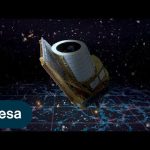
    Scientists created the most accurate three-dimensional map of star-formation regions in our Milky Way galaxy, based on data from the European Space Agency’s Gaia space telescope. This map will teach us more about these obscure cloudy areas, and the hot young stars that shape them.

    It is notoriously difficult to map and study regions in space where stars form because they are usually hidden from view by thick clouds of gas and dust, whose distances cannot be directly measured.

    Gaia can’t see these clouds directly, but it can measure stellar positions and the so-called ‘extinction’ of stars. This means it can see how much light from stars is blocked by dust. From this, scientists can create 3D maps showing where the dust is, and use those maps to figure out how much ionised hydrogen gas is present – a telltale sign of star formation.

    The new 3D map of star-forming regions in the Milky Way is based on Gaia observations of 44 million ‘ordinary’ stars and 87 O-type stars. The map extends to a distance of 4000 light-years from us, with the Sun at the centre.

    Read more: https://www.esa.int/Science_Exploration/Space_Science/Gaia/Fly_through_Gaia_s_3D_map_of_stellar_nurseries

    Credit: European Space Agency (ESA)
    Animation: ESA/Gaia/DPAC, S. Payne-Wardenaar, L. McCallum et al (2025), CC BY-SA 3.0 IGO
    Music:
    My Story – Echoes Of The Heart

    Access the video on the ESA video library: https://www.esa.int/ESA_Multimedia/Videos/2025/09/The_most_accurate_3D_map_of_stellar_nurseries_in_the_Milky_Way

    ★ Subscribe: http://bit.ly/ESAsubscribe and click twice on the bell button to receive our notifications.

    Check out our full video catalog: http://bit.ly/SpaceInVideos
    Follow us on Twitter: http://bit.ly/ESAonTwitter
    On Facebook: http://bit.ly/ESAonFacebook
    On Instagram: http://bit.ly/ESAonInstagram
    On LinkedIn: https://bit.ly/ESAonLinkedIn
    On Pinterest: https://bit.ly/ESAonPinterest
    On Flickr: http://bit.ly/ESAonFlickr

    We are Europe’s gateway to space. Our mission is to shape the development of Europe’s space capability and ensure that investment in space continues to deliver benefits to the citizens of Europe and the world. Check out https://www.esa.int/ to get up to speed on everything space related.

    Copyright information about our videos is available here: https://www.esa.int/ESA_Multimedia/Terms_and_Conditions
  • Zoom Into Sombrero Galaxy 🔍

    Zoom Into Sombrero Galaxy 🔍

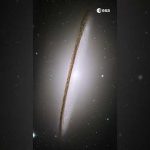
    This video takes the viewer on a journey through space to the Sombrero Galaxy, also known as Messier 104 (M104).

    The NASA/ESA/CSA James Webb Space Telescope recently imaged the Sombrero galaxy with its MIRI (Mid-InfraRed Instrument), resolving the clumpy nature of the dust along the galaxy’s outer ring.

    The mid-infrared light highlights the gas and dust that are a feature of the star formation taking place among the Sombrero galaxy’s outer disc. The rings of the Sombrero galaxy produce less than one solar mass of stars per year, in comparison to the Milky Way’s roughly two solar masses a year. It’s not a particular hotbed of star formation.

    The Sombrero galaxy is around 30 million light-years from Earth in the constellation Virgo.

    📹 European Space Agency (ESA)
    📸 NASA, ESA, CSA, STScI, ESO/IDA/Danish 1.5 m, DSS 2, The Hubble Heritage Team (STScI/AURA), N. Bartmann (ESA/Webb), R. Gendler and J.-E. Ovaldsen, E. Slawik, N. Risinger & M. Zamani (ESA/Webb)

    #ESA #Webb #Space

  • Earth views from Cupola during Ignis mission 🌍

    Earth views from Cupola during Ignis mission 🌍

    View of Earth as seen by ESA project astronaut Sławosz Uznański-Wiśniewski inside the seven-windowed cupola, the International Space Station’s “window to the world”.

    The European Space Agency-built Cupola is the favourite place of many astronauts on the International Space Station. It serves not only as a unique photo spot, but also for observing robotic activities of the Canadian Space Agency’s robotic arm Canadarm2, arriving spacecraft and spacewalks.

    Sławosz was launched to the International Space Station on the Dragon spacecraft as part of Axiom Mission 4 on 25 June 2025. The 20-day mission on board is known as Ignis.

    During the Ignis mission, Sławosz conducted 13 experiments proposed by Polish companies and institutions and developed in collaboration with ESA, along with three additional ESA-led experiments. These covered a broad range of areas including human research, materials science, biology, biotechnology and technology demonstrations. 

    The Ax-4 mission marks the second commercial human spaceflight for an ESA project astronaut. Ignis was sponsored by the Polish government and supported by ESA, the Polish Ministry of Economic Development and Technology (MRiT) and the Polish Space Agency (POLSA).

    📹 European Space Agency (ESA)
    📸 ESA – Sławosz Uznański-Wiśniewski

    #ESA #Earth #Astronaut

  • Is our galaxy really going to collide with Andromeda? 🤯

    Is our galaxy really going to collide with Andromeda? 🤯

    For years, astronomers believed the Milky Way and Andromeda were on a direct collision course in about 4.5 billion years. But new research using data from our Gaia mission and Hubble Space Telescope suggests the story isn’t so simple.

    After running 100 000 simulations with the most precise data available, scientists now say there’s only a 50% chance the two galaxies will collide in the next 10 billion years.

    The Large Magellanic Cloud, one of our satellite galaxies, could be tugging the Milky Way just enough to steer it away from Andromeda. Instead of crashing, the two galaxies might simply orbit each other in a slow cosmic dance.

    So the fate of the Milky Way remains uncertain. And with the Sun expected to make Earth uninhabitable in about a billion years, a galaxy collision is low on our list of concerns.

    📹 European Space Agency (ESA)
    📸 NASA, ESA, STScI, Till Sawala (University of Helsinki), DSS, J. DePasquale (STScI)

    #ESA #Space #Science

  • Sławosz comes home 🧑‍🚀🪂💦

    Sławosz comes home 🧑‍🚀🪂💦

    After 20 days in space, ESA project astronaut Sławosz Uznański-Wiśniewski and his Axiom Mission 4 crewmates returned safely to Earth on 15 July 2025.

    #Ignis mission highlights:

    🌍 230 orbits around Earth
    📏 + 13 million km travelled
    🧪+ 20 science experiments (13 led by Poland)
    💯 All mission objectives fulfilled
    ⏰ 105 hours of orbital work
    📈 + 25% extra activities completed

    📹 European Space Agency (ESA)
    📸 Axiom Space/SpaceX

    #ESA #Ax4 #Astronaut

  • Splashdown | Ax-4 mission with Sławosz Uznański-Wiśniewski

    Splashdown | Ax-4 mission with Sławosz Uznański-Wiśniewski

    Tune in on Tuesday, 15 July, from 09:30 BST (10:30 CEST), to watch ESA project astronaut Sławosz Uznański-Wiśniewski and crew splash down off the coast of California, USA at 10:31 BST (11:31 CEST).

    During the Ignis mission, Sławosz conducted 13 experiments proposed by Polish companies and institutions and developed in collaboration with ESA, along with three additional ESA-led experiments. These covered a broad range of areas including human research, materials science, biology, biotechnology and technology demonstrations. 

    Ax-4 marks the second commercial human spaceflight mission for an ESA project astronaut. Sponsored by the Polish government and supported by ESA, the Polish Ministry of Economic Development and Technology (MRiT) and the Polish Space Agency (POLSA), the mission featured an ambitious programme of technological and scientific research.

    Follow Sławosz’s journey to space on the Ignis mission website.
    Ignis website: https://www.esa.int/Science_Exploration/Human_and_Robotic_Exploration/ignis

    Credit: Axiom Space/SpaceX
    📸 SpaceX

    ★ Subscribe: http://bit.ly/ESAsubscribe and click twice on the bell button to receive our notifications.

    Check out our full video catalog: http://bit.ly/SpaceInVideos
    Follow us on Twitter: http://bit.ly/ESAonTwitter
    On Facebook: http://bit.ly/ESAonFacebook
    On Instagram: http://bit.ly/ESAonInstagram
    On LinkedIn: https://bit.ly/ESAonLinkedIn
    On Pinterest: https://bit.ly/ESAonPinterest
    On Flickr: http://bit.ly/ESAonFlickr

    We are Europe’s gateway to space. Our mission is to shape the development of Europe’s space capability and ensure that investment in space continues to deliver benefits to the citizens of Europe and the world. Check out https://www.esa.int/ to get up to speed on everything space related.

    Copyright information about our videos is available here: https://www.esa.int/ESA_Multimedia/Terms_and_Conditions
  • Undocking | Ax-4 mission with Sławosz Uznański-Wiśniewski

    Undocking | Ax-4 mission with Sławosz Uznański-Wiśniewski

    Tune in on Monday, 14 July, from 11:45 BST (12:45 CEST), to watch ESA project astronaut Sławosz Uznański-Wiśniewski depart from the International Space Station, bringing the Ignis mission to a close after nearly three weeks in orbit.

    During the Ignis mission, Sławosz conducted 13 experiments proposed by Polish companies and institutions and developed in collaboration with ESA, along with three additional ESA-led experiments. These covered a broad range of areas including human research, materials science, biology, biotechnology and technology demonstrations. 

    Ax-4 marks the second commercial human spaceflight mission for an ESA project astronaut. Sponsored by the Polish government and supported by ESA, the Polish Ministry of Economic Development and Technology (MRiT) and the Polish Space Agency (POLSA), the mission featured an ambitious programme of technological and scientific research.

    Follow Sławosz’s journey to space on the Ignis mission website.
    Ignis website: https://www.esa.int/Science_Exploration/Human_and_Robotic_Exploration/ignis

    Credit: Axiom Space/SpaceX/NASA
    📸 NASA

    ★ Subscribe: http://bit.ly/ESAsubscribe and click twice on the bell button to receive our notifications.

    Check out our full video catalog: http://bit.ly/SpaceInVideos
    Follow us on Twitter: http://bit.ly/ESAonTwitter
    On Facebook: http://bit.ly/ESAonFacebook
    On Instagram: http://bit.ly/ESAonInstagram
    On LinkedIn: https://bit.ly/ESAonLinkedIn
    On Pinterest: https://bit.ly/ESAonPinterest
    On Flickr: http://bit.ly/ESAonFlickr

    We are Europe’s gateway to space. Our mission is to shape the development of Europe’s space capability and ensure that investment in space continues to deliver benefits to the citizens of Europe and the world. Check out https://www.esa.int/ to get up to speed on everything space related.

    Copyright information about our videos is available here: https://www.esa.int/ESA_Multimedia/Terms_and_Conditions

  • ESA turns 50! 🎉 Meet some of the brilliant people behind half a century of missions and discoveries.

    ESA turns 50! 🎉 Meet some of the brilliant people behind half a century of missions and discoveries.

    Roy Gibson was ESA’s very first Director General. Born in 1924, he led the Agency from its foundation in 1975 until 1980.

    Ulf Merbold was the first ESA astronaut to fly in space, as part of the crew of the STS-9 Spacelab 1 mission on Space Shuttle Columbia in 1983.

    Claudie Heigneré made history in 2001 as the first female European astronaut on a ‘taxi flight’ to the International Space Station.

    Gerhard Schwehm was ESA’s first planetary scientist, working on the Giotto mission that provided the first close-up images of a comet nucleus. He then became Mission Manager for the Rosetta mission until his retirement.

    Paolo Ferri dedicated 20 years to Rosetta, first as Operations Manager, then as Flight Director, and eventually as Head of the Mission Operations Department.

    Elsa Montagnon is currently Head of the Mission Operations Division. Previously, she was Spacecraft Operations Manager for BepiColombo, Europe’s first mission to Mercury, launched in 2018.

    Josef Aschbacher became ESA Director General in 2021. From 2016–21, he was ESA Director for Earth Observation Programmes He has been a key leader of the European Copernicus programme, which is now considered to be one of the most successful Earth observation programmes in the world.

    📹 European Space Agency (ESA)
    📸 European Space Agency (ESA)

    #ESA #Space #Astronaut

  • Elevating Europe in space for fifty years

    Elevating Europe in space for fifty years

    For half a century, the European Space Agency (ESA) has been serving Europe as its space agency and inspiring its citizens. On 30 May 1975, the ESA Convention was signed by 10 founding Member States and has since now expanded to 23 Member States, three Associate Members, four Cooperating States and a Cooperation Agreement with Canada. This anniversary year provides the opportunity to reflect not only on ESA’s past achievements, but even more so on its future perspectives.

    Credits: European Space Agency (ESA)

    *Correction: 1990, Launch of NASA/ESA Hubble Space Telescope*

    Check out our full video catalog: http://bit.ly/SpaceInVideos
    Follow us on Twitter: http://bit.ly/ESAonTwitter
    On Facebook: http://bit.ly/ESAonFacebook
    On Instagram: http://bit.ly/ESAonInstagram
    On LinkedIn: https://bit.ly/ESAonLinkedIn
    On Pinterest: https://bit.ly/ESAonPinterest
    On Flickr: http://bit.ly/ESAonFlickr

    We are Europe’s gateway to space. Our mission is to shape the development of Europe’s space capability and ensure that investment in space continues to deliver benefits to the citizens of Europe and the world. Check out https://www.esa.int/ to get up to speed on everything space related.

    Copyright information about our videos is available here: https://www.esa.int/ESA_Multimedia/Terms_and_Conditions
  • What’s causing this black hole to suddenly burst with X-ray flashes? 🤔

    What’s causing this black hole to suddenly burst with X-ray flashes? 🤔

    Scientists speculate that the black hole is pulling in gas from nearby space and this has formed a disc of orbiting material around it. Something like a star or small black hole also orbiting around it, is flying through the disc over and over, causing shockwaves and powerful energy bursts.

    Watching these repeated eruptions in real time gives scientists a rare chance to study how black holes behave and learn more about these strange, powerful events. But for now, we still have more questions than answers.

    📹 European Space Agency (ESA)

    #ESA #Space #BlackHole

  • The people make the mission. 🥹

    The people make the mission. 🥹

    This footage is from 20 January 2014, when ESA’s Rosetta spacecraft awoke from deep space hibernation, more than 800 million kilometres from Earth. After spending 31 months in a power-saving sleep mode to conserve energy while travelling through the cold, outer regions of the Solar System, Rosetta successfully reactivated and sent a signal back to Earth — a simple “Hello, world!” that marked the beginning of one of the most ambitious space missions in history. Rosetta went on to become the first spacecraft to rendezvous with a comet (67P/Churyumov–Gerasimenko), orbit it, and deploy a lander, Philae, to its surface.

    📹 European Space Agency (ESA)

    #ESA #Space #Rosetta

  • Gaia: Rewriting the story of the Milky Way

    Gaia: Rewriting the story of the Milky Way

    For over a decade, ESA’s Gaia mission has mapped our galaxy with stunning precision—rewriting the story of the Milky Way. As its mission enters a new phase, we look back at its most groundbreaking discoveries.

    Credit: ESA – European Space Agency

    Chapters:
    00:23 – Mapping the Milky Way and beyond
    00:58 – Structure of the Milky Way
    01:40 – Galactic family tree
    02:27 – Mapping star-forming regions
    03:00 – Ancient star streams
    03:19 – Cosmic encounters
    04:07 – Black holes and hidden giants

    ★ Subscribe: http://bit.ly/ESAsubscribe and click twice on the bell button to receive our notifications.

    Check out our full video catalog: http://bit.ly/SpaceInVideos
    Follow us on Twitter: http://bit.ly/ESAonTwitter
    On Facebook: http://bit.ly/ESAonFacebook
    On Instagram: http://bit.ly/ESAonInstagram
    On LinkedIn: https://bit.ly/ESAonLinkedIn
    On Pinterest: https://bit.ly/ESAonPinterest
    On Flickr: http://bit.ly/ESAonFlickr

    We are Europe’s gateway to space. Our mission is to shape the development of Europe’s space capability and ensure that investment in space continues to deliver benefits to the citizens of Europe and the world. Check out https://www.esa.int/ to get up to speed on everything space related.

    Copyright information about our videos is available here: https://www.esa.int/ESA_Multimedia/Terms_and_Conditions

  • This space telescope is mapping the Universe! 🌌 (Part 2)

    This space telescope is mapping the Universe! 🌌 (Part 2)

    On 19 March 2025, our Euclid mission released its first batch of survey data, including a preview of its deep fields. Here, hundreds of thousands of galaxies in different shapes and sizes take centre stage and show a glimpse of their large-scale organisation in the cosmic web.

    📹 ESA – European Space Agency
    📸 ESA /Euclid/Euclid Consortium/@NASA, image processing by J.-C. Cuillandre, E. Bertin, G. Anselmi
    Euclid Deep Field South, 70x zoom: ESA/Euclid/Euclid Consortium/NASA, image processing by J.-C. Cuillandre, E. Bertin, G. Anselmi

    #ESA #Euclid #Space

  • Gaia leaves for retirement orbit

    Gaia leaves for retirement orbit

    From 25 July 2014 to 15 January 2025, the Gaia space observatory performed high-precision measurements of nearly two billion stars from its Lissajous orbit around the L2 Lagrange point, 1.5 million km from Earth.

    After 10.5 years of groundbreaking observations, Gaia’s cold gas supply for attitude control has been depleted. On 27 March 2025, Gaia will leave its Lissajous orbit and transition into a stable heliocentric orbit. Soon after, the spacecraft will be passivated, with its instruments and transmitters switched off.

    While Gaia will no longer collect new data, its scientific mission is far from over! The team continues working on Gaia Data Release 4 (expected 2026) and the final legacy catalogue (to be published not before the end of 2030), ensuring that Gaia’s discoveries will shape astronomy for decades to come.

    This video visualises how Gaia leaves its Lissajous orbit and enters its final heliocentric orbit.

    This video was made with Gaia Sky (https://gaiasky.space) by Tiago Nogueira, Toni Sagristà, and Stefan Jordan.

    Text: Stefan Jordan, Tiago Nogueira, Tineke Roegiers

    The creators would like to thank Alessandro Masat and Ander Martinez from ESA for providing Gaia’s orbit and attitude data.

    Credit: ESA/Gaia/DPAC, CC BY-SA 3.0 IGO

    ★ Subscribe: http://bit.ly/ESAsubscribe and click twice on the bell button to receive our notifications.

    Check out our full video catalog: http://bit.ly/SpaceInVideos
    Follow us on Twitter: http://bit.ly/ESAonTwitter
    On Facebook: http://bit.ly/ESAonFacebook
    On Instagram: http://bit.ly/ESAonInstagram
    On LinkedIn: https://bit.ly/ESAonLinkedIn
    On Pinterest: https://bit.ly/ESAonPinterest
    On Flickr: http://bit.ly/ESAonFlickr

    We are Europe’s gateway to space. Our mission is to shape the development of Europe’s space capability and ensure that investment in space continues to deliver benefits to the citizens of Europe and the world. Check out https://www.esa.int/ to get up to speed on everything space related.

    Copyright information about our videos is available here: https://www.esa.int/ESA_Multimedia/Terms_and_Conditions

  • This space telescope is mapping the Universe! 🌌

    This space telescope is mapping the Universe! 🌌

    On 19 March 2025, our Euclid mission released its first batch of survey data, revealing an astonishing view of the cosmic web.

    With just one scan of its deep fields, Euclid has already detected 26 million galaxies, some as far as 10.5 billion light-years away! This is just a preview of what’s to come, as Euclid will continue mapping the Universe in unprecedented detail.

    What’s in this first release?
    – Three vast mosaics covering 63 square degrees of the sky
    – A catalogue of 380 000 galaxies, classified with AI + citizen scientists
    – 500 new gravitational lens candidates, almost all never seen before
    – The first hints of Euclid’s full cosmic atlas, which will eventually cover one-third of the sky

    This data is a huge leap forward in understanding how galaxies are distributed across the Universe and how dark matter and dark energy shape the cosmos.

    Over the next six years, Euclid will revisit these deep fields 30 to 52 times, uncovering billions of galaxies and pushing the astrophysics’ boundaries.

    📹 @europeanspaceagency
    📸 ESA /Euclid/Euclid Consortium/@NASA, image processing by J.-C. Cuillandre, E. Bertin, G. Anselmi
    Euclid Deep Field South, 70x zoom: ESA/Euclid/Euclid Consortium/NASA, image processing by J.-C. Cuillandre, E. Bertin, G. Anselmi

    #ESA #Euclid #Space

  • Euclid’s first deep dive into the Universe

    Euclid’s first deep dive into the Universe

    The European Space Agency’s Euclid space telescope mission has scouted out the three areas in the sky where it will eventually provide the deepest observations of its mission.

    In just one week of observations, with one scan of each region so far, Euclid already spotted 26 million galaxies. The farthest of those are up to 10.5 billion light-years away.

    In the coming years, Euclid will pass over these three regions tens of times, capturing many more faraway galaxies, making these fields truly ‘deep’ by the end of the nominal mission in 2030.

    The first glimpse of 63 square degrees of the sky, the equivalent area of more than 300 times the full Moon, already gives an impressive preview of the scale of Euclid’s grand cosmic atlas when the mission is complete. This atlas will cover one-third of the entire sky – 14 000 square degrees – in this high-quality detail.

    Explore the three deep field previews in ESASky:

    – Euclid Deep Field South: https://sky.esa.int/esasky/?hide_welcome=true&hide_banner_info=true&hips=DES-DR2+ColorIRG&sci=false&layout=esasky&euclid_image=EDFS

    – Euclid Deep Field Fornax: https://sky.esa.int/esasky/?target=202.469575%2047.195258333333335&hips=DSS2+color&fov=1&projection=TAN&cooframe=J2000&sci=false&lang=en&layout=esasky />
    – Euclid Deep Field North:
    https://sky.esa.int/esasky/?target=202.469575%2047.195258333333335&hips=PanSTARRS+DR1+color+(i%2C+r%2C+g)&fov=1&projection=TAN&cooframe=J2000&sci=false&lang=en&layout=esasky />
    Read more:
    https://www.esa.int/Science_Exploration/Space_Science/Euclid/Euclid_opens_data_treasure_trove_offers_glimpse_of_deep_fields

    —————————————————
    Credits: ESA/Euclid/Euclid Consortium/NASA, image processing by J.-C. Cuillandre, E. Bertin, G. Anselmi, M. Walmsley, M. Huertas-Company; ESA/Gaia/DPAC; ESA/Planck Collaboration
    —————————————————

    ★ Subscribe: http://bit.ly/ESAsubscribe and click twice on the bell button to receive our notifications.

    Check out our full video catalog: http://bit.ly/SpaceInVideos
    Follow us on Twitter: http://bit.ly/ESAonTwitter
    On Facebook: http://bit.ly/ESAonFacebook
    On Instagram: http://bit.ly/ESAonInstagram
    On LinkedIn: https://bit.ly/ESAonLinkedIn
    On Pinterest: https://bit.ly/ESAonPinterest
    On Flickr: http://bit.ly/ESAonFlickr

    We are Europe’s gateway to space. Our mission is to shape the development of Europe’s space capability and ensure that investment in space continues to deliver benefits to the citizens of Europe and the world. Check out https://www.esa.int/ to get up to speed on everything space related.

    Copyright information about our videos is available here: https://www.esa.int/ESA_Multimedia/Terms_and_Conditions

    #ESA #Euclid #Space

  • Completing the spacecraft – Let’s Smile (episode 2)

    Completing the spacecraft – Let’s Smile (episode 2)

    Smile is a brand-new space mission currently in the making. It will study space weather and the interaction between the solar wind and Earth’s magnetic environment.

    At the European Space Agency’s technical heart in the Netherlands, engineers have spent the last five months unboxing and testing different elements of the spacecraft, and joining the two main parts together. Due to launch by the end of 2025, Smile is now well on its way to being ready for space.

    This video provides a glimpse into what we’ve been up to recently. It is the second episode in a series of short videos, and includes interviews with Adriana González Castro (ESA Smile Project Controller), Walfried Raab (ESA Smile Lead Payload Engineer), Sylvain Vey (ESA Smile Instrument and Operations Interface Engineer), Li Jing (CAS Smile Project Manager), Benjamin Vanoutryve (Smile AIT/AIV and Launcher Interface Principal Engineer), and José Ignacio Maestra Onteniente (Airbus Smile AIT Manager).

    Credit: ESA/Lightcurve Films

    Acknowledgment: Direction, main camera, sound, editing, post-production by Lightcurve Films. Original music by William Zeitler. Drone footage is by The Postboat Dronedepartment.

    ★ Subscribe: http://bit.ly/ESAsubscribe and click twice on the bell button to receive our notifications.

    Check out our full video catalog: http://bit.ly/SpaceInVideos
    Follow us on Twitter: http://bit.ly/ESAonTwitter
    On Facebook: http://bit.ly/ESAonFacebook
    On Instagram: http://bit.ly/ESAonInstagram
    On LinkedIn: https://bit.ly/ESAonLinkedIn
    On Pinterest: https://bit.ly/ESAonPinterest
    On Flickr: http://bit.ly/ESAonFlickr

    We are Europe’s gateway to space. Our mission is to shape the development of Europe’s space capability and ensure that investment in space continues to deliver benefits to the citizens of Europe and the world. Check out https://www.esa.int/ to get up to speed on everything space related.

    Copyright information about our videos is available here: https://www.esa.int/ESA_Multimedia/Terms_and_Conditions
    #ESA #Smile #Documentary

  • Could water protect astronauts from radiation? 💧

    Could water protect astronauts from radiation? 💧

    It turns out water is great at blocking radiation. But using water as a protection system has its challenges.

    A team from the Polymer Chemistry and Biomaterials Group (PBM) at Ghent University in Belgium is looking into a new option: superabsorbent polymers (SAPs).

    These materials might be safer and more effective than water alone.

    SAPs can soak up hundreds of times their weight in liquid, similar to those “grow monster” toys that expand in water. When swollen with liquid, they’re called “hydrogels.”

    📹 ESA – European Space Agency
    📸 Lenny Van Daele/Johan Dubruel

  • Why these volunteers are in bed for 60 days straight

    Why these volunteers are in bed for 60 days straight

    A group of volunteers is spending two months lying in bed—with their feet up and one shoulder always touching the mattress—even while eating, showering, and using the toilet. But why? This extreme bedrest study is helping scientists understand how space travel affects the human body and how to keep astronauts healthy on long missions.

    Microgravity causes muscle and bone loss, fluid shifts, and other physiological changes similar to those experienced by bedridden patients on Earth. By studying volunteers here on Earth, researchers can develop better countermeasures for astronauts and even improve treatments for medical conditions like osteoporosis.

    In this study, participants are divided into three groups: one stays in bed with no exercise, another cycles in bed to mimic astronaut workouts, and a third cycles while being spun in a centrifuge to simulate artificial gravity. Scientists hope artificial gravity could become a key tool in protecting astronauts during deep-space missions.

    Could you handle 60 days in bed for the sake of space exploration? Let us know in the comments!

    Credits: ESA – European Space Agency

    ★ Subscribe: http://bit.ly/ESAsubscribe and click twice on the bell button to receive our notifications.

    Check out our full video catalog: http://bit.ly/SpaceInVideos
    Follow us on Twitter: http://bit.ly/ESAonTwitter
    On Facebook: http://bit.ly/ESAonFacebook
    On Instagram: http://bit.ly/ESAonInstagram
    On LinkedIn: https://bit.ly/ESAonLinkedIn
    On Pinterest: https://bit.ly/ESAonPinterest
    On Flickr: http://bit.ly/ESAonFlickr

    We are Europe’s gateway to space. Our mission is to shape the development of Europe’s space capability and ensure that investment in space continues to deliver benefits to the citizens of Europe and the world. Check out https://www.esa.int/ to get up to speed on everything space related.

    Copyright information about our videos is available here: https://www.esa.int/ESA_Multimedia/Terms_and_Conditions

    #ESA #SpaceResearch #Astronaut

  • Say hello to ALISSE! 🧑‍⚕️

    Say hello to ALISSE! 🧑‍⚕️

    The AI-powered innovation transforming space medicine. Astronauts can now perform expert-level ultrasounds without Earth-based guidance—keeping them healthy on deep-space missions while paving the way for smarter, more accessible healthcare on Earth.

    The future of exploration starts here!

    📸 ESA/NASA – Alexander Gerst
    📹 ESA – European Space Agency

    #ESA #Astronaut #AI

  • Floating in zero gravity… on Earth? 🌍 How is that possible?

    Floating in zero gravity… on Earth? 🌍 How is that possible?

    Air Zero G’s parabolic flights create a weightless environment by flying along a curved path called a parabola. This short period of weightlessness lasts about 22 seconds, during which people and experiments on board the parabolic flight can experience the same weightlessness as astronauts in orbit on the International Space Station.

    The price to pay for this free-floating freedom is two short periods of hypergravity, during which everything weighs almost double for 20 seconds: first when the aircraft pulls up sharply and then again when it pulls out sharply afterwards to return to a normal flight path.

    Each parabola takes about one minute to complete and is repeated 31 times in one flight, providing a total of about ten minutes of zero-gravity.

    The flights provide European scientists with access to a repeatable, low-gravity research environment. Hundreds of experiments have flown over thousands of parabolas, enabling extensive scientific endeavours across many disciplines and resulting in a huge legacy of publications.

    📹 ESA – European Space Agency

    📸 ESA/Novespace

    #ESA #ZeroG #ParabolicFlight

  • This is where we are in the Milky Way… 🌌

    This is where we are in the Milky Way… 🌌

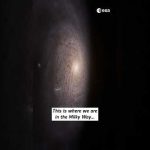
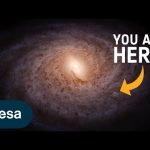
    This stunning artist’s animation of the Milky Way is based on data from ESA’s Gaia space telescope. Gaia has completely reshaped our understanding of our home galaxy—revealing unexpected details about its spiral arms, central bar, and overall structure.

    We can’t take a selfie of the Milky Way, but thanks to Gaia, we’re seeing it clearer than ever! And with more data releases on the way, our view will only get sharper.

    Credit: ESA/Gaia/DPAC, Stefan Payne-Wardenaar

    #ESA #MilkyWay #Gaia

  • The best Milky Way animation, by Gaia

    The best Milky Way animation, by Gaia

    This is a new artist’s animation of our galaxy, the Milky Way, based on data from ESA’s Gaia space telescope.

    Gaia has changed our impression of the Milky Way. Even seemingly simple ideas about the nature of our galaxy’s central bar and the spiral arms have been overturned. Gaia has shown us that it has more than two spiral arms and that they are less prominent than we previously thought. In addition, Gaia has shown that its central bar is more inclined with respect to the Sun.
    No spacecraft can travel beyond our galaxy, so we can’t take a selfie, but Gaia is giving us the best insight yet of what our home galaxy looks like. Once all of Gaia’s observations collected over the past decade are made available in two upcoming data releases, we can expect an even sharper view of the Milky Way.

    Click here to download the still image of the Milky Way: https://www.esa.int/Science_Exploration/Space_Science/Gaia/New_Gaia_release_reveals_rare_lenses_cluster_cores_and_unforeseen_science

    Credit: ESA/Gaia/DPAC, Stefan Payne-Wardenaar

    ★ Subscribe: http://bit.ly/ESAsubscribe and click twice on the bell button to receive our notifications.

    Check out our full video catalog: http://bit.ly/SpaceInVideos
    Follow us on Twitter: http://bit.ly/ESAonTwitter
    On Facebook: http://bit.ly/ESAonFacebook
    On Instagram: http://bit.ly/ESAonInstagram
    On LinkedIn: https://bit.ly/ESAonLinkedIn
    On Pinterest: https://bit.ly/ESAonPinterest
    On Flickr: http://bit.ly/ESAonFlickr

    We are Europe’s gateway to space. Our mission is to shape the development of Europe’s space capability and ensure that investment in space continues to deliver benefits to the citizens of Europe and the world. Check out https://www.esa.int/ to get up to speed on everything space related.

    Copyright information about our videos is available here: https://www.esa.int/ESA_Multimedia/Terms_and_Conditions

    #ESA #Gaia #MilkyWay

  • How the Large Magellanic Cloud survived a galactic collision! 🌌

    How the Large Magellanic Cloud survived a galactic collision! 🌌

    Did you know the Large Magellanic Cloud, one of our galaxy’s closest neighbors, survived a dramatic collision with the Milky Way’s gaseous halo? Despite losing most of its gas, the Large Magellanic Cloud is still forming new stars—a testament to its resilience! Thanks to Hubble Space Telescope, astronomers measured the Large Magellanic Cloud’s halo for the first time, revealing incredible insights about galaxy interactions.

    📹 ESA – European Space Agency
    📸 NASA, ESA, R. Crawford

    #ESA #Hubble #LargeMagellanicCloud

  • See and hear three years of solar fireworks

    See and hear three years of solar fireworks

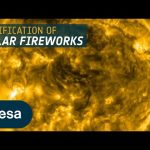
    At the start of this new year, close-up pictures and solar flare data that the ESA-led Solar Orbiter mission has been recording for more than three years. See and hear for yourself how the number of flares and their intensity increase, a clear sign of the Sun approaching the peak of the 11-year solar cycle.

    This video combines ultraviolet images of the Sun’s outer atmosphere (the corona, yellow) taken by Solar Orbiter’s Extreme Ultraviolet Imager (EUI) instrument, with the size and locations of solar flares (blue circles) as recorded by the Spectrometer/Telescope for Imaging X-rays (STIX) instrument. The accompanying audio is a sonification based on the detected flares and the spacecraft’s distance to the Sun.

    Solar Orbiter moves on an elliptical path around the Sun, making a close approach to our star every six months. We can see this in the video from the spacecraft’s perspective, with the Sun moving closer and farther over the course of each year. In the sonification, this is represented by the low background humming that loudens as the Sun gets closer and becomes quieter as it moves further away. (There are some abrupt shifts in distance visible in the video, as it skips over dates where one or both instruments were inactive or collecting a different type of data.)

    The blue circles represent solar flares: bursts of high-energy radiation of which STIX detects the X-rays. Flares are sent out by the Sun when energy stored in ‘twisted’ magnetic fields (usually above sunspots) is suddenly released. The size of each circle indicates how strong the flare is, with stronger flares sending out more X-rays. We can hear the flares in the metallic clinks in the sonification, where the sharpness of the sound corresponds to how energetic the solar flare is.

    Many thanks to Klaus Nielsen (DTU Space / Maple Pools) for making the sonification in this video. If you would like to hear more sonifications and music by this artist, please visit: https://linktr.ee/maplepools
    Solar Orbiter is a space mission of international collaboration between ESA and NASA, operated by ESA.

    —————————————————
    Credits
    Credit: ESA & NASA/Solar Orbiter/EUI & STIX, Klaus Nielsen (DTU Space/Maple Pools)
    Acknowledgements: Data processing for video by Laura Hayes
    License: CC BY-SA 3.0 or ESA Standard License

    Video credit slate
    Solar Orbiter animation: ESA
    Sun images: ESA & NASA/Solar Orbiter/EUI
    Solar flare data: ESA & NASA/Solar Orbiter/STIX
    Data processing for video: Laura Hayes
    Data sonification & music: Klaus Nielsen (DTU Space/Maple Pools)
    —————————————————

    ★ Subscribe: http://bit.ly/ESAsubscribe and click twice on the bell button to receive our notifications.

    Check out our full video catalog: http://bit.ly/SpaceInVideos
    Follow us on Twitter: http://bit.ly/ESAonTwitter
    On Facebook: http://bit.ly/ESAonFacebook
    On Instagram: http://bit.ly/ESAonInstagram
    On LinkedIn: https://bit.ly/ESAonLinkedIn
    On Pinterest: https://bit.ly/ESAonPinterest
    On Flickr: http://bit.ly/ESAonFlickr

    We are Europe’s gateway to space. Our mission is to shape the development of Europe’s space capability and ensure that investment in space continues to deliver benefits to the citizens of Europe and the world. Check out https://www.esa.int/ to get up to speed on everything space related.

    Copyright information about our videos is available here: https://www.esa.int/ESA_Multimedia/Terms_and_Conditions
    #ESA #SolarOrbiter #Sun

  • Proba-3: Creating artificial Solar Eclipses in space ☀️ #shorts

    Proba-3: Creating artificial Solar Eclipses in space ☀️ #shorts

    The double-satellite Proba-3 is the most ambitious member yet of ESA’s Proba family of experimental missions. Two spacecraft will fly together as one, maintaining precise formation down to a single millimetre. One will block out the fiery disc of the Sun for the other, to enable prolonged observations of the Sun’s surrounding atmosphere, or ‘corona’, the source of the solar wind and space weather. Usually, the corona can only be glimpsed for a few minutes during terrestrial total solar eclipses.

    Proba-3 aims to reproduce such eclipses for up to six hours at a time, in a highly elliptical orbit taking it more than 60 000 km from Earth. The two spacecraft are being launched together by India’s PSLV-XL launcher from the Satish Dhawan Space Centre.

    📹 ESA – European Space Agency
    📸 SOHO (ESA & NASA)

    #ESA #Proba-3 #SolarEclipse

  • What happens during the Sun’s 11-year cycle? ☀️ #shorts

    What happens during the Sun’s 11-year cycle? ☀️ #shorts

    The Sun’s 11-year solar cycle is more than just a cosmic dance 🌞

    It shapes space weather and impacts life on Earth! From dazzling auroras to powerful solar flares, its activity keeps us on our toes.

    📹 ESA – European Space Agency
    📸 SOHO (ESA & NASA)

    #ESA #Sun #SolarCycle

  • Solar Orbiter’s highest-resolution full views of the Sun

    Solar Orbiter’s highest-resolution full views of the Sun

    Join us on a unique video tour of the Sun’s mesmerising surface. Thanks to its innovative instrumentation and a ‘daring’ trajectory passing close to the Sun, ESA’s Solar Orbiter spacecraft has obtained the highest-resolution full views of the Sun’s surface to date.

    Watching the Sun in visible light, Solar Orbiter reveals a grainy surface and dark sunspots. On the same day, the spacecraft mapped the Sun’s magnetic field, tracked how fast and in which direction scorching hot material on the surface is moving, and snapped a hypnotising image in ultraviolet light of the Sun’s upper atmosphere, the corona. All taken on the same day, the four new images shown in this video let us peel away the Sun’s many layers.

    The images were taken when Solar Orbiter was less than 74 million kilometres from the Sun; being so close meant each high-resolution image only covers a small portion of the Sun. To obtain the full-disc views showcased in the video, 25 images were stitched together like a mosaic. The Sun has a diameter of around 8000 pixels in the full mosaics, revealing an extraordinary amount of detail.

    Read more: https://www.esa.int/Science_Exploration/Space_Science/Solar_Orbiter/New_full_Sun_views_show_sunspots_fields_and_restless_plasma

    Credit: ESA – European Space Agency
    Acknowledgements: Sun images: ESA & NASA/Solar Orbiter/PHI and EUI Teams; Solar Orbiter spacecraft animation: ESA/ATG medialab; Voiceover: Juliet Hannay

    ★ Subscribe: http://bit.ly/ESAsubscribe and click twice on the bell button to receive our notifications.

    Check out our full video catalog: http://bit.ly/SpaceInVideos
    Follow us on Twitter: http://bit.ly/ESAonTwitter
    On Facebook: http://bit.ly/ESAonFacebook
    On Instagram: http://bit.ly/ESAonInstagram
    On LinkedIn: https://bit.ly/ESAonLinkedIn
    On Pinterest: https://bit.ly/ESAonPinterest
    On Flickr: http://bit.ly/ESAonFlickr

    We are Europe’s gateway to space. Our mission is to shape the development of Europe’s space capability and ensure that investment in space continues to deliver benefits to the citizens of Europe and the world. Check out https://www.esa.int/ to get up to speed on everything space related.

    Copyright information about our videos is available here: https://www.esa.int/ESA_Multimedia/Terms_and_Conditions
    #ESA #Sun #SolarOrbiter

  • How we made history by landing on a comet?

    How we made history by landing on a comet?

    On 12 November 2014, after a ten-year journey through the Solar System and over 500 million kilometres from home, Rosetta’s lander Philae made space exploration history by touching down on a comet for the first time. On the occasion of the tenth anniversary of this extraordinary feat, we celebrate by taking a look back over the mission’s highlights.

    Rosetta was an ESA mission with contributions from its Member States and NASA. It studied Comet 67P/Churyumov-Gerasimenko for over two years, including delivering lander Philae to the comet’s surface. Philae was provided by a consortium led by DLR, MPS, CNES and ASI.

    Credits: ESA – European Space Agency

    ★ Subscribe: http://bit.ly/ESAsubscribe and click twice on the bell button to receive our notifications.

    Check out our full video catalog: http://bit.ly/SpaceInVideos
    Follow us on Twitter: http://bit.ly/ESAonTwitter
    On Facebook: http://bit.ly/ESAonFacebook
    On Instagram: http://bit.ly/ESAonInstagram
    On LinkedIn: https://bit.ly/ESAonLinkedIn
    On Pinterest: https://bit.ly/ESAonPinterest
    On Flickr: http://bit.ly/ESAonFlickr

    We are Europe’s gateway to space. Our mission is to shape the development of Europe’s space capability and ensure that investment in space continues to deliver benefits to the citizens of Europe and the world. Check out https://www.esa.int/ to get up to speed on everything space related.

    Copyright information about our videos is available here: https://www.esa.int/ESA_Multimedia/Terms_and_Conditions
    #ESA #Comet #RosettaMission

  • Why do we know very little about Mercury? ♨️ #shorts

    Why do we know very little about Mercury? ♨️ #shorts

    1️⃣ Space near Mercury is HOT. Sending a spacecraft there is a bit like asking a laptop to work inside a hot pizza oven! Some spacecraft have gotten close to Mercury but none have remained in this scorching heat continuously. This means we still don’t have high-resolution data covering Mercury’s entire surface.

    2️⃣ It’s difficult to observe from Earth: Because Mercury is very close to the Sun, when we try to look at it from Earth, it’s often lost in the Sun’s glare.

    3️⃣ It’s hard to reach: Mercury is not that far, but according to some estimates, it would take less energy to get to Pluto than to get to Mercury. The Sun’s strong gravitational pull means that spacecraft need to use a lot of energy to slow down enough to orbit Mercury.

    But our BepiColombo mission, will help us learn a lot more about Mercury when it enters into orbit in 2026! It’s the most advanced spacecraft ever sent to Mercury. It will help us answer many questions, such as: Why is there ice in the polar craters of the scorched planet? And what are the mysterious ‘hollows’ on its surface?

    📹 ESA – European Space Agency
    📸 ESA/NASA

    #ESA #Mercury #BepiColombo

  • How do you cross a module in space? 🙃 #shorts

    How do you cross a module in space? 🙃 #shorts

    European Space Agency astronaut Samantha Cristoforetti shared this video on social media with the caption: How do you cross a module in space? 🙃

    📹 ESA – S. Cristoforetti

    #ESA #Floating #MissionMinerva

  • Ever heard of centaurs? ☄️ #shorts

    Ever heard of centaurs? ☄️ #shorts

    In mythology, centaurs are half-human, half-horse creatures, but in space, they’re celestial objects orbiting the Sun between Jupiter and Neptune.

    Centaurs are “hybrid” objects in the sense that they share characteristics with trans-Neptunian objects from the Kuiper Belt reservoir and short-period comets.
    A team of scientists used the James Web Telescope to study Centaur 29P.

    While data from previous observations of Centaur 29P showed a carbon monoxide (CO) gas jet pointed toward Earth, Webb parsed the jet’s composition in greater detail, and also detected multiple never-before-seen features of the centaur: two jets of carbon dioxide (CO2) emanating in the north and south directions, and another jet of CO pointing toward the north.

    Centaur 29P’s different CO and CO2 abundances suggest that the body may be composed of different pieces that coalesced together during its formation. However, other scenarios to explain Centaur 29P’s outgassing activity are still being considered.

    📹 ESA – European Space Agency
    📸 ESA/NASA

    #ESA #Webb #Centaurs

  • Euclid’s 208-Gigapixel glimpse into the Universe

    Euclid’s 208-Gigapixel glimpse into the Universe

    Discover the first page of ESA Euclid’s great cosmic atlas and marvel at millions of stars and galaxies captured in pristine detail, in a huge 208-gigapixel mosaic. The mosaic covers an area of the Southern Sky more than 500 times the area of the full Moon as seen from Earth.

    This video takes you through a rare sky dive. Starting from a vast cosmic panorama bedazzled by some 14 million galaxies, a series of ever-deeper zooms brings you to a crisp view of a swirling spiral galaxy, in a final image enlarged 600 times compared to the full mosaic.

    Although the scenes are enticing, they are not taken for their beauty, but to help us advance our understanding of the cosmos. Many of the 14 million galaxies in the initial vista will be used to study the hidden influence of dark matter and dark energy on the Universe.

    Unveiled as a teaser of the wide survey, the mosaic accounts for 1% of the area that Euclid will cover over six years, and was obtained by combining 260 observations collected in just two weeks.

    This first chunk of Euclid’s survey was revealed on 15 October 2024 at the International Astronautical Congress in Milan, Italy, by ESA’s Director General Josef Aschbacher and Director of Science Carole Mundell.

    Read more: https://www.esa.int/Science_Exploration/Space_Science/Euclid/Zoom_into_the_first_page_of_ESA_Euclid_s_great_cosmic_atlas

    —————————————————
    Copyright: ESA/Euclid/Euclid Consortium/NASA, CEA Paris-Saclay, image processing by J.-C. Cuillandre, E. Bertin, G. Anselmi; ESA/Gaia/DPAC; ESA/Planck Collaboration
    —————————————————

    ★ Subscribe: http://bit.ly/ESAsubscribe and click twice on the bell button to receive our notifications.

    Check out our full video catalog: http://bit.ly/SpaceInVideos
    Follow us on Twitter: http://bit.ly/ESAonTwitter
    On Facebook: http://bit.ly/ESAonFacebook
    On Instagram: http://bit.ly/ESAonInstagram
    On LinkedIn: https://bit.ly/ESAonLinkedIn
    On Pinterest: https://bit.ly/ESAonPinterest
    On Flickr: http://bit.ly/ESAonFlickr

    We are Europe’s gateway to space. Our mission is to shape the development of Europe’s space capability and ensure that investment in space continues to deliver benefits to the citizens of Europe and the world. Check out https://www.esa.int/ to get up to speed on everything space related.

    Copyright information about our videos is available here: https://www.esa.int/ESA_Multimedia/Terms_and_Conditions
    #ESA #Euclid #Darkmatter

  • Webb cracks case of inflated exoplanet 🕵️ #shorts

    Webb cracks case of inflated exoplanet 🕵️ #shorts

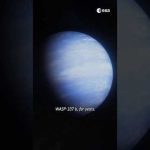
    Data collected using the NASA/ESA/CSA James Webb Space Telescope, combined with earlier observations from the NASA/ESA Hubble Space Telescope, show surprisingly little methane (CH4) in the atmosphere of WASP-107 b, indicating that the interior of the planet must be significantly hotter and the core much more massive than previously estimated.

    📹 ESA – European Space Agency
    📸 NASA, ESA, CSA, R. Crawford

    #ESA #Webb #SpaceMysteries

  • How do foams behave in space? ⛓️ #shorts

    How do foams behave in space? ⛓️ #shorts

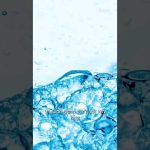
    On Earth, the mixture of gas and liquid that makes up a foam quickly starts to change. Gravity pulls the liquid between the bubbles downwards, and small bubbles shrink while the larger ones tend to grow at the expense of others. As the liquid is drawn downwards due to gravity the bubbles lose their strength and rupture, collapsing back to a liquid state.

    This is annoying for researchers as it limits the time they can study foams and interferes with their experiments. But in space foams are more stable as the liquid does not drain to the bottom in weightlessness.

    📹 @EuropeanSpaceAgency
    📸 ESA – European Space Agency

    #ESA #Foam #Space

  • How Europe’s biggest rocket came to be: Ariane 6 montage

    How Europe’s biggest rocket came to be: Ariane 6 montage

    The first half of 2024 saw hundreds of people across Europe building, cajoling, shipping, lowering, integrating, securing and protecting the precious pieces and parts that came together to create Ariane 6 – Europe’s new heavy-lift rocket.

    Huge engines, boosters and outer shells met tiny screws, electrical boards and masses of supercooled fuel. All this came together at Europe’s Spaceport in French Guiana, for the spectacular first launch of Ariane 6 on 9 July 2024, restoring Europe’s access to space.

    Get a glimpse at the teamwork, skill and care that went into this moment over many months, in this montage of Ariane 6 images, videos and timelapse photography spanning 30 January to 9 July 2024.

    ★ Subscribe: http://bit.ly/ESAsubscribe and click twice on the bell button to receive our notifications.

    Check out our full video catalog: http://bit.ly/SpaceInVideos
    Follow us on Twitter: http://bit.ly/ESAonTwitter
    On Facebook: http://bit.ly/ESAonFacebook
    On Instagram: http://bit.ly/ESAonInstagram
    On LinkedIn: https://bit.ly/ESAonLinkedIn
    On Pinterest: https://bit.ly/ESAonPinterest
    On Flickr: http://bit.ly/ESAonFlickr

    We are Europe’s gateway to space. Our mission is to shape the development of Europe’s space capability and ensure that investment in space continues to deliver benefits to the citizens of Europe and the world. Check out https://www.esa.int/ to get up to speed on everything space related.

    Copyright information about our videos is available here: https://www.esa.int/ESA_Multimedia/Terms_and_Conditions
    #ESA #Ariane6 #Rocket

  • Five new stunning images from Euclid’s Telescope

    Five new stunning images from Euclid’s Telescope

    ESA’s Euclid space mission has released five unprecedented new views of the Universe. These never-before-seen images demonstrate Euclid’s remarkable ability to unravel the secrets of the cosmos. Scientists are now equipped to hunt for rogue planets, study mysterious matter through lensed galaxies, and explore the evolution of the Universe. Join us as we explore these groundbreaking discoveries and what they mean for the future of space exploration.

    Credits: ESA – European Space Agency

    Chapters:
    00:00 – 00:36 Intro
    00:36 – 01:14 The Galaxy Cluster Abell 2390
    01:15 – 02:14 Messier 78: Stellar Nurseries and Galactic Formation
    02:15 – 03:02 Galaxies in the Dorado Group
    03:03 – 04:27 NGC 6744
    04:28 – 05:25 Abell 2764
    05:26 – 6:16 Conclusion

    ★ Subscribe: http://bit.ly/ESAsubscribe and click twice on the bell button to receive our notifications.

    Check out our full video catalog: http://bit.ly/SpaceInVideos
    Follow us on Twitter: http://bit.ly/ESAonTwitter
    On Facebook: http://bit.ly/ESAonFacebook
    On Instagram: http://bit.ly/ESAonInstagram
    On LinkedIn: https://bit.ly/ESAonLinkedIn
    On Pinterest: https://bit.ly/ESAonPinterest
    On Flickr: http://bit.ly/ESAonFlickr

    We are Europe’s gateway to space. Our mission is to shape the development of Europe’s space capability and ensure that investment in space continues to deliver benefits to the citizens of Europe and the world. Check out https://www.esa.int/ to get up to speed on everything space related.

    Copyright information about our videos is available here: https://www.esa.int/ESA_Multimedia/Terms_and_Conditions
    #ESA #Euclid #Universe

  • ESA’s Euclid celebrates first science with sparkling cosmic views

    ESA’s Euclid celebrates first science with sparkling cosmic views

    ESA is releasing a new set of full-colour images captured by the space telescope Euclid. Five new portraits of our cosmos were captured during Euclid’s early observations phase, each revealing amazing new science. Euclid’s ability to unravel the secrets of the cosmos is something you will not want to miss.

    Credits: ESA – European Space Agency

    ★ Subscribe: http://bit.ly/ESAsubscribe and click twice on the bell button to receive our notifications.

    Check out our full video catalog: http://bit.ly/SpaceInVideos
    Follow us on Twitter: http://bit.ly/ESAonTwitter
    On Facebook: http://bit.ly/ESAonFacebook
    On Instagram: http://bit.ly/ESAonInstagram
    On LinkedIn: https://bit.ly/ESAonLinkedIn
    On Pinterest: https://bit.ly/ESAonPinterest
    On Flickr: http://bit.ly/ESAonFlickr

    We are Europe’s gateway to space. Our mission is to shape the development of Europe’s space capability and ensure that investment in space continues to deliver benefits to the citizens of Europe and the world. Check out https://www.esa.int/ to get up to speed on everything space related.

    Copyright information about our videos is available here: https://www.esa.int/ESA_Multimedia/Terms_and_Conditions
    #ESA #Euclid #DarkMatter

  • Euclid celebrates first science with sparkling new images

    Euclid celebrates first science with sparkling new images

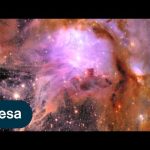
    Today, ESA’s Euclid space mission releases five unprecedented new views of the Universe. The never-before-seen images demonstrate Euclid’s ability to unravel the secrets of the cosmos and enable scientists to hunt for rogue planets, use lensed galaxies to study mysterious matter, and explore the evolution of the Universe.

    Read more about Euclid’s first images and download the individual images here:

    Credits: ESA/Euclid/Euclid Consortium/NASA, image processing by J.-C. Cuillandre (CEA Paris-Saclay), G. Anselmi

    ★ Subscribe: http://bit.ly/ESAsubscribe and click twice on the bell button to receive our notifications.

    Check out our full video catalog: http://bit.ly/SpaceInVideos
    Follow us on Twitter: http://bit.ly/ESAonTwitter
    On Facebook: http://bit.ly/ESAonFacebook
    On Instagram: http://bit.ly/ESAonInstagram
    On LinkedIn: https://bit.ly/ESAonLinkedIn
    On Pinterest: https://bit.ly/ESAonPinterest
    On Flickr: http://bit.ly/ESAonFlickr

    We are Europe’s gateway to space. Our mission is to shape the development of Europe’s space capability and ensure that investment in space continues to deliver benefits to the citizens of Europe and the world. Check out https://www.esa.int/ to get up to speed on everything space related.

    Copyright information about our videos is available here: https://www.esa.int/ESA_Multimedia/Terms_and_Conditions
    #ESA #Euclid #Science

  • Do you think that you could lie in bed for 60 days? 🛌 #shorts

    Do you think that you could lie in bed for 60 days? 🛌 #shorts

    A group of 12 volunteers are sticking to a strict bed routine for 60 days, lying with their feet up and one shoulder always touching the mattress. This reclined lifestyle includes meals, showers and toilet breaks, as well as intensive cycling and centrifuge rides for some.

    The BRACE study follows a two-month bedtime schedule to investigate how cycling and artificial gravity could counteract changes the human body experiences in space.

    Astronauts face similar physiological problems as elderly and bedridden patients on Earth. During space missions, astronauts’ bodies go through a wide array of changes – everything from their eyes to their heart might be affected, and their muscles and bones start to deteriorate. To battle this degradation, crew members exercise two hours per day on the International Space Station.

    The BRACE study involves male participants between the ages of 20 and 45 years with good physical and mental health. They are placed in beds tilted 6° below the horizontal position. As blood flows to the head and muscle wears out from lack of use, researchers chart how their bodies react.

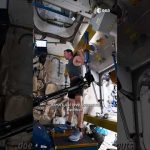
    Researchers split the volunteers in three groups. One group cycles in bed, a second one cycles while being spun on a centrifuge, and a third control group stays in bed for the full two months with no bike exercise or centrifuge rides. The centrifuge mimics artificial gravity, acting on all organs at once. Volunteers are spun to drive blood towards their feet, where the force of gravity doubles during the ride. Scientists hope artificial gravity could be used to keep astronauts fit and healthy in space.

    Now halfway through its second edition, the experiment will finish on 4 May 2024, after 95 days of intense clinical testing and monitoring. This campaign takes place at MEDES, the Institute for Space Medicine and Physiology in Toulouse, France, and is supported by the French Space Agency CNES.

    The study involves 14 European and international science teams that are working to release the results from the first BRACE campaign in 2023. Researchers are assessing a wide range of changes in the cardiovascular, metabolic, musculoskeletal, neuro-sensorial, haematological, and immunological systems.

    The tests will provide a better understanding of the effects of prolonged bedrest to the benefit of those in space and on Earth. Results could help design countermeasures and improve health for patients suffering from accelerated ageing due to a sedentary lifestyle.

    📹 ESA – European Space Agency

    #ESA #SpaceScience #Astronaut