Tag: Space Tech

  • Europe’s future in space transportation

    Europe’s future in space transportation

    Space is huge and essential to humankind, fuelling knowledge, supporting our economies and driving global prosperity. None of this would be possible without reliable access to space.

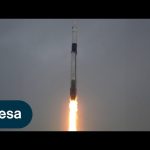
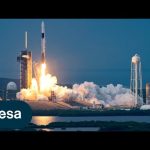
    Since 1979, Europe has relied on the Ariane rockets and Vega series to launch its missions. Today, with Ariane 6 and Vega-C, ESA ensures Europe’s autonomous and independent access to space. But we are also looking ahead. With the Ariane Smart Transfer and Release In-orbit Ship (ASTRIS), Phoebus, P160C boosters, the MR-10 engine and more, ESA is enhancing its rockets with new innovations that improve cost, performance, capability and sustainability.

    ESA is also leading the way in developing new propulsion systems to power the European launchers of the future. In collaboration with industry, ESA is supporting the development of new technologies to be used on rocket, boosters, upper stages, landers and spacecraft.

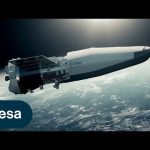
    Initiates like Boosters for European Space Transportation (BEST!), Technologies for High-thrust Re-Usable Space Transportation (THRUST!) and Future Innovation and Research in Space Transportation programme (FIRST!), are advancing key technologies for reusable boosters, engines and other innovations crucial for the future of space exploration. ESA’s Space Rider is a reusable spacecraft and robotic laboratory, designed to stay in low Earth-orbit for two months and return payloads to Earth. Themis is a prototype for testing reusable rocket technologies, including vertical takeoff, landing and reuse, powered by the Prometheus engine.

    The future of space transport extends beyond Earth launches, with in-orbit operations, transportation systems to support satellite servicing, orbital refuelling, and payload transfers between orbits.

    To support all of this, ESA is upgrading its ground support and Europe’s Spaceport in French Guiana, to accommodate more launches.

    Through programmes like ‘Boost!’ ESA is empowering the European Space Industry, supporting innovative companies which are creating new launch services. The European Launcher Challenge is shaping a competitive European launch sector for the future, strengthening Europe’s autonomous access to space.

    Credit: European Space Agency (ESA)

    Access the video on the ESA video library: https://www.esa.int/ESA_Multimedia/Videos/2025/06/The_future_of_ESA_Transportation

    ★ Subscribe: http://bit.ly/ESAsubscribe and click twice on the bell button to receive our notifications.

    Check out our full video catalog: http://bit.ly/SpaceInVideos
    Follow us on Twitter: http://bit.ly/ESAonTwitter
    On Facebook: http://bit.ly/ESAonFacebook
    On Instagram: http://bit.ly/ESAonInstagram
    On LinkedIn: https://bit.ly/ESAonLinkedIn
    On Pinterest: https://bit.ly/ESAonPinterest
    On Flickr: http://bit.ly/ESAonFlickr

    We are Europe’s gateway to space. Our mission is to shape the development of Europe’s space capability and ensure that investment in space continues to deliver benefits to the citizens of Europe and the world. Check out https://www.esa.int/ to get up to speed on everything space related.

    Copyright information about our videos is available here: https://www.esa.int/ESA_Multimedia/Terms_and_Conditions

  • ESA turns 50! 🎉 Meet some of the brilliant people behind half a century of missions and discoveries.

    ESA turns 50! 🎉 Meet some of the brilliant people behind half a century of missions and discoveries.

    Roy Gibson was ESA’s very first Director General. Born in 1924, he led the Agency from its foundation in 1975 until 1980.

    Ulf Merbold was the first ESA astronaut to fly in space, as part of the crew of the STS-9 Spacelab 1 mission on Space Shuttle Columbia in 1983.

    Claudie Heigneré made history in 2001 as the first female European astronaut on a ‘taxi flight’ to the International Space Station.

    Gerhard Schwehm was ESA’s first planetary scientist, working on the Giotto mission that provided the first close-up images of a comet nucleus. He then became Mission Manager for the Rosetta mission until his retirement.

    Paolo Ferri dedicated 20 years to Rosetta, first as Operations Manager, then as Flight Director, and eventually as Head of the Mission Operations Department.

    Elsa Montagnon is currently Head of the Mission Operations Division. Previously, she was Spacecraft Operations Manager for BepiColombo, Europe’s first mission to Mercury, launched in 2018.

    Josef Aschbacher became ESA Director General in 2021. From 2016–21, he was ESA Director for Earth Observation Programmes He has been a key leader of the European Copernicus programme, which is now considered to be one of the most successful Earth observation programmes in the world.

    📹 European Space Agency (ESA)
    📸 European Space Agency (ESA)

    #ESA #Space #Astronaut

  • Can cockroaches help astronauts in their long space missions? 🪳

    Can cockroaches help astronauts in their long space missions? 🪳

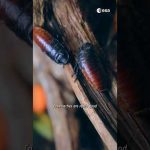
    Waste management is a critical challenge for spaceflight. But what if the waste produced by astronauts could be sustainably transformed into something valuable in space? A Polish company thought about that and has come up an innovative solution: an insect bioreactor powered by Madagascar cockroaches.

    Astronika, with support from ESA, has developed an innovative insect bioreactor that could revolutionize waste management on long-duration space missions. Currently, astronauts on the ISS rely on high-temperature reactors to process small amounts of waste, but much of it is still sent back to Earth. This method is unsustainable for deep-space missions. The insect bioreactor offers a closed-loop solution by converting organic waste into valuable resources, helping to create a more self-sufficient space ecosystem.

    The system relies on Madagascar cockroaches, chosen for their resilience and efficiency in breaking down waste. The bioreactor can process up to 3.6 kg of waste per week, producing over 100 grams of protein-rich biomass—equivalent to more than 20 eggs. It also aids in water recovery and reduces waste volume, making it a highly sustainable option for future missions. By optimizing the bioreactor’s environment—controlling temperature, humidity, and waste conditions—the insects’ metabolism and reproduction can be accelerated, improving efficiency.

    While still in early development, the next step is to send a prototype to space to observe how cockroaches behave and reproduce in microgravity. Understanding their adaptation to space conditions will provide valuable insights for further development. In the future, this technology could be a key component of long-term missions to the Moon or Mars, not only for waste recycling but also for plant cultivation and food production, helping astronauts sustain themselves far from Earth.

    📹 ESA – European Space Agency
    📸 ESA/Astronika

    #ESA #SpaceResearch #Cockroaches

  • How Europe’s biggest rocket came to be: Ariane 6 montage

    How Europe’s biggest rocket came to be: Ariane 6 montage

    The first half of 2024 saw hundreds of people across Europe building, cajoling, shipping, lowering, integrating, securing and protecting the precious pieces and parts that came together to create Ariane 6 – Europe’s new heavy-lift rocket.

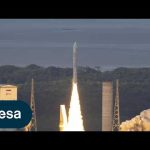
    Huge engines, boosters and outer shells met tiny screws, electrical boards and masses of supercooled fuel. All this came together at Europe’s Spaceport in French Guiana, for the spectacular first launch of Ariane 6 on 9 July 2024, restoring Europe’s access to space.

    Get a glimpse at the teamwork, skill and care that went into this moment over many months, in this montage of Ariane 6 images, videos and timelapse photography spanning 30 January to 9 July 2024.

    ★ Subscribe: http://bit.ly/ESAsubscribe and click twice on the bell button to receive our notifications.

    Check out our full video catalog: http://bit.ly/SpaceInVideos
    Follow us on Twitter: http://bit.ly/ESAonTwitter
    On Facebook: http://bit.ly/ESAonFacebook
    On Instagram: http://bit.ly/ESAonInstagram
    On LinkedIn: https://bit.ly/ESAonLinkedIn
    On Pinterest: https://bit.ly/ESAonPinterest
    On Flickr: http://bit.ly/ESAonFlickr

    We are Europe’s gateway to space. Our mission is to shape the development of Europe’s space capability and ensure that investment in space continues to deliver benefits to the citizens of Europe and the world. Check out https://www.esa.int/ to get up to speed on everything space related.

    Copyright information about our videos is available here: https://www.esa.int/ESA_Multimedia/Terms_and_Conditions
    #ESA #Ariane6 #Rocket

  • Five new stunning images from Euclid’s Telescope

    Five new stunning images from Euclid’s Telescope

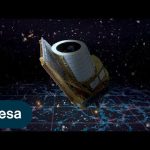
    ESA’s Euclid space mission has released five unprecedented new views of the Universe. These never-before-seen images demonstrate Euclid’s remarkable ability to unravel the secrets of the cosmos. Scientists are now equipped to hunt for rogue planets, study mysterious matter through lensed galaxies, and explore the evolution of the Universe. Join us as we explore these groundbreaking discoveries and what they mean for the future of space exploration.

    Credits: ESA – European Space Agency

    Chapters:
    00:00 – 00:36 Intro
    00:36 – 01:14 The Galaxy Cluster Abell 2390
    01:15 – 02:14 Messier 78: Stellar Nurseries and Galactic Formation
    02:15 – 03:02 Galaxies in the Dorado Group
    03:03 – 04:27 NGC 6744
    04:28 – 05:25 Abell 2764
    05:26 – 6:16 Conclusion

    ★ Subscribe: http://bit.ly/ESAsubscribe and click twice on the bell button to receive our notifications.

    Check out our full video catalog: http://bit.ly/SpaceInVideos
    Follow us on Twitter: http://bit.ly/ESAonTwitter
    On Facebook: http://bit.ly/ESAonFacebook
    On Instagram: http://bit.ly/ESAonInstagram
    On LinkedIn: https://bit.ly/ESAonLinkedIn
    On Pinterest: https://bit.ly/ESAonPinterest
    On Flickr: http://bit.ly/ESAonFlickr

    We are Europe’s gateway to space. Our mission is to shape the development of Europe’s space capability and ensure that investment in space continues to deliver benefits to the citizens of Europe and the world. Check out https://www.esa.int/ to get up to speed on everything space related.

    Copyright information about our videos is available here: https://www.esa.int/ESA_Multimedia/Terms_and_Conditions

    #ESA #Euclid #Universe

  • ESA’s Euclid celebrates first science with sparkling cosmic views

    ESA’s Euclid celebrates first science with sparkling cosmic views

    ESA is releasing a new set of full-colour images captured by the space telescope Euclid. Five new portraits of our cosmos were captured during Euclid’s early observations phase, each revealing amazing new science. Euclid’s ability to unravel the secrets of the cosmos is something you will not want to miss.

    Credits: ESA – European Space Agency

    ★ Subscribe: http://bit.ly/ESAsubscribe and click twice on the bell button to receive our notifications.

    Check out our full video catalog: http://bit.ly/SpaceInVideos
    Follow us on Twitter: http://bit.ly/ESAonTwitter
    On Facebook: http://bit.ly/ESAonFacebook
    On Instagram: http://bit.ly/ESAonInstagram
    On LinkedIn: https://bit.ly/ESAonLinkedIn
    On Pinterest: https://bit.ly/ESAonPinterest
    On Flickr: http://bit.ly/ESAonFlickr

    We are Europe’s gateway to space. Our mission is to shape the development of Europe’s space capability and ensure that investment in space continues to deliver benefits to the citizens of Europe and the world. Check out https://www.esa.int/ to get up to speed on everything space related.

    Copyright information about our videos is available here: https://www.esa.int/ESA_Multimedia/Terms_and_Conditions
    #ESA #Euclid #DarkMatter

  • Euclid celebrates first science with sparkling new images

    Euclid celebrates first science with sparkling new images

    Today, ESA’s Euclid space mission releases five unprecedented new views of the Universe. The never-before-seen images demonstrate Euclid’s ability to unravel the secrets of the cosmos and enable scientists to hunt for rogue planets, use lensed galaxies to study mysterious matter, and explore the evolution of the Universe.

    Read more about Euclid’s first images and download the individual images here:

    Credits: ESA/Euclid/Euclid Consortium/NASA, image processing by J.-C. Cuillandre (CEA Paris-Saclay), G. Anselmi

    ★ Subscribe: http://bit.ly/ESAsubscribe and click twice on the bell button to receive our notifications.

    Check out our full video catalog: http://bit.ly/SpaceInVideos
    Follow us on Twitter: http://bit.ly/ESAonTwitter
    On Facebook: http://bit.ly/ESAonFacebook
    On Instagram: http://bit.ly/ESAonInstagram
    On LinkedIn: https://bit.ly/ESAonLinkedIn
    On Pinterest: https://bit.ly/ESAonPinterest
    On Flickr: http://bit.ly/ESAonFlickr

    We are Europe’s gateway to space. Our mission is to shape the development of Europe’s space capability and ensure that investment in space continues to deliver benefits to the citizens of Europe and the world. Check out https://www.esa.int/ to get up to speed on everything space related.

    Copyright information about our videos is available here: https://www.esa.int/ESA_Multimedia/Terms_and_Conditions
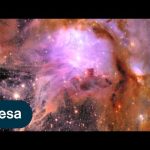
    #ESA #Euclid #Science

  • A tour of the International Space Station with Andreas Mogensen

    A tour of the International Space Station with Andreas Mogensen

    On the last day of his Huginn mission, ESA astronaut Andreas Mogensen takes us on a tour of the place he called home for 6 months: the International Space Station. From the beautiful views of Cupola to the kitchen in Node 1 filled with food and friends and all the way to the science of Columbus, the Space Station is the work and living place for astronauts as they help push science forward.

    Credits: ESA – European Space Agency

    ★ Subscribe: http://bit.ly/ESAsubscribe and click twice on the bell button to receive our notifications.

    Check out our full video catalog: http://bit.ly/SpaceInVideos
    Follow us on Twitter: http://bit.ly/ESAonTwitter
    On Facebook: http://bit.ly/ESAonFacebook
    On Instagram: http://bit.ly/ESAonInstagram
    On LinkedIn: https://bit.ly/ESAonLinkedIn
    On Pinterest: https://bit.ly/ESAonPinterest
    On Flickr: http://bit.ly/ESAonFlickr

    We are Europe’s gateway to space. Our mission is to shape the development of Europe’s space capability and ensure that investment in space continues to deliver benefits to the citizens of Europe and the world. Check out https://www.esa.int/ to get up to speed on everything space related.

    Copyright information about our videos is available here: https://www.esa.int/ESA_Multimedia/Terms_and_Conditions
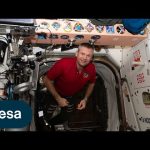
    #ESA #Huginn #AndreasMogensen

  • Mimicking a Solar Eclipse in space

    Mimicking a Solar Eclipse in space

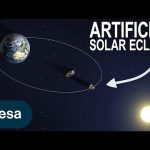
    During a solar eclipse the Earth is plunged into darkness and the Sun’s ghostly atmosphere becomes visible. Scientists travel the globe to experience total solar eclipses, which occur for just a few minutes at a time every 18 months or so. But what exactly causes solar eclipses, and how do scientists try to make their own, including with ESA’s new Proba-3 mission?

    Timestaps of the video:
    00:00 – 00:32 – Intro
    00:33 – 01:45 – How do solar eclipses happen?
    01:46 – 02:45 – How do we know anything about the solar corona given that eclipses occur so rarely?
    02:46 – 04:00 – How can we create a perfect artificial solar eclipse in space?

    Credits: ESA – European Space Agency
    Videos: ESA, NASA, Solar Orbiter/EUI (ESA/NASA), SOHO/LASCO (ESA/NASA), ESA-Magic Fennec, Getty Images

    ★ Subscribe: http://bit.ly/ESAsubscribe and click twice on the bell button to receive our notifications.

    Check out our full video catalog: http://bit.ly/SpaceInVideos
    Follow us on Twitter: http://bit.ly/ESAonTwitter
    On Facebook: http://bit.ly/ESAonFacebook
    On Instagram: http://bit.ly/ESAonInstagram
    On LinkedIn: https://bit.ly/ESAonLinkedIn
    On Pinterest: https://bit.ly/ESAonPinterest
    On Flickr: http://bit.ly/ESAonFlickr

    We are Europe’s gateway to space. Our mission is to shape the development of Europe’s space capability and ensure that investment in space continues to deliver benefits to the citizens of Europe and the world. Check out https://www.esa.int/ to get up to speed on everything space related.

    Copyright information about our videos is available here: https://www.esa.int/ESA_Multimedia/Terms_and_Conditions
    #ESA #SolarEclipse #Proba-3

  • How Euclid team overcame this problem 🔧 #shorts

    How Euclid team overcame this problem 🔧 #shorts

    Euclid, our dark Universe detective was struggling to see the faint light from distant galaxies thanks to a tiny villain: ice! Building up on its mirrors, it was blocking the crucial light Euclid needs to unlock some of the Universe’s biggest mysteries – dark matter and dark energy.

    But fear not! Across Europe, a team of brilliant scientists and engineers joined forces. Months of research led to a delicate de-icing procedure, and with a touch of targeted warmth, they were able to restore Euclid’s sight.

    This icy situation turned into a shining example of international collaboration and innovative thinking. And who knows what cosmic secrets Euclid will uncover now that its vision is restored.

    📹 ESA – European Space Agency

    #ESA #Euclid #SpaceTelescope

  • A bold new approach to Mars orbit 🔴 #shorts

    A bold new approach to Mars orbit 🔴 #shorts

    ESA is venturing towards putting a spacecraft into orbit around Mars using a technique that engineers have studied for over half a century but never dared to attempt.

    📹 ESA – European Space Agency

    #ESA #Science #Mars

  • Toward the next generation of air quality monitoring

    Toward the next generation of air quality monitoring

    Air pollution is the largest environmental health risk in Europe and significantly impacts the health of the European population, particularly in urban areas.

    Following on from the Sentinel-5P satellite – the first Copernicus mission dedicated to monitoring our atmosphere – the Sentinel-4 and Sentinel-5 missions will take current air quality measuring capabilities to the next level.

    Together, the Sentinel-4 and -5 missions will provide information on atmospheric variables in support of European policies. This will include the monitoring of air quality, stratospheric ozone and solar radiation, and climate monitoring.

    This video features interviews with Giorgio Bagnasco, Sentinel-4 Mission Project Manager, Ben Veilhelmann, Sentinel-4&5 Mission Scientist and Didier Martin, Sentinel-5 Mission Project Manager.

    Credits: ESA – European Space Agency

    ★ Subscribe: http://bit.ly/ESAsubscribe and click twice on the bell button to receive our notifications.

    Check out our full video catalog: http://bit.ly/SpaceInVideos
    Follow us on Twitter: http://bit.ly/ESAonTwitter
    On Facebook: http://bit.ly/ESAonFacebook
    On Instagram: http://bit.ly/ESAonInstagram
    On LinkedIn: https://bit.ly/ESAonLinkedIn
    On Pinterest: https://bit.ly/ESAonPinterest
    On Flickr: http://bit.ly/ESAonFlickr

    We are Europe’s gateway to space. Our mission is to shape the development of Europe’s space capability and ensure that investment in space continues to deliver benefits to the citizens of Europe and the world. Check out https://www.esa.int/ to get up to speed on everything space related.

    Copyright information about our videos is available here: https://www.esa.int/ESA_Multimedia/Terms_and_Conditions
    #ESA #Satellite #Sentinels

  • Asteroid mission is getting ready ☄️ #shorts

    Asteroid mission is getting ready ☄️ #shorts

    In its latest test of readiness for space, ESA’s Hera spacecraft for planetary defence is being operated for around three weeks in hard vacuum, while being subjected to the same temperature profiles it will experience during its journey to the Didymos binary asteroid system.

    The 1.6 × 1.6 × 1.7 m spacecraft was slid inside the 4.5-m diameter, 11.8-m long Phenix thermal vacuum chamber at ESA’s ESTEC Test Centre in the Netherlands.

    “You’re always a bit nervous when your baby gets moved about,” remarks Ian Carnelli, overseeing Hera for ESA. “Right now it’s being shut into a dark airless box for weeks on end, but we have confidence it will perform well.”

    Hera can be seen receded into the rectangular ‘thermal tent’ within Phenix. The six copper walls of this internal box can be heated up to 100°C or cooled via piped liquid nitrogen down to –190°C, all independently from each other.

    Then, after the main door of the stainless steel Phenix chamber was slid shut, the air within the chamber was pumped out during a lengthy 20 hours process down to approximately one billionth of outside atmospheric pressure. This will allow the Hera team from ESA, European Test Services operating the Test Centre and Hera manufacturer OHB to test the spacecraft’s thermal behaviour as the temperature changes around it.

    Space is a place where it is possible to be hot and cold at the same time if one part of your spacecraft is in sunlight and another is in shade. And because there is no air, there is no conduction or convection to lose heat from your spacecraft. Instead thermal experts employ insulation and radiators to keep the body of a spacecraft within carefully chosen temperature limits. In general spacecraft electronics – just like their human makers – work best at room temperature.

    “We already have detailed models of the spacecraft’s thermal behaviour, and this spacecraft-level thermal vacuum test lets us correlate these models with reality,” explains Hera’s Product Assurance and Safety manager, Heli Greus.

    “More than 400 thermal sensors have been placed in and around Hera to give us precise knowledge of what is going on, and the test is being supervised on a 24/7 basis in case anything anomalous occurs. The spacecraft is now being put through a series of ‘cold plateaus’ and ‘hot plateaus’ representative of its mission, which will allow us to test the thermal limits of each specific unit aboard.”

    Hera is Europe’s contribution to an international planetary defence experiment. Following the DART mission’s impact with the Dimorphos asteroid in 2022 – modifying its orbit and sending a plume of debris thousands of kilometres out into space – Hera will return to Dimorphos to perform a close-up survey of the crater left by DART. The mission will also measure Dimorphos’ mass and make-up, along with that of the larger Didymos asteroid that Dimorphos orbits around. Hera is due for launch in October 2024.

    The ESTEC Test Centre in the Netherlands is the largest facility of its kind in Europe, providing a complete suite of equipment for all aspects of satellite testing under a single roof.

    Credits: ESA – European Space Agency

    #ESA #Hera #Asteroid

  • Taking Earth’s temperature from space

    Taking Earth’s temperature from space

    Climate change exacerbates droughts by making them more frequent, longer, and more severe. This can have a wide range of impacts on the environment, agriculture, ecosystems and communities including water scarcity, crop failure and food shortages.

    The upcoming Copernicus Land Surface Temperature Monitoring, LSTM, mission will improve sustainable agricultural productivity in a world of increasing water scarcity and variability.

    The mission will carry a high spatial-temporal resolution thermal infrared sensor to provide observations of land-surface temperature.

    These data are key to understand and respond to climate variability, manage water resources for agricultural production, predict droughts and also to address land degradation.

    LSTM is one of six Copernicus Sentinel Expansion missions that ESA is developing on behalf of the EU. The missions will expand the current capabilities of the Copernicus Space Component – the world’s biggest supplier of Earth observation data.

    This video features interviews with Ana Bolea Alamanac, LSTM Mission Project Manager, Ilias Manolis, LSTM Mission Payload Manager and Itziar Barat, LSTM Mission System and Operations Manager.

    Credits: ESA – European Space Agency

    ★ Subscribe: http://bit.ly/ESAsubscribe and click twice on the bell button to receive our notifications.

    Check out our full video catalog: http://bit.ly/SpaceInVideos
    Follow us on Twitter: http://bit.ly/ESAonTwitter
    On Facebook: http://bit.ly/ESAonFacebook
    On Instagram: http://bit.ly/ESAonInstagram
    On LinkedIn: https://bit.ly/ESAonLinkedIn
    On Pinterest: https://bit.ly/ESAonPinterest
    On Flickr: http://bit.ly/ESAonFlickr

    We are Europe’s gateway to space. Our mission is to shape the development of Europe’s space capability and ensure that investment in space continues to deliver benefits to the citizens of Europe and the world. Check out https://www.esa.int/ to get up to speed on everything space related.

    Copyright information about our videos is available here: https://www.esa.int/ESA_Multimedia/Terms_and_Conditions
    #ESA #Satellite #LSTM

  • How to drink orange juice in space (Fun way)🧃 #shorts

    How to drink orange juice in space (Fun way)🧃 #shorts

    European Space Agency astronaut Andreas Mogensen shared this video on social media with the caption:

    “On the weekends, we have time off and and while I like to call my friends and family or sit in the Cupola and take pictures of Earth, I sometimes like to play around a bit. I recorded this video a few weeks ago and finally got around to sharing it with you.

    The way a liquid, in this case orange juice, moves around on the Space Station is fascinating, rippling when I blow on it and how sticks to me as I drink it.”

    Credits: ESA / NASA

    #ESA #AndreasMogensen #Space

  • The return of Andreas Mogensen | Huginn Mission

    The return of Andreas Mogensen | Huginn Mission

    After more than 6 months on the International Space Station, ESA astronaut Andreas Mogensen returned to Earth, marking the end of his Huginn mission. It was his second mission to the Space Station and his first long-duration, where he was the pilot of Crew-7, which consisted of Jasmin Moghbeli (NASA), Satoshi Furukawa (JAXA), and Konstantin Borisov (Roscosmos).

    Credits: ESA/NASA/SpaceX

    ★ Subscribe: http://bit.ly/ESAsubscribe and click twice on the bell button to receive our notifications.

    Check out our full video catalog: http://bit.ly/SpaceInVideos
    Follow us on Twitter: http://bit.ly/ESAonTwitter
    On Facebook: http://bit.ly/ESAonFacebook
    On Instagram: http://bit.ly/ESAonInstagram
    On LinkedIn: https://bit.ly/ESAonLinkedIn
    On Pinterest: https://bit.ly/ESAonPinterest
    On Flickr: http://bit.ly/ESAonFlickr

    We are Europe’s gateway to space. Our mission is to shape the development of Europe’s space capability and ensure that investment in space continues to deliver benefits to the citizens of Europe and the world. Check out https://www.esa.int/ to get up to speed on everything space related.

    Copyright information about our videos is available here: https://www.esa.int/ESA_Multimedia/Terms_and_Conditions

    #ESA #Huginn #AndreasMogensen

  • EarthCARE bids adieu to Europe

    EarthCARE bids adieu to Europe

    After years of development and a rigorous testing programme, ESA’s EarthCARE satellite has left Munich, Germany, and is now on its away to SpaceX’s launch site in Vandenberg, California. Once it arrives, it will be put into storage for a few weeks until it is time to ready the satellite for liftoff – which is scheduled to launch in May on a Falcon 9 rocket.

    The Earth Cloud Aerosol and Radiation Explorer, or EarthCARE for short, is the most complex Earth Explorer mission to date. The new satellite will look at the role that clouds and aerosols play in heating and cooling Earth’s atmosphere – contributing to our understanding of climate change.

    With its unique set of four instruments, EarthCARE will examine the role clouds and aerosols play in reflecting solar radiation back into space and also in trapping infrared radiation emitted from Earth’s surface.

    EarthCARE is a joint venture between ESA and JAXA, the Japan Aerospace Exploration Agency.

    This video features interviews with Simonetta Cheli, Director of Earth Observation Programmes at ESA, Thorsten Fehr, ESA’s EarthCARE Mission Scientist, Dirk Bernaerts, ESA’s EarthCARE Project Manager and Eiichi Tomita, JAXA’s EarthCARE/CPR Project Manager.

    Credits: ESA – European Space Agency

    ★ Subscribe: http://bit.ly/ESAsubscribe and click twice on the bell button to receive our notifications.

    Check out our full video catalog: http://bit.ly/SpaceInVideos
    Follow us on Twitter: http://bit.ly/ESAonTwitter
    On Facebook: http://bit.ly/ESAonFacebook
    On Instagram: http://bit.ly/ESAonInstagram
    On LinkedIn: https://bit.ly/ESAonLinkedIn
    On Pinterest: https://bit.ly/ESAonPinterest
    On Flickr: http://bit.ly/ESAonFlickr

    We are Europe’s gateway to space. Our mission is to shape the development of Europe’s space capability and ensure that investment in space continues to deliver benefits to the citizens of Europe and the world. Check out https://www.esa.int/ to get up to speed on everything space related.

    Copyright information about our videos is available here: https://www.esa.int/ESA_Multimedia/Terms_and_Conditions
    #ESA #EarthObservation #Satellite

  • Andreas Mogensen returns to Earth | Huginn Mission

    Andreas Mogensen returns to Earth | Huginn Mission

    Andreas Mogensen launched on his Huginn mission in August 2023 to the International Space Station, becoming the first non-US astronaut to pilot SpaceX’s Crew Dragon spacecraft. Andreas became commander of the International Space Station in September 2023, becoming the longest serving European commander in January 2024. His mission was spent on more than 30 European experiments and plenty of international ones as well, ranging from water purification to studies of human physiology and thunderclouds. After 6 months on the International Space Station, Andreas will come down to Earth together with his Crew-7 crewmates Jasmin Moghbeli (NASA), Satoshi Furukawa (JAXA), and Konstantin Borisov (Roscosmos).

    ★ Subscribe: http://bit.ly/ESAsubscribe and click twice on the bell button to receive our notifications.

    Check out our full video catalog: http://bit.ly/SpaceInVideos
    Follow us on Twitter: http://bit.ly/ESAonTwitter
    On Facebook: http://bit.ly/ESAonFacebook
    On Instagram: http://bit.ly/ESAonInstagram
    On LinkedIn: https://bit.ly/ESAonLinkedIn
    On Pinterest: https://bit.ly/ESAonPinterest
    On Flickr: http://bit.ly/ESAonFlickr

    We are Europe’s gateway to space. Our mission is to shape the development of Europe’s space capability and ensure that investment in space continues to deliver benefits to the citizens of Europe and the world. Check out https://www.esa.int/ to get up to speed on everything space related.

    Copyright information about our videos is available here: https://www.esa.int/ESA_Multimedia/Terms_and_Conditions
    #ESA #Huginn #AndreasMogensen

  • New radar mission for Europe

    New radar mission for Europe

    The upcoming Copernicus Radar Observation System for Europe in L-band (ROSE-L) will provide continuous day-and-night all-weather monitoring of Earth’s land, oceans and ice, and offer frequent images at a high spatial resolution.

    ROSE-L will carry an active phased array synthetic aperture radar instrument. The radar antenna will be the largest planar antenna ever built measuring an impressive 40 sq m – roughly the size of 10 ping-pong tables.

    ROSE-L will deliver essential information on forests and land cover, leading to improved monitoring of the terrestrial carbon cycle and carbon accounting.

    The mission will also greatly extend our ability to monitor minute surface displacements and helping detect geohazards. It will automatically map surface soil moisture conditions and monitor sea and land ice – greatly helping climate change research and mitigation.

    ROSE-L is one of six Copernicus Sentinel Expansion missions that ESA is developing on behalf of the EU. The missions will expand the current capabilities of the Copernicus Space Component – the world’s biggest supplier of Earth observation data.

    This video features interviews with Malcolm Davidson, ROSE-L Mission Scientist, Nico Gebert, ROSE-L Payload Manager and Gianluigi Di Cosimo, ROSE-L Project Manager.

    Credits: ESA – European Space Agency

    ★ Subscribe: http://bit.ly/ESAsubscribe and click twice on the bell button to receive our notifications.

    Check out our full video catalog: http://bit.ly/SpaceInVideos
    Follow us on Twitter: http://bit.ly/ESAonTwitter
    On Facebook: http://bit.ly/ESAonFacebook
    On Instagram: http://bit.ly/ESAonInstagram
    On LinkedIn: https://bit.ly/ESAonLinkedIn
    On Pinterest: https://bit.ly/ESAonPinterest
    On Flickr: http://bit.ly/ESAonFlickr

    We are Europe’s gateway to space. Our mission is to shape the development of Europe’s space capability and ensure that investment in space continues to deliver benefits to the citizens of Europe and the world. Check out https://www.esa.int/ to get up to speed on everything space related.

    Copyright information about our videos is available here: https://www.esa.int/ESA_Multimedia/Terms_and_Conditions
    #ESA #Satellite #ROSE-L

  • Ariane 6 arrives at the launcher assembly building 🚀 #shorts

    Ariane 6 arrives at the launcher assembly building 🚀 #shorts

    The two central stages for Ariane 6’s first flight are being assembled in the launcher assembly building (BAL) at Europe’s Spaceport. The core stage and the upper stage for Europe’s new rocket Ariane 6 are set to fly in the Summer of 2024. Once assembled, the stages will be transferred to the launch pad.

    On the launch pad, the two stages will be raised into their vertical launch position inside the mobile assembly building. Here the two boosters for Ariane 6’s first flight will be added and then the payloads will be placed on top and be covered by the fairing – Ariane 6’s nose cone that splits vertically in two.

    The stages arrived at Europe’s Spaceport on novel hybrid sail ship Canopée on 21 February after a two-week transatlantic crossing from mainland Europe.

    Ariane 6 is an all-new design, created to succeed Ariane 5 as Europe’s heavy-lift launch system. With Ariane 6’s upper stage restart capability, Europe’s launch capability will be tailored to the needs of multiple payload missions, for example to orbit satellite constellations. This autonomous capability to reach Earth orbit and deep space supports Europe’s navigation, Earth observation, scientific and security programmes. Ongoing development of Europe’s space transportation capabilities is made possible by the sustained dedication of thousands of talented people working in ESA’s 22 Member States.

    Credits: ESA/CNES/Arianespace/Arianegroup

    #ESA #Rocket #Ariane6

  • How will space transform the global food system?

    How will space transform the global food system?

    According to the Food and Agriculture Organization (FAO), global agricultural production will need to increase by 60% by 2050 to meet the food demands of the growing global population.

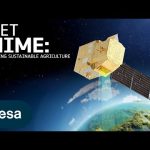
    A new satellite called Copernicus Hyperspectral Imaging Mission for the Environment, or CHIME, is being developed to support EU policies on the management of natural resources – ultimately helping to address the global issue of food security.

    CHIME will carry a unique visible to shortwave infrared spectrometer to provide routine hyperspectral observations to support new and enhanced services for sustainable agricultural and biodiversity management, as well as soil property characterisation.

    CHIME is one of six Copernicus Sentinel Expansion missions that ESA is developing on behalf of the EU. The missions will expand the current capabilities of the Copernicus Space Component – the world’s biggest supplier of Earth observation data.

    This video features interviews with Marco Celesti, CHIME Mission Scientist and Jens Nieke, CHIME Project Manager.

    Credits: ESA – European Space Agency

    ★ Subscribe: http://bit.ly/ESAsubscribe and click twice on the bell button to receive our notifications.

    Check out our full video catalog: http://bit.ly/SpaceInVideos
    Follow us on Twitter: http://bit.ly/ESAonTwitter
    On Facebook: http://bit.ly/ESAonFacebook
    On Instagram: http://bit.ly/ESAonInstagram
    On LinkedIn: https://bit.ly/ESAonLinkedIn
    On Pinterest: https://bit.ly/ESAonPinterest
    On Flickr: http://bit.ly/ESAonFlickr

    We are Europe’s gateway to space. Our mission is to shape the development of Europe’s space capability and ensure that investment in space continues to deliver benefits to the citizens of Europe and the world. Check out https://www.esa.int/ to get up to speed on everything space related.

    Copyright information about our videos is available here: https://www.esa.int/ESA_Multimedia/Terms_and_Conditions
    #ESA #Satellite #CHIME

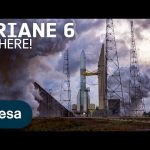
  • Ariane 6 arrives at Europe’s Spaceport

    Ariane 6 arrives at Europe’s Spaceport

    The largest components for the first flight model of Europe’s new rocket Ariane 6 arrived at the port of Pariacabo in Kourou, French Guiana on 21 February 2024 via the novel ship, Canopée (canopy in French).

    The Ariane 6 stages and components are all manufactured across Europe. On this trip, Canopée brought the central core for Ariane 6’s first flight. The main engine and the main stage were integrated in Les Mureaux, France, while the upper stage and insulation for the rocket’s exterior were built up in Bremen, Germany.

    The various Ariane 6 components are then offloaded and transported by road to the new Ariane 6 launch vehicle assembly building just a few kilometres away. Here, the launcher stages are unpacked and installed on the assembly line for integration, and finally, liftoff.

    The Ariane 6 boosters are already in Europe’s Spaceport after their production in Italy, they are the same P120C solid propulsion boosters as used for Europe’s Vega-C rocket.

    First the central core will be assembled horizontally after which it is transported to the launchpad. Here it will be lifted into the upright position after which Boosters and the upper stage will be added inside the mobile gantry.

    This summer Flight Model-1 will be ready to let its engine rumble and fly.

    Credits: ESA/CNES/Arianespace/Arianegroup

    ★ Subscribe: http://bit.ly/ESAsubscribe and click twice on the bell button to receive our notifications.

    Check out our full video catalog: http://bit.ly/SpaceInVideos
    Follow us on Twitter: http://bit.ly/ESAonTwitter
    On Facebook: http://bit.ly/ESAonFacebook
    On Instagram: http://bit.ly/ESAonInstagram
    On LinkedIn: https://bit.ly/ESAonLinkedIn
    On Pinterest: https://bit.ly/ESAonPinterest
    On Flickr: http://bit.ly/ESAonFlickr

    We are Europe’s gateway to space. Our mission is to shape the development of Europe’s space capability and ensure that investment in space continues to deliver benefits to the citizens of Europe and the world. Check out https://www.esa.int/ to get up to speed on everything space related.

    Copyright information about our videos is available here: https://www.esa.int/ESA_Multimedia/Terms_and_Conditions
    #ESA #Rocket #Ariane6

  • ESA satellite returns to Earth

    ESA satellite returns to Earth

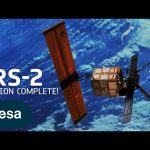
    Mission complete. ESA’s second European Remote Sensing (ERS-2) satellite has reentered Earth’s atmosphere over the North Pacific Ocean. The satellite returned at 18:17 CET (17:17 UTC) between Alaska and Hawaii.

    ERS-2 was launched almost 30 years ago, on 21 April 1995. Together with ERS-1, it provided invaluable long-term data on Earth’s land surfaces, ocean temperatures, ozone layer and polar ice extent that revolutionised our understanding of the Earth system.

    ERS-2’s reentry was ‘natural’. ESA used the last of its fuel, emptied its batteries and lowered the satellite from its altitude of 785 km to 573 km. This reduced the risk of collision with other satellites and space debris. As a result, it was not possible to control ERS-2 at any point during its reentry and the only force driving its descent was unpredictable atmospheric drag.
    As well as leaving a remarkable legacy of data that still continue to advance science, this outstanding mission set the stage for many of today’s satellites and ESA’s position at the forefront of Earth observation.

    The ERS-2 reentry is part of ESA’s wider efforts to ensure the long-term sustainability of space activities. These include ESA’s Clean Space initiative which promotes the development of new technologies for more sustainable space missions in collaboration with the wider European space community, as well as the Zero Debris Approach, which will even further reduce the debris left in both Earth and lunar orbits by future missions.

    Credits: ESA – European Space Agency

    ★ Subscribe: http://bit.ly/ESAsubscribe and click twice on the bell button to receive our notifications.

    Check out our full video catalog: http://bit.ly/SpaceInVideos
    Follow us on Twitter: http://bit.ly/ESAonTwitter
    On Facebook: http://bit.ly/ESAonFacebook
    On Instagram: http://bit.ly/ESAonInstagram
    On LinkedIn: https://bit.ly/ESAonLinkedIn
    On Pinterest: https://bit.ly/ESAonPinterest
    On Flickr: http://bit.ly/ESAonFlickr

    We are Europe’s gateway to space. Our mission is to shape the development of Europe’s space capability and ensure that investment in space continues to deliver benefits to the citizens of Europe and the world. Check out https://www.esa.int/ to get up to speed on everything space related.

    Copyright information about our videos is available here: https://www.esa.int/ESA_Multimedia/Terms_and_Conditions

    #ESA #ERS-2 #Satellite

  • Have you heard that a messy space equals a messy mind? 🧠🧹 #shorts

    Have you heard that a messy space equals a messy mind? 🧠🧹 #shorts

    The design of buildings and spaces can greatly affect how people feel and perform. Windows, wall colours and even plants in a room can improve your productivity and mood. In extreme environments, the layout of a habitat becomes even more important.

    📹 ESA – European Space Agency

    #ESA #ISS #Astronaut

  • New mission to track changes in the cryosphere

    New mission to track changes in the cryosphere

    Tracking ice lost from the world’s glaciers, ice sheets and frozen land shows that Earth is losing ice at an accelerating rate. Monitoring the cryosphere is crucial for assessing, predicting and adapting to climate change.

    The Copernicus Polar Ice and Snow Topography Altimeter (CRISTAL) mission will provide a full picture of the changes taking place in some of the most inhospitable regions of the world. It will carry – for the first time – a dual-frequency radar altimeter, and microwave radiometer, that will measure and monitor sea-ice thickness, overlying snow depth and ice-sheet elevations.

    These data will support maritime operations in the polar oceans and contribute to a better understanding of climate processes. CRISTAL will also support applications related to coastal and inland waters, as well as providing observations of ocean topography.

    CRISTAL is one of six Copernicus Sentinel Expansion missions that ESA is developing on behalf of the EU. The missions will expand the current capabilities of the Copernicus Space Component – the world’s biggest supplier of Earth observation data.

    This video features interviews with Kristof Gantois, CRISTAL Project Manager and Paolo Cipollini, CRISTAL Mission Scientist.

    Credits: ESA – European Space Agency

    ★ Subscribe: http://bit.ly/ESAsubscribe and click twice on the bell button to receive our notifications.

    Check out our full video catalog: http://bit.ly/SpaceInVideos
    Follow us on Twitter: http://bit.ly/ESAonTwitter
    On Facebook: http://bit.ly/ESAonFacebook
    On Instagram: http://bit.ly/ESAonInstagram
    On LinkedIn: https://bit.ly/ESAonLinkedIn
    On Pinterest: https://bit.ly/ESAonPinterest
    On Flickr: http://bit.ly/ESAonFlickr

    We are Europe’s gateway to space. Our mission is to shape the development of Europe’s space capability and ensure that investment in space continues to deliver benefits to the citizens of Europe and the world. Check out https://www.esa.int/ to get up to speed on everything space related.

    Copyright information about our videos is available here: https://www.esa.int/ESA_Multimedia/Terms_and_Conditions
    #ESA #Satellite #Cryosphere

  • Axiom 3 departing the International Space Station 👋 #shorts

    Axiom 3 departing the International Space Station 👋 #shorts

    European Space Agency astronaut Andreas Mogensen shared this video on social media with the caption:

    “After almost six months on the International Space Station, it is time to go home. We have gotten the date for our return: No earlier than 8 March 2024 will Jasmin, Satoshi, Konstantin, and I enter our Crew Dragon “Endurance” and undock from the Space Station and splash down near the coast of Florida. The return is dependent on Crew 8’s launch on the 1 March and weather at the landing site off the coast of Florida.

    It has been a fantastic mission, where I became the commander of the crew on Expedition 70, a fantastic international crew where we have explored new science and worked together to make it a great expedition. Unfortunately, the spacewalk I was planned to go out on will not be performed this time, but maybe in the future by another crew.

    My Huginn mission has been a dream come true, where I got to live and work on International Space Station once more, this time for a little bit longer than in 2015 😉 I will do my best to make the most of these last few weeks, and at the same time, I look forward to coming home to my family.”

    Credits: ESA / NASA

    #ESA #Crew7 #ReturnToEarth

  • What does a warming Arctic mean for the future?

    What does a warming Arctic mean for the future?

    The Arctic is experiencing disproportionately higher temperature increases compared to the rest of the planet, triggering a series of cascading effects. This rapid warming has profound implications for global climate patterns, human populations and wildlife.

    The Copernicus Imaging Microwave Radiometer mission (CIMR) will provide measurements to decision makers with evidence of change and impact in the polar regions – with a focus on the Arctic.

    The mission has the largest radiometer developed by ESA and will provide high-resolution measurements related to sea ice, the ocean, snow and ice-sheet surfaces. This will be crucial in understanding the evolution of the climate in the polar region.

    CIMR is one of six Copernicus Sentinel Expansion missions that ESA is developing on behalf of the EU. The missions will expand the current capabilities of the Copernicus Space Component – the world’s biggest supplier of Earth observation data.

    This video features interviews with Craig Donlon, CIMR Mission Scientist, Rolv Midthassel, CIMR Payload Manager, Claudio Galeazzi, CIMR Project Manager, Mariel Triggianese, CIMR Satellite Engineering and AIV Manager, and Marcello Sallusti, CIMR System Performance and Operations Manager.

    In the meantime Craig has changed his role but will retain his position as Mission Scientist.

    Credits: ESA – European Space Agency

    ★ Subscribe: http://bit.ly/ESAsubscribe and click twice on the bell button to receive our notifications.

    Check out our full video catalog: http://bit.ly/SpaceInVideos
    Follow us on Twitter: http://bit.ly/ESAonTwitter
    On Facebook: http://bit.ly/ESAonFacebook
    On Instagram: http://bit.ly/ESAonInstagram
    On LinkedIn: https://bit.ly/ESAonLinkedIn
    On Pinterest: https://bit.ly/ESAonPinterest
    On Flickr: http://bit.ly/ESAonFlickr

    We are Europe’s gateway to space. Our mission is to shape the development of Europe’s space capability and ensure that investment in space continues to deliver benefits to the citizens of Europe and the world. Check out https://www.esa.int/ to get up to speed on everything space related.

    Copyright information about our videos is available here: https://www.esa.int/ESA_Multimedia/Terms_and_Conditions
    #ESA #Satellite #EarthObservation

  • Splashdown of Axiom 3 Mission with Marcus Wandt

    Splashdown of Axiom 3 Mission with Marcus Wandt

    After almost 20 days on the International Space Station, ESA project astronaut Marcus Wandt is coming home.

    The trip back to Earth will take the Axiom Mission 3 crew around 47 hours. Marcus will serve as a mission specialist during the journey, sharing the ride with Walter Villadei from Italy, Alper Gezeravcı from Türkiye and Michael López-Alegría, a dual US-Spanish citizen.

    After a series of burns to lower its orbit, the spacecraft will enter Earth’s atmosphere and deploy its parachutes for a water-landing. Marcus and crew are expected to splash down off the coast of Florida, USA, on 9 February 2024 at 13:30 GMT/14:30 CET. This will mark the end of Marcus’s mission, called Muninn.

    Muninn website: https://www.esa.int/Science_Exploration/Human_and_Robotic_Exploration/muninn
    Marcus Wandt’s Instagram: https://www.instagram.com/esaastro_marcus/
    Marcus Wandt’s X: https://twitter.com/astro_marcus

    Timestaps of the video:
    00:00:00 – 00:14:30 – Pre-Splashdown programme
    00:14:31 – 00:20:50 – Trunk Jettison / Claw Separation
    00:20:51 – 00:36:00 – Deorbit Burn
    00:36:01 – 01:02:40 – Nosecone Closed
    01:02:41 – 01:03:30 – Drogue Parachutes Deploy
    01:03:31 – 01:06:30 – Main Parachutes Deploy
    01:06:31 – 01:53:10 – Splashdown
    01:53:11 – 02:00:00 – Hatch Opening
    02:00:01 – 02:09:16 – Axiom 3 Mission Crew Egress

    📸 SpaceX

    ★ Subscribe: http://bit.ly/ESAsubscribe and click twice on the bell button to receive our notifications.

    Check out our full video catalog: http://bit.ly/SpaceInVideos
    Follow us on Twitter: http://bit.ly/ESAonTwitter
    On Facebook: http://bit.ly/ESAonFacebook
    On Instagram: http://bit.ly/ESAonInstagram
    On LinkedIn: https://bit.ly/ESAonLinkedIn
    On Pinterest: https://bit.ly/ESAonPinterest
    On Flickr: http://bit.ly/ESAonFlickr

    We are Europe’s gateway to space. Our mission is to shape the development of Europe’s space capability and ensure that investment in space continues to deliver benefits to the citizens of Europe and the world. Check out https://www.esa.int/ to get up to speed on everything space related.

    Copyright information about our videos is available here: https://www.esa.int/ESA_Multimedia/Terms_and_Conditions
    #ESA #Axiom3 #MarcusWandt

  • Undocking of Axiom 3 Mission with Marcus Wandt

    Undocking of Axiom 3 Mission with Marcus Wandt

    After almost 20 days on the International Space Station, ESA project astronaut Marcus Wandt is coming home.

    The trip back to Earth will take the Axiom Mission 3 crew around 47 hours. Marcus will serve as a mission specialist during the journey, sharing the ride with Walter Villadei from Italy, Alper Gezeravcı from Türkiye and Michael López-Alegría, a dual US-Spanish citizen.

    Muninn website: https://www.esa.int/Science_Exploration/Human_and_Robotic_Exploration/muninn
    Marcus Wandt’s Instagram: https://www.instagram.com/esaastro_marcus/
    Marcus Wandt’s X: https://twitter.com/astro_marcus

    Timestaps of the video:
    00:00 – 17:20 – Pre-Undocking programme
    17:20 – 22:20 – Undock command
    22:21 – 28:25 – Physical separation / Departure Burn 0
    28:26 – 43:00 – Departure Burn 1 / Exit Keep Out Sphere
    43:01 – 48:35 – Exit Approach Ellipsoid

    ★ Subscribe: http://bit.ly/ESAsubscribe and click twice on the bell button to receive our notifications.

    Check out our full video catalog: http://bit.ly/SpaceInVideos
    Follow us on Twitter: http://bit.ly/ESAonTwitter
    On Facebook: http://bit.ly/ESAonFacebook
    On Instagram: http://bit.ly/ESAonInstagram
    On LinkedIn: https://bit.ly/ESAonLinkedIn
    On Pinterest: https://bit.ly/ESAonPinterest
    On Flickr: http://bit.ly/ESAonFlickr

    We are Europe’s gateway to space. Our mission is to shape the development of Europe’s space capability and ensure that investment in space continues to deliver benefits to the citizens of Europe and the world. Check out https://www.esa.int/ to get up to speed on everything space related.

    Copyright information about our videos is available here: https://www.esa.int/ESA_Multimedia/Terms_and_Conditions
    #ESA #Axiom3 #MarcusWandt

  • A Red Sea on the Red Planet? 🌊 #shorts

    A Red Sea on the Red Planet? 🌊 #shorts

    Our Mars Express has revisited one of Mars’s most intriguing features the Medusae Fossae, revealing what seems to be layers of water ice below the dusty surface.

    If melted, this potential water would be enough to fill Earth’s Red Sea, or cover Mars in a layer of water up to 2.7 m deep!

    📸 Planetary Science Institute/Smithsonian Institution
    📸 European Space Agency / DLR / FU Berlin
    📸 CReSIS/KU/Smithsonian Institution

    📹 ESA – European Space Agency

    #ESA #Mars #Water

  • Earth views from Cupola by Marcus Wandt 🌍 #shorts

    Earth views from Cupola by Marcus Wandt 🌍 #shorts

    Join ESA project astronaut Marcus Wandt inside the seven-windowed cupola, the International Space Station’s “window to the world”.

    The ESA – European Space Agency-built Cupola is the favourite place of many astronauts on the International Space Station. It serves not only as a unique photo spot, but also for observing robotic activities of the Canadian Space Agency’s robotic arm Canadarm2, arriving spacecraft and spacewalks.

    Marcus was launched to the International Space Station on the Dragon spacecraft as part of Axiom Mission 3 on 18 January 2024. His two-week mission on board is known as Muninn.

    Credits: ESA–M. Wandt

    #ESA #MarcusWandt #EarthViews

  • Advanced Research in Telecommunications Systems (ARTES) 4.0

    Advanced Research in Telecommunications Systems (ARTES) 4.0

    Satellite communication underpins everyday life, enabling fundamental improvements not just in communication, but also in transport, healthcare, safety and security, environmental services and many other industries.

    The Advanced Research in Telecommunications Systems (ARTES) 4.0 programme enables European and Canadian industry to explore, through research and development, innovative concepts that stimulates the wider economy, creating new business and jobs across almost every industry. ARTES 4.0 supports the production of market-leading and cutting-edge products and services within a fiercely competitive global satellite communications market.

    Learn more: https://connectivity.esa.int/

    Credits: ESA – European Space Agency

    ★ Subscribe: http://bit.ly/ESAsubscribe and click twice on the bell button to receive our notifications.

    Check out our full video catalog: http://bit.ly/SpaceInVideos
    Follow us on Twitter: http://bit.ly/ESAonTwitter
    On Facebook: http://bit.ly/ESAonFacebook
    On Instagram: http://bit.ly/ESAonInstagram
    On LinkedIn: https://bit.ly/ESAonLinkedIn
    On Pinterest: https://bit.ly/ESAonPinterest
    On Flickr: http://bit.ly/ESAonFlickr

    We are Europe’s gateway to space. Our mission is to shape the development of Europe’s space capability and ensure that investment in space continues to deliver benefits to the citizens of Europe and the world. Check out https://www.esa.int/ to get up to speed on everything space related.

    Copyright information about our videos is available here: https://www.esa.int/ESA_Multimedia/Terms_and_Conditions
    #ESA #Satellite #Telecommunications

  • Docking of Axiom 3 Mission with Marcus Wandt

    Docking of Axiom 3 Mission with Marcus Wandt

    Watch as Marcus Wandt and his crewmates arrived to the Space Station around 36 hours after liftoff.

    Marcus is the first of a new generation of European astronauts to fly on a commercial human spaceflight opportunity with Axiom Space. His mission is supported by ESA and the Swedish National Space Agency (SNSA). Marcus’s mission is called Muninn.

    During his two-week mission, Marcus will devote much of his time to scientific activities and technology demonstrations that could shape the way we live and work on Earth. In total, he will run around 20 experiments.

    Marcus Wandt was selected in November 2022 as a member of the ESA astronaut reserve after a year-long selection process. The 2022 ESA recruitment campaign received over 22 5000 applications from across its Member States.

    Timestaps of the video:
    00:00:00 – 01:55:44 – Pre-Docking programme
    01:55:45 – 03:14:29 – Complete docking to the Space Station
    03:14:30 – 03:16:00 – Hatching opening
    03:16:01 – 03:37:24 – Axiom 3 Mission crew entering the Space Station
    03:37:25 – 03:49:00 – Welcoming ceremony

    Follow Marcus’s journey on the Muninn website, check our launch kit and connect with him on his Instagram and X accounts.

    Muninn website: https://www.esa.int/Science_Exploration/Human_and_Robotic_Exploration/muninn
    Marcus Wandt’s Instagram: https://www.instagram.com/esaastro_marcus/
    Marcus Wandt’s X: https://twitter.com/astro_marcus

    ★ Subscribe: http://bit.ly/ESAsubscribe and click twice on the bell button to receive our notifications.

    Check out our full video catalog: http://bit.ly/SpaceInVideos
    Follow us on Twitter: http://bit.ly/ESAonTwitter
    On Facebook: http://bit.ly/ESAonFacebook
    On Instagram: http://bit.ly/ESAonInstagram
    On LinkedIn: https://bit.ly/ESAonLinkedIn
    On Pinterest: https://bit.ly/ESAonPinterest
    On Flickr: http://bit.ly/ESAonFlickr

    We are Europe’s gateway to space. Our mission is to shape the development of Europe’s space capability and ensure that investment in space continues to deliver benefits to the citizens of Europe and the world. Check out https://www.esa.int/ to get up to speed on everything space related.

    Copyright information about our videos is available here: https://www.esa.int/ESA_Multimedia/Terms_and_Conditions
    #ESA #ISS #MarcusWandt

  • Marcus and Muninn are flying

    Marcus and Muninn are flying

    ESA project astronaut Marcus Wandt took off on 18 January 2024 as part of the Axiom-3 crew for a 14-day mission to the International Space Station. After 36 hours catching up to the Space Station, the Dragon docked to the Space Station, the seal between the two tested and finally Marcus started his Muninn mission as he entered the International Space Station. ESA astronaut Andreas Mogensen along with the rest of the crew of Expedition 70 was waiting to welcome them to space!

    Follow Marcus’s journey on the Muninn website, check our launch kit and connect with him on his Instagram and X accounts.

    Muninn website: https://www.esa.int/Science_Exploration/Human_and_Robotic_Exploration/muninn
    Marcus Wandt’s Instagram: https://www.instagram.com/esaastro_marcus/
    Marcus Wandt’s X: https://twitter.com/astro_marcus

    ★ Subscribe: http://bit.ly/ESAsubscribe and click twice on the bell button to receive our notifications.

    Check out our full video catalog: http://bit.ly/SpaceInVideos
    Follow us on Twitter: http://bit.ly/ESAonTwitter
    On Facebook: http://bit.ly/ESAonFacebook
    On Instagram: http://bit.ly/ESAonInstagram
    On LinkedIn: https://bit.ly/ESAonLinkedIn
    On Pinterest: https://bit.ly/ESAonPinterest
    On Flickr: http://bit.ly/ESAonFlickr

    We are Europe’s gateway to space. Our mission is to shape the development of Europe’s space capability and ensure that investment in space continues to deliver benefits to the citizens of Europe and the world. Check out https://www.esa.int/ to get up to speed on everything space related.

    Copyright information about our videos is available here: https://www.esa.int/ESA_Multimedia/Terms_and_Conditions
    #ESA #ISS #MarcusWandt

  • Axiom 3 Mission launch | Muninn spreads its wings

    Axiom 3 Mission launch | Muninn spreads its wings

    ESA project astronaut Marcus Wandt launched together with the rest of the Axiom-3 crew at 23:11 CET on 17 January 2024, from launch pad 39A, NASA’s Kennedy Space Center, Florida, USA.

    Marcus will start his Muninn mission when he enters the International Space Station on Saturday 20 January, where he will spend up to 14 days conducting science and testing technology that can one day help people on Earth.

    Follow Marcus’s journey on the Muninn website, check our launch kit and connect with him on his Instagram and X accounts.

    Muninn website: https://www.esa.int/Science_Exploration/Human_and_Robotic_Exploration/muninn
    Marcus Wandt’s Instagram: https://www.instagram.com/esaastro_marcus/
    Marcus Wandt’s X: https://twitter.com/astro_marcus

    Credits: Axiom/SpaceX/NASA/ESA
    📸 SpaceX

    ★ Subscribe: http://bit.ly/ESAsubscribe and click twice on the bell button to receive our notifications.

    Check out our full video catalog: http://bit.ly/SpaceInVideos
    Follow us on Twitter: http://bit.ly/ESAonTwitter
    On Facebook: http://bit.ly/ESAonFacebook
    On Instagram: http://bit.ly/ESAonInstagram
    On LinkedIn: https://bit.ly/ESAonLinkedIn
    On Pinterest: https://bit.ly/ESAonPinterest
    On Flickr: http://bit.ly/ESAonFlickr

    We are Europe’s gateway to space. Our mission is to shape the development of Europe’s space capability and ensure that investment in space continues to deliver benefits to the citizens of Europe and the world. Check out https://www.esa.int/ to get up to speed on everything space related.

    Copyright information about our videos is available here: https://www.esa.int/ESA_Multimedia/Terms_and_Conditions
    #ESA #Launch #ISS

  • Liftoff of Axiom Mission 3 with Marcus Wandt

    Liftoff of Axiom Mission 3 with Marcus Wandt

    The launch of ESA project astronaut Marcus Wandt to the International Space Station on Axiom Mission 3 (Ax-3). Marcus’s mission is called Muninn.

    A SpaceX Falcon 9 rocket will lift off from launch pad 39A at NASA’s Kennedy Space Center in Florida, USA, on 18 January 2024. Marcus will fly as a mission specialist on the Dragon spacecraft. The other Axiom 3 crew members are Walter Villadei from Italy and Alper Gezeravcı from Türkiye. They will fly under the command of Michael López-Alegría, representing both USA and Spain as a dual-citizen.

    Marcus is the first of a new generation of European astronauts to fly on a commercial human spaceflight opportunity with Axiom Space. His mission is supported by ESA and the Swedish National Space Agency (SNSA).

    During his two-week mission, Marcus will devote much of his time to scientific activities and technology demonstrations that could shape the way we live and work on Earth. In total, he will run around 20 experiments.

    Marcus Wandt was selected in November 2022 as a member of the ESA astronaut reserve after a year-long selection process. The 2022 ESA recruitment campaign received over 22 5000 applications from across its Member States.

    Timestaps of the video:
    00:00:00 – 02:10:44 – Pre-Launch programme
    02:10:45 – 02:35:38 – Liftoff

    Follow Marcus’s journey on the Muninn website, check our launch kit and connect with him on his Instagram and X accounts.

    Muninn website: https://www.esa.int/Science_Exploration/Human_and_Robotic_Exploration/muninn
    Marcus Wandt’s Instagram: https://www.instagram.com/esaastro_marcus/
    Marcus Wandt’s X: https://twitter.com/astro_marcus

    ★ Subscribe: http://bit.ly/ESAsubscribe and click twice on the bell button to receive our notifications.

    Check out our full video catalog: http://bit.ly/SpaceInVideos
    Follow us on Twitter: http://bit.ly/ESAonTwitter
    On Facebook: http://bit.ly/ESAonFacebook
    On Instagram: http://bit.ly/ESAonInstagram
    On LinkedIn: https://bit.ly/ESAonLinkedIn
    On Pinterest: https://bit.ly/ESAonPinterest
    On Flickr: http://bit.ly/ESAonFlickr

    We are Europe’s gateway to space. Our mission is to shape the development of Europe’s space capability and ensure that investment in space continues to deliver benefits to the citizens of Europe and the world. Check out https://www.esa.int/ to get up to speed on everything space related.

    Copyright information about our videos is available here: https://www.esa.int/ESA_Multimedia/Terms_and_Conditions
    #ESA #Launch #MarcusWandt

  • A warm welcome from Huginn to Muninn

    A warm welcome from Huginn to Muninn

    From the International Space Station to Earth, ESA astronaut Andreas Mogensen talks about what kind of person his fellow Scandinavian and ESA project astronaut Marcus Wandt is. The Axiom-3 mission with Marcus onboard is planned to launch in mid-January 2024 to the International Space Station for a 14-day mission, where Marcus will join Andreas, marking the first time two Scandinavians are in space together.

    Credits: ESA – European Space Agency

    ★ Subscribe: http://bit.ly/ESAsubscribe and click twice on the bell button to receive our notifications.

    Check out our full video catalog: http://bit.ly/SpaceInVideos
    Follow us on Twitter: http://bit.ly/ESAonTwitter
    On Facebook: http://bit.ly/ESAonFacebook
    On Instagram: http://bit.ly/ESAonInstagram
    On LinkedIn: https://bit.ly/ESAonLinkedIn
    On Pinterest: https://bit.ly/ESAonPinterest
    On Flickr: http://bit.ly/ESAonFlickr

    We are Europe’s gateway to space. Our mission is to shape the development of Europe’s space capability and ensure that investment in space continues to deliver benefits to the citizens of Europe and the world. Check out https://www.esa.int/ to get up to speed on everything space related.

    Copyright information about our videos is available here: https://www.esa.int/ESA_Multimedia/Terms_and_Conditions
    #ESA #ISS #Astronauts

  • POV: Huygens probe landing on Titan

    POV: Huygens probe landing on Titan

    19 years ago, on 25 December 2004, ESA’s Huygens probe was released from the Cassini spacecraft. Huygens continued on to Titan, Saturn’s largest and most interesting moon, descending via parachute and touching-down at 11:30 UTC, 14 January 2005. The descent phase lasted around 2 hours, 27 minutes, with a further 1 hour and 10 minutes of operation on the surface.

    This video has been accelerated to 200% speed, showing the descent from an altitude of 62 km at 9:41 UTC to the touchdown.

    Credits: NASA/ESA/University of Arizona

    #ESA #Titan #Huygens

  • 2024: a year of launches

    2024: a year of launches

    As 2024 kicks into gear, we invite you to look ahead with ESA and see what awaits us in the coming 12 months.

    After Ariane 5’s retirement in 2023, Europe’s new and versatile heavy-duty launcher Ariane 6 will continue the Ariane legacy of excellence and reliability. After years of development and construction, Ariane 6 will be ready for its first flight from Europe’s Spaceport in Kourou.

    In 2024, we’ll see a return-to-flight for Vega-C. Vega-C will continue to provide Europe with its own affordable lightweight launcher. Together both projects guarantee Europe’s independent access to space.

    We also continue to collaborate internationally with NASA on the Artemis lunar programme. This Spring, another European Service Module, ESM-3, for the third Artemis mission will be shipped to the United States for mating with its Orion capsule.

    In 2024, Proba-3 will be launched, the first precision formation-flying mission. The Coronagraph and Occulter spacecraft will fly together forming a 144 m coronagraph studying the Sun’s corona closer to the solar rim than ever before.

    At the beginning of the year, the first scientific data gathered by our latest space telescope, Euclid, will be revealed. Euclid was designed to explore the composition and evolution of dark matter and dark energy.

    Another exciting mission that will launch later in 2024 is the Hera mission. This mission will fly to the binary asteroid system of Dimorphos and Didymos to observe the aftermath of the impact made by NASA’s Dart mission.

    In Earth observation, there are several satellites ready to be launched: the ESA/JAXA mission EarthCARE mission, the Arctic Weather Satellite mission and the European Union’s Copernicus Sentinel-1C and Sentinel-2C satellites.

    2024 will bring new developments as well for Galileo: two more first-generation satellites are to be launched in April, followed by two more later in the year. These will expand the constellation and help guarantee Galileo’s optimal performance. Meanwhile, the first hardware deliveries will take place for the second-generation Galileo satellites.

    The five career astronauts from the 2022 astronaut class will finish their basic training this year and then be ready for mission assignments.

    For Swedish project astronaut Marcus Wandt, there is no such wait. In January, he will be launched to the Space Station as a mission specialist on the Axiom-3 commercial mission – just time to catch up in space with his Danish colleague, ESA astronaut Andreas Mogensen, who is scheduled to return to Earth after a six-month stay on the Space Station in February.

    Credits: ESA – European Space Agency

    ★ Subscribe: http://bit.ly/ESAsubscribe and click twice on the bell button to receive our notifications.

    Check out our full video catalog: http://bit.ly/SpaceInVideos
    Follow us on Twitter: http://bit.ly/ESAonTwitter
    On Facebook: http://bit.ly/ESAonFacebook
    On Instagram: http://bit.ly/ESAonInstagram
    On LinkedIn: https://bit.ly/ESAonLinkedIn
    On Pinterest: https://bit.ly/ESAonPinterest
    On Flickr: http://bit.ly/ESAonFlickr

    We are Europe’s gateway to space. Our mission is to shape the development of Europe’s space capability and ensure that investment in space continues to deliver benefits to the citizens of Europe and the world. Check out https://www.esa.int/ to get up to speed on everything space related.

    Copyright information about our videos is available here: https://www.esa.int/ESA_Multimedia/Terms_and_Conditions
    #ESA #EuropeanSpaceAgency #2024

  • Europe’s future of space travel

    Europe’s future of space travel

    For 40 years, ESA has been shaping the future in space, while delivering crucial access to space for Europe. That work continues, as brand-new rockets are set to take flight: some reusable, some carbon-neutral, with hybrid propulsion, two and three stages, small, large, crewed and uncrewed, to Earth orbit and deep space, the journey continues.

    All of these missions are currently in development in Europe and will ensure our continued ability to explore beyond our own home, while looking back to learn more about it.

    This, is the future of space exploration.

    ★ Subscribe: http://bit.ly/ESAsubscribe and click twice on the bell button to receive our notifications.

    Check out our full video catalog: http://bit.ly/SpaceInVideos
    Follow us on Twitter: http://bit.ly/ESAonTwitter
    On Facebook: http://bit.ly/ESAonFacebook
    On Instagram: http://bit.ly/ESAonInstagram
    On LinkedIn: https://bit.ly/ESAonLinkedIn
    On Pinterest: https://bit.ly/ESAonPinterest
    On Flickr: http://bit.ly/ESAonFlickr

    We are Europe’s gateway to space. Our mission is to shape the development of Europe’s space capability and ensure that investment in space continues to deliver benefits to the citizens of Europe and the world. Check out https://www.esa.int/ to get up to speed on everything space related.

    Copyright information about our videos is available here: https://www.esa.int/ESA_Multimedia/Terms_and_Conditions
    #ESA #Rocket #SpaceTravel