European Space Agency astronaut Samantha Cristoforetti shared this video on social media with the caption: How do you cross a module in space? 🙃
📹 ESA – S. Cristoforetti
#ESA #Floating #MissionMinerva
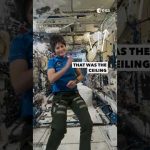
European Space Agency astronaut Samantha Cristoforetti shared this video on social media with the caption: How do you cross a module in space? 🙃
📹 ESA – S. Cristoforetti
#ESA #Floating #MissionMinerva
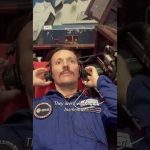
Human centrifuges simulate the gravitational forces, known as g-forces, experienced by astronauts during launch and return to Earth.
The g-forces in this centrifuge were directed from the chest to the back, reaching acceleration levels up to 6G (equivalent to 4.5 times Earth’s gravity).
The astronaut candidates reclined on their backs, reflecting the position astronauts assume in their launch vehicles.
Equipped with biomonitoring devices, they communicated with medical staff during the spin, describing the effects felt on their bodies.
📹 ESA – European Space Agency
🖥️ ESA
#ESA #Astronauts #Centrifuge

Did you know that ESA is researching human hibernation for long distance spaceflight to Mars or beyond?
Hibernating astronauts could be the best way to save mission costs, reduce the size of spacecraft by a third and keep crew healthy on their way to Mars. An ESA-led investigation suggests that human hibernation goes beyond the realm of science-fiction and may become a game-changing technique for space travel.
When packing for a return flight to the Red Planet, space engineers account for around two years’ worth of food and water for the crew.
Torpor during hibernation is an induced state that reduces the metabolic rate of an organism. This ‘suspended animation’ is a common mechanism in animals who wish to preserve energy.
Reducing the metabolic rate of a crew en route to Mars down to 25% of the normal state would dramatically cut down the amount of supplies and habitat size, making long-duration exploration more feasible.
Mimicking therapeutic torpor, the idea of putting human into a state of hibernation, has been around in hospitals since the 1980s – doctors can induce hypothermia to reduce metabolism during long and complex surgeries. However, it is not an active reduction of energy and misses most of the advantages of torpor. Studies on hibernation to visit other planets could offer new potential applications for patient care on Earth.
Animals hibernate to survive periods of cold and food or water scarcity, reducing their heart rate, breathing and other vital functions to a fraction of their normal life, while body temperature lowers close to ambient temperature. Tardigrades, frogs and reptiles are very good at it.
Lower testosterone levels seem to aid long hibernation in mammals, estrogens in humans strongly regulate energy metabolism.
With the crew at rest for long periods, artificial intelligence will come into play during anomalies and emergencies.
The possibilities of hibernation for medical use is of particular interest to the European research community and could transform how we approach many severe illnesses.
Inducing torpor is already used in some medical environments such as surgical theathers to replace anesthesia in those patients allergic to anesthetic drugs.
The step to space research is closer than you might think. Get involved with spaceflight research via https://www.esa.int/spaceflightAO. Find out about our commercial partnerships and opportunities in human and robotic exploration via https://www.esa.int/explorationpartners to run your research in microgravity as well.
★ Subscribe: http://bit.ly/ESAsubscribe and click twice on the bell button to receive our notifications.
Check out our full video catalog: http://bit.ly/SpaceInVideos
Follow us on Twitter: http://bit.ly/ESAonTwitter
On Facebook: http://bit.ly/ESAonFacebook
On Instagram: http://bit.ly/ESAonInstagram
On LinkedIn: https://bit.ly/ESAonLinkedIn
On Pinterest: https://bit.ly/ESAonPinterest
On Flickr: http://bit.ly/ESAonFlickr
We are Europe’s gateway to space. Our mission is to shape the development of Europe’s space capability and ensure that investment in space continues to deliver benefits to the citizens of Europe and the world. Check out https://www.esa.int/ to get up to speed on everything space related.
Copyright information about our videos is available here: https://www.esa.int/ESA_Multimedia/Terms_and_Conditions
#ESA
#Space
#Hibernation

The primary objective of Apollo 11 was to complete a national goal set by President John F. Kennedy on May 25, 1961: perform a crewed lunar landing and return to Earth. The success of the mission was celebrated globally and united all humankind. This video shows the parades that celebrated the successful return of Neil Armstrong, Michael Collins and Buzz Aldrin.
For more information on the Apollo Program, visit https://www.nasa.gov/specials/apollo50th/
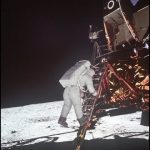
Neil Armstrong and Buzz Aldrin spent more than two hours outside their spacecraft on the Moon. They studied the surface. They collected rocks. After almost a day, they blasted off. They docked with Michael Collins in orbit around the Moon.
For more information on their voyage to the Moon and one small step on the lunar surface for all of mankind, visit https://www.nasa.gov/specials/apollo50th/

On July 20, 1969, humans walked on another world for the first time in history, achieving the goal that President John F. Kennedy had set in 1961, before Americans had even orbited the Earth. After a landing that included dodging a lunar crater and boulder field just before touchdown, Apollo 11 astronauts Neil Armstrong and Buzz Aldrin explored the area around their lunar landing site for more than two hours.
When the lunar module landed at 4:17 p.m EDT, only 30 seconds of fuel remained. Armstrong radioed “Houston, Tranquility Base here. The Eagle has landed.” Mission control erupted in celebration as the tension breaks, and a controller tells the crew “You got a bunch of guys about to turn blue, we’re breathing again.”
For more information on the Apollo Program, visit https://www.nasa.gov/specials/apollo50th/
Get a month of CuriosityStream for free at http://www.curiositystream.com/joescott.
The European Space Agency – or ESA – has been a major player in the commercial launch space for decades with their Ariane series of rockets. But they also have been racking up some impressive interplanetary missions, their latest one being the BepiColumbo mission to Mercury.
Here we break down the ESA, talk about some of their biggest victories, and where they want to go in the future.
Like my shirt? Get one here:
http://www.answerswithjoe.com/shirts
Support me on Patreon!
http://www.patreon.com/answerswithjoe
Follow me at all my places!
Instagram: https://instagram.com/answerswithjoe
Snapchat: https://www.snapchat.com/add/answerswithjoe
Facebook: http://www.facebook.com/answerswithjoe
Twitter: https://www.twitter.com/answerswithjoe
LINKS LINKS LINKS:
https://www.esa.int/About_Us/Law_at_ESA/ESA_Convention
First launch of the Ariane 5 that blew up:
https://www.youtube.com/watch?v=gp_D8r-2hwk
The BepiColumbo path to Mercury:
https://www.youtube.com/watch?v=0Yp-q1wqgig
https://www.space.com/39390-alien-planets-reveal-our-strange-solar-system.html
https://www.popularmechanics.com/space/rockets/a27290/one-chart-spacex-dominate-rocket-launches/
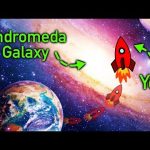
Visiting an outside galaxy—in your lifetime—is possible! The one trick: time dilation.
SUBSCRIBE: https://bit.ly/2o2WYxD
DIY Particle Detector: https://youtu.be/wN_DMMQEhfQ
PRODUCTION CREDITS
Host, Producer: Greg Kestin
Research, Writing: Samia Bouzid, Greg Kestin
Editing, Animating: Daniel Thomson
Editorial Input from: Julia Cort, Ari Daniel
Special thanks: Entire NOVA team
From the producers of PBS NOVA © WGBH Educational Foundation Funding provided by FQXi Music provided by APM
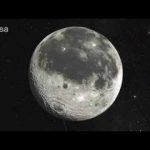
This 8-minute film gives an overview of the past, present, and future of Moon exploration, from the Lunar cataclysm to ESA’s vision of what Lunar exploration could be.
Why is the Moon important for science? What resources does the Moon have? Is there water? Why should we go back and how will we do it?
A look inside the life, science and adventure of being an astronaut aboard the International Space Station.
www.nasa.gov/mission_pages/station