NASA Television’s newest offering, NASA TV UHD, brings ultra-high definition video to a new level with the kind of imagery only the world’s leader in space exploration could provide.
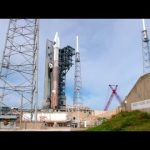
Using an array of six 4K+ cameras, Harmonic documented the Dec. 6 launch of Orbital ATK’s commercial resupply mission to the International Space Station from Cape Canaveral Air Force Station in Florida. Capturing footage at Ultra High Definition with high frame rate and in high dynamic range (HDR) options.
The company then post-produced the footage into a program showcasing the entire launch process for airing on NASA TV UHD.
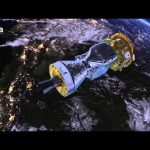
Artist’s impression of the launch of LISA Pathfinder, ESA’s technology demonstration mission that will pave the way for future gravitational-wave observatories in space.
Scheduled to lift off on a Vega rocket from Europe’s Spaceport in French Guiana in late 2015, LISA Pathfinder will operate at the Lagrange point L1, 1.5 million km from Earth towards the Sun. After launch, the spacecraft will take about eight weeks to reach its operational orbit around L1.
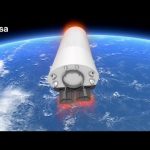
The Vega rocket is designed to take small payloads into low-Earth orbit. The animation shows the rocket shortly after launch, rising above our planet and releasing the fairing.
Vega will place the spacecraft onto an elliptical orbit with perigee at 200 km, apogee at 1540 km and angled at about 6.5° to the equator. Then, LISA Pathfinder will continue on its own, using its separable propulsion module to perform a series of six manoeuvres and gradually raise the apogee of the initial orbit.
Eventually, LISA Pathfinder will cruise towards its final orbiting location, discarding the propulsion system along the way, one month after the last burn. Once in orbit around L1, the spacecraft will begin its six months of operations devised to demonstrate key technologies for space-based observation of gravitational waves.
The Asteroid Impact Mission (AIM) is a candidate mission currently undergoing preliminary design work.
Launched in October 2020, AIM would travel to a binary asteroid system – the paired Didymos asteroids, which will come a comparatively close 11 million km to Earth in 2022. The 800 m-diameter main body is orbited by a 170 m moon, informally called ‘Didymoon’.
This smaller body is AIM’s focus: the spacecraft would perform high-resolution visual, thermal and radar mapping of the moon to build detailed maps of its surface and interior structure.
The main AIM spacecraft is planned to carry at least three smaller spacecraft – the Mascot-2 asteroid lander, being provided by DLR (Mascot-1 is already flying on JAXA’s Hayabusa-2), as well as two or more CubeSats. AIM would test optical communications and inter-satellite links in deep space, essential technology for future exploration.
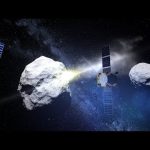
If approved, AIM would also be Europe’s contribution to the larger Asteroid Impact & Deflection Assessment mission: AIDA. In late 2022, the NASA-led part of AIDA will arrive: the Double Asteroid Redirection Test, or DART, probe will approach the binary system – then crash straight into the asteroid moon at about 6 km/s.
AIM is intended to be watching closely as DART hits Didymoon. In the aftermath, it will perform detailed before-and-after comparisons on the structure of the body itself, as well as its orbit, to characterise DART’s kinetic impact and its consequences.
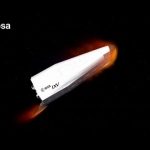
Having completed a short and flawless return from space, the Intermediate eXperimental Vehicle (IXV), Europe’s atmospheric reentry demonstrator, is now on its way to Europe for detailed analysis of its flight experience. The successful mission opens a new door for Europe in future space transportation.
Dancing is probably the oldest human artform – and now ESA’s Proba-3 precision formation-flying mission intends to extend the art of dance to space.
Like dancers, a pair of minisatellites will move around each other, their relative positions maintained to millimetre-scale precision, as if they were both parts of one giant spacecraft.
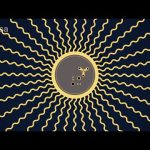
Their mission is to cast a shadow from one minisatellite onto another, in order to form an artificial total solar eclipse in space – then study the fine details of the Sun’s wispy atmosphere, the solar corona.
Franco Ongaro, ESA Director of Technical and Quality Management; Frederic Teston, Head of System and Cost Engineering; Andrea Santovincenzo, ESA engineer and the project’s manager Agnes Mestreau-Garreau, explain how to go about teaching a space mission to dance.
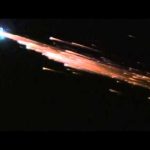
Europe’s space freighter ATV Jules Verne burning up over an uninhabited area of the Pacific Ocean at the end of its mission.
ATV Jules Verne was the first of ESA’s Automated Transfer Vehicles to bring supplies to the International Space Station and help keep its orbit 400 km above our planet.
A final deorbit burn at 14:58 CEST on 29 September 2008 slowed Jules Verne’s velocity by 70 m/s and spacecraft entered the upper atmosphere at an altitude of 120 km at 15:31 CEST. It broke up at an altitude of 75 km with the remaining fragments falling into the Pacific some 12 minutes later.
The planned reentry into the atmosphere was filmed from a DC-8 aircraft as part of an observation campaign including recording from the Station itself, as well as from two specially-equipped observation planes located in the vicinity of the ATV’s flight path in the skies above the South Pacific. The campaign served to determine whether the vehicle’s breakup matched computer modelling.
IXV, Europe’s Intermediate Experimental Vehicle, will soon be launched by Vega into a suborbital path. As it reenters Earth’s atmosphere, IXV will test new critical technologies to advance Europe’s ambition to return autonomously from space.
Soon, IXV, Europe’s Intermediate Experimental Vehicle, will be launched into space on a Vega launcher from Europe’s spaceport in Kourou, French Guiana. A short but crucial mission to advance Europe’s ambition to return autonomously from space.
This timelapse video shows the Soyuz TMA-15M spacecraft during transfer from the MIK 40 integration facility to Baikonur Cosmodrome launch pad 31, as well as the launch on 23 November 2014 with ESA astronaut Samantha Cristoforetti and her crewmates to the International Space Station where they will live and work for five months.
With Samantha are Russian Soyuz commander Anton Shkaplerov and NASA astronaut Terry Virts. All three are part of the Station’s Expedition 42/43 crew.
On this mission, Samantha is flying as an ESA astronaut for Italy’s ASI space agency under a special agreement between ASI and NASA.
Directed by Stephane Corvaja, ESA Edited by Manuel Pedoussaut, Zetapress Music: MZB
Scene inside Mission Control as the team regained contact with Rosetta as expected after separation, and with Philae that is descending onto the surface of Comet 67P/C-G.
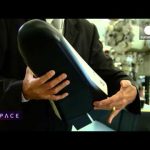
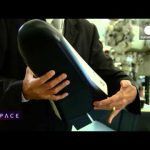
Re-entry is the make or break moment for spacecraft. It’s the time when satellites burn up and astronauts hold on for the ride of their lives. A new ESA spacecraft, called IXV Intermediate eXperimental Vehicle, will be launched into space in November 2014 in a bid to feed precious new data to engineers as they try to master the difficult transition between space and planet Earth. In this episode of Space, IXV programme manager Giorgio Tumino shows us around the spacecraft, while rarely-seen archive footage brings the heat, drama and danger of re-entry to life.
Subir até ao espaço é considerado normalmente o cerne da questão. Mas e o regresso à Terra? A reentrada na atmosfera é, na verdade, um dos maiores desafios da aventura espacial. Por isso, os europeus criaram uma nave chamada IXV que irá testar novas possibilidades precisamente no reencontro com o nosso planeta. É uma viagem única, até porque é impossível de recriar artificialmente a experiência. As aprendizagens têm sido feitas através de descidas efetivas. E é precisamente isso que a mais recente nave da Agência Espacial Europeia (ESA) vai fazer em novembro, como explica o coordenador de projeto, Giorgio Tumino: “O objetivo da missão do IXV é o de passar a controlar aquelas zonas cinzentas que desconhecemos acerca da reentrada atmosférica.”
Pour les véhicules spatiaux, la rentrée dans l’atmosphère, c’est le moment où – pourrait-on dire – ça passe ou ça casse. C’est la phase où les satellites s’enflamment et où les astronautes retiennent leur souffle.
Un nouveau vaisseau de l’ESA baptisé IXV sera lancé dans l’espace en novembre 2014 dans l’objectif de fournir de nouvelles données aux ingénieurs alors qu’ils tentent de maîtriser cette délicate transition entre l’espace et la planète Terre.
Dans cette édition de Space sur euronews, le manager du programme IXV Giorgio Tumino nous présente le véhicule. Nous abordons aussi, images rares à l’appui, les conditions et les risques de cette rentrée atmosphérique.
Clean Space is the European Space Agency’s initiative to safeguard the terrestrial and orbital environments, while boosting the innovation and competitiveness of Europe’s space sector. This animated guide follows a newly-launched satellite as it first enters orbit, in the process explaining the various branches of the Clean Space effort and the different future Clean Space aims to build.
Now with English, French, German, Dutch, Italian, Greek, Romanian and Swedish subtitles. More languages will be added as they become available.
Annotated version of the Philae’s mission at comet 67P animation.
The animation begins with the deployment of Philae from Rosetta at comet 67P/Churyumov–Gerasimenko in November 2014. It will take several hours for it to reach the surface. Because of the comet’s extremely low gravity, landing gear will absorb the small forces of landing while ice screws in the probe’s feet and a harpoon system will lock the probe to the surface. At the same time a thruster on top of the lander will push it down to counteract the impulse of the harpoon imparted in the opposite direction.
Once it is anchored to the comet, the lander will begin its primary science mission, based on its 64-hour initial battery lifetime. The animation shows a number of the science instruments in action on the surface.
Rosetta’s Philae lander is provided by a consortium led by DLR, MPS, CNES and ASI.
ESA’s Intermediate eXperimental Vehicle, IXV, is tilted and turned along and around all three axes at ESA’s Technical Centre, ESTEC, in the Netherlands to measure its centre of gravity and moments of inertia, because both influence its flying characteristics.
To be launched on Vega in early November 2014, IXV will flight-test the technologies and critical systems for Europe’s future automated reentry vehicles returning from low orbit.
Visualisation of the Venus Express aerobraking manoeuvre, which will see the spacecraft orbiting Venus at an altitude of around 130 km from 18 June to 11 July. In the month before, the altitude will gradually be reduced from around 200 km to 130 km. If the spacecraft survives and fuel permits, the elevation of the orbit will be raised back up to approximately 450 km, allowing operations to continue for a further few months. Eventually, however, the spacecraft will plunge back into the atmosphere and the mission will end.
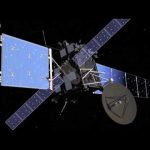
This short movie tells the story of Rosetta’s journey through the Solar System so far, through the voices of some of the many people involved in this exciting mission. ESA’s Rosetta spacecraft launched in March 2004 and has since been chasing down comet 67P/Churyumov-Gerasimenko, where it will become the first space mission to orbit a comet, the first to attempt a landing on a comet’s surface, and the first to follow a comet as it swings around the Sun. In the last ten years Rosetta has made 3 flybys of Earth and 1 of Mars, and passed by and imaged asteroids Steins and Lutetia. Operating on solar energy alone, in June 2011 Rosetta was placed into deep space hibernation as it cruised nearly 800 million kilometres from the warmth of the Sun, close to the orbit of Jupiter. On 20 January, Rosetta will wake up at 673 million kilometres from the Sun and about 9 million km from the comet, ready for the next leg of its epic adventure.
Visualisation of how the Rosetta spacecraft wakes up from deep space hibernation, 673 million kilometres from the Sun, on 20 January 2014.
Prior to entering hibernation on 8 June 2011, Rosetta was oriented so that its solar arrays faced the Sun, and it began rotating once per minute for stability. The only devices left running were its computer and several heaters.
Rosetta’s computer is programmed to carry out a sequence of events to re-establish contact with the Earth on 20 January, starting with an ‘alarm clock’ at 10:00 GMT. Immediately after, the star trackers begin to warm up. Around 6 hours later the thrusters are fired and the slow rotation stops. A slight adjustment is made to Rosetta’s orientation to ensure that the solar arrays now face the Sun. Then the star trackers switch on to determine its attitude. The spacecraft rotates towards Earth, and the transmitter is switched on. Then Rosetta’s high-gain antenna points to Earth and the signal is sent. The journey takes 45 minutes before the signal is received and mission controllers can begin to check Rosetta’s health, ready for the next phase of the mission.
The first opportunity for receiving a signal on Earth is between 17:30 GMT and 18:30 GMT.
It has spawned a host of songs from crooners to alternative rock bands. One of the best loved chocolate bars in the United Kingdom is named after it. Yet how much to we really know about the Milky Way and just how important is it?
We could be close to many answers about the galaxy thanks to a new satellite named Gaia, being launched by the European Space Agency.
“One fundamental step to understand our universe is to understand our closer universe, which is the galaxy,” explained Guiseppe Sarri who is the project manager of ESA’s Gaia project.
Gaia will scan the sky with powerful new eyes, mapping the Milky Way in unprecedented detail. It will help produce a detailed 3D image of the galaxy, something which has never been done before.
Olhando para o céu durante a noite é possível ver milhares de estrelas. Mas muito para além das visíveis existem milhões de outras escondidas na escuridão. Mais fracas, mais distantes, e profundamente misteriosas.
Podemos estar perto de as descobrir graças a um novo satélite denominado Gaia, que está a ser lançado pela Agência Espacial Europeia.
“Um passo fundamental para compreender o universo é entender o nosso universo mais próximo, a galáxia”, explicou Guiseppe Sarri, gestor do projeto Gaia da Agência Espacial Europeia.
O Gaia vai conseguir ver o céu com uns poderosos novos olhos e criar um mapa detalhado da galáxia em 3D. Algo nunca antes visto na astronomia.
Os astrónomos estão entusiasmados já que o satélite promete uma revolução. Vai observar, mapear e medir mil milhões de estrelas no total.
Para isso o satélite vai transportar a maior câmera digital que alguma vez voou para o espaço. Como Guiseppe Sarri salientou: “Estamos a falar de estrelas que são 400 mil vezes mais fracas do que as que podemos ver a olho nu.”
O grande número de dados recolhidos na missão deve ajudar os astrónomos a resolver alguns dos maiores quebra-cabeças no universo. Tais como a forma exata da nossa galáxia e os mistérios da matéria negra – a força oculta que molda o universo. O mapa da Via Láctea do satélite Gaia vai deixar o universo um pouco menos misterioso, mas nem por isso menos belo.
Les milliards d’étoiles de notre Voie lactée forment un labyrinthe dont nous avons du mal à appréhender l’étendue. Pour faire progresser les connaissances sur notre galaxie, l’Agence spatiale européenne mène la mission Gaia, du nom d’un satellite capable de scanner le ciel avec une précision extraordinaire, au moins mille fois supérieure à celle des observations depuis le sol.
L’engin construit par Astrium à Toulouse et lancé depuis Kourou en Guyane française va réaliser une première en astronomie en établissant une carte 3D détaillée de la Voie lactée : il calculera la position relative, la trajectoire et la vitesse d’un milliard d’étoiles. Ce qui correspond à 1% de l’ensemble des étoiles peuplant notre galaxie.
Pour l’aider dans ses observations, Gaia dispose de la plus grande caméra numérique jamais conçue pour une mission spatiale et comme point de référence, du plus grand téléscope de l’observatoire du Pic du Midi dans les Pyrénées.
Grâce à cette mission, les astronomes espèrent résoudre de grandes énigmes, notamment établir avec exactitude, la structure en spirale de la Voie lactée et trouver la trace de la matière noire, cette force invisible qui façonne notre univers.
ESA operates some of the world’s most sophisticated deep-space tracking stations, enabling spacecraft to maintain contact with Earth while voyaging deep into our Solar System. The essential task of all ESA stations is to communicate with our missions, sending telecommands and receiving vital scientific data and spacecraft status information.
The Agency’s three Deep Space Antenna (DSA) stations are located in Australia, Spain and Argentina, and are centrally controlled from the ESOC Operations Centre in Germany. They are equipped with large, 35 m-diameter parabolic dish reflectors, weighing in at 610 tonnes, that can be rotated and pointed with extreme accuracy.
Using signal data from the stations and an advanced navigational technique known as ‘delta-DOR’, engineers can pinpoint the orbit of a spacecraft exploring Mars or Venus – a distance of over 100 million kilometres from Earth – to an accuracy within 1 kilometre.