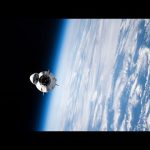
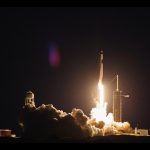
Watch a SpaceX Dragon spacecraft dock to the International Space Station after a successful liftoff on Aug. 24. The spacecraft is carrying supplies – including food and essential equipment for the crew – as well as a variety of science experiments.
The Dragon spacecraft is scheduled to remain at the space station until December, when it will depart and return to Earth with research and cargo, splashing down off the coast of California.
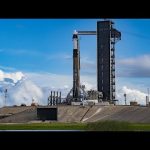
The 33rd SpaceX commercial resupply mission to the International Space Station is set to lift off at 2:45 a.m. EDT (0645 UTC) on Sunday, Aug. 24, from Space Launch Complex 40 at Cape Canaveral Space Force Station in Florida, atop a Falcon 9 rocket.
Dragon is scheduled to dock autonomously to the station at around 7:30 a.m. EDT (1130 UTC) on Monday, Aug. 25. Read the full timeline and learn more about the mission: https://go.nasa.gov/4lHGTaX
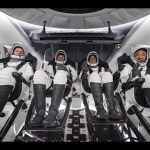
The four members of NASA’s SpaceX Crew-10 mission — NASA astronauts Anne McClain and Nichole Ayers, JAXA (Japan Aerospace Exploration Agency) astronaut Takuya Onishi, and Roscosmos cosmonaut Kirill Peskov — prepare to head to Earth as the hatches are closed on their spacecraft. Undocking is scheduled for Friday, Aug. 8, at 6:05 p.m. ET (2205 UTC).
During their nearly five months on the space station, Crew-10 contributed to the more than 200 scientific demonstrations and experiments taking place in orbit. These included physiological and psychological studies, material flammability tests for future spacecraft designs, and testing a backup lunar navigation solution.
The four members of NASA’s SpaceX Crew-10 mission — NASA astronauts Anne McClain and Nichole Ayers, JAXA (Japan Aerospace Exploration Agency) astronaut Takuya Onishi, and Roscosmos cosmonaut Kirill Peskov — undock from the space station, setting off to return to Earth. Splashdown will occur off the coast of California on Saturday, Aug. 9, at approximately 11:33 a.m. ET (1533 UTC).
During their nearly five months on the space station, Crew-10 contributed to the more than 200 scientific demonstrations and experiments taking place in orbit. These included physiological and psychological studies, material flammability tests for future spacecraft designs, and testing a backup lunar navigation solution.
After nearly five months aboard the International Space Station, the four members of NASA’s SpaceX Crew-10 mission — NASA astronauts Anne McClain and Nichole Ayers, JAXA (Japan Aerospace Exploration Agency) astronaut Takuya Onishi, and Roscosmos cosmonaut Kirill Peskov — are sharing their farewell remarks from space as they prepare to return home, followed by a change of command ceremony aboard the station.
After lifting off from NASA’s Kennedy Space Center on Thursday, July 31, the crew members of NASA’s SpaceX Crew-11 mission are arriving at the International Space Station.
NASA astronauts Zena Cardman and Mike Fincke, JAXA (Japan Aerospace Exploration Agency) astronaut Kimiya Yui, and Roscosmos cosmonaut Oleg Platonov are scheduled to dock in their SpaceX Dragon spacecraft at approximately 2:30 a.m. EDT (0630 UTC) on Saturday, Aug. 2. Station crew will then open the hatches between Dragon and the station, to be followed by a welcome ceremony.
Cardman, Fincke, Yui, and Platonov will spend several months on the station, conducting research to help humans learn how to live in space while making life better on Earth. After Crew-11 arrives at the station, the four members of Crew-10 will depart the station following a brief handover period.
Following the successful launch of NASA’s SpaceX Crew-11 mission on Thursday, July 31, experts from NASA and our mission partners share updates and answer media questions in a postlaunch news conference.
Participants include: – Ken Bowersox, associate administrator, NASA’s Space Operations Mission Directorate – Steve Stich, manager, NASA’s Commercial Crew Program – Dana Weigel, manager, NASA’s International Space Station Program – Kazuyoshi Kawasaki, associate director general, Space Exploration Center/Space Exploration Innovation Hub Center, JAXA – Sarah Walker, director, Dragon Mission Management, SpaceX
NASA astronauts Zena Cardman and Mike Fincke, JAXA (Japan Aerospace Exploration Agency) astronaut Kimiya Yui, and Roscosmos cosmonaut Oleg Platonov lifted off from NASA’s Kennedy Space Center at 12:09 p.m. EDT (1609 UTC) for a long-term science mission aboard the International Space Station. Crew-11 is scheduled to dock with the station on Saturday, Aug. 2.
We’re sending a new crew to the International Space Station!
Watch with us as the four members of NASA’s SpaceX Crew-11 mission launch to the station from NASA’s Kennedy Space Center in Florida. Liftoff is targeted for 12:09 p.m. EDT (1609 UTC) on Thursday, July 31.
SpaceX’s Dragon spacecraft will carry NASA astronauts Zena Cardman and Mike Fincke, JAXA (Japan Aerospace Exploration Agency) astronaut Kimiya Yui, and Roscosmos cosmonaut Oleg Platonov to the orbiting laboratory for a science mission. This is the 11th crew rotation mission and the 12th human spaceflight mission for NASA to the space station supported by the Dragon spacecraft since 2020 as part of the agency’s Commercial Crew Program.
Crew-11 is scheduled to arrive at the station on Saturday, Aug. 2. After a brief handover period, NASA astronauts Anne McClain and Nichole Ayers, along with JAXA (Japan Aerospace Exploration Agency) astronaut Takuya Onishi and Roscosmos cosmonaut Kirill Peskov, will depart the station for a splashdown off the coast of California.
NASA and the agency’s partners preview the launch of NASA’s SpaceX Crew-11 mission. Participants include:
Ken Bowersox, associate administrator, NASA’s Space Operations Mission Directorate Steve Stich, manager, NASA’s Commercial Crew Program Dana Weigel, manager, NASA’s International Space Station Program William Gerstenmaier, vice president, Build and Flight Reliability, SpaceX Sergey Krikalev, executive director, Human Space Flight Program, Roscosmos Naoki Nagai, Program Manager of International Space Station, Human Spaceflight Technology Directorate, JAXA
NASA astronauts Zena Cardman and Mike Fincke, Roscosmos cosmonaut Oleg Platonov, and JAXA astronaut Kimiya Yui will launch to the International Space Station on the Dragon spacecraft powered by a Falcon 9 rocket no earlier than July 31.
Four crew members are preparing to launch to the International Space Station as part of NASA’s SpaceX Crew-11 mission to perform research, technology demonstrations, and maintenance activities aboard the orbiting laboratory.
NASA astronauts Zena Cardman and Mike Fincke, JAXA (Japan Aerospace Exploration Agency) astronaut Kimiya Yui, and Roscosmos cosmonaut Oleg Platonov will lift off no earlier than 12:09 p.m. EDT (1609 UTC) on Thursday, July 31, from Launch Complex 39A at NASA’s Kennedy Space Center in Florida.
Watch a SpaceX Dragon spacecraft dock to the International Space Station after a successful liftoff on April 21 at 4:15 a.m. EDT (0815 UTC). The spacecraft is carrying supplies – including food and essential equipment for the crew – as well as a variety of science experiments.
The Dragon spacecraft is scheduled to remain at the space station until May, when it will depart and return to Earth with research and cargo, splashing down off the coast of California.
Learn more about the science aboard, including studies to produce gold nanoparticles and to test a vision-based sensor that could improve navigation: https://youtu.be/4841piONzVk
Ai întrebări de știință și vrei răspunsuri personale? Intră acum pe Patreon și eu își voi răspunde direct pe whatsapp ►https://patreon.com/cristianpresura
0:00 Intro – Starship vs. China 1:00 Lansarea Starship și explozia 15:30 Probleme tehnice la Starship (analiză) 30:45 Planurile SpaceX după eșec 37:10 Programul spațial al Chinei – context 45:00 Cum vede China eșecul Starship 52:00 Concluzii și perspective
Unul dintre obiectivele majore ale Starship este implicarea în programul Artemis al NASA, în special în misiunea Artemis 3, programată teoretic pentru 2027. Această misiune presupune transportul astronauților de pe orbita lunară pe suprafața Lunii cu ajutorul unui model modificat numit Starship HLS (Human Landing System). Însă acest plan implică un proces complex de alimentare cu combustibil pe orbita Pământului, ceea ce necesită între 15 și 20 de lansări Starship de succes – un lucru care nu s-a realizat încă.
În paralel, China dezvoltă propriul program de aselenizare, mai centralizat și cu o arhitectură mai simplă, asemănătoare cu cea a programului Apollo. Dacă SUA nu reușesc să respecte calendarul actual, este posibil ca China să devanseze misiunea cu echipaj uman spre Lună până în 2030.
Podcastul subliniază dificultățile tehnice și politice cu care se confruntă programul Artemis, inclusiv incertitudinile legate de schimbările de administrație la NASA. Deși SpaceX a realizat progrese notabile, mai ales cu prima treaptă a rachetei, provocarea majoră rămâne revenirea treptei superioare de pe orbită într-o stare perfectă de reutilizare. În final, Claudiu rămâne sceptic privind respectarea termenelor și viitorul apropiat al misiunilor lunare americane.”
The 32nd SpaceX commercial resupply mission to the International Space Station is set to lift off on a Falcon 9 rocket from our Kennedy Space Center in Florida at 4:15 a.m. EDT (0815 UTC), Monday, April 21, delivering science investigations and supplies to the orbiting lab.
SpaceX’s Dragon spacecraft is carrying several new research projects to the station, including experiments focused on vision-based navigation, spacecraft air quality, materials for drug and product manufacturing, and advancing plant growth with less reliance on photosynthesis.
After completing a long-duration stay aboard the International Space Station, NASA’s SpaceX Crew-9 astronauts — Nick Hague, Suni Williams, and Butch Wilmore — are discussing their scientific mission to space.
The three NASA crew members and Roscosmos cosmonaut Aleksandr Gorbunov returned to Earth on March 18. Gorbunov will not participate in the news conference because of his travel schedule.
Hague, Williams, and Wilmore completed over 900 hours of research while in orbit, conducting more than 150 unique experiments. The crew studied plant growth and development, tested stem cell technology to help patients on Earth, and went on a spacewalk to collect samples from the station’s exterior, studying the survivability of microorganisms in space. Additionally, the crew supported 30 ham radio events with students worldwide and conducted a student-led genetic experiment, helping to inspire the next generation of explorers.
Following the return of NASA’s SpaceX Crew-9 mission, NASA and SpaceX will hold a news conference to discuss the crew’s return and take media questions. The participants include:
• Joel Montalbano, deputy associate administrator, NASA’s Space Operations Mission Directorate • Steve Stich, manager, NASA’s Commercial Crew Program • Bill Spetch, operations integration manager, NASA’s International Space Station Program • Sarah Walker, director, Dragon Mission Management, SpaceX
NASA’s SpaceX Crew-9 mission returned to Earth on Tuesday, March 18, carrying NASA astronauts Nick Hague, Suni Williams, and Butch Wilmore, as well as Roscosmos cosmonaut Aleksandr Gorbunov, after completing a long-duration science expedition aboard the orbiting laboratory.
Watch with us as the four members of NASA’s SpaceX Crew-9 mission—NASA astronauts Nick Hague, Suni Williams, Butch Wilmore, and cosmonaut Aleksandr Gorbunov—return to Earth.
Suni Williams and Butch Wilmore began their mission at the International Space Station on June 6, 2024, arriving aboard Boeing’s Starliner spacecraft. Nick Hague and Aleksandr Gorbunov arrived at the station on Sept. 29, 2024. Hague and Gorbunov launched to space aboard SpaceX’s Dragon Freedom spacecraft, which was docked to the station since its arrival in September, and has since brought Crew-9 back home.
2:24 Return coverage begins 6:41 Meet the crew 28:14 Deorbit burn start 1:05:20 First views from WB-57 aircraft 1:09:37 Drogue chutes deploy 1:10:31 Main chutes deploy 1:12:00 Splashdown 1:33:56 Dolphins 1:38:33 Hoist 1:53:45 Hatch open 1:57:09 Crew egress
Watch as the four members of NASA’s SpaceX Crew-9 mission—NASA astronauts Nick Hague, Suni Williams, Butch Wilmore, and cosmonaut Aleksandr Gorbunov—undock from the International Space Station and begin their journey home to Earth.
Crew-9’s SpaceX Dragon spacecraft is scheduled to undock from the International Space Station at 1:05 a.m. EST (0505 UTC). After undocking from the station, Crew-9 is scheduled to splash down off the coast of Florida at 5:57 p.m. EDT (2157 UTC), ending their multi-month mission in low Earth orbit.
Watch as the four members of NASA’s SpaceX Crew-9 mission—NASA astronauts Nick Hague, Suni Williams, Butch Wilmore, and cosmonaut Aleksandr Gorbunov—begin the final preparations for their return to Earth, currently targeted for Tuesday, March 18.
After entering their SpaceX Dragon spacecraft, the spacecraft’s hatch will be closed on the Crew-9 explorers. After hatch closure, Crew-9 is scheduled to undock from the International Space Station at 1:05 a.m. EDT (0505 UTC) on Tuesday, March 18.
Watch with us as the four members of NASA’s SpaceX Crew-10 mission launch to the space station from Launch Complex 39A at NASA’s Kennedy Space Center in Florida.
Liftoff is targeted for 7:03 p.m. EDT (2303 UTC) on Friday, March 14. Wednesday’s launch attempt was scrubbed due to a hydraulic system issue with a ground support clamp arm.
SpaceX’s Dragon spacecraft will carry NASA astronauts Anne McClain, commander; and Nichole Ayers, pilot; along with mission specialists JAXA (Japan Aerospace Exploration Agency) astronaut Takuya Onishi, and Roscosmos cosmonaut Kirill Peskov to the orbiting laboratory for a long-duration science mission. This is the 10th crew rotation mission and the 11th human spaceflight mission for NASA to the space station supported by the Dragon spacecraft since 2020 as part of the agency’s Commercial Crew Program.
Following the launch of Crew-10, NASA astronauts Nick Hague, Suni Williams, and Butch Wilmore, along with Roscosmos cosmonaut Aleksandr Gorbunov, will depart the station for a splashdown off the coast of Florida.
Watch with us as the four members of NASA’s SpaceX Crew-10 mission launch to the space station from Launch Complex 39A at NASA’s Kennedy Space Center in Florida. Liftoff is targeted for 7:48 p.m. EDT (2348 UTC) on Wednesday, March 12.
SpaceX’s Dragon spacecraft will carry NASA astronauts Anne McClain, commander; and Nichole Ayers, pilot; along with mission specialists JAXA (Japan Aerospace Exploration Agency) astronaut Takuya Onishi, and Roscosmos cosmonaut Kirill Peskov to the orbiting laboratory for a long-duration science mission. This is the 10th crew rotation mission and the 11th human spaceflight mission for NASA to the space station supported by the Dragon spacecraft since 2020 as part of the agency’s Commercial Crew Program.
Following the launch of Crew-10, NASA astronauts Nick Hague, Suni Williams, and Butch Wilmore, along with Roscosmos cosmonaut Aleksandr Gorbunov, will depart the station for a splashdown off the coast of Florida.
NASA’s SpaceX Crew-9 mission with astronauts Nick Hague, Butch Wilmore, and Suni Williams, and Roscosmos cosmonaut Aleksandr Gorbunov, is preparing to return to Earth following their science mission aboard the International Space Station.
Hague, Williams, and Wilmore completed more than 900 hours of research between over 150 unique scientific experiments and technology demonstrations during their stay aboard the orbiting laboratory.
The 31st SpaceX commercial resupply mission to the International Space Station lifted off on a Falcon 9 rocket from our Kennedy Space Center in Florida at 9:29 p.m. EST, Monday, Nov. 4 (0229 UTC, Tuesday, Nov. 5), delivering science investigations, supplies, and holiday food to the orbiting lab.
SpaceX’s Dragon spacecraft carried several new experiments to the station, including the Coronal Diagnostic Experiment, to examine solar wind and how it forms. Dragon also delivered Antarctic moss to observe the combined effects of cosmic radiation and microgravity on plants. Other investigations include a device to test cold welding of metals in microgravity and an investigation that studies how space impacts different materials.
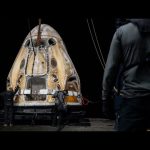
Watch Crew-8 return to Earth, concluding their mission to the International Space Station. Their SpaceX Dragon spacecraft is scheduled for splashdown off the coast of Florida on Friday, Oct. 25 at approximately 3:29 a.m. EDT (0729 UTC).
NASA astronauts Michael Barratt, Matthew Dominick, and Jeanette Epps and Roscosmos cosmonaut Alexander Grebenkin are coming home after seven months aboard the orbiting lab, conducting scientific experiments and technology demonstrations.
Astronauts Butch Wilmore and Suni Williams, who launched to the station aboard NASA’s Boeing Crew Flight Test (CFT) this summer, will return to Earth with the two members of NASA’s SpaceX Crew-9 mission in the spring of 2025. Learn more about CFT: https://nasa.gov/starliner-faq
NASA astronauts Michael Barratt, Matthew Dominick, and Jeanette Epps and Roscosmos cosmonaut Alexander Grebenkin are returning to Earth after several months aboard the International Space Station conducting scientific experiments and technology demonstrations for the agency’s SpaceX Crew-8 mission.
Watch the launch of NASA’s SpaceX #Crew9, the first human spaceflight mission to launch from Space Launch Complex 40 at Cape Canaveral Space Force Station in Florida. Liftoff on Saturday, Sept. 28 is set for 1:17 p.m. EDT (1717 UTC).
The Dragon spacecraft will carry NASA astronaut Nick Hague and Roscosmos cosmonaut Aleksandr Gorbunov to the International Space Station for a science mission of approximately five months. This will be Hague’s second mission to the orbiting laboratory, and Gorbunov’s first spaceflight.
Hague and Gorbunov will fly to the space station as commander and mission specialist, respectively. NASA astronauts Butch Wilmore and Suni Williams, who launched aboard the Starliner spacecraft in June, will fly home with Hague and Gorbunov in February 2025.
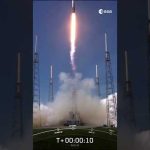
ESA’s EarthCARE satellite lifted off on a SpaceX Falcon 9 rocket from the Vandenberg Space Force Base in California, US, on 29 May at 00:20 CEST (28 May, 15:20 local time).
Developed as a cooperation between ESA and the Japan Aerospace Exploration Agency (JAXA), the Earth Cloud Aerosol and Radiation Explorer satellite carries a set of four instruments to make a range of different measurements that together will shed new light on the role that clouds and aerosols play in regulating Earth’s climate.
Credits: ESA/SpaceX
★ Subscribe: http://bit.ly/ESAsubscribe and click twice on the bell button to receive our notifications.
We are Europe’s gateway to space. Our mission is to shape the development of Europe’s space capability and ensure that investment in space continues to deliver benefits to the citizens of Europe and the world. Check out https://www.esa.int/ to get up to speed on everything space related.
Watch as the four members of NASA’s SpaceX Crew-8 mission move their Dragon Endeavour spacecraft between docking ports on the International Space Station. Aboard are:
• NASA astronauts Matt Dominick, Mike Barratt, and Jeanette Epps • Roscosmos cosmonaut Alexander Grebenkin
The crew will undock from the forward-facing port of the station’s Harmony module at 7:45 a.m EDT (1145 AM UTC), then dock at the station’s space-facing Harmony port at 8:28 a.m. EDT (1228 UTC). The spacecraft is relocating to make room for Boeing’s Starliner spacecraft, currently scheduled to arrive in May.
SpaceX’s 30th cargo resupply mission to the International Space Station is scheduled to lift off at 4:55 p.m. EDT (2055 UTC) from Cape Canaveral Space Force Station in Florida.
This uncrewed launch of SpaceX’s Dragon spacecraft will carry tech that monitors sea ice, research into off-planet photosynthesis, studies to improve nanoparticle solar cells, and essential supplies for our astronauts living and working aboard the orbiting laboratory.
After six months in orbit, the four members of NASA’s SpaceX Crew-7 mission—NASA astronaut Jasmin Moghbeli, ESA (European Space Agency) astronaut Andreas Mogensen, JAXA (Japan Aerospace Exploration Agency) astronaut Satoshi Furukawa, and Roscosmos cosmonaut Konstantin Borisov—are heading home.
Crew-7 is scheduled to splash down off the coast of Florida at approximately 5:50 a.m. EDT (0950 UTC) on Tuesday, March 12, after undocking from the International Space Station on Monday, March 11. While aboard the orbiting laboratory, Crew-7 contributed to a number of studies to help us learn how to live in space while making life better back on Earth: https://go.nasa.gov/3UWWIAF
Watch live with us as a crew of four launch on NASA’s SpaceX Crew-8 mission to the International Space Station. Liftoff is targeted at 10:53 p.m. EST (0353 UTC), Sunday, March 3.
The launch attempt March 2 was postponed due to unfavorable conditions in the flight path of the SpaceX Falcon 9 rocket and Dragon spacecraft.
The crew will lift off in their SpaceX Dragon spacecraft, powered by a Falcon 9 rocket, from Launch Complex 39A at NASA’s Kennedy Space Center in Florida. Members include: • NASA astronaut Matthew Dominick, commander • NASA astronaut Michael Barratt, pilot • NASA astronaut Jeanette Epps, mission specialist • Roscosmos cosmonaut Aleksandr Grebenkin, mission specialist
Over 200 science experiments and technology demonstrations will take place during Crew-8’s mission of approximately six months in space. Experiments will include using stem cells to create organoid models to study degenerative diseases, studying the effects of microgravity and UV radiation on plants at a cellular level, and testing whether wearing pressure cuffs on the legs could prevent fluid shifts and reduce health problems in astronauts. Learn more about the mission and science at: https://www.nasa.gov/missions/station/commercial-crew/what-you-need-to-know-about-nasas-spacex-crew-8-mission/
Watch live with us as a crew of four launch on NASA’s SpaceX Crew-8 mission to the International Space Station. Liftoff is targeted at 11:16 p.m. EST (0416 UTC), Saturday, March 2.
Teams selected the new launch opportunity due to unfavorable weather conditions forecast for Friday, March 1, in offshore areas along the flight path of the Dragon spacecraft.
The crew will lift off in their SpaceX Dragon spacecraft, powered by a Falcon 9 rocket, from Launch Complex 39A at NASA’s Kennedy Space Center in Florida. Members include: • NASA astronaut Matthew Dominick, commander • NASA astronaut Michael Barratt, pilot • NASA astronaut Jeanette Epps, mission specialist • Roscosmos cosmonaut Aleksandr Grebenkin, mission specialist
Over 200 science experiments and technology demonstrations will take place during Crew-8’s mission of approximately six months in space. Experiments will include using stem cells to create organoid models to study degenerative diseases, studying the effects of microgravity and UV radiation on plants at a cellular level, and testing whether wearing pressure cuffs on the legs could prevent fluid shifts and reduce health problems in astronauts. Learn more about the mission and science at: https://www.nasa.gov/missions/station/commercial-crew/what-you-need-to-know-about-nasas-spacex-crew-8-mission/
During their time on the International Space Station, Crew-7 grew space tomatoes, took part in medical studies, and conducted many other science experiments and technology demonstrations to benefit people on Earth and prepare humans for future space missions.
Here’s a look at some scientific milestones our crew accomplished during their mission: https://go.nasa.gov/3UWWIAF
Our SpaceX Crew-6 mission safely returns to Earth, the tech demo hitching a ride on our Psyche spacecraft, and studying ancient life on Earth to better understand Mars … a few of the stories to tell you about – This Week at NASA!
Link to download this video: https://images.nasa.gov/details/Our%20SpaceX%20Crew-6%20Mission%20Safely%20Returns%20to%20Earth%20on%20This%20Week%20@NASA%20%E2%80%93%20September%208,%202023
Video Producer: Andre Valentine Video Editor: Andre Valentine Narrator: Andre Valentine Music: Universal Production Music Credit: NASA
NASA astronauts Stephen Bowen and Woody Hoburg, UAE astronaut Sultan Alneyadi, and cosmonaut Andrey Fedyaev—the four members of NASA’s SpaceX Crew-6 mission—are scheduled to splash down off the coast of Florida at 12:17 a.m. EDT (0417 UTC) on Monday, Sept. 4, concluding their six-month stay in low Earth orbit.
Join NASA and SpaceX for live coverage of Crew-6 and their Dragon Endeavour spacecraft from reentry through recovery. While aboard the International Space Station, Crew-6 contributed to a number of studies to help us learn how to live in space while making life better back on Earth: https://go.nasa.gov/3OOOR3l
After launching to the International Space Station on March 2, 2023, NASA’s SpaceX Crew-6 mission is wrapping up its time in orbit, with a return to Earth in early September 2023.
NASA astronauts Stephen Bowen and Woody Hoburg, UAE (United Arab Emirates) astronaut Sultan Alneyadi, and Roscosmos cosmonaut Andrey Fedyaev spent their months on the orbiting lab conducting scientific investigations and technology demonstrations, including running a student robotic challenge, studying plant genetic adaptations to space, and monitoring human health in microgravity to prepare for exploration beyond low Earth orbit and to benefit life on Earth.
The astronauts also released Saskatchewan’s first satellite, which tests a new radiation detection and protection system derived from melanin.
An international crew is preparing to launch to the International Space Station aboard NASA’s SpaceX Crew-7 mission.
NASA astronaut Jasmin Moghbeli, ESA (European Space Agency) astronaut Andreas Mogensen, JAXA (Japan Aerospace Exploration Agency) astronaut Satoshi Furukawa, and cosmonaut Konstantin Borisov of Roscosmos will perform research technology demonstrations, science experiments, and maintenance activities aboard the microgravity laboratory.
Crew-7 is targeted to launch no earlier than 3:27 a.m. EDT Saturday, Aug. 26 from Launch Complex 39A at Kennedy. As part of the agency’s Commercial Crew Program, Crew-7 marks the eighth human spaceflight mission supported by a SpaceX Dragon spacecraft and the seventh crew rotation mission to the space station since 2020 for NASA.
Watch live with us as a crew of four launch on NASA’s SpaceX #Crew7 mission to the International Space Station. Liftoff is targeted at 3:49 a.m. EDT (0749 UTC), Fri., Aug. 25. Commander Jasmin Moghbeli of NASA, pilot Andreas Mogensen of the European Space Agency, and mission specialists Satoshi Furukaw of the Japan Aerospace Exploration Agency and Konstantin Borisov of Roscosmos will launch on their SpaceX Dragon spacecraft, powered by a Falcon 9 rocket, from Launch Complex 39A at NASA’s Kennedy Space Center in Florida.
Over 200 science experiments and technology demonstrations will take place during Crew-7’s mission of approximately six months in space. Experiments will include the collection of microbial samples from the exterior of the space station, the first study of human response to different spaceflight durations, and an investigation of the physiological aspects of astronauts’ sleep. Learn more about the mission and science at: https://www.nasa.gov/feature/what-you-need-to-know-about-nasa-s-spacex-crew-7-mission/
ESA’s latest astrophysics mission, Euclid, lifted off on a Space X Falcon 9 from Cape Canaveral in Florida, USA, at 17:12 CEST on 1 July 2023.
Euclid has now started its month-long journey to Sun-Earth Lagrange point L2, located 1.5 million kilometres from Earth, in the opposite direction from the Sun.
The telescope will survey one third of the sky with unprecedented accuracy and sensitivity. By observing billions of galaxies out to 10 billion light-years, it will create the most extensive 3D-map of the Universe, with the third dimension representing time.
ESA’s Euclid mission is designed to explore the composition and evolution of the dark Universe. Euclid will chart how the Universe has expanded and how large-scale structure is distributed across space and time, revealing more about the role of gravity and the nature of dark energy and dark matter.
Four weeks after launch, Euclid will enter its orbit around L2. Once in orbit, mission controllers will start the activities to verify all functions of the spacecraft, check out the telescope and finally turn the instruments on. Following this, scientists and engineers will be engaged in an intense two-month phase of testing and calibrating Euclid’s scientific instruments, and preparing for routine observations. The telescope begins its early phase of the survey of the Universe three months after launch.
We are Europe’s gateway to space. Our mission is to shape the development of Europe’s space capability and ensure that investment in space continues to deliver benefits to the citizens of Europe and the world. Check out https://www.esa.int/ to get up to speed on everything space related.
Watch a replay of the launch broadcast for ESA’s Euclid.
ESA’s Euclid mission was launched into space on a SpaceX Falcon 9 from Cape Canaveral in Florida, USA, on 1 July 2023. It is now on its way to Sun-Earth Lagrange point L2.
By observing billions of galaxies out to 10 billion light-years, the space telescope will create the most detailed 3D-map of the Universe, with time as the third dimension.
The launch broadcast programme includes live segments from the launch site and ESA’s European Spacecraft Operations Centre (ESOC) in Darmstadt, Germany.
Credits: ESA/SpaceX
00:00 – 45:35 Pre-launch programmes 45:35 – 55:00 Lift-off 55:00 – 01:27:00 Booster landing in the ocean 01:27:00 – 01:31:00 Euclid space craft separation 01:31:00 – 01:42:29 Acquisition of Signal (AOS)
★ Subscribe: http://bit.ly/ESAsubscribe and click twice on the bell button to receive our notifications.
We are Europe’s gateway to space. Our mission is to shape the development of Europe’s space capability and ensure that investment in space continues to deliver benefits to the citizens of Europe and the world. Check out https://www.esa.int/ to get up to speed on everything space related.
SpaceX’s 27th cargo resupply mission (CRS-27) to the International Space Station is scheduled to lift off at 8:30 p.m. EDT on Tuesday, March 14 (0030 UTC March 15), from Launch Complex 39A at NASA’s Kennedy Space Center in Florida.
CRS-27 will carry supplies, equipment for our international crew, and science, including Space Station hardware designed by high school students, and research that could help fight heart disease.
Additionally, a pair of small satellites, called CubeSats, will hitch a ride to space on the mission. The two university-built satellites, named ARKSAT-1, created by students at the University of Arkansas, and LightCube, by Arizona State University with Vega Space Systems and Mexico’s CETYS Universidad. ARKSAT-1 will illuminate an LED from orbit and use a ground spectrometer to track and perform atmospheric measurements. LightCube features a flash bulb that can be controlled remotely by amateur radio operators on Earth who will be able to activate the satellite to produce a brief flash visible from the ground.