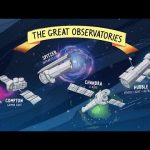
This is the animated storybook tale of the Spitzer spacecraft and its exploits as part of the space telescope superteam known as NASA’s Great Observatories, which also includes Hubble. With its special power to see infrared light, Spitzer revealed a whole side of the universe that had been hidden from our view.
Tag: Spitzer
-

A Critical Test for Our Commercial Crew Program on This Week @NASA – January 25, 2020
A critical test for our Commercial Crew Program, spacewalkers focus on upgrades aboard the space station, and paying tribute to one of our Great Observatories … a few of the stories to tell you about – This Week at NASA!
This video is available from NASA’s Image and Video Library: https://images.nasa.gov/details-NHQ_2020_0125_A%20Critical%20Test%20for%20Our%20Commercial%20Crew%20Program%20on%20This%20Week%20@NASA%20%E2%80%93%20January%2025,%202020
-
First Light Detected from Gravitational Wave Event on This Week @NASA – October 20, 2017
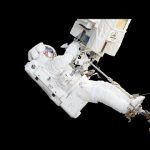
For the first time, NASA scientists have detected light tied to a gravitational-wave event. The gravitational wave – caused by an explosive merger of two neutron stars, about 130 million light-years from Earth – produced a gamma-ray burst and a rarely seen flare-up called a “kilonova”. The phenomenon was captured by our Fermi, Swift, Hubble, Chandra and Spitzer missions, along with dozens of NASA-funded ground-based observatories. Also, Trio of Station Spacewalks Completed, Fresh Findings from Cassini, and Test of SLS RS-25 Flight Engine!
This video is available for download from NASA’s Image and Video Library: https://images.nasa.gov/#/details-NHQ_20171023_This%20Week%20@%20NASA.html
-
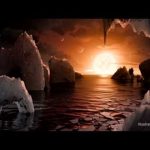
NASA’s Spitzer Reveals Largest Batch of Earth-Size, Habitable-Zone Planets Around a Single Star
NASA held a news conference Feb. 22 at the agency’s headquarters to discuss the finding by the Spitzer Space Telescope of seven Earth-sized planets around a tiny, nearby, ultra-cool dwarf star. Three of these planets are in the habitable zone, the region around the star in which liquid water is most likely to thrive on a rocky planet. This is the first time so many planets have been found in a single star’s habitable zone, and the first time so many Earth-sized planets have been found around the same star. The finding of this planetary system, called TRAPPIST-1, is the best target yet for studying the atmospheres of potentially habitable, Earth-sized worlds