🚩 If you like what you see, consider supporting my work on Patreon and you get ad-free early access to my videos for as little as $1 https://www.patreon.com/historymarche — You can also show your support by subscribing to the channel and liking the video. Thank you for watching.
📢 Narrated by David McCallion
🎼 Music: EpidemicSound Filmstro
📚 Sources: The Gibraltar Crusade: Castile and the Battle for the Strait – Joseph F. O’Callaghan (2011) The Reconquista: The History and Legacy of the Conflicts Between the Moors and Christians on the Iberian Peninsula – Charles River Editors (2018) The Reconquest of Spain – Derek Lomax (1978) The Portuguese in the Age of Discovery 1340-1665 – David Nicolle (2012)
A new study shows that the Nord Stream methane leak that happened in 2022 was bigger than we thought. How much bigger? Watch our video until the end to find out.
📹 European Space Agency (ESA) 📸 Pexels, contains modified Copernicus Sentinel data (2022), processed by ESA, GHGSat, Pléiades Neo, Planet Labs PBC
🚩 If you like what you see, consider supporting my work on Patreon and you get ad-free early access to my videos for as little as $1 https://www.patreon.com/historymarche — You can also show your support by subscribing to the channel and liking the video. Thank you for watching.
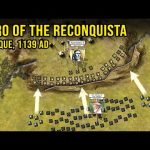
The Battle of Ourique is a defining moment in the history of Portugal, as it was here that Afonso Henriques was on July 25, 1139, proclaimed the first King of Portugal by his troops after defeating the Moorish army. The significance of the battle of Ourique cannot be overstated for it secured the founding of the Kingdom of Portugal.
The five blue shields at the very centre of the flag of Portugal represent the five Moorish kings that were defeated by Portugal’s first King Afonso Henriques in the battle of Ourique 1139. The white central shield is the personal armor of this same King and was said to have been given to him in a vision of the crucified Christ on the eve of battle.
📢 Narrated by David McCallion
🎼 Music: EpidemicSound Filmstro
📚 Sources: The Reconquest Kings of Portugal: Political and Cultural Reorientation on the Medieval Frontier – Stephen Lay (2008) Between Silences: The Coronation of Portuguese Medieval Kings (12th–14th Centuries) – Carla Varela Fernandes (2020) The Teaching of military history at Portuguese universities: Pride and Prejudice – João Gouveia Monteiro (2021) The History of Medieval Portugal in the Deducao cronologica analitica – Filipe Alves Moreira (2022) The Kingdom of León-Castilla under King Alfonso VII, 1126–1157 – Bernard F. Reilly (1998) Between God and the King: The world of military orders – Isabel Cristina Ferreira Fernandes (2018) A History of Portugal and the Portuguese Empire, volume I, Cambridge University Press – Anthony Disney (2009) The Reconquista and Its Legacy, 1000-1348 – António Henriques (2017) Fantastic Stories of the History of Portugal – João Ferreira (2010)
Correction: 10:48 The location of the battle is heavily debated. Contemporary sources said that they do not know where the battle took place, only that it took place on “fields near Ourique”. But today many historians argue that Alfonso couldn’t lead a full military campaign in Alentejo with his limited resources, so deep in Muslim territory (he was only a count with a small realm). A more plausible location is suggested near Vila Chã de Ourique, which was closer to Portugal’s traditional lands. Nevertheless, historians are divided between Ourique in Alentejo and Vila Chã de Ourique further north – my opinion is that Vila Chã de Ourique is much more plausible.
🚩 Visit https://betterhelp.com/historymarche or use “historymarche” when you sign up to get a special discount on your first month of therapy with our sponsor BetterHelp. 🚩 If you have any questions about the brand relating to how the therapists are licensed, their privacy policy, or therapist compensation model, check out this FAQ: https://www.betterhelp.com/your-questions-answered/
🚩 If you like what you see, consider supporting my work on Patreon and you get ad-free early access to my videos for as little as $1 https://www.patreon.com/historymarche — You can also show your support by subscribing to the channel and liking the video. Thank you for watching.
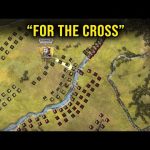
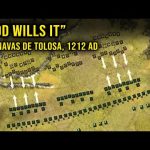
🚩 In early 13th century, crusade was a new concept in Iberia, just beginning to take hold and influence their approach to the regular warfare with their Muslim neighbors. However, the clash at Las Navas helped to solidify and expand the acceptance of crusade ideology in the minds of the Iberian Christians in the ensuing years. This was a turning point in the age of Reconquista…
📢 Narrated by David McCallion
🎼 Music: EpidemicSound Filmstro
📚 Sources Joseph F. O’Callaghan – A History of Medieval Spain Joseph F. O’Callaghan – Reconquest and Crusade in Medieval Spain George F. Nafziger, Mark W. Walton – Islam at War: A History Kenneth M. Setton et. al. – A History of the Crusades Vol. II: The Later Crusades
Our Plankton, Aerosol, Cloud ocean Ecosystem (PACE) mission will study what makes Earth so different from every other planet we study: life itself.
Three-quarters of our home planet is covered by water, and PACE’s advanced instruments will provide new ways to measure the distributions of microscopic algae known as phytoplankton near the ocean’s surface. Those observations will enhance our understanding of the crucial exchange of CO2 between the ocean and atmosphere.
At the same time, PACE will help reveal how aerosols – microscopic particles in the atmosphere – and clouds control the amount of the Sun’s energy that is absorbed by Earth. Novel uses of PACE data will benefit our economy and society, and will extend and expand NASA’s long-term observations of our living planet.
PACE is scheduled to lift off at 1:33 a.m. EST (0633 UTC) Thursday, Feb. 8, on a SpaceX Falcon 9 rocket from Space Launch Complex 40 at Cape Canaveral Space Force Station in Florida. NASA’s live launch coverage begins at 12:45 a.m. EST (0545 UTC).
The main goal of the Jupiter Icy Moons Explorer, Juice, is to characterise Jupiter’s icy moons as both planetary objects and possible habitats. But by observing Jupiter’s atmosphere, magnetosphere, and system of moons and rings, the mission will also reveal how different aspects of the planet’s environment affect one another. In this way, Juice will improve our knowledge of Jupiter as a unique planet and as a whole system.
With Jupiter being like a ‘mini solar system’, we will be able to apply this knowledge to our own Solar System and other planetary systems in the Universe, improving our understanding of how gas giants form and behave, and the potential for life to exist on their orbiting worlds. This knowledge will feed into our exoplanet monitoring programme, which currently consists of a trifecta of dedicated missions – Cheops, Plato and Ariel – complemented by Webb.
★ Subscribe: http://bit.ly/ESAsubscribe and click twice on the bell button to receive our notifications.
We are Europe’s gateway to space. Our mission is to shape the development of Europe’s space capability and ensure that investment in space continues to deliver benefits to the citizens of Europe and the world. Check out https://www.esa.int/ to get up to speed on everything space related.
🚩 This video was produced in collaboration with Bulgarian Empire Mapping, check out their channel and give them the credit that they deserve! https://www.youtube.com/channel/UCD-0LPbxri4fSvd0UoisIfg – Big shout to BEM for collaborating with us on this video!
🚩 Heraclius’ campaigns are an example of an indirect approach to war strategy. And although his gains would be swiftly lost in the wake of the Muslim Conquest, the method by which they were achieved would remain a point of pride in Byzantine military history.
📜 Sources: Howard-Johnston J. The Last Great War of Antiquity. Oxford University Press 2021. Kaegi W. Heraclius Emperor of Byzantium. Cambridge University Press 2003. Daryaee T. Sasanian Persia. IB Tauris 2009. Kaegi W. Byzantine Military Unrest 471-843. Adolf M Hakkert 1981. Kardaras G. Byzantium and the Avars, 6th-9th Century AD. Brill 2019. Luttwak E. The Grand Strategy of the Byzantine Empire. Belknap Press of Harvard University Press 2009. Pohl W. The Avars. Cornell University Press 2018. Pourshariati P. Decline and Fall of the Sasanian Empire. IB Tauris 2008. Reinink G, Stolte B (eds.). The Reign of Heraclius (610-641). Peeters 2002. Maksymiuk K. Geography of Roman-Iranian Wars. Uniwersytet Przyrodniczo-Humanistyczny w Siedlcach, Siedlce 2015. Greatrex G, Lieu S. The Roman Eastern Frontier and the Persian Wars: Part II AD 363-630. Routledge 2002.
The Eastern Roman Empire was under constant Ottoman pressure ever since the new conquerors appeared in the Anatolia. Although the Ottomans tried to take Constantinople on a number of occasions, they had to lift the siege of the city due to the Crusades of Varna and Nicopolis, the Timurid Invasion and the battle of Ankara, and the Interregnum period that happened after their Sultan Bayezid was taken hostage by Timur. However, after the victories at the battles of Varna (1444) and 2nd Kosovo (1448) against the crusaders of Wladyslaw III and John Hunyadi, the road to Constantinople was open and the new sultan Mehmed II set his sight on the city of the Roman emperors…
We are grateful to our patrons, who made this video possible: Matthew Levy, Rene Malmgren, Ibrahim Rahman, Koopinator, Daisho, Łukasz Maliszewski, William Fluit, Juan Camilo Rodriguez, Murray Dubs, Félix Gagné-Dion, Fahri Dashwali, Kyle Hooton, Dan Mullen, Mohamed Thair, Pablo Aparicio Martínez, Iulian Margeloiu, Chet, Nick Nasad, Jeyares, Amir Eppel, Thomas Bloch, Uri Sternfeld, Georgi Kirilov, Mohammad Mian, Daniel Yifrach, Brian Crane, Muramasa, Gerald Tnay, Hassan Ali, Richie Thierry, David O’Hare, Christopher Commins, Chris Glantzis, William Pugh, Stefan Dt, indy, Bashir Hammour, Mario Nickel, R.G. Ferrick, Moritz Pohlmann, Russell Breckenridge, Jared R. Parker, Kassem Omar Kassem, AmericanPatriot, Robert Arnaud, Christopher Issariotis, John Wang, Joakim Airas, Nathanial Eriksen, Joakim Airas, Chuan Kit Kee, John Padalis, Raphaël Dordeins, Donovan Moore, Howie Truong, Chuan Kit Kee, Håvard Siegel Haukeberg, ccplz, Tepes Obrejac, Jon, Emil Johansson, Patrick Riordan, Marc Kuiper, Qamil Lita, Jack Roelofs, Fernando Henrique, iMattyz, Rbj, Frat, The Noob Game Developer, Jacob Filmer, Travis Tiffany, Andreas Ekström, Zachary Marhal, Tomás Cortés Benjumea, Mensur Hamzic, Maxwell Gaughran, Kristofer Eriksson, Dave Ormsby, Aaron Snakenberg, Razen Alsuwaihel, Scott Buster, Erik W Thurnher, Tim Taylor, Aldo Schepis and Umar Farooq.
The Machinimas for this video are created by one more friend – Malay Archer. Check out his channel, he has some of the best Total War machinimas ever created: https://www.youtube.com/user/MathemedicUpdates/videos
Tracking the movement of Earth’s water, resupplying the International Space Station, and our Administrator testifies about the agency’s proposed budget – a few of the stories to tell you about – This Week at NASA!
This video is available for download from NASA’s Image and Video Library: https://images.nasa.gov/details-NHQ_2018_0525_Following%20the%20movement%20of%20Earth%E2%80%99s%20water%20on%20This%20Week%20@NASA%20%E2%80%93%20May%2025,%202018.html
Findings published March 15 in the journal Nature from a series of flight tests in 2013 and 2014 near NASA’s Armstrong Flight Research Center in California indicate that using biofuels helps jet engines reduce particle emissions in exhaust by as much as 50 to 70 percent. That’s both an economic and an environmental benefit. The findings were based on data from the Alternative Fuel Effects on Contrails and Cruise Emissions Study, or ACCESS. The international research program led by NASA and involving agencies from Germany and Canada, studied the effects of alternative fuels on aircraft-generated contrails, engine performance and emissions. Also, NASA @SXSW Interactive Festival, Satellites See Winter Storm from Space, CST-100 Starliner Parachute Testing, and NASA’s Pi Day Challenge!
Hear from Head of School: Engineering, Associate Professor Brenton Dansie and final year University of South Australia Engineering students as they showcase their student projects.
For more from University of South Australia visit: