Tag: Telecommunication

  • Advanced Research in Telecommunications Systems (ARTES) 4.0

    Advanced Research in Telecommunications Systems (ARTES) 4.0

    Satellite communication underpins everyday life, enabling fundamental improvements not just in communication, but also in transport, healthcare, safety and security, environmental services and many other industries.

    The Advanced Research in Telecommunications Systems (ARTES) 4.0 programme enables European and Canadian industry to explore, through research and development, innovative concepts that stimulates the wider economy, creating new business and jobs across almost every industry. ARTES 4.0 supports the production of market-leading and cutting-edge products and services within a fiercely competitive global satellite communications market.

    Learn more: https://connectivity.esa.int/

    Credits: ESA – European Space Agency

    ★ Subscribe: http://bit.ly/ESAsubscribe and click twice on the bell button to receive our notifications.

    Check out our full video catalog: http://bit.ly/SpaceInVideos
    Follow us on Twitter: http://bit.ly/ESAonTwitter
    On Facebook: http://bit.ly/ESAonFacebook
    On Instagram: http://bit.ly/ESAonInstagram
    On LinkedIn: https://bit.ly/ESAonLinkedIn
    On Pinterest: https://bit.ly/ESAonPinterest
    On Flickr: http://bit.ly/ESAonFlickr

    We are Europe’s gateway to space. Our mission is to shape the development of Europe’s space capability and ensure that investment in space continues to deliver benefits to the citizens of Europe and the world. Check out https://www.esa.int/ to get up to speed on everything space related.

    Copyright information about our videos is available here: https://www.esa.int/ESA_Multimedia/Terms_and_Conditions

    #ESA #Satellite #Telecommunications

  • What is ESA’s Moonlight initiative?

    What is ESA’s Moonlight initiative?

    Going to the Moon was the first step. Staying there is the next ambition.

    ESA is a key partner in NASA’s Artemis programme, which aims to return people to the Moon by the end of the decade. Dozens of other international public and private missions are setting their sights on the lunar surface in the coming years.

    But to achieve a permanent and sustainable presence on the Moon, reliable and autonomous lunar communications and navigation services are required.

    This is why ESA is working with its industrial partners on the Moonlight initiative, to become the first off-planet commercial telecoms and satellite navigation provider.

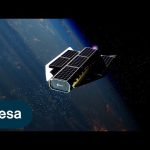
    Following their launch, three or four satellites will be carried into lunar orbit by a space tug and deployed one by one, to form a constellation of lunar satellites. The number and specification of these satellites are currently being defined.

    The constellation’s orbits are optimised to give coverage to the lunar south pole, whose sustained sunlight and polar ice make it the focus of upcoming missions.

    Moonlight will provide data capacities sufficient to serve these planned and future missions, with a navigation service that enables accurate real-time positioning for all lunar missions.

    ★ Subscribe: http://bit.ly/ESAsubscribe and click twice on the bell button to receive our notifications.

    Check out our full video catalog: http://bit.ly/SpaceInVideos
    Follow us on Twitter: http://bit.ly/ESAonTwitter
    On Facebook: http://bit.ly/ESAonFacebook
    On Instagram: http://bit.ly/ESAonInstagram
    On Flickr: http://bit.ly/ESAonFlickr

    We are Europe’s gateway to space. Our mission is to shape the development of Europe’s space capability and ensure that investment in space continues to deliver benefits to the citizens of Europe and the world. Check out https://www.esa.int/ to get up to speed on everything space related.

    Copyright information about our videos is available here: https://www.esa.int/ESA_Multimedia/Terms_and_Conditions

    #ESA
    #Moon
    #MoonLight

  • Large antenna deployment

    Large antenna deployment

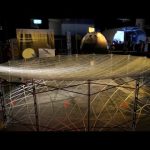
    A 5 m-diameter antenna reflector, designed for orbital operations, seen during a test deployment during ESA’s latest Large Deployable Antenna Workshop.

    Large-scale antenna reflectors are increasingly required for telecommunications, science and Earth observation missions.

    This metal mesh reflector has a ‘double pantograph’ design to form a deployable ring. Once deployed it tensions two opposing, but connected, parabolic shaped nets, one on the top and one on the bottom.

    Read more here: http://www.esa.int/spaceinimages/Images/2016/11/Large_antenna_deployment

  • Working as a Telecommunications Engineer in ECSAT

    Working as a Telecommunications Engineer in ECSAT

    Gonzalo Martín-de-Mercado specialises in optical telecommunications. He speaks about how his academic background helps him to support collaboration between ESA and companies.

    More about Careers at ESA:
    http://www.esa.int/careers