Tag: Test Centre

  • Noordwijk shake

    Noordwijk shake

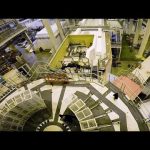
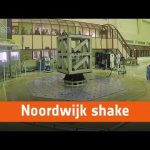
    ESA’s Test Centre based in Noordwijk, the Netherlands, simulates every aspect of space for satellite testing – including recreating the equivalent vibration of a rocket launch. This is ESA’s most powerful shaker: the Hydra hydraulic shaker, able to generate vibration equivalent to a 7.5 Richter scale  earthquake.

    Find out more about the test centre: http://www.esa.int/Our_Activities/Space_Engineering_Technology/Test_centre

    ★ Subscribe: http://bit.ly/ESAsubscribe

    Check out our full video catalog: http://bit.ly/SpaceInVideos
    Follow ESA on Twitter: http://bit.ly/ESAonTwitter
    On Facebook: http://bit.ly/ESAonFacebook
    On Instagram: http://bit.ly/ESAonInstagram
    On Flickr: http://bit.ly/ESAonFlickr

    ESA is Europe’s gateway to space. Our mission is to shape the development of Europe’s space capability and ensure that investment in space continues to deliver benefits to the citizens of Europe and the world. Check out http://www.esa.int/ESA to get up to speed on everything space related.

    Copyright information about our videos is available here: http://www.esa.int/spaceinvideos/Terms_and_Conditions
  • Orion service module – from components to shipping

    Orion service module – from components to shipping

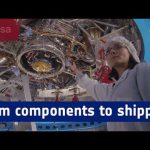
    A look at the elements that make up the European service module that will provide power, water, air and electricity to NASA’s Orion Moon module.

    Made in Europe the service module is integrated in Bremen, Germany, from where it will be shipped to NASA’s Kennedy Space Center in the USA for testing and getting ready for launch.

    Inside the Service Module, large tanks hold fuel as well consumables for the astronauts: oxygen, nitrogen and water.

    Radiators and heat exchangers keep the astronauts and equipment at a comfortable temperature, while the module’s structure is the backbone of the entire vehicle, like a car chassis.

    The European Service Module is built by main contractor Airbus, with many companies all over Europe supplying components.

    Orion will eventually fly beyond the Moon with astronauts, the first time a spacecraft will support humans with European hardware will also be the farthest humans ever travel from Earth. The first mission – without astronauts – is getting ready for launch in 2019.

    Find out more about Orion and ESM: http://www.esa.int/orion

    ★ Subscribe: http://bit.ly/ESAsubscribe

    Check out our full video catalog: http://bit.ly/SpaceInVideos

    Follow ESA on Twitter: http://bit.ly/ESAonTwitter
    On Facebook: http://bit.ly/ESAonFacebook
    On Instagram: http://bit.ly/ESAonInstagram
    On Flickr: http://bit.ly/ESAonFlickr

    ESA is Europe’s gateway to space. Our mission is to shape the development of Europe’s space capability and ensure that investment in space continues to deliver benefits to the citizens of Europe and the world.

    Check out http://www.esa.int/ESA to get up to speed on everything space related.

  • BepiColombo prepares for Mercury

    BepiColombo prepares for Mercury

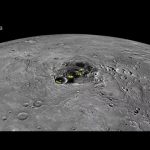
    ESA’s first mission to Mercury, BepiColombo, is now set for final thermal tests before launching to the hottest planet in our Solar System in October 2018. Europe said farewell to the spacecraft in July when it was at the European Space Research and Technology Centre (ESTEC) in Noordwijk, the Netherlands, in its launch configuration.

    BepiColombo is a joint mission to Mercury between the ESA and the Japan Aerospace Exploration Agency (JAXA) and consists of two science orbiters: ESA’s Mercury Planetary Orbiter and JAXA’s Mercury Magnetospheric Orbiter.

    More about BepiColombo:
    http://www.esa.int/Our_Activities/Space_Science/BepiColombo_overview2

  • ESA-RAL Advanced Manufacturing Laboratory

    ESA-RAL Advanced Manufacturing Laboratory

    Located on the UK Space Gateway, Harwell Campus, the ESA-RAL Advanced Manufacturing Laboratory provides expertise and test services to investigate and optimise advanced materials and manufacturing processes in support of cutting-edge research and development. The facility is physically located within the Science and Technology Facilities Council’s Rutherford Appleton Laboratory (RAL).

    The laboratory takes in samples of material destined for future space projects and puts them through various tests. A wide range of material properties and characteristics can be investigated in order to provide recommendations on how the materials can best be applied or improved before they can be considered for further development and used in a fully-fledged space mission. It has access to a metal-based 3D printer and is equipped with a suite of powerful microscopes, an X-ray CT machine and a range of furnaces.

    Mechanical testing such as tensile and micro hardness testing is also performed.The lab is a gateway to accessing some of the extensive on-site testing facilities based on Harwell Campus, such as STFC’s ISIS Neutron Source, the Diamond Light Source synchrotron and the UK’s Central Laser Facility.

    More about the new lab on our website:
    http://www.esa.int/Our_Activities/Space_Engineering_Technology/New_lab_for_advanced_manufacturing_techniques_and_materials

  • Testing ESA’s Mercury mission

    Testing ESA’s Mercury mission

    Europe’s Mercury mission is moved through ESA’s ESTEC Test Centre in this new video, positioning it for testing inside the largest vacuum chamber in Europe, for a trial by vacuum.

    BepiColombo, Europe’s first mission to study Mercury, is a joint mission with Japan. Two spacecraft – the Mercury Planetary Orbiter and the Mercury Magnetospheric Orbiter – will fly in two different paths around the planet to study it from complementary perspectives.

    Flight hardware for the mission is undergoing testing at ESA’s Technical Centre, ESTEC, in Noordwijk, the Netherlands, the largest spacecraft test facility in Europe, to prepare for its 2016 launch.

    The Mercury Planetary Orbiter was placed inside the chamber in late October for ‘thermal–vacuum’ testing. It will sit in vacuum until early December, subjected to the equivalent temperature extremes that will be experienced in Mercury orbit.

    Liquid nitrogen runs through the walls of the chamber to recreate the chill of empty space, while an array of lamps focuses simulated sunlight 10 times more intense than on Earth.