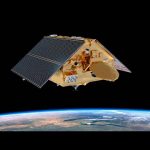
The world’s latest Earth-observing satellite, Sentinel-6 Michael Freilich, is set for launch on Nov. 21 from Vandenberg Air Force Base in California. Tune in live on Fri., Nov, 20 at 3:30 p.m EST (8:30 p.m. UTC) to learn about the science of this U.S-European mission, which will closely monitor sea level and provide atmospheric data to support weather forecasting and climate models. Hear from experts including project scientists and oceanographers at NASA, the European Space Agency, the European Organisation for the Exploitation of Meteorological Satellites, NASA’s Jet Propulsion Laboratory, and the University of Washington.
Tag: the
-
SpaceX’s CRS-21 Mission to the Space Station: What’s On Board
The 21st SpaceX cargo resupply mission that will launch from NASA’s Kennedy Space Center in Florida carries a variety of critical research and technology demonstrations to the International Space Station. The mission will be the first on an upgraded version of the company’s Dragon cargo spacecraft that can carry more science payloads to and from the orbiting laboratory. The craft’s cargo includes critical materials that support research ranging from heart disease to asteroid mining and a new commercial airlock as part of NASA’s goal to achieve a sustainable economy in low-Earth orbit. Learn more here: https://go.nasa.gov/3pzkkt8
-
Watch the Launch of NASA’s SpaceX Crew-1 Mission to the International Space Station
Watch as we #LaunchAmerica! Join us for live coverage of SpaceX Crew-1, the first crew rotation flight to the International Space Station by a U.S. commercial spacecraft. The crew is set to arrive at the International Space Station on Monday, Nov. 16 at 11 p.m. EST (Nov. 17 at 4 a.m. UTC). Watch continuous coverage of their entire ride, HERE: https://youtu.be/21X5lGlDOfg
The Crew Dragon ‘Resilience’ will carry astronauts Michael Hopkins, Victor Glover, and Shannon Walker of NASA and Soichi Noguchi of JAXA (Japan Aerospace Exploration Agency) to the station. Liftoff was at 7:27 p.m. EST, Sunday, Nov. 15 from Launch Complex 39A at NASA’s Kennedy Space Center in Florida.
Learn more about the mission: https://www.nasa.gov/crew-1
-
Paolo Ferri on the culture at mission control | ESA Masterclass
Step inside the Main Control Room at ESOC, ESA’s European Space Operations Centre in Darmstadt, Germany, and one thing becomes immediately clear: teams that operate space missions are highly hierarchical, and the Flight Director is indisputably in charge.
How does this work, and why is this the case? In the last of his Masterclass series, Paolo Ferri delves into the culture of operations, from written rules and procedures to equally important unwritten principles that guide the day-to-day working lives of those flying Europe’s spacecraft.
Paolo explains that on rare occasions, an internal battle takes place when protocols, procedures and flight rules don’t seem up to the task, and someone must assume the huge responsibility of deciding whether or not they need to be violated to keep a mission functioning.
With 36 years’ of experience at ESA, Paolo Ferri is responsible for mission operations, and he has played a leading role in ensuring the success of missions like Eureca, ESA’s first-ever reusable satellite; Cluster, one of the longest-flying science missions; Venus Express, Europe’s first exploration of Earth’s ‘evil twin’; and Rosetta, humanity’s first landing on a comet.
In five episodes of ‘Leadership at Mission Control’, Paolo takes us through major events in his career at ESA, covering cornerstone missions, first attempts, overcoming technical challenges, building diverse teams, working under pressure and solving the unexpected problems that are part of any space endeavour.
This is the last episode of the ESA Masterclass series with Paolo Ferri. Thank you very much for watching!
★ Subscribe: http://bit.ly/ESAsubscribe and click twice on the bell button to receive our notifications.
Check out our full video catalog: http://bit.ly/SpaceInVideos
Follow us on Twitter: http://bit.ly/ESAonTwitter
On Facebook: http://bit.ly/ESAonFacebook
On Instagram: http://bit.ly/ESAonInstagram
On Flickr: http://bit.ly/ESAonFlickrWe are Europe’s gateway to space. Our mission is to shape the development of Europe’s space capability and ensure that investment in space continues to deliver benefits to the citizens of Europe and the world. Check out http://www.esa.int/ESA to get up to speed on everything space related.
Copyright information about our videos is available here: http://www.esa.int/spaceinvideos/Terms_and_Conditions
#ESA
#MasterClass
#MissionControl -

The Next Space Station Crew Launching From America on This Week @NASA – November 13, 2020
The next space station crew launching from America, a mission milestone for our next Mars rover, and an update on a future Mars sample return mission … a few of the stories to tell you about – This Week at NASA!
Download Link https://images.nasa.gov/details-The%20Next%20Space%20Station%20Crew%20Launching%20From%20America%20on%20This%20Week%20@NASA%20%E2%80%93%20November%2013,%202020
-

Alexander the Great (All Parts)
Thank you to Invicta for their help making this series, and suppling all Total War game footage.
Game Engine: Total War: Rome II https://www.totalwar.com/
Buy the game here: http://geni.us/kiR7NhoEpic History TV’s complete four-part history of Alexander the Great in one video. Follow the incredible story of the Macedonian king as he embarks on the total conquest of the ancient world’s greatest superpower, the Persian Empire. With dramatic victories at the Granicus, Issus and Gaugamela, Alexander defeats Darius III and claims the throne of Persia. But his campaign to subdue the empire’s easternmost provinces and reach the edge of the known world will take him into modern Afghanistan, Pakistan and the frontier of India, where he meets the Indian king Porus in battle at the Hydaspes. This is the complete overview of Alexander’s conquests, a 10 year period of immense drama and historical significance, as the young Macedonian king’s breathtaking achievements ushered in a new era in European and Middle Eastern history – the Hellenistic Age.
Help me make more videos by supporting Epic History TV on Patreon https://www.patreon.com/EpicHistoryTV
Get exclusive Epic History TV merch here:
https://teespring.com/en-GB/stores/epic-history-tv-merch-shop🎶🎶 Music from Filmstro: https://filmstro.com/?ref=7765
Get 20% off an annual license with code EPICHISTORYTV_ANNProduced in partnership with Osprey Publishing
https://ospreypublishing.com/Warrior: Macedonian Warrior
https://ospreypublishing.com/macedonian-warrior-pbMen-at-Arms: The Army of Alexander the Great
https://ospreypublishing.com/the-army-of-alexander-the-great-pbCampaign: Granicus 334 BC
https://ospreypublishing.com/granicus-334-bc-pbThe Persian Army 560 – 330 BC:
https://ospreypublishing.com/the-persian-army-560-330-bc-pbSpecial thanks to Chris Stevens for Gordian Knot footage!
Images:
Alexander the Great Mosaic Remastered – with thanks to Miłek Jakubiec
Parthenon – Dennis Jarvis via Flickr (CC BY-SA 2.0)
Socrates – Bar Harel via Wikimedia (CC BY-SA 4.0)
White Mountains of Crete – Tobias von der Haar via Flickr (CC BY-SA 2.0)
Acropolis – Aleksandr Zykov via Flickr (CC BY-SA 2.0)
Theatre of Dionysus – Sébastien Bertrand via Flickr (CC BY-SA 2.0)
Sparta – Ronny Siegel via Flickr (CC BY-SA 2.0)
Macedonian mountains – Novica Nakov via Flickr (CC BY-SA 2.0)
Vergina sun – SilentResident via Wikimedia (CC BY-SA 3.0)
Standard of Cyrus the Great – Sodacan via Wikimedia (CC BY-SA 3.0)
Golden Wheat – Mr Hicks46 via Flickr (CC BY-SA 2.0)
Knot – JP Davidson via Flickr (CC BY-SA 2.0)
Amun – Jeff Dahl via WM (CC BY-SA 2.0)
Columns – Marco Zanferrari, via Flickr (CC BY-SA 2.0)
JakubiecDoric Columns – Dimitry B. via Flickr (CC BY-SA 2.0)
Lar Plain, Iran – Ninara via Flickr (CC BY-SA 2.0)
Treasury Reliefs – Alan via Flickr (CC BY-SA 2.0)
Columns by Matt Sherlock via Flickr (CC BY-SA 2.0)
Hindu Kush Scene by 401st_AFSB via Flickr (CC BY-SA 2.0)
Baluchistan by Beluchistan via Flickr (CC BY-SA 2.0)
Bust of Alexander the Great by shakko via Wikimedia Commons (CC BY-SA 3.0)
Ruins at Pergamon by Peter via Flickr (CC BY-SA 2.0)
Hephaestion Digital image courtesy of the Getty’s Open Content Program.#EpicHistoryTV #AlexandertheGreat
-

#LaunchAmerica: Ready for the Next NASA and SpaceX Mission?
It’s not just Mission Control counting down – how are you getting ready for the next #LaunchAmerica mission? From building your own rocket to binge-watching launch coverage, share a video, photo or simply your thoughts for a chance to be featured on NASA TV and social media, as we prepare for Crew-1, the first certified mission under NASA’s Commercial Crew Program.
Click here for terms and conditions: https://www.nasa.gov/nasa-invites-you-to-launchamerica
Producer/Editor: Lacey Young
Music: Universal Production Music -

Battle of Cannae, 216 BC (Chapter 3) ⚔️ The Carnage ⚔️ Hannibal (Part 13) – Second Punic War
🚩 Watch thousands of documentaries for FREE on CuriosityStream: https://curiositystream.thld.co/historymarcheoct – Use the code “historymarche” to get a 30-day free trial!
👇 Push down for more cool stuff 👇🟥 HANNIBAL PLAYLIST: https://www.youtube.com/playlist?reload=9&list=PLWwyDn76LiH0Cq8lqPuOlZevRlEywpbXf
🚩 Consider supporting our work on Patreon: https://www.patreon.com/historymarche
🟥 Hannibal episode list:
PART 1 https://youtu.be/sF1zOflXZKY
PART 2 https://youtu.be/uSDGqRWcbsk
PART 3 https://youtu.be/1PPH78ahpp0
PART 4 https://youtu.be/Yua17eOTKYY
PART 5 https://youtu.be/MqW2ShfF1nA
PART 6 https://youtu.be/T4Dgc4Zao2U
PART 7 https://youtu.be/CAXMibcpRF8
PART 8 https://youtu.be/XHEAdlDrWM4
PART 9 https://youtu.be/9PtK0e1eWo8
Part 10 https://youtu.be/8Fziza6B0TU
Part 11 https://youtu.be/40HqhhWN93Y
Part 12 https://youtu.be/n7vqMFtT_Yw
Part 13 https://youtu.be/xjnck2XvuPQ📢 Narrated by David McCallion
🚩 Graphics:
Many thanks to Fabio Naskino Fiorenza for allowing us to use his fantastic Hannibal portrait. Check out more of his work here: http://www.puttyandpaint.com/FabioNaskinoFiorenza🎼 Music:
Peaks of Atlas – Omri Lahav📝 Sources:
Adrian Goldsworthy – Cannae, Hannibal’s Greatest Victory
Adrian Goldsworthy – Fall of Carthage
Robert L. O’Connell – The Ghosts of Cannae
Nigel Bagnall – The Punic Wars, 264 – 146 BC
Mark Healy – Cannae 216 BC
Adrian Goldsworthy – Roman Warfare
Polybius – Histories
Dexter Hoyos – A companion to the Punic Wars#carthage #rome #hannibal
-

The Arctic: a delicate icy ecosystem
The Arctic is one of the most rapidly changing regions in the world. Diminishing sea ice, thawing permafrost and melting glaciers are all direct effects of rising global temperatures – driven by human-made emissions. Learn more about how satellites flying 800 km above our heads can help us monitor and understand the changes occurring in this remote region.
★ Subscribe: http://bit.ly/ESAsubscribe and click twice on the bell button to receive our notifications.
Check out our full video catalog: http://bit.ly/SpaceInVideos
Follow us on Twitter: http://bit.ly/ESAonTwitter
On Facebook: http://bit.ly/ESAonFacebook
On Instagram: http://bit.ly/ESAonInstagram
On Flickr: http://bit.ly/ESAonFlickrWe are Europe’s gateway to space. Our mission is to shape the development of Europe’s space capability and ensure that investment in space continues to deliver benefits to the citizens of Europe and the world. Check out http://www.esa.int/ESA to get up to speed on everything space related.
Copyright information about our videos is available here: http://www.esa.int/spaceinvideos/Terms_and_Conditions
#ESA
#EarthObservation
#Arctic -

The Space Station’s Next Crew Heads to Launch Site on This Week @NASA – October 2, 2020
The space station’s next crew heads to their launch site, new cargo launches to the station, and getting ready for a first-of-its-kind crew rotation mission … a few of the stories to tell you about – This Week at NASA!
Download Link: https://images.nasa.gov/details-The%20Space%20Station%E2%80%99s%20Next%20Crew%20Heads%20to%20Launch%20Site%20on%20This%20Week%20@NASA%20%E2%80%93%20October%203,%202020
-

International Observe the Moon Night
Eyes to the skies, humans! On Saturday, Sept. 26, we are celebrating International #ObserveTheMoon Night with Earth’s very best friend: the Moon 🌝🌛🌚 Join us live for tips on photographing the Moon, a look at our missions exploring the Moon, and #AskNASA Q&A’s with lunar scientists. More: https://moon.nasa.gov/observe
-
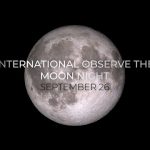
International Observe the Moon Night – Sept. 26 2020
On September 26, 2020, Moon enthusiasts and curious people worldwide will come together to celebrate International Observe the Moon Night. Everyone on Earth is invited to learn about lunar science and exploration, take part in celestial observations, and honor cultural and personal connections to the Moon. International Observe the Moon Night occurs annually in September or October, when the Moon is around first quarter ― a great phase for evening observing.
You can join International Observe the Moon Night from wherever you are. Attend or host a virtual or in-person event, or observe the Moon from home. Connect with fellow lunar enthusiasts around the world through our Facebook page, use #ObserveTheMoon on your preferred social media platform, and join the International Observe the Moon Night Flickr group.
Learn more and find program resources on moon.nasa.gov/observe.
This video is available from NASA’s Image and Video Library: https://images.nasa.gov/details-NHQ_2020_0914_Observe%20the%20moon%20promo
Producer Credit: Sonnet Apple
Music: Universal Production Music -
Meet the Experts: Designing space missions
Space missions are complex and require input from many specialists. The Concurrent Design Facility (CDF) is where most of ESA missions are conceived and conceptually designed. In this episode of Meet the Experts, Massimo Bandecchi, the founding father of ESA’s CDF, explains Concurrent Design (CD) and some of the missions studied using this methodology.
Find more episodes in the series: https://www.esa.int/Education/Expedition_Home/12_-_18_years_old
★ Subscribe: http://bit.ly/ESAsubscribe and click twice on the bell button to receive our notifications.
Check out our full video catalog: http://bit.ly/SpaceInVideos
Follow us on Twitter: http://bit.ly/ESAonTwitter
On Facebook: http://bit.ly/ESAonFacebook
On Instagram: http://bit.ly/ESAonInstagram
On Flickr: http://bit.ly/ESAonFlickrWe are Europe’s gateway to space. Our mission is to shape the development of Europe’s space capability and ensure that investment in space continues to deliver benefits to the citizens of Europe and the world. Check out http://www.esa.int/ESA to get up to speed on everything space related.
Copyright information about our videos is available here: http://www.esa.int/spaceinvideos/Terms_and_Conditions
#ESA
#MeetTheExperts
#ExpeditionHome -
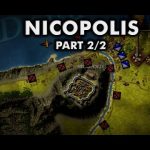
Battle of Nicopolis, 1396 AD ⚔️ Part 2 of 2 ⚔️ The Ottomans confront Europe
🚩 Download Guns of Glory now and Help Support Our Channel ► http://patron.me/HistoryMarcheGOG
New users can get an in-game starter pack with my creator code historygog and you will have a chance to win a $50 Amazon gift card!
Please check the details of the giveaways here: https://forms.gle/gLErJW2FShxMJxh56All Guns of Glory events mentioned in the video only available to players in Kingdom#1 to Kingdom#590.
👇 Push down for more cool stuff 👇
🚩 Consider supporting our work on Patreon: https://www.patreon.com/historymarche
📢 Narrated by David McCallion
🎼 Music:
EpidemicSound.com📝 Sources:
A Military History of the Ottomans – Mesut Uyar
Tuchman (of course 😏)
David Nicolle – Nicopolis 1396, the Last Crusade
Runciman – A history of the Crusades#historymarche #ottomanempire #gunsofglory
-

Comets | Meet the experts
Comets are small objects of loosely packed ice and dust. Sometimes oddly shaped, they can tell us much about the formation of our Solar System. Cometary scientist Charlotte Götz discusses comets, their formation and their study in this week’s episode of Meet the Experts.
Find more episodes in the series here: https://www.esa.int/Education/Expedition_Home/12_-_18_years_old
★ Subscribe: http://bit.ly/ESAsubscribe and click twice on the bell button to receive our notifications.
Check out our full video catalog: http://bit.ly/SpaceInVideos
Follow us on Twitter: http://bit.ly/ESAonTwitter
On Facebook: http://bit.ly/ESAonFacebook
On Instagram: http://bit.ly/ESAonInstagram
On Flickr: http://bit.ly/ESAonFlickrWe are Europe’s gateway to space. Our mission is to shape the development of Europe’s space capability and ensure that investment in space continues to deliver benefits to the citizens of Europe and the world. Check out http://www.esa.int/ESA to get up to speed on everything space related.
Copyright information about our videos is available here: http://www.esa.int/spaceinvideos/Terms_and_Conditions
#ESA
#MeetTheExperts
#ExpeditionHome -

Battle of Nicopolis, 1396 AD ⚔️ Part 1 of 2 ⚔️ The Crusade Beckons
🚩 Watch thousands of documentaries for FREE on CuriosityStream: http://go.thoughtleaders.io/1600320200805 – Use the code “historymarche” to get a 30-day free trial!
👇 Push down for more cool stuff 👇🚩 Consider supporting our work on Patreon: https://www.patreon.com/historymarche
📢 Narrated by David McCallion
🎼 Music:
EpidemicSound.com#ottomanempire #curiositystream #historymarche
-

First Battle of Tarain, 1191 AD ⚔️ The First Islamic Conquest of India
🚩 Start playing WOTs now! Register into the game through the link below https://tanks.ly/33vyfYq , activate the invite code TANKTASTIC and get a huge starter pack of: Premium Tank: T-127 (Soviet – tier 3) — 7 premium days — 500 Gold
👇 Push down for more cool stuff 👇🚩 Consider supporting our work on Patreon: https://www.patreon.com/historymarche
🚩 Check out Hoc Est Bellum channel! This video would not have been possible without him https://www.youtube.com/channel/UCl5m12RUvypT4e7w-mWrzsA
📢 Narrated by David McCallion
🎼 Music, courtesy of EpidemicSound
#tarain #worldoftanks #india
-

Targeting the Next U.S. Launch of Astronauts on This Week @NASA – August 21, 2020
Targeting the next U.S. launch of astronauts, another successful space station resupply mission, and honoring pilots for National Aviation Day … a few of the stories to tell you about – This Week at NASA!
Download Link: https://images.nasa.gov/details-Targeting%20the%20Next%20U.S.%20Launch%20of%20Astronauts%20on%20This%20Week%20@NASA%20August%2021,%202020
-
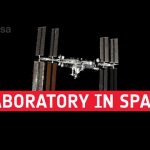
Meet the Experts: Laboratory in Space
Flying 400km above our heads, the International Space Station (ISS) is the world’s laboratory in space. But what kind of research is done there and how does it affect our lives on Earth? ESA expert Dr. Jason Hatton discusses notable research from the ISS and how the unique location of this facility allows us to explore never-before-seen phenomena in this episode of Meet the Experts.
Find more episodes in the series here: https://www.esa.int/Education/Expedition_Home/12_-_18_years_old
★ Subscribe: http://bit.ly/ESAsubscribe and click twice on the bell button to receive our notifications.
Check out our full video catalog: http://bit.ly/SpaceInVideos
Follow us on Twitter: http://bit.ly/ESAonTwitter
On Facebook: http://bit.ly/ESAonFacebook
On Instagram: http://bit.ly/ESAonInstagram
On Flickr: http://bit.ly/ESAonFlickrWe are Europe’s gateway to space. Our mission is to shape the development of Europe’s space capability and ensure that investment in space continues to deliver benefits to the citizens of Europe and the world. Check out http://www.esa.int/ESA to get up to speed on everything space related.
Copyright information about our videos is available here: http://www.esa.int/spaceinvideos/Terms_and_Conditions
#ESA
#MeetTheExperts
#ExpeditionHome -
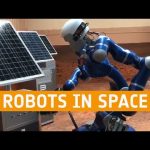
Meet the Experts: Robots in space
Will robots replace humans one day? When it comes to space exploration, robots are our precursors, gathering data to prepare humans for deep space. ESA robotics engineer Martin Azkarate discusses some of the upcoming missions involving robots and the unique science they will perform in this episode of Meet the Experts.
For more information about robotics, visit:
https://bit.ly/AutomationAndRoboticsESAFind more episodes in the series here: https://www.esa.int/Education/Expedition_Home/12_-_18_years_old
★ Subscribe: http://bit.ly/ESAsubscribe and click twice on the bell button to receive our notifications.
Check out our full video catalog: http://bit.ly/SpaceInVideos
Follow us on Twitter: http://bit.ly/ESAonTwitter
On Facebook: http://bit.ly/ESAonFacebook
On Instagram: http://bit.ly/ESAonInstagram
On Flickr: http://bit.ly/ESAonFlickrWe are Europe’s gateway to space. Our mission is to shape the development of Europe’s space capability and ensure that investment in space continues to deliver benefits to the citizens of Europe and the world. Check out http://www.esa.int/ESA to get up to speed on everything space related.
Copyright information about our videos is available here: http://www.esa.int/spaceinvideos/Terms_and_Conditions
#ESA
#MeetTheExperts
#ExpeditionHome -

A Bridge Above: 20 Years of the International Space Station
“What if we built a bridge, between and above all nations, to jointly discover the galaxy’s great unknowns?” Join us this fall as we prepare to celebrate the 20th anniversary of the International Space Station. As a global endeavor, 240 people from 19 countries have visited the unique microgravity laboratory, which has hosted more than 2,800 research investigations from scientists in over 100 nations.
-

Meet the Experts: 3, 2, 1 Liftoff!
How do rockets lift off from the ground and how fast do they go? Can we launch rockets from other planets? ESA rocket scientist Kate Underhill answers these questions and offers more fun facts about launchers in this episode of Meet The Experts.
Learn more: http://bit.ly/ExpeditionHome12_18YearsOld
★ Subscribe: http://bit.ly/ESAsubscribe and click twice on the bell button to receive our notifications.
Check out our full video catalog: http://bit.ly/SpaceInVideos
Follow us on Twitter: http://bit.ly/ESAonTwitter
On Facebook: http://bit.ly/ESAonFacebook
On Instagram: http://bit.ly/ESAonInstagram
On Flickr: http://bit.ly/ESAonFlickrWe are Europe’s gateway to space. Our mission is to shape the development of Europe’s space capability and ensure that investment in space continues to deliver benefits to the citizens of Europe and the world. Check out http://www.esa.int/ESA to get up to speed on everything space related.
Copyright information about our videos is available here: http://www.esa.int/spaceinvideos/Terms_and_Conditions
#ESA
#MeetTheExperts
#ExpeditionHome -
#AskNASA┃ How Do We Launch Astronauts from the United States to the Space Station?
NASA is enabling safe, reliable, and cost-effective crew transportation to and from the International Space Station from two private companies – Spacex and Boeing. NASA’s Commercial Crew Program represents a revolutionary approach to government and commercial collaborations for the advancement of space exploration.
For the first time in history, NASA astronauts launched from American soil in a commercially built and operated American crew spacecraft to the space station. The SpaceX Crew Dragon spacecraft carrying NASA astronauts Robert Behnken and Douglas Hurley launched May 31 on the company’s Falcon 9 rocket from Launch Complex 39A at NASA’s Kennedy Space Center in Florida. They returned to Earth and splashed down in the Dragon Endeavor capsule on Sunday, Aug. 2, off the coast of Pensacola, Florida.
Known as NASA’s SpaceX Demo-2, the mission is an end-to-end test flight to validate the SpaceX crew transportation system, including launch, in-orbit, docking and landing operations. The program demonstrates NASA’s commitment to investing in commercial companies through public-private partnerships and builds on the success of American companies, including SpaceX, already delivering cargo to the space station. Boeing will also complete an uncrewed flight test followed by a crewed flight test for certification to fly NASA astronauts to the space station.
-

After the Splashdown: NASA & SpaceX Discuss the Return of Astronauts from Space
Today’s #LaunchAmerica mission that brought NASA astronauts Robert Behnken and Douglas Hurley back to Earth marks the first splashdown of an American crew spacecraft in 45 years. Tune in starting at 4:45 p.m. EDT to hear Administrator Jim Bridenstine and #LaunchAmerica mission experts talk about this milestone in human spaceflight.
-
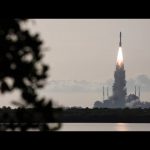
After the Launch: Perseverance Mars Rover Update
Join Administrator Jim Bridenstine and NASA leadership for a post-launch news conference about the launch of our Perseverance rover and the Ingenuity helicopter on a United Launch Alliance Atlas V 541 rocket.
Submit your questions NOW for the broadcast! Comment using #CountdownToMars.
-
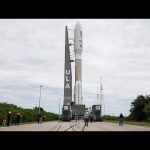
#EZScience: Preparing to Launch the Perseverance Rover to Mars
In this “On the Go” episode of #EZScience, we’re on the scene at Kennedy Space Center with the rocket that will take the Perseverance rover and the Ingenuity helicopter to Mars.
ABOUT THE SERIES: In our #EZScience video series with the National Air and Space Museum, NASA’s associate administrator for science Dr. Thomas Zurbuchen and Museum director Dr. Ellen Stofan talk about the latest in planetary science and exploration.
Learn more about the series: https://www.nasa.gov/ezscience
-
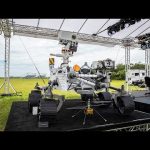
What’s the Status of our Perseverance Rover Launch to Mars?
Reporting from the Countdown Clock at NASA’s Kennedy Space Center — America’s spaceport — officials from NASA will provide a #CountdownToMars update for the July 30 launch of the Mars 2020 Perseverance rover on a United Launch Alliance Atlas V rocket from Space Launch Complex 41 at Cape Canaveral Air Force Station in Florida. The launch window is approximately two hours, with a launch opportunity every five minutes.
Watch LIVE to see NASA Administrator Jim Bridenstine, NASA Deputy Administrator Jim Morhard, Kennedy Space Center Director Bob Cabana, and astronaut Zena Cardman share their insights about the mission.
-
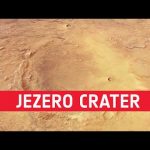
Flight over the Mars 2020 Perseverance rover landing site
This video shows Jezero crater, the landing site of the @NASA Mars 2020 Perseverance rover on the Red Planet, based on images from ESA’s Mars Express mission. The planned landing area is marked with an orange ellipse.
Scheduled for launch from Cape Canaveral, Florida on 30 July 2020 on board an Atlas V rocket, the Perseverance rover will land on 18 February 2021 in Jezero crater.
An impact crater with a diameter of about 45 km, Jezero is located at the rim of the giant Isidis impact basin. Morphological evidence suggests that the crater once hosted a lake, some 3.5 billion years ago.
Jezero possesses an inlet- and an outlet channel. The inlet channel discharges into a fan-delta deposit, containing water-rich minerals such as smectite clays. Scientists believe that the lake was relatively long lived because the delta may have required 1 to 10 million years to reach its thickness and size. Other studies conclude that the lake did not experience periods of important water-level fluctuations and that it was formed by a continuous surface runoff. This makes Jezero crater to a prime target for the search for potential signs of microbial life, because organic molecules are very well preserved in river deltas and lake sediments.
A recent study of the ancient lakeshores, diverse minerals and violent volcanism of Jezero crater based on data from ESA’s Mars Express mission is available here: https://bit.ly/MarsExpressHelpsUncoverTheSecretsOfPerseveranceLandingSite
The animation was created using an image mosaic made from four single orbit observations obtained by the High Resolution Stereo Camera (HRSC) on Mars Express between 2004 and 2008. The mosaic combines data from the HRSC nadir and colour channels; the nadir channel is aligned perpendicular to the surface of Mars, as if looking straight down at the surface. The mosaic image was then combined with topography information from the stereo channels of HRSC to generate a three-dimensional landscape, which was then recorded from different perspectives, as with a movie camera, to render the flight shown in the video.
Copyright:
Animation: ESA/DLR/FU Berlin, CC BY-SA 3.0 IGO
Music: Björn Schreiner
Soundtrack logo: Alicia Neesemann★ Subscribe: http://bit.ly/ESAsubscribe and click twice on the bell button to receive our notifications.
Check out our full video catalog: http://bit.ly/SpaceInVideos
Follow us on Twitter: http://bit.ly/ESAonTwitter
On Facebook: http://bit.ly/ESAonFacebook
On Instagram: http://bit.ly/ESAonInstagram
On Flickr: http://bit.ly/ESAonFlickrWe are Europe’s gateway to space. Our mission is to shape the development of Europe’s space capability and ensure that investment in space continues to deliver benefits to the citizens of Europe and the world. Check out http://www.esa.int/ESA to get up to speed on everything space related.
Copyright information about our videos is available here: http://www.esa.int/spaceinvideos/Terms_and_Conditions
#ESA
#Mars
#MarsExpress -
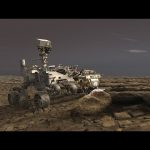
How the Perseverance Mars Rover Will Help NASA Return Mars Samples to Earth
When our Perseverance Mars rover launches on July 30, it’s set to be the first leg of a series of sample return missions in the search for evidence of life beyond Earth. Watch as experts from both NASA and the European Space Agency discuss how Perseverance will collect samples for future return to Earth.
-

Meet the Experts: Extreme life
Microbial life is known to survive in all sorts of extreme environments by going into a dormant state. Could they have survived long trips around our galaxy to seed life on Earth? Astrobiologist Nicol Caplin talks extreme life in this episode of Meet The Experts.
Learn more: http://bit.ly/ExpeditionHome12_18YearsOld
★ Subscribe: http://bit.ly/ESAsubscribe and click twice on the bell button to receive our notifications.
Check out our full video catalog: http://bit.ly/SpaceInVideos
Follow us on Twitter: http://bit.ly/ESAonTwitter
On Facebook: http://bit.ly/ESAonFacebook
On Instagram: http://bit.ly/ESAonInstagram
On Flickr: http://bit.ly/ESAonFlickrWe are Europe’s gateway to space. Our mission is to shape the development of Europe’s space capability and ensure that investment in space continues to deliver benefits to the citizens of Europe and the world. Check out http://www.esa.int/ESA to get up to speed on everything space related.
Copyright information about our videos is available here: http://www.esa.int/spaceinvideos/Terms_and_Conditions
#ESA
#MeetTheExperts
#ExpeditionHome -
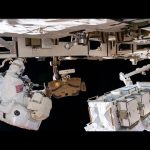
Spacewalk Outside the International Space Station
Coffee + spacewalk = breakfast of champions. ✔️ Join us on Thursday, July 16, as NASA Astronauts Chris Cassidy and Robert Behnken venture outside the International Space Station. This will be the first spacewalk in a series of two which complete power upgrades outside the orbital lab.The duo plan to remove five of six older nickel-hydrogen batteries for the truss’ power system and install three new lithium-ion batteries, as well as accompanying hardware. Start your day with us, and set a reminder to watch! Coverage starts at 6 a.m. EDT.
-
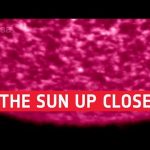
Solar Orbiter first images revealed
ESA’s Solar Orbiter spacecraft has sent back its first images of the Sun. At 77 million kilometres from the surface, this is the closest a camera has ever flown to our nearest star. The pictures reveal features on the Sun’s exterior that have never been seen in detail before.
Launched on 10 February 2020, the spacecraft completed its commissioning phase and first close-approach to the Sun in mid-June. Since then, science teams have been processing and examining this early data.
The spacecraft is currently in its cruise phase, on its way to Venus, but will eventually get even closer to the Sun.
Learn more: https://bit.ly/SolarOrbitersFirstImages
★ Subscribe: http://bit.ly/ESAsubscribe and click twice on the bell button to receive our notifications.
Check out our full video catalog: http://bit.ly/SpaceInVideos
Follow us on Twitter: http://bit.ly/ESAonTwitter
On Facebook: http://bit.ly/ESAonFacebook
On Instagram: http://bit.ly/ESAonInstagram
On Flickr: http://bit.ly/ESAonFlickrWe are Europe’s gateway to space. Our mission is to shape the development of Europe’s space capability and ensure that investment in space continues to deliver benefits to the citizens of Europe and the world. Check out http://www.esa.int/ESA to get up to speed on everything space related.
Copyright information about our videos is available here: http://www.esa.int/spaceinvideos/Terms_and_Conditions
#ESA
#SolarOrbiter
#TheSunUpClose -

Solar Orbiter sees ‘campfires’ on the Sun
The first images from ESA’s Solar Orbiter, captured around the spacecraft’s first close pass of the Sun, some 77 million kilometres from its surface, are already exceeding expectations revealing interesting new phenomena on our parent star.
This animation shows a series of close-up views captured by the Extreme Ultraviolet Imager (EUI) at wavelengths of 17 nanometers, showing the upper atmosphere of the Sun, or corona, with a temperature of around 1 million degrees.
These images reveal a multitude of small flaring loops, erupting bright spots and dark, moving fibrils. A ubiquitous feature of the solar surface, uncovered for the first time by these images, have been called ‘campfires’. They are omnipresent minuature eruptions that could be contributing to the high temperatures of the solar corona and the origin of the solar wind.
Captured on 30 May 2020, when Solar Orbiter was roughly halfway between the Earth and the Sun, these are the closest views of the Sun ever taken, allowing EUI to see features in the solar corona of only 400 km across. As the mission continues, Solar Orbiter will go closer to the Sun and this will increase the instrument’s resolving power by a factor of two at closest approach.
The colour on this image has been artificially added because the original wavelength detected by the instrument is invisible to the human eye.
The circle in the lower left corner indicates the size of Earth for scale.
The extended grey shape visible at times moving across the field (00:00-00:25; 01:00-01:28; 01:50-02:00; 02:52-03:27) is not a solar feature but is caused by a sensor artefact.
Solar Orbiter is a space mission of international collaboration between ESA and NASA.
Learn more: https://bit.ly/SolarOrbitersFirstImages
Credit: Solar Orbiter/EUI Team (ESA & NASA); CSL, IAS, MPS, PMOD/WRC, ROB, UCL/MSSL
★ Subscribe: http://bit.ly/ESAsubscribe and click twice on the bell button to receive our notifications.
Check out our full video catalog: http://bit.ly/SpaceInVideos
Follow us on Twitter: http://bit.ly/ESAonTwitter
On Facebook: http://bit.ly/ESAonFacebook
On Instagram: http://bit.ly/ESAonInstagram
On Flickr: http://bit.ly/ESAonFlickrWe are Europe’s gateway to space. Our mission is to shape the development of Europe’s space capability and ensure that investment in space continues to deliver benefits to the citizens of Europe and the world. Check out http://www.esa.int/ESA to get up to speed on everything space related.
Copyright information about our videos is available here: http://www.esa.int/spaceinvideos/Terms_and_Conditions
#ESA
#SolarOrbiter
#TheSunUpClose -
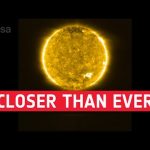
Closer than ever: Solar Orbiter’s first views of the Sun
The first images from ESA’s Solar Orbiter are already exceeding expectations and revealing interesting new phenomena on the Sun.
This animation combines a series of views captured with several remote-sensing instruments on Solar Orbiter between 30 May and 21 June 2020, when the spacecraft was roughly halfway between the Earth and the Sun ¬– closer to the Sun than any other solar telescope has ever been before.
The red and yellow images were taken with the Extreme Ultraviolet Imager (EUI) in the extreme ultraviolet region of the electromagnetic spectrum, at wavelengths of 30 and 17 nanometers, respectively.
The close-up views by EUI show the upper atmosphere of the Sun, or corona, with a temperature of around 1 million degrees. With the power to see features in the solar corona of only 400 km across, these images reveal a multitude of small flaring loops, erupting bright spots and dark, moving fibrils. A ubiquitous feature of the solar surface, uncovered for the first time by these images, have been called ‘campfires’. They are omnipresent minuature eruptions that could be contributing to the high temperatures of the solar corona and the origin of the solar wind.
The EUI images are followed by three views based on data from the Polarimetric and Helioseismic Imager (PHI) instrument. The blue and red view is a ‘tachogram’ of the Sun, showing the line of sight velocity of the Sun, with the blue side turning to us and the red side turning away. The following view is a magnetogram, or a map of magnetic propertied for the whole Sun, featuring a large magnetically active region in the lower right-hand quadrant of the Sun. The yellow-orange view is a visible light image and represents what we would see with the naked eye: there are no sunspots visible because the Sun is displaying only low levels of magnetic activity at the moment.
On larger scales, the Metis coronograph blocks out the dazzling light from the solar surface, bringing the fainter corona into view. Metis observes the corona simultaneously in visible light (shown in green) and ultraviolet light (shown in red) for the first time with unprecedented temporal coverage and spatial resolution. These images reveal the two bright equatorial streamers and fainter polar regions that are characteristic of the solar corona during times of minimal magnetic activity.
On even grander scales, the Heliospheric Imager (SoloHI) telescope takes images of the solar wind – the stream of charged particles constantly released by the Sun into outer space – by capturing the light scattered by electrons in the wind. The first-light image from SoloHI is shown at the end, as a mosaic of four separate images from the instrument’s four separate detectors. In this view, the Sun is located to the right of the frame, and its light is blocked by a series of baffles; the last baffle is in the field of view on the right-hand side and is illuminated by reflections from the solar array. The partial ellipse visible on the right is the zodiacal light, created by sunlight reflecting off the dust particles that are orbiting the Sun. The signal from the solar wind outflow is faint compared to the much brighter zodiacal light signal, but the SoloHI team has developed techniques to reveal it. Planet Mercury is also visible as a small bright dot near the lower edge of the upper left tile.
Solar Orbiter is a space mission of international collaboration between ESA and NASA.
Learn more: https://bit.ly/SolarOrbitersFirstImages
Credit: Solar Orbiter/EUI Team; PHI Team; Metis Team; SoloHI Team /ESA & NASA
★ Subscribe: http://bit.ly/ESAsubscribe and click twice on the bell button to receive our notifications.
Check out our full video catalog: http://bit.ly/SpaceInVideos
Follow us on Twitter: http://bit.ly/ESAonTwitter
On Facebook: http://bit.ly/ESAonFacebook
On Instagram: http://bit.ly/ESAonInstagram
On Flickr: http://bit.ly/ESAonFlickrWe are Europe’s gateway to space. Our mission is to shape the development of Europe’s space capability and ensure that investment in space continues to deliver benefits to the citizens of Europe and the world. Check out http://www.esa.int/ESA to get up to speed on everything space related.
Copyright information about our videos is available here: http://www.esa.int/spaceinvideos/Terms_and_Conditions
#ESA
#SolarOrbiter
#TheSunUpClose -

Battle of Zab, 750 AD ⚔️ Rise of the Abbasids
🚩 The first 1000 people to click the link will get 2 months of Skillshare Premium for FREE https://skl.sh/historymarche3
👇 Push down for more cool stuff 👇🚩 Consider supporting our work on Patreon: https://www.patreon.com/historymarche
🚩 Check out Hoc Est Bellum channel! This video would not have been possible without him https://www.youtube.com/channel/UCl5m12RUvypT4e7w-mWrzsA
📢 Narrated by David McCallion
🎼 Music:
EpidemicSound.com#abbasid #umayyad #zab
-

Meet the NASA Psyche team who will map Psyche’s elemental composition
Meet the team designing and building the Psyche mission’s gamma ray and neutron spectrometer. This instrument on the spacecraft will detect, measure, and map Psyche’s elemental composition. It is mounted on a 6-foot (2-meter) boom to distance the sensors from background radiation created by energetic particles interacting with the spacecraft and to provide an unobstructed field of view. The team is based at the Applied Physics Laboratory at Johns Hopkins University and is led by Principal Investigator David Lawrence.
Learn more: https://psyche.asu.edu/mission/instruments-science-investigations/
-
What You Need to Know About Astrobiology – The Search for Life in the Universe!
How did life begin on Earth? Does life exist beyond our home planet? How do we search for it?
These are the really tough questions astrobiologists want to answer by studying life as we know it.
Here’s what you need to know about our search for life in the cosmos: https://www.nasa.gov/content/the-search-for-life
-

NASA Science Live: Science in the Time of Coronavirus
Our planet is facing an unprecedented crisis as we continue to wrestle with the impacts of coronavirus. With its unparalleled technical and scientific expertise, NASA has joined the fight against the pandemic. Join us Thursday, June 25 at 3 p.m. EDT on #NASAScience Live to learn about the ideas and developments that NASA has contributed to confront this global health crisis.
To learn more about NASA’s response to coronavirus, go to: https://www.nasa.gov/coronavirus
-

A Boost in the Right Direction for Artemis on This Week @NASA – June 19, 2020
A boost in the right direction for Artemis, closing in on the launch of our next Mars rover, and the latest progress in our quest for quiet supersonic flight … a few of the stories to tell you about – This Week at NASA!
This video is available for download from NASA’s Image and Video Library: https://images.nasa.gov/details-A%20Boost%20in%20the%20Right%20Direction%20for%20Artemis%20on%20This%20Week%20@NASA%20%E2%80%93%20June%2019,%202020
-

Meet the Experts: Space for the future
Professionals in the space sector don’t try to predict the future, but a dedicated team prepares for it. The Advanced Concepts Team (ACT) is ESA’s multidisciplinary team of future concepts researchers that explore solutions to potential problems in space many decades from now. Young Graduate Trainee Belinda Rich works on Advanced Materials for Space Habitats and discusses the ACT’s work in this area as well as in artificial intelligence, fundamental physics, neuroscience, energy systems, mission analysis and more.
Learn more: http://bit.ly/ExpeditionHome12_18YearsOld
★ Subscribe: http://bit.ly/ESAsubscribe and click twice on the bell button to receive our notifications.
Check out our full video catalog: http://bit.ly/SpaceInVideos
Follow us on Twitter: http://bit.ly/ESAonTwitter
On Facebook: http://bit.ly/ESAonFacebook
On Instagram: http://bit.ly/ESAonInstagram
On Flickr: http://bit.ly/ESAonFlickrWe are Europe’s gateway to space. Our mission is to shape the development of Europe’s space capability and ensure that investment in space continues to deliver benefits to the citizens of Europe and the world. Check out http://www.esa.int/ESA to get up to speed on everything space related.
Copyright information about our videos is available here: http://www.esa.int/spaceinvideos/Terms_and_Conditions
#ESA
#MeetTheExperts
#ExpeditionHome