🚩 The Battle of the Catalaunian Plains, (AD 451), battle fought between the Huns under Attila and a mixed Roman and Visigoth force under Aetius and Theodoric I; checked the Hunnic advance in Europe. The battle, long-remembered for its ferocity, resulted in Attila’s defeat, though the casualty figures in traditional accounts are probably exaggerated. The Huns’ defeat prevented the widespread destruction and spoliation of Gaul, but it is unlikely that Attila’s horde could have made any deep impression upon the Latin and urban character of the country.
🚩 I combined all parts of our “Battle of the Catalaunian Plains” mini-series for easier viewing. This video was chosen by my Patrons. Thank you so much for your likes and comments ❤️. If you enjoy my videos please consider subscribing.
Play World of Warships here: https://wo.ws/3zuoCIa Thank you World of Warships for sponsoring this video. During registration use the code BRAVO to get for free: -500 doubloons -1.5 million credits -7 Days Premium Account time -Free of choice USS Phoenix, Japanese cruiser Kuma, French battleship Courbet, Italian battleship Dante Alighieri, or the HMS Wakeful after you complete 15 battles Applicable to new users only
🚩 The Crimean War was the result of Russian demands to exercise protection over the Orthodox subjects of the Ottoman sultan. Another cause was a dispute between Russia and France over the privileges of the Russian Orthodox and Roman Catholic churches in Palestine. More broadly, struggles between the great powers in the Middle East led to war. The Crimean War produced about 500,000 total casualties, with about half suffered by each side. A disproportionate number of deaths were caused by disease.
🚩 This video was produced in collaboration with Strategy Stuff, check out their channel and give them the credit that they deserve! https://www.youtube.com/c/StrategyStuff
🚩 We apologies for errors in the video. Namely, Catalonia being part of France and not swapping the banner of Nicholas I with Alexander II. In hindsight both of these seem like no-brainers, but we somehow failed to notice them.
The European Service Module is ESA’s contribution to @NASA’s Orion spacecraft that will send astronauts to the Moon and beyond. It provides electricity, water, oxygen and nitrogen as well as keeping the spacecraft at the right temperature and on course.
We are Europe’s gateway to space. Our mission is to shape the development of Europe’s space capability and ensure that investment in space continues to deliver benefits to the citizens of Europe and the world. Check out https://www.esa.int/ to get up to speed on everything space related.
Before our Space Launch System (SLS) rocket and Orion spacecraft can launch our nation into a new era of spaceflight, the duo must first undergo a wet dress rehearsal at the launch pad prior to liftoff.
Watch SLS and Orion continue on their path to the pad as they travel to Kennedy Space Center’s Launch Pad 39B for a full countdown rehearsal – an operation involving hundreds of engineers stationed all across the nation.
Credits: Writer: Danielle Sempsrott Editor: Francisco Martin Producers: John Sackman, Michael Justice & Madison Tuttle Music courtesy of Gothic Storm Music Credit: NASA
🚩 In this video we’re heading back to the 9th century. The Battle of Pliska in 811 AD marked the first time since the death of Emperor Valens in 378 AD, that a Roman emperor fell in battle.
🚩 This video was produced in collaboration with Bulgarian Empire Mapping, check out their channel and give them the credit that they deserve! https://www.youtube.com/channel/UCD-0LPbxri4fSvd0UoisIfg – Big shout to BEM for collaborating with us on this video!
The move to the launchpad ahead of our Artemis I flight test, discussing priorities for national space activities, and cargo and science head home from the space station … a few of the stories to tell you about – This Week at NASA!
Named after one of the largest constellations in the night sky, Orion is the name given to the spacecraft that will carry the first woman and first person of color to the Moon. But before we fly astronauts aboard, the spacecraft, powered by our Space Launch System rocket, will travel tens of thousands of miles on a flight test around the Moon. Watch as teams at NASA’s Kennedy Space Center prepare Orion for that journey, outfitting the spacecraft with its necessary components as it moves along its path to the pad.
Writer: Danielle Sempsrott Editor: Francisco Martin Producers: John Sackman, Michael Justice & Madison Tuttle Music courtesy of Gothic Storm Music Credit: NASA
When #Artemis I launches to the Moon and back there will be *A LOT* of science hitching a ride! From CubeSats designed to hunt for water deposits on the lunar surface to experiments on how life responds to space – and so much more.
The Artemis I mission consists of the Space Launch System rocket that will send the uncrewed Orion spacecraft around the Moon and back to Earth to check out spacecraft systems before crew fly aboard on Artemis II. The Artemis I mission is one more step toward taking the next giant leap: sending the first astronauts to Mars. Get all the info on this historic mission: https://nasa.gov/specials/artemis-i
Producers: Jessica Wilde, Sami Aziz, Scott Bednar Videographer: Frank Michaux Credit: NASA
The countdown to our Artemis I Moon mission, a Moon-observing small satellite hitching a ride on Artemis I, and some other tiny satellites that could help us better prepare for space weather … a few of the stories to tell you about – This Week at NASA!
Have you ever wondered what it takes to assemble the most powerful rocket NASA has ever built? Watch documentary footage of our Space Launch System (SLS) rocket’s transformation into the over-300-foot-tall launch vehicle that will return humanity to the Moon.
Starting with manufacturing and ending with stacking operations inside NASA Kennedy Space Center’s Vehicle Assembly Building, this is only the beginning of SLS’s path to the pad.
Writer: Danielle Sempsrott Editor: Francisco Martin Producers: John Sackman, Michael Justice & Madison Tuttle Music courtesy of Gothic Storm Music Credit: NASA
Watch live as our mega Moon rocket launches an uncrewed Orion spacecraft on a six-week mission around the Moon and back to Earth. During #Artemis I, Orion will lift off aboard the Space Launch System (SLS) rocket, and travel 280,000 miles (450,000 km) from Earth and 40,000 miles (64,000 km) beyond the far side of the Moon, carrying science and technology payloads to expand our understanding of lunar science, technology developments, and deep space radiation.
Through Artemis missions, NASA will land the first woman and the first person of color on the Moon, paving the way for a long-term lunar presence and serving as a steppingstone to send astronauts to Mars. We are going.
Through Artemis, NASA will once again land humans on the Moon. But before that can happen, we must first launch our Space Launch System (SLS) rocket—the most powerful rocket we’ve ever built—and Orion spacecraft on a flight test around the Moon. Join us as we document this moment in history and watch as we follow SLS and Orion on their path to the pad. The first episode of this series will premiere here on Aug. 12, 2022.
The benefits of space station research and development, refining the architecture for the Mars Sample Return mission, and test firing a solid-rocket booster for our mega Moon rocket … a few of the stories to tell you about – This Week at NASA!
NASA’s Artemis I mission is targeted to launch no earlier than Aug. 29, 2022.
Artemis I will be the first integrated test of NASA’s deep space exploration systems: the Orion spacecraft, Space Launch System (SLS) rocket and the ground systems at Kennedy Space Center in Cape Canaveral, Florida. The first in a series of increasingly complex missions, Artemis I will be an uncrewed flight test that will provide a foundation for human deep space exploration, and demonstrate our commitment and capability to extend human existence to the Moon and beyond.
During this flight, the spacecraft will launch on the most powerful rocket in the world and fly farther than any spacecraft built for humans has ever flown. It will travel 280,000 miles from Earth, thousands of miles beyond the Moon over the course of about a four to six-week mission. Orion will stay in space longer than any ship for astronauts has done without docking to a space station and return home faster and hotter than ever before.
ESA’s new Vega-C rocket lifted off for its inaugural flight VV21 at 15:13 CEST/13:13 UTC/10:13 local time from Europe’s Spaceport in French Guiana. With new first and second stages and an uprated fourth stage, Vega-C increases performance to about 2.3 t in a reference 700 km polar orbit, from the 1.5 t capability of its predecessor, Vega. For flight VV21, Vega-C’s payload is LARES-2, a scientific mission of the Italian space agency ASI and six research CubeSats from France, Italy and Slovenia.
We are Europe’s gateway to space. Our mission is to shape the development of Europe’s space capability and ensure that investment in space continues to deliver benefits to the citizens of Europe and the world. Check out https://www.esa.int/ to get up to speed on everything space related.
Discover the top five mysteries that ESA’s Jupiter Icy Moons Explorer (Juice) mission will solve. Jupiter, its magnetic environment, and its moons form one of the most intriguing systems in the Solar System. Juice, planned for launch in 2023 and arrival at Jupiter in 2031, will reveal more about this fascinating planet and its natural satellites.
We are Europe’s gateway to space. Our mission is to shape the development of Europe’s space capability and ensure that investment in space continues to deliver benefits to the citizens of Europe and the world. Check out https://www.esa.int/ to get up to speed on everything space related.
The Webb Space Telescope’s new look at the cosmos, technology used to fine tune Webb improves the vision of millions on Earth, and a new climate study heads to the space station … a few of the stories to tell you about – This Week at NASA!
Producer: Andre Valentine Editor: Shane Apple Music: Universal Production Music Credit: NASA
The 25th SpaceX cargo resupply services mission (SpaceX CRS-25) carrying scientific research and technology demonstrations to the International Space Station is scheduled for launch July 14from NASA’s Kennedy Space Center in Florida. Experiments aboard the Dragon capsule include studies of the immune system, Earth’s oceans, soil communities, and cell-free biomarkers, along with mapping the composition of Earth’s dust and testing an alternative to concrete.
🚩 Why Did the Scottish Clan System Collapse? Many pinpoint the bloody Battle of Culloden in 1746 as the moment where everything changed for Scotland’s clan system, as King George’s troops crushed the Jacobite rebellion. In what today might be considered ethnic cleansing, the ruling King of England ordered all supporters of the Jacobite cause be slaughtered, including many of the clans that populated the Scottish Highlands. This was followed by the notorious Highland Clearances and bitter disputes over land ownership, during which any final traces of Highland clans were forced on mass to the sea coast, the Lowlands or abroad.
Ready to showcase the Webb space telescope’s first full-color images, back in touch with a spacecraft on an important mission to the Moon, and our Artemis I Moon rocket and spacecraft move a step closer to launch … a few of the stories to tell you about – This Week at NASA!
Producer: Andre Valentine Editor: Lacey Young Music: Universal Production Music Credit: NASA
“After Euclid’s lifetime, it will just be floating in space. What if future beings found Euclid? How would they know anything about the humanity of the people?” – Tom Kitching, lead scientist of Euclid’s VIS instrument.
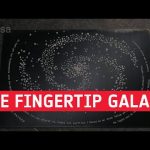
The team behind ESA’s Euclid mission has come together to create something special – a personal and collective galaxy-shaped fingerprint painting that has been attached to the spacecraft ready to launch into space. The collaborative nature of the artwork reflects the collaborative nature of the Euclid project overall; in both cases, people have come together to build something unique.
The Fingertip Galaxy was created by visual artist Lisa Pettibone and Euclid instrument scientist Tom Kitching. Since the very first fingerprint was pressed down in 2019, over 250 scientists and engineers have contributed to the piece of art.
So why a galaxy? Euclid is a galaxy-imaging machine that will observe billions of galaxies out to 10 billion light-years to make a 3D map of the Universe. The mission’s ultimate aim is to explore dark matter and dark energy.
“Although Euclid has always been beautiful in concept and materials, it didn’t really say anything about the people involved and humanity as a whole. We asked ourselves whether we could do something artistic that would speak to people,” says Lisa.
Scientists and engineers involved in Euclid were invited to dip their fingertips in paint and make their mark on a large piece of paper.
“We wanted something authentic, not perfect, and not shaped too much,” continues Lisa. “The result is a piece of art with a wonderful energy to it that captures all the energy of the people involved.”
The artwork was photographed and engraved onto a plaque using lasers at Mullard Space Science Laboratory – the same lasers that are used to etch parts for satellites. The plaque was fixed to Euclid and revealed at a ‘Goodbye Euclid’ event on 1 July 2022, when Euclid left Thales Alenia Space in Turin to head to Cannes for final testing as a complete system.
Euclid’s project scientist René Laureijs suggested adding text to the plaque to explain the thoughts behind it. Continuing the artistic nature of the project, poet Simon Barraclough wrote a dedicated poem, from which a short extract was chosen to be etched on to the plaque in a typewriter font that swirls around the galaxy of fingerprints. This video ends with Simon reading part of Since his poem.
Lisa summarises the Fingertip Galaxy: “It is adding an element of humanity to a dark, vast space, where as far as we can see there is no other intelligent life.”
Credit: Filmmaker/composer: Sam Charlesworth Fingertip Galaxy creators: Tom Kitching and Lisa Pettibone Poet: Simon Barraclough – ‘Unextraordinary Light (For Euclid)’ Special thanks: ESA, Euclid mission team, Mullard Space Science Laboratory Additional media: @NASA, Jeremy Perkins from unsplash.com
★ Subscribe: http://bit.ly/ESAsubscribe and click twice on the bell button to receive our notifications.
We are Europe’s gateway to space. Our mission is to shape the development of Europe’s space capability and ensure that investment in space continues to deliver benefits to the citizens of Europe and the world. Check out https://www.esa.int/ to get up to speed on everything space related.
Watch the launch from New Zealand of CAPSTONE, a new pathfinder CubeSat that will explore a unique orbit around the Moon!
The Cislunar Autonomous Positioning System Technology Operations and Navigation Experiment, or CAPSTONE, will be the first spacecraft to fly a near rectilinear halo orbit (NRHO) around the Moon, where the pull of gravity from Earth and the Moon interact to allow for a nearly-stable orbit. CAPSTONE’s test of this orbit will lead the way for our future Artemis lunar outpost called Gateway.
CAPSTONE is targeted to launch at 5:55 a.m. EDT (9:55 UTC) Tuesday, June 28 on Rocket Lab’s Electron rocket from the company’s Launch Complex 1 in New Zealand.
🚩 Thanks to Kingdom Maker for sponsoring – Download Kingdom Maker on iOS & Android and start ruling today: https://pixly.go2cloud.org/SH3EW
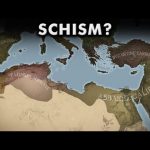
🚩 The Fatimid Conquest of Egypt, a pivotal moment in Islamic history. It destroyed any semblance of central authority in the Muslim world, provoked the reaction of the Turks as defenders of orthodox (Sunni) Islam, impelled the Omayyads in Spain to declare their own Caliphate, launched the powerful Murabitun revolution in western Africa, denied the Muslims their last chance to conquer Europe. Moreover the Fatimid schism gave the Crusaders an opportunity to capture Jerusalem in 1099.
The Color of Space captures the personal stories of seven current and former Black astronauts, each selected to become part of NASA’s astronaut corps and train for space missions. Current NASA astronauts Stephanie Wilson, Victor Glover, Jeanette Epps, as well as retired astronauts Leland Melvin, Bernard Harris, Robert Curbeam, and Bobby Satcher, speak about their journeys and their motivations in a panel hosted by NASA Johnson Space Center Director Vanessa Wyche, the first Black woman to lead a NASA center.
They took the step to achieve the impossible, overcoming barriers and making space for others to follow. In this new documentary, be empowered by the remarkable stories of tenacity, courage, and motivation from the agency’s most decorated heroes. Learn about their path to NASA, their sources of inspiration, experiences in space, the importance of representation, the meaning of Juneteenth, and much more.
Originally held at Space Center Houston on March 25, the panel discussion marks the first time the seven astronauts have been assembled for an official NASA event.
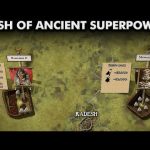
🚩 Battle of Kadesh 1274 BC was a major battle fought between the Egyptians under Ramses II and the Hittites under Muwatallis. It was one of the world’s largest chariot battles, fought on the banks of the Orontes river, where Ramses II sought to wrest Syria from the Hittites and recapture the Hittite-held city of Kadesh…
The next prelaunch rehearsal before launch of our Artemis I Moon mission, news about some NASA astronomy missions, and a critical milestone for an Earth-observing satellite … a few of the stories to tell you about – This Week at NASA!
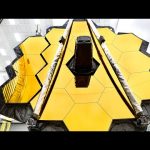
It’s time to #UnfoldTheUniverse. Watch as the mission team reveals the long-awaited first images from the James Webb Space Telescope. Webb, an international collaboration led by NASA with our partners the European Space Agency and the Canadian Space Agency, is the biggest telescope ever launched into space. It will unlock mysteries in our solar system, look beyond to distant worlds around other stars, and probe the mysterious structures and origins of our universe and our place in it.
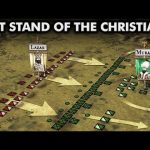
🚩 With the decline of the Byzantine Empire, the Bulgarian and Serbian states were gradually losing their power, while the young Ottoman state began its conquest of the Balkan lands. Clashes between Ottomans and Serbs, beginning from the 1350’s, led to the gory Battle of Maritsa on 26 September 1371. Some of the powerful Serbian Principalities became vassals of the Ottoman State, while other rallied under the banner of Prince Lazar to stop the Ottomans in the battle of Kosovo…
The next commercial crew test mission to the space station, outlining the agency’s objectives for deep space exploration, and covering the total lunar eclipse on Earth and from space … a few of the stories to tell you about – This Week at NASA!
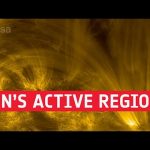
The Extreme Ultraviolet Imager (EUI) on the ESA/NASA Solar Orbiter spacecraft captured this movie on 17 March 2022. It shows the Sun’s appearance at a wavelength of 17 nanometers. This is an extreme ultraviolet wavelength of light that is emitted by the upper atmosphere of the Sun. Known as the corona, this layer of the Sun’s atmosphere exists at a temperature of around one million degrees. EUI takes both full disc images using the Full Sun Imager (FSI) telescope, as well as detailed images of a smaller region using the High Resolution Imager (HRIEUV) telescope.
On 17 March, Solar Orbiter was at roughly a third of the Earth’s distance from the Sun (0.378 AU), and heading for a close approach on 26 March, placing its payload closer to the Sun than any previous solar telescope.
This movie shows FSI’s view of the Sun before zooming in on an active region with HRIEUV. Active regions are where the Sun’s magnetic field bursts out from its interior in loops that rise into the atmosphere. As gas flows around the loops and cools back down on its way to the surface it creates the phenomenon called coronal rain.
Another intriguing feature of this image is the bright gas that makes delicate, lace-like patterns across the Sun. This is called coronal ‘moss’. It usually appears around the footprints, referred to by solar physicists as footpoints, of large coronal loops that are too hot to be seen in the EUI images.
The colour on this image has been artificially added because the original wavelength detected by the instrument is invisible to the human eye.
Credit: ESA & NASA/Solar Orbiter/EUI Team
★ Subscribe: http://bit.ly/ESAsubscribe and click twice on the bell button to receive our notifications.
We are Europe’s gateway to space. Our mission is to shape the development of Europe’s space capability and ensure that investment in space continues to deliver benefits to the citizens of Europe and the world. Check out https://www.esa.int/ to get up to speed on everything space related.
ESA invites all bakers to try out a special banana bread recipe courtesy of Sens’Astro that contains the main chemical elements found on the Moon with a social media challenge inspired by World Baking Day, celebrated on 17 May.
Bakers of all ages are invited to share their results with pictures or videos on social media using the hashtag #ESABakes. The deadline for pastry chefs to submit their cakes is 24 May 2022.
Here are the ingredients: – 3 bananas – 2 eggs – 1 yoghurt (125 ml) – 80 g wheat flour – 30 g oat flour – 40 g almond powder – 100 g chocolate chips – 2 tablespoons maple syrup – 1 teaspoon vanilla extract – 1 teaspoon baking powder – 1 pinch of salt – 1 handful of nuts
We are Europe’s gateway to space. Our mission is to shape the development of Europe’s space capability and ensure that investment in space continues to deliver benefits to the citizens of Europe and the world. Check out https://www.esa.int/ to get up to speed on everything space related.
🚩 Go to: https://curiositystream.thld.co/historymarche_0522 and use the code HISTORYMARCHE to save 25% discount off today, that’s only $14.99 a year. Thanks to Curiosity Stream for sponsoring today’s video. 👇 Push down for more cool stuff 👇
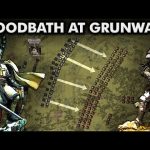
🚩 The Battle of Grunwald was one of medieval Europe’s most bloodiest battles. Polish-Lithuanian victory broke the Teutonic Order, marking the end of the order’s expansion along the southeastern coast of the Baltic Sea and the beginning of the decline of its power.
The Webb Telescope is closer to starting its mission of science, an historic look at the center of our galaxy, and the Crew-3 astronauts reflect on their mission … a few of the stories to tell you about – This Week at NASA!
How are space technologies such as earth observation, satellite communications, and navigation systems being applied to our greatest global challenges like climate change, deforestation and disaster resilience? Find out more in this Space Bites talk by David Taverner, Senior Director at Caribou Space.
David Taverner’s career has focused on using space, mobile, internet and renewable energy technology to address challenges in developing countries. Caribou Space works with governments, space agencies, development agencies and private companies – to use space technology for positive impact on society, economy and environment. David supports the UK Space Agency International Partnership Programme, a £150 million fund to use space technology to benefit developing countries. David has also supported ESA’s Earth Observation for Sustainable Development programme, helping define its future strategy and plan.
Space Bites is a series of lectures about space exploration promoted by the ESA Directorate of Human and Robotic Exploration in order to increase the awareness of the importance of space exploration.
Due to Covid-19 restrictions, the lecture was hosted online via video conference.
★ Subscribe: http://bit.ly/ESAsubscribe and click twice on the bell button to receive our notifications.
We are Europe’s gateway to space. Our mission is to shape the development of Europe’s space capability and ensure that investment in space continues to deliver benefits to the citizens of Europe and the world. Check out https://www.esa.int/ to get up to speed on everything space related.
The Crew-3 astronauts return from the space station, the spacecraft for another commercial crew mission is on the move, and discussing NASA’s budget … a few of the stories to tell you about – This Week at NASA!
Dive into our navigation activities and hear about the projects, goals, challenges and work environment from ESA staff working in the Navigation Directorate and the Directorate for Technology, Engineering and Quality.
We are Europe’s gateway to space. Our mission is to shape the development of Europe’s space capability and ensure that investment in space continues to deliver benefits to the citizens of Europe and the world. Check out https://www.esa.int/ to get up to speed on everything space related.
Crew Dragon capsule Endurance, carrying ESA astronaut Matthias Maurer and @NASA astronauts Raja Chari, Thomas Marshburn and Kayla Barron, undocked from the International Space Station at 06:20 BST/07:20 CEST Thursday 5 May. The autonomous undocking marked the start of Crew-3’s return to Earth after almost six months in orbit.
Crew-3’s return will take approximately 23.5 hours. Their spacecraft will splash down off the coast of Florida, USA, where ships will be waiting to bring it aboard and welcome the astronauts home.
This return also marks the end of Matthias’s first space mission, Cosmic Kiss. During his time on Station, Matthias supported over 35 European and many more international experiments in microgravity. He also supported International Space Station operations and maintenance and performed a spacewalk with NASA astronaut Raja Chari on 23 March 2022.
After initial medical checks, Crew-3 crew members will be transported by helicopter to shore where a plane will be waiting to bring Matthias back to ESA’s European Astronaut Centre in Cologne, Germany, for his post-flight debriefings and rehabilitation.
We are Europe’s gateway to space. Our mission is to shape the development of Europe’s space capability and ensure that investment in space continues to deliver benefits to the citizens of Europe and the world. Check out https://www.esa.int/ to get up to speed on everything space related.
We are Europe’s gateway to space. Our mission is to shape the development of Europe’s space capability and ensure that investment in space continues to deliver benefits to the citizens of Europe and the world. Check out https://www.esa.int/ to get up to speed on everything space related.
We are Europe’s gateway to space. Our mission is to shape the development of Europe’s space capability and ensure that investment in space continues to deliver benefits to the citizens of Europe and the world. Check out https://www.esa.int/ to get up to speed on everything space related.
Since 2020, ESA has been riding a recruitment wave stemming from the fact that, between 2020 and 2030, 44% of the ESA workforce will retire. This, combined with the impact of the Covid-19 pandemic on the way we work, forms a major catalyst for change. ESA is evolving, and will continue to evolve for the foreseeable future.
Join a roundtable discussion with the ESA Head of Human Resources, the ESA Chief Diversity Officer, and the ESA Head of Talent Acquisition to hear how they see the future of careers at ESA and who they expect their new colleagues to be.
We are Europe’s gateway to space. Our mission is to shape the development of Europe’s space capability and ensure that investment in space continues to deliver benefits to the citizens of Europe and the world. Check out https://www.esa.int/ to get up to speed on everything space related.