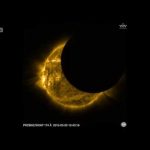
Our Proba-3 mission recently pulled off its first-ever autonomous formation flight — aligning with the Sun and holding position for hours, all on its own.
This is precision. This is the future. And it’s just the beginning.
Steve Spangler is a bestselling author, STEM educator and Emmy award-winning television personality with more than 2,100 television appearances to his credit. Steve appeared as a regular guest on the Ellen DeGeneres Show from 2007-2022 (27 appearances).
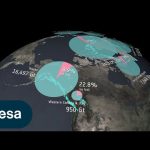
As part of a community effort, the Glacier Mass Balance Intercomparison Exercise, Glambie, has compiled all major studies using observations from a wealth of different techniques to provide an estimate of the world’s glacier mass change over the last two decades. The results, published in the journal Nature, show that ice melting from glaciers around the world is depleting regional freshwater resources and driving global sea levels to rise at ever-faster rates. The animation here illustrates the different observation methods used in the research, and Vatnajökull in Iceland as an example.
We are Europe’s gateway to space. Our mission is to shape the development of Europe’s space capability and ensure that investment in space continues to deliver benefits to the citizens of Europe and the world. Check out https://www.esa.int/ to get up to speed on everything space related.
Steve Spangler is a bestselling author, STEM educator and Emmy award-winning television personality with more than 2,100 television appearances to his credit. Steve appeared as a regular guest on the Ellen DeGeneres Show from 2007-2022 (27 appearances).
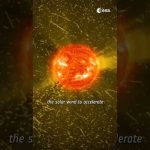
Fast’ solar wind moves with speeds above 500 km/s. Curiously, this wind exits the Sun’s corona with lower speeds, so something speeds it up as it moves farther away. The million-degree wind naturally cools down as it expands into a larger volume and becomes less dense, much like the air on Earth as you climb a mountain. And yet, it cools more slowly than expected from this effect alone.
So, what provides the necessary energy to accelerate and heat the fastest parts of the solar wind?
Data from our Solar Orbiter and NASA’s Parker Solar Probe have provided conclusive evidence that the answer is large-scale oscillations in the Sun’s magnetic field, known as Alfvén waves.
Hera is complete. ESA’s asteroid mission for planetary defence was built and prepared in two halves, but now, through a painstaking operation, they have been mated together to make a single spacecraft, ready for full-scale testing of its readiness for space.
The mating took place at OHB Bremen in Germany, with Hera’s Core Module raised more than 3 m above its Propulsion Module then gradually and carefully slotted into place, over a three-hour period. The modules had been placed in cages to ensure their correct alignment relative to each other down to a few tenths of a millimetre.
Hera’s Propulsion Module incorporates its propellant tanks – housed within a central titanium cylinder, the ‘backbone’ of the spacecraft – along with piping and thrusters, which will have the job of hauling the mission across deep space for more than two years, then to manoeuvre around the Dimorphos and Didymos asteroids.
Meanwhile Hera’s Core Module can be thought of as the brains of the mission, hosting its onboard computer, mission systems and instruments.
Once the tip of the Propulsion Module cylinder met the top deck of the Core Module the mating was complete. Then an initial test bolt was inserted to check the alignment was entirely correct in advance of the two modules being fully bolted together.
The combined Hera spacecraft is scheduled to go through a test campaign to assess its readiness for spaceflight, along with the two CubeSats it will carry aboard, in preparation for its October 2024 lift-off.
Credits: ESA – European Space Agency Footage: ESA / OHB
★ Subscribe: http://bit.ly/ESAsubscribe and click twice on the bell button to receive our notifications.
We are Europe’s gateway to space. Our mission is to shape the development of Europe’s space capability and ensure that investment in space continues to deliver benefits to the citizens of Europe and the world. Check out https://www.esa.int/ to get up to speed on everything space related.
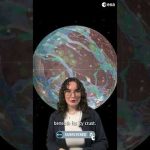
Juice will complete two flybys of Europa in July 2032, approaching the moon at a closest approach of 400 km. During these close encounters, Juice will explore the geology, surface, subsurface, activity and environment of the moon, which appears to have a young, active, colourful and distinctively marked surface.
The mission will characterise the composition and chemistry of Europa’s surface, hunting for substances that are essential to support life and determining the source of the moon’s material. Europa may vent water vapour to space via ‘plumes’ and geysers; Juice will search for pockets of water in the moon’s shallow subsurface using unprecedented ice-penetrating radar, and reveal locations where the transfer of material between subsurface, surface and space may be especially intense.
Juice will complete its first flyby of Callisto in June 2032; the spacecraft will complete a total of 21 flybys of this moon from 2032–2034 (both to explore the moon and to adjust the energy and orientation of Juice’s orbit), coming as close as 200 km from Callisto at nearest approach.
Callisto is also the least geologically evolved Galilean satellite, and therefore offers a unique glimpse into the environment around early Jupiter. As the moon does not seem to have evolved much over time, it stands to reveal unique information about how it initially formed, and about the origin of the wider Jupiter system.
📹 @EuropeanSpaceAgency
★ Subscribe: http://bit.ly/ESAsubscribe and click twice on the bell button to receive our notifications.
We are Europe’s gateway to space. Our mission is to shape the development of Europe’s space capability and ensure that investment in space continues to deliver benefits to the citizens of Europe and the world. Check out https://www.esa.int/ to get up to speed on everything space related.
Researchers have found evidence for the existence of a new type of planet they have called a “water world,” where water makes up a large fraction of the entire planet. These worlds, discovered in a planetary system 218 light-years away, are unlike any planets in our Solar System.
📹 @europeanspaceagency 🖥️ @nasa , ESA, L. Hustak
★ Subscribe: http://bit.ly/ESAsubscribe and click twice on the bell button to receive our notifications.
We are Europe’s gateway to space. Our mission is to shape the development of Europe’s space capability and ensure that investment in space continues to deliver benefits to the citizens of Europe and the world. Check out https://www.esa.int/ to get up to speed on everything space related.
Tune in on Wed., June 24 at 2 p.m. EDT to learn about two upcoming spacewalks to begin the replacement of batteries for one of the space station’s power channels, as well as the latest on the SpaceX Dragon Endeavour’s mission to the orbiting laboratory.
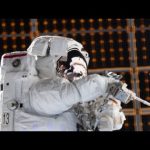
On Fri., June 26 and Wed., July 1, NASA astronauts Chris Cassidy and Robert Behnken will exit the station’s Quest airlock to replace aging nickel-hydrogen batteries for one of two power channels on the far starboard truss with new lithium-ion batteries that arrived on a Japanese cargo spacecraft last month. The spacewalks will begin at around 7:35 a.m., and will last as long as seven hours.
This video reveals the changing face of our Galaxy, tracing the motion of two million stars five million years into the future using data from the Tycho-Gaia Astrometric Solution, one of the products of the first Gaia data release. This provides a preview of the stellar motions that will be revealed in Gaia’s future data releases, which will enable scientists to investigate the formation history of our Galaxy.
The stars are plotted in Galactic coordinates and using a rectangular projection: in this, the plane of the Milky Way stands out as the horizontal band with greater density of stars.
The video starts from the positions of stars as measured by Gaia between 2014 and 2015, and shows how these positions are expected to evolve. The frames in the video are separated by 750 years, and the overall sequence covers five million years. The stripes visible in the early frames reflect the way Gaia scans the sky and the preliminary nature of the first data release; these artefacts are gradually washed out in the video as stars move across the sky.
The shape of the Orion constellation can be spotted towards the right edge of the frame, just below the Galactic Plane, at the beginning of the video. As the sequence proceeds, the familiar shape of this constellation (and others) evolves into a new pattern. Two stellar clusters – groups of stars that were born together and consequently move together – can be seen towards the left edge of the frame: these are the alpha Persei (Per OB3) and Pleiades open clusters.
As Europe enjoyed a partial solar eclipse on the morning of Friday 20 March 2015, ESA’s Sun-watching Proba-2 minisatellite had a ringside seat from space. Orbiting Earth once approximately every 100 minutes, Proba-2 caught two eclipses over the course of the morning.
Proba-2 used its SWAP imager to capture the Moon passing in front of the Sun. SWAP views the solar disc at extreme ultraviolet wavelengths to capture the turbulent surface of the Sun and its swirling corona.
The Mars Exploration Rovers “Spirit” and “Opportunity” were sent to Mars for what was planned to be a 90 day mission. 5 years later they are still roving the surface of Mars, making new discoveries almost every day. This video celebrates the extraordinary success of these “Intrepid Explorers”.