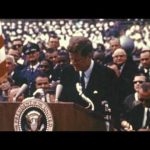
Join leaders from NASA and Rice University as we commemorate President John F. Kennedy’s historic “We choose to go to the Moon…” speech. That address, before a crowd of 35,000 on Sept. 12, 1962, set NASA and our country on the path to explore worlds beyond our own.
Participants will include:
NASA Administrator Bill Nelson NASA Associate Administrator Bob Cabana NASA’s Johnson Space Center Director Vanessa Wyche NASA astronaut Shannon Walker Rice University President Reggie DesRoches Rice Space Institute Director Dr. David Alexander, Rice Space Institute (master of ceremonies) Retired ESA (European Space Agency) astronaut Jean-Loup Chrétien Avalon Hogans, Houston’s youth poet laureate
Hear from Head of School: Engineering, Associate Professor Brenton Dansie and final year University of South Australia Engineering students as they showcase their student projects.
For more from University of South Australia visit:
Even if you don’t, watch anyway. Maybe I’ll convince you. And if not, maybe I’ll impart some important skills or perspectives upon you. A lot of what I say can be applied not only to physics, but to other academic disciplines as well.
Here are some resources for learning physics (in order of increasing difficulty)
Amateur (little to no math)
A Briefer History of Time by Stephen Hawking
The Grand Design by Stephen Hawking and Leonard Mlodinow
The Elegant Universe by Brian Greene
Cosmos by Carl Sagan
Fearful Symmetry by Anthony Zee
Recruit (some calculus, maybe a DiffEQ here or there)
University Physics by Roger Freedman
Physics (Vol 1 and 2) by Resnick, Halliday, and Krane
Regular (know calculus cold, and have a good handle on DiffEQs)
An Introduction to Mechanics by Kleppner and Kolenkow
Electricity and Magnetism by Purcell
Classical and Statistical Thermodynamics by Ashley Carter
Hardened (all of the “baby maths” should be second nature to you)
Classical Mechanics by Taylor
Introduction to Electrodynamics by Griffiths
Introduction to Quantum Mechanics by Griffiths
Introduction to Elementary Particles by Griffiths
Veteran (you will not survive)
A Modern Approach to Quantum Mechanics by Townsend
Quantum Field Theory in a Nutshell by Anthony Zee
Studies indicating that studying in pairs is ideal:
Hake, R. R. (1998). Interactive-engagement versus traditional methods: A six-thousand-student survey of mechanics test data for introductory physics courses. American journal of Physics, 66, 64.
50 years ago, President John F. Kennedy delivered his historic “Space Challenge” speech to students and faculty at Rice University in Houston that included this now-iconic statement, “We choose to go to the moon not because it is easy but because it is hard.” See and hear the speech in its entirety this Wednesday at 10:15 a.m. Central on NASA TV just as it was delivered that morning on September 12, 1962
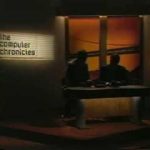
An early look at artificial Intelligence. Guests includes Edward Feigenbaum of Stanford University, Nils Nilsson of the AI Center at SRI International, Tom Kehler of Intellegenetics, Herb Lechner of SRI, and John McCarthy of Stanford. Featured demonstrations include Inferential Knowledge Engineering and the programming language LISP. Originally broadcast in 1984.
Q. What is artificial intelligence?
A. It is the science and engineering of making intelligent machines, especially intelligent computer programs. It is related to the similar task of using computers to understand human intelligence, but AI does not have to confine itself to methods that are biologically observable.
Q. Yes, but what is intelligence?
A. Intelligence is the computational part of the ability to achieve goals in the world. Varying kinds and degrees of intelligence occur in people, many animals and some machines.
Q. Isn’t there a solid definition of intelligence that doesn’t depend on relating it to human intelligence?
A. Not yet. The problem is that we cannot yet characterize in general what kinds of computational procedures we want to call intelligent. We understand some of the mechanisms of intelligence and not others.
Q. Is intelligence a single thing so that one can ask a yes or no question “Is this machine intelligent or not?”?
A. No. Intelligence involves mechanisms, and AI research has discovered how to make computers carry out some of them and not others. If doing a task requires only mechanisms that are well understood today, computer programs can give very impressive performances on these tasks. Such programs should be considered “somewhat intelligent”.
Q. Isn’t AI about simulating human intelligence?
A. Sometimes but not always or even usually. On the one hand, we can learn something about how to make machines solve problems by observing other people or just by observing our own methods. On the other hand, most work in AI involves studying the problems the world presents to intelligence rather than studying people or animals. AI researchers are free to use methods that are not observed in people or that involve much more computing than people can do.
Q. What about IQ? Do computer programs have IQs?
A. No. IQ is based on the rates at which intelligence develops in children. It is the ratio of the age at which a child normally makes a certain score to the child’s age. The scale is extended to adults in a suitable way. IQ correlates well with various measures of success or failure in life, but making computers that can score high on IQ tests would be weakly correlated with their usefulness. For example, the ability of a child to repeat back a long sequence of digits correlates well with other intellectual abilities, perhaps because it measures how much information the child can compute with at once. However, “digit span” is trivial for even extremely limited computers.
Hosted by Stewart Cheifet, Computer Chronicles was the world’s most popular television program on personal technology during the height of the personal computer revolution. It was broadcast for twenty years from 1983 – 2002. The program was seen on more than 300 television stations in the United States and in over 100 countries worldwide, with translations into French, Spanish, Chinese, and Arabic. The series had a weekly television broadcast audience of over two million viewers.
Many of the series programs are distributed on video to corporations and educational institutions for use in computer training. Computer Chronicles program segments have also been bundled with various computer text books by major publishers.