Tag: voyager

  • Bateria nucleara chinezeasca episodul 1.

    Bateria nucleara chinezeasca episodul 1.

    🔸 SUSȚINE ȘI TU DIRECT ACTIVITATEA MEA ►https://patreon.com/cristianpresura
    🔸 DEVINO YOUTUBE MEMBRU ►https://bit.ly/35Q8vXC
    🔸 PAYPAL ► paypal.me/cristianpresura
    🔸 DONORBOX ► https://donorbox.org/cristianpresura

    ❗TikTok ► https://www.tiktok.com/@cristian.presura
    ❗Facebook ► https://www.facebook.com/presura
    ❗Facebook page ► https://www.facebook.com/stiintaclub
    ❗Instagram ► https://www.instagram.com/cristianpresura/
    ❗Twitch ► https://www.twitch.tv/cristian_presura
    ❗Discord ► https://www.discord.gg/presura
    ❗Reddit ► https://www.reddit.com/r/presura/

    📙 Carte ► “Fizica Povestita”: https://bit.ly/2YsKaAc
    📙 Carte ► “O calatorie prin Univers”: https://bit.ly/3pdOfGp
    📙 Carte ► “Care e diferența dintre un copil și un laptop?” https://bit.ly/3h4auLZ

    🔊 Spotify Podcast ► https://spoti.fi/3dbvYo6
    🔊 MixCloud Podcas ► https://www.mixcloud.com/StiintaClub/
    ❗Asociația “Știinta pentru toți” ► https://www.presura.ro/

    Seria Fizica Cool #seriacool https://tinyurl.com/2s437srj
    Seria shorts: https://tinyurl.com/yw8b4sab
    Seria carte “Fizica Povestită” #fizicapovestita https://tinyurl.com/966kzam9
    Seria „Dicţionarul de idei şi ideologii (#2i)”: https://tinyurl.com/muryddb5
    Seria “Deschis la cercetare”: https://tinyurl.com/2p9dtb6k
    Fizica pentru începători: https://tinyurl.com/4xbc67c2
    Fizica cuantică: https://tinyurl.com/mr2d7acu
    Fizica nucleara: https://tinyurl.com/3yv3kr5r
    Fizica spațiului: https://tinyurl.com/3kc5jz95
    Călătorie prin Univers: https://tinyurl.com/mv6sxxrb
    Teoria relativității: https://tinyurl.com/2m8umyew
    Fizica simplă: https://tinyurl.com/24j6ekje
    Fizica avansată: https://tinyurl.com/39chd56e
    Fizica mediului inconjurator: https://tinyurl.com/5n86xdzc
    Cum sa ne protejam? https://tinyurl.com/mmyvr3n7
    Fizica 5G: https://tinyurl.com/2p9b3j6r
    Podcast “Întâlnirea cu fizica”: https://tinyurl.com/5n8hsswe

    #stiinta #fizica #science #tehnologie #technology #cristianpresura
    algoritm:”Bateria nucleară, sau generatorul termoelectric radioizotopic (RTG), reprezintă o tehnologie avansată ce exploatează energia nucleară prin dezintegrarea radioactivă a izotopilor, precum Plutoniu-238, pentru a genera energie electrică. Această sursă de energie de lungă durată este esențială în aplicații spațiale, alimentând sondele spațiale și vehiculele de explorare planetară, precum Voyager și Curiosity Rover, datorită autonomiei energetice remarcabile și eficienței energetice în medii închise sau îndepărtate de Soare. RTG-urile sunt apreciate pentru durabilitatea lor excepțională și capacitatea de a funcționa în condiții extreme, fiind considerate o tehnologie cheie pentru navigația în spațiu profund.

    Pe lângă utilizările în explorarea spațială, bateriile nucleare prezintă potențial pentru aplicații terestre și militare, oferind o sursă de energie nepoluantă și sustenabilă. Siguranța nucleară și eficiența energetică sunt priorități esențiale în dezvoltarea și implementarea acestor sisteme, asigurând că bateriile nucleare sunt o opțiune viabilă și sigură pentru generarea de energie. Inovația în domeniul energiei nucleare continuă să avanseze, explorând noi modalități de a îmbunătăți performanța și sustenabilitatea acestor sisteme energetice.

    În concluzie, bateriile nucleare reprezintă o componentă crucială a tehnologiei moderne, cu aplicații variind de la misiuni spațiale de lungă durată la proiecte de cercetare nucleară pe Terra. Eficiența lor energetică, durabilitatea și capacitatea de a funcționa în medii ostile le fac ideale pentru provocările explorării spațiale și pentru necesitățile energetice durabile pe Pământ. Aceste tehnologii avansate demonstrează angajamentul continuu către inovație și sustenabilitate în domeniul energiei.”
  • Time to explore Jupiter with some JUICE!🧃 #shorts

    Time to explore Jupiter with some JUICE!🧃 #shorts

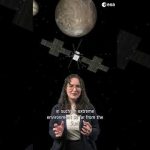
    Our Jupiter Icy Moons Explorer, Juice, will make detailed observations of the giant gas planet and its three large ocean-bearing moons – Ganymede, Callisto and Europa – with a suite of remote sensing, geophysical and in situ instruments. The mission will characterise these moons as both planetary objects and possible habitats, explore Jupiter’s complex environment in depth, and study the wider Jupiter system as an archetype for gas giants across the Universe.

    Juliet will be taking us to Jupiter and its moons in the coming weeks. So stay tuned for more!

    📹 @europeanspaceagency

    ★ Subscribe: http://bit.ly/ESAsubscribe and click twice on the bell button to receive our notifications.

    Check out our full video catalog: http://bit.ly/SpaceInVideos
    Follow us on Twitter: http://bit.ly/ESAonTwitter
    On Facebook: http://bit.ly/ESAonFacebook
    On Instagram: http://bit.ly/ESAonInstagram
    On LinkedIn: https://bit.ly/ESAonLinkedIn
    On Pinterest: https://bit.ly/ESAonPinterest
    On Flickr: http://bit.ly/ESAonFlickr

    We are Europe’s gateway to space. Our mission is to shape the development of Europe’s space capability and ensure that investment in space continues to deliver benefits to the citizens of Europe and the world. Check out https://www.esa.int/ to get up to speed on everything space related.

    Copyright information about our videos is available here: https://www.esa.int/ESA_Multimedia/Terms_and_Conditions

    #ESA
    #Juice
    #Jupiter

  • Voyager 1 Trajectory through the Solar System

    Voyager 1 Trajectory through the Solar System

    This visualization tracks the trajectory of the Voyager 1 spacecraft through the solar system. Launched on September 5, 1977, it was one of two spacecraft sent to visit the giant planets of the outer solar system. Voyager 1 flew by Jupiter and Saturn before being directed out of the solar system.

    To fit the 40 year history of the mission into a short visualization, the pacing of time accelerates through most of the movie, starting at about 5 days per second at the beginning and speeding up to about 11 months per second after the planet flybys are past.

    The termination shock and heliopause are the ‘boundaries’ created when the plasma between the stars interacts with the plasma flowing outward from the Sun. They are represented with simple grid models and oriented so their ‘nose’ is pointed in the direction (Right Ascension = 17h 24m, declination = 17 degrees south) represented by more recent measurements from other missions.
    https://svs.gsfc.nasa.gov/4139
    Credit: NASA’s Scientific Visualization Studio

  • Voyager 2 Trajectory through the Solar System

    Voyager 2 Trajectory through the Solar System

    This visualization tracks the trajectory of the Voyager 2 spacecraft through the solar system. Launched on August 20, 1977, it was one of two spacecraft sent to visit the giant planets of the outer solar system. Like Voyager 1, Voyager 2 flew by Jupiter and Saturn, but the Voyager 2 mission was extended to fly by Uranus and Neptune before being directed out of the solar system.

    To fit the 40 year history of the mission into a short visualization, the pacing of time accelerates through most of the movie, starting at about 5 days per second at the beginning and speeding up to about 11 months per second after the planet flybys are past.

    The termination shock and heliopause are the ‘boundaries’ created when the plasma between the stars interacts with the plasma flowing outward from the Sun. They are represented with simple grid models and oriented so their ‘nose’ is pointed in the direction (Right Ascension = 17h 24m, declination = 17 degrees south) represented by more recent measurements from other missions.

    Credit: NASA’s Scientific Visualization Studio
    https://svs.gsfc.nasa.gov/4140

  • Voyager in Interstellar Space! On This Week @NASA

    Voyager in Interstellar Space! On This Week @NASA

    During a press briefing at NASA headquarters, scientists announced that the Voyager 1 spacecraft has officially left our solar bubble and has reached interstellar space. The Voyager Interstellar Mission (VIM) seeks to extend NASA’s exploration of the solar system beyond the outer planets — to the outer limits of the Sun’s sphere of influence, and possibly beyond. Voyager 1 and its twin Voyager 2 were launched 16 days apart in 1977. Also, Off the Earth, For the Earth, Comings and Goings, Flight Of Cygnus, Rockets 2 Racecars, InSight Landing Sites and more!

  • NASA’s Voyager 1 is in Interstellar Space

    NASA’s Voyager 1 is in Interstellar Space

    NASA’s Voyager 1 spacecraft has traveled beyond our solar bubble and has entered interstellar space. During a NASA Headquarters briefing, the Voyager team assessing the data determined the craft is in a transitional region immediately outside the solar bubble where some effects from our sun are still evident. New, unexpected data indicate that Voyager 1 has been traveling through the plasma, or ionized gas, that originates in the space between the stars. The spacecraft is now bathed in interstellar plasma, the material ejected from the death of nearby stars millions of years ago. Speakers on the occasion were – Ed Stone- Voyager project scientist, California Institute of Technology; Don Gurnett – Voyager plasma wave investigation principal investigator, University of Iowa; Suzanne Dodd – Voyager project manager, Jet Propulsion Laboratory; and Gary Zank, physics department chair, University of Alabama in Huntsville.