Tag: Wake

  • Wake up sleeping satellite – #wakeuprosetta

    Wake up sleeping satellite – #wakeuprosetta

    Singer Tasmin Archer kindly sent this message to Europe’s ‘sleeping satellite’, ESA’s comet-chaser Rosetta. Thanks, Tasmin!

    Tasmin Archer is the well-known British singer, whose song ‘Sleeping Satellite’ about the Apollo missions to the Moon was her first single released in 1992. The song went to Number 1 in the UK and Ireland singles charts, and also broke into the US, German and Australian music charts. The song has been covered by numerous artists, including Kim Wilde. Tasmin famously performed an acoustic version of Sleeping Satellite at the International Astronautical Congress Opening ceremony in Glasgow, September 2008 (see http://youtu.be/owYZOOIXUAs).

    Video copyright: T. Archer
    Sleeping Satellite written by: T. Archer, J. Beck, J. Hughes (courtesy Quiverdisc)
    Video produced by tasminarcher.com

  • #WakeUpRosetta — Wake up!

    #WakeUpRosetta — Wake up!

    At 10:00 UTC on 20 January 2014, ESA’s comet-chasing Rosetta spacecraft will wake up from 31 months in deep space hibernation. Save the date and join the adventure — enter our #wakeuprosetta contest by adding your wake up shout video to the Rosetta Mission Facebook page ‪http://www.facebook.com/rosettamission.

    More details and competition rules: http://www.esa.int/Our_Activities/Space_Science/Rosetta/Wake_up_Rosetta

  • How Rosetta wakes up from deep space hibernation

    How Rosetta wakes up from deep space hibernation

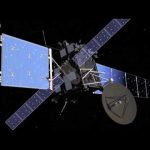
    Visualisation of how the Rosetta spacecraft wakes up from deep space hibernation, 673 million kilometres from the Sun, on 20 January 2014.

    Prior to entering hibernation on 8 June 2011, Rosetta was oriented so that its solar arrays faced the Sun, and it began rotating once per minute for stability. The only devices left running were its computer and several heaters.

    Rosetta’s computer is programmed to carry out a sequence of events to re-establish contact with the Earth on 20 January, starting with an ‘alarm clock’ at 10:00 GMT. Immediately after, the star trackers begin to warm up. Around 6 hours later the thrusters are fired and the slow rotation stops. A slight adjustment is made to Rosetta’s orientation to ensure that the solar arrays now face the Sun. Then the star trackers switch on to determine its attitude. The spacecraft rotates towards Earth, and the transmitter is switched on. Then Rosetta’s high-gain antenna points to Earth and the signal is sent. The journey takes 45 minutes before the signal is received and mission controllers can begin to check Rosetta’s health, ready for the next phase of the mission.

    The first opportunity for receiving a signal on Earth is between 17:30 GMT and 18:30 GMT.

    Credits: ESA/ATG medialab; music: B. Lynne.