Tag: wakeuprosetta

  • ESA Euronews – Rosetta: The Comet Hunter Awakes

    ESA Euronews – Rosetta: The Comet Hunter Awakes

    The exploits of comet-hunting spacecraft Rosetta are generating intense interest as it speeds towards a dramatic climax this autumn.

    The craft will catch up with comet 67p/Churyumov–Gerasimenko, fly alongside, and put a lander on its surface. Throughout this fantastic voyage, Euronews will have special access to the engineers and scientists who are making it happen.

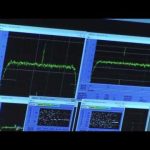
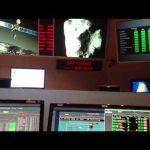
    On 20th January Rosetta woke up from two and a half years of hibernation. It was a moment of extreme tension for everyone at ESA’s European Space Operations Centre in Darmstadt, Germany. Strained, nervous faces searched for a signal from a probe in deep space.

    After some 45 minutes of anxiety the all-important first signal came through. The scientists burst into energetic applause.


  • ESA Euronews: Rosetta prepara su cita con el cometa

    ESA Euronews: Rosetta prepara su cita con el cometa

    Hace unos días, la sonda Rosetta se reactivó tras casi dos años y medio de hibernación. La comunidad científica del mundo entero estaba pendiente de la sala de control en el momento en el que Rosetta, tras reactivarse, enviaba su señal de confirmación.

    A ocho cientos millones de kilómetros, en algún lugar del espacio, Rosetta se despertaba.

    Este proceso tardó varias horas, a las 18:18 de la tarde, hora central europea, el equipo del Centro de Operaciones de la Agencia Espacial Europea, en Darmstadt, Alemania, estallaba de alegría.

  • ESA Euronews: Rosetta lassú ébredése

    ESA Euronews: Rosetta lassú ébredése

    Pár nappal ezelőtt az Európai Űrügynökség sikeresen felébresztette a hibernációból a Rosetta nevű műholdat, amely hamarosan egyedülálló küldetésre indul: leszállóegységet próbál ereszteni egy üstökös felszínére.

    2014. január huszadikán a világ szeme az Európai Űrügynökség csapatára szegeződött, amint arra vártak, hogy az űreszköz válaszoljon.

  • Thank you for helping us to wake up Rosetta!

    Thank you for helping us to wake up Rosetta!

    Compilation of some of the 218 video entries and messages received as part of the “Wake up, Rosetta!” video shout-out contest.

    http://www.esa.int/rosetta
    http://www.facebook.com/rosettamission

    Credits: ESA

    #wakeuprosetta

  • Rosetta wakes up from deep space hibernation

    Rosetta wakes up from deep space hibernation

    Replay of Part 3 of the Rosetta wake-up media briefing at the ESA Operations Centre ESOC, in Darmstadt, Germany, on 20 January 2014.

    Waiting for the signal from Rosetta. View inside the Mission Control Room at ESOC as the team waits for a first signal that Rosetta has successfully come out of deep space hibernation.

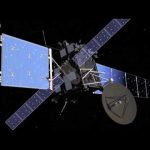
    Rosetta was launched in 2004 and has since travelled around the Sun five times, picking up energy from Earth and Mars to line it up with its final destination: comet 67P/Churyumov–Gerasimenko. For the coldest, loneliest leg of the mission, as Rosetta travelled out towards the orbit of Jupiter, the spacecraft was put into deep-space hibernation.

    In 2014, Rosetta will complete its cruise towards the comet, rendezvousing with it in August, before putting its Philae lander onto the comet’s surface in November, as it begins its journey closer to the Sun.

    The spacecraft’s internal alarm clock is set for 10:00 GMT (11:00 CET) on 20 January. Once it has warmed itself up, it should re-establish communication with Earth several hours later.

  • Rosetta calls home

    Rosetta calls home

    Video highlight showing receipt of signal from ESA’s Rosetta comet chaser after 31 months of deep-space hibernation. Teams at ESA’s operations centre in Darmstadt, Germany, leapt for joy as the signal was confirmed via NASA’s 70m tracking stations in California and Australia.

  • ESOC Main Mission Control counts down to #wakeuprosetta

    ESOC Main Mission Control counts down to #wakeuprosetta

    The clock inside ESOC’s Main Mission Control counts down to 10:00 GMT (11:00 CET) on 20 January 2014 – the moment when ESA’s Rosetta spacecraft was woken from a 31-month deep space hibernation.

  • Chasing comets in space

    Chasing comets in space

    Space missions have been chasing comets since the launch of the Giotto spacecraft in 1985. NASA’s Stardust mission flew through a comet’s tail in 2006 and brought a sample of dust back to Earth. Glycene was found in this sample, one of the four basic amino acids in our DNA. We can make a fake comet on Earth using a recipe of water ice, liquid nitrogen and fine carbon particles. By testing the fake comet and simulating the conditions of space, this will help scientists interpret data from ESA’s latest comet chaser – Rosetta. With ESA’s comet chaser Rosetta expectations are great : for the first time a probe will be flying alongside a comet and even placing a lander on its surface.

  • Wake up sleeping satellite – #wakeuprosetta

    Wake up sleeping satellite – #wakeuprosetta

    Singer Tasmin Archer kindly sent this message to Europe’s ‘sleeping satellite’, ESA’s comet-chaser Rosetta. Thanks, Tasmin!

    Tasmin Archer is the well-known British singer, whose song ‘Sleeping Satellite’ about the Apollo missions to the Moon was her first single released in 1992. The song went to Number 1 in the UK and Ireland singles charts, and also broke into the US, German and Australian music charts. The song has been covered by numerous artists, including Kim Wilde. Tasmin famously performed an acoustic version of Sleeping Satellite at the International Astronautical Congress Opening ceremony in Glasgow, September 2008 (see http://youtu.be/owYZOOIXUAs).

    Video copyright: T. Archer
    Sleeping Satellite written by: T. Archer, J. Beck, J. Hughes (courtesy Quiverdisc)
    Video produced by tasminarcher.com

  • #WakeUpRosetta — Wake up!

    #WakeUpRosetta — Wake up!

    At 10:00 UTC on 20 January 2014, ESA’s comet-chasing Rosetta spacecraft will wake up from 31 months in deep space hibernation. Save the date and join the adventure — enter our #wakeuprosetta contest by adding your wake up shout video to the Rosetta Mission Facebook page ‪http://www.facebook.com/rosettamission.

    More details and competition rules: http://www.esa.int/Our_Activities/Space_Science/Rosetta/Wake_up_Rosetta

  • #WakeUpRosetta — Once upon a time…

    #WakeUpRosetta — Once upon a time…

    …a spacecraft named Rosetta was launched into the sky to uncover mysteries of our Solar System. A long journey lay ahead…

    Enter our #wakeuprosetta contest – add your video to the Facebook page http://www.facebook.com/rosettamission.

    More details and competition rules on http://www.esa.int/Our_Activities/Space_Science/Rosetta/Wake_up_Rosetta

  • How Rosetta wakes up from deep space hibernation

    How Rosetta wakes up from deep space hibernation

    Visualisation of how the Rosetta spacecraft wakes up from deep space hibernation, 673 million kilometres from the Sun, on 20 January 2014.

    Prior to entering hibernation on 8 June 2011, Rosetta was oriented so that its solar arrays faced the Sun, and it began rotating once per minute for stability. The only devices left running were its computer and several heaters.

    Rosetta’s computer is programmed to carry out a sequence of events to re-establish contact with the Earth on 20 January, starting with an ‘alarm clock’ at 10:00 GMT. Immediately after, the star trackers begin to warm up. Around 6 hours later the thrusters are fired and the slow rotation stops. A slight adjustment is made to Rosetta’s orientation to ensure that the solar arrays now face the Sun. Then the star trackers switch on to determine its attitude. The spacecraft rotates towards Earth, and the transmitter is switched on. Then Rosetta’s high-gain antenna points to Earth and the signal is sent. The journey takes 45 minutes before the signal is received and mission controllers can begin to check Rosetta’s health, ready for the next phase of the mission.

    The first opportunity for receiving a signal on Earth is between 17:30 GMT and 18:30 GMT.

    Credits: ESA/ATG medialab; music: B. Lynne.

  • #WakeUpRosetta – What do YOU do at 10am?

    #WakeUpRosetta – What do YOU do at 10am?

    #WakeUpRosetta – What do you do Mondays at 10 am? At 10:00 UTC on 20 January 2014, ESA’s comet-chasing Rosetta spacecraft will wake up from 31 months in deep-space hibernation. Save the date and join the adventure. More info at www.esa.int/rosetta.

  • #WakeUpRosetta – Save the date

    #WakeUpRosetta – Save the date

    #WakeUpRosetta – Save the date. At 10:00 UTC on 20 January 2014, ESA’s comet-chasing Rosetta spacecraft will wake up from 31 months in deep-space hibernation. Save the date and join the adventure. More info at www.esa.int/rosetta.

    #WakeUpRosetta