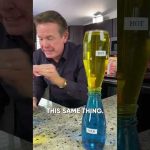
It turns out water is great at blocking radiation. But using water as a protection system has its challenges.
A team from the Polymer Chemistry and Biomaterials Group (PBM) at Ghent University in Belgium is looking into a new option: superabsorbent polymers (SAPs).
These materials might be safer and more effective than water alone.
SAPs can soak up hundreds of times their weight in liquid, similar to those “grow monster” toys that expand in water. When swollen with liquid, they’re called “hydrogels.”
📹 ESA – European Space Agency 📸 Lenny Van Daele/Johan Dubruel
Steve Spangler is a bestselling author, STEM educator and Emmy award-winning television personality with more than 2,100 television appearances to his credit. Steve appeared as a regular guest on the Ellen DeGeneres Show from 2007-2022 (27 appearances).
Steve Spangler is a bestselling author, STEM educator and Emmy award-winning television personality with more than 2,100 television appearances to his credit. Steve appeared as a regular guest on the Ellen DeGeneres Show from 2007-2022 (27 appearances).
Steve Spangler is a bestselling author, STEM educator and Emmy award-winning television personality with more than 2,100 television appearances to his credit. Steve appeared as a regular guest on the Ellen DeGeneres Show from 2007-2022 (27 appearances).
Steve Spangler is a bestselling author, STEM educator and Emmy award-winning television personality with more than 2,100 television appearances to his credit. Steve appeared as a regular guest on the Ellen DeGeneres Show from 2007-2022 (27 appearances).
Steve Spangler is a bestselling author, STEM educator and Emmy award-winning television personality with more than 2,100 television appearances to his credit. Steve appeared as a regular guest on the Ellen DeGeneres Show from 2007-2022. Learn more about Steve at https://stevespangler.com/about-steve-spangler/
Steve Spangler is a bestselling author, STEM educator and Emmy award-winning television personality with more than 2,100 television appearances to his credit. Steve appeared as a regular guest on the Ellen DeGeneres Show from 2007-2022. Learn more about Steve at https://stevespangler.com/about-steve-spangler/
Steve Spangler is a bestselling author, STEM educator and Emmy award-winning television personality with more than 2,100 television appearances to his credit. Steve appeared as a regular guest on the Ellen DeGeneres Show from 2007-2022. Learn more about Steve at https://stevespangler.com/about-steve-spangler/
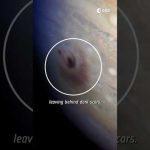
In 2013, our Herschel telescope solved the mystery of water in Jupiter’s upper atmosphere, tracing it back to the impact of comet Shoemaker-Levy 9 in July 1994.
This finding paved the way for our Juice mission, set to reach Jupiter in 2031. Juice’s observations will give us a better chance of understanding how Jupiter’s atmosphere responds to such events.
Steve Spangler is a bestselling author, STEM educator and Emmy award-winning television personality with more than 2,100 television appearances to his credit. Steve appeared as a regular guest on the Ellen DeGeneres Show from 2007-2022. Learn more about Steve at https://stevespangler.com/about-steve-spangler/
Steve Spangler is a bestselling author, STEM educator and Emmy award-winning television personality with more than 2,100 television appearances to his credit. Steve appeared as a regular guest on the Ellen DeGeneres Show from 2007-2022. Learn more about Steve at https://stevespangler.com/about-steve-spangler/
Steve Spangler is a bestselling author, STEM educator and Emmy award-winning television personality with more than 2,100 television appearances to his credit. Steve appeared as a regular guest on the Ellen DeGeneres Show from 2007-2022. Learn more about Steve at https://stevespangler.com/about-steve-spangler/
Steve Spangler is a bestselling author, STEM educator and Emmy award-winning television personality with more than 2,100 television appearances to his credit. Steve appeared as a regular guest on the Ellen DeGeneres Show from 2007-2022. Learn more about Steve at https://stevespangler.com/about-steve-spangler/
Steve Spangler is a bestselling author, STEM educator and Emmy award-winning television personality with more than 2,100 television appearances to his credit. Steve appeared as a regular guest on the Ellen DeGeneres Show from 2007-2022. Learn more about Steve at https://stevespangler.com/about-steve-spangler/
Scientists are on a quest to understand how water, the foundation of life as we know it, reaches distant planets. The PDS 70 system, with its inner and outer discs hosting gas-giant planets, holds intriguing clues. Recently, MIRI, part of the James Webb Space Telescope, detected water vapor in the inner disc at distances less than 160 million km from the star – a zone where rocky, Earth-like planets may be taking shape!
This discovery is groundbreaking, as it delves into the region where terrestrial planets typically form. The PDS 70 star is relatively old, yet it surprisingly harbors water vapor, offering the raw materials needed for rocky world construction. But where did the water come from? Could it be forming in place or transported from the outer disc?
The PDS 70 system’s secrets await further exploration, and Webb’s NIRCam and NIRSpec instruments will soon dive deeper into this fascinating cosmic phenomenon. As we unlock the mysteries of water in space, we inch closer to understanding the origins of life beyond our own planet.
📹 ESA – European Space Agency
★ Subscribe: http://bit.ly/ESAsubscribe and click twice on the bell button to receive our notifications.
We are Europe’s gateway to space. Our mission is to shape the development of Europe’s space capability and ensure that investment in space continues to deliver benefits to the citizens of Europe and the world. Check out https://www.esa.int/ to get up to speed on everything space related.
By using concrete examples of the water and carbon cycles, the speakers in this session will focus on the grand science questions before us and how we can turn them into answers and solutions most useful to decision-makers at the front line of the climate crisis. Earth is a highly dynamic system where the transport and exchanges of energy and matter are influenced by a multitude of processes and feedback mechanisms. Untangling these complex processes to better understand how Earth works as a system is a major challenge; a challenge that satellites, with their global view, are ideally positioned to tackle. While each mission gives us unique insights, it is by combining their data that makes scientific findings shine the brightest. This, in turn, puts European and international collaboration at the heart of Earth observation today.
★ Subscribe: http://bit.ly/ESAsubscribe and click twice on the bell button to receive our notifications.
We are Europe’s gateway to space. Our mission is to shape the development of Europe’s space capability and ensure that investment in space continues to deliver benefits to the citizens of Europe and the world. Check out https://www.esa.int/ to get up to speed on everything space related.
The @NASA/@EuropeanSpaceAgency/@canadianspaceagency James Webb Space Telescope has enabled astronomers get one step closer to the answer by allowing them to detect water vapour around a comet in the main asteroid belt for the first time.
We are Europe’s gateway to space. Our mission is to shape the development of Europe’s space capability and ensure that investment in space continues to deliver benefits to the citizens of Europe and the world. Check out https://www.esa.int/ to get up to speed on everything space related.
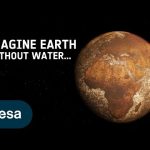
Imagine the world without water: as cold and lifeless as the planet Mars. Earth is unique in our solar system in being able to sustain liquid water on its surface. Water is essential for life and for Earth’s climate, helping transport heat around the planet, but it is difficult to track through the whole water cycle. The global view offered by satellites helps. ESA’s Climate Change Initiative is looking at a range of climate variables linked to the water cycle.
We are Europe’s gateway to space. Our mission is to shape the development of Europe’s space capability and ensure that investment in space continues to deliver benefits to the citizens of Europe and the world. Check out https://www.esa.int/ to get up to speed on everything space related.
Is there water on the Moon? Yes! But you won’t find pools of liquid H2O on the lunar surface — water on the Moon is mostly in the form of ice.
Harvesting this water is a critical component of future human deep space exploration, which is why our golf cart-sized VIPER, or the Volatiles Investigating Polar Exploration Rover, will be traveling to the Moon’s South Pole to search for ice and other potential resources to determine where they came from. Explore more about this first-of-its-kind rover: https://www.nasa.gov/viper
Producers: Jessica Wilde, Scott Bednar Editor: Seth Robinson
We are Europe’s gateway to space. Our mission is to shape the development of Europe’s space capability and ensure that investment in space continues to deliver benefits to the citizens of Europe and the world. Check out https://www.esa.int/ to get up to speed on everything space related.
How are space technologies such as earth observation, satellite communications, and navigation systems being applied to our greatest global challenges like climate change, deforestation and disaster resilience? Find out more in this Space Bites talk by David Taverner, Senior Director at Caribou Space.
David Taverner’s career has focused on using space, mobile, internet and renewable energy technology to address challenges in developing countries. Caribou Space works with governments, space agencies, development agencies and private companies – to use space technology for positive impact on society, economy and environment. David supports the UK Space Agency International Partnership Programme, a £150 million fund to use space technology to benefit developing countries. David has also supported ESA’s Earth Observation for Sustainable Development programme, helping define its future strategy and plan.
Space Bites is a series of lectures about space exploration promoted by the ESA Directorate of Human and Robotic Exploration in order to increase the awareness of the importance of space exploration.
Due to Covid-19 restrictions, the lecture was hosted online via video conference.
★ Subscribe: http://bit.ly/ESAsubscribe and click twice on the bell button to receive our notifications.
We are Europe’s gateway to space. Our mission is to shape the development of Europe’s space capability and ensure that investment in space continues to deliver benefits to the citizens of Europe and the world. Check out https://www.esa.int/ to get up to speed on everything space related.
ESA astronaut Matthias Maurer is currently living and working aboard the International Space Station for his first space mission, Cosmic Kiss. Recently, he experimented with water in microgravity. In this water experiments video series, Matthias demonstrates the different behavior of water in weightlessness and how this research is applied to life on Earth.
In part 5, Matthias explains how studying the behavior of water and other liquids on the International Space Station is important for numerous applications on Earth, such as in industry or food technology.
Matthias will live and work in orbit for approximately six months for his Cosmic Kiss mission. During this time, he will conduct and support more than 35 European and numerous other international experiments in microgravity.
We are Europe’s gateway to space. Our mission is to shape the development of Europe’s space capability and ensure that investment in space continues to deliver benefits to the citizens of Europe and the world. Check out https://www.esa.int/ to get up to speed on everything space related.
ESA astronaut Matthias Maurer is currently living and working aboard the International Space Station for his first space mission, Cosmic Kiss. Recently, he experimented with water in microgravity. In this water experiments video series, Matthias demonstrates the different behavior of water in weightlessness and how this research is applied to life on Earth.
In part 4 of this video series, Matthias takes a closer look at the lens effect and surface tension of water.
Matthias will live and work in orbit for approximately six months for his Cosmic Kiss mission. During this time, he will conduct and support more than 35 European and numerous other international experiments in microgravity.
We are Europe’s gateway to space. Our mission is to shape the development of Europe’s space capability and ensure that investment in space continues to deliver benefits to the citizens of Europe and the world. Check out https://www.esa.int/ to get up to speed on everything space related.
ESA astronaut Matthias Maurer is currently living and working aboard the International Space Station for his first space mission, Cosmic Kiss. Recently, he experimented with water in microgravity. In this water experiments video series, Matthias demonstrates the different behavior of water in weightlessness and how this research is applied to life on Earth.
In this second clip in the series, Matthias blows air into a floating water sphere and looks at what happens when he tries to mix it with olive oil.
Matthias will live and work in orbit for approximately six months for his Cosmic Kiss mission. During this time, he will conduct and support more than 35 European and numerous other international experiments in microgravity.
We are Europe’s gateway to space. Our mission is to shape the development of Europe’s space capability and ensure that investment in space continues to deliver benefits to the citizens of Europe and the world. Check out https://www.esa.int/ to get up to speed on everything space related.
ESA astronaut Matthias Maurer is currently living and working aboard the International Space Station for his first space mission, Cosmic Kiss. Recently, he has been experimenting with water in microgravity.
In this water experiments video series, Matthias demonstrates the different behavior of water in weightlessness and how this research is applied to life on Earth.
In Part 1, Matthias lets water spheres float inside the Columbus module of the Space Station and wets a paddle with a hydrophobic surface to take a closer look at the viscosity and surface tension of water.
Matthias will live and work in orbit for approximately six months for his Cosmic Kiss mission. During this time, he will conduct and support more than 35 European and numerous other international experiments in microgravity.
We are Europe’s gateway to space. Our mission is to shape the development of Europe’s space capability and ensure that investment in space continues to deliver benefits to the citizens of Europe and the world. Check out https://www.esa.int/ to get up to speed on everything space related.
Is there water on Mars? There sure is! It’s not exactly like water on Earth, but Martian H20 can tell us a lot about the planet’s distant past while potentially aiding explorers in the future. Some of the water is even trapped inside rocks! Hear from Mars scientist Eva Scheller who helped make that discovery using NASA data. Get more Martian science: www.nasa.gov/mars
Producers: Jessica Wilde & Scott Bednar Editor: David Shelton
Water is life, on Earth and in space. Dutch ESA astronaut André Kuipers recounts his experience living in space for 204 days, and his time looking back on the blue face of ‘Planet Aqua’, comparing notes with divers about what is going on beneath the waves. He goes on to explore how space technology is being used for water management, from orbital tracking of water quality and pollution to spacecraft-grade recycling systems deployed down on the ground, as well as ambitious efforts to identify marine plastic litter using satellites. Produced for SIWI World Water Week with the support of the Netherlands Ministry of Foreign Affairs.
★ Subscribe: http://bit.ly/ESAsubscribe and click twice on the bell button to receive our notifications.
We are Europe’s gateway to space. Our mission is to shape the development of Europe’s space capability and ensure that investment in space continues to deliver benefits to the citizens of Europe and the world. Check out https://www.esa.int/ to get up to speed on everything space related.
Copernicus Sentinel-2 takes us over the largest lake in central Europe: Lake Balaton in Hungary, in this week’s edition of the Earth from Space programme.
We are Europe’s gateway to space. Our mission is to shape the development of Europe’s space capability and ensure that investment in space continues to deliver benefits to the citizens of Europe and the world. Check out http://www.esa.int/ESA to get up to speed on everything space related.
UN Sustainable Goal 6 is crystal clear: Water for all by 2030.
For World Water Day we take a look at ways that space can help this global challenge. While Earth-observing satellites monitor our precious water resources, technologies developed for human space missions also serve global needs in harsh environments here on Earth.
★ Subscribe: http://bit.ly/ESAsubscribe and click twice on the bell button to receive our notifications.
ESA is Europe’s gateway to space. Our mission is to shape the development of Europe’s space capability and ensure that investment in space continues to deliver benefits to the citizens of Europe and the world. Check out http://www.esa.int/ESA to get up to speed on everything space related.
ESA is Europe’s gateway to space. Our mission is to shape the development of Europe’s space capability and ensure that investment in space continues to deliver benefits to the citizens of Europe and the world. Check out http://www.esa.int/ESA to get up to speed on everything space related.
ESA is Europe’s gateway to space. Our mission is to shape the development of Europe’s space capability and ensure that investment in space continues to deliver benefits to the citizens of Europe and the world. Check out http://www.esa.int/ESA to get up to speed on everything space related.
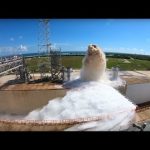
This system is used to reduce extreme heat and energy generated by a rocket launch.🚀 On Oct. 15, 2018, the Ignition Overpressure Protection and Sound Suppression water deluge system at Kennedy Space Center’s Launch Pad 39B was tested, sending water about 100 feet in the air. The test is part of preparation for launching our Space Launch System rocket on Exploration Mission-1 and subsequent missions.
Modifications were made to the pad after a previous wet flow test, increasing the performance of the system. During launch, this water deluge system will release approximately 450,000 gallons of water across the mobile launcher and Flame Deflector.