This image was captured by NIRCam, Webb’s primary near-infrared camera, and contains the lensing galaxy cluster SDSS J1226+2149. It lies at a distance of around 6.3 billion light-years from Earth, in the constellation Coma Berenices. By combining Webb’s sensitivity with the magnifying effect of gravitational lensing, astronomers were able to use this gravitational lens to explore the earliest stages of star formation in distant galaxies. To do so, they relied on earlier studies by the NASA/ESA Hubble Space Telescope, which provided the ‘prescription’ for this gravitational lens.
Credit: ESA/Webb, NASA & CSA, J. Rigby Music: Stellardrone – Twilight
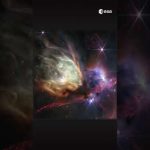
This video takes the viewer on a journey through space to the Rho Ophiuchi cloud complex.
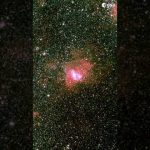
From our cosmic backyard in the Solar System to distant galaxies near the dawn of time, the NASA/ESA/CSA James Webb Space Telescope has delivered on its promise of revealing the Universe like never before in its first year of science operations. To celebrate the completion of a successful first year, a new Webb image has been released of a small star-forming region in the Rho Ophiuchi cloud complex. While the region is relatively quiet, its proximity at 390 light-years makes for a highly detailed close-up, with no foreground stars in the intervening space.
Credits: ESA/Webb, NASA, ESA, CSA, JPL-Caltech/Harvard-Smithsonian CfA, DSS2, N. Bartmann (ESA/Webb), E. Slawik, N. Risinger, D. de Martin, M. Zamani (ESA/Webb), K. Pontoppidan (STScI), A. Pagan (STScI)
Music: Tonelabs – The Red North
★ Subscribe: http://bit.ly/ESAsubscribe and click twice on the bell button to receive our notifications.
We are Europe’s gateway to space. Our mission is to shape the development of Europe’s space capability and ensure that investment in space continues to deliver benefits to the citizens of Europe and the world. Check out https://www.esa.int/ to get up to speed on everything space related.
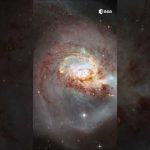
This video takes the viewer on a journey through space to the peculiar galaxy NGC 3256.
This distorted galaxy is the wreckage of a head-on collision between two spiral galaxies which likely occurred 500 million years ago, and it is studded with clumps of young stars which were formed as gas and dust from the two galaxies collided.
We are Europe’s gateway to space. Our mission is to shape the development of Europe’s space capability and ensure that investment in space continues to deliver benefits to the citizens of Europe and the world. Check out https://www.esa.int/ to get up to speed on everything space related.
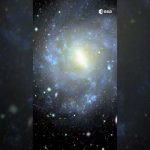
This video takes the viewers on a journey to the barred spiral galaxy NGC 5068, whose bright central bar is visible in the upper left of this image. NGC 5068 lies around 17 million light-years from Earth in the constellation Virgo.
With its ability to peer through the gas and dust enshrouding newborn stars, the NASA/ESA/CSA James Webb Space Telescope is the perfect telescope to explore the processes governing star formation. Stars and planetary systems are born amongst swirling clouds of gas and dust that are opaque to visible-light observatories like Hubble or the VLT. The keen vision at infrared wavelengths of two of Webb’s instruments — MIRI and NIRCam — allowed astronomers to see right through the gargantuan clouds of dust in NGC 5068 and capture the processes of star formation as they happened. This image combines the capabilities of these two instruments, providing a truly unique look at the composition of NGC 5068.
Credit: ESA/Webb, NASA, CSA, J. Lee and the PHANGS-JWST Team, Dark Energy Survey/DOE/FNAL/NOIRLab/NSF/AURA, DSS, N. Bartmann (ESA/Webb), E. Slawik, N. Risinger, D. de Martin (ESA/Webb), M. Zamani (ESA/Webb)
Music: Tonelabs – The Red North
★ Subscribe: http://bit.ly/ESAsubscribe and click twice on the bell button to receive our notifications.
We are Europe’s gateway to space. Our mission is to shape the development of Europe’s space capability and ensure that investment in space continues to deliver benefits to the citizens of Europe and the world. Check out https://www.esa.int/ to get up to speed on everything space related.
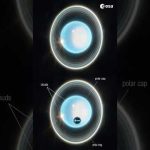
The NASA/ESA/CSA James Webb Space Telescope has taken a stunning image of the Solar System’s other ice giant, the planet Uranus. The new image features dramatic rings as well as bright features in the planet’s atmosphere. The new Webb data of Uranus offer exquisite sensitivity, revealing the faintest dusty rings.
The seventh planet from the Sun, Uranus is strange: it rotates on its side, at a nearly 90-degree angle from the plane of its orbit. This causes unusual seasons since the planet’s poles experience 42 years of constant sunlight and 42 years of complete darkness (Uranus takes 84 years to orbit the Sun). Currently, it is late spring at the northern pole, which is on the right side of this image; Uranus’s northern summer will be in 2028.
Credit: NASA, ESA, CSA, STScI, J. DePasquale (STScI), N. Bartmann Music: Stellardrone – The Belt of Orion
★ Subscribe: http://bit.ly/ESAsubscribe and click twice on the bell button to receive our notifications.
We are Europe’s gateway to space. Our mission is to shape the development of Europe’s space capability and ensure that investment in space continues to deliver benefits to the citizens of Europe and the world. Check out https://www.esa.int/ to get up to speed on everything space related.
This image takes the viewer to space to finish at Webb’s view of the galaxy merger II ZW 96.
This pair of galaxies is roughly 500 million light-years from Earth and lies in the constellation Delphinus, close to the celestial equator. As well as the wild swirl of the merging galaxies, a menagerie of background galaxies are dotted throughout the image. Learn more about the object here.
Credit: ESA/Webb, NASA, CSA, L. Armus, A. Evans, SDSS, E. Slawik, N. Risinger, M. Zamani (ESA/Webb), N. Bartmann (ESA/Webb) Music: Tonelabs – The Red North
★ Subscribe: http://bit.ly/ESAsubscribe and click twice on the bell button to receive our notifications.
We are Europe’s gateway to space. Our mission is to shape the development of Europe’s space capability and ensure that investment in space continues to deliver benefits to the citizens of Europe and the world. Check out https://www.esa.int/ to get up to speed on everything space related.
This video takes the viewer on a journey to NGC 346, one of the most dynamic star-forming regions in nearby galaxies, as seen by the NASA/ESA/CSA James Webb Space Telescope.
NCG 346 is located in the Small Magellanic Cloud (SMC), a dwarf galaxy close to our Milky Way.
Credit: ESA/Webb, NASA, CSA, ESO, ESA/Hubble, Digitized Sky Survey 2, A. Nota, N. Bartmann, M. Zamani Music: Music for the Zoom: Tonelabs – The Red North
★ Subscribe: http://bit.ly/ESAsubscribe and click twice on the bell button to receive our notifications.
We are Europe’s gateway to space. Our mission is to shape the development of Europe’s space capability and ensure that investment in space continues to deliver benefits to the citizens of Europe and the world. Check out https://www.esa.int/ to get up to speed on everything space related.
James Webb Space Telescope – the largest, most powerful telescope to be sent into space is getting ready for launch in autumn 2021!
Watch the replay of the media presentation and Q&A with representatives from Webb’s partners ESA, @NASA and the @Canadian Space Agency, as well as ESA’s partner @arianespace, to hear more about it and its upcoming launch. Following in the footsteps of the Hubble Space Telescope as the next great space science observatory, the International James Webb Space Telescope is designed to help answer outstanding questions about the Universe and make breakthrough discoveries in all fields of astronomy.
We are Europe’s gateway to space. Our mission is to shape the development of Europe’s space capability and ensure that investment in space continues to deliver benefits to the citizens of Europe and the world. Check out https://www.esa.int/ to get up to speed on everything space related.
Thomas Zurbuchen, associate administrator of NASA’s Science Mission Directorate, and John Mather, senior project scientist, comment on an independent review board’s findings on the agency’s James Webb Space Telescope. Webb is now targeting March 2021 as a new launch date, after the board assessed delays in integration and testing. NASA and the board unanimously agree that Webb can still achieve mission success.
NASA Administrator Jim Bridenstine discusses the findings of the Independent Review Board on one of our flagship missions, the James Webb Space Telescope. Despite Webb’s major challenges during the final testing and integration phase, the board and NASA unanimously agreed that Webb will achieve mission success with the implementation of the board’s recommendations, many of which are already underway.