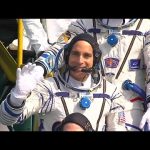
After lifting off from NASA’s Kennedy Space Center on Thursday, July 31, the crew members of NASA’s SpaceX Crew-11 mission are arriving at the International Space Station.
NASA astronauts Zena Cardman and Mike Fincke, JAXA (Japan Aerospace Exploration Agency) astronaut Kimiya Yui, and Roscosmos cosmonaut Oleg Platonov are scheduled to dock in their SpaceX Dragon spacecraft at approximately 2:30 a.m. EDT (0630 UTC) on Saturday, Aug. 2. Station crew will then open the hatches between Dragon and the station, to be followed by a welcome ceremony.
Cardman, Fincke, Yui, and Platonov will spend several months on the station, conducting research to help humans learn how to live in space while making life better on Earth. After Crew-11 arrives at the station, the four members of Crew-10 will depart the station following a brief handover period.
From the International Space Station to Earth, ESA astronaut Andreas Mogensen talks about what kind of person his fellow Scandinavian and ESA project astronaut Marcus Wandt is. The Axiom-3 mission with Marcus onboard is planned to launch in mid-January 2024 to the International Space Station for a 14-day mission, where Marcus will join Andreas, marking the first time two Scandinavians are in space together.
Credits: ESA – European Space Agency
★ Subscribe: http://bit.ly/ESAsubscribe and click twice on the bell button to receive our notifications.
We are Europe’s gateway to space. Our mission is to shape the development of Europe’s space capability and ensure that investment in space continues to deliver benefits to the citizens of Europe and the world. Check out https://www.esa.int/ to get up to speed on everything space related.
Barranquilla lies strategically next to the delta of the Magdalena River, one of the main rivers in Colombia, flowing northwards for around 1500 km through the west half of the country before emptying into the Caribbean Sea.
Owing to large quantities of sediment, as seen by the extensive sediment plume at its mouth and the brownish colour of its waters, the Magdalena requires frequent dredging of its main channel to allow access to Barranquilla’s port for oceangoing vessels.
We are Europe’s gateway to space. Our mission is to shape the development of Europe’s space capability and ensure that investment in space continues to deliver benefits to the citizens of Europe and the world. Check out https://www.esa.int/ to get up to speed on everything space related.
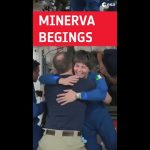
ESA astronaut Samantha Cristoforetti and @NASA astronauts Kjell Lindgren, Robert “Bob” Hines and Jessica Watkins arrive to the International Space Station after docking at 01:37 CEST on Thursday 28 April 2022.
Collectively known as Crew-4, the four astronauts were launched from @NASA’s Kennedy Space Center in Florida, USA, at 09:52 CEST on 27 April 2022.
Samantha is the third ESA astronaut to travel to the orbital outpost in a Crew Dragon. During the journey she and Jessica served as Mission Specialists. Kjell is Crew-4 Commander and Bob is Crew-4 Pilot.
Crew-4 was welcomed aboard by the Station’s current inhabitants, including ESA astronaut Matthias Maurer who was launched to the Station as part of Crew-3 and is expected to return shortly to Earth.
Samantha first flew to space in 2014 for her @AsiTV-sponsored mission Futura. Her ESA space mission, known as Minerva, will officially begin once she reaches the Station.
Throughout her mission, Samantha will hold the role of US Orbital Segment (USOS) lead, taking responsibility for all operations within the US, European, Japanese and Canadian modules and components of the Space Station. She will support around 35 European and many more international experiments in orbit.
We are Europe’s gateway to space. Our mission is to shape the development of Europe’s space capability and ensure that investment in space continues to deliver benefits to the citizens of Europe and the world. Check out https://www.esa.int/ to get up to speed on everything space related.
ESA’s Ariane 6 will offer more performance and flexibility than its predecessor Ariane 5 and will be available in two versions, with either two or four boosters.
This new rocket will launch from Europe’s Spaceport in French Guiana and its home, the recently inaugurated launch complex, is a marvel of engineering. Take a tour with Tony Dos Santos, ESA’s Technical Manager there.
The main elements of the Ariane 6 launch complex include the mobile gantry, launch pad and launch vehicle assembly building.
See tests being carried out to qualify vital systems involved in a launch campaign and hear how they work. This includes raising a mockup Ariane 6 core stage vertical in the 90 m-high mobile gantry. Watch the deluge system gush water to absorb the roar of launch and capture the moment the fluidic systems detach from the rocket as it lifts off.
The Ariane 6 programme is funded and developed by ESA. These tests by @CNESand @ArianeGroup teams were jointly performed under the responsibility of ESA.
Ariane 6 opens new opportunities and guarantees continued access to space for ESA Member States.
★ Subscribe: http://bit.ly/ESAsubscribe and click twice on the bell button to receive our notifications.
We are Europe’s gateway to space. Our mission is to shape the development of Europe’s space capability and ensure that investment in space continues to deliver benefits to the citizens of Europe and the world. Check out https://www.esa.int/ to get up to speed on everything space related.
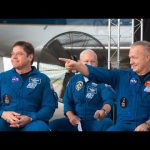
NASA Astronauts Robert Behnken and Douglas Hurley splashed down in the Dragon Endeavour capsule at 2:48 p.m. EDT on Sunday, Aug. 2, off the coast of Pensacola, Florida.
Demo-2 is SpaceX’s final test flight and is providing data on the performance of the Falcon 9 rocket, Crew Dragon spacecraft and ground systems, as well as in-orbit, docking, splashdown, and recovery operations. The data will inform NASA’s certification of the SpaceX crew transportation system for regular flights carrying astronauts to and from the space station. SpaceX is readying the hardware for the first rotational mission that will occur following NASA certification, which is expected to take about six weeks.
The #LaunchAmerica mission aboard SpaceX’s Crew Dragon “Endeavour” spacecraft that brought NASA astronauts Robert Behnken and Douglas Hurley back to Earth marked the first splashdown of an American crew spacecraft in 45 years. Tune in at 4:30 p.m. EDT to hear Bob and Doug talk about this milestone in human spaceflight.
Today we made history as NASA Astronauts Robert Behnken and Douglas Hurley safely and successfully splashed down into the Gulf of Mexico after two months on board the International Space Station. This completes the flight demonstration of the SpaceX Dragon Endeavour spacecraft, which will now be used to ferry astronauts to and from the space station from American soil. Now that our #LaunchAmerica crew has returned to Earth, join us in welcoming them as they fly into Ellington Field, home of our astronaut corps:
New crew arrives safely at the space station, valuable microgravity research returns to Earth, and an update on our Commercial Crew Program … a few of the stories to tell you about – This Week at NASA!
This video is available for download from NASA’s Image and Video Library: https://images.nasa.gov/details-A%20Warm%20Welcome%20for%20the%20Space%20Stations%20New%20Crew%20on%20This%20Week%20@NASA%20April%2010,%202020
Jim Bridenstine officially took office as the 13th administrator of NASA on Monday, April 23rd, after he was given the oath of office by Vice President Mike Pence at the agency’s headquarters in Washington.
NASA Administrator Charles Bolden and Associate Administrator for Diversity and Equal Opportunity Brenda Manuel welcome you to NASA’s Modern Figures Website: https://www.nasa.gov/modernfigures
Expedition 47 Commander Tim Kopra of NASA, Soyuz Commander Yuri Malenchenko of Roscosmos and Flight Engineer Tim Peake of ESA (European Space Agency) were greeted in a traditional ceremony in Kazakhstan June 18, a few hours after their safe return to Earth from a 186 day mission on the International Space Station.
A visual highlight of the people involved in the innovative technologies developed and under development, as well as the scientific discoveries made as NASA explores and studies our changing Earth and our universe, and continues to make advancements in green, next-generation air travel.
ESA astronaut Andreas Mogensen introduces us to Star City, near Moscow, where he is currently training for his mission to the International Space Station in 2015.
NASA’s two Gravity Recovery And Interior Laboratory (GRAIL) spacecraft are closing in on their quarry, the moon. The mission plans New Year’s Eve and New Year’s Day main engine burns to place the twin spacecraft in lunar orbit. http://www.nasa.gov/grail
NASA’s two Gravity Recovery And Interior Laboratory (GRAIL) spacecraft are closing in on their quarry, the moon. The mission plans New Year’s Eve and New Year’s Day main engine burns to place the twin spacecraft in lunar orbit. http://www.nasa.gov/grail
The Dec. 9 event opens with an address by NASA Deputy Administrator, Lori Garver. (Part 1 of 4) Since 2008, the agency’s ongoing series of Future Forums have provided NASA leadership, technologists, scientists, and engineers an opportunity to join with local business, science, technology, and education leaders to discuss the future role of NASA in further advancing innovation, technology, science, engineering, education and the economy that benefits their community and the nation.
ESA astronaut Paolo Nespoli landed back on Earth this morning to conclude his 159-day mission to the International Space Station.
Paolo had been serving as the flight engineer for Expeditions 26 and 27 since December. Paolo’s MagISStra mission, the third long mission by a European astronaut on the Station, came to end at 04:27 CEST (02:27 GMT) on the steppes of Kazakhstan as the Soyuz TMA-20 spacecraft fired its retrorockets for a soft landing.
ESA astronaut Paolo Nespoli landed back on Earth this morning to conclude his 159-day mission to the International Space Station.
Paolo had been serving as the flight engineer for Expeditions 26 and 27 since December. Paolo’s MagISStra mission, the third long mission by a European astronaut on the Station, came to end at 04:27 CEST (02:27 GMT) on the steppes of Kazakhstan as the Soyuz TMA-20 spacecraft fired its retrorockets for a soft landing.
Paolo and crewmates Soyuz Commander Dmitri Kondratyev and NASA’s Cady Coleman boarded the Soyuz on Monday night and undocked from the Station’s nadir
Rassvet port at 23:35 CEST (21:35 GMT).