Steve Spangler is a bestselling author, STEM educator and Emmy award-winning television personality with more than 2,100 television appearances to his credit. Steve appeared as a regular guest on the Ellen DeGeneres Show from 2007-2022 (27 appearances).
Steve Spangler is a bestselling author, STEM educator and Emmy award-winning television personality with more than 2,100 television appearances to his credit. Steve appeared as a regular guest on the Ellen DeGeneres Show from 2007-2022 (27 appearances).
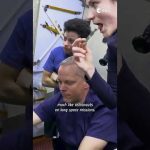
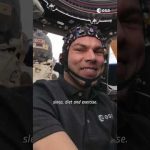
From the deep sea to outer space! Submarines are helping scientists’ study how humans adapt to extreme environments — just like astronauts on long space missions.
What we learn underwater today could shape the future of space exploration tomorrow.
📹 ESA – European Space Agency 📸 ESA/Portuguese Space Agency/Portuguese Navy
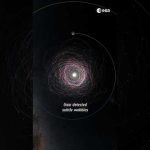
Thanks to the incredible precision of our Gaia mission, scientists have discovered potential moons orbiting over 350 asteroids! This nearly doubles the known number of ‘binary asteroids,’ revealing a whole new layer of complexity in our Solar System.
Steve Spangler is a bestselling author, STEM educator and Emmy award-winning television personality with more than 2,100 television appearances to his credit. Steve appeared as a regular guest on the Ellen DeGeneres Show from 2007-2022. Learn more about Steve at https://stevespangler.com/about-steve-spangler/
Steve Spangler is a bestselling author, STEM educator and Emmy award-winning television personality with more than 2,100 television appearances to his credit. Steve appeared as a regular guest on the Ellen DeGeneres Show from 2007-2022. Learn more about Steve at https://stevespangler.com/about-steve-spangler/
In the weekend of 10–12 May 2024, the biggest solar storm to hit Earth in over 20 years swept over our planet. This produced an intense geomagnetic storm, creating beautiful auroras.
The culprit? An active sunspot region called AR3664. As it rotated away from Earth’s view around 14 May, it sent out the strongest flare yet (class X8.79), causing large radio blackouts on Earth. But the fact that we could not see it anymore from Earth did not mean that this monster had gone to sleep.
Watching the Sun’s far side on 20 May, Solar Orbiter’s X-ray instrument STIX observed a massive flare with an estimated class of X12. This makes it the strongest flare yet of the current solar cycle, and in the top ten flares since 1996.
📹 ESA – European Space Agency 📸 ESA & NASA/Solar Orbiter/EUI
In 2016, scientists spotted Kamo’oalewa ,a 40 to 100 metre object, during a planetary defence survey to discover space rocks that could possibly hit our planet.
At first, the object appeared to orbit Earth in a similar way to our Moon. But astronomers found it was actually orbiting the Sun on a very similar path to Earth. So, Kamo’oalewa was demoted from a potential new moon to a near-Earth asteroid and a quasi-satellite to Earth.
However, the asteroid’s connection to the Moon could run deeper. The object’s Earth-like orbit and Moon-like composition may indicate that it was created when a chunk of the Moon was thrown into space by an asteroid impact.
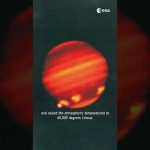
30 years ago, the comet, Shoemaker-Levy 9, pounded into the southern hemisphere of Jupiter, leaving dark scars in the planet’s atmosphere that persisted for several weeks.
The remarkable event was the first direct observation of an extraterrestrial collision in the Solar System.
Huge plumes up to 3 thousand kilometres high were created by the impact and raised the atmospheric temperatures to 40,000 degrees Celsius.
Almost 10 years after the collision, our Herschel telescope found conclusive evidence that Shoemaker-Levy 9 was the origin of water found in Jupiter’s upper atmosphere. Our Juice mission launched last year will map the distribution of Jupiter’s atmospheric ingredients in even greater detail.
This kind of collision was more frequent in the early solar system but today, something as large as Shomaker-Levy impacts Earth only once in a million years.
However, it is important we can protect ourselves from such space hazards which is why we are carrying out several projects dedicated to improving our ability to detect, track and mitigate potentially hazardous asteroids and comets, such as our Hera mission currently planned to launch later this year and our new mission, Ramses, which will to rendezvous with the asteroid Apophis.
📹 ESA – European Space Agency 📸 HA. Weaver, T. ESmith (Space Telescope Science Institute), and NASA/ESA 📸 ESA/Hubble (M. Kornmesser & L. L. Christensen) 📸 H. Hammel, MIT and NASA/ESA 📸 Calar Alto Observatory/Max Planck Institute for Astronomy, Heidelberg, Germany
Steve Spangler is a bestselling author, STEM educator and Emmy award-winning television personality with more than 2,100 television appearances to his credit. Steve appeared as a regular guest on the Ellen DeGeneres Show from 2007-2022. Learn more about Steve at https://stevespangler.com/about-steve-spangler/
After being launched not even a month ago, EarthCARE has returned its first results.
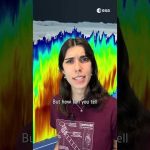
This was the first time we were able to see the internal structure and dynamics of clouds from space.
These are the first results from EarthCARE’s Cloud Profiling Radar instrument, provided by JAXA, which will be followed by the first results from EarthCARE’s three other instruments in the next weeks and months.
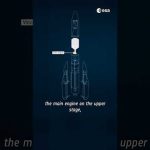
Europe’s newest rocket Ariane 6 has an upper stage engine, Vinci, that can restart up to four more times once in space!
This allows Ariane 6 to reach a larger range of orbits and deliver multiple payloads on a single launch.
Vinci does this using an auxiliary propulsion unit that heats up the same liquid oxygen and hydrogen fuel used by the main engine. It then turns it into gas that is expelled from the upper stage to provide a small amount of thrust. The effect is barely noticeable, but the forces are just enough to keep the liquid fuel at the bottom of the tank and ready for reignition.
📹 ESA – European Space Agency 📸 ESA – European Space Agency
Aurora made a rare appearance across both the Northern and Southern Hemisphere skies after Earth was hit by one of the strongest geomagnetic storms for years. The storm over the weekend was classed as the highest G5.
Don’t worry if you missed them, we are entering a “solar maximum” where the Sun becomes very active meaning more storms and a greater chance of seeing Aurora in more places.
Let us know if and where you saw them in the comments👇
A group of 12 volunteers are sticking to a strict bed routine for 60 days, lying with their feet up and one shoulder always touching the mattress. This reclined lifestyle includes meals, showers and toilet breaks, as well as intensive cycling and centrifuge rides for some.
The BRACE study follows a two-month bedtime schedule to investigate how cycling and artificial gravity could counteract changes the human body experiences in space.
Astronauts face similar physiological problems as elderly and bedridden patients on Earth. During space missions, astronauts’ bodies go through a wide array of changes – everything from their eyes to their heart might be affected, and their muscles and bones start to deteriorate. To battle this degradation, crew members exercise two hours per day on the International Space Station.
The BRACE study involves male participants between the ages of 20 and 45 years with good physical and mental health. They are placed in beds tilted 6° below the horizontal position. As blood flows to the head and muscle wears out from lack of use, researchers chart how their bodies react.
Researchers split the volunteers in three groups. One group cycles in bed, a second one cycles while being spun on a centrifuge, and a third control group stays in bed for the full two months with no bike exercise or centrifuge rides. The centrifuge mimics artificial gravity, acting on all organs at once. Volunteers are spun to drive blood towards their feet, where the force of gravity doubles during the ride. Scientists hope artificial gravity could be used to keep astronauts fit and healthy in space.
Now halfway through its second edition, the experiment will finish on 4 May 2024, after 95 days of intense clinical testing and monitoring. This campaign takes place at MEDES, the Institute for Space Medicine and Physiology in Toulouse, France, and is supported by the French Space Agency CNES.
The study involves 14 European and international science teams that are working to release the results from the first BRACE campaign in 2023. Researchers are assessing a wide range of changes in the cardiovascular, metabolic, musculoskeletal, neuro-sensorial, haematological, and immunological systems.
The tests will provide a better understanding of the effects of prolonged bedrest to the benefit of those in space and on Earth. Results could help design countermeasures and improve health for patients suffering from accelerated ageing due to a sedentary lifestyle.
Steve Spangler is a bestselling author, STEM educator and Emmy award-winning television personality with more than 2,100 television appearances to his credit. Steve appeared as a regular guest on the Ellen DeGeneres Show from 2007-2022. Learn more about Steve at https://stevespangler.com/about-steve-spangler/
Steve Spangler is a bestselling author, STEM educator and Emmy award-winning television personality with more than 2,100 television appearances to his credit. Steve appeared as a regular guest on the Ellen DeGeneres Show from 2007-2022. Learn more about Steve at https://stevespangler.com/about-steve-spangler/
The design of buildings and spaces can greatly affect how people feel and perform. Windows, wall colours and even plants in a room can improve your productivity and mood. In extreme environments, the layout of a habitat becomes even more important.
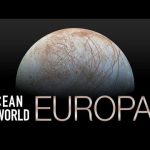
Deep beneath the crust of Jupiter’s frozen moon Europa lies a massive liquid water ocean. Exploring this ocean world with our Europa Clipper spacecraft could provide new clues in our search for life beyond Earth.
Scheduled to launch in October 2024, Europa Clipper’s main science goal is to determine whether there are places below the icy moon’s surface that could be habitable.
On 28 November 1983, the first European-built Spacelab was launched from @NASAKennedy aboard Space Shuttle Columbia.
Also on board was Ulf Merbold, who became our first astronaut in space. The 10-day Spacelab-1 mission marked our entry into human spaceflight activities.
Under a cooperation agreement with @NASA, we were to build a modular research laboratory that would fit inside the Shuttle’s cargo bay.
In 17 years, European Spacelab equipment flew on 36 missions. The two Spacelab modules eventually made 16 flights with five different Shuttle Orbiters.
Many of Spacelab’s features live on in space hardware that is flying today. Europe’s Columbus laboratory on the Station evolved from Spacelab.
★ Subscribe: http://bit.ly/ESAsubscribe and click twice on the bell button to receive our notifications.
We are Europe’s gateway to space. Our mission is to shape the development of Europe’s space capability and ensure that investment in space continues to deliver benefits to the citizens of Europe and the world. Check out https://www.esa.int/ to get up to speed on everything space related.
1. Mars has two moons, Phobos and Deimos. They are both too light for gravity to make them spherical.
2. It has the highest volcano in the Solar System, the Olympus Mons. It rises 25 kilometres above the surrounding plain: Mount Everest is only one third as high.
3. The air is 100 times thinner than on Earth, and mostly made up of carbon dioxide. Human explorers will have to wear oxygen masks and special suits every time they step outside their sealed homes.
4. Like Earth, the Red Planet has two large ice caps at its north and south poles.
54 years ago on 20 July 1969, Apollo 11’s crew made history by being the first people to step foot on the moon.
Today, we’ll be sharing some fun facts about our celestial neighbour! 🌚🌝
1️⃣ Twelve people have walked on the Moon. Between 1969 and 1972, astronauts left scientific experiments on the lunar surface and came back to Earth with nearly 400 kg of rocks and soil. All 12 Apollo Moonwalkers reported symptoms similar to hay fever. Lunar dust is made of sharp, abrasive particles, and it is not known how toxic it is to humans.
2️⃣ You would also weigh less on the Moon! With only 1/6 the gravity, you would be able to jump higher and throw objects farther than on Earth.
3️⃣ If you look at the Moon through a telescope, you will see brilliant flashes of light. Nobody is sending you signals though – they are meteorites hitting our rocky neighbour at great speed.
4️⃣ If you were to live on the Moon, both day and night would be two weeks long! As humankind goes to the Moon, astronauts will need to work with this new day/night cycle
5️⃣ The Moon hides one ‘face’ from us, we call it the far side of the Moon, and we never get to see it from Earth. What do you think is on the far side of the Moon?
📹 ESA – European Space Agency
★ Subscribe: http://bit.ly/ESAsubscribe and click twice on the bell button to receive our notifications.
We are Europe’s gateway to space. Our mission is to shape the development of Europe’s space capability and ensure that investment in space continues to deliver benefits to the citizens of Europe and the world. Check out https://www.esa.int/ to get up to speed on everything space related.
We are Europe’s gateway to space. Our mission is to shape the development of Europe’s space capability and ensure that investment in space continues to deliver benefits to the citizens of Europe and the world. Check out https://www.esa.int/ to get up to speed on everything space related.
Lying in bed for a full 60 days – with one shoulder always touching the mattress – might sound like bliss, but add cycling, spinning and constant medical tests to the equation and it becomes a challenging experience for the sake of human space exploration.
A group of 12 volunteers are bracing themselves for a bedridden journey that put them into a compulsory reclined lifestyle. Participants are kept in beds tilted 6 degrees below the horizontal with their feet up – meals, showers and toilet breaks included.
As blood flows to the head and muscle is lost from underuse, researchers are charting how their bodies react. Bedrest studies offer a way of testing measures to counter some of the negative aspects of living in space.
During space missions, astronauts’ bodies go through a wide array of changes due to lack of gravity – everything from their eyes to their heart is affected, and muscles and bones start to waste away.
📹 @EuropeanSpaceAgency 📷 ESA/CNES/MEDES-IMPS
★ Subscribe: http://bit.ly/ESAsubscribe and click twice on the bell button to receive our notifications.
We are Europe’s gateway to space. Our mission is to shape the development of Europe’s space capability and ensure that investment in space continues to deliver benefits to the citizens of Europe and the world. Check out https://www.esa.int/ to get up to speed on everything space related.
Determining whether the Jovian moons provide the right conditions for habitability is one of the Jupiter Icy Moons Explorer, Juice, core objectives. Could life have appeared somewhere there? Do any of the Galilean moons have the building blocks needed for life?
By studying the Galilean moons’ hidden oceans, magnetism, heating processes, tidal effects, orbits, surface activity, cores and compositions, atmospheres and space environments, Juice will investigate whether the conditions necessary for life could ever have emerged on Ganymede, Europa or Callisto. Juice will help us to understand these worlds not only as planetary bodies but also as possible habitats for life. Juice’s high-resolution mapping will hunt for biologically essential and important elements (such as carbon, oxygen, nitrogen, magnesium and iron).
These moons are especially exciting prospects for life given their hidden subsurface oceans. Characterising their habitability will have far-reaching scientific implications well beyond the Jupiter system itself, and will help us understand the general habitability of icy worlds across the Universe. Importantly, Juice’s second target of the wider Jupiter system will reveal more about the general prospects for habitability in similar planetary systems around other stars.
★ Subscribe: http://bit.ly/ESAsubscribe and click twice on the bell button to receive our notifications.
We are Europe’s gateway to space. Our mission is to shape the development of Europe’s space capability and ensure that investment in space continues to deliver benefits to the citizens of Europe and the world. Check out https://www.esa.int/ to get up to speed on everything space related.
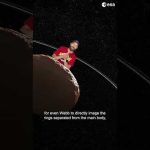
Chariklo is an icy, small body, but the largest of the known Centaur population, located more than 3.2 billion kilometres away beyond the orbit of Saturn. Chariklo is only 250 kilometers or ~51 times smaller than Earth in diameter, and its rings orbit at a distance of about 400 kilometers from the center of the body.
On 18 October 2022, a team used the James Webb Space Telescipe to closely monitor the star Gaia DR3 6873519665992128512, and watch for the tell-tale dips in brightness indicating an occultation had taken place. The shadows produced by Chariklo’s rings were clearly detected, demonstrating a new way of using Webb to explore solar system objects. The star shadow due to Chariklo itself tracked just out of Webb’s view. This appulse (the technical name for a close pass with no occultation) was exactly as had been predicted after the last Webb course trajectory maneuver.
Credit: @NASA, ESA, CSA, Leah Hustak (STScI), Pablo Santos-Sanz (IAA-CSIC), Nicolás Morales (IAA-CSIC), Bruno Morgado (UFRJ, ON/MCTI, LIneA)
★ Subscribe: http://bit.ly/ESAsubscribe and click twice on the bell button to receive our notifications.
We are Europe’s gateway to space. Our mission is to shape the development of Europe’s space capability and ensure that investment in space continues to deliver benefits to the citizens of Europe and the world. Check out https://www.esa.int/ to get up to speed on everything space related.
The ‘Enabling Lunar In-Situ Agriculture by Producing Fertilizer from Beneficiated Regolith’ project, involves studying a combination of mechanical, chemical and biological processes to extract mineral nutrients from the lunar soil. Valuable elements might need concentrating before use, while undesirable ones would be removed.
The current study represents a proof of principle using available lunar regolith simulants, opening the way to more detailed research in future.
★ Subscribe: http://bit.ly/ESAsubscribe and click twice on the bell button to receive our notifications.
We are Europe’s gateway to space. Our mission is to shape the development of Europe’s space capability and ensure that investment in space continues to deliver benefits to the citizens of Europe and the world. Check out https://www.esa.int/ to get up to speed on everything space related.
During a break from looking at planets around other stars, ESA’s CHaracterising ExOPlanet Satellite (Cheops) mission has observed a dwarf planet in our own Solar System and made a decisive contribution to the discovery of a dense ring of material around it.
Studying these dwarf planets is difficult because of their small sizes and extreme distances. Quaoar itself orbits the Sun at almost 44 times the Sun-Earth distance. So, occultations are particularly valuable tools. Until recently, however, it has been difficult to predict exactly when and where they will take place.
For an occultation to occur, the alignment between the occulting object (here the TNO), the star, and the observing telescope must be extremely precise. In the past, it has been almost impossible to meet the stringent accuracy requirements to be certain of seeing an event. Nevertheless, to pursue this goal the European Research Council Lucky Star project, coordinated by Bruno Sicardy, Sorbonne University & Paris Observatory – PSL (LESIA), was created to predict upcoming occultations by TNOs, and to co-ordinate the observation of these events from professional and amateur observatories around the globe.
We are Europe’s gateway to space. Our mission is to shape the development of Europe’s space capability and ensure that investment in space continues to deliver benefits to the citizens of Europe and the world. Check out https://www.esa.int/ to get up to speed on everything space related.
🚩 Help support HistoryMarche on Patreon and for as little as $1 per video get ad-free early access to our videos: https://www.patreon.com/historymarche
🚩 The first Scottish War of Independence was a long series of bloody conflicts between Scotland and England. In this series you will see the initial invasion of Edward I in 1296, the galvanizing resistance of William Wallace and the campaigns of the Scottish Guardians from 1297 until 1304, as well as Robert the Bruce’s campaigns from 1306 until his infamous victory at Bannockburn in 1314, and, finally, the Scottish diplomatic missions coupled with military victories culminating in the Treaty of Edinburgh-Northampton in 1328.
Sources: • Bannockburn 1314: Robert Bruce’s great victory (Peter Armstrong) ISBN: 978-1855326095 • Stirling Bridge & Falkirk 1297-98 (Pete Armstrong). ISBN: 978-1-84176-510-5 • Robert the Bruce, King of Scots (Ronald McNair Scott). ISBN: 978-1-78211-177-1 • A Great and Terrible King: Edward I and the Forging of Britain (Marc Morris). ISBN: 978-0-091-79684-6 • The Hammer of the Scots: Edward I and the Scottish Wars of Independence (David Santiuste). ISBN: 978-1-78159-012-6 • Edward I (Michael Prestwich). ISBN: 978-0-300-07157-3 • William Wallace: Brave Heart (James MacKay). ISBN: 9781780574288 • Peter Reese – Bannockburn, Scotlands greatest victory
Mecklenburg–West Pomerania is one of Germany’s least populated states. Nearly two-thirds is covered by farmland with the main crops being rye, wheat, barley and hay. The green areas present in this image are most likely winter wheat and winter rapeseed. The region’s pastures typically support sheep, horses and cattle.
On the state’s coastline on the Baltic Sea lie many holiday resorts, unspoilt nature and the islands of Rügen and Usedom, as well as many others.
We are Europe’s gateway to space. Our mission is to shape the development of Europe’s space capability and ensure that investment in space continues to deliver benefits to the citizens of Europe and the world. Check out https://www.esa.int/ to get up to speed on everything space related.
Did you know that ESA is researching human hibernation for long distance spaceflight to Mars or beyond?
Hibernating astronauts could be the best way to save mission costs, reduce the size of spacecraft by a third and keep crew healthy on their way to Mars. An ESA-led investigation suggests that human hibernation goes beyond the realm of science-fiction and may become a game-changing technique for space travel.
When packing for a return flight to the Red Planet, space engineers account for around two years’ worth of food and water for the crew.
Torpor during hibernation is an induced state that reduces the metabolic rate of an organism. This ‘suspended animation’ is a common mechanism in animals who wish to preserve energy. Reducing the metabolic rate of a crew en route to Mars down to 25% of the normal state would dramatically cut down the amount of supplies and habitat size, making long-duration exploration more feasible.
Mimicking therapeutic torpor, the idea of putting human into a state of hibernation, has been around in hospitals since the 1980s – doctors can induce hypothermia to reduce metabolism during long and complex surgeries. However, it is not an active reduction of energy and misses most of the advantages of torpor. Studies on hibernation to visit other planets could offer new potential applications for patient care on Earth.
Animals hibernate to survive periods of cold and food or water scarcity, reducing their heart rate, breathing and other vital functions to a fraction of their normal life, while body temperature lowers close to ambient temperature. Tardigrades, frogs and reptiles are very good at it. Lower testosterone levels seem to aid long hibernation in mammals, estrogens in humans strongly regulate energy metabolism.
With the crew at rest for long periods, artificial intelligence will come into play during anomalies and emergencies.
The possibilities of hibernation for medical use is of particular interest to the European research community and could transform how we approach many severe illnesses.
Inducing torpor is already used in some medical environments such as surgical theathers to replace anesthesia in those patients allergic to anesthetic drugs.
The step to space research is closer than you might think. Get involved with spaceflight research via https://www.esa.int/spaceflightAO. Find out about our commercial partnerships and opportunities in human and robotic exploration via https://www.esa.int/explorationpartners to run your research in microgravity as well.
★ Subscribe: http://bit.ly/ESAsubscribe and click twice on the bell button to receive our notifications.
We are Europe’s gateway to space. Our mission is to shape the development of Europe’s space capability and ensure that investment in space continues to deliver benefits to the citizens of Europe and the world. Check out https://www.esa.int/ to get up to speed on everything space related.
Just think about the amount of food and water that a crew of astronauts would need to go all the way to Mars, as well as all the mental, physiological, and, most importantly, radiation risk challenges. How about we avoid all of those issues by putting the astronauts to sleep?
The main problem is that humans don’t hibernate. Astronauts would have to take a drug to induce hibernation and enter sleeping pods, quiet environments with low lights, high humidity, kept at temperatures below 10°C.
Hibernation not only promises to benefit astronauts in space, but it may also offer new potential applications for patient care on Earth.
★ Subscribe: http://bit.ly/ESAsubscribe and click twice on the bell button to receive our notifications.
We are Europe’s gateway to space. Our mission is to shape the development of Europe’s space capability and ensure that investment in space continues to deliver benefits to the citizens of Europe and the world. Check out https://www.esa.int/ to get up to speed on everything space related.
It’s New Year’s Eve day and our Earth from Space hosts, Chiara and Jorge, share some traditions of their home countries.
In Italy, people eat lentils on the last dinner of the year to bring good fortune and in Spain people eat one grape with each chime of the clock at midnight making a wish.
We are Europe’s gateway to space. Our mission is to shape the development of Europe’s space capability and ensure that investment in space continues to deliver benefits to the citizens of Europe and the world. Check out https://www.esa.int/ to get up to speed on everything space related.
In Rovaniemi, the Arctic Circle runs through Santa Claus Village, located eight kilometres north of the city centre. The Arctic Circle marks the southernmost latitude where the sun can stay continuously below or above the horizon for 24 hours – these phenomena are known as the Midnight Sun in the summer and the Polar Night in the winter.
We are Europe’s gateway to space. Our mission is to shape the development of Europe’s space capability and ensure that investment in space continues to deliver benefits to the citizens of Europe and the world. Check out https://www.esa.int/ to get up to speed on everything space related.
The archipelago is the largest island of the Azores autonomous region of Portugal.
The island has a region called Furnace Valley which is famous for its volcanic landscape. Local cooking methods have been influenced by their surroundings.
Cozido das Furnas is a specialty, stew type dish in the region and is prepared by lowering a pot filled with meat and vegetables into the valleys hot springs and leaving to cook for around 5 hours.
★ Subscribe: http://bit.ly/ESAsubscribe and click twice on the bell button to receive our notifications.
We are Europe’s gateway to space. Our mission is to shape the development of Europe’s space capability and ensure that investment in space continues to deliver benefits to the citizens of Europe and the world. Check out https://www.esa.int/ to get up to speed on everything space related.
Solar Orbiter is a space mission of international collaboration between ESA and @NASA.
Solar Orbiter’s closest approach to the Sun, known as perihelion, took place on 26 March. The spacecraft was inside the orbit of Mercury, at about one-third the distance from the Sun to the Earth, and its heatshield was reaching around 500°C. But it dissipated that heat with its innovative technology to keep the spacecraft safe and functioning.
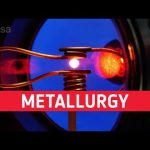
Did you know that in microgravity you can better study liquid metals and how they solidify?
Research in space on metallurgy helps improving production processes while enhancing properties for stronger, lighter and durable materials.
The step to space research is closer than you might think. Get involved with spaceflight research via https://www.esa.int/spaceflightAO. Find out about our commercial partnerships and opportunities in human and robotic exploration via https://www.esa.int/explorationpartners to run your research in microgravity as well.
★ Subscribe: http://bit.ly/ESAsubscribe and click twice on the bell button to receive our notifications.
We are Europe’s gateway to space. Our mission is to shape the development of Europe’s space capability and ensure that investment in space continues to deliver benefits to the citizens of Europe and the world. Check out https://www.esa.int/ to get up to speed on everything space related.
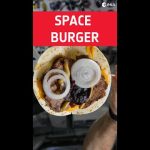
Here’s the space burger recipe of ESA astronaut Thomas Pesquet: “Tortillas, rehydrated beef patty, fresh onion from a cargo vehicle, a slice of lettuce (grown on the International Space Station for a scientific experiment: don’t tell), and various sauces. It tasted like heaven, and flew like an angel”
We are Europe’s gateway to space. Our mission is to shape the development of Europe’s space capability and ensure that investment in space continues to deliver benefits to the citizens of Europe and the world. Check out https://www.esa.int/ to get up to speed on everything space related.
The Pirs docking compartment (also called DC-1) left the International Space Station together with the Progress MS-16 cargo spacecraft after 20 years of service and burned up safely in the atmosphere above the Pacific Ocean on 26 July 2021. Its departure made room for the Nauka science module.
European Space Agency astronaut, Thomas Pesquet, filmed this video and shared on social media with the caption: “Here’s a timelapse of DC1’s re-entry last week, together with its tow truck, Progress 77P, seen from above. Atmospheric re-entry without a heat shield results in a nice fireball (you clearly see smaller pieces of melting metal floating away and adding to the fireworks). This timelapse is sped up, we could observe the fireball for around six minutes. Next time you see a shooting star, it might be our ISS trash getting burnt up… Not sure it will be granted in that case, but you never know, I’d still advise to go ahead and make a wish.”
We are Europe’s gateway to space. Our mission is to shape the development of Europe’s space capability and ensure that investment in space continues to deliver benefits to the citizens of Europe and the world. Check out https://www.esa.int/ to get up to speed on everything space related.