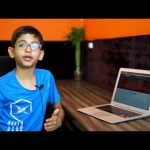
Arjun, a bright 7th grade alumnus of Camp K12’s AI course, shows off the intelligent movie search engine “CinemaBin” that he developed, and shares why he believes every middle school student should learn AI.
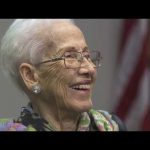
On Aug. 26, as part of NASA’s celebration of Katherine Johnson’s 100th birthday, agency employees received a special message from administrator Jim Bridenstine to mark the occasion. With slide rules and pencils, Katherine, a legendary NASA mathematician – and the other human computers who worked at the agency – helped our nation’s space program get off the ground, but it was their confidence, bravery and commitment to excellence that broke down racial and social barriers that continue to inspire to this day. To learn more about Katherine and other trailblazing ‘human computers,’ visit: https://www.nasa.gov/modernfigures
In 1962, as NASA prepared for the orbital mission of John Glenn, Katherine Johnson was called upon to hand check the computer’s orbital equations that would control the trajectory of the capsule in John Glenn’s Friendship 7 mission, from blast off to splashdown.
“If she says they’re good,’” Katherine Johnson remembers the astronaut saying, “then I’m ready to go.” Glenn’s flight was a success, and marked a turning point in the competition between the United States and the Soviet Union in space.
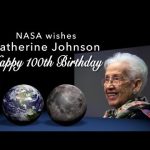
NASA wishes Katherine Johnson a very Happy 100th Birthday.
Discussing the future of human space exploration, a vital resource is confirmed on the surface of the Moon, and a first glimpse at asteroid Bennu … a few of the stories to tell you about – This Week at NASA!
This video is available for download from NASA’s Image and Video Library: https://images.nasa.gov/details-NHQ_2018_0824_Vice%20President%20Pence%20Talks%20Future%20Human%20Space%20Exploration%20on%20This%20Week%20@NASA%20%E2%80%93%20August%2024,%202018.html
Jim Kwik the renowned expert in speed-reading, memory improvement, brain performance, and accelerated learning.
After a childhood brain injury leaving him learning-challenged, he overcame it by creating strategies to dramatically enhance his mental performance.
Jim have since dedicated his life to helping others unleash their own brain-power, and serve as a coach to many of the world’s leading CEOs and Celebrities, including Elon Musk, Will Smith, and the cast of Xmen.
His message is that “Knowledge is power, learning is a superpower”.
Founded by Brian Rose in 2011. London Real is the curator of people worth watching. Our mission is to promote personal transformation through inspiration, self-discovery and empowerment.
We feature interesting guests with fascinating stories and unique perspectives on life. We aim to take viewers on a journey through the lives of others and ultimately inspire them to embark on one of their own.
ESA’s Earth Explorer Aeolus satellite lifted off on a Vega rocket from Europe’s Spaceport in Kourou, French Guiana, at 21:20 GMT (23:20 CEST, 18:20 local time) on 22 August 2018. Aeolus carries one of the most sophisticated instruments ever to be put into orbit. The first of its kind, the Aladin instrument includes revolutionary laser technology to generate pulses of ultraviolet light that are beamed down into the atmosphere to profile the world’s winds – a completely new approach to measuring the wind from space. By profiling the lowermost 30 km of the atmosphere, Aeolus will give scientists global information on the speed of the wind in near-real time. This will improve our understanding of how wind, pressure, temperature and humidity are interlinked. This new mission will also provide insight into how the wind influences the exchange of heat and moisture between Earth’s surface and the atmosphere. These aspects are important for understanding climate change. As well as advancing science and improving weather forecasts, data from Aeolus will be used in air-quality models to improve forecasts of dust and other airborne particles that affect public health.
FREE AI SUMMER SCHOOL FOR KIDS – WATCH A FUTURE AI TALENT SPEAK ON HER EXPERIENCE.
Africa’s AI future is great! We are excited to host amazing kids at our AI Summer School. They learnt Introductory Python programming, they applied codes in interacting with robotic objects (e.g. drones) and did intro Machine Learning with y=mx+c linear equation for prediction. Amazing how they grasped the concept of regression/dependent and independent variables in prediction.Listen to future AI superstar, Victory Yinka-Banjo as she shares her experience.Batch 2 will run 13-17 August. Selection has been sent to all the participants.
Our mission to touch the Sun is on its way, Administrator Bridenstine visits NASA spaceflight facilities, and an update on our first-ever asteroid sample return mission … a few of the stories to tell you about – This Week at NASA!
This video is available for download from NASA’s Image and Video Library: https://images.nasa.gov/details-Our%20Journey%20to%20Touch%20the%20Sun%20is%20Underway%20on%20This%20Week%20@NASA%20%E2%80%93%20August%2017,%202018.html
The universe is incredibly old, astoundingly vast and populated by trillions of planets — so where are all the aliens? Astronomer Stephen Webb has an explanation: we’re alone in the universe. In a mind-expanding talk, he spells out the remarkable barriers a planet would need to clear in order to host an extraterrestrial civilization — and makes a case for the beauty of our potential cosmic loneliness. “The silence of the universe is shouting, ‘We’re the creatures who got lucky,’” Webb says.
The TED Talks channel features the best talks and performances from the TED Conference, where the world’s leading thinkers and doers give the talk of their lives in 18 minutes (or less). Look for talks on Technology, Entertainment and Design — plus science, business, global issues, the arts and more.
ESA’s Pangaea training course prepares astronauts and space engineers to identify planetary geological features during future missions to the Moon, Mars and asteroids.
The Pangaea campaign – named after the ancient supercontinent – provides the crew with introductory and practical knowledge to find interesting rock samples and assess the most likely places to find traces of life on other planets. Leading European planetary geologists share their insights into the geology of the Solar System.
Theoretical work is followed by field trips to the Ries impact crater in Germany, the sedimentary environment of Geopark Bletterbach in the Italian Dolomites and the volcanic landscapes of the Geopark of Lanzarote, Spain.
Pangaea is the first step in preparing European astronauts to become planetary explorers on missions to other planets, allowing them to effectively communicate with science advisors on Earth.
Through Pangaea, Europe is also developing operational concepts for surface missions where astronauts and robots work together, among themselves and with scientists and engineers on Earth, using the best field geology and planetary observation techniques.
Diego Fernandez and Chris Stewart welcome Earth observation attendants and provide their opening remarks.
Every two years, ESA’s Earth observation summer schools draws young scientists from all over the world to learn more about remote sensing, Earth system science, modelling and monitoring, and how data can be used to better understand the world we live in. In 2018, the two-week summer school is held on 30 July to 10 August. While the students engage in practical sessions in the afternoons, the morning lectures were streamed live.
In the past 60 years, NASA has advanced our understanding of our solar system and beyond. We continually ask “What’s out there?” as we advance humankind and send spacecraft to explore.
Congress passed the National Aeronautics and Space Act, on July 16 and President Eisenhower signed it into law on July 29, 1958. NASA opened for business on Oct. 1, 1958.
Our history tells a story of exploration, innovation and discoveries. The next 60 years, that story continues. Learn more: https://www.nasa.gov/60
Ever wondered what it feels like to fly from Alaska to the Andes in 260 seconds? ESA astronaut Alexander Gerst captured this timelapse footage of Alaska, the USA and South America while orbiting Earth on board the International Space Station.
This timelapse is made up of 6,375 images shown 12.5 times faster than actual speed. Music is Our Oasis by Miriam Speyer, sourced from Audio Network Limited.
To support Kurzgesagt and learn more about Brilliant, go to https://www.brilliant.org/nutshell and sign up for free. The first 688 people that go to that link will get 20% off the annual Premium subscription.
Are wormholes real or are they just magic disguised as physics and maths? And if they are real how do they work and where can we find them?
🐦🐧🐤 PATREON BIRD ARMY 🐤🐧🐦
▀▀▀▀▀▀▀▀▀▀▀▀▀▀▀▀▀▀▀▀▀▀▀▀▀▀
Many Thanks to our wonderful Patreons from http://kgs.link/patreon who support us every month and made this video possible:
Big Skapinsky, Liam Wenzel, Juan Gonzalez, Grigory Sarnitsky, Brandon Cleary, Amanda Hutchings, Siddharth Amarsee, Maciamo Hay, Nick T., Gabriel Correa, Matthew McAteer, Javier Silva Calvo, javier canella, Gergely Szakács, Pernox, Alana leonhardy, Tommi Moilanen, David DiGiovanni, Jack Bernstein, Jonas Steen Nielsen, Thomas Pyke, Gizem Ozdemir, ShiroiYami, Alice Bater, Ennio Sialiti, Alexander Evans, Eric Chan, Peter Noort, Adrian Haslinger, Tomasz Różalski, Miro Cibula, Lyle Jeff, Sunil Pai, Aurélien Delaux, Piotr Pałek, Øyvind Helland, Khloudalahbaby, Nicola Larosa, Dave, Montant, Eli V, ryan oberfield, Iain Garioch, Janina Lamøy, Saurischian, Zachary Osman, Cody Douglas, Can Berk Güder, Jason Lin, Eric Lugo, Emil Hjort, Luuk Perdaems, Brandon Carraway, Zack Methven, dava, Gauthier Muguerza, Tim Andreev, Robin Gielings, Mihai Anei, Pranab Kumar Mishra, jeong-min, An, Nerijana, jongre1512, Mike Levy, David W., Jakob Stams, Linda Yancey, Leo White, John, Justin Boh, Thot, Matthew Dyet, Andrei Stefan, Patrick McKelvy, Kervan Govender, Rajiv Cruz, Peter Duncan, Ramsey Elbasheer, Zhuang Miao, Brayden Sola, frikinside, Yasmeen Mawlawi, Loic Rebillard, Nicholas Miller, Philipp Bergamin, K. Gustavo Carlos, Albin, Connor Wilson, Talal Al-Khaldi, NURO, Durham Goode, Christopher Hadley, Sean Holland, iulian constantin, Pumpk!nH34D, Douwe de Jong, Jens Baumann, Vladislav Aleynikov, Joshua Olson, Andrew Boggs, William Wu, Andrew Mckinley, Eric Burnett, Benjamin Bromberg, Barry Costa, Philippe Ryll, Barbieri Davide, Claire Baldauf, Ondrej Debreceni, Benjamin Sairanen, Elija Peterson, Eki Hassa, Ryan K. Allen, Ville Vuorela, Reinhold Dunkl, Gloria Hope, Matti Hanberg, Moritz Roell, Marco Schmidt, Trey, Jiesi Ren, Maurice Simmons, Simon Sardeson-Coe, Sam Day, Orphansmith, Noah T Blanchard, Gerald Balla, Yannick van Andel, Khaled I. Johari
NASA’s Parker Solar Probe mission launched Aug. 11 from Cape Canaveral Air Force Station in Florida. The mission will be the first to fly directly through the Sun’s corona – the hazardous region of intense heat and solar radiation in the Sun’s atmosphere that is visible during an eclipse. It will gather data that could help answer questions about solar physics that have puzzled scientists for decades. Gathering information about fundamental processes near the Sun can help improve our understanding of how our solar system’s star changes the space environment, where space weather can affect astronauts, interfere with satellite orbits, or damage spacecraft electronics.
Humanity’s first mission to touch the Sun, Administrator Bridenstine visits Kennedy Space Center, and historic California wildfires seen from space … a few of the stories to tell you about – This Week at NASA!
This video is available for download from NASA’s Image and Video Library: https://images.nasa.gov/details-NHQ_2018_0811_Humanity%E2%80%99s%20first%20mission%20to%20touch%20the%20Sun%20on%20This%20Week%20@NASA%20%E2%80%93%20August%2011,%202018.html
The Parker Solar Probe will be the first-ever mission to “touch” the Sun, traveling directly into the Sun’s atmosphere about 4 million miles from the surface. Read the story: https://go.nasa.gov/2KEExYZ NASA launch schedule: https://go.nasa.gov/2JfklMB
The Sun contains 99.8 of the mass in our solar system. Its gravitational pull is what keeps everything here, from tiny Mercury to the gas giants to the Oort Cloud, 186 billion miles away.
But even though the Sun has such a powerful pull, it’s surprisingly hard to actually go to the Sun: It takes 55 times more energy to go to the Sun than it does to go to Mars. Why is it so difficult? The answer lies in the same fact that keeps Earth from plunging into the Sun: Our planet is traveling very fast – about 67,000 miles per hour – almost entirely sideways relative to the Sun. The only way to get to the Sun is to cancel that sideways motion.
Since Parker Solar Probe will skim through the Sun’s atmosphere, it only needs to drop 53,000 miles per hour of sideways motion to reach its destination, but that’s no easy feat. In addition to using a powerful rocket, the Delta IV Heavy, Parker Solar Probe will perform seven Venus gravity assists over its seven-year mission to shed sideways speed into Venus’ well of orbital energy. These gravity assists will draw Parker Solar Probe’s orbit closer to the Sun for a record approach of just 3.83 million miles from the Sun’s visible surface on the final orbits.
Though it’s shedding sideways speed to get closer to the Sun, Parker Solar Probe will pick up overall speed, bolstered by Sun’s extreme gravity – so it will also break the record for the fastest-ever human-made objects, clocking in at 430,000 miles per hour on its final orbits.
Music: Percs and Pizz from Killer Tracks.
Credit: NASA’s Godddard Space flight Center
Māori, as native New Zealanders, refer to their islands as “Aotearoa” or “the land of the long white cloud”. This timelapse from ESA astronaut Alexander Gerst shows Australia and New Zealand shrouded in cloud from the unique viewpoint of the International Space Station.
Comprised of 5,175 photos, this timelapse is 12.5 times faster than actual speed and is set to the soundtrack “Try or Die” sourced from Audio Network Limited.
A hostile artificial intelligence called NIM has taken over the world’s computers. You’re the only person skilled enough to shut it down, and you’ll only have one chance. Can you survive and shut off the artificial intelligence? Dan Finkel shows how.
Lesson by Dan Finkel, directed by Artrake Studio.
Thank you so much to our patrons for your support! Without you this video would not be possible! Jordan Tang, Christopher Jimenez, Juan, Tracey Tobkin, Sid, emily lam, Kathryn J Hammond, Elliot Poulin, Noel Situ, Oyuntsengel Tseyen-Oidov, Latora Slydell, Sydney Evans, Victor E Karhel, Bernardo Paulo, Eysteinn Guðnason, Andrea Feliz, Natalia Rico, Josh Engel, Bárbara Nazaré, Gustavo Mendoza, Zhexi Shan, Hugo Legorreta, PnDAA, Sandra Tersluisen, Ellen Spertus, Fabian Amels, sammie goh, Mattia Veltri, Quentin Le Menez, Yuh Saito, Joris Debonnet, Heather Slater, Dr Luca Carpinelli, Janie Jackson, Christophe Dessalles, Arturo De Leon, Eduardo Briceño, Bill Feaver, Ricardo Paredes, David Douglass, Grant Albert, Paul Coupe, Jen, Megan Whiteleather, and Mayank Kaul.
Astronauts named to the first commercial crew flights, using Earth science data to benefit society, and California wildfires seen from space … a few of the stories to tell you about – This Week at NASA!
This video is available for download from NASA’s Image and Video Library: https://images.nasa.gov/details-NHQ_2018_0803_Astronauts%20Assigned%20to%20First%20Commercial%20Crew%20Flights%20on%20This%20Week%20@NASA%20%E2%80%93%20August%203,%202018.html
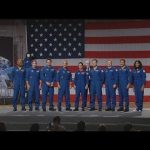
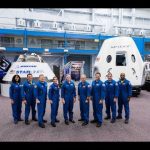
NASA announces the men and women who will be on board the first flights of the new spaceships built by Boeing and SpaceX when Americans are once again launched into space from the USA.
News release: https://go.nasa.gov/2KoGhVS
The nine astronauts targeted to make the first flights on the Boeing CST-100 Starliner and SpaceX Crew Dragon share their thoughts about the assignment and the importance of this new capability to support the International Space Station as part of the nation’s overall space exploration plan.
The date is fixed: you are invited to the annual ESA Open Day at ESTEC, ESA’s technical heart in the Netherlands, on Sunday, 7 October.
The theme this year is ‘A voyage through space with Europe’. We’ll have all ESA establishments represented on site, either with speakers giving talks or live link-ups to the different centres. You’ll be able to meet astronauts, scientists and engineers, plus some special guests. You’ll see how we design space missions, how we develop the technologies needed to go into space and how we simulate space on the ground. With the help of our colleagues from the other ESA centres, we’ll complete the life-cycle of a mission and see how it is launched and controlled once in space!
What is a lunar eclipse? What is a solar eclipse? This short video explains the difference between these regularly occurring events that can be observed from Earth.
The video uses a mix of ground- and space-based imagery of eclipses, including footage from the International Space Station, ESA’s Proba-2 satellite and the Japanese-led Hinode satellite.
Remember: never look directly at the Sun, even when partially eclipsed, without proper eye protection such as special solar eclipse glasses, or you risk permanent eye damage.
Credits: ESA, ESA/CESAR (graphics, ground-based observations), NASA’s Scientific Visualization Studio (partial lunar eclipse sequence) ESA/NASA (ISS footage), ESA/Royal Observatory of Belgium (Proba-2 footage), NASA/Hinode/XRT (Hinode image).
Orbiting Earth once every 90 minutes, the International Space Station soars into 16 sunrises and sunsets every single day. Many of these sunrises occur while the crew is working or sleeping, but ESA astronaut Alexander Gerst captured this stunning timelapse of a sunrise to share with us here on Earth.
These photos were taken by Alexander at an interval of two per second and the video has been edited at 25 frames per second.
Music: First Survivors 4 by Los Angeles-based British composer, Luke Richards. Sourced from Audio Network Limited.
Artificial Intelligence also known as Machine Intelligence or Intelligence displayed by Machines is a broad concept which is essentially important for our children to learn about, Science and technology are reaching out to new possibilities in developing new AI products every day
Here are a some few Examples of AI for kids which will help them to get a glance about what Artificial Intelligence is all about.
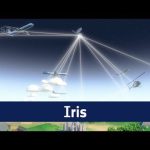
Iris will provide a safe and secure text-based data link between pilots and air traffic control (ATC) networks using satellite technology.
The programme is developed under a public-private partnership between ESA and Inmarsat, and will help relieve pressure on the aviation sector’s congested radio frequency communication channels.
It will so as part of the European Commission’s Single European Sky ATM Research (SESAR) masterplan to modernise Europe’s air traffic management.
Congress passed the National Aeronautics and Space Act, on July 16 and President Eisenhower signed it into law on July 29, 1958. NASA opened for business on Oct. 1, 1958, with T. Keith Glennan as our first administrator. Our history tells a story of exploration, innovation and discoveries. The next 60 years, that story continues. Learn more: https://www.nasa.gov/60
These are solar sounds generated from 40 days of the Solar and Heliospheric Observatory’s (SOHO) Michelson Doppler Imager (MDI) data and processed by A. Kosovichev. Read more & download audio: https://go.nasa.gov/2JR0wLL
The procedure he used for generating these sounds was the following. He started with doppler velocity data, averaged over the solar disk, so that only modes of low angular degree (l = 0, 1, 2) remained. Subsequent processing removed the spacecraft motion effects, instrument tuning, and some spurious points. Then Kosovichev filtered the data at about 3 mHz to select clean sound waves (and not supergranulation and instrumental noise). Finally, he interpolated over the missing data and scaled the data (speeded it up a factor 42,000 to bring it into the audible human-hearing range (kHz)).
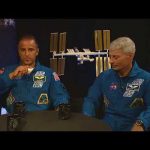
During a recent visit to NASA headquarters astronauts Joe Acaba and Mark Vande Hei sat down for an informal Q&A session with Administrator Jim Bridenstine – and responded to questions from the agency’s social media followers.
The astronauts, who returned from the International Space Station in late February, talked about the station’s role as a platform to help us live and work in space. The cutting-edge research and technology development on the station is helping prepare our astronauts to take the next giant leap in human space exploration. The agency plans to return to the Moon and eventually send humans to Mars and destinations beyond.
This video is available for download from NASA’s Image and Video Library: https://images.nasa.gov/details-NHQ_2018_0725_NASA%20Administrator%20Bridenstine%20Chats%20with%20Astronauts%20Acaba%20and%20Vande%20Hei.html
NASA heliophysicist Alex Young explains how sound connects us with the Sun and all other stars. This piece features low frequency sounds of the Sun. Raw audio (no commentary): https://youtu.be/-I-zdmg_Dno Read more: https://go.nasa.gov/2JR0wLL
Credit: NASA’s Goddard Space Flight Center
Micheala Sosby (NASA/GSFC): Lead Producer
Katie Atkinson (GSFC Interns): Lead Producer
C. Alex Young (NASA/GSFC): Narrator
Aaron E. Lepsch (ADNET Systems Inc.): Technical Support
Music: “Flow” by Lee Rosevere
This video is public domain and along with other supporting materials can be downloaded from the Scientific Visualization Studio at: https://svs.gsfc.nasa.gov/13011
NASA Administrator Jim Bridenstine recently sat down with Nobel Prize winner John Mather and the agency’s Associate Administrator for Science, Thomas Zurbuchen for a conversation about NASA’s James Webb Space Telescope. They talked about the challenges of building the world’s premier space telescope and why it’s all worth it. Webb is the first telescope of its kind, an unprecedented feat of engineering, and is at the very leading edge of technological innovation and development. Webb will find the first galaxies that formed in the early universe and peer through dusty clouds to see stars forming planetary systems.
This video is available for download from NASA’s Image and Video Library: https://images.nasa.gov/details-NASA%20Administrator%20Bridenstine%20Talks%20Webb%20Science%20with%20Nobel%20Laureate.html
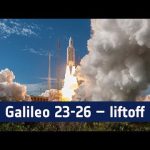
Europe’s next four Galileo satellites lifted off at 11:25 GMT (13:25 CEST, 08:25 local time) on 25 July from Europe’s Spaceport in French Guiana atop an Ariane 5 launcher.
On 20 July 2018 around 21:50 local time, ESA astronaut Alexander Gerst welcomed the legendary electronic band Kraftwerk and 7500 visitors to the Jazz Open Festival on Stuttgart’s Schlossplatz – live from the International Space Station, where he will live and work until mid-December 2018. During the call with space, Kraftwerk founding member Ralf Hütter and Alexander played a special duet version of the track Spacelab, for which Alexander had a tablet computer configured with virtual synthesizers on board. With thanks to Kraftwerk for sharing this video footage.
————————————————————————————————————–
So begrüßte ESA-Astronaut Alexander Gerst am 20. Juli 2018 um 21:50 Uhr Ortszeit die legendären Elektro-Pioniere Kraftwerk sowie 7500 Besucherinnen und Besucher des Jazz Open-Festivals auf dem Stuttgarter Schlossplatz – und zwar live von der Internationalen Raumstation ISS, auf der er noch bis Mitte Dezember 2018 lebt und arbeitet.
Kraftwerk-Gründungsmitglied Ralf Hütter und Alexander Gerst spielten eine spezielle Version des Tracks Spacelab im Duett an, für das Gerst eigens einen mit virtuellen Synthesizern konfigurierten Tablet-Computer an Bord hatte.
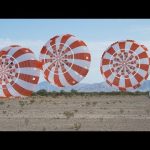
Another successful parachute test for Orion, how we’re getting back to the Moon, and an Apollo 11 virtual experience … a few of the stories to tell you about – This Week at NASA!