Hello Friends, I am very excited while creating the video. This video is very close to my heart. Why? I love Marvel series specially the Iron Man and his AI Jarvis.
But, now Jarvis is Vision and at present his AI is Friday. So, i have tried to build same kind of Artificial Intelligence in Python.
RIght now, it a basic one. Which will greet, open C drive folders and good bye.
Have you ever done a science experiment and wondered “What would this be like if it were HUGE?” Welcome to Science Max, the exciting new series that turbocharges all the science experiments you’ve done at home.
Our astronauts at work outside the space station, preparing for launch of our next planet-hunting mission, and finding exploding stars – a few of the stories to tell you about, This Week at NASA!
This video is available for download from NASA’s Image and Video Library: https://images.nasa.gov/details-NHQ_2018_0330_Astronauts%20at%20Work%20Outside%20the%20Space%20Station%20on%20This%20Week%20@NASA%20%E2%80%93%20March%2030,%202018.html
Every week, on average, a substantial, inert satellite drops into our atmosphere and burns up. Monitoring these reentries and warning European civil authorities has become routine work for ESA’s space debris experts.
Each year, about 100 tonnes of defunct satellites, uncontrolled spacecraft, spent upper stages and discarded items like instrument covers are dragged down by Earth’s upper atmosphere, ending their lives in flaming arcs across the sky.
Some of these objects are big and chunky, and pieces of them survive the fiery reentry to reach the surface. Our planet, however, is a big place, mostly covered by water, and much of what falls down is never seen by anyone, sinking to the bottom of some ocean, or landing far from human habitation.
While still in orbit, these and many other objects are tracked by a US military radar network, which shares the data with ESA, since Europe has no such capability of its own.It’s the task of ESA’s Space Debris team to look at these data and issue updates to ESA Member States and partner civil authorities around the globe.
🔥 NIT Warangal Post Graduate Program on AI and Machine Learning: https://www.edureka.co/nitw-ai-ml-pgp
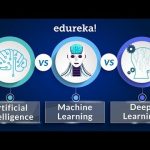
This Edureka Machine Learning tutorial (Machine Learning Tutorial with Python Blog: https://goo.gl/fe7ykh ) on “AI vs Machine Learning vs Deep Learning” talks about the differences and relationship between AL, Machine Learning and Deep Learning. Below are the topics covered in this tutorial:
1. AI vs Machine Learning vs Deep Learning
2. What is Artificial Intelligence?
3. Example of Artificial Intelligence
4. What is Machine Learning?
5. Example of Machine Learning
6. What is Deep Learning?
7. Example of Deep Learning
8. Machine Learning vs Deep Learning
How it Works?
1. This is a 5 Week Instructor led Online Course,40 hours of assignment and 20 hours of project work
2. We have a 24×7 One-on-One LIVE Technical Support to help you with any problems you might face or any clarifications you may require during the course.
3. At the end of the training you will be working on a real time project for which we will provide you a Grade and a Verifiable Certificate!
– – – – – – – – – – – – – – – – –
About the Course
Edureka’s Python Online Certification Training will make you an expert in Python programming. It will also help you learn Python the Big data way with integration of Machine learning, Pig, Hive and Web Scraping through beautiful soup. During our Python Certification training, our instructors will help you:
1. Master the Basic and Advanced Concepts of Python
2. Understand Python Scripts on UNIX/Windows, Python Editors and IDEs
3. Master the Concepts of Sequences and File operations
4. Learn how to use and create functions, sorting different elements, Lambda function, error handling techniques and Regular expressions ans using modules in Python
5. Gain expertise in machine learning using Python and build a Real Life Machine Learning application
6. Understand the supervised and unsupervised learning and concepts of Scikit-Learn
7. Master the concepts of MapReduce in Hadoop
8. Learn to write Complex MapReduce programs
9. Understand what is PIG and HIVE, Streaming feature in Hadoop, MapReduce job running with Python
10. Implementing a PIG UDF in Python, Writing a HIVE UDF in Python, Pydoop and/Or MRjob Basics
11. Master the concepts of Web scraping in Python
12. Work on a Real Life Project on Big Data Analytics using Python and gain Hands on Project Experience
– – – – – – – – – – – – – – – – – – –
Why learn Python?
Programmers love Python because of how fast and easy it is to use. Python cuts development time in half with its simple to read syntax and easy compilation feature. Debugging your programs is a breeze in Python with its built in debugger. Using Python makes Programmers more productive and their programs ultimately better. Python continues to be a favorite option for data scientists who use it for building and using Machine learning applications and other scientific computations.
Python runs on Windows, Linux/Unix, Mac OS and has been ported to Java and .NET virtual machines. Python is free to use, even for the commercial products, because of its OSI-approved open source license.
Python has evolved as the most preferred Language for Data Analytics and the increasing search trends on python also indicates that Python is the next “Big Thing” and a must for Professionals in the Data Analytics domain.
For more information, please write back to us at sales@edureka.co or call us at IND: 9606058406 / US: 18338555775 (toll-free).
Customer Review
Sairaam Varadarajan, Data Evangelist at Medtronic, Tempe, Arizona: “I took Big Data and Hadoop / Python course and I am planning to take Apache Mahout thus becoming the “customer of Edureka!”. Instructors are knowledge… able and interactive in teaching. The sessions are well structured with a proper content in helping us to dive into Big Data / Python. Most of the online courses are free, edureka charges a minimal amount. Its acceptable for their hard-work in tailoring – All new advanced courses and its specific usage in industry. I am confident that, no other website which have tailored the courses like Edureka. It will help for an immediate take-off in Data Science and Hadoop working.”
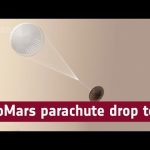
The video features footage taken of the parachute deployment as seen from the ground, as well as from onboard GoPros fixed to the drop test vehicle and looking up at the parachute. The test focused on the deployment and inflation of the second main stage 35m-wide parachute, which will be the largest to fly on Mars.
Discussing the test are Stephane Langlois, ESA ExoMars engineer, and John Underwood, principal engineer at Vorticity.
The test was carried out by Vorticity Ltd under supervision of Thales Alenia Space France, Thales Alenia Space Italy and ESA, in Kiruna, Sweden, on 2 March 2018.
Things that fizz, pop, explode and inspire the next generation of scientists and engineers. Here’s are just a few highlights of the last 25 years working with the team at Steve Spangler Science. Thanks to everyone from around the world who subscribed to our channels, participated in our live events, purchased our educational science kits, joined our STEM subscription club or followed our journey over the years. We promise more fun, learning and inspiration in the years to come. Thank you! – Steve Spangler
Sick Science® is a trademark of Steve Spangler, inc.
Have you ever done a science experiment and wondered “What would this be like if it were HUGE?” Welcome to Science Max, the exciting new series that turbocharges all the science experiments you’ve done at home.
A new crew at the space station, some science on the next SpaceX resupply mission, and testing Orion’s parachutes – a few of the stories to tell you about – This Week at NASA!
This video is available for download from NASA’s Image and Video Library: https://images.nasa.gov/details-NHQ_2018_0323_New%20Crew%20Arrives%20at%20the%20Space%20Station%20on%20This%20Week%20@NASA%20%E2%80%93%20March%2023,%202018.html
Az űrorvostudomány eredményei segíthetnek a földi betegségekben szenvedőknek is. Ami jó a Nemzetközi Űrállomáson, az segíthet a Newcastle-i nyugdíjasokon is.
Az űrhajósoknak földöntúli munkájuk van. A hajnalt és a naplementét naponta 16-szor látják, és az űrben töltött hetek és hónapok alatt a testük kívül-belül átalakul. Izmaik és csontjaik tömegükből veszítenek, és egészségi állapotuk is megváltozik. Így az asztronauták testüket is a tudomány szolgálatába állítják.
A nemzetközi űrállomáson zajló kutatások nem csak abban segítenek, hogy jobban megismerjük az emberi testet, hanem abban is, hogy olyan hétköznapi problémákra találjunk új megoldást, mint például a hátfájás. A Space márciusi adásában az űrmedicináról lesz szó.
Πειράματα σε αστροναύτες προσφέρουν χρήσιμα συμπεράσματα σε επιστήμονες για απλά ιατρικά θέματα που αντιμετωπίζουμε όλοι μας στη Γη
Οι αστροναύτες έχουν μια απαιτητική δουλειά. Βλέπουν την ανατολή και τη δύση του ήλιου 16 φορές την ημέρα. Επειδή αυτό συμβαίνει για εβδομάδες, το σώμα τους αλλάζει εσωτερικά, αλλά και εξωτερικά. Χάνουν μυική και οστική μάζα και η υγεία τους επηρεάζεται πολλαπλά.
Business Insider spoke to 6 tech industry figures at MWC 2018, and asked them what they thought the world would look like in 50 years’ time. From self-driving cars to implanted technology, watch to hear what these experts are predicting for the future.
Have you ever done a science experiment and wondered “What would this be like if it were HUGE?” Welcome to Science Max, the exciting new series that turbocharges all the science experiments you’ve done at home.
Having a stressful day? We got you covered!Sit back, turn the volume up and enjoy a relaxing moment brought to you by ESA and Lufthansa getting lost in the beauty of our planet with images captured by Envisat, JAXA ALOS, KARI Kompsat-2, GeoEye Ikonos-2 and NASA Landsat-5 and Landsat-7 satellites.
Don’t forget to favourite this video. You will always have a space to relax with us.
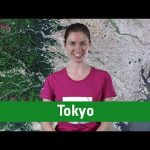
Earth from Space is presented by Kelsea Brennan-Wessels from the ESA Web TV virtual studios. In this edition, Sentinel-2A satellite takes us over Japan’s capital, the world’s largest megacity.
Having a stressful day? We got you covered! Sit back, turn the volume up and enjoy a relaxing moment brought to you by ESA and Lufthansa exploring the coldest parts of our planet with a collection of ice images captured by the Envisat satellite.
Don’t forget to favourite this video. You will always have a space to relax with us.
NASA is honoring visionary physicist Stephen Hawking, who died at his home in Cambridge, England, early Wednesday morning.
Acting NASA Administrator Robert Lightfoot noted Hawking’s role as a “passionate communicator who wanted to share the excitement of discovery with all,” adding that his “impact cannot be overstated.”
“Stephen’s breakthroughs in the fields of physics and astronomy not only changed how we view the cosmos, but also has played, and will continue to play, a pivotal role in shaping NASA’s efforts to explore our solar system and beyond,” said Lightfoot.
This talk explores the similarities between the human brain and AI. It is a very high level abstraction of AI and how it enables us to unfold the convolutions of the mind. It convinces you that when you invest in AI, you are actually investing in yourself. Upamanyu Ghose is a 3rd year computer science and engineering student, who is an ex computer vision team member of Project Manas, the only team comprising only of undergraduate students, working to build India’s first driverless car for Mahindra’s million dollar rise prize challenge.
He has been actively pursuing projects and research in the field of computer vision and natural language processing for the past year and is currently working on a project to enable searching through contents of a video. His prior projects include, cervical cancer detection using deep learning, tweet generator, generating stem cell lineage using image processing techniques (assisted a lab in Imperial College London). He’s also a part of a group called Teach Code for Good, which focuses on teaching underprivileged children the basics of coding in order to gear them up for the future.
His future plan is to pursue research in the field of human cognition in order to understand the mind better through artificial intelligence. This talk was given at a TEDx event using the TED conference format but independently organized by a local community. Learn more at https://www.ted.com/tedx
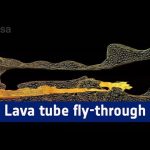
The “Cueva de los Verdes” lava tube in Lanzarote, Spain, is one of the world’s largest volcanic cave complexes with a total length of about 8 km.
Geology experts from ESA’s Pangaea-X campaign mapped most of the lava tube system as part of a project supported by local authorities Cabildo of Lanzarote and the University of Padova, Italy. The data was acquired in November 2017 by Leica Geosystems.
The map comes alive in great detail in 3D, helping institutions to protect the subterranean environment. The map also provides scientific data to study the origins of the tube and its peculiar formations.
Pangaea-X is a test campaign that brings together geology, high-tech survey equipment and space exploration. Learn more about the science and technology behind this campaign visiting http://blogs.esa.int/pangaea
This Random Forest Algorithm tutorial will explain how Random Forest algorithm works in Machine Learning. By the end of this video, you will be able to understand what is Machine Learning, what is Classification problem, applications of Random Forest, why we need Random Forest, how it works with simple examples and how to implement Random Forest algorithm in Python.
Below are the topics covered in this Machine Learning tutorial:
1. What is Machine Learning?
2. Applications of Random Forest
3. What is Classification?
4. Why Random Forest?
5. Random Forest and Decision Tree
6. Use case – Iris Flower Analysis
A form of artificial intelligence, Machine Learning is revolutionizing the world of computing as well as all people’s digital interactions. Machine Learning powers such innovative automated technologies as recommendation engines, facial recognition, fraud protection and even self-driving cars.This Machine Learning course prepares engineers, data scientists and other professionals with knowledge and hands-on skills required for certification and job competency in Machine Learning.
– – – – – – –
Why learn Machine Learning?
Machine Learning is taking over the world- and with that, there is a growing need among companies for professionals to know the ins and outs of Machine Learning
The Machine Learning market size is expected to grow from USD 1.03 Billion in 2016 to USD 8.81 Billion by 2022, at a Compound Annual Growth Rate (CAGR) of 44.1% during the forecast period.
– – – – – –
What skills will you learn from this Machine Learning course?
By the end of this Machine Learning course, you will be able to:
1. Master the concepts of supervised, unsupervised and reinforcement learning concepts and modeling.
2. Gain practical mastery over principles, algorithms, and applications of Machine Learning through a hands-on approach which includes working on 28 projects and one capstone project.
3. Acquire thorough knowledge of the mathematical and heuristic aspects of Machine Learning.
4. Understand the concepts and operation of support vector machines, kernel SVM, naive Bayes, decision tree classifier, random forest classifier, logistic regression, K-nearest neighbors, K-means clustering and more.
5. Be able to model a wide variety of robust Machine Learning algorithms including deep learning, clustering, and recommendation systems
– – – – – – –
Who should take this Machine Learning Training Course?
We recommend this Machine Learning training course for the following professionals in particular:
1. Developers aspiring to be a data scientist or Machine Learning engineer
2. Information architects who want to gain expertise in Machine Learning algorithms
3. Analytics professionals who want to work in Machine Learning or artificial intelligence
4. Graduates looking to build a career in data science and Machine Learning
Have you ever done a science experiment and wondered “What would this be like if it were HUGE?” Welcome to Science Max, the exciting new series that turbocharges all the science experiments you’ve done at home.
A chance to send your name to the Sun, testing systems for our Orion spacecraft, and sizing up Earth, from space – a few of the stories to tell you about – This Week at NASA!
This video is available for download from NASA’s Image and Video Library: https://images.nasa.gov/details-NHQ_2018_0309_Send%20Your%20Name%20to%20the%20Sun%20on%20This%20Week%20@NASA%20%E2%80%93%20March%209,%202018.html
Earth from Space is presented by Kelsea Brennan-Wessels from the ESA Web TV virtual studios. In this edition, Sentinel-3A treats us to a view stretching from Sardinia to Romania.
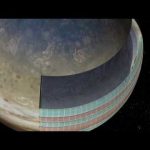
The bands were thought to be an expression of Jovian weather, related to winds blowing eastward and westward at different speeds.
This animation illustrates a recent discovery by Juno that demonstrates these east-west flows, also known as jet-streams penetrate deep into the planet’s atmosphere, to a depth of about 1,900 miles (3,000 kilometers). Due to Jupiter’s rapid rotation (Jupiter’s day is about 10 hours), these flows extend into the interior parallel to Jupiter’s axis of rotation, in the form of nested cylinders. Below this layer the flows decay, possibly slowed by Jupiter’s strong magnetic field.
The depth of these flows surprised scientists who estimate the total mass involved in these jet streams to be about 1% of Jupiter’s mass (Jupiter’s mass is over 300 times that of Earth). This discovery was revealed by the unprecedented accuracy of Juno’s measurements of the gravity field.
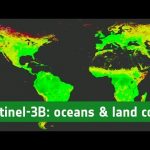
Following its launch in February 2016 and subsequent commissioning phase, the Copernicus Sentinel-3A satellite has been systematically measuring our oceans, land, ice and atmosphere. The information feeds a range of practical applications and is used for monitoring and understanding large-scale global dynamics. Sentinel-3A will soon be joined in orbit by its identical twin, Sentinel-3B. Both satellites carry a suite of cutting-edge instruments to supply a new generation of data products, which are particularly useful for marine applications. For example, they monitor ocean-surface temperatures for ocean and weather forecasting services, aquatic biological productivity, ocean pollution and sea-level change. The mission also delivers unique and timely information about changing land cover, vegetation, urban heat islands, and for tracking wildfires. With the two satellites in orbit, global coverage and data delivery will be optimised.
The sixth Space App Camp was held at ESA’s establishment in Frascati, Italy, in September 2017. The camp offers access to the latest space data – particularly from the European Copernicus programme – to app developers, who work to make the information accessible to a broad audience. Twenty-four developers from 14 countries attended the 2017 camp. In this short video, participants talk about why they attended and what they hoped to achieve.
Learn how clinical informatics can structure healthcare data across multiple sources and make the invisible visible through medical data visualization. Learn more at http://philips.to/2I7BiZR.
CMIO Vinay Vaidya of Phoenix Childrens’ Hospital discusses the challenges of managing the overabundance of healthcare data and points to the use of healthcare informatics systems to streamline analysis. He further implies that having human and artificial intelligence (AI) working together produces much more powerful medical insights.
Join the conversation and help us create the future of healthcare: http://philips.to/2FvXOgw https://twitter.com/philipshealth https://www.linkedin.com/company/philips
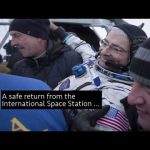
A safe return from the International Space Station, a new weather satellite launched into orbit, and our next mission to Mars moves closer to launch … a few of the stories to tell you about – This Week at NASA!
This video is available for download from NASA’s Image and Video Library: https://images.nasa.gov/details-NHQ_2018_0305_Space%20Station%20Crew%20Returns%20Safely%20on%20This%20Week%20@NASA%20%E2%80%93%20March%205,%202018.html
Have you ever done a science experiment and wondered “What would this be like if it were HUGE?” Welcome to Science Max, the exciting new series that turbocharges all the science experiments you’ve done at home.
Mohamad Jebara loves mathematics — but he’s concerned that too many students grow up thinking that this beautiful, rewarding subject is difficult and boring. His company is experimenting with a bold idea: paying students for completing weekly math homework. He explores the ethics of this model and how it’s helping students — and why learning math is crucial in the era of fake news.
The TED Talks channel features the best talks and performances from the TED Conference, where the world’s leading thinkers and doers give the talk of their lives in 18 minutes (or less). Look for talks on Technology, Entertainment and Design — plus science, business, global issues, the arts and more.
This evidence seems to suggest that the dark matter is particles that are less than four times the mass of a proton and are moving at non-relativistic speeds. This is consistent with dark matter particles being so-called WIMPs: https://en.wikipedia.org/wiki/Weakly_interacting_massive_particles.
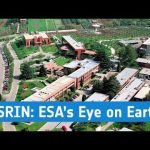
Located in Frascati, Italy, ESRIN – known as the ESA Centre for Earth Observation – is one of the five ESA specialised centres situated in Europe. The mission and payload operations of ESA’s Earth observation satellites are managed here and ESRIN is the primary source for the acquisition, distribution and exploitation of data from these and other non-ESA satellites.Within ESRIN, a key role in Europe’s space effort has been undertaken with the development of the new small launcher, Vega, which took its maiden voyage in February 2012. ESRIN designs and develops all ESA-wide software for corporate applications and is responsible for developing security measures for classified space programmes. The European Centre for Space Records (ECSR) is also based at ESRIN. The ECSR appraises and preserves the valuable technical records of completed ESA projects together with their management archives to safeguard this valuable knowledge for generations to come.Finally, ESRIN is home to ESA’s Near-Earth Object Coordination Centre. The centre serves as the central access point to a network of European near-Earth object data sources and information providers being established under ESA’s Space Situational Awareness (SSA) Programme.For more information, visit the ESRIN site.
Located in Frascati, Italy, ESRIN – known as the ESA Centre for Earth Observation – is one of the five ESA specialised centres situated in Europe. The mission and payload operations of ESA’s Earth observation satellites are managed here and ESRIN is the primary source for the acquisition, distribution and exploitation of data from these and other non-ESA satellites.Within ESRIN, a key role in Europe’s space effort has been undertaken with the development of the new small launcher, Vega, which took its maiden voyage in February 2012. ESRIN designs and develops all ESA-wide software for corporate applications and is responsible for developing security measures for classified space programmes. The European Centre for Space Records (ECSR) is also based at ESRIN. The ECSR appraises and preserves the valuable technical records of completed ESA projects together with their management archives to safeguard this valuable knowledge for generations to come.Finally, ESRIN is home to ESA’s Near-Earth Object Coordination Centre. The centre serves as the central access point to a network of European near-Earth object data sources and information providers being established under ESA’s Space Situational Awareness (SSA) Programme.For more information, visit the ESRIN site.
Is String Theory the final solution for all of physic’s questions or an overhyped dead end?
This video was realised with the help of Dr. Alessandro Sfondrini and it was funded by SNSF under Agora Grant n. 171622 and through the NCCR SwissMAP: The Mathematics of Physics.
🐦🐧🐤 PATREON BIRD ARMY 🐤🐧🐦
▀▀▀▀▀▀▀▀▀▀▀▀▀▀▀▀▀▀▀▀▀▀▀▀▀▀
Many Thanks to our wonderful Patreons from http://kgs.link/patreon who support us every month and made this video possible:
Flavio Storino, Alice Balcon, Hari Krishnan, Warren Wiscombe, Sara Zeglin, Asiryan Alexander, maarten sprengers, William Northern, Kerem Mimaroglu, Yana Kultysheva, Josh, Keaton Anderson, Croconaw, Peter Steinberger, Jonathan Diamond, Troy McConaghy, Paddy, Darko Sperac, Peter Burkhalter, Chris Amaris, Tyler Lovell, John Ruble, Chase Henson, Arpita Singh, Edward C.P., Andreas Edlund, Ryan Bubinski, Paul Greyson, Jerry Ding, Austin Sundquist, Daniel Link, Tim Johnson, kayleigh dreste, Johan Sjöblom, Max Stuart, Mush Rain, Andor Baranyi, Eduardas Afanasjevas, Bill Clem, Jake Smith, Stephen Woerner, Jeff Sorensen, Christopher Damsgaard, Eduardo AV, Michael Gawenka, Florian Hoedt, Lucas Nyman, Nathanael Baker, Martin Wierzyk, Mauricio Streb, Karl, Rameet Chawla, Joachim Andersen, Avinash, Erik Golden, Glenn Stoltz, Elliott Nelson, Andrew Averett, Ben Wei
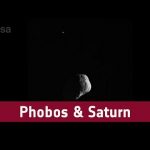
These observations of Phobos and Saturn were taken by the Super Resolution Channel of the High Resolution Stereo Camera on Mars Express. The video comprises 30 separate images acquired during Mars Express orbit 16 346 on 26 November 2016. The slight up and down movement of Saturn and Phobos in these images is caused by the oscillation of the spacecraft’s orientation after completing the turn towards the moon. Phobos can be seen in the foreground, partially illuminated, with Saturn visible as a small ringed dot in the distance. For more information go tohttp://www.esa.int/Our_Activities/Space_Science/Mars_Express/Mars_Express_views_moons_set_against_Saturn_s_rings
Have you ever done a science experiment and wondered “What would this be like if it were HUGE?” Welcome to Science Max, the exciting new series that turbocharges all the science experiments you’ve done at home.