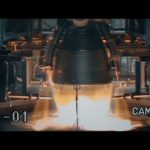
The first hot firing of Ariane 6’s Vulcain 2.1 main engine was performed in January 2018 at the DLR German Aerospace Center test facility in Lampoldshausen, Germany.
The engine, developed by ArianeGroup, has a simplified and more robust nozzle, a gas generator made through additive manufacturing, and an oxygen heater for oxygen tank pressurisation. These features lower the cost of the engine and simplify manufacturing.
Space vous emmène à Cologne découvrir la réplique terrestre de Columbus. Entretien avec des chercheurs et des astronautes.
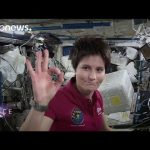
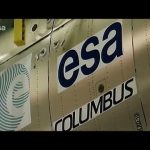
Ce mois-ci, Space vous emmène au Centre Européen des Astronautes à Cologne, en Allemagne à la découverte de Columbus, le module européen de la Station spatiale internationale. Pendant ces dix dernières années il a été utilisé par les astronautes pour réaliser des expériences sur eux-mêmes, faire pousser des plantes et même développer de nouveaux métaux. Il y a dix ans, Columbus a pris une navette pour l’espace. Le premier laboratoire européen vola en orbite et fut soigneusement amarré à la Station Spatiale Internationale.
O módulo Columbus na Estação Espacial Internacional é a contribuição da Europa para o laboratório de investigação em órbita. Nos últimos dez anos, foi utilizado por astronautas para cultivar plantas, desenvolver novos metais e até para realizar experiências em si mesmos.
Bem-vindos a Space aqui no Centro Europeu de Astronautas em Colónia.
Este mês, debruçamo-nos sobre o módulo Columbus na Estação Espacial Internacional, o centro científico da Europa no espaço.
Nos últimos 10 anos tem sido utilizado por astronautas para realizar experiências em si mesmos, cultivar plantas e até mesmo desenvolver novos metais. Vamos descobrir mais.
Há dez anos, o Columbus apanhou uma boleia de foguetão para o espaço.
O primeiro laboratório em órbita da Europa foi cuidadosamente agregado à Estação Espacial Internacional.
Está situado en la Estación Espacial Internacional (ISS) y los astronautas lo emplean para cultivar plantas, desarrollar nuevos materiales e influso para experimentar sobre sí mismos.
El módulo Columbus de la Estación Espacial Internacional que se encuentra en el Centro Europeo de Astronautas en Colonia es una réplica del laboratorio espacial europeo en órbita. El de Colonia se emplea como módulo de entrenamiento.
Columbus lleva 10 años en el espacio y los astronautas lo usan para llevar a cabo todo tipo de experimentos: cultivar plantas, desarrollar nuevos metales e incluso experimentar diferentes variables sobre ellos mismos.
Fue puesto en órbita el 7 de febrero de 2008 y fue acoplado cuidadosamente a la Estación Espacial Internacional.
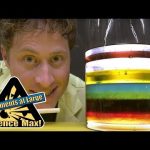
Have you ever done a science experiment and wondered “What would this be like if it were HUGE?” Welcome to Science Max, the exciting new series that turbocharges all the science experiments you’ve done at home.
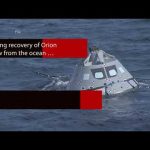
Firing the engine that will power humans to deep space, testing a potential source of power for future exploration, and practicing water recovery of the Orion spacecraft – a few of the stories to tell you about – This Week at NASA!
This video is available for download from NASA’s Image and Video Library: https://images.nasa.gov/details-NHQ_2018_0119_Feel%20the%20Rumble!%20RS-25%20Engine%20Test%20on%20This%20Week%20@NASA%20%E2%80%93%20January%2019,%202018.html
NOVA has teamed up with Cook’s Illustrated to cook up a recipe for stars and black holes – a culinary “course” on how the most mysterious objects in the universe are created.
In episode #313 of Science Goes to the Movies, author and cosmologist Janna Levin joins the show to talk about mathematics in movies like “The Man Who Knew Infinity”—about the life and work of famous mathematician Srinivasa Ramanujan. Levin shares what it was that drove her to write her two books, “How the Universe Got its Spots and Black Hole Blues,” about Kip Thorne’s wild ambition to record the sound of two black holes colliding. She explains the spirit of generosity that compels scientific research and how a mathematical proof can transcend argument. Also included: Levin’s assessment of how black holes are depicted in the film, “Interstellar,” given the fact that no one has ever seen one.
Have you ever done a science experiment and wondered “What would this be like if it were HUGE?” Welcome to Science Max, the exciting new series that turbocharges all the science experiments you’ve done at home.
The James Webb Space Telescope’s cryogenic vacuum testing at our Johnson Space Center verified it’s ready for the cold, harsh environment of space, and its mission to uncover a part of the universe we have not seen. From distant worlds orbiting other stars, to mysterious cosmic structures, Webb could help answer questions about our universe and our place in it. Launch of Webb is set for 2019. Also, Flight through Orion Nebula, 360 Degree View from the Center of the Galaxy, and Raging Water on Launch Pad!
This video is available for download from NASA’s Image and Video Library: https://images.nasa.gov/details-NHQ_2018_0112_Webb%20Space%20Telescope%20Update%20on%20This%20Week%20@NASA%20%E2%80%93%20January%2012,%202018.html
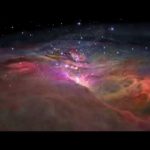
By combining the visible and infrared capabilities of the Hubble and Spitzer space telescopes, astronomers and visualization specialists from NASA’s Universe of Learning program have created a spectacular, three-dimensional, fly-through movie of the magnificent Orion nebula, a nearby stellar nursery. Using actual scientific data along with Hollywood techniques, a team at the Space Telescope Science Institute in Baltimore, Maryland, and the Caltech/IPAC in Pasadena, California, has produced the best and most detailed multi-wavelength visualization yet of the Orion nebula.
Credits: Space Telescope Science Institute
More: https://www.nasa.gov/feature/goddard/2018/hubble-yields-new-discoveries-at-the-winter-aas-meeting
Download: http://hubblesite.org/news_release/news/2018-04
The Moon is a destination, a laboratory for science, a place to learn the skills of planetary exploration, and a source of materials and energy for use on the Moon and in space to create new spacefaring capability.
Advocate of a human return on the Moon, Paul D. Spudis, Senior Staff Scientist at the Lunar and Planetary Institute in Houston (Texas, USA), takes us on a journey to rediscover the value of lunar exploration, a topic on which he has spent more than 40 years of study, thought and publications.
Space Bites hosts the best talks on space exploration from the most inspiring and knowledgeable speakers from the field. Held at the technical heart of the European Space Agency in the Netherlands, the lectures are now also available on YouTube. If you want to know about the present and future challenges of ESA, stay tuned for more.
We are Europe’s gateway to space. Our mission is to shape the development of Europe’s space capability and ensure that investment in space continues to deliver benefits to the citizens of Europe and the world. Check out https://www.esa.int/ to get up to speed on everything space related.
Astronaut John Young, who walked on the Moon during Apollo 16 and commanded the first space shuttle mission, has passed away at the age of 87.
He is the only person to go into space as part of the Gemini, Apollo and space shuttle programs and was the first to fly into space six times — or seven times, when counting his liftoff from the Moon during Apollo 16.
Have you ever done a science experiment and wondered “What would this be like if it were HUGE?” Welcome to Science Max, the exciting new series that turbocharges all the science experiments you’ve done at home.
For many years scientists have been working to simulate human perception and human actions in machines. The aim: artificial intelligence. But if artificial intelligence is already superior to people in some areas, what role will we then still play in the future? And how can we trust these systems if today’s computers are susceptible to viruses and hacking? Check out latest video to find out more about.
Script download: www.explainity.com/education-project/transskripte/
——-
This explainer video was produced by explainity GmbH
Homepage: www.explainity.com
E-Mail: info@explainity.com
This explanatory film was produced and published for private, non-commercial use and may be used free of charge in this context for private purposes without consultation or written authorization. Please note, however, that neither the content nor the graphics of this explanatory film may be altered in any way. Please always give explainity as the source when using the film, and if you publish it on the internet, provide a reference to www.explainity.com.
For commercial use or use for training purposes, such as projection of the film at training events (e.g. projection of the film as a teaching aid in school or in adult education), a licence is required. Further information on this subject will be found here: https://www.explainity.com/education-project
If you are interested in an own explainity explainer video, visit our website www.explainity.com and contact us. We are looking forward to your inquiry.
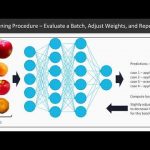
In this video, we will see what neural networks are, why are they named this way, and how do they work.
• Explain that neural networks are a kind of classification technique
• Explain that neural networks were designed to be analogous to brain neurons
• Learn that a neural network has multiple layers whose weights are trained over several epochs
For the latest Big Data and Business Intelligence video tutorials, please visit http://bit.ly/1HCjJik
After a fruitful 2017 with many exciting launches and the end of some historic missions, ESA is ready for the year to come. 2018 will see the 10th anniversary of the International Space Station’s Columbus module and an ESA astronaut taking the helm of the ISS as commander. There will be more launches of new Earth observation and exploration satellites and ESA will venture to the innermost planet in our Solar System. 2018 will also mark the completion of the first part of the Copernicus constellation observing the Earth and of the full Galileo constellation, Europe’s own satellite navigation system.
——————————————————————————————————
Join Amazon Prime For Amazing Offers(Free 30 Days Trial) : http://amzn.to/2HjTpKM
——————————————————————————————————-
Some Cheap & Cool Doll Girls & Toys You Can Buy On Amazon – Here all links are Affiliate links:
—————————————————————————————-
—————————————————————————————-
1. Eileen MK MysticKids Doll Girl BJD Doll 1/3 58CM BJD Doll Dollfie / 100% Custom-made / Free Make-up + Free Gifts
Science Max – What makes boats float? Tinfoil doesn’t float, but a boat made of tinfoil does. It’s all about how you build it. Watch as Phil builds his human-sized tinfoil boat wrong several times before he figures it out. Plus, Phil gets into a tub full of the main ingredient in diapers. Why would he do such a thing? For Science!
Have you ever done a science experiment and wondered “What would this be like if it were HUGE?” Welcome to Science Max, the exciting new series that turbocharges all the science experiments you’ve done at home.
In season 1, join Phil as he builds rocket cars, uses elastic energy to hurl pumpkins on a giant catapult, builds a bridge out of pasta that can hold a human, find magnets powerful enough to float Phil off the ground, and many more experiments taken to the MAX!
I was just making another video but got an unexpected call from an alien world. In this video, I help a girl named North from another planet help find a missing device using Artificial Intelligence. We use machine learning/deep learning technologies to help find the device in the mountain of data. Using programming, we’ll try to search for it. This video is made for the young and young at heart.
Coding challenge winners, i’ll announce you guys in a separate video this weekend. To everyone, Please Subscribe! And like. And comment. That’s what keeps me creating.
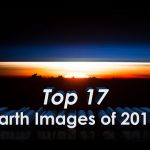
The astronauts and cosmonauts on the International Space Station take pictures of Earth out their windows nearly every day, and over a year that adds up to thousands of photos. The people at the Earth Science and Remote Sensing Unit at NASA’s Johnson Space Center in Houston had the enviable job of going through this year’s crop to pick their top 17 photos of Earth for 2017—here’s what they chose!
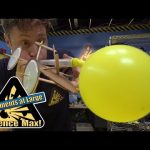
Phil builds a balloon powered car in the lab. Then he tries to make one big enough to ride. Can the Science Max build team find a big enough balloon? Or are balloons the way to go? Plus, Newton’s Cradle out of bowling balls, how Guinea Pigs got their name and Newton’s 3rd Law.
Have you ever done a science experiment and wondered “What would this be like if it were HUGE?” Welcome to Science Max, the exciting new series that turbocharges all the science experiments you’ve done at home.
In season 1, join Phil as he builds rocket cars, uses elastic energy to hurl pumpkins on a giant catapult, builds a bridge out of pasta that can hold a human, find magnets powerful enough to float Phil off the ground, and many more experiments taken to the MAX!
With 2018 approaching rapidly and 2017 coming to a close, ESA can look back on a fruitful year. It has been a year dominated by the ESA astronaut missions to the International Space Station, the launch of more Sentinel satellites and the first launch of a small Geo satellite.
This video looks back at the highlights of 2017 for ESA.
Europe’s first Space Exploration Masters competition, based around space exploration activities, welcomed new players to boost business and innovation in the space industry. The event was held at the NewSpace Europe conference on 16 November 2017 in Luxembourg.
Prizes worth more than €500 000 were awarded to winners with disruptive ideas to connect space and non-space areas with new approaches, solutions and services.
This is NASA’s 2018 ‘To Do’ list.
The work we do, which will continue in 2018, helps the United States maintain its world leadership in space exploration and scientific discovery.
Launches, discoveries and more exploration await in the year ahead.
This video is available for download from NASA’s Image and Video Library:
images-assets.nasa.gov/video/NHQ_2017_1219_NASA 2018 TO DO LIST_FINAL/NHQ_2017_1219_NASA 2018 TO DO LIST_FINAL~orig.mp4
James Bissonette, James Gill, Cas Eliëns, Jeremy Banks, Thomas J Miller Jr MD, Jaclyn Cauley, David F Watson, Jay Edwards, Tianyu Ge, Michael Cao, Caron Hideg, Andrea Di Biagio, Andrey Chursin, Christopher Anthony, Richard Comish, Stephen W. Carson, JoJo Chehebar, Mark Govea, John Buchan, Donal Botkin, Bob Kunz
Have you ever done a science experiment and wondered “What would this be like if it were HUGE?” Welcome to Science Max, the exciting new series that turbocharges all the science experiments you’ve done at home.
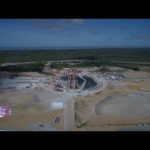
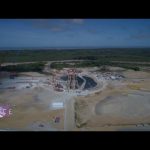
Dans cette édition de Space, nous entrons dans les coulisses d’un chantier colossal au Centre spatial européen de Kourou en Guyane française. Un pas de tir est en train de sortir de terre en vue du vol inaugural d’Ariane 6 programmé en juillet 2020. Grâce à ce projet, l’Europe se relance dans la compétition mondiale qui oppose les acteurs du secteur spatial.
Sur la côte nord-est de l’Amérique du Sud, à Kourou en Guyane, des ingénieurs européens s’affairent à la construction du nouveau pas de tir d’Ariane 6. Ce chantier colossal doit répondre à un objectif simple : diviser par deux, les coûts de lancement par rapport à son modèle précédent. Pour y parvenir, il faut d’abord une quantité astronomique de béton, d’acier et de main-d’oeuvre.
The race is on to build the new launch pad for the Ariane 6 rocket, due to make its maiden voyage in July 2020. Construction is in full swing in French Guiana as Europe builds not only a new rocket but also a new way of launching rockets, in a bid to face down competition from the likes of Space X.
When Euronews visited, around 500 people were active on the site from six in the morning until ten at night, with attention focused on two key elements of the pad – firstly the huge flame trench which will take the hot gases away from the rocket on launch, and the new building in which the Ariane 6 will be built.
El Puerto Espacial Europeo en la Guyana francesa, está en plena efervescencia. Estamos en medio de una gigantesca obra. Aquí se sitúa la nueva plataforma de lanzamiento de Ariane 6, cuyo despegue está previsto en julio de 2020. Intentamos averigurar qué se necesita para mantenerse a la vanguardia en el negocio del espacio.
Amanece en Guyana y los ingenieros europeos se afanan en la construcción del terminal de lanzamiento de Ariane 6. Esta gigantesca obra tiene un único objetivo: lanzar cohetes al espacio por un coste, dos veces inferior al de Ariane 5. Para lograrlo se necesita un montón de hormigón, de acero y de mano de obra.
ESA is taking advantage of Novespace’s latest ‘Zero-G’ aircraft to perform a number of experiments in microgravity. Twelve experiments – which include six by professional scientists and six by students as part of ESA’s Fly Your Thesis programme – took to the skies for three series of 31 parabolas off the coast of France. Conditions of microgravity, or weightlessness, are unique for research ranging from fundamental physics, testing Einstein’s weak equivalence principle, to psychology, neuroscience and the deployment of a balloon that may one day make measurements while falling through Mars’ atmosphere.