The 50th International Paris Air & Space Show at Le Bourget opened its doors on Monday 17 June.
The Agency’s pavilion, situated between the full-size models of the Ariane 1 and Ariane 5 launchers, features the wealth of ESA programmes across all space domains, and focus on recent and upcoming launches and their results. This year, the emphasis is on space as a driver of competitiveness and growth.
Author: kidibot
-
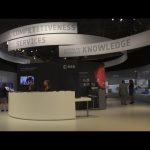
Visit ESA’s Pavilion at the Paris Air and Space Show 2013
-
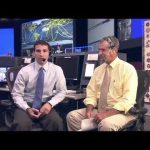
Aerospace Adventures Students Talk Space Technology with NASA
Ken Neiss, Communication Radio Frequency Onboard Network Utilization Specialist (CRONUS) ISS Flight Controller from Johnson Space Center in Houston Texas hosts Cloverdale Aerospace Technology Middle School from Little Rock Arkansas. NASA DLN broadcasts are connecting students around the country with the live mission operations being done by the International Space Station Flight Control Team. ISS flight controllers, astronauts and scientists often answer student’s questions about living and working in space, how the Houston mission control center operates, and a wealth of other topics related to Science, Technology, Engineering, and Mathematics.
-
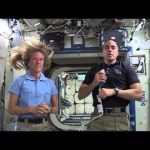
Kansas Students Speak Live with Space Station NASA Astronauts
Expedition 36 crew members and NASA astronauts Chris Cassidy and Karen Nyberg, currently orbiting aboard the International Space Station, spoke with students gathered at the Kansas Cosmosphere and Space Center on Wednesday, June 19. Students were able to ask the astronauts questions about life, work and research aboard the orbiting space station. NASA activities have been incorporated into Cosmosphere summer programs and local Boys and Girls Club in preparation for the conversation with the space station astronauts. Linking students directly to the astronauts aboard the space station provides them with an authentic, live experience of space exploration, space study, the scientific components of space travel and possibilities of life in space.
-
NASA Announces Asteroid Grand Challenge
NASA announced Tuesday a Grand Challenge focused on finding all asteroid threats to human populations and knowing what to do about them.
The challenge, which was announced at an asteroid initiative industry and partner day at NASA Headquarters in Washington, is a large-scale effort that will use multi-disciplinary collaborations and a variety of partnerships with other government agencies, international partners, industry, academia, and citizen scientists. It complements NASA’s recently announced mission to redirect an asteroid and send humans to study it.
-

Popsicle Stick Chain Reaction – Sick Science! #144
Click here to find out why this reaction happens: http://www.stevespanglerscience.com/lab/experiments/popsicle-stick-chain-reaction
Popsicle sticks are great for holding frozen treats and reading the occasional joke off of, but did you know they’re excellent for demonstrating potential and kinetic energy? It’s true! If you weave popsicle sticks together just right, you can create a chain reaction that will create a dazzling display of flying popsicle sticks!
Want more experiments like this? Check out http://www.stevespanglerscience.com/product/naked-eggs-and-flying-potatoes
Sick Science™ is a trademark of Steve Spangler, inc.
© 2013 Steve Spangler Science all rights reserved
-
2013 Astronaut Class on This Week @NASA
During a Google+ Hangout NASA announced its newest class of astronaut trainees. The eight candidates selected to the 2013 astronaut class were chosen from a pool of 63-hundred applications — the second largest NASA has ever received. In August, the group will begin a wide array of technical training at Johnson Space Center, other NASA centers and space agencies around the world.
Also, Science Day on The Hill, Technology Day, Dry Ice Movement on Mars, Sample Return Robot Challenge, Engineering Leaders Graduate, I’m an Engineer! and more!
-

ATV vs. UD: DJ Young Einstein vs. ATV Albert Einstein
For the 2013 Automated Transfer Vehicle docking day music video, ESA teamed up with California hip hop group Ugly Duckling (http://www.uglyduckling.us), who have produced a super space remix of Elevation (http://www.youtube.com/watch?v=zcbSiqhJHcc).
Rock along to the beats of DJ Young Einstein and the visuals of ATV Albert Einstein!Follow the ATV mission to the ISS via http://blogs.esa.int/atv
Music, lyrics and original video animation Copyright (C) Ugly Duckling (http://www.uglyduckling.us) 2012-13.
ESA remix video credit ESA/European Space Agency, used with permission. -
Science of Slime – Cool Science Experiment
Our science guy, Steve Spangler, is an expert at making science fun, but you get an extra dose of fun when the science is ooey, gooey and slimy. Steve is with Kim today to uncover the real science behind making the perfect batch of slime.
Want more experiments like this? Check out http://www.stevespanglerscience.com/experiments
© 2013 Steve Spangler, Inc. all rights reserved About Steve Spangler Science…
Steve Spangler is a celebrity teacher, science toy designer, speaker, author and an Emmy award-winning television personality. Spangler is probably best known for his Mentos and Diet Coke geyser experiment that went viral in. Spangler is the founder of www.SteveSpanglerScience.com, a Denver-based company specializing in the creation of science toys, classroom science demonstrations, teacher resources and home for Spangler’s popular science experiment archive and video collection. Spangler is a frequent guest on the Ellen DeGeneres Show and Denver 9 News where he takes classroom science experiments to the extreme. For teachers, parents or DIY Science ideas – check out other sources of learning:
Join the Science Club and check out other cool science experiments at – http://www.SteveSpanglerScience.com
Sign up to receive a FREE Experiment of the Week- http://www.stevespanglerscience.com/experiment-of-the-week
Attend a Spangler Hands-on Science Workshop for Teachers – http://www.stevespanglerscience.com/training
Watch Steve on Local and National Media Appearances on YouTube at: https://www.youtube.com/user/SpanglerScienceTV
-

Bubble Snakes – Sick Science! #143
Read the full experiment HERE: http://www.stevespanglerscience.com/lab/experiments/bubble-snakes
Bubbles usually only come as individual spheres of soap and water. Sometimes, if you’re lucky, you can get a whole bunch of bubbles in one cluster… but it always seems random. Luckily, we’ve found a spectacular way to create entires snakes made of bubbles and teach you how to make them in all the colors of the rainbow!
Want more experiments like this? Check out http://www.stevespanglerscience.com/product/naked-eggs-and-flying-potatoes
Sick Science™ is a trademark of Steve Spangler, inc.
© 2013 Steve Spangler Science all rights reserved
-
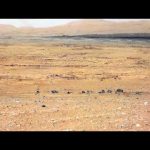
NASA Mars Curiosity Rover Report — June 7, 2013
A NASA Mars Curiosity rover team member gives an update on developments and status of the planetary exploration mission. The Mars Science Laboratory spacecraft delivered Curiosity to its target area on Mars at 1:31:45 a.m. EDT on Aug. 6, 2012 which includes the 13.8 minutes needed for confirmation of the touchdown to be radioed to Earth at the speed of light. The rover will conduct a nearly two-year prime mission to investigate whether the Gale Crater region of Mars ever offered conditions favorable for microbial life.
Curiosity carries 10 science instruments with a total mass 15 times as large as the science payloads on NASA’s Mars rovers Spirit and Opportunity. Some of the tools, such as a laser-firing instrument for checking rocks’ elemental composition from a distance, are the first of their kind on Mars. Curiosity will use a drill and scoop, which are located at the end of its robotic arm, to gather soil and powdered samples of rock interiors, then sieve and parcel out these samples into the rover’s analytical laboratory instruments.
-

Steven Spielberg’s A.I.-ARTIFICIAL INTELLIGENCE (2001) – The Flesh Fair
As a “celebration of life,” future mankind makes symbolic spectacle of the destruction of artificiality.
Copyright 2002 Dreamworks and Warner Bros. All rights reserved.
-
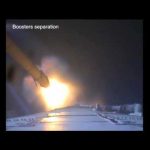
Sterex images of ATV-4 launch
ESA’s ATV-4 launch images taken by the Sterex experiment. These images provide a stunning vision of the Ariane 5 launch, including liftoff, boosters separation and ATV-4 release. The video system was developed by Kayser-Threde GmbH for ESA and DLR and integrated on Ariane by Astrium GmbH. Usage for ATV-4 was financed by DLR and ESA and supported by Arianespace and CNES.
© ESA /DLR-BMWi 2013
-

NASA’s Newest View of the Sun
NASA hosts a news update about the June 26 launch of the Interface Region Imaging Spectrograph (IRIS) mission from Vandenberg Air Force Base in California.
IRIS is a NASA Small Explorer Mission to observe how solar material moves in a dynamic million-degree atmosphere that drives the solar wind around the Sun’s atmosphere. The region is the origin of most of the ultraviolet solar emission that impacts the near-Earth space environment and Earth’s climate.
-
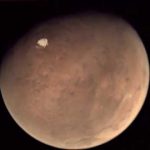
Mars Express Full Orbit Video 2.0
In celebration of the 10th anniversary of Mars Express: a new and enhanced Full Orbit Video generated by multiple images acquired by the VMC camera – the Mars Webcam – on board ESA’s Mars Express
This version is a special ‘MEX birthday preview’. We’ll post a somewhat extended version late next week, to coincide with the next expected VMC image set arriving from Mars (for news, follow the VMC blog http://blogs.esa.int/vmc)
Thanks to the Mars Express Science & operations teams for generating a fabulous, unique-in-our-Solar-System view of the Red planet. And happy Birthday, Mars Express!
Credit: ESA – European Space Agency, CC BY-SA 3.0 IGO
Copyright Notice:
This work is licenced under the Creative Commons Attribution-ShareAlike 3.0 IGO (CC BY-SA 3.0 IGO) licence. The user is allowed to reproduce, distribute, adapt, translate and publicly perform this publication, without explicit permission, provided that the content is accompanied by an acknowledgement that the source is credited as ‘ESA/DLR/FU Berlin’, a direct link to the licence text is provided and that it is clearly indicated if changes were made to the original content. Adaptation/translation/derivatives must be distributed under the same licence terms as this publication. To view a copy of this license, please visit http://creativecommons.org/licenses/by-sa/3.0/igo/
-

Soda Can Shake Up – Sick Science! #142
Find out what’s happening inside the can HERE: http://www.stevespanglerscience.com/experiment/soda-can-shake-up-experiment
Have you ever wondered why shaking a soda results in a great explosion when it’s opened? What causes a 2-liter bottle of soda to go flat? Is there anything that can be done to keep fizz in a bottle of soda? Get ready to uncover some amazing soda secrets that will change your soda drinking habits.
Want more experiments like this? Check out http://www.stevespanglerscience.com/product/naked-eggs-and-flying-potatoes
Sick Science™ is a trademark of Steve Spangler, inc.
© 2013 Steve Spangler Science all rights reserved
-
Mars Express ten year highlights
The journey of Mars Express, from drawing board through launch, to its key science highlights during ten years of operations. With its suite of seven instruments, Mars Express has studied the subsurface of the Red Planet to the upper atmosphere and beyond to the two tiny moons Phobos and Deimos, providing an in depth analysis of the planet’s history and returning stunning 3D images.
-
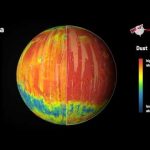
Mars mineral globe
This unique atlas comprises a series of maps showing the distribution and abundance of minerals formed in water, by volcanic activity, and by weathering to create the dust that makes Mars red.
Together the maps provide a global context for the dominant geological processes that have defined the planet’s history.The maps were built from ten years of data collected by the OMEGA visible and infrared mineralogical mapping spectrometer on Mars Express.
The animation cycles through maps showing: individual sites where a range of minerals that can only be formed in the presence of water were detected; maps of olivine and pyroxene, minerals that tell the story of volcanism and the evolution of the planet’s interior; and ferric oxide and dust. Ferric oxide is a mineral phase of iron, and is present everywhere on the planet: within the bulk crust, lava outflows and the dust oxidised by chemical reactions with the martian atmosphere, causing the surface to ‘rust’ slowly over billions of years, giving Mars its distinctive red hue.
The map showing hydrated minerals includes detections made by both ESA’s Mars Express and by NASA’s Mars Reconnaissance Orbiter.
Copyright: Hydrated mineral map: ESA/CNES/CNRS/IAS/Université Paris-Sud, Orsay; NASA/JPL/JHUAPL; Olivine, pyroxone, ferric dust & dust maps: ESA/CNES/CNRS/IAS/Université Paris-Sud, Orsay Orsay; Video production: ESA.
-
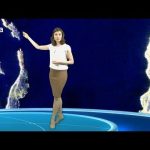
Earth from Space: Crete
Earth from Space is presented by Kelsea Brennan-Wessels from the ESA Web-TV virtual studios.
Greece’s largest and most populous island is featured in the sixty-seventh edition.See also the following link to download the image:
http://www.esa.int/Our_Activities/Observing_the_Earth/Earth_from_Space_Crete -
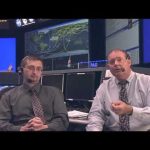
NASA Aerospace Engineer Talks Space with Students
NASA Johnson Space Center Aerospace Engineer Jason Barbour answers questions from 5th grade students at Public School 174 Queens in Queens, New York during a NASA Digital Learning Network (DLN) interactive broadcast.
NASA DLN broadcasts are connecting students around the country with the live mission operations being done by the International Space Station Flight Control Team. ISS flight controllers, astronauts and scientists answer student’s questions about living and working in space, how the Houston mission control center operates, and a wealth of other topics related to Science, Technology, Engineering, and Mathematics.
-
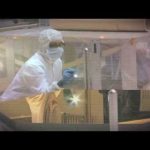
Actor Jaden Smith Highlights NASA Earth Science
Jaden Smith, star of Columbia Pictures’ movie “After Earth,” describes the contributions of the agency’s Earth science program to environmental awareness and exploration of our home planet.
-
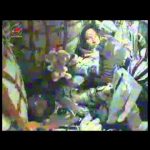
NASA Television Covers the Launch of the Next ISS Crew
Expedition 36/37 Soyuz Commander Fyodor Yurchikhin of the Russian Federal Space Agency (Roscosmos), NASA Flight Engineer Karen Nyberg and Flight Engineer Luca Parmitano of the European Space Agency launched on the Russian Soyuz TMA-09M spacecraft on May 29, Kazakh time (May 28, U.S. time) from the Baikonur Cosmodrome in Kazakhstan to begin an accelerated six-hour journey to the International Space Station. Once aboard, the trio will start a five and a half month mission, joining station Commander Pavel Vinogradov of Roscosmos, Flight Engineer Chris Cassidy of NASA and Russian Flight Engineer Alexander Misurkin, who have been on the station since late March. The footage includes the crew’s pre-launch ceremonial activities at their Cosmonaut Hotel crew quarters, their departure from the Cosmonaut Hotel to their suit up facility in the Cosmodrome, the
-

Marshmallow Masher – Sick Science! #141
Find out the secret HERE: http://www.stevespanglerscience.com/experiment/marshmallow-masher
Marshmallows are a delicious, fluffy staple of summer, campouts, and barbecues. Did you know that there isn’t really much to them? It’s true. The best way to see what really comprises a marshmallow is to put it to the Marshmallow Masher pressure test. You’ll use the power of air to demonstrate what you’re really eating when you roasting ‘mallows this summer.
Want more experiments like this? Check out http://www.stevespanglerscience.com/product/naked-eggs-and-flying-potatoes
Sick Science™ is a trademark of Steve Spangler, inc.
© 2013 Steve Spangler Science all rights reserved
-
The Oklahoma Storms As Seen From Space on This Week @NASA
Also, NASA Administrator Charlie Bolden received updates on the important work being on done at the agency’s California centers, , a New Crew Prepares for Launch to the International Space Station, and a look at Dream Chaser Flight Simulations. These and other stories on This Week @NASA
-
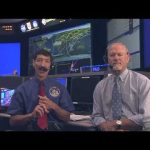
NASA Astronaut Talks Space with Students
NASA Astronaut Mario Runco answers questions from 9-12th grade students at Deptford High School in Deptford, NJ during a NASA Digital Learning Network (DLN) interactive broadcast.
NASA DLN broadcasts are connecting students around the country with the live mission operations being done by the International Space Station Flight Control Team. ISS flight controllers, astronauts and scientists answer student’s questions about living and working in space, how the Houston mission control center operates, and a wealth of other topics related to Science, Technology, Engineering, and Mathematics.
-
![A.I. Artificial Intelligence – Official® Trailer [HD]](https://video.kidibot.ro/wp-content/uploads/2020/01/3179/ai-artificial-intelligence-official-trailer-hd-150x150.jpg)
A.I. Artificial Intelligence – Official® Trailer [HD]
Release Date: June 29, 2001
It’s the mid-21st century and man has developed a new type of computer that is aware of its own existence. This computer has been utilized to help man cope with the melting of the polar ice caps and the submerging of many of its coastal cities. This form of artificial intelligence has been used in robots, and one such android, a young boy (Haley Joel Osment) is about to take an emotional journey to find out if he can ever be anything more than a machine.
Cast: Haley Joel Osment, Jude Law, Frances O’Connor, Sam Robards, Jake Thomas, Brendan Gleeson, William Hurt, Jack Angel, Ben Kingsley, Robin Williams
Studio: Warner Bros. Pictures
Director: Steven Spielberg
Screenwriter: Steven Spielberg, Ian Watson
Genre: Adventure, Drama, Sci-FiOfficial Website: http://www.aimovie.com
-
Salt Water Density Straw – Sick Science! #140
GET THE KIT HERE: http://www.stevespanglerscience.com/collections/sick-science.html
Click here to get the secret: http://www.stevespanglerscience.com/experiment/density-straw
Density can be a difficult scientific property to grasp, that’s why we like making it colorful, fun, and (most importantly) simple! The Salt Water Density Straw is the epitome of kitchen science. You’ll use materials are right in your house, and with just a bit of salt, you’ll create a colorful experience that will have young scientists understanding density in moments.
Want more experiments like this? Check out http://www.stevespanglerscience.com/product/naked-eggs-and-flying-potatoes
Sick Science™ is a trademark of Steve Spangler, inc.
© 2013 Steve Spangler Science all rights reserved
-
NASA Mars Curiosity Rover Report – May 16, 2013
A NASA Mars Curiosity rover team member gives an update on developments and status of the planetary exploration mission. The Mars Science Laboratory spacecraft delivered Curiosity to its target area on Mars at 1:31:45 a.m. EDT on Aug. 6, 2012 which includes the 13.8 minutes needed for confirmation of the touchdown to be radioed to Earth at the speed of light. The rover will conduct a nearly two-year prime mission to investigate whether the Gale Crater region of Mars ever offered conditions favorable for microbial life.
Curiosity carries 10 science instruments with a total mass 15 times as large as the science payloads on NASA’s Mars rovers Spirit and Opportunity. Some of the tools, such as a laser-firing instrument for checking rocks’ elemental composition from a distance, are the first of their kind on Mars. Curiosity will use a drill and scoop, which are located at the end of its robotic arm, to gather soil and powdered samples of rock interiors, then sieve and parcel out these samples into the rover’s analytical laboratory instruments.
-

NASA Connects Space Station and “Star Trek Into Darkness” Crews in a Google+ Hangout
Astronaut Chris Cassidy, from aboard the International Space Station participated in a Google+ hangout with fellow astronauts at Johnson Space Center and cast members of the new film, “Star Trek Into Darkness” to discuss how work aboard the ISS is turning science fiction into reality. The astronauts and Star Trek cast asked questions of each other and fielded questions from social media followers at several locations, including the Intrepid Museum in New York City (home of the space shuttle Enterprise) and the Smithsonian’s National Air and Space Museum in Washington, DC.
-
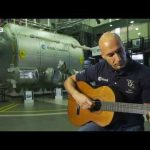
Luca Parmitano guitar solo
ESA astronaut Luca Parmitano plays one of his own compositions on guitar at ESA’s technical heart ESTEC in The Netherlands.
The song doesn’t have a name yet as playing the guitar is a way to relax for Luca after the extensive astronaut training he receives for his Volare mission to the International Space Station.
-

Candy Science – Sick Science! #139
To Discover Why This Happens: http://www.stevespanglerscience.com/experiment/floating-letters
M&Ms have the slogan of melting in your mouth, but not in your hands. You wanna know something cool? The special melting property is totally scientific. The results are an amazing phenomenon that we call Floating Letters.
Want more experiments like this? Check out http://www.stevespanglerscience.com/product/naked-eggs-and-flying-potatoes
Sick Science™ is a trademark of Steve Spangler, inc.
© 2013 Steve Spangler Science all rights reserved
-
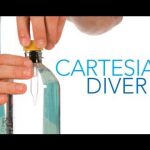
Cartesian Diver – Sick Science! #138
Read the full experiment here http://www.stevespanglerscience.com/experiment/eye-dropper-cartesian-diver
This experiment is named after Rene Descartes (1596-1650), a French scientist and mathematician. It’s a classic science experiment using an eye-dropper and a soda bottle filled with water.Want more experiments like this? Check out http://www.stevespanglerscience.com/product/naked-eggs-and-flying-potatoes
Sick Science™ is a trademark of Steve Spangler, inc.
© 2013 Steve Spangler Science all rights reserved
-

Floating Ping Pong Ball – Sick Science! #137
Get the secret here: http://www.stevespanglerscience.com/experiment/floating-ping-pong-ball
You’ve seen Steve Spangler use blow dryers or industrial-sized blowers to levitate ping pong balls, beach balls, and send toilet paper flying through the air. You can replicate this levitating object phenomenon on a smaller scale using objects that are right in your home! The Floating Ping Pong Ball trick uses amazing principles of air that are sure to amaze anyone, from your science teacher to your parents to your neighbors!
Want more experiments like this? Check out http://www.stevespanglerscience.com/product/naked-eggs-and-flying-potatoes
Sick Science™ is a trademark of Steve Spangler, inc.
© 2013 Steve Spangler Science all rights reserved
-
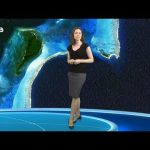
Earth from Space: Great Blue Hole
Earth from Space is presented by Kelsea Brennan-Wessels from the ESA Web-TV virtual studios.
In the sixty-third edition, we look at an underwater sinkhole in the Belize Barrier Reef.Use the following link to view and download the full size image:
http://www.esa.int/Our_Activities/Observing_the_Earth/Earth_from_Space_Great_Blue_Hole -

Huff and Puff Challenge – Sick Science! #136
Find out why this happens HERE http://www.stevespanglerscience.com/experiment/huff-and-puff
Putting an item into an empty soda bottle is a piece of cake. Just drop the object through the mouth of the bottle, right? Well, we have a challenge for you. Place a small item in the mouth of a bottle and attempt to blow the object into the bottle using a straw. Not so easy, now is it?
Want more experiments like this? Check out http://www.stevespanglerscience.com/product/naked-eggs-and-flying-potatoes
Sick Science™ is a trademark of Steve Spangler, inc.
© 2013 Steve Spangler Science all rights reserved
-

Gobstopper Candy Science – Sick Science! #135
Find out why the colors don’t mix HERE: http://www.stevespanglerscience.com/experiment/gobstopper-science
Hard candies are known for their bright colors, delicious tastes, and, well, having a ton of sugar. While having a handful of candy every once in a while is definitely a good thing, we like conducting experiments with them! We especially love Gobstoppers. They have layers of colors that, when they dissolve into water, do something very peculiar…
Want more experiments like this? Check out http://www.stevespanglerscience.com/product/naked-eggs-and-flying-potatoes
Sick Science™ is a trademark of Steve Spangler, Inc.
© 2013 Steve Spangler Science all rights reserved
-
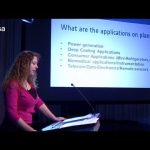
ThermoMag – 1st lecture on Thermoelectricity
Lecture from Anastasiia Prytuliak, European Space Agency postdoctoral research fellow in the Institute Laue Langevin and European Radiation Synchrotron Facility in Grenoble, France about a project called “ThermoMag”, which is devoted to the research and development of energy-harvesting thermoelectric materials.
“ThermoMag” is a project co-funded by the 7th Framework Programme of the European Commission, coordinated by the European Space Agency.
Watch the second lecture: http://www.youtube.com/watch?v=lmHSu5Yh6cE
-

Sick Science!™ DVD – Volume 1
Purchase DVD here: http://www.stevespanglerscience.com/product/sick-science-dvd-volume-1
If you’ve experienced our Sick Science!™ series before, you know that the videos are all about bringing science to life for young learners. The best part? The hands-on science exploration can be done using items found right in your own home or classroom! Each volume of the Sick Science DVD series features 10 experiments that leave young scientists with a question. Sometimes, they may be asked to figure out why the experiment works. Other times, they may be asked to determine a mystery component of the activity. The entire experience is designed to encourage investigation and inquiry… a sure-fire way to keep everyone engaged and wanting more.Sick Science™ is a trademark of Steve Spangler, inc.
© 2013 Steve Spangler Science all rights reserved
-

NASA’s Next Budget Advances US Leadership in Space and Science
President Obama’s Fiscal Year 2014 budget request for NASA is a $17.7 billion investment in our nation’s future. NASA’s budget ensures the United States will remain the world’s leader in space exploration and scientific discovery for years to come, while making critical advances in aerospace and aeronautics to benefit the American people.