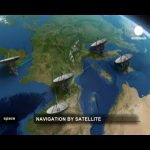
Ai giorni nostri il GPS è uno strumento familiare e molto utile. Gli europei hanno voluto perfezionare la sua precisione sviluppando il sistema EGNOS, precursore della costellazione Galileo. La navigazione satellitare e le sue applicazioni in questa edizione di Space.
Author: kidibot
-
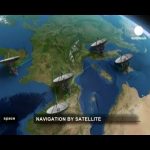
ESA Euronews: Satelliten-Navigation
Heutzutage ist das GPS ein sehr nützliches Werkzeug, das aus dem Alltag nicht mehr wegzudenken ist. Mit dem System Egnos, Vorreiter der Satelliten-Konstellation Galileo, wollen die Europäer seine Treffsicherheit erhöhen. Die Satelliten-Navigation und ihre Anwendungen in dieser Ausgabe von “Space”.
-

ESA Euronews: Navigation by satellite
Today GPS is a common and extremely useful tool. Europeans wanted to refine its accuracy by developing EGNOS, the precursor of the Galileo constellation.
We look at satellite navigation and its applications. -
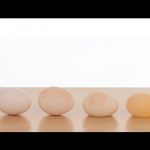
Naked Egg – Sick Science! #031
This experiment answers the age-old question, “Which came first, the rubber egg or the rubber chicken?” It’s easy to make a rubber egg if you understand the chemistry of removing the eggshell with vinegar. What you’re left with is a totally embarrassed naked egg and a cool piece of science.
Want more experiments like this? Check out http://www.stevespanglerscience.com/product/naked-eggs-and-flying-potatoes
Sick Science™ is a trademark of Steve Spangler, inc.
© 2011 Steve Spangler Science all rights reserved
-
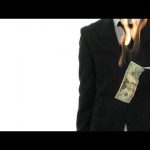
Burning Money – Sick Science! #030
It’s probably not a wise idea to soak a $20 bill in a flammable liquid and set it on fire, but that’s what you’ll have to do with this science demonstration. Sure, you could use just a $1 bill, but then you don’t sweat as much. There is a point to all of this burning… it’s the fact that to everyone’s amazement, paper money never actually burns (if you do it correctly). Read on to discover the secret behind this amazing demonstration.
Want more experiments like this? Check out http://www.stevespanglerscience.com/product/naked-eggs-and-flying-potatoes
Sick Science™ is a trademark of Steve Spangler, inc.
© 2011 Steve Spangler Science all rights reserved
-
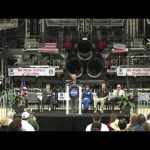
NASA Commemorates Space Shuttle’s 30th Anniversary, Reveals Display Sites for Orbiters
On the anniversary of the first space shuttle flight, NASA Administrator Charles Bolden joined Kennedy Space Center Director Bob Cabana, and STS-1 shuttle pilot Robert Crippen to pay tribute to the space shuttle era at the KSC in Florida. During the event, Bolden named the four institutions that will receive a shuttle orbiter for permanent display.
-
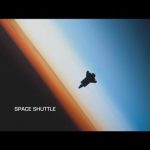
The Space Shuttle (Narrated by William Shatner)
An idea born in unsettled times becomes a feat of engineering excellence. The most complex machine ever built to bring humans to and from space and eventually construct the next stop on the road to space exploration.
-
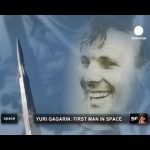
ESA Euronews: Yuri Gagarin: o primeiro Homem no espaço
Esta semana, há 50 anos, pela primeira vez na história da humanidade, um homem deixou a Terra e viajou para o Espaço. Quem foi Yuri Gagarin? Como é que aquele voo mudou a sua vida e a da humanidade?
-

ESA Euronews: Gagarin, pionero en órbita
Hace 50 años, por primera vez en la historia, un hombre viajó al espacio.
¿Quién era Yuri Gagarin? ¿Cómo fue el vuelo que cambió su vida y el devenir de la humanidad? -

ESA Euronews: First Man in Space
50 years ago, for the first time in history, a human travelled into space.
Who was Yuri Gagarin ? How did this flight change his life and the future of humankind? -

The Power of Air – Sick Science! #029
We’ve taught you the water absorbing secret behind the polymer inside diapers, but did you know that a Diaper Genie bag is a great way to demonstrate some properties of air? That’s right! That plastic smell-shield isn’t just for odor defense any longer. Now you can use the thin plastic bag to show Bernoulli’s Principle and amaze your friends.
Want more experiments like this? Check out http://www.stevespanglerscience.com/product/fire-bubbles-exploding-toothpaste-book
Sick Science™ is a trademark of Steve Spangler, inc.
© 2011 Steve Spangler Science all rights reserved
-

New Shuttle Launch Date on This Week @NASA
NASA has re-targeted the liftoff of space shuttle Endeavour for Friday, April 29, at 3:47 p.m. EDT. The move comes to resolve a scheduling conflict with a Russian Progress supply vehicle scheduled to launch April 27 and arrive at the station two days later. Also, Goddard Memorial Symposium; “Wheels” rolls with big Shorty; cost-saving software summit; two honors for Ames; and, marking Odyssey’s beginning.
-

Expedition 27 Crew Prepares for Launch as their Soyuz Rocket Move to Launch Pad
The Soyuz TMA-21 spacecraft and its booster and were moved to the launch pad at the Baikonur Cosmodrome in Kazakhstan on a railcar April 2 for final preparations before launch April 5, Baiknour time, to the International Space Station. The Soyuz will carry Expedition 27 Soyuz Commander Alexander Samokutyaev, NASA Flight Engineer Ron Garan and Russian Flight Engineer Andrey Borisenko to the complex. The trio will spend six months on the station, joining station Commander Dmitry Kondratyev, NASA Flight Engineer Cady Coleman and European Space Agency Flight Engineer Paolo Nespoli, who have been in orbit since December 2010. Samokutyaev, Garan and Borisenko are in final training for launch with their backups, Anatoly Ivanishin, Dan Burbank and Anton Shkaplerov. The footage includes interviews with Astronaut Nicole Stott, STS-133 Mission Specialist, and with Mike Lopez-Alegria, Deputy Director for ISS, NASA Flight Crew Operations.
-
Hovering Plane – What to do With the Fans You Bought!
Now that you bought two fans to perform the Hovering Plane Trick (which you later found out was a joke)… Here are a few ideas on how you can use them!
Want more experiments like this? Check out http://www.stevespanglerscience.com/product/naked-eggs-and-flying-potatoes
Sick Science™ is a trademark of Steve Spangler, inc.
© 2011 Steve Spangler Science all rights reserved
-
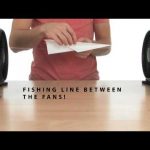
Hovering Plane Reveal – Sick Science! #028
APRIL FOOL’S! A few days ago we posted a video showing a paper airplane hovering between two fans. This is not actually possible without the help of a little fishing line. We thought why not have some fun around April Fool’s Day and see how many people we could trick.
Want more experiments like this? Check out http://www.stevespanglerscience.com/product/fire-bubbles-exploding-toothpaste-book
-
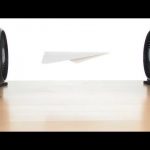
Hovering Plane – Sick Science! #027
We don’t know if the Wright Brothers ever made the attempt, but Steve Spangler has defied the odds to create a hovering airplane. We don’t suggest any passengers (because they wouldn’t fit), but this Floating Paper Plane is a great hands-on science tool for teaching the science behind airplanes, lift and drag, and principles of air.
Want more experiments like this? Check out http://www.stevespanglerscience.com/product/naked-eggs-and-flying-potatoes
Sick Science™ is a trademark of Steve Spangler, inc.
© 2011 Steve Spangler Science all rights reserved
-
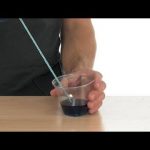
Traveling Water – Sick Science! #026
Can you transfer water from one cup to another with nothing but a piece of string? Watch this video to find out how!
Want more experiments like this? Check out http://www.stevespanglerscience.com/product/naked-eggs-and-flying-potatoes
Sick Science™ is a trademark of Steve Spangler, inc.
© 2011 Steve Spangler Science all rights reserved
-
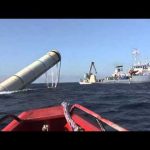
Shuttle’s Boosters Recovered in HD
NASA has released the first ever up-close, high-definition video of Kennedy Space Center’s solid rocket booster (SRB) recovery ships retrieving SRB segments from the Atlantic Ocean following a space shuttle launch. The unprecedented video is from the launch of the most recent shuttle mission, STS-133, Discovery’s final flight, on Feb. 24.
Following each space shuttle launch, crew members of Liberty Star and Freedom Star pull the spent boosters out of the ocean and return them to Hangar AF at Cape Canaveral Air Force Station in Florida. Once they are processed, the boosters are transported to Utah, where they are refurbished and stored, if needed. -
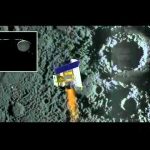
NASA’S MESSENGER Spacecraft Begins Historic Orbit of Mercury
NASA’s MErcury Surface, Space ENvironment, Geochemistry, and Ranging, or MESSENGER spacecraft successfully achieved orbit around Mercury at approximately 9 p.m. EDT Thursday. This marks the first time a spacecraft has accomplished this engineering and scientific milestone at our solar system’s innermost planet. Shown is reaction in MESSENGER mission control at the Johns Hopkins University Applied Physics Laboratory in Laurel, Md., as engineers received telemetry data confirming orbit insertion, plus animated depiction of the event. Among other goals, MESSENGER is expected to detect whether ice exists at Mercury’s poles.
-

ESA Euronews: 2011, año de los lanzadores espaciales europeos
Ariane 5, la punta de lanza de la industria europea de cohetes espaciales, lidera el mercado de lanzadores comerciales.
En breve, otros cohetes se le unirán para completar la oferta europea, haciendo de 2011 el año de los lanzadores espaciales europeos -
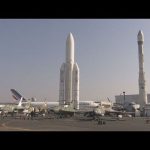
ESA Euronews: The year of the Launchers
Ariane 5, the European space industry’s workhorse, continues to successfully carry payloads into orbit. Two new launchers will soon complement Ariane 5, offering a full range of competitive services to Europe.
2011 will be the year of the launchers. -
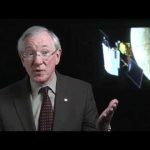
NASA’s MESSENGER to Become First Spacecraft to Orbit Mercury
After more than a dozen laps through the inner solar system, NASA’s MESSENGER spacecraft will move into orbit around Mercury on March 17, 2011. The durable spacecraft — carrying seven science instruments and fortified against the blistering environs near the sun — will be the first to orbit the innermost planet. At 8:45 p.m. EDT, MESSENGER — having pointed its largest thruster very close to the direction of travel — will fire that thruster for nearly 14 minutes, with other thrusters firing for an additional minute, slowing the spacecraft by 862 meters per second (1,929 mph). The orbit insertion will place the spacecraft into a 12 hour orbit about Mercury with a 200 kilometer (124 mile) minimum altitude. At the time of orbit insertion, MESSENGER will be 46.14 million kilometers (28.67 million miles) from the sun and 155.06 million kilometers (96.35 million miles) from Earth. MESSENGER has been on a 6.6 year mission to become the first spacecraft to orbit Mercury. The spacecraft followed a path through the inner solar system, including one flyby of Earth, two flybys of Venus, and three flybys of Mercury. This impressive journey is returning the first new spacecraft data from Mercury since the Mariner 10 mission over 30 years ago.
-
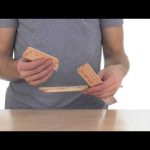
Heavy Newspaper – Sick Science! #025
Our science guy, isn’t taking a break to read the newspaper. He’s using a sheet of newspaper and some karate-chopping skills to demonstrate the incredible power of air pressure.
Want more experiments like this? Check out http://www.stevespanglerscience.com/product/fire-bubbles-exploding-toothpaste-book
Sick Science™ is a trademark of Steve Spangler, inc.
© 2011 Steve Spangler Science all rights reserved
-
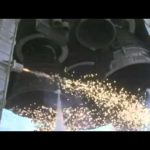
Discovery Launch Captured by Multiple Cameras
The ascent of space shuttle Discovery from NASA’s Kennedy Space Center on Feb. 24 is shown from a number of unique angles recorded by multiple engineering cameras situated at and around Launch Pad 39A.
-
Flying Tea Rocket – Sick Science! #024
The Tea Bag Rocket is really an adaptation of a classic science demonstration called the Ditto Paper Rocket. If you’re old enough to have experienced Ditto paper, you’ll recall the bluish-purple ink and that unforgettable smell of freshly printed copies. (Come to find out… both the Ditto machine solvent and the ink were highly toxic, but no one seemed to care back then.) Each piece of Ditto paper had a sheet of tissue paper that separated the two-part form, and it was this discarded piece of paper that teachers and kids used to make Ditto paper “rockets.” Since Ditto paper is a thing of the past, science enthusiasts have found a simple replacement – a tea bag.
Want more experiments like this? Check out http://www.stevespanglerscience.com/product/naked-eggs-and-flying-potatoes
Sick Science™ is a trademark of Steve Spangler, inc.
© 2011 Steve Spangler Science all rights reserved
-
Marble Gravitron – Sick Science! #023
Last summer, Spangler Labs took a company trip to an amusement park. We didn’t go for a company retreat, we didn’t even go on a day off. We went to do research on physics, the science of motion. One amusement park ride that really got Steve thinking was the gravitron. As we all stood in a circular room with our backs against the wall, the walls began to spin. Faster and faster the walls spun until the floor dropped out from under us. There were shrieks of terror as everyone thought they were about to fall, but to our surpise… we didn’t drop! Steve wanted to find a way to recreate this phenomenon on a small, kitchen-science scale. Steve Spangler Science gives you the Marble Gravitron!
Want more experiments like this? Check out http://www.stevespanglerscience.com/product/naked-eggs-and-flying-potatoes
Sick Science™ is a trademark of Steve Spangler, inc.
© 2011 Steve Spangler Science all rights reserved
-

NASA Celebrates Black History Month
Administrator Charles Bolden talks of the contributions to the space program made by African Americans, including Guy Bluford, the first black man in space; the first African American woman in space; and Fred Gregory, the first black to pilot and command a space shuttle mission.
-
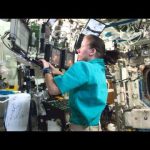
Expedition 24: Life in Space
Follow Expedition 24 crewmembers Aleksandr Skvortsov, Mikhail Korniyenko, Tracy Caldwell Dyson, Fyodor Yurchikhin, Shannon Walker, and Doug “Wheels” Wheelock as they live and work aboard the International Space Station. The music of Five for Fighting provides the backdrop for this compilation of images taken before, during, and after the mission.
-
ESA Euronews: Alla ricerca delle origini
Tredici miliardi e settecento milioni di anni fa nasceva l’Universo. Si tratta del Big Bang. Cos’è? Esisteva qualcosa prima? A quest’interrogativo si comincia a dare delle risposte grazie alla missione spaziale Planck.
-
ESA Euronews: Searching for the origins
The universe was born 13.7 billion years ago with the Big Bang. But what is the Big Bang and what was there before?
Scientists are starting to get an answer thanks to the time-travelling Planck mission. -

NASA Briefs Media on Comet Flyby
News conference held Feb. 15 following the flyby of comet Tempel 1 by the Stardust-NExT spacecraft on Valentine’s Day, Feb. 14. The spacecraft’s closest approach was a distance of 112 miles. Participants are: Ed Weiler, NASA’s associate administrator, Science Mission Directorate, Washington; Joe Veverka, Stardust-NExT principal investigator, Cornell University; Tim Larson, Stardust-NExT project manager, NASA’s Jet Propulsion Laboratory, Pasadena, Calif.; Don Brownlee, Stardust-NExT co-investigator, University of Washington, Seattle; and Pete Schultz, Stardust-NExT co-investigator, Brown University.
-
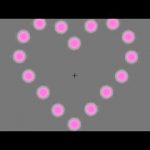
Optical Illusion Heart – Sick Science! #022
Do you love Optical Illusions? Try this cool experiment out and compare results with your friends!
Want more experiments like this? Check out http://www.stevespanglerscience.com/product/fire-bubbles-exploding-toothpaste-book
Sick Science™ is a trademark of Steve Spangler, inc.
© 2011 Steve Spangler Science all rights reserved
-
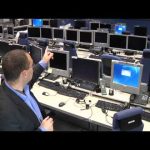
ATVCC tour with Kris Capelle
A personal guided tour and explanation of the layout and functioning of the various control rooms at ESA’s ATV Control Centre, located at the CNES establishment at Toulouse, France. ESA’s Kris Capelle is the lead Mission Director overseeing all ATV flight operations.
-
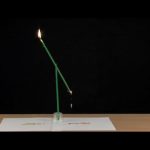
Candle Seesaw – Sick Science! #021
Recently, the scientists at Spangler Labs had a day where they recollected their fond memories of elementary school. Some thought back to their favorite science or math class, but Steve was excited about the playground equipment. He loved the monkey bars, the swings, and even loved to play tetherball.
But, he recalled, his favorite thing to do on the playground was seesaw. Steve’s memories even included a daredevil stunt where he seesawed while it was on fire. He was a regular elementary Evil Knievel. And then it hit him…what if he could use some amazing science principles to make a magic seesaw?
Want more experiments like this? Check out http://www.stevespanglerscience.com/product/naked-eggs-and-flying-potatoes
Sick Science™ is a trademark of Steve Spangler, inc.
© 2011 Steve Spangler Science all rights reserved
-
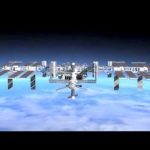
ATV-2 – A key ESA contribution to the ISS
In recent weeks several space freighters, the Russian Progress and Japanese HTV, have arrived at the International Space Station. But the most important logistics spacecraft for the ISS is Europe’s Automated Transfer Vehicle. The ATV-2 called Johannes Kepler is to be launched from Kourou in just over a week and will be docking at the orbital complex on February 23rd with over 7 tonnes of cargo.
-
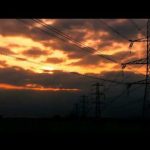
NASA Mission Sheds New Light on Full Sun
For the first time, NASA’s Solar Terrestrial Relations Observatory, or STEREO, spacecraft, has provided a view of the entire sun, including its far side. Scientists can now gain a better understanding of the dynamic nature of our star and give earlier predictions of space weather events that can impact our technological infrastructure.
-
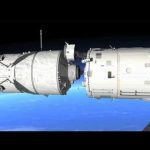
ATV-2 mission profile with ESA Mission Director Kris Capelle
ESA’s lead ATV-2 Mission Director Kris Capelle talks us through all phases of this complex mission – from launch preparation and lift-off to rendezvous and docking with the ISS through the attached phase, undocking and reentry.
-
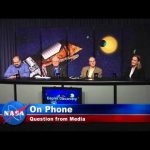
NASA’s Kepler Finds Its First “Goldilocks” Candidates
NASA’s Kepler Mission has discovered 54 planet candidates that orbit in the habitable zone of their host star; this so-called “Goldilocks” region is “not too hot or too cold, but just right” for the possible existence of liquid water on the surface of a planet. Four of those candidates are near Earth-sized planets in orbit around small, cool stars. The findings, discussed at a news conference held Feb. 2 at NASA Headquarters in Washington, are based on data collected by the space telescope between May and September, 2009. Ground-based observatories will be used this spring and summer to help determine if these candidates can be validated as planets.
-
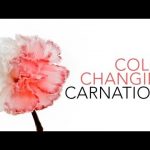
Color Changing Carnations – Sick Science! #020
Where does the water go when a plant is watered? With this experiment, children can discover for themselves how essential the functions of roots and stems are to plant growth. As the colored water is absorbed, students will be able to see how the water is absorbed into the plant and the petals of the carnation change color.
Want more experiments like this? Check out http://www.stevespanglerscience.com/product/fire-bubbles-exploding-toothpaste-book
Sick Science™ is a trademark of Steve Spangler, inc.
© 2011 Steve Spangler Science all rights reserved
-
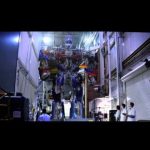
NASA and OPTIMUS PRIME Team Up
NASA and OPTIMUS PRIME have teamed up to educate! Kids everywhere created videos showing how NASA technology is truly more than meets the eye, and now you can vote on your favorite! Visit http://ipp.gsfc.nasa.gov/optimus/ to learn more. OPTIMUS PRIME is a trademark of Hasbro and is used with permission. © 2011 Hasbro. All Rights Reserved.