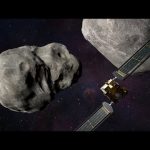
On Sept. 26, 2022, NASA’s Double Asteroid Redirection Test (DART) spacecraft will intentionally crash into a small asteroid, Dimorphos, in a first-ever test of planetary defense, should we ever need it. The #DARTMission’s target asteroid is NOT a threat to Earth before, during or after the impact event.
The wavelength combination used to create this image of the island of Marajó in Brazil is particularly useful for identifying different vegetation types and helps us to distinguish it very clearly from inland water bodies: water appears dark blue, while vegetation appears in a variety of bright colours.
We are Europe’s gateway to space. Our mission is to shape the development of Europe’s space capability and ensure that investment in space continues to deliver benefits to the citizens of Europe and the world. Check out https://www.esa.int/ to get up to speed on everything space related.
A critical preflight test for Artemis I, the first trip to space for a NASA astronaut, and new Webb Space Telescope images of neighbors in our solar system … a few of the stories to tell you about – This Week at NASA!
Producer: Andre Valentine Editor: Shane Apple Music: Universal Production Music Credit: NASA
In this week’s edition of the Earth from Space programme, the Copernicus Sentinel-2 mission takes us over Lake Trasimeno, the fourth largest lake in Italy.
We are Europe’s gateway to space. Our mission is to shape the development of Europe’s space capability and ensure that investment in space continues to deliver benefits to the citizens of Europe and the world. Check out https://www.esa.int/ to get up to speed on everything space related.
Meet Hera, our very own asteroid detective. Together with two small CubeSats – Milani the rock decoder and Juventas the radar visionary – Hera is off on an adventure to explore Didymos, a double asteroid system that is typical of the thousands that pose an impact risk to planet Earth.
Suitable for space enthusiasts young and old, this episode of ‘The incredible adventures of the Hera mission’ is all about craters. What are they? Why are they important? Why is NASA’s DART spacecraft about to collide with an asteroid to create the Solar System’s newest – and perhaps most important – crater? And why do we need Hera to unveil the secrets of this crater?
We are Europe’s gateway to space. Our mission is to shape the development of Europe’s space capability and ensure that investment in space continues to deliver benefits to the citizens of Europe and the world. Check out https://www.esa.int/ to get up to speed on everything space related.
These are our explorers. They’re the people who will get us to the Moon, collect Moon rocks, deliver them to Earth safely, and ensure that we can study them for years to come. On episode one of “NASA Explorers: Artemis Generation,” meet astronaut Jessica Watkins, engineer Adam Naids, Moon rock curator Julie Mitchell, and astrobiologist Jose Aponte. They each had a different path to NASA, from conducting hazardous kitchen chemistry experiments in Lima, Peru, to exploring the Louisiana Bayou, to dissecting a cow’s eye in a science program in Colorado. Each person is a vital part of NASA’s goal to conduct science on the Moon’s surface.
Series Executive Producers: Katy Mersmann/Lauren Ward Season Producers: Lonnie Shekhtman/Stephanie Sipila/James Tralie/Molly Wasser
Explorers: Jose Aponte/Natalie Curran/Julie Mitchell/Adam Naids/Noah Petro/Kelsey Young/Jessica Watkins
Music: a. “Blackbird” by Magnum Opus b. “Optimistic Attitude 1” by Joel Goodman and Vicente Julio Ortiz Gimeno c. “By the Moonlit Lake” by Mark Choi d. “Beside You” by Dominic Marsh and Giovanni Tria e. “Playground Intrigue” by Brice Davoli f. “Momentous” by Le Fat Club and Olivier Grim
Most striking about Webb’s new image is the crisp view of the planet’s dynamic rings — some of which haven’t been seen at all, let alone with this clarity, since the Voyager 2 flyby in 1989. In addition to several bright narrow rings, the Webb images clearly show Neptune’s fainter dust bands. Webb’s extremely stable and precise image quality also permits these very faint rings to be detected so close to Neptune.
We are Europe’s gateway to space. Our mission is to shape the development of Europe’s space capability and ensure that investment in space continues to deliver benefits to the citizens of Europe and the world. Check out https://www.esa.int/ to get up to speed on everything space related.
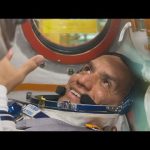
NASA astronaut Frank Rubio, a member of NASA’s 2017 astronaut candidate class, is set to begin his first mission to space this Wednesday, Sept. 21. Rubio will lift off from the Baikonur Cosmodrome in Kazakhstan aboard the Soyuz MS-22 spacecraft, alongside Roscosmos cosmonauts Sergey Prokopyev and Dmitri Petelin.
MS-22 is scheduled to lift off at 9:54 a.m. EDT (13:54 UTC) Wednesday, Sept. 21; NASA TV coverage will begin at 9 a.m. After a two-orbit, three-hour journey, the Soyuz will dock to the International Space Station at 1:11 p.m. Rubio, Prokopyev, and Petelin are scheduled to spend six months aboard the station.
ESA astronauts Thomas Pesquet, Luca Parmitano, Alexander Gerst, and Matthias Maurer, together with the ESA Director General, will answer questions from journalists from the IAC in Paris. Andreas Mogensen will join remotely and Samantha Cristoforetti will connect directly from the ISS. A live not to be missed!
We are Europe’s gateway to space. Our mission is to shape the development of Europe’s space capability and ensure that investment in space continues to deliver benefits to the citizens of Europe and the world. Check out https://www.esa.int/ to get up to speed on everything space related.
The world’s largest global space event takes place in Paris from 18 to 22 September 2022 and ESA, of course, will be there! Join us for the first live coming from the International Astronautical Congress with the ESA Director General and several Directors talking to the press. They will answer questions from journalists while focusing on ESA’s strategy, Agenda 2025 and the ambitious package that will be put forward at the ESA Ministerial in November.
We are Europe’s gateway to space. Our mission is to shape the development of Europe’s space capability and ensure that investment in space continues to deliver benefits to the citizens of Europe and the world. Check out https://www.esa.int/ to get up to speed on everything space related.
We are Europe’s gateway to space. Our mission is to shape the development of Europe’s space capability and ensure that investment in space continues to deliver benefits to the citizens of Europe and the world. Check out https://www.esa.int/ to get up to speed on everything space related.
Commemorating an historic event for human spaceflight, an update on plans for Artemis I, and what our Perseverance rover is up to on Mars … a few of the stories to tell you about – This Week at NASA!
Producer: Andre Valentine Editor: Shane Apple Music: Universal Production Music Credit: NASA
ESA astronauts Thomas Pesquet, Luca Parmitano, Alexander Gerst, and Matthias Maurer, together with the ESA Director General, will answer questions from journalists from the IAC in Paris. Andreas Mogensen will join remotely and Samantha Cristoforetti will connect directly from the ISS. A live not to be missed!
We are Europe’s gateway to space. Our mission is to shape the development of Europe’s space capability and ensure that investment in space continues to deliver benefits to the citizens of Europe and the world. Check out https://www.esa.int/ to get up to speed on everything space related.
This week’s edition of the Earth from Space programme features a Copernicus Sentinel-3 image showing the scale of Britain’s heatwave as it baked in extreme temperatures in August.
We are Europe’s gateway to space. Our mission is to shape the development of Europe’s space capability and ensure that investment in space continues to deliver benefits to the citizens of Europe and the world. Check out https://www.esa.int/ to get up to speed on everything space related.
NASA will host a briefing to provide highlights from the first year-and-a-half of the Perseverance rover’s exploration of Mars.
The rover landed in Mars’ Jezero Crater in February 2021 and is collecting samples of rock and other materials from the Martian surface. Perseverance is investigating the sediment-rich ancient river delta in the Red Planet’s Jezero Crater.
Speakers: • Lori Glaze, director of NASA’s Planetary Science Division, NASA Headquarters • Laurie Leshin, JPL director • Rick Welch, Perseverance deputy project manager, JPL • Ken Farley, Perseverance project scientist, Caltech • Sunanda Sharma, Scanning Habitable Environments with Raman and Luminescence for Organics and Chemicals (SHERLOC) scientist, JPL • David Shuster, Perseverance returned sample scientist, University of California, Berkeley
On 15 September 2022, ESA astronaut Samantha Cristoforetti conducted an in-flight call with the European Parliament from the International Space Station. In conversation with President Metsola and ESA Director General Josef Aschbacher, she provided insights into the importance Europe’s presence in space, as well as the scientific and technological progress enabled by its activities. The three also touched on Samantha’s upcoming commandership, life on the Station, and the pressing issue of space debris.
We are Europe’s gateway to space. Our mission is to shape the development of Europe’s space capability and ensure that investment in space continues to deliver benefits to the citizens of Europe and the world. Check out https://www.esa.int/ to get up to speed on everything space related.
Solar Orbiter has made the first ever remote sensing observation consistent with a magnetic phenomenon called a solar switchback – sudden and large deflections of the solar wind’s magnetic field. The new observation provides a full view of the structure, in this case confirming it has an S-shaped character, as predicted. Furthermore, the global perspective provided by the Solar Orbiter data indicates that these rapidly changing magnetic fields can have their origin near the surface of the Sun.
We are Europe’s gateway to space. Our mission is to shape the development of Europe’s space capability and ensure that investment in space continues to deliver benefits to the citizens of Europe and the world. Check out https://www.esa.int/ to get up to speed on everything space related.
Join leaders from NASA and Rice University as we commemorate President John F. Kennedy’s historic “We choose to go to the Moon…” speech. That address, before a crowd of 35,000 on Sept. 12, 1962, set NASA and our country on the path to explore worlds beyond our own.
Participants will include:
NASA Administrator Bill Nelson NASA Associate Administrator Bob Cabana NASA’s Johnson Space Center Director Vanessa Wyche NASA astronaut Shannon Walker Rice University President Reggie DesRoches Rice Space Institute Director Dr. David Alexander, Rice Space Institute (master of ceremonies) Retired ESA (European Space Agency) astronaut Jean-Loup Chrétien Avalon Hogans, Houston’s youth poet laureate
It has been an exciting and busy summer for the European Space Agency, with development and testing of its new Ariane 6 launcher. At Europe’s spaceport in, French Guiana, a test model of the launcher’s central core was assembled for the first time. Ariane 6 is the first Ariane rocket to be assembled horizontally, which is simpler and less costly than more traditional vertical assembly. Then, the rocket was moved to its launchpad and placed upright in the massive mobile gantry for combined tests, to validate the compatibility between all components of the complete launch system. Soon more testing will be done on Ariane 6’s upper stage at a purpose-built @DLRde facility in Lampoldshausen, Germany.
★ Subscribe: http://bit.ly/ESAsubscribe and click twice on the bell button to receive our notifications.
We are Europe’s gateway to space. Our mission is to shape the development of Europe’s space capability and ensure that investment in space continues to deliver benefits to the citizens of Europe and the world. Check out https://www.esa.int/ to get up to speed on everything space related.
We are Europe’s gateway to space. Our mission is to shape the development of Europe’s space capability and ensure that investment in space continues to deliver benefits to the citizens of Europe and the world. Check out https://www.esa.int/ to get up to speed on everything space related.
Teams review options for the next Artemis I launch attempt, the National Space Council meets in Houston, and Webb captures a new image of a cosmic tarantula … a few of the stories to tell you about – This Week at NASA!
Vice President Kamala Harris chairs the the National Space Council meeting at NASA’s Johnson Space Center in Houston. NASA Administrator Bill Nelson will deliver remarks.
The council advises the president on America’s space policy and strategy, and reviews the nation’s long-range goals for space activities.
For more than 50 years, NASA has been collecting and providing data about Earth’s land, water, ice and atmosphere. Now, a new era of Earth Science has begun. NASA will launch a fleet of state-of-the-art satellites forming the Earth System Observatory, which will create a comprehensive 4D view of Earth like never before. NASA, working with federal partners, will equip decision makers with the information they need to mitigate, adapt and respond to climate change through the new Earth Information Center. A new satellite observatory in the sky and an information center here on Earth, protecting our planet for the next generation.
The Small Magellanic Cloud has a simpler chemical composition than the Milky Way, making it similar to the galaxies found in the younger Universe, when heavier elements were more scarce. Because of this, the stars in the Small Magellanic Cloud burn hotter and so run out of their fuel faster than in our Milky Way. Though a proxy for the early universe, at 200 000 light-years away the Small Magellanic Cloud is also one of our closest galactic neighbours.
We are Europe’s gateway to space. Our mission is to shape the development of Europe’s space capability and ensure that investment in space continues to deliver benefits to the citizens of Europe and the world. Check out https://www.esa.int/ to get up to speed on everything space related.
NASA’s Double Asteroid Redirection Test, also known as DART, is humanity’s first attempt to change the motion of a non-hazardous asteroid in space by intentionally crashing a spacecraft into it. After impact, ground-based observatories across the globe will turn their eyes to the skies to determine if this planetary defense test was successful. In this video, NASA visits Lowell Observatory to learn more about how astronomers have been tracking this double asteroid over the course of many years, and how they will document the orbital change post-impact.
DART is a spacecraft designed to impact an asteroid as a test of technology. DART’s target asteroid is NOT a threat to Earth. This asteroid system is a perfect testing ground to see if intentionally crashing a spacecraft into an asteroid is an effective way to change its course, should a hazardous asteroid be discovered in the future.
Thousands of never-before-seen young stars are spotted in a stellar nursery called 30 Doradus, captured by the @NASA/ESA/@Canadian Space Agency James Webb Space Telescope. Nicknamed the Tarantula Nebula for the appearance of its dusty filaments in previous telescope images, the nebula has long been a favourite for astronomers studying star formation. In addition to young stars, Webb reveals distant background galaxies, as well as the detailed structure and composition of the nebula’s gas and dust.
We are Europe’s gateway to space. Our mission is to shape the development of Europe’s space capability and ensure that investment in space continues to deliver benefits to the citizens of Europe and the world. Check out https://www.esa.int/ to get up to speed on everything space related.
It’s not rockets and satellites that make NASA soar. It’s people. On season 5 of #NASAExplorers, “Artemis Generation,” meet the scientists and engineers who are studying Moon rocks, building tools, working aboard NASA’s International Space Station, and training astronauts in preparation for landing humans on the surface of the Moon through NASA’s Artemis missions. #S5E0
NASA leads provide a news update on the Sept. 3 launch attempt of the #Artemis I flight test.
The launch director waived off the launch at approximately 11:17 a.m. EDT (15:17 UTC). Teams encountered a liquid hydrogen leak while loading the propellant into the core stage of the Space Launch System rocket. Engineers are continuing to gather additional data. Briefing participants include:
NASA Administrator Bill Nelson Jim Free, associate administrator for Exploration Systems Development Mission Directorate, NASA Headquarters Mike Sarafin, Artemis mission manager, NASA Headquarters
Artemis I is the first integrated flight test of the Space Launch System (SLS) and Orion spacecraft that will return humanity to the Moon. As NASA’s most powerful rocket ever built, SLS will launch the uncrewed Orion spacecraft on a six-to-eight-week mission around the Moon and back to Earth. Orion will travel 280,000 miles (450,000 km) from Earth and 40,000 miles (64,000 km) beyond the far side of the Moon, carrying science and technology payloads to expand our understanding of lunar science, technology developments, and deep space radiation.
We are Europe’s gateway to space. Our mission is to shape the development of Europe’s space capability and ensure that investment in space continues to deliver benefits to the citizens of Europe and the world. Check out https://www.esa.int/ to get up to speed on everything space related.
An update on our Artemis I Moon mission, a first for our James Webb Space Telescope, and a new target launch date for the next commercial crew mission … a few of the stories to tell you about – This Week at NASA!
At 1 p.m. EDT on Monday, Aug. 29, NASA leaders gave an update on the launch of the Artemis I flight test. Following tanking operations, engineers were troubleshooting an issue conditioning one of the RS-25 engines (engine 3) on the bottom of the rocket’s core stage. All engines must reach a proper temperature range before they can be started. Teams are poring through the data and will set a new launch date and time.
Artemis I is the first integrated flight test of the Space Launch System (SLS) and Orion spacecraft that will return humanity to the Moon. As NASA’s most powerful rocket ever built, SLS will launch the uncrewed Orion spacecraft on a six-to-eight-week mission around the Moon and back to Earth. Orion will travel 280,000 miles (450,000 km) from Earth and 40,000 miles (64,000 km) beyond the far side of the Moon, carrying science and technology payloads to expand our understanding of lunar science, technology developments, and deep space radiation.
New images of the spectacular Phantom Galaxy, M74, showcase the power of space observatories working together in multiple wavelengths. In this case, data from the @NASA / ESA / @canadianspaceagency James Webb Space Telescope and the NASA/ESA Hubble Space Telescope compliment each other to provide a comprehensive view of the galaxy.
We are Europe’s gateway to space. Our mission is to shape the development of Europe’s space capability and ensure that investment in space continues to deliver benefits to the citizens of Europe and the world. Check out https://www.esa.int/ to get up to speed on everything space related.
Administrator Bill Nelson speaks about the Artemis I flight test. The launch director halted today’s Artemis I launch attempt at approximately 8:34 a.m. EDT. The Space Launch System rocket and Orion spacecraft remain in a safe and stable configuration.
For the latest updates about Artemis, visit: blogs.nasa.gov/artemis
The European Service Module is ESA’s contribution to @NASA’s Orion spacecraft that will send astronauts to the Moon and beyond. It provides electricity, water, oxygen and nitrogen as well as keeping the spacecraft at the right temperature and on course.
We are Europe’s gateway to space. Our mission is to shape the development of Europe’s space capability and ensure that investment in space continues to deliver benefits to the citizens of Europe and the world. Check out https://www.esa.int/ to get up to speed on everything space related.
“Best day of my whole life. Ever.” Watch the reactions of a group of students, joined by NASA Administrator Bill Nelson and NASA Associate Administrator Bob Cabana, who hopped on a tour bus at Kennedy Space Center for an opportunity of a lifetime to view the Artemis I Space Launch System rocket and Orion spacecraft in the Vehicle Assembly Building’s High Bay 3.
#Artemis I is scheduled to launch no earlier than Aug. 29 at 8:33 a.m. EDT from the center’s Launch Complex 39B on a flight test around the Moon and back to Earth.
Song Credits: Existence from Gothic Storm The Artemis Generation: Exploration, Discovery and the Unknowns, written by Doug Wallace and performed by the Cooper Middle School Band Percussion Section
We are Europe’s gateway to space. Our mission is to shape the development of Europe’s space capability and ensure that investment in space continues to deliver benefits to the citizens of Europe and the world. Check out https://www.esa.int/ to get up to speed on everything space related.
Our Artemis I flight test is “go for launch,” the first deep-space long-duration biology test, and the Webb Space Telescope captures new images of Jupiter … a few of the stories to tell you about – This Week at NASA!
Before our Space Launch System (SLS) rocket and Orion spacecraft can launch our nation into a new era of spaceflight, the duo must first undergo a wet dress rehearsal at the launch pad prior to liftoff.
Watch SLS and Orion continue on their path to the pad as they travel to Kennedy Space Center’s Launch Pad 39B for a full countdown rehearsal – an operation involving hundreds of engineers stationed all across the nation.
Credits: Writer: Danielle Sempsrott Editor: Francisco Martin Producers: John Sackman, Michael Justice & Madison Tuttle Music courtesy of Gothic Storm Music Credit: NASA
JoAnn Morgan, former Apollo 11 engineer, expresses her excitement for Artemis I as launch day gets closer for NASA’s Space Launch System and Orion spacecraft. Morgan was the only woman working in the control room during launch of Apollo 11 to the Moon in 1969. She notes that more women now are leaders and contributors to NASA’s mission.
#Artemis I will launch no earlier than Aug. 29, 2022, at 8:33 a.m. EDT (12:33 UTC) from Kennedy Space Center’s Launch Complex 39B.
Managers and engineers from NASA’s Marshall Space Flight Center in Alabama share their thoughts about the Space Launch System (SLS) rocket for #Artemis I. Van L. Strickland, SLS program operations manager; John Blevins, SLS chief engineer; and Sharon Cobb, SLS associate program manager, commend a diverse workforce for its effort and dedication to prepare the backbone of NASA’s return to the Moon. SLS will launch the Orion spacecraft on its mission beyond the Moon and back to Earth. Artemis I is scheduled to launch no earlier than Aug. 29, 2022, at 8:33 a.m. EDT from Kennedy Space Center’s Launch Complex 39B in Florida.