Is there water on Mars? There sure is! It’s not exactly like water on Earth, but Martian H20 can tell us a lot about the planet’s distant past while potentially aiding explorers in the future. Some of the water is even trapped inside rocks! Hear from Mars scientist Eva Scheller who helped make that discovery using NASA data. Get more Martian science: www.nasa.gov/mars
Producers: Jessica Wilde & Scott Bednar Editor: David Shelton
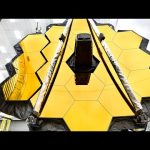
Watch the launch of the James Webb Space Telescope—the most powerful space telescope ever made. This mission is scheduled to lift off at 7:20 a.m. EST (12:20 UTC), Dec. 24, 2021, aboard an Ariane 5 rocket from Europe’s Spaceport in French Guiana.
With revolutionary technology, Webb will observe a part of space and time never seen before, providing a wealth of amazing views into an era when the very first stars and galaxies formed––over 13.5 billion years ago.
It can explore our own solar system’s residents with exquisite new detail and study the atmospheres of distant worlds. From new forming stars to devouring black holes, Webb will reveal all this and more! It’s the world’s largest and most powerful space telescope ever built.
Webb is an international collaboration between NASA, ESA (European Space Agency), and CSA (Canadian Space Agency). Thousands of engineers and hundreds of scientists worked to make Webb a reality, along with over 300 universities, organizations, and companies from 29 U.S. states and 14 countries!
Ready to #UnfoldTheUniverse? The greatest origin story of all unfurls soon. Learn more at https://nasa.gov/jwst
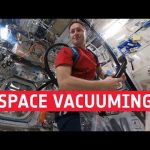
Even astronauts in orbit cannot escape housework. Join ESA astronaut Matthias Maurer as he vacuums the European Columbus and Japanese Kibo modules of the International Space Station in this 360° video.
Unlike on Earth, dust on the Space Station does not settle. Astronauts vacuum regularly to prevent floating dust from getting in their eyes and noses, causing irritation and allergic reactions. Pan to explore the different modules and follow Matthias’s work.
Matthias was launched to the International Space Station on Crew Dragon Endurance as part of Crew-3 at 02:03 GMT/03:03 CET Thursday 11 November. His ESA mission on board is known as Cosmic Kiss and will see him live and work for approximately six months in orbit.
We are Europe’s gateway to space. Our mission is to shape the development of Europe’s space capability and ensure that investment in space continues to deliver benefits to the citizens of Europe and the world. Check out https://www.esa.int/ to get up to speed on everything space related.
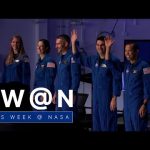
A new class of astronaut candidates, highlighting the next era of space communications, and a new x-ray satellite mission … a few of the stories to tell you about – This Week at NASA!
We are Europe’s gateway to space. Our mission is to shape the development of Europe’s space capability and ensure that investment in space continues to deliver benefits to the citizens of Europe and the world. Check out https://www.esa.int/ to get up to speed on everything space related.
We’re sending a new pair of X-ray eyes into the universe!
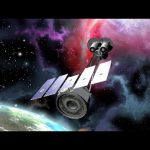
NASA’s Imaging X-ray Polarimetry Explorer (IXPE) is our first satellite dedicated to measuring the polarization of X-rays. Polarized light is made up of electric fields that vibrate in a single direction—and IXPE’s state-of-the-art X-ray vision will help scientists study the spin of black holes, the magnetic fields of pulsars, and other cosmic phenomena.
IXPE is targeted to launch at 1:00 a.m. EST, Dec. 9 (06:00 UTC), aboard a SpaceX Falcon 9 rocket from NASA’s Kennedy Space Center in Florida.
Are there oceans on other worlds? Yes! Earth is not alone. When you look deeper into our solar system, there are worlds we suspect have oceans hidden beneath their icy surfaces. NASA scientist Lucas Paganini is here to tell you more. Learn more about ocean worlds: https://go.nasa.gov/3rD0zlO
Producers: Jessica Wilde & Scott Bednar Editor: Matthew Schara
By studying X-rays in deep space, we can learn about some of the most violent and extreme objects in the universe, such as black holes and the remains of stars that have exploded. NASA’s Imaging X-Ray Polarimetry Explorer, IXPE, will study these phenomena in a new way. Learn more in this episode of #EZScience, starring NASA associate administrator for science Dr. Thomas Zurbuchen and Smithsonian Under Secretary for Science and Research Dr. Ellen Stofan.
IXPE is set to launch Dec. 9 at 1:00 a.m. EST (06:00 UTC) from NASA’s Kennedy Space Center. Watch the live broadcast: https://youtu.be/JGij0x0PA_Q
The world’s next generation cosmic observatory, the James Webb Space Telescope, is due for launch on an Ariane 5 from Europe’s Spaceport in French Guiana in late December.
Developed and constructed over more than 30 years, Webb is a remarkable feat of engineering and technology – with the largest astronomical mirror ever flown in space, sophisticated new scientific instruments, and a sunshield the size of a tennis court.
Webb is an international partnership between @NASA, ESA and the @Canadian Space Agency and will reveal the Universe in a whole new light. Optimised for infrared wavelengths, its detectors will be able to look back to shortly after the very dawn of time, revealing the formation of the first galaxies, as well as study stars and planets in our own Milky Way.
We are Europe’s gateway to space. Our mission is to shape the development of Europe’s space capability and ensure that investment in space continues to deliver benefits to the citizens of Europe and the world. Check out https://www.esa.int/ to get up to speed on everything space related.
After evaluating more than 12,000 applications, we’ll introduce our 2021 astronaut candidates live at a ceremony at Ellington Field near NASA’s Johnson Space Center in Houston.
After completing training, these women and men could be eligible for a variety of flight assignments including missions on and around the Moon under Artemis.
The astronaut candidates will join NASA Administrator Bill Nelson, NASA Deputy Administrator Pam Melroy, Johnson Center Director Vanessa Wyche, and Flight Operations Director Norm Knight on stage at the event.
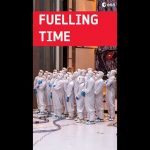
The James Webb Space Telescope, configured for flight, was moved from the cleanroom to the payload preparation facility for fuelling at Europe’s Spaceport in French Guiana on 11–12 November 2021.
Webb will be loaded with propellants before being mounted on top of the rocket and then encapsulated by the Ariane 5 fairing.
Webb will be the largest, most powerful telescope ever launched into space. As part of an international collaboration agreement, ESA is providing the telescope’s launch service using the Ariane 5 launch vehicle. Working with partners, ESA was responsible for the development and qualification of Ariane 5 adaptations for the Webb mission and for the procurement of the launch service by Arianespace.
Webb is an international partnership between @NASA , ESA and the @Canadian Space Agency.
We are Europe’s gateway to space. Our mission is to shape the development of Europe’s space capability and ensure that investment in space continues to deliver benefits to the citizens of Europe and the world. Check out https://www.esa.int/ to get up to speed on everything space related.
NASA celebrates the life and career of Nichelle Nichols, famous for her role of Lieutenant Uhura on Star Trek, as she retires from public life.
Not only did Nichols portray a character that was an incredible role model, but in 1977, she also partnered with NASA to recruit minority and female personnel for the space agency’s shuttle program.
Nichols symbolized to so many what was possible and inspired young minds to pursue science, technology, engineering, and mathematics careers.
Video Producer: Sonnet Apple Music: Universal Production Music
Explore the International Space Station’s Cupola module in 360 degrees while ESA astronaut Matthias Maurer lifts weights in weightlessness. This 360 timelapse video was shot over 53 minutes, at a rate one frame every two seconds, as Matthias completed a workout on the Advanced Resistive Exercise Device (ARED).
Pan to watch the world go by as the Station orbits Earth at around 28 000 km/h, then see how Matthias keeps his muscles and bones healthy for a safe return to Earth.
Exercise is an important part of an astronaut’s daily routine. It not only keeps them fit and ready for demanding tasks like a spacewalk, but it also helps to combat bone and muscle loss caused by a prolonged stay in orbit. ARED is one of several exercise devices astronauts use on Station. They also have a treadmill called T2 and an exercycle known as CEVIS.
Matthias was launched to the International Space Station on Crew Dragon Endurance as part of Crew-3 at 02:03 GMT/03:03 CET Thursday 11 November. His ESA mission on board is known as Cosmic Kiss and will see him live and work for approximately six months in orbit.
We are Europe’s gateway to space. Our mission is to shape the development of Europe’s space capability and ensure that investment in space continues to deliver benefits to the citizens of Europe and the world. Check out https://www.esa.int/ to get up to speed on everything space related.
Replacing a space station communications antenna, another round of testing for our lunar roving robot, and discussing space policy and priorities … a few of the stories to tell you about – This Week at NASA!
With Artemis, NASA is going back to the Moon. And we want you to come along!
You Are Going, illustrated by former NASA intern Shane Tolentino, shares a glimpse into future Artemis missions. Learn all about the elements that will help make Artemis possible: the powerful Space Launch System rocket, the Orion spacecraft, the Gateway, and so much more.
In this story, NASA invites you—a member of the Artemis Generation—to feel connected to each Artemis mission and discover all of the exciting possibilities of going to space.
So, what are you waiting for? You Are Going!
Get your digital copy at: www.nasa.gov/youaregoing
Narration: Victor Glover, Mike Hopkins, Shannon Walker, Soichi Noguchi
We are Europe’s gateway to space. Our mission is to shape the development of Europe’s space capability and ensure that investment in space continues to deliver benefits to the citizens of Europe and the world. Check out https://www.esa.int/ to get up to speed on everything space related.
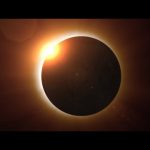
Weather permitting, NASA TV will air a view of the Dec. 4, 2021, total solar eclipse from Union Glacier, Antarctica. The stream will start at 1:30 a.m. EST (06:30 UTC) and end at 3:37 a.m. EST (08:47 UTC). Totality begins at 2:44 a.m. EST (07:44 UTC).
This stream is provided courtesy of Theo Boris and Christian Lockwood of the JM Pasachoff Antarctic Expedition.
Watch NASA astronauts Kayla Barron and Thomas Marshburn venture outside the International Space Station on Dec. 2 to replace a faulty antenna system. The antenna recently lost its ability to transmit low-rate voice communications and data to flight controllers in mission control, although it has had a limited impact on operations. The two astronauts will replace it with a spare.
The spacewalkers are expected to turn their spacesuits on to battery power at about 7:10 a.m. EST for an excursion slated to last about 6.5 hours. Marshburn will serve as extravehicular crew member 1 (EV 1), wearing a spacesuit with red stripes, and Barron will be extravehicular crew member 2 (EV 2), wearing a spacesuit with no stripes. European Space Agency astronaut Matthias Maurer will provide support from inside the orbiting laboratory, maneuvering the Canadarm2 robotic arm that will carry Marshburn. This will be the fifth spacewalk for Marshburn, and the first for Barron.
What’s it like landing on Mars? Tough! But every time we land, we learn more.
When our Perseverance Mars rover descended toward the Red Planet, it was decked out with temperature and pressure sensors that collected critical data about entry and landing conditions. NASA engineer Alex Scammell tells us more.
Watch the liftoff of our Laser Communications Relay Demonstration (LCRD) from Cape Canaveral Space Force Station in Florida. The two-hour launch window opens Dec. 5, 2021 at 4:04 a.m. EST.
Laser communications offer data rates higher than traditional radio frequency systems, allowing more data per transmission. Once in orbit, LCRD will demonstrate the benefits of using infrared lasers to communicate information from space, including reduced size, weight, and power requirements for a communications system on a spacecraft. A smaller size means more room for science instruments. Less weight means a less expensive launch. Less power means less drain on the spacecraft’s batteries. All of this enables further exploration.
LCRD is a NASA payload aboard the Department of Defense’s Space Test Program Satellite-6 (STPSat-6). STPSat-6, part of the Space Test Program 3 (STP-3) mission, will launch on a United Launch Alliance Atlas V 551 rocket from the Cape Canaveral Space Force Station in Florida. STP is operated by the United States Space Force’s Space Systems Command.
Soon another pair of Galileo satellites will be launched on top of a Soyuz from Europe spaceport in French Guiana. These satellites are the first of the so-called ‘Batch 3’, comprising of 12 additional first-generation Galileo satellites commissioned in 2017 to bring the constellation to full operational capability. They will be used to further expand the constellation up to 38 satellites and act as backups and spares for satellites that reach their end-of-life. This 11th Galileo launch also marks the 10 year anniversary of the first launch of the Galileo operational satellites and the start of the construction of the constellation. Ten years later Galileo is the most accurate satellite navigation system in the world and available on every recent smartphone and device. It is also two decades since satellite navigation was first introduced as a completely new activity in the European space sector.
Meanwhile ESA continues to ensure the future of the Galileo programme and European expertise in satellite navigation. For Galileo ESA has already commissioned a second generation of more powerful and flexible navigation satellites while new services are being developed to meet market demand.
★ Subscribe: http://bit.ly/ESAsubscribe and click twice on the bell button to receive our notifications.
We are Europe’s gateway to space. Our mission is to shape the development of Europe’s space capability and ensure that investment in space continues to deliver benefits to the citizens of Europe and the world. Check out https://www.esa.int/ to get up to speed on everything space related.
The launch of our first planetary defense test mission, a new docking module for the space station, and shielding the Orion spacecraft from the heat … a few of the stories to tell you about – This Week at NASA!
Asteroids, comets, and meteors: what’s the difference? These space rocks each have their own unique attributes. But differences aside, these fascinating objects are all worthy of study. Just ask @NASA Jet Propulsion Laboratory scientist Ryan Park and he’ll agree.
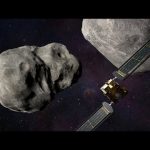
What questions do you have about NASA’s #DARTMission? Join our experts Tuesday, Nov. 23 at 4 p.m. EST. NASA’s Double Asteroid Redirection Test (DART) launches soon on a journey to become the world’s first #PlanetaryDefense test. The spacecraft will intentionally crash itself into an asteroid to see if it can move its motion in space. If it does, this could be proved as a viable way to deflect a threatening asteroid in the future, should one be discovered.
DART is a spacecraft designed to impact an asteroid as a test of technology. DART’s target asteroid is NOT a threat to Earth. This asteroid system is a perfect testing ground to see if intentionally crashing a spacecraft into an asteroid is an effective way to change its course, should an Earth-threatening asteroid be discovered in the future.
Meet the experts: Dr. Lori Glaze is the Director for NASA’s Planetary Science Missions. Her favorite part about her job is that she gets to learn something new every day. “The solar system is packed with mysteries, and we have an amazing collection of missions that are working together every day to unlock those mysteries.” Outside of work, Dr. Glaze enjoys spending time outdoors with her family and listening to music.
Dr. Nancy Chabot is the DART Coordination Lead at Johns Hopkins University Applied Physics Laboratory. Her favorite part about her job is working with a team to accomplish more than any one person could do on their own. Outside of work, Dr. Chabot has been learning to cook new recipes.
Lisa Wu is a Mechanical Engineer at Johns Hopkins University Applied Physics Laboratory. Her favorite part of her job is that she gets to work with space flight hardware every day. She is most looking forward to not only the science we’ll learn from the DART impact, but also demonstrating the new technologies onboard the spacecraft. In her free time, Lisa has been figure skating.
Stephanie L. Smith is the social media lead at NASA headquarters. Her favorite part of the job is using pop culture and plain English to make science and technology meaningful and relatable to as many people as possible. When she’s not hosting conversations about smacking into space rocks, you’ll probably find her hiking or cooking.
Meet Hera, our very own asteroid detective. Together with two CubeSats – Milani the rock decoder and Juventas the radar visionary – Hera is off on an adventure to explore Didymos, a double asteroid system that is typical of the thousands that pose an impact risk to planet Earth.
Suitable for kids and adults alike, this episode tells the story of the discovery of asteroids, in ‘The Curious Case of the Missing Planet’. Astronomers in the 18th century were sure there was a planet in the wide gap between Mars and Jupiter – and even formed a group called the Celestial Police to find it. But eventually it became clear there was no single world out there, just lots and lots of little ones. Fast forward to today and more than a million asteroids have been discovered, and Hera will perform close-up detection on two of them.
We are Europe’s gateway to space. Our mission is to shape the development of Europe’s space capability and ensure that investment in space continues to deliver benefits to the citizens of Europe and the world. Check out https://www.esa.int/ to get up to speed on everything space related.
The space station crew is safe following a debris event, our recently returned Crew-2 astronauts discuss their mission, and what our Crew-1 astronauts did in Washington … a few of the stories to tell you about – This Week at NASA!
We are Europe’s gateway to space. Our mission is to shape the development of Europe’s space capability and ensure that investment in space continues to deliver benefits to the citizens of Europe and the world. Check out https://www.esa.int/ to get up to speed on everything space related.
On Nov. 24, 2021, our Double Asteroid Redirection Test (DART) spacecraft will lift off on a ten-month journey to crash into a distant asteroid – on purpose.
As a test of NASA’s planetary defense technologies, DART will collide with and slightly change the speed of Dimorphos, a small ‘moonlet’ orbiting the asteroid Didymos. Dimorphos will be over 6 million miles away at the time of impact and does not pose a threat to Earth, either before or after DART’s collision. With nearby satellites and Earth-based telescopes, NASA and our international partners will track DART’s effect on Dimorphos and use this data to help protect Earth from future asteroid impact threats.
DART’s first launch attempt is scheduled for 1:20 a.m. EST (06:20 UTC) on Nov. 24. Launch coverage starts at 12:30 a.m. EST (05:30 UTC) on NASA TV, the NASA app, and @NASA social media. Be a part of DART’s historic launch day by using the hashtag #DARTMission.
Producer/Editor: Lacey Young Voiceover: Elena Adams, Michelle Chen, Kelly Fast, Andy Rivkin, Justyna Surowiec Music: Universal Production Music
Can we change the motion of an asteroid? Our #DARTMission is set to be the first to try! The Double Asteroid Redirection Test (DART) mission is a spacecraft designed to impact an asteroid as a test of technology to see if it can change the motion of an asteroid in space. The goal of the mission is to see if intentionally crashing a spacecraft into an asteroid is an effective way to change its course, should an Earth-threatening asteroid be discovered in the future. DART’s target is the binary near-Earth asteroid Didymos and its moonlet, which pose no threat to Earth.
This mission is targeted to launch at 1:21 a.m. EST, Nov. 24 (06:21 UTC), aboard a SpaceX Falcon 9 rocket from Vandenberg Space Force Base in California.
Learn more about the mission at: www.nasa.gov/dart
Are we really crashing a spacecraft into an asteroid? We sure are — all in the name of planetary defense. The #DARTMission is a technology test to see if an impactor could change the trajectory of an asteroid. Nancy Chabot of the Johns Hopkins University Applied Physics Laboratory tells us more.
Science fiction meets science fact – Netflix’s upcoming movie “Don’t Look Up” is a fictional story about three scientists warning the planet about a doomsday comet. NASA’s upcoming DART mission is a real spacecraft that will intentionally crash itself into an asteroid as a test to see if this could be a viable way to move its motion in space. Hear from movie director Adam McKay as he compares the two.
DART is a spacecraft designed to impact an asteroid as a test of technology. DART’s target asteroid is NOT a threat to Earth. This asteroid system is a perfect testing ground to see if intentionally crashing a spacecraft into an asteroid is an effective way to change its course, should an Earth-threatening asteroid be discovered in the future.
NASA’s #DARTMission is crashing a spacecraft into an asteroid to try to change its motion in space. But how will we know if this test worked? That’s where Johns Hopkins APL scientist Andy Rivkin comes in. He’ll be studying the precise change in the asteroid’s motion right here from Earth. Have questions about DART? Submit them using #askNASA and tune in on Monday, Nov. 15 at 4:30 pm ET for a LIVE Q&A with Andy.
Satellites observe the Earth using a range of wavelengths on the electromagnetic spectrum. Different wavelengths allow us to probe different aspects of Earth’s land, atmosphere and ocean. By sampling the electromagnetic spectrum at multiple wavelengths, we can build a more complete picture of Earth’s complex climate system.
We are Europe’s gateway to space. Our mission is to shape the development of Europe’s space capability and ensure that investment in space continues to deliver benefits to the citizens of Europe and the world. Check out https://www.esa.int/ to get up to speed on everything space related.
Our Crew-3 mission launches to the space station, Crew-2 makes a splash at the end of its record-setting mission, and a big honor for our deputy administrator … a few of the stories to tell you about – This Week at NASA!
Producer/Writer: Andre Valentine Editor: Shane Apple Music: Universal Production Music
NASA’s DART spacecraft will intentionally crash into an asteroid to test if impacting an object is a viable way to deflect an asteroid, should a threat ever be discovered in the future. Watch as NASA astronaut Shane Kimbrough and European Space Agency astronaut Thomas Pesquet demonstrate how DART’s mission will work. Spoiler alert: it’s like a pillow fight in microgravity.
DART is a spacecraft designed to impact an asteroid as a test of technology. DART’s target asteroid is NOT a threat to Earth. This asteroid system is a perfect testing ground to see if intentionally crashing a spacecraft into an asteroid is an effective way to change its course, should an Earth-threatening asteroid be discovered in the future.
ESA astronaut Matthias Maurer and @NASA astronauts Raja Chari, Tom Marshburn and Kayla Barron liftoff to the International Space Station in the @SpaceX Crew Dragon spacecraft “Endurance”.
Collectively known as “Crew-3”, the astronauts were launched from launchpad 39A at @NASAKennedy in Florida, USA at 02:03 GMT/03:03 CET Thursday 11 November.
The spacecraft docked to the International Space Station at 00:32 CET Friday, 12 November/23:32 GMT Thursday, 11 November, marking the official start of Matthias’s first mission ‘Cosmic Kiss’.
Crew-3 will spend around six months living and working aboard the orbital outpost before returning to Earth. It is the first space mission for Matthias, who’s become the 600th human to fly to space. He chose the name “Cosmic Kiss” for his mission as a declaration of love for space.
Matthias has a background in materials science and looks forward to supporting a wide range of science and research in orbit. The work he carries out throughout his mission will contribute to the success of future space missions and help enhance life on Earth.
We are Europe’s gateway to space. Our mission is to shape the development of Europe’s space capability and ensure that investment in space continues to deliver benefits to the citizens of Europe and the world. Check out https://www.esa.int/ to get up to speed on everything space related.
The Copernicus Sentinel-2 takes us over Cancún, on the northeast coast of Mexico’s Yucatán Peninsula, in this edition of the Earth from Space programme.
We are Europe’s gateway to space. Our mission is to shape the development of Europe’s space capability and ensure that investment in space continues to deliver benefits to the citizens of Europe and the world. Check out https://www.esa.int/ to get up to speed on everything space related.
Watch the SpaceX Crew-3 astronauts arrive at the International Space Station aboard the Crew Dragon Endurance spacecraft. Kayla Barron, Raja Chari, and Thomas Marshburn of NASA, and Matthias Maurer of the European Space Agency will begin a six-month mission aboard the orbiting laboratory. Once aboard, they will join their station crewmates to conduct hundreds of scientific experiments and perform space station maintenance and upgrades. Endurance is scheduled to automatically dock to the space station at 6:32 p.m. EST (23:32 UTC).
Crew-3 lifted off from NASA’s Kennedy Space Center in Florida at 9:03 p.m. EST on Nov. 10 (02:03 UTC Nov. 11).
Is NASA aware of any Earth-threatening asteroids? Luckily there are no known asteroid threats to Earth for at least 100 years. But that doesn’t mean we’re not looking. Asteroid expert Davide Farnocchia of our@NASA Jet Propulsion Laboratory breaks it down.