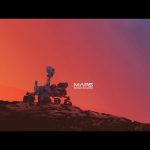
Watch an epic journey unfold on Thursday, Feb. 18 as our Perseverance rover lands on Mars. To reach the surface of the Red Planet, the rover has to survive the harrowing final phase known as Entry, Descent, and Landing.
Only then can the rover – the biggest, heaviest, cleanest, and most sophisticated six-wheeled robot ever launched into space – search Jezero Crater for signs of ancient life and collect samples that will eventually be returned to Earth.
Tune in to a live video feed of key landing activities and commentary from Mission Control at NASA’s Jet Propulsion Laboratory.
NASA celebrates Black History Month by honoring the accomplishments and contributions of African Americans across the agency. This year, NASA pays tribute to The Black Family: Representation, Identity, and Diversity, the theme for 2021. Each year during February, NASA highlights the African American community’s significant achievements, whose creativity and innovations have done much to advance science & technology and made our lives more enriched.
Video Credits: Producer/Editor: Jori Kates Writer: Jori Kates and Andre Valentine
A new source of power for the space station, targeting a second Green Run hot fire test, and another major boost for our Space Launch System rocket … a few of the stories to tell you about – This Week at NASA!
The Copernicus Sentinel-2 mission, takes us over the algal blooms swirling around the Pacific Ocean, just off the coast of Japan, in this edition of the Earth from Space programme.
We are Europe’s gateway to space. Our mission is to shape the development of Europe’s space capability and ensure that investment in space continues to deliver benefits to the citizens of Europe and the world. Check out https://www.esa.int/ to get up to speed on everything space related.
Behind every NASA success story are the people who make the impossible, possible. Join us as we celebrate Black History Month and the contributions of African American trailblazers and those following in their footsteps as they help NASA reach new heights for the benefit of all humankind.
From the @Airbus integration halls in Bremen, Germany, this replay of a live event shows a sneak peek of the two European Service Modules that will power astronauts to the Moon and back as part of @NASA’s Orion spacecraft.
Orion is NASA’s next exploration spacecraft to send astronauts farther into space than ever before, beyond the Moon to asteroids and even Mars.
ESA has contracted and is overseeing the development of the European Service Module, the part of the Orion spacecraft that provides air, electricity and propulsion. Much like a train engine pulls passenger carriages and supplies power, the European Service Module will power the Orion crew module to its destination and back to Earth.
The programme includes Andreas Hammer, Head of @Airbus Defence and Space Exploration showing the European Service Modules in production, ESA Director General Jan Wörner announcing future developments, a statement by ESA’s head of European Service Module programme Philippe Deloo, a statement by Airbus head of European Service Module programme Didier Radola, a Moon missions overview with ESA astronaut Alexander Gerst and ESA’s head of Space Transportation Nico Dettmann on how ESA is building Orion with industry.
★ Subscribe: http://bit.ly/ESAsubscribe and click twice on the bell button to receive our notifications.
We are Europe’s gateway to space. Our mission is to shape the development of Europe’s space capability and ensure that investment in space continues to deliver benefits to the citizens of Europe and the world. Check out https://www.esa.int/ to get up to speed on everything space related.
Apollo 14 was the eighth crewed Apollo mission and the third to land on the Moon. On January 31, 1971, Apollo 14 launched from Kennedy Space Center with a crew of commander Alan B. Shepard, command module pilot Stuart A. Roosa, and lunar module pilot Edgar D. Mitchell.
The crew experienced challenges in docking with the lunar module Antares and six attempts were required before a “hard dock” was achieved.
On February 5, 1971, Antares made the most precise landing to date in the hilly uplands of the Fra Mauro crater.
Shepard and Mitchell spent a total of 33.5 hours on the Moon and performed two extra-vehicular activities (EVAs, or “moonwalks”), totaling 9 hours and 23 minutes. During the first EVA, they deployed several science experiments. Among these was a reflector that continues to be used to measure the distance from the Earth to the Moon. They also deployed a seismometer, which detected thousands of moonquakes and helped to determine the structure of the Moon’s interior. Other instruments measured the composition of the solar wind and the Moon’s tenuous atmosphere and plasma environment. Shepard and Mitchell collected 95 pounds of lunar rock and soil samples.
The command module Kitty Hawk splashed down safely on February 9, 1971, exactly nine days and two minutes after launch. The mission duration from liftoff to splashdown was 216 hours, two minutes.
The first space station spacewalk of the new year, a new date for a commercial crew test flight, and our next landing on Mars is fast approaching … a few of the stories to tell you about – This Week at NASA!
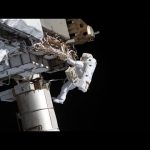
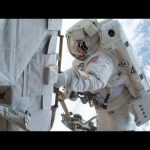
Watch two spacewalkers at work outside the International Space Station! NASA astronauts Victor Glover and Michael Hopkins will exit the orbiting lab’s Quest airlock at about 7 a.m. EST, to complete tasks including battery maintenance and installing high definition cameras.
Live coverage on NASA Television begins at 5:30 a.m.. The spacewalk is will officially begin once the duo set their spacesuits to battery power, and is scheduled to last approximately six-and-a-half hours.
The Copernicus Sentinel-2 mission, ahead of World Wetlands Day, takes us over Lake Titicaca – one of the largest lakes in South America and a designated Ramsar site of International Importance – in this edition of the Earth from Space programme.
We are Europe’s gateway to space. Our mission is to shape the development of Europe’s space capability and ensure that investment in space continues to deliver benefits to the citizens of Europe and the world. Check out https://www.esa.int/ to get up to speed on everything space related.
On Thursday, Jan. 28, wreaths were laid at Arlington National Cemetery in Virginia in memory of the fallen astronauts of Apollo 1, space shuttles Challenger and Columbia, and other members of the NASA family who lost their lives in the quest for space exploration. A limited number of senior agency officials and others from NASA Headquarters joined family members for the small family gathering on the annual Day of Remembrance.
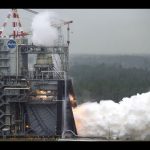
Watch an RS-25 engine that will help power our Space Launch System rocket on future missions to the Moon and Mars come alive at NASA’s Stennis Space Center.
Today’s test fire will provide data to help enhance production of new, upgraded engines for flights under our Artemis Program.
NASA remembers the crews of Apollo 1, space shuttles Challenger and Columbia during the agency’s Day of Remembrance on Jan. 28, 2021, the 35th anniversary of the Challenger accident. NASA’s Day of Remembrance honors members of the NASA family who lost their lives while furthering the cause of exploration and discovery.
After nearly 300 million miles, our Perseverance rover completes its journey to Mars on Feb. 18, 2021. To reach the surface of the Red Planet, it has to survive the harrowing final phase known as Entry, Descent, and Landing.
On Jan. 27 at 4:30 p.m. EST, find out more about the upcoming landing from the scientists and engineers on the team:
Thomas Zurbuchen, associate administrator, Science Mission Directorate, NASA Headquarters Lori Glaze, director, Planetary Science Division, NASA Headquarters Matt Wallace, Mars 2020 deputy project manager, JPL Allen Chen, Mars 2020 entry, descent, and landing lead, JPL Ken Farley, Mars 2020 project scientist, Caltech Briony Horgan, Mars 2020 science team member, Purdue University
Watch live as astronauts Victor Glover and Michael Hopkins of NASA venture outside the International Space Station on Jan. 27. The spacewalk will begin at about 7 a.m. EST and last for approximately six and a half hours. The astronauts will focus on completing cable and antenna rigging for the “Bartolomeo” science payloads platform outside the station’s ESA (European Space Agency) Columbus module. They’ll also configure a Ka-band terminal that will enable an independent, high-bandwidth communication link to European ground stations.
Hopkins will be extravehicular crew member 1 (EV 1), wearing a spacesuit with red stripes, and Glover will be extravehicular crew member 2 (EV 2), wearing a spacesuit with no stripes. This will be the third spacewalk in Hopkins’ career, and the first for Glover.
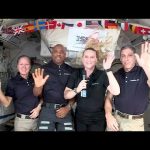
NASA astronauts Shannon Walker, Victor Glover, Kate Rubins and Mike Hopkins shared a special inaugural message while aboard the International Space Station, orbiting 200 miles above the Earth’s surface.
Download this video from NASA’s image and video library: https://images.nasa.gov/details-NASA%20Astronauts%20Share%20Their%20Inauguration%20Message%20From%20The%20Space%20Station Editor: Lacey Young
An update on the recent Green Run hot fire test, preflight preparations continue with the Orion spacecraft, and a new view of small solar structures … a few of the stories to tell you about – This Week at NASA!
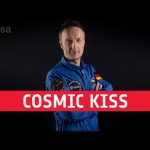
ESA astronaut Matthias Maurer is preparing for his mission to the International Space Station, scheduled for launch in late 2021. This mission is known as Cosmic Kiss.
In this video log from his current training base at NASA’s Johnson Space Center in Houston, Texas, USA, Matthias shows a space food tasting session and shares how astronauts maintain their fitness for a safe return to Earth.
Astronauts exercise for two hours a day, six days a week while on the International Space Station to combat muscle and bone loss caused by an extended stay in microgravity. Diet also plays an important role in maintaining physical and mental wellbeing.
Due to the current situation with COVID-19, all personnel are required to adhere to special safety precautions while training. These include wearing a mask – as seen in the clip.
Matthias will continue his training for Cosmic Kiss at partner agencies around the world over the next weeks and months. Stay tuned for further footage of his training and experiences.
We are Europe’s gateway to space. Our mission is to shape the development of Europe’s space capability and ensure that investment in space continues to deliver benefits to the citizens of Europe and the world. Check out https://www.esa.int/ to get up to speed on everything space related.
Did you know that in microgravity we are preparing one of the most promising fuels for the future?
Microgravity is helping to find answers and models to refine the processes needed to efficiently burn solid fuel like iron dust. Are we witnessing the rise of a new “Iron Age”? Could we use metal powders instead of petrol to fuel our cars?
Solid fuels are used for burning a match, lighting a sparkler on New Year’s Eve as well as the fuel inside the boosters of Ariane and of other rockets. But metals such as iron can also burn, in powder form, and are entirely smokeless and carbon free.
Metals could be produced using clean energy, such as from solar cells or wind turbines. That electricity is stored as chemical energy in the metal powder at energy densities that are competitive with fossil fuels. This has the potential to reduce greenhouse gasses emission globally, but a barrier to implementing this technology is the development of combustion systems that can efficiently burn the metal fuels, which requires a solid understanding of their combustion physics.
To understand the physics of metal fuel combustion, a cluster of iron powder needs to be suspended for about 30 seconds, the time needed to observe and study how a flame propagates. Researchers used sounding rockets and parabolic flights to run experiments in weightlessness and to validate existing models, yielding promising results.
The density of iron particles and the composition of gases in the combustion chamber are essential parameters, like in a petrol car engine. Microgravity allows for the study of the laws of flame propagation, to optimise parameters in industrial burner designs, and reduce impact on the environment.
These space experiments also help us understand similar phenomena, such as the spreading of contagious microbes and forest fires.
In a vote of confidence for the technique a student team at TU Eindhoven in The Netherlands worked with industrial partners to design a metal combustion facility now installed at Swinkels Family Brewers, subsidised by the Dutch province of Noord-Brabant, used to produce steam for the brewing process.
The step to space research is closer than you might think. Get involved with spaceflight research via https://www.esa.int/spaceflightAO. Find out about our commercial partnerships and opportunities in human and robotic exploration via https://www.esa.int/explorationpartners to run your research in microgravity as well.
★ Subscribe: http://bit.ly/ESAsubscribe and click twice on the bell button to receive our notifications.
We are Europe’s gateway to space. Our mission is to shape the development of Europe’s space capability and ensure that investment in space continues to deliver benefits to the citizens of Europe and the world. Check out https://www.esa.int/ to get up to speed on everything space related.
One step closer to Artemis missions to the Moon 🚀 We are targeting a two-hour test window that opens at 4 p.m. EST on Sat., Jan. 16 for the hot fire test of the Space Launch System (SLS) rocket core stage at our Stennis Space Center. The hot fire is the eighth and final test of the Green Run series, to ensure the core stage of the SLS is ready to launch #Artemis missions to the Moon. This will be the first time that all four RS-25 engines will be fired at once in order to simulate a launch, generating 1.6 million pounds of thrust.
Live coverage begins at 3:20 p.m. EST. Use the hashtag #AskNASA and your questions might be answered on air 🚀
The annual assessment of global temperatures, a first-of-its-kind undocking from the space station, and a look at what goes into the Green Run hot fire test … a few of the stories to tell you about – This Week at NASA!
A look back at Administrator Jim Bridenstine’s time at NASA and all the incredible things accomplished during his tenure. From introducing the Artemis Generation to renaming NASA headquarters after hidden figure Mary W. Jackson, there have been so many highlights to appreciate.
Producer/Editor: David Anderson Music: Universal Production Music
Tour the Ariane 6 launch complex at Europe’s Spaceport in Kourou, French Guiana.
The 8200 tonne 90 metre-high mobile gantry has platforms to enable engineers to access the vehicle for integration of the stages. This steel structure protects Ariane 6 before launch and is rolled back prior to liftoff.
At the entrance of the gantry are two mockup Ariane 6 P120C rocket boosters. These are representative of the real boosters, having the same size and mass but filled with water instead of solid propellant and used in mechanical tests.
The hydrogen and oxygen storage facilities are close by. Underground, engineers are preparing the launch support systems.
A pumping station at the reservoir will supply the water to quell the exhaust at liftoff.
Credits: CNES/ESA
★ Subscribe: http://bit.ly/ESAsubscribe and click twice on the bell button to receive our notifications.
We are Europe’s gateway to space. Our mission is to shape the development of Europe’s space capability and ensure that investment in space continues to deliver benefits to the citizens of Europe and the world. Check out https://www.esa.int/ to get up to speed on everything space related.
NASA is targeting the final test in the Green Run series, the hot fire, for Sat., Jan.16. The hot fire is the culmination of the Green Run test series, an eight-part test campaign that gradually brings the core stage of the Space Launch System (SLS) — the deep space rocket that will power the Artemis program’s human missions to the Moon — to life for the first time. All four of the stage’s RS-25 engines will be fired simultaneously for up to eight minutes to simulate the core stage’s performance during launch.
The next time this core stage will be fired is during the launch of Artemis I, the first integrated flight of SLS and Orion, and the first mission of the agency’s Artemis program.
As the world leaves behind the strange and challenging year of 2020, we look towards 2021 with a mixture of relief and expectation. And this is the same at ESA, where we look forward to a brighter and very exciting 2021. This year will see Vega-C making its maiden flight, two ESA astronauts start long-duration missions on board the International Space Station, and BepiColombo and Solar Orbiter continuing their voyages around the Solar System. Also this year, we will say farewell to our current Director General Jan Wörner as his tenure ends, while welcoming into office his successor, Josef Aschbacher.
★ Subscribe: http://bit.ly/ESAsubscribe and click twice on the bell button to receive our notifications.
We are Europe’s gateway to space. Our mission is to shape the development of Europe’s space capability and ensure that investment in space continues to deliver benefits to the citizens of Europe and the world. Check out https://www.esa.int/ to get up to speed on everything space related.
Ever wonder what it’s like to see our planet from space? NASA’s astronauts will take you on a journey to the International Space Station, exploring the life-changing experience of an orbital perspective. View Earth as you’ve never seen it before: through the eyes of an astronaut.
Sending the first Artemis mission to the Moon in preparation for human missions, landing a new rover on Mars, and launching the James Webb Space Telescope into space, expanding our ability to see deep into the universe, are just a few of the things NASA has planned for 2021.
To learn more about the missions mentioned in this video, take a deep dive into these links:
Want to know more about our solar system but don’t know where to start? We’ve got you covered. Our What You Need to Know series takes you on a tour across the solar system, exploring some of the most intriguing features about our tiny slice of the Milky Way galaxy.
From moons that hide vast liquid oceans to asteroids that hold the secrets of our universe to worlds that could be friendly to life, tune in to find out What You Need to Know.
It’s winter in the Northern Hemisphere on Earth, but we’re not the only place with ice and snow! From the frozen polar craters of Mercury to methane frost on the mountains of Pluto, enjoy season’s greetings from around the solar system.
2020 has been another year of progress for ESA. The launch and commissioning of Solar Orbiter heralded a new era of space science, whilst Eutelsat Konnect revolutionised telecommunications. The new Vega SSMS began a cost-effective new launch system for small satellites, deploying exciting new technologies such as PhiSat and ESAIL. ESA’s Earth Observation activities were also showcased, with the launch of Sentinel-6 and an international effort to monitor the environmental and economic impact of COVID-19. Gaia and Cheops yielded new findings about our universe; ESA astronaut Luca Parmitano returned successfully from orbit. With a lunar programme agreement signed and new steps being taken to control debris, ESA is set to begin 2021 at the forefront of space exploration.
★ Subscribe: http://bit.ly/ESAsubscribe and click twice on the bell button to receive our notifications.
We are Europe’s gateway to space. Our mission is to shape the development of Europe’s space capability and ensure that investment in space continues to deliver benefits to the citizens of Europe and the world. Check out https://www.esa.int/ to get up to speed on everything space related.
2020 was historic for NASA. We launched humans to the International Space Station from America again, made progress on our plans to return humans to the Moon and explore Mars, had an unprecedented encounter with an asteroid, and displayed perseverance and resilience in space and on Earth … all, while helping the country deal with a global crisis. Here’s a look back at highlights from those and other things we did this year at NASA.
The International Space Station is one of the most ambitious international collaborations ever attempted, and is a convergence of science, technology and human innovation that provides humanity a one-of-a-kind proving ground for Artemis as we go forward to the Moon and on to Mars. International collaboration in space exploration serves as an unparalleled and inspiring example of what humanity can do when it comes together to achieve a common goal for the common good. NASA’s partnerships with the Canadian Space Agency, European Space Agency, Japan Aerospace Exploration Agency, and Roscosmos aboard the space station have led to an unprecedented continuous human presence in space for nearly 20 years.
In recognition of the 20th anniversary of continuous human presence aboard the International Space Station, listen as Space Foundation Board Member Jeanne Meserve sits down the International Space Station partner leaders as they discuss what it has taken to keep this global partnership successful. Joining the conversation is the International Space Station Partner Leadership consisting of Joel Montalbano of the National Aeronautics and Space Administration, Sergei Krikalev of Roscosmos, Luc Dubé of the Canadian Space Agency, Frank De Winne of the European Space Agency, and Junichi Sakai of the Japanese Aerospace Exploration Agency.
The Copernicus Sentinel-2 mission takes us to Lapland, the largest and northernmost region of Finland, just in time for Christmas, in the last edition of the Earth from Space programme for 2020.
We are Europe’s gateway to space. Our mission is to shape the development of Europe’s space capability and ensure that investment in space continues to deliver benefits to the citizens of Europe and the world. Check out https://www.esa.int/ to get up to speed on everything space related.
Have you noticed two bright objects in the sky getting closer together with each passing night? It’s Jupiter and Saturn doing a planetary dance that will result in the Great Conjunction on Dec. 21. On that day, Jupiter and Saturn will be right next to each other in the sky — the closest they have appeared in nearly 400 years! Want to learn when and where to look up? Join our expert astronomer Dr. Henry Throop on #NASAScience Live.
No matter who you are or where you are, YOU can participate in the science done at NASA and make new discoveries alongside NASA scientists. Watch #NASAScience Live on Wednesday, Dec. 16 at 3:00 p.m. EST to hear from people around the globe about how they’re doing NASA science and learn how you too can get involved with NASA’s citizen science projects.
The Orion spacecraft with European Service Module will fly farther from Earth than any human-rated vehicle has ever flown before. This video gives an overview of the first mission – without astronauts – for Artemis, focussing on ESA’s European Service Module that powers the spacecraft.
The spacecraft will perform a flyby of the Moon, using lunar gravity to gain speed and propel itself 70 000 km beyond the Moon, almost half a million km from Earth – further than any human has ever travelled.
On its return journey, Orion will do another flyby of the Moon before heading back to Earth. The total trip will take around 20 days, ending with a splashdown in the Pacific Ocean without the European Service Module – it separates and burns up harmlessly in the atmosphere.
The second Artemis mission will have a similar flight plan but with astronauts. The third Artemis mission will see astronauts taken to the lunar surface.
The European Service Module is ESA’s contribution to NASA’s Orion spacecraft that will send astronauts to the Moon and beyond. It provides electricity, water, oxygen and nitrogen as well as keeping the spacecraft at the right temperature and on course.
The European Service Module has 33 thrusters, 11 km of electrical wiring, four propellant and two pressure tanks that all work together to supply propulsion and everything needed to keep astronauts alive far from Earth – there is no room for error.
★ Subscribe: http://bit.ly/ESAsubscribe and click twice on the bell button to receive our notifications.
We are Europe’s gateway to space. Our mission is to shape the development of Europe’s space capability and ensure that investment in space continues to deliver benefits to the citizens of Europe and the world. Check out https://www.esa.int/ to get up to speed on everything space related.
You’ve heard of asteroids… But have you heard of Trojan asteroids?
Our upcoming Lucy mission will study these time capsules from the birth of our solar system for the first time ever. Find out what you need to know about Trojan Asteroids.
For more information about Lucy, check out this episode of NASA Science Live: Lucy in the Sky with Asteroids: https://youtu.be/180pFU_h5Eg
The European Space Agency and NASA signed a Memorandum of Understanding (MoU) to take Europe to the Moon.
This historic agreement will see ESA Member States contribute a number of essential elements to the first human outpost in lunar orbit, known as the Gateway.
It confirms ESA’s commitment to delivering at least two European Service Modules that provide electricity, water, oxygen and nitrogen to NASA’s Orion spacecraft – with more to come. ESA will also receive three flight opportunities for European astronauts to travel to and work on the Gateway.
ESA’s head of the Legal Services, Marco Ferrazzani, explains how these agreements will take us forward to the Moon.
We are Europe’s gateway to space. Our mission is to shape the development of Europe’s space capability and ensure that investment in space continues to deliver benefits to the citizens of Europe and the world. Check out https://www.esa.int/ to get up to speed on everything space related.
ESA astronaut Matthias Maurer from Germany has been assigned his first mission to the International Space Station. He is expected to fly to the Space Station in the autumn of 2021. The mission is called Cosmic Kiss and Maurer will spend six months in orbit, carrying out vital science and operations on behalf of researchers and international partners worldwide.
We are Europe’s gateway to space. Our mission is to shape the development of Europe’s space capability and ensure that investment in space continues to deliver benefits to the citizens of Europe and the world. Check out https://www.esa.int/ to get up to speed on everything space related.
The giant A-68A iceberg could strike land this month – wreaking havoc near the waters of the South Georgia Island.
Since its ‘birth’ in 2017, the iceberg has travelled thousands of kilometres from the Larsen C ice shelf, in Antarctica, and now lies around 120 km from South Georgia. If it remains on its current path, the iceberg could ground in the shallow waters offshore – threatening wildlife, including penguins and seals.
Satellite missions are being used to track the berg on its journey over the past three years. The Copernicus Sentinel-1 radar mission, with its ability to see through clouds and the dark, has been instrumental in mapping the polar regions in winter.
Credits: ESA
★ Subscribe: http://bit.ly/ESAsubscribe and click twice on the bell button to receive our notifications.
We are Europe’s gateway to space. Our mission is to shape the development of Europe’s space capability and ensure that investment in space continues to deliver benefits to the citizens of Europe and the world. Check out https://www.esa.int/ to get up to speed on everything space related.