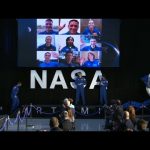
The Vice President introduces the Artemis team of astronauts, progress on hardware for upcoming Artemis missions, and the science priorities for our next human mission on the Moon … a few of the stories to tell you about – This Week at NASA!
NASA astronaut Kate Rubins is a member of the Artemis Team, a select group of astronauts charged with focusing on the development and training efforts for early Artemis missions.
Through the Artemis program NASA and a coalition of international partners will return to the Moon to learn how to live on other worlds for the benefit of all. With Artemis missions NASA will send the first woman and the next man to the Moon in 2024 and about once per year thereafter.
Through the efforts of humans and robots, we will explore more of the Moon than ever before; to lead a journey of discovery that benefits our planet with life changing science, to use the Moon and its resources as a technology testbed to go even farther and to learn how to establish and sustain a human presence far beyond Earth.
Learn more: www.nasa.gov/ArtemisTeam
Video Credits: Producer: Paul Wizikowski Directors: Ryan Cristelli and Paul Wizikowski Editor: Hunter Brothers
Asteroids are prehistoric treasures that hold the lost tales about the origin of our solar system. We are slowly starting to unfold this story and NASA’s Lucy mission will launch in about a year to venture on a 12-year tour studying diverse primordial worlds. Join mission experts on #NASAScience Live and learn about the first ever spacecraft to study the swarm of asteroids associated with Jupiter, known as the Trojans.
This episode was originally broadcast live on Thursday, Dec. 3, 2020.
What progress have we made on returning to the Moon to build a sustainable human presence there? Tune in starting at 12:30pm ET, Wed., Dec. 9 for the eighth meeting of the National Space Council, including a news update from Vice President Pence and NASA Administrator Jim Bridenstine on our Artemis program to send the first woman and next man to the Moon by 2024. The National Space Council advises the president on America’s space policy and strategy and reviews the nation’s long-range goals for space activities.
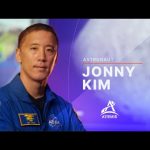
NASA astronaut Jonny Kim is a member of the Artemis Team, a select group of astronauts charged with focusing on the development and training efforts for early Artemis missions.
Through the Artemis program NASA and a coalition of international partners will return to the Moon to learn how to live on other worlds for the benefit of all. With Artemis missions NASA will send the first woman and the next man to the Moon in 2024 and about once per year thereafter.
Through the efforts of humans and robots, we will explore more of the Moon than ever before; to lead a journey of discovery that benefits our planet with life changing science, to use the Moon and its resources as a technology testbed to go even farther and to learn how to establish and sustain a human presence far beyond Earth.
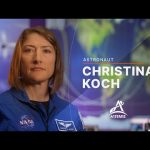
NASA astronaut Christina Koch is a member of the Artemis Team, a select group of astronauts charged with focusing on the development and training efforts for early Artemis missions.
Through the Artemis program NASA and a coalition of international partners will return to the Moon to learn how to live on other worlds for the benefit of all. With Artemis missions NASA will send the first woman and the next man to the Moon in 2024 and about once per year thereafter.
Through the efforts of humans and robots, we will explore more of the Moon than ever before; to lead a journey of discovery that benefits our planet with life changing science, to use the Moon and its resources as a technology testbed to go even farther and to learn how to establish and sustain a human presence far beyond Earth.
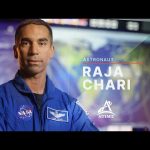
NASA astronaut Raja Chari is a member of the Artemis Team, a select group of astronauts charged with focusing on the development and training efforts for early Artemis missions.
Through the Artemis program NASA and a coalition of international partners will return to the Moon to learn how to live on other worlds for the benefit of all. With Artemis missions NASA will send the first woman and the next man to the Moon in 2024 and about once per year thereafter.
Through the efforts of humans and robots, we will explore more of the Moon than ever before; to lead a journey of discovery that benefits our planet with life changing science, to use the Moon and its resources as a technology testbed to go even farther and to learn how to establish and sustain a human presence far beyond Earth.
NASA astronaut Victor Glover is a member of the Artemis Team, a select group of astronauts charged with focusing on the development and training efforts for early Artemis missions.
Through the Artemis program NASA and a coalition of international partners will return to the Moon to learn how to live on other worlds for the benefit of all. With Artemis missions NASA will send the first woman and the next man to the Moon in 2024 and about once per year thereafter.
Through the efforts of humans and robots, we will explore more of the Moon than ever before; to lead a journey of discovery that benefits our planet with life changing science, to use the Moon and its resources as a technology testbed to go even farther and to learn how to establish and sustain a human presence far beyond Earth.
NASA astronaut Jessica Watkins is a member of the Artemis Team, a select group of astronauts charged with focusing on the development and training efforts for early Artemis missions.
Through the Artemis program NASA and a coalition of international partners will return to the Moon to learn how to live on other worlds for the benefit of all. With Artemis missions NASA will send the first woman and the next man to the Moon in 2024 and about once per year thereafter.
Through the efforts of humans and robots, we will explore more of the Moon than ever before; to lead a journey of discovery that benefits our planet with life changing science, to use the Moon and its resources as a technology testbed to go even farther and to learn how to establish and sustain a human presence far beyond Earth.
NASA astronaut Anne McClain is a member of the Artemis Team, a select group of astronauts charged with focusing on the development and training efforts for early Artemis missions.
Through the Artemis program NASA and a coalition of international partners will return to the Moon to learn how to live on other worlds for the benefit of all. With Artemis missions NASA will send the first woman and the next man to the Moon in 2024 and about once per year thereafter.
Through the efforts of humans and robots, we will explore more of the Moon than ever before; to lead a journey of discovery that benefits our planet with life changing science, to use the Moon and its resources as a technology testbed to go even farther and to learn how to establish and sustain a human presence far beyond Earth.
At NASA, we have always answered the innate call to explore and our achievements have changed the course of history. Now, we’re returning to the Moon under the Artemis program to learn to live and work on another world for the benefit of humanity.
NASA has selected an initial team of astronauts – the Artemis Team – to help pave the way for our next human missions on and around the Moon. The Artemis program includes sending the first woman and next man to walk on the lunar surface. Let’s meet the team!
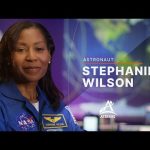
NASA astronaut Stephanie Wilson is a member of the Artemis Team, a select group of astronauts charged with focusing on the development and training efforts for early Artemis missions.
Through the Artemis program NASA and a coalition of international partners will return to the Moon to learn how to live on other worlds for the benefit of all. With Artemis missions NASA will send the first woman and the next man to the Moon in 2024 and about once per year thereafter.
Through the efforts of humans and robots, we will explore more of the Moon than ever before; to lead a journey of discovery that benefits our planet with life changing science, to use the Moon and its resources as a technology testbed to go even farther and to learn how to establish and sustain a human presence far beyond Earth.
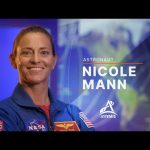
NASA astronaut Nicole Mann is a member of the Artemis Team, a select group of astronauts charged with focusing on the development and training efforts for early Artemis missions.
Through the Artemis program NASA and a coalition of international partners will return to the Moon to learn how to live on other worlds for the benefit of all. With Artemis missions NASA will send the first woman and the next man to the Moon in 2024 and about once per year thereafter.
Through the efforts of humans and robots, we will explore more of the Moon than ever before; to lead a journey of discovery that benefits our planet with life changing science, to use the Moon and its resources as a technology testbed to go even farther and to learn how to establish and sustain a human presence far beyond Earth.
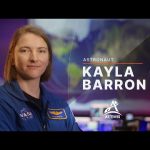
NASA astronaut Kayla Barron is a member of the Artemis Team, a select group of astronauts charged with focusing on the development and training efforts for early Artemis missions.
Through the Artemis program NASA and a coalition of international partners will return to the Moon to learn how to live on other worlds for the benefit of all. With Artemis missions NASA will send the first woman and the next man to the Moon in 2024 and about once per year thereafter.
Through the efforts of humans and robots, we will explore more of the Moon than ever before; to lead a journey of discovery that benefits our planet with life changing science, to use the Moon and its resources as a technology testbed to go even farther and to learn how to establish and sustain a human presence far beyond Earth.
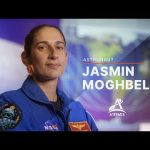
NASA astronaut Jasmin Moghbeli is a member of the Artemis Team, a select group of astronauts charged with focusing on the development and training efforts for early Artemis missions.
Through the Artemis program NASA and a coalition of international partners will return to the Moon to learn how to live on other worlds for the benefit of all. With Artemis missions NASA will send the first woman and the next man to the Moon in 2024 and about once per year thereafter.
Through the efforts of humans and robots, we will explore more of the Moon than ever before; to lead a journey of discovery that benefits our planet with life changing science, to use the Moon and its resources as a technology testbed to go even farther and to learn how to establish and sustain a human presence far beyond Earth.
In late 2019, ESA astronaut and geophysicist Alexander Gerst travelled to one of the harshest environments on Earth to learn more about our solar system, and to gather operational knowledge for missions to planetary surfaces such as the Moon. Travel with him to Antarctica and discover the many secrets held by meteorites in this documentary from the ice.
Since its inception in 1976, the US-led Antarctic Search for Meteorites (ANSMET) has recovered more than 22,000 specimens. These are rocks that fell from space, originating from several sources in our solar system, including the Moon and Mars. After each field season the newly recovered specimens are shipped (still frozen and sterile) to the Antarctic Meteorite laboratory at NASA’s Johnson Space Center in Houston, Texas. There they are thawed, dried, carefully examined, and shipped to planetary scientists world-wide. These rock fragments enable scientists to look beyond our planet, and Earth’s orbit, into the depths of space.
As a member of the 2019-2020 crew, Alexander gained and shared knowledge with his team mates and followed in the footsteps of great Antarctic explorers before him, spending weeks in a remote field camp, only a few hundred kilometres from the South Pole. The team recovered 346 meteorites during this season. His mission also shared many similarities with what astronauts will encounter when flying to the Lunar South Pole in the not-so-distant future – making it another valuable step in preparing for what might lie ahead.
We are Europe’s gateway to space. Our mission is to shape the development of Europe’s space capability and ensure that investment in space continues to deliver benefits to the citizens of Europe and the world. Check out https://www.esa.int/ to get up to speed on everything space related.
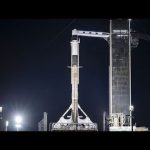
Tune in live starting at 10:45 a.m. EST, Sun., Dec. 6 as the 21st SpaceX cargo resupply mission to the International Space Station lifts off from Launch Complex 39A at NASA’s Kennedy Space Center. Launch is targeted at 11:17 a.m. The targeted date has changed due to poor weather conditions on Sat., Dec. 5 in the recovery area. This will be the first flight of the upgraded cargo version of the Dragon 2 spacecraft. On board are over 250 science investigations, as well as the Nanoracks Bishop Airlock, set to be attached to the station’s Tranquility module. This first commercially funded space station airlock will increase the capacity for external space research at the space station.
Critical cargo on the next space station resupply mission, NASA is at a virtual Earth and space science meeting, and a key piece of hardware installed on the Orion spacecraft … a few of the stories to tell you about – This Week at NASA!
We are Europe’s gateway to space. Our mission is to shape the development of Europe’s space capability and ensure that investment in space continues to deliver benefits to the citizens of Europe and the world. Check out https://www.esa.int/ to get up to speed on everything space related.
ESA has signed an €86 million contract with an industrial team led by Swiss start-up ClearSpace SA to purchase a unique service: the first-ever removal of an item of space debris from orbit.
As a result, in 2025, ClearSpace will launch the first active debris removal mission, ClearSpace-1, which will rendezvous, capture and take down for reentry the upper part of a Vespa (Vega Secondary Payload Adapter) used with Europe’s Vega launcher. This object was left in an approximately 801 km by 664 km-altitude gradual disposal orbit, complying with space debris mitigation regulations, following the second flight of Vega back in 2013.
★ Subscribe: http://bit.ly/ESAsubscribe and click twice on the bell button to receive our notifications.
We are Europe’s gateway to space. Our mission is to shape the development of Europe’s space capability and ensure that investment in space continues to deliver benefits to the citizens of Europe and the world. Check out https://www.esa.int/ to get up to speed on everything space related.
Asteroids are prehistoric treasures that hold the lost tales about the origin of our solar system. We are slowly starting to unfold this story and NASA’s Lucy mission will launch in about a year to venture on a 12-year tour studying diverse primordial worlds. Join mission experts on #NASAScience Live Thursday, Dec. 3 at 3:00 p.m. ET and learn about the first ever spacecraft to study the swarm of asteroids associated with Jupiter, known as the Trojans. Have questions? Use #askNASA.
Europe’s Rosalind Franklin ExoMars rover has a younger ’sibling’, ExoMy. The blueprints and software for this mini-version of the full-size Mars explorer are available for free so that anyone can 3D print, assemble and program their own ExoMy.
Learn more at www.esa.int/exomy
★ Subscribe: http://bit.ly/ESAsubscribe and click twice on the bell button to receive our notifications.
We are Europe’s gateway to space. Our mission is to shape the development of Europe’s space capability and ensure that investment in space continues to deliver benefits to the citizens of Europe and the world. Check out https://www.esa.int/ to get up to speed on everything space related.
Making ready for the first Artemis mission around the Moon and back, the space station is getting a new doorway to space, and how to know when and where you can look up to spot the station … a few of the stories to tell you about – This Week at NASA!
We are Europe’s gateway to space. Our mission is to shape the development of Europe’s space capability and ensure that investment in space continues to deliver benefits to the citizens of Europe and the world. Check out https://www.esa.int/ to get up to speed on everything space related.
Thanksgiving dinner aboard the International Space Station is a little different than one here on Earth. Watch this video to learn how astronauts living and working in space can enjoy holiday meals, thanks to the NASA Nutritional Lab at Johnson Space Center.
Earth is not the only place in the solar system with rain, rivers, lakes and seas. Saturn’s moon Titan has them, too — not of water, but of liquid methane and ethane. This Earth-like world even hides an ocean of liquid water deep beneath its surface! Find out what you need to know about Titan.
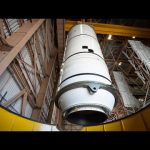
The journey of Resilience to the space station, the next ocean-observing satellite, and an update on a critical rocket test series for our Artemis missions … a few of the stories to tell you about – This Week at NASA!
Download link: images-assets.nasa.gov/video/The Journey of Resilience to The Space Station on This Week @NASA – November 21 2020/The Journey of Resilience to The Space Station on This Week @NASA – November 21 2020~orig.mp4
Producer: Andre Valentine
Editor: Sonnet Apple
Music: Universal Production Music
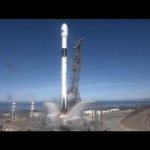
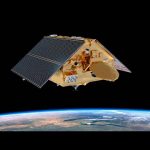
On Nov. 21, 2020, the U.S.-European oceanographic satellite Sentinel-6 Michael Freilich launched to orbit aboard a SpaceX Falcon 9 rocket. During a five-and-a-half-year prime mission, it will collect the most accurate data yet on global sea level and how our ocean is rising in response to climate change. The mission will also collect precise data of atmospheric temperature and humidity that will help improve weather forecasts and climate models.
We’re sending the Sentinel-6 Michael Freilich satellite to space to collect the most accurate data yet on global sea level and how our oceans are rising in response to climate change. This #SeeingTheSeas mission, a historic U.S.-European partnership, will launch from Vandenberg Air Force Base in California aboard a SpaceX Falcon 9 rocket at 12:17 p.m. EST (9:17 a.m. PST, 5:17 p.m. UTC).
The satellite, and its twin Sentinel-6B, is jointly developed by ESA (European Space Agency), the European Organisation for the Exploitation of Meteorological Satellites (EUMETSAT), NASA, and the National Oceanic and Atmospheric Administration (NOAA), with funding support from the European Commission and support from France’s National Centre for Space Studies (CNES). Sentinel-6 Michael Freilich is named in honor of the former director of NASA’s Earth Science Division, who was instrumental in advancing space-based ocean measurements.
The world’s latest Earth-observing satellite, Sentinel-6 Michael Freilich, is set for launch on Nov. 21 from Vandenberg Air Force Base in California. Tune in live on Fri., Nov, 20 at 3:30 p.m EST (8:30 p.m. UTC) to learn about the science of this U.S-European mission, which will closely monitor sea level and provide atmospheric data to support weather forecasting and climate models. Hear from experts including project scientists and oceanographers at NASA, the European Space Agency, the European Organisation for the Exploitation of Meteorological Satellites, NASA’s Jet Propulsion Laboratory, and the University of Washington.
The 21st SpaceX cargo resupply mission that will launch from NASA’s Kennedy Space Center in Florida carries a variety of critical research and technology demonstrations to the International Space Station. The mission will be the first on an upgraded version of the company’s Dragon cargo spacecraft that can carry more science payloads to and from the orbiting laboratory. The craft’s cargo includes critical materials that support research ranging from heart disease to asteroid mining and a new commercial airlock as part of NASA’s goal to achieve a sustainable economy in low-Earth orbit. Learn more here: https://go.nasa.gov/3pzkkt8
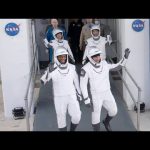
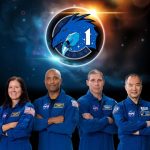
The SpaceX Crew Dragon Resilience successfully docked to the International Space Station at 11:01 p.m. EST Monday, transporting NASA astronauts Michael Hopkins, Victor Glover, Shannon Walker, and Japan Aerospace Exploration Agency (JAXA) astronaut Soichi Noguchi.
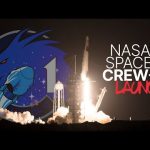
NASA’s SpaceX Crew-1 mission lifted off Sunday, Nov. 15, at 7:27 p.m. on the SpaceX Falcon 9 rocket and Crew Dragon spacecraft from Launch Complex 39A at NASA’s Kennedy Space Center in Florida. The mission is the first of six certified, crew missions NASA and SpaceX will fly as a part of the agency’s Commercial Crew Program.
The crew will conduct science and maintenance during a six-month stay aboard the orbiting laboratory and will return in spring 2021. It is scheduled to be the longest human space mission launched from the United States. The Crew Dragon spacecraft is capable of staying in orbit for at least 210 days, as a NASA requirement.
Producer Credit: Sonnet Apple Music: Willpower/Universal Production Music
Sea levels across the globe are rising as a result of a changing climate — and the rate at which they are rising is accelerating. Watch NASA Science Live Tuesday, Nov. 17 at 12:30 p.m. EST to meet NASA researchers studying these changes, and learn how the next mission launching to space will continue the nearly 30-year record of monitoring Earth’s ocean from space.
Tune in to hear NASA leadership discuss the successful launch and docking of Crew Dragon “Resilience” following the arrival of the Crew-1 astronauts Michael Hopkins, Victor Glover, Shannon Walker, and Japan Aerospace Exploration Agency’s (JAXA) Soichi Noguchi at the International Space Station. This is the first crew rotation flight of the SpaceX Crew Dragon spacecraft on a Falcon 9 rocket, following certification by NASA for regular flights to the space station as part of the agency’s Commercial Crew Program.
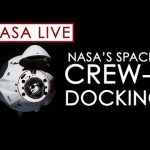
Tune in live as the Crew Dragon “Resilience” spacecraft docks to the International Space Station with astronauts Michael Hopkins, Shannon Walker, and Victor Glover of NASA and Soichi Noguchi of JAXA (Japan Aerospace Exploration Agency) aboard. The four astronauts will begin a six-month science mission on the station. Docking is scheduled at 11 p.m. EST (4 a.m. UTC), Monday, Nov. 16 followed by the hatch opening at 1:10 a.m. EST (6:30 a.m. UTC), and a welcome ceremony at 1:40 a.m. EST (6:40 a.m. UTC) Tuesday, Nov. 17.
NASA astronauts Victor Glover, Michael Hopkins, Shannon Walker and JAXA (Japan Aerospace Exploration Agency) astronaut Soichi Noguchi take viewers on a tour of the SpaceX Crew Dragon Resilience spacecraft that will take them to their new home on orbit.
The SpaceX Falcon 9 rocket and Crew Dragon spacecraft successfully launched from Kennedy Space Center’s historic Launch Pad 39A at Nov. 15 at 7:27 p.m. EST (Nov. 16 at 12:27 a.m. UTC) with the astronauts aboard for a six-month mission to the International Space Station. Crew Dragon will perform a series of phasing maneuvers to gradually approach and autonomously dock with the International Space Station on Monday, Nov. 16, at approximately 11:00 p.m.. EST (Nov. 17 at 4:00 a.m. UTC).
At 7:27 p.m. EST on Sunday, Nov. 15, 2020, the SpaceX Falcon 9 rocket and Crew Dragon “Resilience” spacecraft lifted off from Launch Complex 39A at NASA’s Kennedy Space Center in Florida. Aboard are astronauts Michael Hopkins, Shannon Walker, and Victor Glover of NASA and Soichi Noguchi of JAXA (Japan Aerospace Exploration Agency). The four are on the way to the International Space Station for a six-month science mission.
Join NASA Administrator Jim Bridenstine and officials from NASA, JAXA (Japan Aerospace Exploration Agency), the FAA (Federal Aviation Administration) and SpaceX for a live news conference starting at 9:30 p.m. EST with an update on NASA’s SpaceX Crew-1 mission. After launching at 7:27 p.m. EST from Kennedy Space Center in Florida, the SpaceX Crew Dragon ‘Resilience’ spacecraft carrying NASA astronauts Michael Hopkins, Victor Glover, and Shannon Walker, along with Soichi Noguchi of JAXA is in orbit and on the way to the International Space Station.