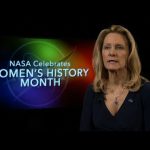
“When I was a kid, coding was terrifying,” says Farah Alibay, a Systems Engineer at NASA’s Jet Propulsion Laboratory.
This month we are celebrating #WomensHistoryMonth with a video series highlighting some exceptional builders and makers. Learn about how she and other #WomenAtNASA build and speak to instruments on Mars everyday.
Producer: Sarah Loff/NASA
Director/Editor: Nasreen Alkhateeb/NASA
Videographer: Ryan Bell/NASA
Accelerating our return to the Moon, another spacewalk outside the International Space Station, and testing our Mars Helicopter … a few of the stories to tell you about – This Week at NASA!
Flying low over some of the most dramatic landscapes on the planet, a cadre of scientists and pilots have been measuring changes in Alaskan glaciers as part of NASA’s Operation IceBridge for almost a decade. The team has seen significant change in ice extent and thickness over that time. Data from the mission was used in a 2015 study that put numbers on the loss of Alaskan glaciers: 75 billion tons of ice every year from 1994 to 2013. Last summer, Chris Larsen and Martin Truffer, both of the University of Alaska Fairbanks, flew with University of Arizona’s Jack Holt and University of Texas student Michael Christoffersen.
Credit: NASA’s Goddard Space Flight Center
Jefferson Beck (USRA): Lead Producer
Maria-Jose Vinas Garcia (Telophase): Writer
Chris Larsen (University of Alaska Fairbanks): Lead Scientist
Mark Fahnestock (University of Alaska): Scientist
Alex Kekesi (GST): Lead Visualizer
Martin Truffer (University of Alaska): Lead Scientist
“You don’t need a path that is what someone else tells you to do.” Janet Karika remembers being one of the only women at her college studying mechanical engineering. Now she sees women everywhere at NASA. Celebrate #WomensHistoryMonth with our Chief of Staff.
On behalf of the President, Vice President Mike Pence directed NASA Administrator Jim Bridenstine to accelerate the agency’s lunar exploration plans during a National Space Council meeting held at the U.S. Space and Rocket Center in Huntsville, Alabama, March 26. Administrator Bridenstine said NASA accepts the challenge to land humans on the Moon in 2024. For more information, visit: https://www.nasa.gov/moontomars.
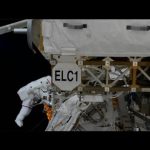
A spacewalk outside the space station, testing a motor critical to the safety of Orion, and some surprising findings about asteroid Bennu … a few of the stories to tell you about – This Week at NASA!
This video is available for download from NASA’s Image and Video Library: https://images.nasa.gov/details-A%20Spacewalk%20Outside%20The%20International%20Space%20Station%20on%20This%20Week%20@NASA%20%E2%80%93%20March%2022,%202019.html
Marking World Water Day, this week’s edition of the Earth from Space programme features Lake Chad at the southern edge of the Sahara, where water supplies are dwindling.
ESA is Europe’s gateway to space. Our mission is to shape the development of Europe’s space capability and ensure that investment in space continues to deliver benefits to the citizens of Europe and the world. Check out http://www.esa.int/ESA to get up to speed on everything space related.
UN Sustainable Goal 6 is crystal clear: Water for all by 2030.
For World Water Day we take a look at ways that space can help this global challenge. While Earth-observing satellites monitor our precious water resources, technologies developed for human space missions also serve global needs in harsh environments here on Earth.
★ Subscribe: http://bit.ly/ESAsubscribe and click twice on the bell button to receive our notifications.
ESA is Europe’s gateway to space. Our mission is to shape the development of Europe’s space capability and ensure that investment in space continues to deliver benefits to the citizens of Europe and the world. Check out http://www.esa.int/ESA to get up to speed on everything space related.
Climate change is high on the global agenda.
To tackle climate change, a global perspective is needed and this can be provided by satellites. Their data is key if we want to prepare ourselves for the consequences of climate change. While our Earth Explorers gather data to understand how our planet works and understand the impact that climate change and human activity are having on the planet, the European Union’s Copernicus Sentinels provide systematic data for environmental services that help adapt to and mitigate change.
The video offers an overview of how European satellites keep watch over our world. It includes interviews with Josef Aschbacher, our Director of Earth Observation Programmes, and Michael Rast, our Earth Observation Senior Advisor.
★ Subscribe: http://bit.ly/ESAsubscribe and click twice on the bell button to receive our notifications.
ESA is Europe’s gateway to space. Our mission is to shape the development of Europe’s space capability and ensure that investment in space continues to deliver benefits to the citizens of Europe and the world. Check out http://www.esa.int/ESA to get up to speed on everything space related.
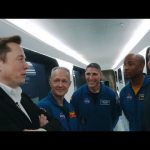
On the latest Watch this Space, NASA Administrator Jim Bridenstine chats with SpaceX CEO and Chief Designer Elon Musk during a tour of Launch Complex 39A just before the Demo-1 launch at the Kennedy Space Center in Florida. The historic Demo-1 mission launched at 2:49 a.m. EDT on Saturday, March 2 and was the first launch of a commercially built and operated American spacecraft and space system designed for humans as part of NASA’s Commercial Crew Program.
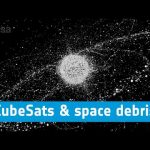
With this webinar about CubeSats in the context of space debris, we want to raise awareness of the space debris problem to the CubeSat community, present the Space Debris Mitigation (SDM) requirements and what they mean for CubeSats, discuss Post Mission Disposal (PMD) technologies, and finally, close the gap between the community and ESA to attempt involving it more in future events
★ Subscribe: http://bit.ly/ESAsubscribe and click twice on the bell button to receive our notifications.
ESA is Europe’s gateway to space. Our mission is to shape the development of Europe’s space capability and ensure that investment in space continues to deliver benefits to the citizens of Europe and the world. Check out http://www.esa.int/ESA to get up to speed on everything space related.
Strong budget support for our Moon to Mars effort, a new crew launches to the space station, and training for Orion recovery … a few of the stories to tell you about – This Week at NASA!
This video is available for download from NASA’s Image and Video Library: https://images.nasa.gov/details-NHQ_2019_0315_Strong%20Budget%20Support%20for%20Moon%20to%20Mars%20Effort%20on%20This%20Week%20@NASA%20%E2%80%93%20March%2015,%202019.html
NASA is going to the Moon and on to Mars, in a measured, sustainable way. Working with U.S. companies and international partners, NASA will push the boundaries of human exploration forward to the Moon. NASA is working to establish a permanent human presence on the Moon within the next decade to uncover new scientific discoveries and lay the foundation for private companies to build a lunar economy.
The lunar surface will serve as a crucial training ground and technology demonstration test site where we will prepare for future human missions to Mars and other destinations. Through an innovative combination of missions involving commercial and international partners, robotic lunar surface missions will begin as early as 2020, focus on scientific exploration of lunar resources, and prepare the lunar surface for a sustained human presence.
Right now, NASA is taking steps to begin this next era of exploration. #Moon2Mars
NASA is going to the Moon and on to Mars, in a measured, sustainable way. Working with U.S. companies and international partners, NASA will push the boundaries of human exploration forward to the Moon. NASA is working to establish a permanent human presence on the Moon within the next decade to uncover new scientific discoveries and lay the foundation for private companies to build a lunar economy.
Right now, NASA is taking steps to begin this next era of exploration. #Moon2Mars
Join us starting at 7:30 a.m. EST to see SpaceX’s #CrewDragon on its journey back to Earth, including its deorbit burn and splashdown in the Atlantic Ocean.
After undocking from the International Space Station at 2:32 a.m. EST on Friday, March 8, the SpaceX Crew Dragon completed a deorbit burn to reenter Earth’s atmosphere, deployed parachutes and splashed down in the Atlantic Ocean at 8:45 a.m. EST. These are the final milestones of the Demo-1 flight test, in which SpaceX demonstrated systems which will be used to carry astronauts aboard the Crew Dragon to the space station.
ESA is Europe’s gateway to space. Our mission is to shape the development of Europe’s space capability and ensure that investment in space continues to deliver benefits to the citizens of Europe and the world. Check out http://www.esa.int/ESA to get up to speed on everything space related.
Satellites provides us with large volumes of spatio-temporal data, creating great opportunities for innovative entrepreneurs. ESA’s Business Applications programme is supporting European projects to turn these data into solutions for a wide range of socio-economic situations, as well as jobs and products. This video highlights three concrete examples: automated trains, rehabilitation and money transfers in isolated areas.
★ Subscribe: http://bit.ly/ESAsubscribe and click twice on the bell button to receive our notifications.
ESA is Europe’s gateway to space. Our mission is to shape the development of Europe’s space capability and ensure that investment in space continues to deliver benefits to the citizens of Europe and the world. Check out http://www.esa.int/ESA to get up to speed on everything space related.
Everybody is talking about 5G, the new generation of wireless communication. We are at the start of a revolution in connectivity for everything, everywhere, at all times.
Space plays at important roll in this revolution. We need satellites to ensure businesses and citizens can benefit smoothly from 5G.
★ Subscribe: http://bit.ly/ESAsubscribe and click twice on the bell button to receive our notifications.
ESA is Europe’s gateway to space. Our mission is to shape the development of Europe’s space capability and ensure that investment in space continues to deliver benefits to the citizens of Europe and the world. Check out http://www.esa.int/ESA to get up to speed on everything space related.
Satellites bring immense benefits to everyone on Earth. From monitoring our changing planet and increasingly severe natural disasters, to providing resilient telecom networks and delivering services such as precise navigation that help economies grow and humans in need, satellites are the ‘eyes and ears’ in space that help us to help ourselves. Increasing opportunities in our fast-changing, interconnected world contrast with threats from climate change and an unpredictable environment, and cutting-edge space-based applications are part of the solution. Now is the time for decisions.
Science & Exploration, Applications for Earth, Space Safety & Security and Enabling & Support – these are ESA’s four emblematic pillars of inspiration for Space19+, the Council at ministerial level in November 2019. This is a crucial opportunity to secure new investment to ensure Europe’s leadership in global space endeavours and bring the future down to all of us on Earth. ESA’s proposals range from hunting asteroids and the exploration of icy moons to 5G (5th generation) satellite-based communication for everyone. And did we mention we’re working hard to safeguard our planet?
ESA is Europe’s gateway to space. Our mission is to shape the development of Europe’s space capability and ensure that investment in space continues to deliver benefits to the citizens of Europe and the world. Check out http://www.esa.int/ESA to get up to speed on everything space related.
Space becomes “sonified” in this visualization of a cluster of galaxies imaged by NASA’s Hubble Space Telescope. Time flows left to right, and the frequency of sound changes from bottom to top, ranging from 30 to 1,000 hertz. Objects near the bottom of the image produce lower notes, while those near the top produce higher ones. Most of the visible specks are galaxies housing countless stars. A few individual stars shine brightly in the foreground. Stars and compact galaxies create short, clear tones, while sprawling spiral galaxies emit longer notes that change pitch. The higher density of galaxies near the center of the image — the heart of this galaxy cluster, known as RXC J0142.9+4438 — results in a swell of mid-range tones halfway through the video. Hubble’s Advanced Camera for Surveys and Wide Field Camera 3 acquired this image on Aug. 13, 2018.
50 years ago, we tested the capabilities of our Moon landing spacecraft in Earth’s orbit. Commander James McDivitt, Command Module Pilot David Scott and Lunar Module Pilot Rusty Schweickart performed systems checks and gathered data. The Lunar Module and the Command Module separated by nearly 100 miles and an engine burn check brought them back together. A challenging rendezvous and docking proved the abilities of the hardware. This historic mission launched on March 3, 1969 as an engineering mission and paved the way for future Apollo missions.
An important step for the Commercial Crew Program, more testing with our Space Launch System rocket engine, and a new show that explores how we do, what we do … a few of the stories to tell you about – This Week at NASA!
This video is available for download from NASA’s Image and Video Library: https://images.nasa.gov/details-NHQ_2019_0301_An%20Important%20Step%20for%20Commercial%20Crew%20on%20This%20Week%20@NASA%20%E2%80%93%20March%202,%202019.html
ESA is Europe’s gateway to space. Our mission is to shape the development of Europe’s space capability and ensure that investment in space continues to deliver benefits to the citizens of Europe and the world. Check out http://www.esa.int/ESA to get up to speed on everything space related.
Take a tour of the interior of SpaceX’s Crew Dragon, targeted to launch on its first (uncrewed) demonstration flight on March 2, 2019. Crew Dragon is designed to transport up to four astronauts for NASA missions, along with critical cargo and supplies, to the International Space Station as part of NASA’s Commercial Crew Program.
The Crew Dragon features solar arrays affixed to the side of the spacecraft’s trunk, a launch escape system that will allow crew members to escape an anomaly at any point during flight, a large hatch and windows and a redesigned outer mold line to enhance crew comfort. The first uncrewed flight is an important step in returning human launches on American rockets and spacecraft to the space station from U.S. soil since 2011.
Rocket engines for Ariane 6 are being tested and qualified at the German Aerospace Center in Lampoldshausen, Germany.
Several of the facilities on site have been modified for Ariane 6 and a new facility will soon test the launcher’s complete upper stage, simulating as far as possible the conditions it will experience in flight. With testing and development at full pace, Ariane 6 is taking shape for its maiden voyage.
ESA is Europe’s gateway to space. Our mission is to shape the development of Europe’s space capability and ensure that investment in space continues to deliver benefits to the citizens of Europe and the world. Check out http://www.esa.int/ESA to get up to speed on everything space related.
An upcoming Commercial Crew Flight Test, training underway for the space station’s next crew, and a new development in our search for life beyond Earth … a few of the stories to tell you about – This Week at NASA!
This video is available for download from NASA’s Image and Video Library: https://images.nasa.gov/details-NHQ_2019_0222_An%20Upcoming%20Commercial%20Crew%20Flight%20Test%20on%20This%20Week%20@NASA%20%E2%80%93%20February%2022,%202019.html
On the latest Watch This Space, NASA administrator Jim Bridenstine looks back at 15 years of discoveries by our Opportunity rover on Mars, and forward to new commercial partnerships for missions to the Moon. Learn how we’ll work with American companies to design and develop human lunar landers and reusable systems so we can return to the Moon — to stay.
This video is available for download from NASA’s Image and Video Library: https://images.nasa.gov/details-NHQ_2019_0221_Watch%20This%20Space%20with%20NASA%20Administrator%20Jim%20Bridenstine%20with%20the%20latest%20from%20the%20Moon%20and%20Mars.html
ESA is Europe’s gateway to space. Our mission is to shape the development of Europe’s space capability and ensure that investment in space continues to deliver benefits to the citizens of Europe and the world. Check out http://www.esa.int/ESA to get up to speed on everything space related.
ESA is Europe’s gateway to space. Our mission is to shape the development of Europe’s space capability and ensure that investment in space continues to deliver benefits to the citizens of Europe and the world. Check out http://www.esa.int/ESA to get up to speed on everything space related.
ESA is Europe’s gateway to space. Our mission is to shape the development of Europe’s space capability and ensure that investment in space continues to deliver benefits to the citizens of Europe and the world. Check out http://www.esa.int/ESA to get up to speed on everything space related.
ESA is Europe’s gateway to space. Our mission is to shape the development of Europe’s space capability and ensure that investment in space continues to deliver benefits to the citizens of Europe and the world. Check out http://www.esa.int/ESA to get up to speed on everything space related.
ESA is Europe’s gateway to space. Our mission is to shape the development of Europe’s space capability and ensure that investment in space continues to deliver benefits to the citizens of Europe and the world. Check out http://www.esa.int/ESA to get up to speed on everything space related.
ESA is Europe’s gateway to space. Our mission is to shape the development of Europe’s space capability and ensure that investment in space continues to deliver benefits to the citizens of Europe and the world. Check out http://www.esa.int/ESA to get up to speed on everything space related.
ESA is Europe’s gateway to space. Our mission is to shape the development of Europe’s space capability and ensure that investment in space continues to deliver benefits to the citizens of Europe and the world. Check out http://www.esa.int/ESA to get up to speed on everything space related.
ESA is Europe’s gateway to space. Our mission is to shape the development of Europe’s space capability and ensure that investment in space continues to deliver benefits to the citizens of Europe and the world. Check out http://www.esa.int/ESA to get up to speed on everything space related.
ESA is Europe’s gateway to space. Our mission is to shape the development of Europe’s space capability and ensure that investment in space continues to deliver benefits to the citizens of Europe and the world. Check out http://www.esa.int/ESA to get up to speed on everything space related.
ESA is Europe’s gateway to space. Our mission is to shape the development of Europe’s space capability and ensure that investment in space continues to deliver benefits to the citizens of Europe and the world. Check out http://www.esa.int/ESA to get up to speed on everything space related.
ESA is Europe’s gateway to space. Our mission is to shape the development of Europe’s space capability and ensure that investment in space continues to deliver benefits to the citizens of Europe and the world. Check out http://www.esa.int/ESA to get up to speed on everything space related.