Nella puntata di Space di questo mese abbiamo la chance unica di visitare questo posto alle mie spalle, l’azienda aerospaziale Avio a Colleferro, in provincia di Roma, dove un team di ingegneri sta lavorando alla nuova generazione europea di lanciatori in fibra di carbonio. E’ una cosa rara poter filmare dentro luoghi simili. Entriamo, quindi, incontriamo il team e scopriamo cosa c’è di nuovo.
Questa è una delle poche aziende del settore in Europa. Qui è nato il lanciatore leggero Vega. E qui saranno creati i razzi spaziali del futuro.
Tracing the source of a cosmic phenomenon, the sound of plasma waves in space, and X-ray exploration of the Eagle Nebula … a few of the stories to tell you about – This Week at NASA!
This video is available for download from NASA’s Image and Video Library: https://images.nasa.gov/details-NHQ_2018_0713_Tracing%20The%20Source%20of%20a%20Cosmic%20Phenomenon%20on%20This%20Week%20@NASA%20%E2%80%93%20July%2013,%202018.html
Humans will have to breath, drink and eat while living on the Moon. They will need energy to perform tasks using their robotic companions and materials to build structures. For a sustainable approach to space exploration these resources cannot be carried from Earth but have to be found on the Moon itself.
Angel Abbud Madrid is the Director of the Center for Space Resources at the Colorado School of Mines (CSM), where he leads a multidisciplinary research programme on the human and robotic exploration of space and the utilisation of its resources. He is also the Director of the CSM Space Resources Program, the first academic programme in the world focused on educating scientists, engineers, economists, entrepreneurs and policymakers in the developing field of space resources.
Space Bites hosts the best talks on space exploration from the most inspiring and knowledgeable speakers from the field. Held at the technical heart of the European Space Agency in the Netherlands, the lectures are now also available on YouTube. If you want to know about the present and future challenges of ESA, stay tuned for more.
We are Europe’s gateway to space. Our mission is to shape the development of Europe’s space capability and ensure that investment in space continues to deliver benefits to the citizens of Europe and the world. Check out https://www.esa.int/ to get up to speed on everything space related.
Three of the world’s largest radio telescopes team up to show a rare double asteroid. 2017 YE5 is only the fourth binary near-Earth asteroid ever observed in which the two bodies are roughly the same size, and not touching. More: https://go.nasa.gov/2zxrh7U
This video shows radar images of the pair gathered by Goldstone Solar System Radar, Arecibo Observatory and Green Bank Observatory.
Discover more about our planet with the Earth from Space video programme. In this special edition, ESA’s Aeolus mission scientist, Anne Grete Straume, joins us in the cleanroom at Airbus Defence and Space in Toulouse, France. She explains how winds are generated, how they affect our weather, and how Aeolus will measure the wind and how this information will be used to improve weather forecasts and climate models.
A new resupply mission arrives at the Space Station, a closer look at dwarf planet, Ceres, and the Parker Solar Probe is ready for the heat … a few of the stories to tell you about – This Week at NASA!
This video is available for download from NASA’s Image and Video Library: https://images.nasa.gov/details-NHQ_2018_0706_New%20Supplies%20and%20Research%20for%20the%20Space%20Station%20on%20This%20Week%20@NASA%20%E2%80%93%20July%206,%202018.html
At the Airbus Defence and Space facility in Toulouse, France, ESA’s Aeolus wind satellite has been prepared for its launch on top of a Vega rocket from Kourou in French Guiana. Liftoff is currently scheduled for August. The development of this latest Earth Explorer started 16 years ago and has now finished.
From orbit Aeolus will measure wind profiles on a global scale using a pioneering laser technology. These measurements will greatly benefit existing meteorological models and fill a gap in the observations of wind.
The 2018 European CanSat launch campaign took place from 28 June until 1 July 2018 on the island of Santa Maria, Azores (Portugal).
Hosted by the Regional Fund for Science and Technology (FRCT) in collaboration with local partners. Nineteen teams participated this year: the winners of the CanSat national competitions from Austria, Belgium, Czech Republic, Denmark, Germany, Greece, Ireland, Italy, Nordic (joint competition Finland-Sweden-Norway), Portugal, Poland, Romania, the Netherlands, Spain, and the UK, as well a team from Hungary selected directly by ESA.
The European CanSat competition is only one of ESA’s initiatives to help young people increase their literacy and competence in STEM disciplines and inspire them to pursue a career in the STEM (science, technology, engineering, and mathematics) fields.
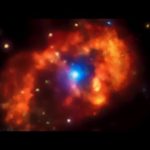
A new study using data from NASA’s NuSTAR space telescope suggests that the most luminous and massive stellar system within 10,000 light-years, Eta Carinae, is accelerating particles to high energies — some of which may reach Earth as cosmic rays. https://go.nasa.gov/2tPxKpA
Cosmic rays with energies greater than 1 billion electron volts (eV) come to us from beyond our solar system. But because these particles — electrons, protons and atomic nuclei — all carry an electrical charge, they veer off course whenever they encounter magnetic fields. This scrambles their paths and masks their origins. Eta Carinae, located about 7,500 light-years away in the southern constellation of Carina, contains a pair of massive stars whose eccentric orbits bring them unusually close every 5.5 years. The stars contain 90 and 30 times the mass of our Sun.
Both stars drive powerful outflows called stellar winds, which emit low-energy X-rays where they collide. NASA’s Fermi Gamma-ray Space Telescope observes gamma rays — light packing far more energy than X-rays — from a source in the direction of Eta Carinae.
But Fermi’s vision isn’t as sharp as X-ray telescopes, so astronomers couldn’t confirm the connection. To bridge this gap, astronomers turned to NASA’s NuSTAR observatory. Launched in 2012, NuSTAR can focus X-rays of much greater energy than any previous telescope.
The team examined NuSTAR observations acquired between March 2014 and June 2016, along with lower-energy X-ray observations from the European Space Agency’s XMM-Newton satellite over the same period. NuSTAR detects a source emitting X-rays above 30,000 eV, some three times higher than can be explained by shock waves in the colliding winds. For comparison, the energy of visible light ranges from about 2 to 3 eV.
The researchers say both the X-ray emission s een by NuSTAR and the gamma-ray emission seen by Fermi is best explained by electrons accelerated in shock waves where the winds collide. The X-rays detected by NuSTAR and the gamma rays detected by Fermi arise from starlight given a huge energy boost by interactions with these electrons. Some of the superfast electrons, as well as other accelerated particles, must escape the system and perhaps some eventually wander to Earth, where they may be detected as cosmic rays. Zoom into Eta Carinae, where the outflows of two massive stars collide and shoot accelerated particles cosmic rays into space.
Credit: NASA’s Goddard Space Flight Center
Music: “Expectant Aspect” from Killer Tracks
This video is public domain and may be downloaded from NASA Goddard’s Scientific Visualization Studio at: https://svs.gsfc.nasa.gov/12989
NASA wishes you a safe and happy Independence Day.
Since the beginning of human space flight, NASA’s astronauts, rockets and
spacecraft have flown the American flag to Earth orbit, the Moon, Mars, and beyond.
Our alien friend Paxi, ESA Education’s mascot, went to visit American astronaut Mark Vande Hei on board the International Space Station. Vande Hei tells Paxi about how astronauts exercise in weightlessness, an important aspect of living on the ISS.
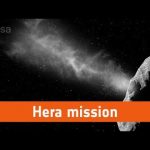
Hera is the European contribution to an ESA-NASA double-spacecraft mission intended to test whether a kinetic deflection technique can be used to shift the orbit of an asteroid. The target of the mission is a double asteroid system, called Didymos, which will come a comparatively close 11 million km to Earth in 2022. The 800-m diameter main body is orbited by a 170-m moon, informally called ‘Didymoon’.
In 2022 NASA’s DART spacecraft will first perform a kinetic impact on the smaller of the two bodies, then Hera will follow-up with a detailed post-impact survey that will turn this grand-scale experiment into a well-understood and repeatable planetary defence technique.
Hera will also gather crucial scientific data on asteroids as a whole by carefully studying the exterior and interior properties of both bodies in the system. The spacecraft will also host two 6-unit cubesats that will be deployed near Didymos to perform, for the first time ever, multi-point measurements in a “mother-daughter” configuration. A novel intersatellite link will be used to establish a flexible communications network supporting the close-proximity operations in very low-gravity conditions, a crucial step for future exploration activities around small bodies.
Hera, a further optimisation of ESA’s earlier proposed Asteroid Impact Mission, is currently in Phase B1 of mission development in preparation of the Agency’s Council of Ministers at European Level in late 2019.
Thomas Zurbuchen, associate administrator of NASA’s Science Mission Directorate, and John Mather, senior project scientist, comment on an independent review board’s findings on the agency’s James Webb Space Telescope. Webb is now targeting March 2021 as a new launch date, after the board assessed delays in integration and testing. NASA and the board unanimously agree that Webb can still achieve mission success.
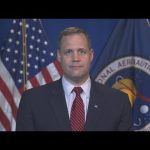
NASA Administrator Jim Bridenstine discusses the findings of the Independent Review Board on one of our flagship missions, the James Webb Space Telescope. Despite Webb’s major challenges during the final testing and integration phase, the board and NASA unanimously agreed that Webb will achieve mission success with the implementation of the board’s recommendations, many of which are already underway.
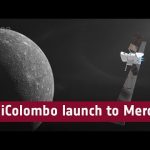
Enjoy this animation visualising BepiColombo’s launch and cruise to Mercury. Some aspects have been simplified for the purpose of this animation.
The joint ESA-JAXA mission comprises the European Mercury Planetary Orbiter and Japan’s Mercury Magnetospheric Orbiter, which will be transported to the innermost planet by the Mercury Transfer Module. The animation highlights several key milestones, including the solar array and antenna deployments once in space, through to the arrival at Mercury seven years later. When approaching Mercury, the transfer module will separate and the two science orbiters, still together, will be captured into orbit around the planet. Their altitude will be adjusted until the Magnetospheric Orbiter’s desired orbit is reached. Then the Planetary Orbiter will separate and descend to its lower orbit, and the two craft will begin their scientific exploration of Mercury and its environment.
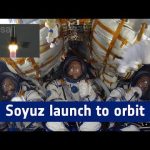
This unique video shows a full launch of the Soyuz MS-09: from liftoff to orbit.
Watch the launch from inside the crew capsule with first-ever shots from outside the spacecraft recorded by cameras fixed to the exterior of the Soyuz.
The intense launch lasts less than ten minutes whereby the Soyuz spacecraft is propelled 1640 km and gains 210 km altitude. Every second for nine minutes, the spacecraft accelerates 50 km/h on average as the rocket’s boosters burn their fuel and are discarded.
See the astronaut’s reactions and what the spacecraft looks like as the main steps are carried out to get into orbit:
-00:12 Launch command issued
-00:10 Engine turbopumps at flight speed
-00:05 Engines at maximum thrust
00:00 Launch
+1:54 Separation of emergency rescue system
+1:57 First stage separation
+2:38 Fairing separation
+4:48 Second stage separation
+4:58 Tail adapter separation
+8:45 Third stage engine cut off having arrived in orbit
+8:49 Soyuz separation, deploy solar arrays and antennae
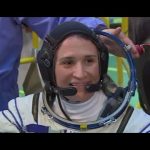
The astronauts, from left to right, are NASA astronaut Serena Auñón-Chancellor, Roscosmos commander Sergei Prokopyev and ESA astronaut and flight engineer Alexander Gerst launched in the Soyuz MS-09 spacecraft from the Baikonur cosmodrome in Kazakhstan to the International Space Station on 6 June 2018. ESA astronaut Matthias Maurer and ESA television host Richard Hollingham provide commentary taken from the live event.
Hunched in their Sokol flight suits that offer protection in case of fire or depressurisation, the trio stay in the crew capsule of the Soyuz – the only module that is also designed to survive a return to Earth. The bags above their heads contain supplies for the International Space Station as every bit of space is used.
During a Soyuz launch astronauts typically experience forces of up to 4g – having to work while being pressed into their seats with a force that is four times more than the gravity felt on Earth. The Soyuz commander uses a stick to press buttons as they are too far away from the control panel.
The fluffy toys above the astronauts’ heads are mascots and good luck charms but also serve as a simple but effective test to see when the spacecraft is in orbit: when they start to float the spacecraft is weightless and orbiting Earth. Above Sergei is the mascot for the 2018 FIFA soccer World Cup held in Russia. Alexander took German children television icon “Die Maus” with him.
The launch went as planned as the 50-m tall Soyuz rocket propelled the astronauts to their cruising speed of around 28 800 km/h.
For this launch the astronauts took 34 orbits of Earth over two days to arrive at their destination spending their time in the cramped orbital module of the Soyuz that is no larger than a car. With limited communications and living space the astronauts had time to adapt to weightlessness and reflect on their mission ahead. They aligned their spacecraft with the International Space Station and approached the orbital outpost for docking on 8 June 2018. The files for this video were downloaded by the astronauts after arriving at the Space Station.
Alexander is a returning visitor to the International Space Station, the first of ESA’s 2009 class of astronauts to be sent into space for a second time. During the second part of his mission Alexander will take over as commander of the International Space Station, only the second time an ESA astronaut will take on this role so far.
The third meeting of the National Space Council, seeking a partnership to power our Gateway, and – an educational activity that’s quite a blast … a few of the stories to tell you about – This Week at NASA!
This video is available for download from NASA’s Image and Video Library: https://images.nasa.gov/details-NHQ_2018_0622_Administrator%20Bridenstine%20Attends%20National%20Space%20Council%20Meeting%20on%20This%20Week%20@NASA%20%E2%80%93%20June%2022,%202018.html
The largest of Pluto’s five moons, Charon, was discovered on June 22, 1978, by James Christy and Robert Harrington at the U.S. Naval Observatory in Flagstaff, Arizona.
Read the story: https://www.nasa.gov/feature/charon-at-40-four-decades-of-discovery-on-pluto-s-largest-moon
Charon was discovered only about six miles from where Pluto itself was discovered at Lowell Observatory. They weren’t even looking for satellites of Pluto – Christy, examining a series of grainy telescope images, trying to refine Pluto’s orbit around the Sun.
Christy and others tell the story of this amazing scientific find, which fueled Pluto’s transformation from a telescopic dot into an actual planetary system – and a source of many discoveries to come.
Enjoy this compilation of with the last images taken by Rosetta’s high resolution OSIRIS camera during the mission’s final hours at Comet 67P/Churyumov-Gerasimenko. As it moved closer towards the surface it scanned across an ancient pit and sent back images showing what would become its final resting place.
Credits: Images: ESA/Rosetta/MPS for OSIRIS Team MPS/UPD/LAM/IAA/SSO/INTA/UPM/DASP/IDA – CC BY-SA 4.0
Image compilation: ESA–D. C. Jimeno and M. P. Ayucar
Astronauts on the International Space Station get food that’s chosen for nutritional value and specially prepared and packaged to be accessible on orbit. Could the same food feed the needs of people stuck on planet Earth? We conducted an experiment to find out how well two regular people could get by eating only astronaut food for a full week—a week that included a holiday weekend feast, just to up the difficulty factor. Could they resist the lure of their favorite foods? Take a look at how they fared…
The flight will help to move the United States one step closer to normalizing unmanned aircraft operations in the airspace used by commercial and private pilots. The Ikhana aircraft is based at NASA’s Armstrong Flight Research Center in Edwards, California.
Discover more about our planet with the Earth from Space video programme. In this special edition, ESA’s Aeolus Project Manager, Anders Elfving, joins us in the cleanroom at Airbus Defence and Space in Toulouse, France, to talk about the challenges in developing the mission’s pioneering laser technology.
A new crew aboard the space station, Curiosity rover’s new science findings on Mars, and – Celebrating 60 years of NASA … a few of the stories to tell you about – This Week at NASA!
This video is available for download from NASA’s Image and Video Library: https://images.nasa.gov/details-NHQ_2018_0608_Curiosity%E2%80%99s%20New%20Mars%20Science%20Results%20on%20This%20Week%20@NASA%20%E2%80%93%20June%208,%202018.html
After orbiting Earth 34 times to catch up to the International Space Station, the car-sized spacecraft carrying ESA astronaut Alexander Gerst, NASA astronaut Serena Auñón-Chancellor and Roscosmos commander Sergei Prokopyev, arrived at the Station two days after launch.
The German astronaut is a returning visitor to the International Space Station, the first of ESA’s 2009 class of astronauts to be sent into space for a second time. During the second part of his mission Alexander will take over as commander of the International Space Station, only the second time an ESA astronaut will take on this role so far.
The mission is called Horizons as a symbol for the unknown and what lies beyond – reflecting on ESA’s strategy to extend human and robotic exploration beyond Earth orbit. While in space, Alexander will work on over 50 European experiments, including testing ways of operating and working with robots to develop techniques required for further human and robotic exploration of our Solar System.
The National Symphony Orchestra Pops and the John F. Kennedy Center for the Preforming Arts hosted a celebration for NASA’s 60th Anniversary June 1, 2018.
This video is available for download from NASA’s Image and Video Library: https://images.nasa.gov/details-NHQ_2018_0606_The%20National%20Symphony%20Orchestra%20Pops%20Celebrates%20NASA%E2%80%99s%2060th%20Anniversary.html
At 11:12 GMT (13:12 CEST), 6 June 2018, ESA astronaut Alexander Gerst was launched into space alongside NASA astronaut Serena Auñón-Chancellor and Roscosmos commander Sergei Prokopyev in the Soyuz MS-09 spacecraft from Baikonur cosmodrome in Kazakhstan.
Tracking the space station’s next crew, a distant and lonely neutron star, and taking the bite out of some very dangerous bugs – a few of the stories to tell you about – This Week at NASA!
This video is available for download from NASA’s Image and Video Library: https://images.nasa.gov/details-NHQ_2018_0601_Tracking%20the%20Space%20Station%E2%80%99s%20Next%20Crew%20on%20This%20Week%20@NASA%20%E2%80%93%20June%201,%202018.html
5G, the next generation of communication services, will deliver ultra-fast speeds, connect all people and devices to the internet and minimise delays. It will affect everybody, changing the way we communicate, work and interact with technology.
Space has an invaluable role to play in the 5G ecosystem. Satellites can extend, enhance, and provide reliability and security to 5G like no other, helping to deliver its promise of global, ubiquitous connectivity, with no noticeable difference to the end-user. ESA’s Satellite for 5G (S45G) programme aims promote the value-added benefits of space to 5G, by developing and demonstrating integrated satellite- and terrestrial-based 5G services, across multiple markets and use cases.
Our alien friend Paxi, ESA Education’s mascot, went to visit American astronaut Mark Vande Hei on board the International Space Station. Vande Hei shows Paxi the views outside of the Cupola, the biggest window on Earth in the International Space Station.
Tracking the movement of Earth’s water, resupplying the International Space Station, and our Administrator testifies about the agency’s proposed budget – a few of the stories to tell you about – This Week at NASA!
This video is available for download from NASA’s Image and Video Library: https://images.nasa.gov/details-NHQ_2018_0525_Following%20the%20movement%20of%20Earth%E2%80%99s%20water%20on%20This%20Week%20@NASA%20%E2%80%93%20May%2025,%202018.html
Explore the Philippines’ Mount Mayon, one of the world’s most active volcanoes, in this episode of Earth from Space, presented by Kelsea Brennan-Wessels from the ESA Web TV virtual studios.