The flight will help to move the United States one step closer to normalizing unmanned aircraft operations in the airspace used by commercial and private pilots. The Ikhana aircraft is based at NASA’s Armstrong Flight Research Center in Edwards, California.
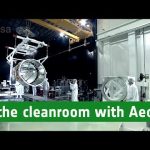
Discover more about our planet with the Earth from Space video programme. In this special edition, ESA’s Aeolus Project Manager, Anders Elfving, joins us in the cleanroom at Airbus Defence and Space in Toulouse, France, to talk about the challenges in developing the mission’s pioneering laser technology.
You’ve probably seen atoms like this emoji ⚛ everywhere from science textbooks to the logo for The Big Bang Theory. But what does an atom really look like? The truth is much stranger.
SUBSCRIBE: http://youtube.com/whatthephysics?sub
Science Max | MAGNETIC LEVITATION | Kids Science | Experiments
Magnets have poles – when you put opposite ones together, they attract. But when you but the same ones together, they repel. Could we find magnets powerful enough to repel each other and float Phil off the ground? Plus, watch magnets defy gravity all on their own.
Have you ever done a science experiment and wondered “What would this be like if it were HUGE?” Welcome to Science Max, the exciting new series that turbocharges all the science experiments you’ve done at home.
In season 1, join Phil as he builds rocket cars, uses elastic energy to hurl pumpkins on a giant catapult, builds a bridge out of pasta that can hold a human, find magnets powerful enough to float Phil off the ground, and many more experiments taken to the MAX!
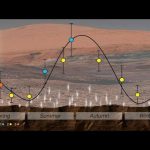
A new crew aboard the space station, Curiosity rover’s new science findings on Mars, and – Celebrating 60 years of NASA … a few of the stories to tell you about – This Week at NASA!
This video is available for download from NASA’s Image and Video Library: https://images.nasa.gov/details-NHQ_2018_0608_Curiosity%E2%80%99s%20New%20Mars%20Science%20Results%20on%20This%20Week%20@NASA%20%E2%80%93%20June%208,%202018.html
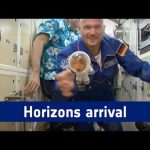
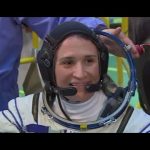
After orbiting Earth 34 times to catch up to the International Space Station, the car-sized spacecraft carrying ESA astronaut Alexander Gerst, NASA astronaut Serena Auñón-Chancellor and Roscosmos commander Sergei Prokopyev, arrived at the Station two days after launch.
The German astronaut is a returning visitor to the International Space Station, the first of ESA’s 2009 class of astronauts to be sent into space for a second time. During the second part of his mission Alexander will take over as commander of the International Space Station, only the second time an ESA astronaut will take on this role so far.
The mission is called Horizons as a symbol for the unknown and what lies beyond – reflecting on ESA’s strategy to extend human and robotic exploration beyond Earth orbit. While in space, Alexander will work on over 50 European experiments, including testing ways of operating and working with robots to develop techniques required for further human and robotic exploration of our Solar System.
The National Symphony Orchestra Pops and the John F. Kennedy Center for the Preforming Arts hosted a celebration for NASA’s 60th Anniversary June 1, 2018.
This video is available for download from NASA’s Image and Video Library: https://images.nasa.gov/details-NHQ_2018_0606_The%20National%20Symphony%20Orchestra%20Pops%20Celebrates%20NASA%E2%80%99s%2060th%20Anniversary.html
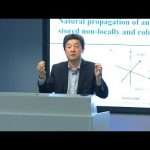
Prof. Shoucheng Zhang discusses three pillars of information technology: quantum computing, AI and blockchain. He presents the fundamentals of crypto-economic science, and answers questions such as: What is the intrinsic value of a medium of exchange? What is the value of consensus and how does it emerge? How can math be used to create distributed self-organizing consensus networks to create a data-marketplace for AI and machine learning?
Prof. Zhang is the JG Jackson and CJ Wood professor of physics at Stanford University. He is a member of the US National Academy of Science, the American Academy of Arts and Sciences and a foreign member of the Chinese Academy of Sciences. He discovered a new state of matter called topological insulator in which electrons can conduct along the edge without dissipation, enabling a new generation of electronic devices with much lower power consumption. For this ground breaking work he received numerous international awards, including the Buckley Prize, the Dirac Medal and Prize, the Europhysics Prize, the Physics Frontiers Prize and the Benjamin Franklin Medal.
He is also the founding chairman of DHVC venture capital fund, which invests in AI, blockchain, mobile internet, big data, AR/VR, genomics and precision medicine, sharing economy and robotics.
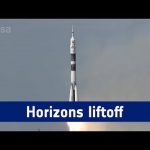
At 11:12 GMT (13:12 CEST), 6 June 2018, ESA astronaut Alexander Gerst was launched into space alongside NASA astronaut Serena Auñón-Chancellor and Roscosmos commander Sergei Prokopyev in the Soyuz MS-09 spacecraft from Baikonur cosmodrome in Kazakhstan.
🔥 IoT Training : https://www.edureka.co/iot-certification-training
This “Top 7 IoT Projects” video by Edureka will take you through the top 7 IoT projects which are revolutionizing the world. Do mention other popular IoT Projects you know about in the comment section. This IoT projects video covers following topics:
7. Biometrics System
6. Smart Irrigation System
5. Security Camera & Door Unlock System
4. Smart Home
3. Smart City
2. Zelda Ocarina Controlled Home Automation
1. Jarvis
Subscribe to our Edureka channel to get video updates. Hit the subscribe button above.
IoT Certification Training is designed by industry experts to make you a Certified IoT Developer. Edureka IoT training covers:
Understanding of IoT architecture and IoT Decision Framework
Configure Raspberry Pi, Understand Sensors, Actuators & get started with python on Raspberry Pi
Program Sensors (Sense-HAT board), Face Detection and reorganization using OpenCV-Python
Understand various IoT Networking Protocols which are mainly used to develop communication solutions
Getting started with Cloud and Azure IoT Hub, demonstration of Azure IoT Hub APIs
Architect an End-to-End Solution using Raspberry Pi, Sense HAT and Azure
Perform Data Analytics on the collected sensor data, use prediction algorithms to get useful insights
IoT challenges, business solutions, research scope and current development, Alexa Voice Bot on Raspberry Pi
————————–
Who should go for this IoT Training?
This IoT Certification Training on Azure is for all the professionals who are passionate about work with IoT devices and want to go ahead and make their career as an IoT Developer. It is best suited for individuals who are:
Software Developers who are venturing into IoT space
Solution Architects
Technical Architects
Students who seek IoT knowledge
Business Executives and Managers who want to understand the essentials of IoT
——————-
Why Learn IoT?
Internet of Things is considered as the next big technology revolution after invention of the Internet. It is supposed to make tremendous impacts on lives and may possibly lead to the betterment of millions of lives throughout the world. According to Cisco, over 50 million devices are expected to be connected to IoT by 2020.
Healthcare, Logistics, Aviation, Education, Information Technology name any thing and IoT will become an integral part of all these verticals. Internet of Things is believed to bring about the singularity which will ultimately converge into becoming the Internet of Everything. IoT has, therefore, become a leading interest of technologists globally and is perceived to be the NEXT BIG THING in IT industry. Learning IoT will not only provide you a career boost but you will also be able to gain insights on how technology has affected the world and will continue to do so in the coming decades.
For more information, Please write back to us at sales@edureka.co or call us at IND: 9606058406 / US: 18338555775 (toll-free).
Michael Harkins, System Architect, Hortonworks says: “The courses are top rate. The best part is live instruction, with playback. But my favourite feature is viewing a previous class. Also, they are always there to answer questions, and prompt when you open an issue if you are having any trouble. Added bonus ~ you get lifetime access to the course you took!!! ~ This is the killer education app… I’ve take two courses, and I’m taking two more.”
Tracking the space station’s next crew, a distant and lonely neutron star, and taking the bite out of some very dangerous bugs – a few of the stories to tell you about – This Week at NASA!
This video is available for download from NASA’s Image and Video Library: https://images.nasa.gov/details-NHQ_2018_0601_Tracking%20the%20Space%20Station%E2%80%99s%20Next%20Crew%20on%20This%20Week%20@NASA%20%E2%80%93%20June%201,%202018.html
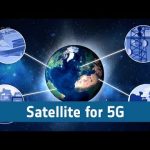
5G, the next generation of communication services, will deliver ultra-fast speeds, connect all people and devices to the internet and minimise delays. It will affect everybody, changing the way we communicate, work and interact with technology.
Space has an invaluable role to play in the 5G ecosystem. Satellites can extend, enhance, and provide reliability and security to 5G like no other, helping to deliver its promise of global, ubiquitous connectivity, with no noticeable difference to the end-user. ESA’s Satellite for 5G (S45G) programme aims promote the value-added benefits of space to 5G, by developing and demonstrating integrated satellite- and terrestrial-based 5G services, across multiple markets and use cases.
Our alien friend Paxi, ESA Education’s mascot, went to visit American astronaut Mark Vande Hei on board the International Space Station. Vande Hei shows Paxi the views outside of the Cupola, the biggest window on Earth in the International Space Station.
Second surprised text messages from Tayo! IT’s AI (Artificial Intelligence) for kids from Tayo the Little Bus. Did you know that Tayo can text? Tayo texts with Jiwu even about the ways to be the strongest person in the world! Wait for more fun episodes that Tayo texts with Jiwu!
Tayo the Little Bus has more than 100 episodes in English, Spanish, Turkish, Russian, Chinese, German and Korean! Here’s the official channels of them. 🇺🇸 🇪🇦 🇹🇷 🇷🇺 🇨🇳 🇩🇪 🇰🇷
Science Max – Ever wanted to build a bridge out of pasta? It’s not too hard and works better than you’d think. But what if we were to try to make a pasta bridge big enough for Phil to walk across? Plus, learn how to build a sandcastle you can stand on!
Have you ever done a science experiment and wondered “What would this be like if it were HUGE?” Welcome to Science Max, the exciting new series that turbocharges all the science experiments you’ve done at home.
In season 1, join Phil as he builds rocket cars, uses elastic energy to hurl pumpkins on a giant catapult, builds a bridge out of pasta that can hold a human, find magnets powerful enough to float Phil off the ground, and many more experiments taken to the MAX!
Tracking the movement of Earth’s water, resupplying the International Space Station, and our Administrator testifies about the agency’s proposed budget – a few of the stories to tell you about – This Week at NASA!
This video is available for download from NASA’s Image and Video Library: https://images.nasa.gov/details-NHQ_2018_0525_Following%20the%20movement%20of%20Earth%E2%80%99s%20water%20on%20This%20Week%20@NASA%20%E2%80%93%20May%2025,%202018.html
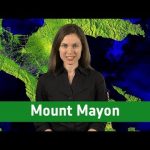
Explore the Philippines’ Mount Mayon, one of the world’s most active volcanoes, in this episode of Earth from Space, presented by Kelsea Brennan-Wessels from the ESA Web TV virtual studios.
See in this time-lapse how the Sentinel-3B satellite was prepared for its liftoff on 25 April 2018 from Plesetsk in Russia.
Sentinel-3B joined its twin, Sentinel-3A, in orbit. The pairing of identical satellites provides the best coverage and data delivery for Europe’s Copernicus programme – the largest environmental monitoring programme in the world. The satellites carry the same suite of cutting-edge instruments to measure oceans, land, ice and atmosphere.
Credits: Directed by Stephane Corvaja, ESA; Edited by Manuel Pedoussaut, Zetapress; Music by Hubrid-Rockot
#Jude Law as Gigolo Joe.
#Sam Robards as Henry Swinton.
#Frances O’Connor as Monica Swinton.
#Jake Thomas as Martin Swinton.
#Ashley Scott as Gigolo Jane.
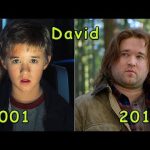
#Haley Joel Osment as David.
#William Hurt as Prof. Hobby.
The new Cold Atom Lab (CAL) facility is among the cargo launching to the International Space Station on the Orbital ATK CRS-9 mission. The Cold Atom Lab could help answer some big questions in modern physics. CAL produces clouds of atoms that are ten billion times colder than deep space. The facility uses lasers and magnetic forces to freeze the atoms until they are almost motionless. In the microgravity environment on the space station, it’s possible to observe these ultra-cold atoms for much longer in than what’s possible on the ground. The research done using CAL could potentially lead to a number of improved technologies, including sensors, quantum computers and atomic clocks used in spacecraft navigation. Read more at: https://coldatomlab.jpl.nasa.gov/
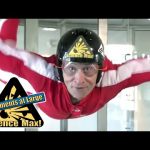
Science Max – Phil starts with a balloon powered hover disc, then tries to make a maxed out version big enough to ride. In fact, why not make two and then race them! Phil also tries to use the power of friction to climb the walls and even to fly!
Have you ever done a science experiment and wondered “What would this be like if it were HUGE?” Welcome to Science Max, the exciting new series that turbocharges all the science experiments you’ve done at home.
In season 1, join Phil as he builds rocket cars, uses elastic energy to hurl pumpkins on a giant catapult, builds a bridge out of pasta that can hold a human, find magnets powerful enough to float Phil off the ground, and many more experiments taken to the MAX!
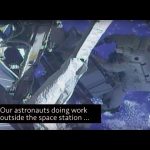
Our astronauts doing work outside the space station, an agencywide town hall with our new administrator, and old data provide new insight about Jupiter’s moon Europa – a few of the stories to tell you about – This Week at NASA!
This video is available for download from NASA’s Image and Video Library: https://images.nasa.gov/details-NHQ_2018_0518_Astronauts%20Working%20Outside%20the%20Space%20Station%20on%20This%20Week%20@NASA%20%E2%80%93%20May%2018,%202018.html
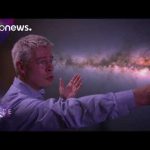
Astronomy is undergoing a revolution with the release of precision data on 1.7 billion stars in our galaxy from the Gaia space telescope. We head to the historic Observatory of Paris and ESA’s ESTEC base in the Netherlands to find out more.
It’s fair to say that science has been waiting for centuries, or even millennia for such a detailed survey of the Milky Way, and right now star-gazers are swamped with fresh, high-quality data that they can use to answer every question about the galaxy they ever wanted to ask.