Science Max – What makes boats float? Tinfoil doesn’t float, but a boat made of tinfoil does. It’s all about how you build it. Watch as Phil builds his human-sized tinfoil boat wrong several times before he figures it out. Plus, Phil gets into a tub full of the main ingredient in diapers. Why would he do such a thing? For Science!
Have you ever done a science experiment and wondered “What would this be like if it were HUGE?” Welcome to Science Max, the exciting new series that turbocharges all the science experiments you’ve done at home.
In season 1, join Phil as he builds rocket cars, uses elastic energy to hurl pumpkins on a giant catapult, builds a bridge out of pasta that can hold a human, find magnets powerful enough to float Phil off the ground, and many more experiments taken to the MAX!
In the edition of Space, Euronews correspondent Jeremy Wilks reports from the Observatory of the Côte d’Azur in the south of France on a unique mission to deflect an asteroid.
Asteroids have the potential to cause a catastrophe – a small asteroid could wipe out an entire city, while a large one could mean the end for us all.
It’s a threat we’re aware of, and which scientists and engineers are working to overcome.
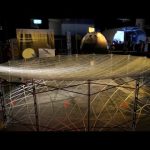
A 5 m-diameter antenna reflector, designed for orbital operations, seen during a test deployment during ESA’s latest Large Deployable Antenna Workshop.
Large-scale antenna reflectors are increasingly required for telecommunications, science and Earth observation missions.
This metal mesh reflector has a ‘double pantograph’ design to form a deployable ring. Once deployed it tensions two opposing, but connected, parabolic shaped nets, one on the top and one on the bottom.
I have a lot of friends who got admitted to Stanford and in this video I summarize things that they’ve told me about their admissions process. Walking around Stanford campus in California! 📗🇺🇸 How I got full financial aid to study in the USA (my book!) – http://bit.ly/2ZwlkRB
SAT/GMAT/GRE preparation – https://goo.gl/nfUAsQ
(These exams are required to get into most of Stanford’s programs)
Magnets have poles – when you put opposite ones together, they attract. But when you but the same ones together, they repel. Could we find magnets powerful enough to repel each other and float Phil off the ground? Plus, watch magnets defy gravity all on their own.
Have you ever done a science experiment and wondered “What would this be like if it were HUGE?” Welcome to Science Max, the exciting new series that turbocharges all the science experiments you’ve done at home.
In season 1, join Phil as he builds rocket cars, uses elastic energy to hurl pumpkins on a giant catapult, builds a bridge out of pasta that can hold a human, find magnets powerful enough to float Phil off the ground, and many more experiments taken to the MAX!
European spirit, identity and cohesion are the overarching aspects for Europe to achieve the best of outcomes for its states and citizens in space and for a globally successful European space sector.
United Space in Europe describes the intensive cooperation of different European entities for the sake of a strengthening of Europe. With this strengthened European cooperation in space, the 2016 Ministerial Council will further ESA’s breadth and strength of action to cover its mandate as laid out in the ESA Convention through enhanced partnership with its Member States, with other institutional actors and with space actors worldwide.
The conference takes place in the advent of the Space 4.0 era, a time when space is evolving from being the preserve of the governments of a few spacefaring nations to a situation in which there is the increased number of diverse space actors around the world, including the emergence of private companies, participation with academia, industry and citizens, digitalisation and global interaction.
Space 4.0 represents the evolution of the space sector into a new era, characterised by a new playing field. This era is unfolding through interaction between governments, private sector, society and politics. Space 4.0 is analogous to, and is intertwined with, Industry 4.0, which is considered as the unfolding fourth industrial revolution of manufacturing and services.
To meet the challenges and to proactively develop the different aspects of Space 4.0, the European space sector can become globally competitive only by fully integrating into European society and economy. This requires a sustainable space sector closely connected with the fabric of society and economy. For this to happen, space must be safe, secure and easily and readily accessible, and built on a foundation of excellence in science and technology – broadly and continuously over time.
ESA will table proposals at the meeting to meet the common European goals for space in this exciting and challenging new era.
[Spanish version] European spirit, identity and cohesion are the overarching aspects for Europe to achieve the best of outcomes for its states and citizens in space and for a globally successful European space sector.
United Space in Europe describes the intensive cooperation of different European entities for the sake of a strengthening of Europe. With this strengthened European cooperation in space, the 2016 Ministerial Council will further ESA’s breadth and strength of action to cover its mandate as laid out in the ESA Convention through enhanced partnership with its Member States, with other institutional actors and with space actors worldwide.
The conference takes place in the advent of the Space 4.0 era, a time when space is evolving from being the preserve of the governments of a few spacefaring nations to a situation in which there is the increased number of diverse space actors around the world, including the emergence of private companies, participation with academia, industry and citizens, digitalisation and global interaction.
Space 4.0 represents the evolution of the space sector into a new era, characterised by a new playing field. This era is unfolding through interaction between governments, private sector, society and politics. Space 4.0 is analogous to, and is intertwined with, Industry 4.0, which is considered as the unfolding fourth industrial revolution of manufacturing and services.
To meet the challenges and to proactively develop the different aspects of Space 4.0, the European space sector can become globally competitive only by fully integrating into European society and economy. This requires a sustainable space sector closely connected with the fabric of society and economy. For this to happen, space must be safe, secure and easily and readily accessible, and built on a foundation of excellence in science and technology – broadly and continuously over time.
ESA will table proposals at the meeting to meet the common European goals for space in this exciting and challenging new era.
[French version] European spirit, identity and cohesion are the overarching aspects for Europe to achieve the best of outcomes for its states and citizens in space and for a globally successful European space sector.
United Space in Europe describes the intensive cooperation of different European entities for the sake of a strengthening of Europe. With this strengthened European cooperation in space, the 2016 Ministerial Council will further ESA’s breadth and strength of action to cover its mandate as laid out in the ESA Convention through enhanced partnership with its Member States, with other institutional actors and with space actors worldwide.
The conference takes place in the advent of the Space 4.0 era, a time when space is evolving from being the preserve of the governments of a few spacefaring nations to a situation in which there is the increased number of diverse space actors around the world, including the emergence of private companies, participation with academia, industry and citizens, digitalisation and global interaction.
Space 4.0 represents the evolution of the space sector into a new era, characterised by a new playing field. This era is unfolding through interaction between governments, private sector, society and politics. Space 4.0 is analogous to, and is intertwined with, Industry 4.0, which is considered as the unfolding fourth industrial revolution of manufacturing and services.
To meet the challenges and to proactively develop the different aspects of Space 4.0, the European space sector can become globally competitive only by fully integrating into European society and economy. This requires a sustainable space sector closely connected with the fabric of society and economy. For this to happen, space must be safe, secure and easily and readily accessible, and built on a foundation of excellence in science and technology – broadly and continuously over time.
ESA will table proposals at the meeting to meet the common European goals for space in this exciting and challenging new era.
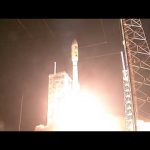
The first spacecraft in a new series of NASA-built advanced geostationary weather satellites launched into orbit aboard a United Launch Alliance Atlas V rocket Nov. 19 from Cape Canaveral Air Force Station in Florida. Once in geostationary orbit, GOES-R will be known as GOES-16 and will provide images of weather patterns and severe storms as regularly as every five minutes or as frequently as every 30 seconds. These images can be used to aid in weather forecasts, severe weather outlooks, watches and warnings, lightning conditions, maritime forecasts and aviation forecasts.
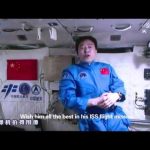
Astronauts on Chinese space station Tiangong-2 greet ESA and Thomas Pesquet. This video was recorded inside the Chinese space station Tiangong-2 by astronauts Jing Haipeng and Chen Dong. The duo landed safely on Earth on 18 November after spending a month orbiting Earth. A few hours before their descent, ESA astronaut Thomas Pesquet was launched aboard a Soyuz spacecraft to the International Space Station.
ESA’s Director of Human Spaceflight, David Parker, noted, “Human spaceflight provides many opportunities to increase international cooperation, and the interaction between the Astronaut Centre of China and the European Astronaut Centre is already creating positive experiences on which to build for the future.”
A cheesecake created by French chef Alain Ducasse for Thomas Pesquet’s six-month mission on the International Space Station was sent to the Chinese astronauts.
Chinese astronaut Ye Guangfu, who trained with the astronauts in this video, took part in ESA’s underground course this summer.
The Expedition 50/51 crew, including NASA astronaut Peggy Whitson, launched aboard a Soyuz spacecraft from the Baikonur Cosmodrome in Kazakhstan Nov. 17 eastern time, to begin a two-day flight to the International Space Station. Whitson, Oleg Novitskiy of the Russian space agency Roscosmos and Thomas Pesquet of ESA (European Space Agency) are scheduled to join Expedition 50 commander Shane Kimbrough of NASA and Roscosmos cosmonauts Sergey Ryzhikov and Andrey Borisenko, who all have been aboard the orbiting laboratory since October. Whitson will assume command of the station in February – making her the first woman to command the space station twice. Whitson and her Expedition 50 crewmates are scheduled to return to Earth next spring. Also, Supermoon Shines Bright, Newman Participates in Operation IceBridge, and Advanced Weather Satellite Mission Previewed!
ESA astronaut Thomas Pesquet, NASA astronaut Peggy Whitson and Roscosmos commander Oleg Novitsky were launched to the International Space Station on 17 November from Baikonur cosmodrome in Kazakhstan on their Soyuz MS-03 spacecraft.
Thomas, Peggy and Oleg will spend six months in space working and living on the International Space Station.
The Proxima mission is the ninth long-duration mission for an ESA astronaut. It is named after the closest star to the Sun, continuing a tradition of naming missions with French astronauts after stars and constellations.
During Proxima, Thomas will perform around 50 scientific experiments for ESA and France’s space agency CNES as well as take part in many research activities for the other Station partners. The mission is part of ESA’s vision to use Earth-orbiting spacecraft as a place to live and work for the benefit of European society while using the experience to prepare for future voyages of exploration further into the Solar System.
This experiment lets you make music through machine learning. A neural network was trained on many examples and it learns about musical concepts, building a map of notes and timings. You just play a few notes, and see how the neural net responds. http://g.co/aiexperiments
Built by Yotam Mann with friends on the Magenta and Creative Lab teams at Google. It uses Tone.js and open-source tools from the Magenta project.
With all of the exciting A.I. stuff happening, there are lots of people eager to start tinkering with machine learning technology. That’s why we’ve created A.I. Experiments, a site that showcases simple experiments that let anyone play with this technology hands-on, and resources for creating your own experiments.
Various visualizations featured in video made by Gene Kogan. Additional footage by Sarah Riazati.
This is a game built with machine learning. You draw, and a neural network tries to guess what you’re drawing. Of course, it doesn’t always work. But the more you play with it, the more it will learn. It’s just one example of how you can use machine learning in fun ways.
Built by Jonas Jongejan, Henry Rowley, Takashi Kawashima, Jongmin Kim, with friends at Google Creative Lab and Data Arts Team.
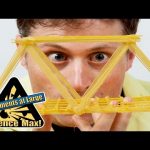
Science Max – Ever wanted to build a bridge out of pasta? It’s not too hard and works better than you’d think. But what if we were to try to make a pasta bridge big enough for Phil to walk across? Plus, learn how to build a sandcastle you can stand on!
Have you ever done a science experiment and wondered “What would this be like if it were HUGE?” Welcome to Science Max, the exciting new series that turbocharges all the science experiments you’ve done at home.
In season 1, join Phil as he builds rocket cars, uses elastic energy to hurl pumpkins on a giant catapult, builds a bridge out of pasta that can hold a human, find magnets powerful enough to float Phil off the ground, and many more experiments taken to the MAX!
Phil builds a balloon powered car in the lab. Then he tries to make one big enough to ride. Can the Science Max build team find a big enough balloon? Or are balloons the way to go? Plus, Newton’s Cradle out of bowling balls, how Guinea Pigs got their name and Newton’s 3rd Law.
Have you ever done a science experiment and wondered “What would this be like if it were HUGE?” Welcome to Science Max, the exciting new series that turbocharges all the science experiments you’ve done at home.
In season 1, join Phil as he builds rocket cars, uses elastic energy to hurl pumpkins on a giant catapult, builds a bridge out of pasta that can hold a human, find magnets powerful enough to float Phil off the ground, and many more experiments taken to the MAX!
Science Max – Phil starts with a Popsicle stick catapult. Then he uses everything he knows about elastic energy to build a full-size catapult that hurls pumpkins! Plus, a maxed out paddle wheel boat and a historical re-enactment (sort of) of how catapults were used in medieval days.
Have you ever done a science experiment and wondered “What would this be like if it were HUGE?” Welcome to Science Max, the exciting new series that turbocharges all the science experiments you’ve done at home.
In season 1, join Phil as he builds rocket cars, uses elastic energy to hurl pumpkins on a giant catapult, builds a bridge out of pasta that can hold a human, find magnets powerful enough to float Phil off the ground, and many more experiments taken to the MAX!
Science Max – Phil starts with a balloon powered hover disc, then tries to make a maxed out version big enough to ride. In fact, why not make two and then race them! Phil also tries to use the power of friction to climb the walls and even to fly!
Have you ever done a science experiment and wondered “What would this be like if it were HUGE?” Welcome to Science Max, the exciting new series that turbocharges all the science experiments you’ve done at home.
In season 1, join Phil as he builds rocket cars, uses elastic energy to hurl pumpkins on a giant catapult, builds a bridge out of pasta that can hold a human, find magnets powerful enough to float Phil off the ground, and many more experiments taken to the MAX!
NASA held a media briefing on Nov. 10 at the agency’s headquarters to discuss the upcoming Cyclone Global Navigation Satellite System (CYGNSS) mission. GYGNSS is a constellation of eight microsatellites that will gather never-before-seen details on the formation and intensity of tropical cyclones and hurricanes.
CYGNSS, targeted for a Dec. 12 launch from Cape Canaveral Air Force Station in Florida, is the first mission competitively selected by NASA’s Earth Venture program. This program focuses on low-cost, science-driven missions to enhance our understanding of the current state of Earth and its complex, dynamic system and enable continual improvement in the prediction of future changes.
During a Nov. 2 media event at NASA’s Goddard Space Flight Center, Administrator Charlie Bolden was joined by Goddard Center Director Chris Scolese and Senior Project Scientist, Dr. John Mather for an update on the James Webb Space Telescope, including a rare glimpse at the telescope’s primary mirror. Engineers and technicians recently completed a “Center of Curvature” test on the mirror, which measures the shape of the mirror. This is the first important optical measurement before the mirror goes into the testing chambers. Meanwhile, the telescope’s sunshield layers also have been finished. This will protect Webb’s sensitive instruments from the sun when the telescope is in space. The Webb Telescope, which is targeted for launch in 2018, will study every phase in the history of our universe, including the cosmos’ first luminous glows, the formation of planetary systems capable of supporting life, and the evolution of our own solar system. Also, Expedition 49 Returns Safely from the International Space Station, Next Space Station Crew Travels to Launch Site, Agency Innovation Mission Day, SDO Captures Lunar Transit, and World Altitude Record for MMS!
Amy Mainzer is a senior research scientist at NASA’s Jet Propulsion Laboratory. She served as deputy project scientist for NASA’s Wide-field Infrared Survey Explorer mission, an Earth-orbiting telescope designed to survey the entire sky in heat-sensitive infrared wavelengths. Following successful completion of its prime mission, this telescope was renamed NEOWISE and given a new mission to characterize asteroids and comets; Mainzer is the principal investigator. She also is the principal investigator of the proposed Near-Earth Object Camera mission, which would carry out a comprehensive survey of asteroids and comets using a dedicated space telescope surveying the solar system from a vantage point beyond the Earth’s Moon.
Producer Kathleen Kennedy and actor Daisy Ridley took a pause on the set of Star Wars: Episode VIII, to talk about the amazing women that work at NASA.
On 17 November 2016, ESA astronaut Thomas Pesquet will be the tenth French astronaut to be launched into space, alongside Roscosmos commander Oleg Novitsky and NASA astronaut Peggy Whitson.
They will travel from Baikonur Cosmodrome in Kazachstan on the Soyuz MS-03, a recently upgraded version of Russia’s workhorse that has been in service for almost 50 years.
Thomas’s mission is called Proxima and it is the ninth long-duration mission for an ESA astronaut. It was named after the closed star to the Sun – continuing a tradition of naming missions with French astronauts after stars and constellations.
During Proxima, Thomas will perform more than 50 scientific experiments for ESA and CNES as well as take part in many research activities for the other Space Station partners.
Paxi has joined ESA Education’s Fly Your Thesis! 2016 campaign where 4 teams of university students are running their experiments in an environment of microgravity.
Dr. Canton sees the coming of more Artificial Intelligence uses in our everyday lives and in
solving global problems. He encourages us to think about its direction and how to maintain control of what we create.
Dr. James Canton is a leading global futurist, social scientist, keynote presenter, author, and visionary business advisor. For over 30 years, he has been insightfully predicting the key trends that have shaped our world. He is a leading authority on future trends with an emphasis on harnessing innovation. Dr. Canton has advised three White House Administrations and global business leaders.
This talk was given at a TEDx event using the TED conference format but independently organized by a local community. Learn more at http://ted.com/tedx
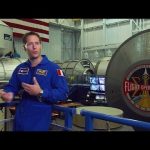
With a background as an aerospace engineer and commercial pilot, Thomas Pesquet is the youngest member of ESA’s astronaut corps. Having completed several years of international training since his selection in 2009, he’ll shortly become the tenth French national to travel into orbit. His stay onboard the International Space Station – known as the Proxima mission – will last around six months.
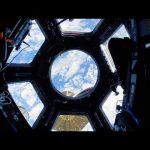
Join us for a fly-through of the International Space Station. Produced by Harmonic exclusively for NASA TV UHD, the footage was shot in Ultra High Definition (4K) using a fisheye lens for extreme focus and depth of field.
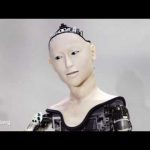
Japan has a unique fascination with androids and the quest to make robots more like humans. One of the country’s most original thinkers in this area is Professor Takashi Ikegami of the University of Tokyo. He has created androids filled with sensors and artificial intelligence software. The technology allows them to perceive the outside world and react to it as they see fit. Hello World host Ashlee Vance traveled to Tokyo to meet with Professor Ikegami and see his latest android creation. The robot they encounter flails about and makes strange gurgling noises as it responds to their movements and conversation. While it all looks rudimentary today, the technology is the precursor of what Ikegami predicts will be a new robotic life form that has its own culture, language, and desires. What could go wrong?
Scientists and engineers on the ExoMars project had their hearts in their mouths as the ExoMars mission reached the red planet, with the Schiaparelli probe going missing in action at the end of its descent just as the TGO mothership swept into a perfectly timed orbit.
The rollercoaster ride of arrival at Mars is the first installment in this ambitious Russian and European project that aims for the first time to directly search for signs of life on Mars.
The plight of Schiaparelli remains unclear. It is certainly on the Martian surface, but may well have hit the red dust much harder then engineers had planned, and nothing has been heard from it since.
Data relayed during the lander’s descent shows the initial high-speed entry to the Martian atmosphere went well, with the heatshield slowing the craft and the parachute deploying. However once the back heat shield and parachute were ejected the flow of events did not go to plan.
Earth from Space is presented by Kelsea Brennan-Wessels from the ESA Web-TV virtual studios. Part of Nepal including its capital city, Kathmandu, and the Himalayan foothills are featured in the 202nd edition.
Team members of NASA’s Juno mission to Jupiter discussed the latest science results, an amateur imaging processing campaign, and the recent decision to postpone a scheduled burn of the spacecraft’s main engine, during a media briefing on Oct. 19. The agency’s Juno spacecraft entered orbit around Jupiter on July 4. On Aug. 27, it performed its first close flyby of the planet. It was the first time Juno had its entire suite of science instruments activated and observing the planet as the spacecraft zoomed past.
On Oct. 17, Orbital ATK launched its Cygnus cargo spacecraft atop an Antares rocket to the International Space Station. The spacecraft launched from the Mid-Atlantic Regional Spaceport at NASA’s Wallops Flight Facility in Virginia. This is the sixth cargo mission to the International Space Station for Orbital ATK.