
Tag med Paxi til den røde planet for at undersøge, om der findes marsmænd, og få mere at vide om Den Europæiske Rumorganisations ExoMars-missioner.
Blog
-
Paxi – Tajemství Rudé planety
Následujte Paxiho na jeho cestě na Mars, kde bude zkoumat vyschlá koryta řek, sopky a polární ledové čepice.
-
Paxi – Geheimnisse des Roten Planeten
Folge Paxi zum Mars, wo er die trockenen Flussbetten, einen beeindruckenden Vulkan und die polaren Eiskappen des Planeten erforschen wird.
-
Paxi – Punaisen planeetan salaisuudet
Lähde Paxin mukaan Marsiin, jossa hän tutkii planeetan kuivia joenuomia, tulivuoria ja napajäätiköitä.
-
Paxi – Geheimen van de Rode Planeet
Volg Paxi op zijn reis naar Mars, waar hij de droge rivierbeddingen, de vulkaan en de ijskappen op de polen gaat verkennen.
-
Paxi – I segreti del Pianeta Rosso
Seguite Paxi nel suo viaggio su Marte, all’esplorazione dei vulcani, degli alvei asciutti dei fiumi e delle calotte polari del pianeta.
-
Paxi – Secrets de la Planète Rouge
Suis Paxi dans son voyage vers Mars pour explorer avec lui des rivières asséchées, un volcan et des calottes de glace polaire.
-

ESA Euronews: Canada’s robot masters
Robots are an essential companion to mankind in space, and many of the modern-day masters of these robots are to be found in Montreal, home to the Canadian Space Agency.
Euronews Space has unique access to the team, among them operations engineer Mathieu Caron, who can steer the Canadarm 2 directly from his control room, or instruct astronauts piloting it in space.
This video is available in the following languages:
English https://www.youtube.com/watch?v=VizQJUAmegQ
German https://www.youtube.com/watch?v=y2ES9dggnjs
French https://www.youtube.com/watch?v=HA110F9db2g
Italian https://www.youtube.com/watch?v=4NGg1hv6RIE
Spanish https://www.youtube.com/watch?v=WzGZHJBFdH4
Portuguese https://www.youtube.com/watch?v=TeFFCzIZaa8
Hungarian https://www.youtube.com/watch?v=cKjQhvKb5_M
Greek https://www.youtube.com/watch?v=bUqP2swWllE -

Earth from Space: Tonga
Earth from Space is presented by Kelsea Brennan-Wessels from the ESA Web-TV virtual studios. Discover the southern Pacific Ocean island, Tongatapu, in the one hundred ninety-fourth edition.
See also http://www.esa.int/spaceinimages/Images/2016/07/Tonga to download the image.
-
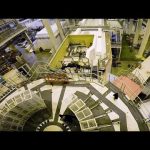
ESA-RAL Advanced Manufacturing Laboratory
Located on the UK Space Gateway, Harwell Campus, the ESA-RAL Advanced Manufacturing Laboratory provides expertise and test services to investigate and optimise advanced materials and manufacturing processes in support of cutting-edge research and development. The facility is physically located within the Science and Technology Facilities Council’s Rutherford Appleton Laboratory (RAL).
The laboratory takes in samples of material destined for future space projects and puts them through various tests. A wide range of material properties and characteristics can be investigated in order to provide recommendations on how the materials can best be applied or improved before they can be considered for further development and used in a fully-fledged space mission. It has access to a metal-based 3D printer and is equipped with a suite of powerful microscopes, an X-ray CT machine and a range of furnaces.
Mechanical testing such as tensile and micro hardness testing is also performed.The lab is a gateway to accessing some of the extensive on-site testing facilities based on Harwell Campus, such as STFC’s ISIS Neutron Source, the Diamond Light Source synchrotron and the UK’s Central Laser Facility.
More about the new lab on our website:
http://www.esa.int/Our_Activities/Space_Engineering_Technology/New_lab_for_advanced_manufacturing_techniques_and_materials -

NASA Q&A With the Stars of STAR TREK: BEYOND
Chris Pine and Zachary Quinto sit down to answer NASA trivia questions with Gay Yee Hill of NASA’s Jet Propulsion Laboratory.
For more information:
http://www.nasa.gov/startrek -
Scoot (age 7) builds a Conversational Chatbot using API.AI
Meet Scoot, a self-employed 7 year old boy. Scoot is going to show you how easy it is to create your own personal chatbot using the API.AI Conversational User Experience Platform. We hope this inspires you to create your own intelligent bot.
-
NASA’s Office of Planetary Protection
The mission of the Office of Planetary Protection is to promote the responsible exploration of the solar system by implementing and developing efforts that protect the science, explored environments, and Earth. The objectives of planetary protection are several-fold and include: Preserving our ability to study other worlds as they exist in their natural states; avoiding the biological contamination of explored environments that may obscure our ability to find life elsewhere – if it exists; and to ensure that we take prudent precautions to protect Earth’s biosphere in case life does exist elsewhere.
-
NASA Does Facebook Live Update on the Next Mars Rover
The team developing NASA’s next rover mission to Mars has received a go-ahead from the agency to proceed with building the rover for launch in 2020. A July 15 Facebook Live event from NASA’s Jet Propulsion Laboratory featured updated news about the Mars 2020 rover and its mission. It will be almost identical to the Curiosity rover currently on Mars, but will have enhanced landing technology, the ability to prepare soil and rock samples for return to Earth and microphones to capture sound. The rover will look for signs of past life in a region of the Red Planet where the ancient environment was favorable for microbial life.
-

Earth from Space: Sundarbans web
Earth from Space is presented by Malì Cecere from the ESA Web-TV virtual studios. The one hundred ninety-third edition features a Sentinel-2 image of Sundarbans in Bangladesh.
See also http://www.esa.int/spaceinimages/Images/2016/07/Sundarbans_web to download the image.
-
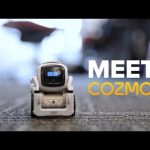
Meet Cozmo, the AI robot with emotions
Cozmo is a mini companion robot powered by a so-called emotion engine that develops as it learns about you. Developers will have access to an SDK to program the robot.
Click here for the Cozmo CNET review – http://cnet.co/29Lz56z
Subscribe to CNET: http://bit.ly/17qqqCs
Watch more CNET videos: http://www.cnet.com/video
Follow CNET on Twitter: http://twitter.com/CNET
Follow CNET on Facebook: http://www.facebook.com/cnet#Cozmo #Anki #CozmoAnki
-
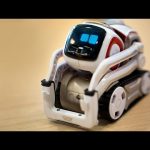
Anki’s AI-powered toy robot
Cozmo is an AI robot from startup Anki, a company best known for making small race cars that connect to your smartphone. With Cozmo, the company hopes it can sell kids and adults alike on the promise of advanced artificial intelligence and robotics all bundled together in a Pixar-like toy. When Cozmo launches in October, Anki will let anyone access the company’s code to start tinkering with the robot and building third-party apps.
Subscribe: https://goo.gl/G5RXGs
Check out our full video catalog: https://goo.gl/lfcGfq
Visit our playlists: https://goo.gl/94XbKx
Like The Verge on Facebook: https://goo.gl/2P1aGc
Follow on Twitter: https://goo.gl/XTWX61
Follow on Instagram: https://goo.gl/7ZeLvX
Read More: http://www.theverge.com -
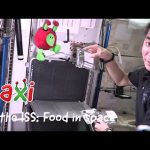
Paxi on the ISS: Food in space
Our alien friend Paxi, ESA Education’s mascot, went to visit Japanese astronaut Kimiya Yui on board the International Space Station. Kimiya shows Paxi what it’s like to prepare and eat food in weightlessness, an important part of the day when living on the ISS.
#ESA
#Paxi
#InternationalSpaceStation -

Behold The Artificial Intelligent Baby X
Behold The Future…Imagine a machine that can laugh and cry, learn and dream, and can express its inner responses to how it perceives you to feel. It can express itself in a natural manner but also allows you to visualise the mental imagery emerging in its mind.
The Laboratory for Animate Technologies is creating ‘live’ computational models of the face and brain by combining Bioengineering, Computational and Theoretical Neuroscience, Artificial Intelligence and Interactive Computer Graphics Research.
We are developing multidisciplinary technologies to create interactive autonomously animated systems which will define the next generation of human computer interaction and facial animation.
“If I had my time again I’d want to spend it in this lab” – Alvy Ray Smith, Co-founder of Pixar (on his visit to the Laboratory for Animate Technologies).
We believe the best way to simulate biological behaviour is through biological models. We model the brain processes which give rise to behaviour and social learning and use these to animate lifelike models of the face that can interact with you.
BabyX is an interactive animated virtual infant prototype. BabyX is a computer generated psychobiological simulation under development in the Laboratory of Animate Technologies and is an experimental vehicle incorporating computational models of basic neural systems involved in interactive behaviour and learning.
These models are embodied through advanced 3D computer graphics models of the face and upper body of an infant. The system can analyse video and audio inputs in real time to react to the caregiver’s or peer’s behaviour using behavioural models.
BabyX embodies many of the technologies we work on in the Laboratory and is under continuous development, in its neural models, sensing systems and also the realism of its real time computer graphics.
We create interactive models of neural systems and neuroanatomy enabling visualisation of the internal processes generated by computational simulations giving rise to behaviour.
The Auckland Face Simulator is being developed to cost effectively create extremely realistic and precisely controllable models of the human face and its expressive dynamics for Psychology research.
We are developing the technology to simulate faces both inside and out. We simulate how faces move and how they look, and even their underlying anatomic structure.
We are developing a visual modelling methodology for the construction, visualisation and animation of neural systems called Brain Language [BL], a novel simulation environment for neural models.
This allows users to create animations and real-time visualisations from biologically based neural network models, allowing simulation effects to be viewed in an interactive context. Such a visual environment is not only suitable for visualising a simulation; it is also ideal for model development.
We are developing computer vision based systems to track and analyse facial expression and state of the art algorithms to solve for individual facial muscle activation.
Applications range from real-time expression recognition to microdynamic interaction analysis for psychology research.
http://www.abi.auckland.ac.nz/en/about/our-research/animate-technologies.html
————————————————————————————This Freaky Baby Could Be the Future of AI. Watch It in Action
-
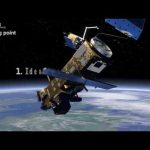
ESA’s active debris removal mission: e.Deorbit (with annotations)
ESA’s Clean Space initiative is studying an active debris removal mission called e.Deorbit, which will target an ESA-owned derelict satellite in low orbit, capture it, then safely burn it up in a controlled atmospheric reentry. e.Deorbit will be the world’s first active debris removal mission, and will provide an opportunity for European industries to showcase their technological capabilities to a global audience.
Read more about e.Deorbit:
http://www.esa.int/Our_Activities/Space_Engineering_Technology/Clean_Space/e.DeorbitA version of this video without annotations was previously published here:
https://www.youtube.com/watch?v=R6yZLbUCU2c -

Happy 4th of July, from NASA
To all Americans — in space and on Earth — NASA wishes you a safe and happy July 4th Independence Day.
-
Space Launch System Booster Test Fired on This Week @NASA – July 1, 2016
On June 28, the booster for NASA’s Space Launch System (SLS) rocket was fired up for a major two-minute full-duration qualification ground test at Orbital ATK Propulsion Systems’ test facilities in Promontory, Utah. Engineers will evaluate test data on the motor’s performance using cold propellant, the steering operation of its redesigned nozzle, and other operational data to help qualify the booster for flight. This is the last time the booster will be fired in a test environment before it’s used for the first uncrewed test flight of SLS with NASA’s Orion spacecraft, known as Exploration Mission-1, in late 2018. Also, SLS Test Hardware Arrives at Marshall, Juno Arrives at Jupiter July 4th, Test Lab Launched to Streamline Air Travel, Russian Docking System Tested on ISS, and NASA 2016 Agency Honor Award Distinguished Honorees.
-
Once upon a time… Rosetta’s second year at the comet
Rosetta describes the exciting discoveries she made during her second year at Comet 67P/Churyumov-Gerasimenko, after the comet made its closest approach to the Sun along its orbit. She also tells us about her efforts to contact Philae, and starts counting down to her own mission finale.
This video is available in the following languages:
English https://www.youtube.com/watch?v=lxdDx8frN_Y
Spanish https://www.youtube.com/watch?v=zM-ZJBinuBk
French https://www.youtube.com/watch?v=bFF1izh10PM
Italian https://www.youtube.com/watch?v=3aS1pgOU8Gs
German https://www.youtube.com/watch?v=ne_PvPJZYL4 -

10 September 2016: Citizens’ Debate on Space for Europe in 22 ESA Member States
On 10 September 2016 about 2000 citizens from 22 European countries will participate in the first Citizens’ Debate on Space for Europe. In the course of the day, citizens will have the opportunity to learn, debate, have their say and participate by suggesting priorities on all aspects of current and future space programmes. This consultation on an unprecedented scale will take place simultaneously in all 22 Member States of the European Space Agency (ESA).
Approximately 100 citizens per Member State will be gathered at various locations. Those selected will be as representative as possible of the population of their country according to socio-demographic criteria. The results of the consultation will be collated – as early as 48 hours after the debate takes place – and communicated to ESA.
The Citizens’ Debate on Space for Europe is a major first – never before has the future of space activities been addressed in such an event held across so many countries.
For more information, and to apply to take part in the debate, visit http://www.citizensdebate.space
-
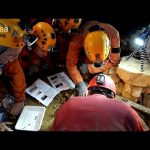
CAVES 2016: The visible face
Scenes from training of six astronauts who will spend six nights underground in a cave in Sardinia, Italy. After a week of training, the astronauts descend into the caves to set up basecamp 800 m underground.
One of the last unexplored environments on our planet, caves offer parallels to exploring space. ESA’s underground training course “Cooperative Adventure for Valuing and Exercising human behaviour and performance Skills” – CAVES – prepares astronauts over two weeks to work safely and effectively in multicultural teams.
This year’s participants are an even more international team than ever, including ESA’s Pedro Duque, NASA’s Jessica Meir and Richard Arnold, Japan’s astronaut Aki Hoshide, China’s Ye Guangfu and Russia’s Sergei Korsakov.
The similarities between caving and spaceflight are highlighted throughout the course. Speleologists and astronauts adopt the ‘buddy system’, and both astronaut trainers and CAVES instructors repeat the same mantras of “slow is fast,” “check your gear, and then trust it,” and “always be aware of where you are and where your buddy is”.
Follow the underground adventure on Twitter with @ESA_Caves, and on the CAVES blog: http://blogs.esa.int/caves/.
-

Neuroscience, AI and the Future of Education | Scott Bolland | TEDxSouthBank
Currently around 63% of students are disengaged at school, meaning that they withdrawal either physically or mentally before they have mastered the skills that are required to flourish in later life. In this talk Scott Bolland explores the science of learning, the mismatch between how we teach and how the brain natural learns, and the important role that artificial intelligence could take in addressing the limitations in our current education system.
Dr Scott Bolland is the founder of New Dawn Technologies, a high-tech software company aiming to revolutionise education through the use of artificial intelligence. He has spent the last 20 years actively researching and teaching in the field of cognitive science – the scientific study of how the mind works – which spans disciplines such as psychology, philosophy, neuroscience, artificial intelligence and computer science. He holds a PhD in this field, as well as a university medal for outstanding academic scholarship.
This talk was given at a TEDx event using the TED conference format but independently organized by a local community. Learn more at http://ted.com/tedx
-
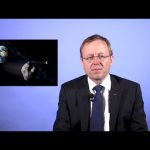
ESA Director General marks Asteroid Day 2016
ESA Director General Jan Woerner sends a message to mark Asteroid Day 2016, an annual global movement to increase public awareness of potential asteroid impacts with Earth, and the importance of guarding against them. It is held each year on 30 June, the anniversary of the largest impact in recent history, the 1908 Tunguska event in Siberia.
-

NASA Agency Awards Recognize Outstanding Employee Contributions
During the 2016 NASA Honor Awards Ceremony on June 28 at Ames Research Center, NASA Administrator Charlie Bolden presented Distinguished Service and Distinguished Public Service Medals to individual employees who have made extraordinary and indelible contributions to the agency’s mission success. These awards are the agency’s most prestigious and distinguished honors.
-

Big Test to Qualify Most Powerful Rocket Booster for Flight
NASA tested the largest, most powerful booster ever built for flight for the agency’s new rocket, the Space Launch System(SLS) on June 28 at Orbital ATK Aerospace System’s test facility in Promontory, Utah. SLS and NASA’s Orion spacecraft will launch astronauts on missions to explore multiple destinations on the journey to Mars.
This was the second two-minute, full duration qualification test for the booster, and will provide NASA with critical data to support booster qualification for flight. This second test measured the booster’s performance at the colder end of the accepted propellant temperature range, a targeted 40 degrees Fahrenheit. It was also the last time the booster will be fired in a test environment before the first flight of SLS and Orion in 2018.
-
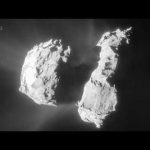
Rosetta status
Rosetta has another three months of science to collect before its historic mission comes to an end. But the mission is not resting on its laurels. It has just broken a new record by flying an orbit 7 kms from the comet’s centre – just 5 kms from the surface – and there are more breathtaking manoeuvres to come.
This film describes the orbits that Rosetta will undertake around comet 67P/Churyumov-Gerasimenko, the changes in the amount of gas coming off the comet, and examines the importance of finding phosphorus and glycine – an amino acid that is essential for life.
It also discusses the mission’s most recent discoveries of Xenon and Krypton, together with most of their isotopes. These noble gases were detected by the ROSINA instrument during the period when Rosetta was flying extremely close to the comet. More important science is expected to be released during the next few months.
More about Rosetta:
http://blogs.esa.int/rosetta -
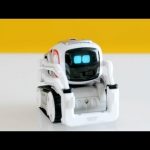
Cozmo is Anki’s new tiny toy robot
Anki aims to bring a Pixar character to life with Cozmo, its plucky little robot. TechCrunch talks so Anki co-founder and CEO, Anki Boris Sofman.
Read more: https://techcrunch.com/2016/06/27/cozmo/
TechCrunch is a leading technology media property, dedicated to obsessively profiling startups, reviewing new Internet products, and breaking tech news.
Subscribe to TechCrunch today: http://bit.ly/18J0X2e
-
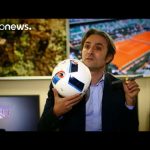
ESA Euronews: Sport and Internet via satellite
Dozens of Euro 2016 matches are being beamed via satellite to television sets and phones all over the world this summer. But did you know that there is a technology, based on internet and satellite, that allows even a small football club to live stream their games and target a new audience?
Claudio Rosmino and the Space team travelled to Italy to see this innovation in action – and also to France to explore the science behind the technology.
This video is available in the following languages:
English: https://www.youtube.com/watch?v=sI9He-OCyY0
French: https://www.youtube.com/watch?v=PS6HbTzUvkE
German: https://www.youtube.com/watch?v=tFys7MGwrVk
Italian: https://www.youtube.com/watch?v=T82rBP-bBow
Spanish: https://www.youtube.com/watch?v=c-gJxC7ch1Y
Portuguese: https://www.youtube.com/watch?v=hmVgrd5CoXY
Greek: https://www.youtube.com/watch?v=h41xGsJ745Y
Hungarian: https://www.youtube.com/watch?v=nKhGZKaXnmQ -

Secrets of Successful Kids: Grit, Purpose, and Artificial Intelligence
While there are no ironclad rules for producing children who perform well in school, pursue healthy behavior, and work towards wise goals, there are proven strategies that can help. Lucky are those with natural talent, but some work suggests grit, perseverance, and pure stick-to-it-ness may matter even more. Research also highlights the value of finding meaningful life purpose. Artificial intelligence has emerged as an effective tool for predicting long-term outcomes, but can it also help maximize a child’s potential? How do we cultivate characteristics in our youth that will lead to a fulfilling adulthood? What can early coaching accomplish?
Featuring:
Robin Koval
Vivienne Ming
Vic Strecher
Kevin Vigilante, Moderator -

NASA Celebrates Makers
NASA works with the Maker community to create new ideas and technologies to drive exploration here on Earth and out in space. The agency uses prizes and challenges, like the Future Engineers 3-D printing challenge for students, and programs like the CubeSat Launch Initiative, which works with students across the country to build and launch small satellites, to encourage innovation and STEM development. During the National Week of Making 2016, NASA committed to continuing its work in order to help groups in all 50 states launch a satellite into orbit.
For more information:
http://www.nasa.gov/feature/calling-all-makers-visit-nasa-solvehttp://www.nasa.gov/mission_pages/station/research/news/multipurpose_precision_maintenance_tool
http://www.nasa.gov/feature/first-cubesat-built-by-an-elementary-school-deployed-into-space
-
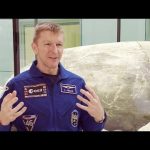
First interview with Tim Peake back on Earth
This interview with ESA astronaut Tim Peake was recorded in Cologne, Germany, one day after his return from a six-month stay on the International Space Station.
Tim Peake, NASA astronaut Tim Kopra and commander Yuri Malenchenko landed in the steppe of Kazakhstan on Saturday, 18 June in their Soyuz TMA-19M spacecraft at 09:15 GMT. The trio spent 186 days on the International Space Station.
The landing brings Tim Peake’s Principia mission to an end but the research continues. Tim is the eighth ESA astronaut to complete a long-duration mission in space. He was the third after Alexander Gerst and Andreas Mogensen to fly directly to ESA’s astronaut home base in Cologne, Germany, for medical checks and for researchers to collect more data on how Tim’s body and mind have adapted to living in space.
More about the Principia mission: http://www.esa.int/principia
Follow Tim Peake via http://timpeake.esa.int
-
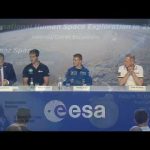
Tim’s first news conference back on Earth
The first news conference with ESA astronaut Tim Peake on return to Earth after spending 186 days in space on the International Space Station on his Principia mission.
The media event was held at ESA’s astronaut centre in Cologne, Germany, 21 July just three days after landing on Earth. The European Astronaut Centre is the home base of all ESA astronauts
Tim Peake, NASA astronaut Tim Kopra and commander Yuri Malenchenko landed in the steppe of Kazakhstan on Saturday, 18 June in their Soyuz TMA-19M spacecraft.
The landing brings Tim Peake’s Principia mission to an end but the research continues. Tim is the eighth ESA astronaut to complete a long-duration mission in space. He is the third after Alexander Gerst and Andreas Mogensen to fly directly to the European Astronaut Centre for medical checks and for researchers to collect more data on how Tim’s body and mind have adapted to living in space.
More about the Principia mission:
http://www.esa.int/principiaFollow Tim on social media:
http://timpeake.esa.intFollow Thomas on social media:
http://thomaspesquet.esa.int -
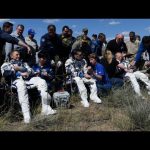
Soyuz TMA-19M landing
ESA astronaut Tim Peake, NASA astronaut Tim Kopra and commander Yuri Malenchenko landed in the steppe of Kazakhstan on Saturday, 18 June in their Soyuz TMA-19M spacecraft. The trio spent 186 days on the International Space Station. The landing brings Tim Peake’s Principia mission to an end but the research continues. Tim is the eighth ESA astronaut to complete a long-duration mission in space. He is the third after Alexander Gerst and Andreas Mogensen to fly directly to ESA’s astronaut home base in Cologne, Germany, for medical checks and for researchers to collect more data on how Tim’s body and mind have adapted to living in space.
Follow Tim Peake via timpeake.esa.int
-

Welcome Back to Earth
Expedition 47 Commander Tim Kopra of NASA, Soyuz Commander Yuri Malenchenko of Roscosmos and Flight Engineer Tim Peake of ESA (European Space Agency) were greeted in a traditional ceremony in Kazakhstan June 18, a few hours after their safe return to Earth from a 186 day mission on the International Space Station.
-
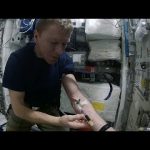
Tim Peake: how to draw blood in space
ESA astronaut Tim Peake shows how to draw blood for research on the International Space Station. Researchers often request samples before, during and after a spaceflight to examine differences.
The tubes of blood are put in a refrigerated centrifuge and then stored in the International Space Station’s –80°C freezer called MELFI for later analysis on Earth.
Read more about the experiments Tim Peake took part in: http://www.esa.int/Our_Activities/Human_Spaceflight/Principia/Body_and_mind
-

Detroit: Become Human – E3 2016 Trailer | PS4
Here’s the E3 2016 premiere trailer for Detroit: Become Human.
May contain content inappropriate for children, visit www.esrb.org for rating information