
Anche a bordo della Stazione Spaziale Internazionale gli astronauti hanno ogni tanto bisogno di una pausa tra esperimenti, esercizio fisico e lavori di manutenzione. Samantha Cristoforetti, astronauta dell’Agenzia Spaziale Europea in missione per l’Agenzia Spaziale Italiana, ci mostra qualche esempio di uno snack sano in microgravitá.
Blog
-
NASA Celebrates Earth Day
NASA uses the vantage point of space to increase our understanding of our home planet, improve lives and safeguard our future. The agency also develops new ways to observe and study Earth’s interconnected natural systems with long-term data records, shares this unique knowledge, and works with institutions around the world to gain new insights into how our planet is changing. Here’s a brief thirty second video showing some of the sights and sounds of our Earth and why it’s important to us all to appreciate our unique home in the solar system.
-
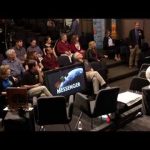
NASA Celebrates MESSENGER Mission Prior to Surface Impact on Planet Mercury
NASA held a panel discussion media on Thursday, April 16, to share scientific findings and technical accomplishments of the agency’s MErcury Surface, Space ENvironment, GEochemistry, and Ranging (MESSENGER) spacecraft.
After more than 10 years in space, the highly successful mission will come to an end when it is expected to collide into planet Mercury at a speed of more than 8,750 miles per hour (3.91 km/sec) near the end of this month.
Launched in August 2004, MESSENGER traveled 4.9 billion miles (7.9 billion kilometers) – a journey that included 15 trips around the sun and flybys of Earth once, Venus twice, and Mercury three times – before it was inserted into orbit around its target planet in March 2011. The spacecraft’s cameras and other sophisticated, high-technology instruments have collected unprecedented images and made other observations. Mission managers are preparing to impact Mercury’ surface in the next couple weeks.
Participants featured were:
· James Green, director, Planetary Science Division, NASA Headquarters, Washington
· Sean Solomon, MESSENGER principal investigator; director, Columbia University’s Lamont-Doherty Earth Observatory, Palisades, New York
· Helene Winters, MESSENGER project manager, Johns Hopkins University Applied Physics Laboratory, Laurel, Maryland
· Daniel O’Shaughnessy, MESSENGER systems engineer, Johns Hopkins University Applied Physics Laboratory, Laurel, Maryland -
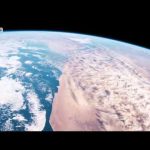
Italy to Indian Ocean
Similar to ESA astronaut Samantha Cristoforetti’s night timelapse over Italy and Egypt (https://www.youtube.com/watch?v=Lgw36RCQPvM) but taken during the day, this video takes you on a 30-second journey over Italy, passing Greece while flying over the Mediterranean Sea to follow the Nile and finish at the Indian Ocean.
Looking out from the International Space Station’s Cupola observatory while circling Earth at speeds of 28 800 km/h, the 5500 km flight took Samantha around 12 minutes. Images from a Space Station camera were joined together to create this video and make the flight seem even faster.
The astronauts on the Space Station spend as much time as possible on science. During her 40-hour working week Samantha runs many experiments from Italy’s ASI space agency and ESA, and takes part in even more from scientists all over the world.
Samantha is living and working on board the International Space Station as part of the six-strong Expedition 42 and 43 crew. Follow her Futura mission at http://samanthacristoforetti.esa.int.
-
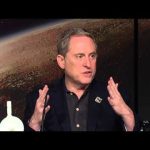
NASA’s New Horizons Spacecraft: Getting to Pluto
In NASA’a second televised briefings on Tuesday, April 14, plans and upcoming activities about the agency’s mission to Pluto that will make the first-ever close flyby of the dwarf planet on July 14 were briefed.
Briefers described the mission’s goals and context, scientific objectives and encounter plans – including what images can be expected and when.
New Horizons already has covered more than 3 billion miles since it launched on Jan. 19, 2006. The spacecraft will pass Pluto at a speed of 31,000 mph taking thousands of images and making a wide range of science observations. At a distance of nearly 4 billion miles from Earth at flyby, it will take approximately 4.5 hours for data to reach Earth.
Participants for the 2:20-3:30 p.m. discussion were:
– James Green, director of Planetary Science, NASA Headquarters
– Glen Fountain, New Horizons Project Manager, Johns Hopkins University Applied Physics Laboratory, Laurel, Maryland
– Hal Weaver, New Horizons Project Scientist, Johns Hopkins University Applied Physics Laboratory, Laurel, Maryland
– Alan Stern, New Horizons Principal Investigator, Southwest Research Institute, Boulder, Colorado -
NASA’s New Horizons Spacecraft: Seeing Pluto as Never Before
In NASA first of two televised briefings on Tuesday, April 14, plans and upcoming activities about the agency’s mission to Pluto that will make the first-ever close flyby of the dwarf planet on July 14 were discussed.
Briefers described the mission’s goals and context, scientific objectives and encounter plans – including what images can be expected and when.
New Horizons already has covered more than 3 billion miles since it launched on Jan. 19, 2006. The spacecraft will pass Pluto at a speed of 31,000 mph taking thousands of images and making a wide range of science observations. At a distance of nearly 4 billion miles from Earth at flyby, it will take approximately 4.5 hours for data to reach Earth.
Participants for 1-2 p.m. discussion were:
– John Grunsfeld, astronaut and Science Mission Directorate associate administrator, NASA Headquarters, Washington
– James Green, director of Planetary Science, NASA Headquarters
– Alan Stern, New Horizons Principal Investigator, Southwest Research Institute, Boulder, Colorado
– William McKinnon, New Horizons Co-Investigator, Washington University in St. Louis
– Cathy Olkin, New Horizons Deputy Project Scientist, Southwest Research Institute, Boulder, Colorado -
So You Want a Degree in Physics
Even if you don’t, watch anyway. Maybe I’ll convince you. And if not, maybe I’ll impart some important skills or perspectives upon you. A lot of what I say can be applied not only to physics, but to other academic disciplines as well.
Online resources for learning math:
Khan Academy
https://www.khanacademy.org/math/
patrickjmt
https://www.youtube.com/user/patrickJMT
Dr. Chris Tisdell
https://www.youtube.com/user/DrChrisTisdell/
MIT Open Courseware
https://www.youtube.com/user/MITHere are some resources for learning physics (in order of increasing difficulty)
Amateur (little to no math)
A Briefer History of Time by Stephen Hawking
The Grand Design by Stephen Hawking and Leonard Mlodinow
The Elegant Universe by Brian Greene
Cosmos by Carl Sagan
Fearful Symmetry by Anthony ZeeRecruit (some calculus, maybe a DiffEQ here or there)
University Physics by Roger Freedman
Physics (Vol 1 and 2) by Resnick, Halliday, and KraneRegular (know calculus cold, and have a good handle on DiffEQs)
An Introduction to Mechanics by Kleppner and Kolenkow
Electricity and Magnetism by Purcell
Classical and Statistical Thermodynamics by Ashley CarterHardened (all of the “baby maths” should be second nature to you)
Classical Mechanics by Taylor
Introduction to Electrodynamics by Griffiths
Introduction to Quantum Mechanics by Griffiths
Introduction to Elementary Particles by GriffithsVeteran (you will not survive)
A Modern Approach to Quantum Mechanics by Townsend
Quantum Field Theory in a Nutshell by Anthony ZeeStudies indicating that studying in pairs is ideal:
Hake, R. R. (1998). Interactive-engagement versus traditional methods: A six-thousand-student survey of mechanics test data for introductory physics courses. American journal of Physics, 66, 64.Hoellwarth, C., & Moelter, M. J. (2011). The implications of a robust curriculum in introductory mechanics. American Journal of Physics, 79, 540.
Prince, M. (2004). Does active learning work? A review of the research. Journal of engineering education, 93(3), 223-231.
http://www.sciencedirect.com/science/article/pii/S030095720100449X
http://www.colorincolorado.org/article/13346/Support me on Patreon: https://www.patreon.com/user?u=581251
-
Water in the Universe
This panel discussion from NASA headquarters focuses on recent discoveries of water and organics in our solar system, the role our sun plays in water-loss in neighboring planets, and our search for habitable worlds among the stars.
-
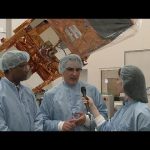
Earth from Space: Special edition
In this special edition, Sentinel-2 Project Manager François Spoto and System Engineering and Operations Manager Omar Sy join the show to tell us more about the Sentinel-2A satellite and its mission at IABG in Munich, Germany.
More about Sentinel-2:
http://www.esa.int/Our_Activities/Observing_the_Earth/Copernicus/Sentinel-2 -
A Story of Ozone-NASA TED Talk with Dr. Paul Newman
Dr. Paul Newman, chief scientist for atmospheric sciences at NASA’s Goddard Space Flight Center in Greenbelt, Maryland, discusses the ozone layer’s past, present and potential future.
-
One-year mission underway on This Week @NASA
A few days after his one-year mission to study the effects of long duration spaceflight on the human body began aboard the International Space Station, Expedition 43 Flight Engineer Scott Kelly was congratulated by NASA Administrator Charlie Bolden from Washington DC. Also on the call – Kelly’s twin brother and former astronaut Mark. The pair will be studied during the mission as part of a science investigation. White House science advisor John Holdren also joined the call and echoed the importance of the mission. Kelly and Russian cosmonaut Mikhail Kornienko will conduct the one-year research mission through March 2016. Also, Super typhoon seen from space, Asteroid mission milestone, LDSD spin test and Sniffing the history of the Martian atmosphere!
-
NASA conducts spin test on15-foot-wide saucer-shaped Low-Density Supersonic Decelerator (LDSD)
NASA’s Low-Density Supersonic Decelerator (LDSD) project will be flying a rocket-powered, saucer-shaped test vehicle into near-space from the Navy’s Pacific Missile Range Facility this June from Kauai, Hawaii. To prepare for the flight, a “spin” test was conducted from the gallery above a clean room at NASA’s Jet Propulsion Laboratory in Pasadena, California, where this near-space experimental test vehicle is being prepared for shipment to Hawaii. During the broadcast, the 15-foot-wide, 7,000-pound vehicle underwent a “spin-table” test. The LDSD crosscutting demonstration mission will test breakthrough technologies that will enable large payloads to be safely landed on the surface of Mars, or other planetary bodies with atmospheres, including Earth.
-
Space food and the good side of lipid fat
We could call them the good, the bad and the ugly! No, we are not talking of spaghetti westerns… Instead, we are talking about a type of fat called lipids. Often we speak badly about them, but some are essential to our health as they reduce chronic inflammation, help lower ‘bad’ cholesterol – LDL – and are a valuable aid in the prevention of cardiovascular disease.
We asked Samantha Cristoforetti, ESA astronaut on board of the International Space Station for the Futura mission, to tell us about which king of healthy fats she and the other astronauts can enjoy while on orbit.
-
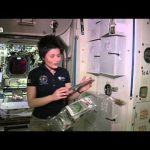
Il buono dei lipidi nel menu della Stazione Spaziale Internazionale
Potremmo chiamarli il buono, il brutto e il cattivo! No, non stiamo parlando di spaghetti-western ma di lipidi. Spesso se ne parla male ma alcuni tipi di grassi sono essenziali per la nostra salute, sulla Terra come anche a bordo della Stazione Spaziale Internazionale. Abbiamo chiesto a Samantha Cristoforetti, astronauta ESA in missione per l’Agenzia Spaziale Italiana, di mostrarci come questi “lipidi buoni” siano presenti nel cibo spaziale che lei e gli altri astroanuti hanno a disposizione mentre sono in orbita.
-
Galileo satellites recovered
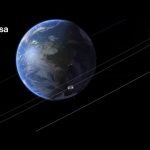
Last summer, they were considered lost: two Galileo satellites ended in the wrong orbit after their launch by a Soyuz from Kourou, French Guiana. But now the two satellites have been recovered and they should be able to fulfil at least partially their mission – a situation made possible thanks to expertise and hard work in the extended Galileo team, from ESA, to agencies partners and industry.
More about Galileo:
http://esa.int/galileo -

IXV completes flawless mission
Having completed a short and flawless return from space, the Intermediate eXperimental Vehicle (IXV), Europe’s atmospheric reentry demonstrator, is now on its way to Europe for detailed analysis of its flight experience. The successful mission opens a new door for Europe in future space transportation.
More about IXV:
http://www.esa.int/Our_Activities/Launchers/IXVFollow IXV on Twitter:
https://twitter.com/esa_ixvThis video was broadcast on ESA TV:
http://www.esa.int/esatv/Transmissions/2015/03/IXV_completes_flawless_mission -
One year ISS crew at launch site on This Week @NASA
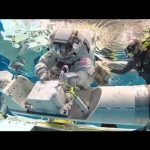
Expedition 43, the next crew headed to the International Space Station is conducting final training at the Baikonur Cosmodrome in Kazakhstan. NASA’s Scott Kelly and Gennady Padalka and Flight Engineer Mikhail Kornienko of the Russian Federal Space Agency (Roscosmos) are scheduled for launch aboard a Soyuz spacecraft on March 27 at 3:42 p.m. Eastern. Kelly and Kornienko will become the first crew to conduct a one-year research mission aboard the orbital laboratory. Expedition 44/45 news conference, Orion heat shield testing, Spacewalk training under water, Gemini 3 50th anniversary, SXSW Interactive and Total solar eclipse!
-
NASA Celebrates the 50th Anniversary of Gemini 3
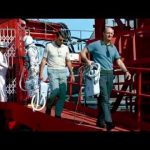
Gemini 3 launched March 23, 1965 from Cape Canaveral, Florida. It was the first crewed Earth-orbiting spacecraft of the Gemini series. It was piloted by astronauts Virgil “Gus” Grissom and John Young.
-
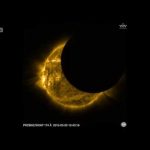
Two solar eclipses for Proba-2
As Europe enjoyed a partial solar eclipse on the morning of Friday 20 March 2015, ESA’s Sun-watching Proba-2 minisatellite had a ringside seat from space. Orbiting Earth once approximately every 100 minutes, Proba-2 caught two eclipses over the course of the morning.
Proba-2 used its SWAP imager to capture the Moon passing in front of the Sun. SWAP views the solar disc at extreme ultraviolet wavelengths to capture the turbulent surface of the Sun and its swirling corona.
More info:
http://proba2.oma.be
http://sidc.beCredit: ESA/ROB
-
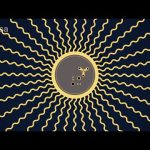
Proba-3: Dancing with the stars
Dancing is probably the oldest human artform – and now ESA’s Proba-3 precision formation-flying mission intends to extend the art of dance to space.
Like dancers, a pair of minisatellites will move around each other, their relative positions maintained to millimetre-scale precision, as if they were both parts of one giant spacecraft.
Their mission is to cast a shadow from one minisatellite onto another, in order to form an artificial total solar eclipse in space – then study the fine details of the Sun’s wispy atmosphere, the solar corona.
Franco Ongaro, ESA Director of Technical and Quality Management; Frederic Teston, Head of System and Cost Engineering; Andrea Santovincenzo, ESA engineer and the project’s manager Agnes Mestreau-Garreau, explain how to go about teaching a space mission to dance.
-

Europe’s solar eclipse seen from Proba-2
As Europe enjoyed a partial solar eclipse on the morning of Friday 20 March 2015, ESA’s Sun-watching Proba-2 minisatellite had a ringside seat from orbit. Proba-2 used its SWAP imager to capture the Moon passing in front of the Sun. SWAP views the solar disc at extreme ultraviolet wavelengths to capture the turbulent surface of the Sun and its swirling corona.
More info:
Indepth explanation of this video: http://proba2.oma.be/Eclipse-Analysis-2015
http://proba2.oma.be
http://sidc.beCredit: ESA/ROB
-

ISS Crew Discusses Life in Space
Aboard the International Space Station, the new Expedition 43 Commander Terry Virts of NASA and Flight Engineer Samantha Cristoforetti of ESA (European Space Agency) discussed the progress of their mission and key activities in the weeks ahead in a pair of in-flight interviews March 13 with WTOP Radio in Washington, D.C,. and Euronews. Virts took over command of the station March 10 from NASA’s Barry Wilmore, who returned to Earth March 12 aboard a Russian Soyuz spacecraft with two Russian cosmonaut crewmates.
-
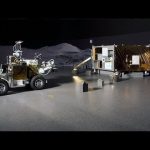
ESA Telerobotics Part 2 – Meteron
In preparation for his 10-day Iriss mission to the International Space Station in September this year, ESA astronaut Andreas Mogensen is at ESA’s technical centre, ESTEC, in Noordwijk, the Netherlands, visiting the Telerobotics and Haptics Laboratory. In this second part of his video diary, Andreas meets Bill Carey to talk about the Meteron project. Andreas will participate in Meteron during his ISS mission.
Connect with Andreas on social media at http://andreasmogensen.esa.int
ESA Telerobotics and Haptics Laboratory http://esa-telerobotics.net/ESA Telerobotics Part 1 – Haptics
https://youtu.be/RkOZe0XVRcgMore videos from Andreas:
https://www.youtube.com/playlist?list=PLbyvawxScNbsCtYE7cHbqq9O6JvA-HPOL -
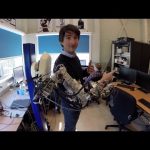
ESA Telerobotics Part 1 – Haptics
In preparation for his 10-day Iriss mission to the International Space
Station in September this year, ESA astronaut Andreas Mogensen is at
ESA’s technical centre, ESTEC, in Noordwijk, the Netherlands, visiting
the Telerobotics and Haptics Laboratory. Andreas catches up with Andre
Schiele, head of the laboratory, to learn more about the robotics
activities he will be participating in during his mission.Connect with Andreas on social media at http://andreasmogensen.esa.int
ESA Telerobotics and Haptics Laboratory http://esa-telerobotics.net/ESA Telerobotics Part 2 – Meteron
http://youtu.be/5Lis9fPXr7EMore videos from Andreas:
https://www.youtube.com/playlist?list=PLbyvawxScNbsCtYE7cHbqq9O6JvA-HPOL -
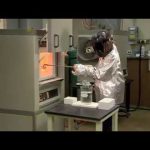
NASA Women’s History Month Profile – Valerie Wiesner (Glenn Research Center)
Dr. Valerie Wiesner is a materials research engineer at NASA Glenn Research Center in Cleveland, Ohio. She is responsible for evaluating high-temperature interactions between Calcium-Magnesium Aluminosilicate and Environmental Barrier Coating materials for aircraft turbine engine development.
-
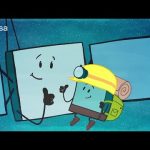
Once upon a time… #cometlanding
Rosetta and Philae were ready for their biggest challenge yet: landing on Comet 67P/Churyumov-Gerasimenko. As Rosetta bid her lander farewell and sent him to the comet’s surface, the whole world looked on, anxious to see what would happen next…
This video is also available in the following languages:
German: http://youtu.be/zo00t_DloWo
Spanish: http://youtu.be/f5OIme-pCZY
Italian: http://youtu.be/DdTJItbD_4M
French: http://youtu.be/r3HbauwhdTYPrevious videos in the series are available in this playlist:
https://www.youtube.com/playlist?list=PLbyvawxScNbui_Ncl9uQ_fXLOjS4sNSd8Credits: ESA
-

International Space Station Astronauts Conduct Third Spacewalk in Eight Days
Outside the International Space Station, Expedition 42 Commander Barry Wilmore and Flight Engineer Terry Virts of NASA conducted their third spacewalk in eight days March 1 to install antennas and communications gear that will be used to provide rendezvous and navigational information to visiting vehicles approaching the complex in the future, including the new U.S. commercial crew vehicles. Wilmore and Virts installed about 400 feet of cable along the truss of the station as part of the new Common Communications for Visiting Vehicles (C2V2) system. In two previous spacewalks on Feb. 21 and Feb. 25, the two astronauts rigged cables for new International Docking Adapter ports that will be delivered to the complex this year and lubricated the grappling end of the Canadian-built Canadarm2 robotic arm.
-
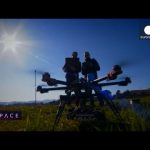
ESA Euronews: Taking space tech down to Earth
This month’s Space focuses on startups in Europe that are finding everyday Earthly applications for space innovations.
There’s a long tradition of transferring technology from one sector to another to improve life on our planet, and in the case of space that can lead to some unlikely links between science success stories such as the Philae lander, and the hunt for bedbugs in hotel rooms, or between the Smart-1 moon mission and the efficiency of geothermal energy. We visit two of the 11 ESA business incubation centres around Europe, one in Barcelona, the other near Oxford.
ESA Euronews is also available in the following languages:
French: http://youtu.be/pzKfXTxrtCY
German: http://youtu.be/EtbUUJ_6Uno
Hungarian: http://youtu.be/SCqU49qNiqo
Italian: http://youtu.be/dt87rFBw8EA
Greek: http://youtu.be/TBbZ4yF3bY8
Portuguese: http://youtu.be/8Xu-wAG-XTg
Spanish: http://youtu.be/5Rr2fKSpEDc -
ESA Euronews: Empresas innovadoras de tecnología espacial
Este mes Space visita varias empresas europeas de reciente creación que buscan aplicar la tecnología espacial aquí en la Tierra.
Las misiones espaciales fuerzan los límites de la ingeniería y ese conocimiento se ha trasladado, desde hace años, a nuestra vida diaria a través de aparatos e inventos innovadores.
Hemos visitado dos de las once incubadoras de empresas que la ESA posee en Europa, una en Barcelona y otra cerca de Oxford. Allí hemos descubierto varios proyectos que ya están, literalmente, despegando.
-
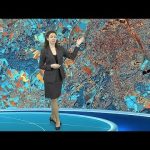
Earth from Space: Brussels
Earth from Space is presented by Kelsea Brennan-Wessels from the ESA Web-TV virtual studios. The one hundred thirty-fourth edition features a false-colour image of Belgium’s capital.
See also http://www.esa.int/spaceinimages/Images/2015/02/Brussels to download the image.
-

EVA Movie Trailer (Science Fiction – 2015)
A cybernetic engineer creates a very special child robot
★Join us on Facebook ► http://facebook.com/HorrorScifiMovies
★ Sci-Fi Fan ? Don’t miss THIS ➨ http://bit.ly/Sci-Fi-MoviesThe year 2014. Humans live along with machines. Alex, a renowned cybernetic engineer, returns to Santa Irene to carry out a very specific mission for the Robotic Faculty: the creation of a child robot. During his ten-year absence, life has moved on for his brother David and Lana, who got her life back together after his departure. Alex’s routine is altered in an unexpected way by Eva, Lana and David’s amazing daughter. She is a very special, charismatic little girl. She and Alex have a special connection from the moment they meet. They set out on a journey together, which will bring them to a revelatory end.
EVA Movie Trailer
A Movie directed by Kike Maillo
US Release Date : March 13, 2015EVA Movie Trailer
© 2015 – TWC✓ Subscribe now 2 catch the best trailers and the latest HD official movie trailer, film clip, scene and video !
-
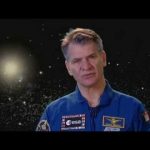
Paolo Nespoli on his astronaut career
ESA astronaut Paolo Nespoli talks about his career as an astronaut. From being inspired by the Moon landings as a child, to his missions to the International Space Station in 2007 and 2010. Paolo also has some advice on how to achieve your dreams.
Recorded for the DStv Eutelsat Star Awards: http://www.dstvstarawards.com/english/
-

ESAhangout: Out of this world with Tim Peake
Replay of our ‘Out of this world’ Google hangout between ESA astronaut Tim Peake and pupils from Rode Heath Primary from Cheshire, UK.
On Wednesday 25 February at 11:00 CET (10:00 GMT) Tim spoke to Rode Heath as part of their ‘Out of this world’ project. Hosted by Manchester Metropolitan University, representatives from all year groups at Rode Heath asked Tim their questions.
Tim is currently training for launch to the International Space Station on 20 November 2015. He will spend six months living and working on the ISS for his Principia mission.
More about ‘Out of this world’ – Rolls-Royce Science Prize Finalist 2014-2015: http://www.rodeheath.cheshire.sch.uk/page/out-of-this-world-/
#Talk2Tim #MMU #outofthisworld #STEM #Principia
-
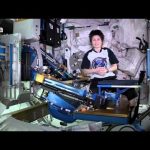
Allenarsi nello spazio con Samantha Cristoforetti!
L’astronauta ESA Samantha Cristoforetti, attualmente sulla Stazione Spaziale Internazionale per la missione Futura dell’Agenzia Spaziale Italiana, ci mostra come funziona la “palestra spaziale” iniziando da ARED, l’Advanced Resistive Exercise Device.
-
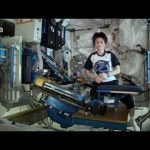
Exercise in space with Samantha Cristoforetti!
ESA astronaut Samantha Cristoforetti, currently living and working on the International Space Station, shows us the ‘space gym’. Starting with ARED, the Advanced Resistive Exercise Device.
-
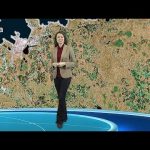
Earth from Space: Estonian mosaic
Earth from Space is presented by Kelsea Brennan-Wessels from the ESA Web-TV virtual studios. The one hundred thirty-third edition features a mosaic of Sentinel-1A radar scans, pieced together to create a single image of Estonia.
See also http://www.esa.int/spaceinimages/Images/2015/02/Estonia to download the image.
-
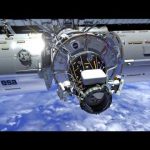
NASA Holds Expedition 42 Space Walk Briefing from Johnson Space Center in Houston
As two NASA astronauts from the International Space Station’s Expedition 42 crew prepare to venture outside the orbital complex on Friday, Feb. 20, NASA Television provided a preview news briefing on Wednesday, Feb. 18. The preview briefing was held at NASA’s Johnson Space Center in Houston with the following panelists:
Kenneth Todd, International Space Station Operations and Integration manager
Tomas Gonzalez-Torres, Expedition 42 lead flight director
Karina Eversley, Extravehicular Activity (EVA) # 29 officer
Sarah Korona, EVA # 30 officer
Arthur Thomason, EVA # 31 officer
Expedition 42 Commander Barry Wilmore and Flight Engineer Terry Virts will exit the station from the Quest airlock for each of the three spacewalks around 7:10 a.m. NASA TV coverage of the approximately six-and-a-half hour spacewalks will begin at 6 a.m.Built by Boeing under contract to NASA, the International Docking Adapters are a critical component of the station’s reconfiguration to ensure long-term docking ports for future commercial crew and other visiting spacecraft. They will permit the standard station crew size to grow from six to seven, potentially doubling the amount of time devoted to research aboard the orbiting laboratory.
The two new docking adapters will be launched to the station on a pair of SpaceX Dragon cargo spacecraft this year. Astronauts will install the first of two adapters on Pressurized Mating Adapter-2 on the forward end of the station’s Harmony module during a future spacewalk. The second adapter will be installed on Pressurized Mating Adapter-3 after it is relocated robotically to the space-facing port of Harmony later this year.
The spacewalks will be the 185th, 186th and 187th in support of space station assembly and maintenance. Wilmore has conducted one spacewalk in his career last October. The spacewalks will be the first of Virts’ career.
-
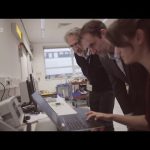
Radiation testing for space
The apparent void of space is actually awash in high-energy particle radiation, which can have just as harmful an effect on delicate satellite components as it does on living tissue. The threat to spacecraft varies greatly based on their orbits.
Ali Zadeh, head of ESA’s Components Space Evaluation and Radiation Effects section explains how electrical, electronic and electro-mechanical (EEE) components – the fundamental building blocks of any space mission – are tested for this harsh environment, assessing their suitability for space.
The Agency’s ESTEC technical centre in Noordwijk, the Netherlands, hosts a Cobalt-60 irradiation facility for highly-penetrating gamma ray testing, supplemented by a network of external European particle accelerator sites for electron, proton and heavy-ion radiation testing.
-

High-tech toys change the way kids have fun
Technology is taking over toys at New York City’s annual Toy Fair. Next to the Lincoln Logs and Tinkertoys are slot cars powered by artificial intelligence. The fair showcases the changing face of the toy industry and how kids play. Gigi Stone Woods reports from the the fair in New York City with the high-tech hype.
-
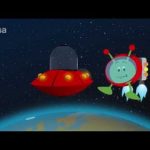
Chi è Paxi?
Incontrate Paxi, la mascotte dell’Education Office dell’ESA: scoprite da dove viene, cosa gli piace dei viaggi dello spazio, chi sono i suoi amici…
Questo video, indirizzato a bambini tra i 6 e i 12 anni, racconta di Paxi, un piccolo alieno proveniente dal pianeta Ally-O che è venuto sulla Terra per incontrare nuovi amici e portare i bambini in avventurosi viaggi alla scoperta dello spazio. Questo è il primo di una serie di animazioni in cui Paxi, la mascotte dell’Education Office dell’ESA, descrive diverse caratteristiche del Sistema Solare, dell’Universo, i segreti del pianeta Terra e molto altro.
Credit: ESA; produced by Science Office, illustrations by Kaleidoscope Design, NL
Chi è Paxi? http://youtu.be/gKQYsjr4fis
Paxi – Il Sistema Solare http://youtu.be/A9bEEiXWYEc
Paxi – Rosetta e le comete http://youtu.be/z6zCjaUcwfQThese videos are also available in the following languages:
English: https://www.youtube.com/playlist?list=PLbyvawxScNbucdsnNdB9p89RmePmGv5cM
Spanish: https://www.youtube.com/playlist?list=PLbyvawxScNbsiYWkwXlb3WMdm2IFWoMyc
Dutch: https://www.youtube.com/playlist?list=PLbyvawxScNbs-7xR5B6QgJeEK89RtGdoK
German: https://www.youtube.com/playlist?list=PLbyvawxScNbvwcIVrGQV4p6g6cp9pH0To
French: https://www.youtube.com/playlist?list=PLbyvawxScNbsiKIAXeo63bGr1QjYJ4QiL