Astronaut Tracy C. Dyson, a spaceflight veteran who has logged over 188 days in orbit, is set to launch on her next mission to the International Space Station.
Dyson, cosmonaut Oleg Novitskiy, and spaceflight participant Marina Vasilevskaya of Belarus is set to lift off at 8:36 a.m. EDT (1236 UTC) from the Baikonur Cosmodrome in Kazakhstan aboard their Soyuz MS-25 spacecraft. This will be Dyson’s third spaceflight.
After two days in orbit, the Soyuz will arrive at the International Space Station’s Prichal module for a scheduled docking at 11:09 a.m. EDT (1509 UTC) Monday, March 25. Dyson is scheduled to spend six months aboard the station, conducting research to help us learn how to live in space while making life better back on Earth.
Have you ever done a science experiment and wondered “What would this be like if it were HUGE?” Welcome to Science Max, the exciting series that turbocharges all the science experiments you’ve done at home.
SpaceX’s 30th cargo resupply mission to the International Space Station is scheduled to lift off at 4:55 p.m. EDT (2055 UTC) from Cape Canaveral Space Force Station in Florida.
This uncrewed launch of SpaceX’s Dragon spacecraft will carry tech that monitors sea ice, research into off-planet photosynthesis, studies to improve nanoparticle solar cells, and essential supplies for our astronauts living and working aboard the orbiting laboratory.
🚩 Click https://betterhelp.com/historymarche for 10% off your first month of therapy with our sponsor BetterHelp. 🚩 Join over 4 million people who’ve met with a therapist on BetterHelp and started living a healthier, happier life.
🎼 Music: Epidemic Sounds Filmstro All this scoring – Kevin MacLeod
📚 Sources: Battle of Sempach – The Oxford Encyclopedia of Medieval Warfare and Military Technology – Clifford J. Rogers (2010) Medieval Warfare – Delbrück, Hans (1990) The Swiss at War 1300 – 1500 – Douglas Miller (1979) A Concise History of Switzerland – Clive H. Church (2013) Medieval European Armies – Terence Wise (1975)
Air pollution is the largest environmental health risk in Europe and significantly impacts the health of the European population, particularly in urban areas.
Following on from the Sentinel-5P satellite – the first Copernicus mission dedicated to monitoring our atmosphere – the Sentinel-4 and Sentinel-5 missions will take current air quality measuring capabilities to the next level.
Together, the Sentinel-4 and -5 missions will provide information on atmospheric variables in support of European policies. This will include the monitoring of air quality, stratospheric ozone and solar radiation, and climate monitoring.
This video features interviews with Giorgio Bagnasco, Sentinel-4 Mission Project Manager, Ben Veilhelmann, Sentinel-4&5 Mission Scientist and Didier Martin, Sentinel-5 Mission Project Manager.
Credits: ESA – European Space Agency
★ Subscribe: http://bit.ly/ESAsubscribe and click twice on the bell button to receive our notifications.
We are Europe’s gateway to space. Our mission is to shape the development of Europe’s space capability and ensure that investment in space continues to deliver benefits to the citizens of Europe and the world. Check out https://www.esa.int/ to get up to speed on everything space related.
The March 21 launch of the crewed Soyuz-25 spacecraft to the International Space Station with NASA astronaut Tracy C. Dyson, Roscosmos cosmonaut Oleg Novitskiy, and spaceflight participant Marina Vasilevskaya of Belarus was scrubbed, and rescheduled for Saturday, March 23. Learn more: https://go.nasa.gov/3IMDTZy
Astronaut Tracy C. Dyson, a spaceflight veteran who has logged over 188 days in orbit, is set to launch on her next mission to the International Space Station.
Dyson, cosmonaut Oleg Novitskiy, and spaceflight participant Marina Vasilevskaya of Belarus is set to lift off at 9:21 a.m. EDT (1321 UTC) from the Baikonur Cosmodrome in Kazakhstan aboard their Soyuz MS-25 spacecraft. This will be Dyson’s third spaceflight.
After a two-orbit, three-hour journey, the Soyuz will arrive at the International Space Station’s Prichal module for a scheduled docking at 12:39 p.m. EDT (1639 UTC). Dyson is scheduled to spend six months aboard the station, conducting research to help us learn how to live in space while making life better back on Earth.
Steve Spangler is a bestselling author, STEM educator and Emmy award-winning television personality with more than 2,100 television appearances to his credit. Steve appeared as a regular guest on the Ellen DeGeneres Show from 2007-2022. Learn more about Steve at https://stevespangler.com/about-steve-spangler/
A total solar eclipse will cross North America on Monday, April 8, 2024, and we want to help you prepare! Find out when and where to look up, learn how to safely view an eclipse and discover ways you can get involved with NASA during this celestial event! Join us live on Wednesday, March 20, at 3 p.m. EDT (1900 UTC) as we help you get ready for the last total solar eclipse to cross the contiguous United States for the next 20 years. Have questions? Submit them during our live chat.
In its latest test of readiness for space, ESA’s Hera spacecraft for planetary defence is being operated for around three weeks in hard vacuum, while being subjected to the same temperature profiles it will experience during its journey to the Didymos binary asteroid system.
The 1.6 × 1.6 × 1.7 m spacecraft was slid inside the 4.5-m diameter, 11.8-m long Phenix thermal vacuum chamber at ESA’s ESTEC Test Centre in the Netherlands.
“You’re always a bit nervous when your baby gets moved about,” remarks Ian Carnelli, overseeing Hera for ESA. “Right now it’s being shut into a dark airless box for weeks on end, but we have confidence it will perform well.”
Hera can be seen receded into the rectangular ‘thermal tent’ within Phenix. The six copper walls of this internal box can be heated up to 100°C or cooled via piped liquid nitrogen down to –190°C, all independently from each other.
Then, after the main door of the stainless steel Phenix chamber was slid shut, the air within the chamber was pumped out during a lengthy 20 hours process down to approximately one billionth of outside atmospheric pressure. This will allow the Hera team from ESA, European Test Services operating the Test Centre and Hera manufacturer OHB to test the spacecraft’s thermal behaviour as the temperature changes around it.
Space is a place where it is possible to be hot and cold at the same time if one part of your spacecraft is in sunlight and another is in shade. And because there is no air, there is no conduction or convection to lose heat from your spacecraft. Instead thermal experts employ insulation and radiators to keep the body of a spacecraft within carefully chosen temperature limits. In general spacecraft electronics – just like their human makers – work best at room temperature.
“We already have detailed models of the spacecraft’s thermal behaviour, and this spacecraft-level thermal vacuum test lets us correlate these models with reality,” explains Hera’s Product Assurance and Safety manager, Heli Greus.
“More than 400 thermal sensors have been placed in and around Hera to give us precise knowledge of what is going on, and the test is being supervised on a 24/7 basis in case anything anomalous occurs. The spacecraft is now being put through a series of ‘cold plateaus’ and ‘hot plateaus’ representative of its mission, which will allow us to test the thermal limits of each specific unit aboard.”
Hera is Europe’s contribution to an international planetary defence experiment. Following the DART mission’s impact with the Dimorphos asteroid in 2022 – modifying its orbit and sending a plume of debris thousands of kilometres out into space – Hera will return to Dimorphos to perform a close-up survey of the crater left by DART. The mission will also measure Dimorphos’ mass and make-up, along with that of the larger Didymos asteroid that Dimorphos orbits around. Hera is due for launch in October 2024.
The ESTEC Test Centre in the Netherlands is the largest facility of its kind in Europe, providing a complete suite of equipment for all aspects of satellite testing under a single roof.
Asigură-ți confidețialitatea cu Surfshark! Introdu codul “presura” pentru 3 luni extra gratuite, de la Surfshark:👇 https://surfshark.deals/presura
00:00:00 Știai că? 00:01:26 Ce este Big Bangul? 00:03:30 Ce este fizica cuantică? 00:04:14 Nu există..!! 00:05:11 OpenAI SORA. 00:06:00 Momentul sponzorului. 00:06:53 Unde a ajuns Voyager1? 00:08:04 “Mituri” Demontate..! 00:09:10 Ce este Gravitația?
Ne confruntăm cu provocarea de a reconsidera ceea ce știm despre esența realității, pe măsură ce explorăm limitele cunoașterii umane și întâlnim concepte care sfidează înțelegerea convențională. Lumina este aruncată asupra inovațiilor revoluționare în tehnologie, cu un accent special pe cum inteligența artificială începe să rescrie regulile interacțiunii noastre cu lumea digitală.
O pauză reflectivă ne oferă șansa de a aprecia susținerea care face posibilă această aventură intelectuală, înainte de a ne reîntoarce la măreția explorării spațiale. Urmărim pașii gigantici ai Voyager 1, care ne întinde imaginația dincolo de limitele sistemului solar, în timp ce demontăm mituri și ne confruntăm cu înțelesurile și misconcepțiile care înconjoară concepte familiare.
Finalul ne aduce înapoi pe terenul bine cunoscut al gravitației, acea forță omniprezentă care modelează existența noastră și a universului, invitându-ne să reflectăm asupra profunzimii și frumuseții necuprinse a tot ceea ce ne înconjoară. Fiecare moment al acestei călătorii este o invitație să privim dincolo de aparențe, să întrebăm, să învățăm și să ne minunăm de nelimitata curiozitate umană și de dorința de a descoperi.”
Today we mourn the passing of Thomas P. Stafford at the age of 93.
In December 1965, Stafford piloted Gemini VI, the first rendezvous in space, and helped develop techniques to prove the basic theory and practicality of space rendezvous.
Later he commanded Gemini IX and performed a demonstration of an early rendezvous that would be used in the Apollo lunar missions, the first optical rendezvous, and a lunar orbit abort rendezvous.
He served as the commander of the Apollo 10 ‘dress rehearsal’ mission preparing for the first Moon landing and as Apollo commander of the Apollo-Soyuz Test Project (ASTP) mission, a joint space flight culminating in the historic first meeting in space between American Astronauts and Soviet Cosmonauts, which ended the International space race.
Throughout his career, Stafford helped us push the boundaries of what’s possible in air and space, flying more than 100 different types of aircraft.
Credit: NASA Music: Universal Production Music Producer: Sonnet Apple
Steve Spangler is a bestselling author, STEM educator and Emmy award-winning television personality with more than 2,100 television appearances to his credit. Steve appeared as a regular guest on the Ellen DeGeneres Show from 2007-2022. Learn more about Steve at https://stevespangler.com/about-steve-spangler/
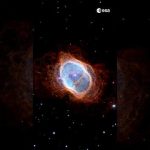
This video zooms through space to reveal Webb’s Near-Infrared Camera (NIRCam) image of the Southern Ring Nebula.
The bright star at the centre of NGC 3132, while prominent when viewed by the NASA/ESA/CSA James Webb Telescope in near-infrared light, plays a supporting role in sculpting the surrounding nebula. A second star, barely visible at lower left along one of the bright star’s diffraction spikes, is the nebula’s source. It has ejected at least eight layers of gas and dust over thousands of years.
Data from Webb’s Near-Infrared Camera (NIRCam) were used to make this extremely detailed image. It is teeming with scientific information — and research will begin following its release.
Credit: NASA, ESA, CSA, STScI, and the Webb ERO Production Team Music: Tonelabs – Happy Hubble
Have you ever done a science experiment and wondered “What would this be like if it were HUGE?” Welcome to Science Max, the exciting series that turbocharges all the science experiments you’ve done at home.
Discussing the strong state of NASA, a safe return from the space station, and testing critical hardware for a future mission … a few of the stories to tell you about – This Week at NASA!
Video Producer: Andre Valentine Video Editor: Andre Valentine Narrator: Emanuel Cooper Music: Universal Production Music Credit: NASA
🚩 Thanks to Storyblocks for sponsoring this video! Download unlimited stock media at one set price with Storyblocks: https://storyblocks.com/historymarche
🚩 Basil became one of the strongest Byzantine emperors, winning territory in the Balkans, Mesopotamia, Armenia, and Georgia. He crushed rebellions, subdued feudal landowners and conquered the enemies of the Empire. Italy was reorganized and a campaign to retake Sicily was prepared. The might of Roman armies was again respected and feared.
🚩 Big thanks to History Rhymes for collaborating with me on this video: https://www.youtube.com/@historyrhymes1701
🎼 Music: Epidemic Sounds Filmstro Impact Allegretto – Kevin MacLeod
📚 Sources: John Haldon – Byzantium at War AD 600 – 1463 Ian Heath & Angus McBride – Byzantine Armies 886-1118 Ian Heath & Angus McBride – Byzantine Armies 1118 – 1461 Judith Herring – Byzantium: The Surprising Life of a Medieval Empire David Nicholle – Manzikert 1071: The Breaking of Byzantium John Julius Norwich – The Normans in the South Paul Stephenson – The Legend of Basil the Bulgar Slayer
Climate change exacerbates droughts by making them more frequent, longer, and more severe. This can have a wide range of impacts on the environment, agriculture, ecosystems and communities including water scarcity, crop failure and food shortages.
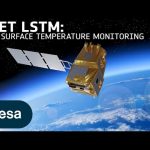
The upcoming Copernicus Land Surface Temperature Monitoring, LSTM, mission will improve sustainable agricultural productivity in a world of increasing water scarcity and variability.
The mission will carry a high spatial-temporal resolution thermal infrared sensor to provide observations of land-surface temperature.
These data are key to understand and respond to climate variability, manage water resources for agricultural production, predict droughts and also to address land degradation.
LSTM is one of six Copernicus Sentinel Expansion missions that ESA is developing on behalf of the EU. The missions will expand the current capabilities of the Copernicus Space Component – the world’s biggest supplier of Earth observation data.
This video features interviews with Ana Bolea Alamanac, LSTM Mission Project Manager, Ilias Manolis, LSTM Mission Payload Manager and Itziar Barat, LSTM Mission System and Operations Manager.
Credits: ESA – European Space Agency
★ Subscribe: http://bit.ly/ESAsubscribe and click twice on the bell button to receive our notifications.
We are Europe’s gateway to space. Our mission is to shape the development of Europe’s space capability and ensure that investment in space continues to deliver benefits to the citizens of Europe and the world. Check out https://www.esa.int/ to get up to speed on everything space related.
Steve Spangler is a bestselling author, STEM educator and Emmy award-winning television personality with more than 2,100 television appearances to his credit. Steve appeared as a regular guest on the Ellen DeGeneres Show from 2007-2022. Learn more about Steve at https://stevespangler.com/about-steve-spangler/
Live from the International Space Station, NASA astronauts Jeanette Epps and Loral O’Hara are joined by NASA experts live at the South by Southwest conference in Austin, Texas. The panel of explorers in orbit and on Earth talk about how you can get involved with space station research and technology.
Find out how to fly a scientific experiment, move your business forward, or find inspiration from the explorers living and working in space, as well as how to spot the station when it flies over your part of the globe. Whether you’re an entrepreneur, a professional researcher, or just plain curious, this session is for you.
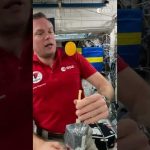
European Space Agency astronaut Andreas Mogensen shared this video on social media with the caption:
“On the weekends, we have time off and and while I like to call my friends and family or sit in the Cupola and take pictures of Earth, I sometimes like to play around a bit. I recorded this video a few weeks ago and finally got around to sharing it with you.
The way a liquid, in this case orange juice, moves around on the Space Station is fascinating, rippling when I blow on it and how sticks to me as I drink it.”
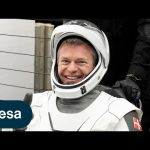
After more than 6 months on the International Space Station, ESA astronaut Andreas Mogensen returned to Earth, marking the end of his Huginn mission. It was his second mission to the Space Station and his first long-duration, where he was the pilot of Crew-7, which consisted of Jasmin Moghbeli (NASA), Satoshi Furukawa (JAXA), and Konstantin Borisov (Roscosmos).
Credits: ESA/NASA/SpaceX
★ Subscribe: http://bit.ly/ESAsubscribe and click twice on the bell button to receive our notifications.
We are Europe’s gateway to space. Our mission is to shape the development of Europe’s space capability and ensure that investment in space continues to deliver benefits to the citizens of Europe and the world. Check out https://www.esa.int/ to get up to speed on everything space related.
After six months in orbit, the four members of NASA’s SpaceX Crew-7 mission—NASA astronaut Jasmin Moghbeli, ESA (European Space Agency) astronaut Andreas Mogensen, JAXA (Japan Aerospace Exploration Agency) astronaut Satoshi Furukawa, and Roscosmos cosmonaut Konstantin Borisov—are heading home.
Crew-7 is scheduled to splash down off the coast of Florida at approximately 5:50 a.m. EDT (0950 UTC) on Tuesday, March 12, after undocking from the International Space Station on Monday, March 11. While aboard the orbiting laboratory, Crew-7 contributed to a number of studies to help us learn how to live in space while making life better back on Earth: https://go.nasa.gov/3UWWIAF
NASA Administrator Bill Nelson discusses the agency’s goals for the benefit of humanity during the annual State of NASA address on Monday, March 11. Learn about our plans for promoting U.S. leadership in space exploration, improving life on Earth through innovation, humanity’s return to the Moon under the Artemis campaign, and more. Senior leaders from each of NASA’s mission directorates also will discuss advancements in their areas ranging from aeronautics and science research to space operations.
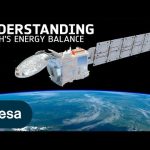
After years of development and a rigorous testing programme, ESA’s EarthCARE satellite has left Munich, Germany, and is now on its away to SpaceX’s launch site in Vandenberg, California. Once it arrives, it will be put into storage for a few weeks until it is time to ready the satellite for liftoff – which is scheduled to launch in May on a Falcon 9 rocket.
The Earth Cloud Aerosol and Radiation Explorer, or EarthCARE for short, is the most complex Earth Explorer mission to date. The new satellite will look at the role that clouds and aerosols play in heating and cooling Earth’s atmosphere – contributing to our understanding of climate change.
With its unique set of four instruments, EarthCARE will examine the role clouds and aerosols play in reflecting solar radiation back into space and also in trapping infrared radiation emitted from Earth’s surface.
EarthCARE is a joint venture between ESA and JAXA, the Japan Aerospace Exploration Agency.
This video features interviews with Simonetta Cheli, Director of Earth Observation Programmes at ESA, Thorsten Fehr, ESA’s EarthCARE Mission Scientist, Dirk Bernaerts, ESA’s EarthCARE Project Manager and Eiichi Tomita, JAXA’s EarthCARE/CPR Project Manager.
Credits: ESA – European Space Agency
★ Subscribe: http://bit.ly/ESAsubscribe and click twice on the bell button to receive our notifications.
We are Europe’s gateway to space. Our mission is to shape the development of Europe’s space capability and ensure that investment in space continues to deliver benefits to the citizens of Europe and the world. Check out https://www.esa.int/ to get up to speed on everything space related.
Steve Spangler is a bestselling author, STEM educator and Emmy award-winning television personality with more than 2,100 television appearances to his credit. Steve appeared as a regular guest on the Ellen DeGeneres Show from 2007-2022. Learn more about Steve at https://stevespangler.com/about-steve-spangler/
🚩 Thanks to Storyblocks for sponsoring this video! Download unlimited stock media at one set price with Storyblocks: https://storyblocks.com/historymarche
🚩 The Battle of Clontarf was a major military encounter that occurred in Ireland in April 1014. The battle is best known for being the culmination of a conflict between the local Irish kingdoms and the Viking forces, which had gained a foothold in Ireland.
A new crew launches to the space station, graduating a new class of Artemis astronauts, and a group of tiny lunar-roving robots are ready to roll … a few of the stories to tell you about – This Week at NASA!
Link to download this video: https://images.nasa.gov/details/A%20New%20Crew%20Launches%20to%20the%20Space%20Station%20on%20This%20Week%20@NASA%20%E2%80%93%20March%208,%202024
Video Producer: Andre Valentine Video Editor: Andre Valentine Narrator: Emanuel Cooper Music: Universal Production Music Credit: NASA
Have you ever done a science experiment and wondered “What would this be like if it were HUGE?” Welcome to Science Max, the exciting series that turbocharges all the science experiments you’ve done at home.
#stiinta #fizica #science #tehnologie #technology #cristianpresura algoritm:”Teoria Pământului plat este una dintre cele mai discutate conspirații, susținută de un grup de oameni care neagă consensul științific privind forma sferică a Terrei. Această teorie neagă existența gravitației, sugerând în schimb că fotografiile din spațiu, oferite de NASA și ilustrate prin sateliți, sunt fabricate sau manipulate. Fondată pe observații empirice, precum aparenta lipsă a curburii orizontului, susținătorii acestei teorii, printre care se numără și Samuel Rowbotham, se bazează pe interpretări literale ale textelor istorice și pe o critică profundă a metodelor științifice moderne.
În era internetului și a social media, teoria Pământului plat a câștigat o nouă viață, fiind promovată prin documentare, conferințe și diverse platforme online. Această mișcare nu doar că promovează o viziune alternativă asupra lumii, dar și critică vehement educația științifică tradițională, promovând o formă de raționalism bazată pe “observație directă” și scepticism față de autoritățile științifice stabilite.
Polemici în jurul acestei teorii includ dezbaterea asupra percepției vizuale, experimente de refutare și analiza critică a presupuselor dovezi ale existenței unui Pământ plat. Teoria Pământului plat servește nu doar ca un exemplu de pseudoștiință, dar și ca un studiu de caz despre cum informațiile și teoriile conspirației pot fi răspândite și acceptate în era digitală, în ciuda dovezilor științifice masive care susțin forma sferică a Pământului. Aceasta evidențiază tensiunile dintre scepticismul științific și credințele bazate pe conspirații moderne, punând sub semnul întrebării integritatea educației și informării publice în societatea contemporană.”
The 2024 astronaut graduating class gives you an insider’s look at not only the who’s who of their graduating class, but it allows you to get a glimpse of the accomplished astronauts’ personalities.
To see them together as a group, connecting through laughter helps to illustrate how much they value team care. These classic superlatives give the scoop on which astronaut is the best dancer, the funniest, and more. Enjoy seeing a lighter side of “The Flies” in this fun and upbeat montage of the 2024 astronaut graduating class.
Live from the South by Southwest conference in Austin, Texas, U.S. Poet Laureate Ada Limón and NASA’s Dr. Lori Glaze engage in a compelling discussion about NASA’s tradition of sending inspirational messages into space. They delve into Ada Limón’s poetic contributions to the NASA Europa Clipper mission, exploring the intersection of curiosity and exploration in both the arts and sciences.
The conversation highlights the upcoming 2024 launch of the Europa Clipper and the unique blend of science and art that it represents. Dr. Glaze unveils the design of the Europa Clipper’s vault plate—a triangular metal piece engraved with Ada Limón’s poem, the waveforms of more than 100 human voices, and other markings that celebrate our shared human connections.
Learn more about Europa Clipper and the vault plate at go.nasa.gov/MakeWaves.
Participants: Ada Limón, U.S. Poet Laureate Dr. Lori Glaze, Director of NASA’s Science Mission Directorate’s Planetary Science Division
All astronauts go through a quarantine period before flying to space.
This period of isolation keeps them away from any germs or viruses that might make them sick. Quarantine is also important to minimise the risk of bringing an infectious disease with them to space.
Marcus Wandt entered quarantine two weeks ahead of his launch in Florida, USA, just a few kilometres away from the rocket that took him to the ISS as part of Axiom Mission 3.
Quarantine for astronauts does not mean a holiday – it is a busy period. Marcus spent around twelve hours a day preparing for the mission ahead. His schedule included physical exercise, refreshers of flight operations, the review of science and outreach activities, and even virtual reality simulations of the job awaiting him on the Space Station.
Andreas Mogensen launched on his Huginn mission in August 2023 to the International Space Station, becoming the first non-US astronaut to pilot SpaceX’s Crew Dragon spacecraft. Andreas became commander of the International Space Station in September 2023, becoming the longest serving European commander in January 2024. His mission was spent on more than 30 European experiments and plenty of international ones as well, ranging from water purification to studies of human physiology and thunderclouds. After 6 months on the International Space Station, Andreas will come down to Earth together with his Crew-7 crewmates Jasmin Moghbeli (NASA), Satoshi Furukawa (JAXA), and Konstantin Borisov (Roscosmos).
★ Subscribe: http://bit.ly/ESAsubscribe and click twice on the bell button to receive our notifications.
We are Europe’s gateway to space. Our mission is to shape the development of Europe’s space capability and ensure that investment in space continues to deliver benefits to the citizens of Europe and the world. Check out https://www.esa.int/ to get up to speed on everything space related.
NASA’s Juno spacecraft has been in orbit around Jupiter for almost eight years, offering it the unique opportunity to make close flybys of two of the planet’s intriguing moons, volcanic Io and icy Europa.
Join NASA experts Thursday, March 7, as we delve into these enigmatic worlds to learn how scientists are unraveling their secrets. From Io’s tumultuous volcanic activity to Europa’s ice-covered ocean depths, discover the latest findings from the Juno spacecraft.
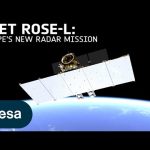
The upcoming Copernicus Radar Observation System for Europe in L-band (ROSE-L) will provide continuous day-and-night all-weather monitoring of Earth’s land, oceans and ice, and offer frequent images at a high spatial resolution.
ROSE-L will carry an active phased array synthetic aperture radar instrument. The radar antenna will be the largest planar antenna ever built measuring an impressive 40 sq m – roughly the size of 10 ping-pong tables.
ROSE-L will deliver essential information on forests and land cover, leading to improved monitoring of the terrestrial carbon cycle and carbon accounting.
The mission will also greatly extend our ability to monitor minute surface displacements and helping detect geohazards. It will automatically map surface soil moisture conditions and monitor sea and land ice – greatly helping climate change research and mitigation.
ROSE-L is one of six Copernicus Sentinel Expansion missions that ESA is developing on behalf of the EU. The missions will expand the current capabilities of the Copernicus Space Component – the world’s biggest supplier of Earth observation data.
This video features interviews with Malcolm Davidson, ROSE-L Mission Scientist, Nico Gebert, ROSE-L Payload Manager and Gianluigi Di Cosimo, ROSE-L Project Manager.
Credits: ESA – European Space Agency
★ Subscribe: http://bit.ly/ESAsubscribe and click twice on the bell button to receive our notifications.
We are Europe’s gateway to space. Our mission is to shape the development of Europe’s space capability and ensure that investment in space continues to deliver benefits to the citizens of Europe and the world. Check out https://www.esa.int/ to get up to speed on everything space related.