Steve Spangler is a bestselling author, STEM educator and Emmy award-winning television personality with more than 2,100 television appearances to his credit. Steve appeared as a regular guest on the Ellen DeGeneres Show from 2007-2022. Learn more about Steve at https://stevespangler.com/about-steve-spangler/
A journey of a billion miles and back begins with a launch.
OSIRIS-REx’s goal: Travel to asteroid Bennu, collect a sample, and return it home. But why Bennu? Meet the NASA Explorers looking for clues to our early solar system in a sample of asteroid rock.
It’s not rockets and satellites that make NASA soar. It’s people. Go inside the space agency and follow the pioneers, risk-takers and experts at the frontline of exploration. This season, follow along with the OSIRIS-REx team, as they launch a spacecraft to an asteroid, collect a sample of Bennu, and bring it home to Earth.
Watch this series and more on NASA+, our no cost, ad-free streaming service. No subscription required. https://plus.nasa.gov
Created by: James Tralie Producers: James Tralie, Dan Gallagher, Lauren Ward, Katy Mersmann Scientists: Dante Lauretta, Mike Drake, Dani DellaGiustina, Christina Richey, Jason Dworkin, Rich Kuhns, Sandy Freund, Olivia Billett Videographers: Rob Andreoli, John Philyaw, John Caldwell Animation: Walt Feimer, Michael Lentz, Jonathan North, Adriana Manrique Gutierrez, Krystofer Kim, James Tralie, Bailee DesRocher, Jacquelyn DeMink, Lisa Poje Sound Design: James Tralie Data Visualization: Kel Elkins NASA+ Executive Producer: Rebecca Sirmons
Music provided by Universal Production Music: “Vortex” Tom Sue and Zac Singerz; “Tested to the Limit” Krantz; “Interstellar” Alan Myson; “Ascension” Alan Myson; “In a Perfect World” Angus Pendergast; “Tough Terrain” Ty Unwin; “Do Androids Dream” Aidan Lavelle; “Kyoto Vision” Andy Blythe and Marten Joustra; “Presidential Destiny” Laurent Dury; “Driving Force” Ben Niblett and Jon Cotton; “Break the Rules” Tihomir Hristozov; “Deadlock” Dean McGinnes; “Final Preparations” Alan Boyd; “Tundra Sunrise” Ty Unwin; “Zero In” Airglo; “Stepping out of the Darkness” Ty Unwin; “Dark Intensity” Jeremy Smith; “Regeneration” Andy Blythe and Marten Joustra; “Warm Drift” Alan Myson; “Distant Suns” Jason Soudah; “Scenes of Devastation” Benji Merrison and Will Slater; “Look to the Stars” Alan Boyd; “Warming” Benji Merrison and Will Slater
Ever wonder about the physics behind earthquakes? Join Phil as he takes a closer look into one of the most destructive and powerful forces on planet Earth! It may just leave you shaking in your boots.
Have you ever done a science experiment and wondered “What would this be like if it were HUGE?” Welcome to Science Max, the exciting series that turbocharges all the science experiments you’ve done at home.
A team of university students from University College Dublin is taking Ireland to space, for the very first time. The story begins in 2017, when the team was accepted to ESA’s educational CubeSat programme, Fly Your Satellite! Over the course of six years, they have designed, built, and tested the satellite with the help of ESA experts and with access to ESA’s state-of-the-art spacecraft testing facilities. As the team prepares for launch and operations, hear more about their journey to this historic moment.
Credits: ESA – European Space Agency
★ Subscribe: http://bit.ly/ESAsubscribe and click twice on the bell button to receive our notifications.
We are Europe’s gateway to space. Our mission is to shape the development of Europe’s space capability and ensure that investment in space continues to deliver benefits to the citizens of Europe and the world. Check out https://www.esa.int/ to get up to speed on everything space related.
Methane is the second most important greenhouse gas contributor to climate change after carbon dioxide. Curbing methane emissions could deliver immediate and long-lasting benefits for the climate, seeing as the gas only lingers in the atmosphere for a relatively short time. Satellites have a really important role to play in reducing greenhouse gas emissions. The Tropomi instrument onboard the Copernicus Sentinel-5P satellite is the only instrument that maps global methane concentrations every single day. This lets scientists detect hotspots for large methane sources around the world – allowing us to address the consequences of methane emissions on our climate and environment.
Credits: ESA – European Space Agency
★ Subscribe: http://bit.ly/ESAsubscribe and click twice on the bell button to receive our notifications.
We are Europe’s gateway to space. Our mission is to shape the development of Europe’s space capability and ensure that investment in space continues to deliver benefits to the citizens of Europe and the world. Check out https://www.esa.int/ to get up to speed on everything space related.
Have you ever done a science experiment and wondered “What would this be like if it were HUGE?” Welcome to Science Max, the exciting series that turbocharges all the science experiments you’ve done at home.
Celebrating the NASA worm, NASA telescopes spot a record-breaking black hole, and the first science images from a new space observatory … a few of the stories to tell you about – This Week at NASA!
Battle of Jaffa (1192) was the culmination of the clash of Richard and Saladin, two of the most valiant commanders of their era. The encounter finally brought to an end the Third Crusade and cemented both Richard’s and Saladin’s reputation in the history books.
Steve Spangler is a bestselling author, STEM educator and Emmy award-winning television personality with more than 2,100 television appearances to his credit. Steve appeared as a regular guest on the Ellen DeGeneres Show from 2007-2022. Learn more about Steve at https://stevespangler.com/about-steve-spangler/
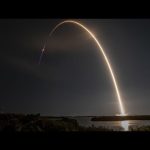
SpaceX’s 29th cargo resupply mission to the International Space Station is scheduled to lift off at 8:28 p.m. EST on Thursday, Nov. 9 (0128 UTC Nov. 10), from Launch Complex 39A at NASA’s Kennedy Space Center in Florida.
This uncrewed launch of SpaceX’s Dragon spacecraft will carry a new laser data communication investigation device, a study on the effects of spaceflight on ovulation, research on the respiratory system, an infrared instrument to measure atmospheric gravity waves, and essential supplies for our astronauts living and working aboard the orbiting laboratory.
Happy National STEM Day! We’re celebrating the fusion of innovation and creativity with a cool science experiment guaranteed to amaze your friends and inspire opportunities in STEM.
Steve Spangler is a bestselling author, STEM educator and Emmy award-winning television personality with more than 2,100 television appearances to his credit. Steve appeared as a regular guest on the Ellen DeGeneres Show from 2007-2022. Learn more about Steve at https://stevespangler.com/about-steve-spangler/
Steve Spangler is a bestselling author, STEM educator and Emmy award-winning television personality with more than 2,100 television appearances to his credit. Steve appeared as a regular guest on the Ellen DeGeneres Show from 2007-2022. Learn more about Steve at https://stevespangler.com/about-steve-spangler/
The iconic “worm” symbol debuted in 1975, and has since wriggled its way into pop culture and deep space. Watch as worm designer Richard Danne joins us at our Headquarters in Washington to discuss the emblem’s lasting legacy.
Following opening remarks by Marc Etkind, associate administrator for NASA’s Office of Communications at NASA Headquarters, Danne and David Rager, creative art director at NASA, will provide remarks followed by a panel discussion with Danne and others including:
Bert Ulrich, entertainment and branding liaison, NASA Headquarters
Michael Bierut, designer, Pentagram
Shelly Tan, design reporter, The Washington Post (moderator)
Julia Heiser, head of live event merchandise, Amazon Music
In moments years (and sometimes decades) in the making, scientists react to new discoveries from the James Webb Space Telescope, the most powerful space telescope ever built.
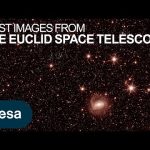
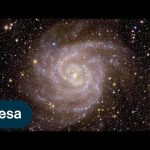
ESA is releasing the first full-colour images of the cosmos captured by its recently launched space telescope Euclid. Follow live a broadcast of the reveal on Tuesday 7 November at 13:15 GMT / 14:15 CET.
Never before has a telescope been able to create such razor-sharp astronomical images across such a large patch of the sky. Five images show that the telescope is ready for its mission to create the most extensive 3D map of the Universe yet and uncover some of its hidden secrets.
Credits: ESA – European Space Agency
★ Subscribe: http://bit.ly/ESAsubscribe and click twice on the bell button to receive our notifications.
We are Europe’s gateway to space. Our mission is to shape the development of Europe’s space capability and ensure that investment in space continues to deliver benefits to the citizens of Europe and the world. Check out https://www.esa.int/ to get up to speed on everything space related.
Today, ESA’s Euclid space mission reveals its first full-colour images of the cosmos. Never before has a telescope been able to create such razor-sharp astronomical images across such a large patch of the sky, and looking so far into the distant Universe. These five images illustrate Euclid’s full potential; they show that the telescope is ready to create the most extensive 3D map of the Universe yet, to uncover some of its hidden secrets.
Credits: ESA/Euclid/Euclid Consortium/NASA, image processing by J.-C. Cuillandre (CEA Paris-Saclay), G. Anselmi, CC BY-SA 3.0 IGO
★ Subscribe: http://bit.ly/ESAsubscribe and click twice on the bell button to receive our notifications.
We are Europe’s gateway to space. Our mission is to shape the development of Europe’s space capability and ensure that investment in space continues to deliver benefits to the citizens of Europe and the world. Check out https://www.esa.int/ to get up to speed on everything space related.
Join Phil as he navigates the wonderful world of water! Water is not just a precious resource for us to live, but an amazing power that humans have been harnessing for thousands of years! Thinking of water brings a tear to our eyes.
Have you ever done a science experiment and wondered “What would this be like if it were HUGE?” Welcome to Science Max, the exciting series that turbocharges all the science experiments you’ve done at home.
Steve Spangler is a bestselling author, STEM educator and Emmy award-winning television personality with more than 2,100 television appearances to his credit. Steve appeared as a regular guest on the Ellen DeGeneres Show from 2007-2022. Learn more about Steve at https://stevespangler.com/about-steve-spangler/
Seria Fizica Cool #seriacool @j Seria shorts: @b Seria carte “Fizica Povestită” #fizicapovestita @9 Seria „Dicţionarul de idei şi ideologii (#2i)”: @5 Seria “Deschis la cercetare”: @k Fizica pentru începători: @2 Fizica cuantică: @u Fizica nucleara: @r Fizica spațiului: @5 Călătorie prin Univers: @b Teoria relativității: @w Fizica simplă: @e Fizica avansată: @e Fizica mediului inconjurator: @c Cum sa ne protejam? @7 Fizica 5G: @r Podcast “Întâlnirea cu fizica”: @e
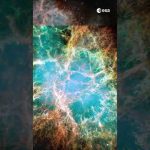
The first image shown in this video is the 2005 Hubble optical wavelength image of the Crab Nebula. This is followed by a new image of the object from the James Webb Space Telescope’s NIRCam (Near-Infrared Camera) and MIRI (Mid-Infrared Instrument) instruments that has revealed new details in infrared light.
In Webb’s infrared observation, a crisp, cage-like structure of fluffy red-orange filaments and knots of dust surround the object’s central area. However, some aspects of the inner workings of the Crab Nebula become more prominent and increase in detail in infrared light. In particular, Webb highlights what is known as synchrotron emission, seen here with a milky smoke-like appearance throughout the majority of the Crab Nebula’s interior.
Credit: NASA, ESA, CSA, STScI, T. Temim (Princeton University), N. Bartmann (ESA/Webb), A. Loll/J. Hester (Arizona State University) Music: Stellardrone – The Night Sky in Motion
There is no point in sending human explorers on long voyages around the solar system if they arrive at their destination in poor physical shape. Long stays in zero gravity are not good for the human body.
We already know that astronauts lose bone mass at around 1% for every month they are in space; muscles – including heart muscles – atrophy despite hours of exercise; and there are a host of other problems.
Introducing NASA’s new streaming service, NASA+, launching Nov. 8, 2023. More space. More rockets. More science. More missions. More NASA. All in one place. No subscription needed. https://nasa.gov/plus
NASA+ is ad free, no cost, and family friendly. It will feature NASA’s Emmy award-winning live coverage, and new original video series.
NASA+ will be available on most major platforms via the NASA App on iOS and Android mobile and tablet devices; streaming media players such as, Roku, Apple TV, and Fire TV; and on the web across desktop and mobile devices.
Never before has a telescope been able to create such razor-sharp astronomical images across such a large patch of the sky.
On Tuesday 7 November, ESA will release the first full-colour images captured by its recently launched Euclid space telescope. These images form part of the mission’s ‘Early Release Observations’ – where Euclid was tasked with scrutinising a set of celestial targets chosen for their public appeal and scientific value.
The five images are full of cosmic secrets waiting to be revealed. And this is just the beginning. During its six-year mission, Euclid will generate the equivalent of a million DVDs of data. These data will be used to create the biggest ever 3D map of the Universe and uncover the secrets of dark matter and dark energy.
In this video, hear from the experts about how Euclid has reached this milestone. Discover how they felt when they saw the first images, and find out what these images will reveal about the cosmos.
Watch the reveal of the images live through ESA Web TV or YouTube on 7 November, 13:15 GMT / 14:15 CET. At the same time, an ESA press release including all images will be published at esa.int/euclid.
Credits: ESA – European Space Agency Music: Carollyn Eden – 2 Million stars
★ Subscribe: http://bit.ly/ESAsubscribe and click twice on the bell button to receive our notifications.
We are Europe’s gateway to space. Our mission is to shape the development of Europe’s space capability and ensure that investment in space continues to deliver benefits to the citizens of Europe and the world. Check out https://www.esa.int/ to get up to speed on everything space related.
This video takes the viewer on a cosmic journey to the Crab Nebula.
The new image of the object revealed at the end from NASA/ESA/CSA James Webb Space Telescope was captured by the NIRCam (Near-Infrared Camera) and MIRI (Mid-Infrared Instrument) instruments to reveal new details in infrared light.
Credit: ESA/Webb, NASA, CSA, STScI, KPNO/NOIRLab, ESO, Digitized Sky Survey 2, N. Bartmann (ESA/Webb), N. Risinger, D. De Martin (ESA/Hubble), M. Zamani (ESA/Webb)
Music: Tonelabs – The Red North
Steve Spangler is a bestselling author, STEM educator and Emmy award-winning television personality with more than 2,100 television appearances to his credit. Steve appeared as a regular guest on the Ellen DeGeneres Show from 2007-2022. Learn more about Steve at https://stevespangler.com/about-steve-spangler/