Steve Spangler is a bestselling author, STEM educator and Emmy award-winning television personality with more than 2,100 television appearances to his credit. Steve appeared as a regular guest on the Ellen DeGeneres Show from 2007-2022 (27 appearances).
Phil tries to bend the power of sound to his will by making the loudest sound he can. Plus: make cornstarch mud dance, shatter a wine glass and make patterns with sand – all with the power of sound!
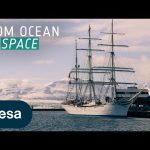
After an extraordinary six-week voyage from northern Norway, the iconic Norwegian tall ship Statsraad Lehmkuhl has docked in Nice, France, concluding ESA’s 2025 Advanced Ocean Training Course. Braving everything from wild storms to calm seas, students aboard mastered techniques for collecting ocean measurements and harnessed satellite data to unlock insights into our blue planet. Led by experts, this real-world expedition offered more than education – it sparked curiosity and a deeper commitment to understanding and protecting our oceans.
We are Europe’s gateway to space. Our mission is to shape the development of Europe’s space capability and ensure that investment in space continues to deliver benefits to the citizens of Europe and the world. Check out https://www.esa.int/ to get up to speed on everything space related.
Steve Spangler is a bestselling author, STEM educator and Emmy award-winning television personality with more than 2,100 television appearances to his credit. Steve appeared as a regular guest on the Ellen DeGeneres Show from 2007-2022 (27 appearances).
Steve Spangler is a bestselling author, STEM educator and Emmy award-winning television personality with more than 2,100 television appearances to his credit. Steve appeared as a regular guest on the Ellen DeGeneres Show from 2007-2022 (27 appearances).
Coming June 2025 to NASA+, YouTube, and other platforms, the original documentary film “Cosmic Dawn” takes you behind the scenes of the James Webb Space Telescope.
Relive the pitfalls and the triumphs of the world’s most powerful space telescope—from developing the idea of an impossible machine to watching with bated breath as it unfolded, hurtling through space a million miles away from Earth.
You’ve seen the universe through the eyes of Webb. Now discover how this technological marvel came about through the eyes of the scientists, engineers, and dreamers who made it possible.
Let’s learn something EPIC today! Join Phil as he shares some of the best kept science secrets. Nothing better than having fun while learning about how things work!
Have you ever done a science experiment and wondered “What would this be like if it were HUGE?” Welcome to Science Max, the exciting series that turbocharges all the science experiments you’ve done at home.
Let’s learn something EPIC today! Join Phil as he shares some of the best kept science secrets. Nothing better than having fun while learning about how things work!
Have you ever done a science experiment and wondered “What would this be like if it were HUGE?” Welcome to Science Max, the exciting series that turbocharges all the science experiments you’ve done at home.
Phil tries to build a tower strong enough to not fall apart when shaken in a massive earthquake. Plus: balancing on wood, getting sucked into sand, cookie towers and a table made of people!
Roy Gibson was ESA’s very first Director General. Born in 1924, he led the Agency from its foundation in 1975 until 1980.
Ulf Merbold was the first ESA astronaut to fly in space, as part of the crew of the STS-9 Spacelab 1 mission on Space Shuttle Columbia in 1983.
Claudie Heigneré made history in 2001 as the first female European astronaut on a ‘taxi flight’ to the International Space Station.
Gerhard Schwehm was ESA’s first planetary scientist, working on the Giotto mission that provided the first close-up images of a comet nucleus. He then became Mission Manager for the Rosetta mission until his retirement.
Paolo Ferri dedicated 20 years to Rosetta, first as Operations Manager, then as Flight Director, and eventually as Head of the Mission Operations Department.
Elsa Montagnon is currently Head of the Mission Operations Division. Previously, she was Spacecraft Operations Manager for BepiColombo, Europe’s first mission to Mercury, launched in 2018.
Josef Aschbacher became ESA Director General in 2021. From 2016–21, he was ESA Director for Earth Observation Programmes He has been a key leader of the European Copernicus programme, which is now considered to be one of the most successful Earth observation programmes in the world.
📹 European Space Agency (ESA) 📸 European Space Agency (ESA)
For half a century, the European Space Agency (ESA) has been serving Europe as its space agency and inspiring its citizens. On 30 May 1975, the ESA Convention was signed by 10 founding Member States and has since now expanded to 23 Member States, three Associate Members, four Cooperating States and a Cooperation Agreement with Canada. This anniversary year provides the opportunity to reflect not only on ESA’s past achievements, but even more so on its future perspectives.
Credits: European Space Agency (ESA)
*Correction: 1990, Launch of NASA/ESA Hubble Space Telescope*
We are Europe’s gateway to space. Our mission is to shape the development of Europe’s space capability and ensure that investment in space continues to deliver benefits to the citizens of Europe and the world. Check out https://www.esa.int/ to get up to speed on everything space related.
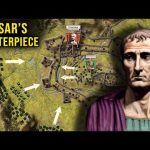
🚩 If you like what you see, consider supporting my work on Patreon and you get ad-free early access to my videos for as little as $1 https://www.patreon.com/historymarche — You can also show your support by subscribing to the channel and liking the video. Thank you for watching.
📢 Narrated by David McCallion
🎼 Music: EpidemicSound Filmstro
📚 Sources: Caesar: the Conquest of Gaul (1982), Translated by S. A. Handford. Published by Penguin Books. Caesar: the Life of a Colossus (2010), by Adrian Goldsworthy. Published by Phoenix. Alesia 52 BC: the Final Struggle for Gaul (Campaign Book 269) (2014), by Nic Fields. Osprey Publishing Ltd.
Corrections:
2:33 To clarify, I’m not depicting Indutiomarus as defeated here. He revolted around the same time as Ambiorix, but withdrew from Labienus’ camp when he heard of Ambiorix’s defeat. Indutiomarus later confronted Labienus’ legion where he was killed. But since I only depicted the opening of the revolt of 53BC and not its entirety, I only had him withdraw at this point.
3:56 Goldsworthy writes (p.376) that Caesar held a council with the Gallic leaders at Durocortorum (modern Reims) “[at] the end of the campaigning season,” so I put ‘Late 53 BC’ as the season generally ended in Autumn (Sep-Nov). It was here that the chieftain Acco was publicly flogged and then executed as the instigator of the trouble among the Senones and Carnutes (which Caesar had temporarily ‘let go’ earlier in the year).
5:52 After the Council at Reims, Caesar writes (p. 154) that he divided his legions in the following way: He had two positioned on the frontier of the Treveri; Two among the Lingones; And finally six at Agedincum (with the Senones).
9:32 Caesar intervenes in Narbo. Goldsworthy writes (P. 387) that Caesar had no legions nearby but had a few “locally raised cohorts” and a few drafts from Cisalpine Gaul, as well as cavalry raised from the area. I gave Caesar an infantry block and a cavalry block here.
10:41 For the political map here I worked off of, primarily, Ceasar’s list (P.156). The Belgae territory and the lands where the legions were wintering were not participating in the revolt yet. The Parisii definitely were, as were the Carnutes and Senones. I included the Veneti and Osismi (Brittany) on the basis of Caesar writing “all of the west coast” which I assume includes the northern part too. I left out the tribes of the Normandy and Flanders regions.
17:39 Before the main attack on Gergovia, Caesar writes that he sent both some cavalry and then a legion to demonstrate for the Gauls in the hills. He does not mention this single legion as involved in his covering force as the main body withdrew. Goldsworthy doesn’t write anything on this either. So I just have these blocks slowly withdraw after the battle.
19:03 Movements of the Aedui in the final attack are based on both Caesar and Goldsworthy. Caesar writes (P. 178) that he sent the Aedui “up the hill by another route on the right”, likely up the same hill but separated from the main body. Goldsworthy (P. 401) writes as much with “…the Aedui [going] up the opposite side of the same spur.” Goldsworthy explains that the terrain was uneven and the legions couldn’t see the Aedui, which explains why – even though the Aedui were nearby – the legions were shocked at their sudden appearance on the right.
19:55 Political map, expansion of the rebellion post-Gergovia. Caesar and Goldsworthy both state that pretty much all of the Gallic and Belgae tribes joined the rebellion after the Aedui defected. The Aedui sent ambassadors after the battle and Noviodunum to push for this. Caesar himself (P. 186) writes that a great council was held at Bibracte and that only the Remi, the Lingones and the Treveri didn’t join the revolt. This corroborates with what Goldsworthy writes (P. 404) that most of the Gallic and Belgae tribes then joined the rebellion, which would be true as the Lingones and Treveri were classed as Gallic or part of Celtica, and the Remi were a Belgic tribe. I therefore reflected this in the political map between Gergovia and Alesia.
27:47 Goldsworthy (P. 410) writes that this attack begun around midnight. He also writes the Gauls let out great cheers to alert Vercingetorix of their arrival.
33:08 I realise that Caesar writes that he received Vercingetorix’s surrender outside of the fortifications, though this is still pretty vague as to exactly where, but I had him placed at the bottom between the walls as this just seemed a natural place to fit all the icons into and show the event of him riding around Caesar and then being arrested.
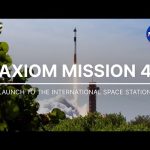
Axiom Mission 4, set to lift off at 2:31 a.m. EDT (0631 UTC) on Wednesday, June 25, is Axiom’s fourth private astronaut mission to the International Space Station. Ax-4 is launching from NASA’s Kennedy Space Center aboard SpaceX’s Dragon spacecraft.
During their two-week stay aboard the orbiting laboratory, the crew of Ax-4 will engage in science, outreach, and commercial activities.
Peggy Whitson, former NASA astronaut and director of human spaceflight at Axiom Space, will command the mission, while ISRO (Indian Space Research Organisation) astronaut Shubhanshu Shukla will serve as pilot. The two mission specialists are ESA (European Space Agency) project astronaut Sławosz Uznański-Wiśniewski of Poland and Tibor Kapu of Hungary. This mission will send the first ISRO astronaut to the station as part of a joint effort between NASA and the Indian space agency. Ax-4 will also carry the first astronauts from Poland and Hungary to stay aboard the space station.
Launch coverage is led by Axiom Space, with support from NASA and SpaceX; NASA’s primary mission responsibilities begin during Dragon’s approach to the International Space Station, the start of Ax-4 integrated operations. Learn more about NASA’s role in Ax-4 and how we’re working with our industry partners to open low Earth orbit to more people, more science, and more opportunities: https://go.nasa.gov/4mRkpGj
Song: ‘Apache’ by Kevin Graham Content ID: WXGBDH0A08QGK9CG
Song: ‘Majestic Skies’ by Strength To Last Content ID: VINOM8MWVMC8LB7X
Steve Spangler is a bestselling author, STEM educator and Emmy award-winning television personality with more than 2,100 television appearances to his credit. Steve appeared as a regular guest on the Ellen DeGeneres Show from 2007-2022 (27 appearances).
When it comes to experiments in space, astronauts on the International Space Station face challenges you won’t find on Earth: bubbles don’t rise, things float away and many Earth-based lab tools don’t always work the same way. So science in space needs to me reimagined from the ground up.
A NASA scientist explains how we study life, chemistry and physics in orbit.
Let’s learn something EPIC today! Join Phil as he shares some of the best kept science secrets. Nothing better than having fun while learning about how things work!
Have you ever done a science experiment and wondered “What would this be like if it were HUGE?” Welcome to Science Max, the exciting series that turbocharges all the science experiments you’ve done at home.
Let’s learn something EPIC today! Join Phil as he shares some of the best kept science secrets. Nothing better than having fun while learning about how things work!
Have you ever done a science experiment and wondered “What would this be like if it were HUGE?” Welcome to Science Max, the exciting series that turbocharges all the science experiments you’ve done at home.
Steve Spangler is a bestselling author, STEM educator and Emmy award-winning television personality with more than 2,100 television appearances to his credit. Steve appeared as a regular guest on the Ellen DeGeneres Show from 2007-2022 (27 appearances).
Steve Spangler is a bestselling author, STEM educator and Emmy award-winning television personality with more than 2,100 television appearances to his credit. Steve appeared as a regular guest on the Ellen DeGeneres Show from 2007-2022 (27 appearances).
Cartea sa de carte popularizare — „Chiar fi, fie ar fi măsura conștiinței” — prezintă pe înțeles aceste idei fără formule complexe. Discuțiile sale cu Philipp sau colaboratorii de la Wisconsin au dus la dezvoltarea unei cască somn care, măsurând semnale encefalogramă, emite sunete în deep sleep pentru a prelungi starea de somn adânc.
În 2025, grupul IIT Concerned (incluzând pe Daniel Dennett, Bernard Barthes, Patricia Churchland) a publicat un articol în care acuză pseudoștiință acuzații la adresa IIT, susținând că nu există încă o măsură derivată direct din ecuațiile fizice și că studiile existente evaluează doar complexitate generică, nu phi specific. Ei cred că teoria nu este teoria dominantă și riscă să concentreze finanțări pe un singur model.
Tononi răspunde că inteligența și conștiința pot fi disociate: un software poate prezenta relații cauză-efect, dar fără miza supraviețuirii rămâne o pseudo-conștiință. În schimb, organismele biologice procesează informație cu miza supraviețuirii, generând conștiință reală.
Un punct central este și problema qualia senzații — calitatea inefabilă a experiențelor subiective. IIT propune că fiecare quală corespunde unei structuri cauză–efect ireductibile, asemănător atomismului subiectivității. Astfel, structura maxim integrată nu doar măsoară cantitatea de conștiință, ci și identifică profilul calitativ al senzațiilor.
În plus, Tononi susține că IIT admite liber arbitru autentic: organismul în zona de informație maxim integrată nu acționează ca un lanț mecanic de neuroni, ci ia decizii reale, ceea ce conferă responsabilitate. Criticii observă însă că, fără o măsură fizică clară, rămâne dificil de comparat IIT cu alte teorii ale conștiinței (de exemplu, Global Workspace sau Higher-Order Thought).
Deși recunoaște că IIT nu este teoria finală, Tononi consideră că integrarea informațională e un element important. Problemele majore rămân însă lacunele în înțelegerea probleme creier și „hard problem” al conștiinței: cum descriem experiența subiectivă din afara ei?”
Steve Spangler is a bestselling author, STEM educator and Emmy award-winning television personality with more than 2,100 television appearances to his credit. Steve appeared as a regular guest on the Ellen DeGeneres Show from 2007-2022 (27 appearances).
How big is space? It’s one of the most mind-bending questions we can ask because the deeper we look, the more the universe keeps going. We’ve measured billions of light-years in every direction and still haven’t reached the edge.
A NASA scientists explains what we know — and don’t know — about the size of the cosmos.
Let’s learn something EPIC today! Join Phil as he shares some of the best kept science secrets. Nothing better than having fun while learning about how things work!
Have you ever done a science experiment and wondered “What would this be like if it were HUGE?” Welcome to Science Max, the exciting series that turbocharges all the science experiments you’ve done at home.
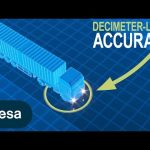
Europe’s Galileo is the world’s most precise satellite navigation system, providing metre-level accuracy to billions of users. ESA and European industry are preparing a new generation of satellites for the European Union, the Galileo Second Generation or G2, that will revolutionise the fleet with enhanced capabilities.
Galileo Second Generation satellites will integrate seamlessly with the current fleet to form the largest European satellite constellation and deliver essential services worldwide. With fully digital navigation payloads, electric propulsion, a better-performing navigation antenna, inter-satellite link capacity and an advanced atomic clock configuration, G2 satellites will provide more robust and reliable positioning, navigation and timing.
Galileo is managed and funded by the European Commission, in partnership with ESA and EUSPA. Since its inception, ESA leads the design and development and is entrusted with R&D activities. EUSPA is the system prime for the operational system and oversees the exploitation of services.
We are Europe’s gateway to space. Our mission is to shape the development of Europe’s space capability and ensure that investment in space continues to deliver benefits to the citizens of Europe and the world. Check out https://www.esa.int/ to get up to speed on everything space related.
Phil builds a small drag racer in the lab that uses the inertia of its wheels to move. Then he tries to max it out. The final experiment involves a jacked up car and a large frame with Phil riding it. Plus, Newton’s laws, pulling a tablecloth without breaking the dishes and a caveman trying to break down a door.
🚩 If you like what you see, consider supporting my work on Patreon and you get ad-free early access to my videos for as little as $1 https://www.patreon.com/historymarche — You can also show your support by subscribing to the channel and liking the video. Thank you for watching.
📢 Narrated by David McCallion
🎼 Music: EpidemicSound Filmstro
📚 Sources: The Gibraltar Crusade: Castile and the Battle for the Strait – Joseph F. O’Callaghan (2011) The Reconquista: The History and Legacy of the Conflicts Between the Moors and Christians on the Iberian Peninsula – Charles River Editors (2018) The Reconquest of Spain – Derek Lomax (1978) The Portuguese in the Age of Discovery 1340-1665 – David Nicolle (2012)
Steve Spangler is a bestselling author, STEM educator and Emmy award-winning television personality with more than 2,100 television appearances to his credit. Steve appeared as a regular guest on the Ellen DeGeneres Show from 2007-2022 (27 appearances).