https://www.qualcomm.com/invention/5g
Artificial intelligence is making our devices more than just utilities. From smartphones to healthcare to autonomous cars, our own Gary Brotman explains the potential of AI to make our lives easier and more exciting.
Tag: AI
-

AI Explained in 101 Seconds
-

Child talks with AI powered cartoon robot and learns to count
4-year old Sophia talks and plays with Buddy’s Flashcards (MyBuddy.ai) to learn numbers and discover animals. English is Sophia’s second language, and Buddy helps her to learn new words and improve her pronunciation. She picks it up right away.
Sign up at MyBuddy.ai to be notified when the App will be available on the App Store.
Like MyBuddy.ai on Facebook https://www.facebook.com/MyBuddyai/
Subscribe to our Youtube channel!
Speak and play – learn all day!
Sign up at MyBuddy.ai and to learn when the App will be available in the App Store.Like MyBuddy.ai on Facebook https://www.facebook.com/MyBuddyai/
Subscribe to our Youtube channel!
Speak and play – learn all day!
-
Digital Transformation: Steve Wilson on “The Limits of Artificial Intelligence”
See more clips and interviews at http://www.digitaltransformation-film.com
Steve Wilson: “Look, there was another point I wanted to make about the limits of AI. One of the most commercially realistic technologies these days is conversation technology, the chatbots. The idea of helping people through the complexity of their interactions, their business interactions through chat is a powerful idea. Some recent experience with chatbots that have gone feral, chatbots that have gone wild, and adopted racist guises. Calling a bot racist is a problematic idea, but let’s just call it what it is. The Microsoft Tay bot [was] released into Twitter to learn the mores and foibles of human language and to adopt those lessons of conversation and then start automating conversation. [It] proved to be a disaster within hours. The salutary lesson of the Tay experience was: Think about a toddler. The salutary lesson of the Tay experience was that this artificial intelligence was fundamentally not human-like. It’s so far short of human that we need to understand this. If a toddler learned some foul language in the playground and brought that home, and she started speaking inappropriately, then you take the toddler, you sit her down and you explain to her. You have an attitude adjustment, is the euphemism that we need. We’re reprogramming the toddler. What they did with Tay was they turned her off. They switch her off, it was like the digital death penalty for becoming unacceptable. The really deep problem here is that there is no teachable moment for an artificial intelligence. You cannot take the artificial intelligence and sit it down and explain where it went wrong. We are so far short of having a teachable moment for artificial intelligence, we’re so far short of having self-awareness, that we need to be really careful with the sort of implicit assumption that self-driving cars will make ethical decisions. Or that conversational robots will have human-like properties. We don’t even know how self-awareness works in ourselves, let alone how we’re going to program it.”
Steve Wilson is a Digital Identity Innovator & Analyst at Constellation Research. http://www.constellationr.com
“Digital Transformation: Visions of Nations, Companies, and People” is a film by Manuel Stagars.
-

VR’s Healthcare Revolution: Transforming Medical Training at CHLA
Recently, we partnered with Children’s Hospital Los Angeles (CHLA) to build a VR simulation that places medical students and staff in rare yet high-risk pediatric trauma situations where split-second decisions determine whether a patient lives or dies. Thanks to the immersive power of VR, we can replicate these training scenarios in true-to-life fashion, complete with paramedics rattling off symptoms, nurses and techs urging you to make a decision, and distraught parents praying for their child’s survival.
These visceral, interactive exercises up the stakes compared to traditional educational tools like non-VR simulations and mannequins. Powered by AiSolve and brought to life by the Hollywood VFX magic of BioflightVR, these virtual scenarios based on actual CHLA case studies let doctors and students practice and learn in realistic workplace conditions. Not only does this new innovation stand to significantly reduce the time and cost associated with mannequin-based training, it also better prepares people to respond in the real world.
Official Oculus Channels:
Oculus: http://ocul.us/Oculus
Facebook: http://ocul.us/Facebook
Twitter: http://ocul.us/Twitter
Instagram: http://ocul.us/Instagram -

The Rise of the Machines – Why Automation is Different this Time
Automation in the Information Age is different.
Books we used for this video:
The Rise of the Robots: http://amzn.to/2sFQTed
The Second Machine Age: http://amzn.to/2szATee
Support us on Patreon so we can make more videos (and get cool stuff in return): https://www.patreon.com/Kurzgesagt?ty=h
Steady: https://steadyhq.com/de/kurzgesagt
Merchandise: https://shop.kurzgesagt.org
Newsletter: http://eepurl.com/cRUQxz
Facebook: http://bit.ly/1NB6U5O
Twitter: http://bit.ly/2DDeT83
Instagram: http://bit.ly/2DEN7r3
Discord: https://discord.gg/cB7ycdvThe Voice of Kurzgesagt:
Steve Taylor: http://voice-pool.com/en/english/The music of the video here:
Soundcloud: http://bit.ly/2sfwlJf
Bandcamp: http://bit.ly/2r17DNc
Facebook: http://bit.ly/2qW6bY4– Study about job automation in the next two decades:
http://bit.ly/1mj2qSJTHANKS A LOT TO OUR LOVELY PATRONS FOR SUPPORTING US:
Brandon Eversole, Andrew Anglehart, Christian Ahlin, Kathleen Woolum, Estel Anahmias, Adam Schlender, Mike Luque, Encyclo, Stevie Taylor, Brent Yoder, Invisibleman, Jeff Lam, Christopher Hayes, Oliver Walker, gwendolyn bellermann, Matt Logan, Philip Chou, Brandon Young, Arlo Stewart, Thomas Hodnemyr, Viachaslau Hurmanau, Sam Cousins, Robin Hultgren, Jose Schroeder, Ched, Claustrophobya, Charles Wang, Dolan Dark, Casaro, Donglin Li, Sarah Thompson, Pamela Palmer, Fergal Harrington, Jonas Erath, Spencer, Zsuzsi Balai, Tyler Roberts, Allyssa Blalock, Robert Bishop, Carl-Johan Linde, Thomas Nielsen, Heather Pray, Marco Boneberger, Mehsotopes, Joe Johnston, ugo dubois, Keagan Boys, Miles Gard, Frantisek Sumsala, Scott, Tobias Theobald, Solar3ty Games, Nicholas Carr, K41N_of_2358, Daniel RodrÌguez, Pixlpit, Gytis Kirvela, Thomas Flanigan, Dwagon, Costin Graur, Mavis Everett, Kwiatkowski Robert, Huo Benpeng, Dan Gretton, Joshua Davison, Bryce Comp, Andrey Lipattsev, DEFECT DAVIS, Gurleen Saini, Andrew “FastLizard4” Adams, Isak Hietala, Leon Han, Sarah Johnson, Kieran Chakravorty, Hanna Khoury, Kimberly Martin, Jon Glass, Julius Wroblewski, Ben Zautner, Kester Falge, Juan Florez, Tad Moore
Help us caption & translate this video!
http://www.youtube.com/timedtext_cs_panel?c=UCsXVk37bltHxD1rDPwtNM8Q&tab=2
The Rise of the Machines – Why Automation is Different This time
-

The Future of Your Job in the Age of AI | Robots & Us | WIRED
Robot co-workers and artificial intelligence assistants are becoming more common in the workplace. Could they edge human employees out? What then?
Still haven’t subscribed to WIRED on YouTube? ►► http://wrd.cm/15fP7B7
Also, check out the free WIRED channel on Roku, Apple TV, Amazon Fire TV, and Android TV. Here you can find your favorite WIRED shows and new episodes of our latest hit series Masterminds.
ABOUT WIRED
WIRED is where tomorrow is realized. Through thought-provoking stories and videos, WIRED explores the future of business, innovation, and culture.The Future of Your Job in the Age of AI | Robots & Us | WIRED
-
AI Can Now Self-Reproduce—Should Humans Be Worried? | Eric Weinstein
New videos DAILY: https://bigth.ink/youtube
Join Big Think Edge for exclusive videos: https://bigth.ink/Edge
———————————————————————————-———————————————————————————-
ABOUT BIG THINK:Smarter Faster™
Big Think is the leading source of expert-driven, actionable, educational content — with thousands of videos, featuring experts ranging from Bill Clinton to Bill Nye, we help you get smarter, faster. Subscribe to learn from top minds like these daily. Get actionable lessons from the world’s greatest thinkers & doers. Our experts are either disrupting or leading their respective fields. We aim to help you explore the big ideas and core skills that define knowledge in the 21st century, so you can apply them to the questions and challenges in your own life.Other Frequent contributors include Michio Kaku & Neil DeGrasse Tyson.
Michio Kaku Playlist: https://bigth.ink/kaku
Bill Nye Playlist: https://bigth.ink/BillNye
Neil DeGrasse Tyson Playlist: https://bigth.ink/deGrasseTysonRead more at Bigthink.com for a multitude of articles just as informative and satisfying as our videos. New articles posted daily on a range of intellectual topics.
Join Big Think Edge, to gain access to a world-class learning platform focused on building the soft skills essential to 21st century success. It features insight from many of the most celebrated and intelligent individuals in the world today. Topics on the platform are focused on: emotional intelligence, digital fluency, health and wellness, critical thinking, creativity, communication, career development, lifelong learning, management, problem solving & self-motivation.
BIG THINK EDGE: https://bigth.ink/Edge
If you’re interested in licensing this or any other Big Think clip for commercial or private use, contact our licensing partner, Executive Interviews: https://bigth.ink/licensing
———————————————————————————-
Follow Big Think here:📰BigThink.com: https://bigth.ink
🧔Facebook: https://bigth.ink/facebook
🐦Twitter: https://bigth.ink/twitter
📸Instagram: https://bigth.ink/Instragram
📹YouTube: https://bigth.ink/youtube
✉ E-mail: info@bigthink.com
———————————————————————————- -

Artificial Intelligence Explained In 2 Minutes
Artificial intelligence or AI is intelligence displayed by machines such as computers, in a way similar to us, humans.
It’s able to observe its environment, learn and solve problems.Please Like and Subscribe for more weekly videos!
Follow me on Twitter: https://twitter.com/thecompscirocks
Follow me on Instagram: https://www.instagram.com/thecompscirocks/
Follow me on Facebook: https://www.facebook.com/thecompscirocks/Some sources & further reading:
http://www-formal.stanford.edu/jmc/whatisai/whatisai.html
http://www.iep.utm.edu/art-inte/
https://en.wikipedia.org/wiki/Artificial_intelligence
https://en.wikipedia.org/wiki/Weak_AI
https://en.wikipedia.org/wiki/Artificial_general_intelligence
https://www.ocf.berkeley.edu/~arihuang/academic/research/strongai3.html
https://en.wikipedia.org/wiki/Superintelligence
http://www.nickbostrom.com/superintelligence.html
https://harvardsciencereview.com/2015/12/04/artificial-superintelligence-the-coming-revolution-2/
http://waitbutwhy.com/2015/01/artificial-intelligence-revolution-1.html
http://waitbutwhy.com/2015/01/artificial-intelligence-revolution-2.html -

The animated guide to artificial intelligence (Explanimators: Episode 1)
An easy guide to everything AI. More from Microsoft Story Labs: microsoft.com/storylabs.
Subscribe to Microsoft on YouTube here: https://aka.ms/SubscribeToYouTube
Follow us on social:
LinkedIn: https://www.linkedin.com/company/microsoft/
Twitter: https://twitter.com/Microsoft
Facebook: https://www.facebook.com/Microsoft/
Instagram: https://www.instagram.com/microsoft/For more about Microsoft, our technology, and our mission, visit https://aka.ms/microsoftstories
#Microsoft #AI #Explanimators
-
What is Artificial Intelligence (or Machine Learning)?
Want to learn more about AI and machine learning? Take this free HubSpot Academy course: https://bit.ly/2Sm2rzG
What is AI? What is machine learning and how does it work? You’ve probably heard the buzz. The age of artificial intelligence has arrived. But that doesn’t mean it’s easy to wrap your mind around. For the full story on the rise of artificial intelligence, check out The Robot Revolution: http://hubs.ly/H0630650
Let’s break down the basics of artificial intelligence, bots, and machine learning. Besides, there’s nothing that will impact marketing more in the next five to ten years than artificial intelligence. Learn what the coming revolution means for your day-to-day work, your business, and ultimately, your customers.
Every day, a large portion of the population is at the mercy of a rising technology, yet few actually understand what it is.
Artificial intelligence. You know, HAL 9000 and Marvin the Paranoid Android?
Thanks to books and movies, each generation has formed its own fantasy of a world ruled — or at least served — by robots. We’ve been conditioned to expect flying cars that steer clear of traffic and robotic maids whipping up our weekday dinner.
But if the age of AI is here, why don’t our lives look more like the Jetsons?
Well, for starters, that’s a cartoon. And really, if you’ve ever browsed Netflix movie suggestions or told Alexa to order a pizza, you’re probably interacting with artificial intelligence more than you realize.
And that’s kind of the point. AI is designed so you don’t realize there’s a computer calling the shots. But that also makes understanding what AI is — and what it’s not — a little complicated.
In basic terms, AI is a broad area of computer science that makes machines seem like they have human intelligence.
So it’s not only programming a computer to drive a car by obeying traffic signals, but it’s when that program also learns to exhibit signs of human-like road rage.
As intimidating as it may seem, this technology isn’t new. Actually, for the past half-a-century, it’s been an idea ahead of its time.
The term “artificial intelligence” was first coined back in 1956 by Dartmouth professor John McCarthy. He called together a group of computer scientists and mathematicians to see if machines could learn like a young child does, using trial and error to develop formal reasoning. The project proposal says they’ll figure out how to make machines “use language, form abstractions and concepts, solve kinds of problems now reserved for humans, and improve themselves.”
That was more than 60 years ago.
Since then, AI has remained for the most part in university classrooms and super secret labs … But that’s changing.
Like all exponential curves, it’s hard to tell when a line that’s slowly ticking upwards is going to skyrocket.
But during the past few years, a couple of factors have led to AI becoming the next “big” thing: First, huge amounts of data are being created every minute. In fact, 90% of the world’s data has been generated in the past two years. And now thanks to advances in processing speeds, computers can actually make sense of all this information more quickly. Because of this, tech giants and venture capitalists have bought into AI and are infusing the market with cash and new applications.
Very soon, AI will become a little less artificial, and a lot more intelligent.
Now the question is: Should you brace yourself for yet another Terminator movie, live on your city streets?
Not exactly. In fact, stop thinking of robots. When it comes to AI, a robot is nothing more than the shell concealing what’s actually used to power the technology.
That means AI can manifest itself in many different ways. Let’s break down the options…
First, you have your bots. They’re text-based and incredibly powerful, but they have limitations.
Ask a weather bot for the forecast, and it will tell you it’s partly cloudy with a high of 57. But ask that same bot what time it is in Tokyo, and it’ll get a little confused. That’s because the bot’s creator only programmed it to give you the weather by pulling from a specific data source.
Natural language processing makes these bots a bit more sophisticated. When you ask Siri or Cortana where the closest gas station is, it’s really just translating your voice into text, feeding it to a search engine, and reading the answer back in human syntax. So in other words, you don’t have to speak in code.
Machine intelligence, artificial intelligence, machine learning, artificial intelligence tutorial, machine learning tutorial, evolution of machine learning, advantages of artificial intelligence, applications of artificial intelligence, ai meaning, machine learning applications, artificial intelligence examples.
Want to stay current on emerging tech? Check out our free guide today: http://bit.ly/2GJesc2
-
![Artificial Intelligence News – Toddler Robots Help Solve How Children Learn☑️[Computer and Math]](https://video.kidibot.ro/wp-content/uploads/2019/12/923/artificial-intelligence-news-toddler-robots-help-solve-how-children-learnefb88fcomputer-and-math-150x150.jpg)
Artificial Intelligence News – Toddler Robots Help Solve How Children Learn☑️[Computer and Math]
✡ Source: Lancaster University
✡Summary: Children may learn new words using the same method as robots. New research suggests that early learning is based not on conscious thought but on an automatic ability to associate objects, which enables babies to quickly make sense of their environment.
———————————————————————————————————
♫ Video :
➥ Playlist : Earth & Climate News : https://goo.gl/QP2KCL
➥ Playlist : Computers & Math News : https://goo.gl/IEY43O
➥ Playlist : Health & Medicine News : https://goo.gl/YvK431
➥ Playlist : Matter & Energy News : https://goo.gl/zzdMUQ
➥ Playlist : Plants & Animals News : https://goo.gl/JzQ6rB
➥ Playlist : Искусственный интеллект : https://goo.gl/u7Xu5d
———————————————————————————————————–
★ Channel : Artificial Intelligence News – Researched Daily News
★ Sub for me [free] : https://goo.gl/f01zWg
★ Twitter : https://goo.gl/iPQsAk
★ Fanpage : https://goo.gl/PCEx5D
★ Website :https://goo.gl/5cXqhe [Coming Soon]
© [Source] https://goo.gl/vaFbJm -

How to be Ready for Jobs in an Artificial Intelligence Driven World
The world is changing and is changing fast. Many of today’s traditional #jobs are at risk. With #AI becoming more predominant, how can we ensure that our children and their children can thrive in this future?
Here, I share some thoughts.
-

Machines That Think: The Good, Bad and Scary of A.I. | Dr. James Canton | TEDxMarin
Dr. Canton sees the coming of more Artificial Intelligence uses in our everyday lives and in
solving global problems. He encourages us to think about its direction and how to maintain control of what we create.Dr. James Canton is a leading global futurist, social scientist, keynote presenter, author, and visionary business advisor. For over 30 years, he has been insightfully predicting the key trends that have shaped our world. He is a leading authority on future trends with an emphasis on harnessing innovation. Dr. Canton has advised three White House Administrations and global business leaders.
This talk was given at a TEDx event using the TED conference format but independently organized by a local community. Learn more at http://ted.com/tedx
-

Meet Cozmo, the AI robot with emotions
Cozmo is a mini companion robot powered by a so-called emotion engine that develops as it learns about you. Developers will have access to an SDK to program the robot.
Click here for the Cozmo CNET review – http://cnet.co/29Lz56z
Subscribe to CNET: http://bit.ly/17qqqCs
Watch more CNET videos: http://www.cnet.com/video
Follow CNET on Twitter: http://twitter.com/CNET
Follow CNET on Facebook: http://www.facebook.com/cnet#Cozmo #Anki #CozmoAnki
-

Anki’s AI-powered toy robot
Cozmo is an AI robot from startup Anki, a company best known for making small race cars that connect to your smartphone. With Cozmo, the company hopes it can sell kids and adults alike on the promise of advanced artificial intelligence and robotics all bundled together in a Pixar-like toy. When Cozmo launches in October, Anki will let anyone access the company’s code to start tinkering with the robot and building third-party apps.
Subscribe: https://goo.gl/G5RXGs
Check out our full video catalog: https://goo.gl/lfcGfq
Visit our playlists: https://goo.gl/94XbKx
Like The Verge on Facebook: https://goo.gl/2P1aGc
Follow on Twitter: https://goo.gl/XTWX61
Follow on Instagram: https://goo.gl/7ZeLvX
Read More: http://www.theverge.com -

Behold The Artificial Intelligent Baby X
Behold The Future…Imagine a machine that can laugh and cry, learn and dream, and can express its inner responses to how it perceives you to feel. It can express itself in a natural manner but also allows you to visualise the mental imagery emerging in its mind.
The Laboratory for Animate Technologies is creating ‘live’ computational models of the face and brain by combining Bioengineering, Computational and Theoretical Neuroscience, Artificial Intelligence and Interactive Computer Graphics Research.
We are developing multidisciplinary technologies to create interactive autonomously animated systems which will define the next generation of human computer interaction and facial animation.
“If I had my time again I’d want to spend it in this lab” – Alvy Ray Smith, Co-founder of Pixar (on his visit to the Laboratory for Animate Technologies).
We believe the best way to simulate biological behaviour is through biological models. We model the brain processes which give rise to behaviour and social learning and use these to animate lifelike models of the face that can interact with you.
BabyX is an interactive animated virtual infant prototype. BabyX is a computer generated psychobiological simulation under development in the Laboratory of Animate Technologies and is an experimental vehicle incorporating computational models of basic neural systems involved in interactive behaviour and learning.
These models are embodied through advanced 3D computer graphics models of the face and upper body of an infant. The system can analyse video and audio inputs in real time to react to the caregiver’s or peer’s behaviour using behavioural models.
BabyX embodies many of the technologies we work on in the Laboratory and is under continuous development, in its neural models, sensing systems and also the realism of its real time computer graphics.
We create interactive models of neural systems and neuroanatomy enabling visualisation of the internal processes generated by computational simulations giving rise to behaviour.
The Auckland Face Simulator is being developed to cost effectively create extremely realistic and precisely controllable models of the human face and its expressive dynamics for Psychology research.
We are developing the technology to simulate faces both inside and out. We simulate how faces move and how they look, and even their underlying anatomic structure.
We are developing a visual modelling methodology for the construction, visualisation and animation of neural systems called Brain Language [BL], a novel simulation environment for neural models.
This allows users to create animations and real-time visualisations from biologically based neural network models, allowing simulation effects to be viewed in an interactive context. Such a visual environment is not only suitable for visualising a simulation; it is also ideal for model development.
We are developing computer vision based systems to track and analyse facial expression and state of the art algorithms to solve for individual facial muscle activation.
Applications range from real-time expression recognition to microdynamic interaction analysis for psychology research.
http://www.abi.auckland.ac.nz/en/about/our-research/animate-technologies.html
————————————————————————————This Freaky Baby Could Be the Future of AI. Watch It in Action
-

Simple Artificial Intelligence (AI) coding in Scratch
In this episode Grace shows us an example of simple artificial intelligence coing in Scratch. Here she shows us how to create a platformer game that learns how to jump over a movable obstacle.
-

Hello World – Machine Learning Recipes #1
Six lines of Python is all it takes to write your first machine learning program! In this episode, we’ll briefly introduce what machine learning is and why it’s important. Then, we’ll follow a recipe for supervised learning (a technique to create a classifier from examples) and code it up.
Follow https://twitter.com/random_forests for updates on new episodes!
Subscribe to the Google Developers: http://goo.gl/mQyv5L –
Subscribe to the brand new Firebase Channel: https://goo.gl/9giPHG
And here’s our playlist: https://goo.gl/KewA03 -

Tyche: The True AI Companion for Kids
TYCHE is an AI robot companion for children. It creates an atmosphere that promotes learning, socializing, and playing as it enhances the imagination and creativity of young minds. The robot talks, listens, thinks and reasons to plan activities and solve problems.
-

How can kids talk to Tyche AI better?
While you interact with Tyche more and more, especially kids, they develop the power to express themselves better. Tyche learns incrementally to be able to carry out intelligent conversations with humans. Visual and audio receptors are used to perceive the world around Tyche building its own beliefs.
-
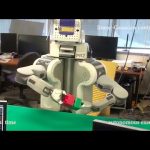
BRETT the Robot learns to put things together on his own
Full Story: http://newscenter.berkeley.edu/2015/05/21/deep-learning-robot-masters-skills-via-trial-and-error/
UC Berkeley researchers have developed algorithms that enable robots to learn motor tasks through trial and error using a process that more closely approximates the way humans learn, marking a major milestone in the field of artificial intelligence. In their experiments, the PR2 robot, nicknamed BRETT for Berkeley Robot for the Elimination of Tedious Tasks, used “deep learning” techniques to complete various tasks without pre-programmed details about its surroundings.
Video footage courtesy of UC Berkeley Robot Learning Lab, edited by Phil Ebiner
http://news.berkeley.edu/2015/05/21/deep-learning-robot-masters-skills-via-trial-and-error/
http://www.berkeley.edu
http://www.facebook.com/UCBerkeley
http://twitter.com/UCBerkeley
http://instagram.com/ucberkeleyofficial
https://plus.google.com/+berkeley -

What happens when our computers get smarter than we are? | Nick Bostrom
Artificial intelligence is getting smarter by leaps and bounds — within this century, research suggests, a computer AI could be as “smart” as a human being. And then, says Nick Bostrom, it will overtake us: “Machine intelligence is the last invention that humanity will ever need to make.” A philosopher and technologist, Bostrom asks us to think hard about the world we’re building right now, driven by thinking machines. Will our smart machines help to preserve humanity and our values — or will they have values of their own?
TEDTalks is a daily video podcast of the best talks and performances from the TED Conference, where the world’s leading thinkers and doers give the talk of their lives in 18 minutes (or less). Look for talks on Technology, Entertainment and Design — plus science, business, global issues, the arts and much more.
Find closed captions and translated subtitles in many languages at http://www.ted.com/translateFollow TED news on Twitter: http://www.twitter.com/tednews
Like TED on Facebook: https://www.facebook.com/TEDSubscribe to our channel: http://www.youtube.com/user/TEDtalksDirector
-

3. Artificial Intelligence, challenges and Achievements (Malayalam) By Ashish Jose
Topic:- Artificial Intelligence (Malayalam) By Ashish Jose
Seminar Organized By :- Freethinkers Facebook Group (https://www.facebook.com/groups/ftkerala4)
Venue :- C Achutha Menon Hall
Date :- 16-02-2014 -

Computer Chronicles: Artificial Intelligence and Expert Systems (1984) Part 1
Thanks for watching, please make sure to subscribe to my channel by clicking on the link below or the Subscribe button for more computer videos.
http://www.youtube.com/subscription_center?add_user=computercloset
http://archive.org/details/computerchronicles
http://www.youtube.com/user/computerclosetAn early look at artificial Intelligence. Guests includes Edward Feigenbaum of Stanford University, Nils Nilsson of the AI Center at SRI International, Tom Kehler of Intellegenetics, Herb Lechner of SRI, and John McCarthy of Stanford. Featured demonstrations include Inferential Knowledge Engineering and the programming language LISP. Originally broadcast in 1984.
Q. What is artificial intelligence?
A. It is the science and engineering of making intelligent machines, especially intelligent computer programs. It is related to the similar task of using computers to understand human intelligence, but AI does not have to confine itself to methods that are biologically observable.
Q. Yes, but what is intelligence?
A. Intelligence is the computational part of the ability to achieve goals in the world. Varying kinds and degrees of intelligence occur in people, many animals and some machines.
Q. Isn’t there a solid definition of intelligence that doesn’t depend on relating it to human intelligence?
A. Not yet. The problem is that we cannot yet characterize in general what kinds of computational procedures we want to call intelligent. We understand some of the mechanisms of intelligence and not others.
Q. Is intelligence a single thing so that one can ask a yes or no question “Is this machine intelligent or not?”?
A. No. Intelligence involves mechanisms, and AI research has discovered how to make computers carry out some of them and not others. If doing a task requires only mechanisms that are well understood today, computer programs can give very impressive performances on these tasks. Such programs should be considered “somewhat intelligent”.
Q. Isn’t AI about simulating human intelligence?
A. Sometimes but not always or even usually. On the one hand, we can learn something about how to make machines solve problems by observing other people or just by observing our own methods. On the other hand, most work in AI involves studying the problems the world presents to intelligence rather than studying people or animals. AI researchers are free to use methods that are not observed in people or that involve much more computing than people can do.
Q. What about IQ? Do computer programs have IQs?
A. No. IQ is based on the rates at which intelligence develops in children. It is the ratio of the age at which a child normally makes a certain score to the child’s age. The scale is extended to adults in a suitable way. IQ correlates well with various measures of success or failure in life, but making computers that can score high on IQ tests would be weakly correlated with their usefulness. For example, the ability of a child to repeat back a long sequence of digits correlates well with other intellectual abilities, perhaps because it measures how much information the child can compute with at once. However, “digit span” is trivial for even extremely limited computers.
Hosted by Stewart Cheifet, Computer Chronicles was the world’s most popular television program on personal technology during the height of the personal computer revolution. It was broadcast for twenty years from 1983 – 2002. The program was seen on more than 300 television stations in the United States and in over 100 countries worldwide, with translations into French, Spanish, Chinese, and Arabic. The series had a weekly television broadcast audience of over two million viewers.
Many of the series programs are distributed on video to corporations and educational institutions for use in computer training. Computer Chronicles program segments have also been bundled with various computer text books by major publishers.
-

Artificial Intelligence – “The Stolen Child”
Robin Williams, voicing Dr. Know, recites the famous refrain of William Butler Yeats’s poem “The Stolen Child.” Visit my channel for more films that quote poetry.
Video is property of its rightful owners and is used without profit. No copyright infringment is ever intended.