Tag: aircraft

  • Rovers compete in lunar Space Resources Challenge

    Rovers compete in lunar Space Resources Challenge

    Wheeled, tracked and walking rovers competed to survey a shadowy analogue of the polar lunar surface for useable resources during the first field test of the ESA-ESRIC Space Resources Challenge. Some 12 teams from across Europe and Canada took part in the field test in the Netherlands, with five winners going on to the next phase of the contest.

    The Space Resources Challenge – supported by ESA and the European Space Resources Innovation Centre (ESRIC) in Luxembourg – asked European (and Canadian) researchers and institutions to develop and demonstrate a system of one or more vehicles capable of prospecting resources on the Moon in the near future.

    Working inside a former aircraft hangar, the competition organisers spread 200 tons of lava rock across an area equivalent to seven tennis courts, landscaping it into a Moon-like environment, including the main crater of interest. Then they scattered rocks, including a hundred simulated boulders larger than a metre across, whose positions were precisely geo-referenced.

    These measurements served as the basis of a map provided to the rover teams. The idea was to give them the equivalent level of local information from satellite imagery, while still leaving smaller-scale surprises. Once complete, the moonscape was kept concealed from the rover groups behind black curtains, so they would see it only through the cameras of their rovers. The 12 teams each made their prospecting attempt one at a time.

    The competing rovers had to navigate and map the whole test environment to prospect for useable resources – meaning first of all to track down their location, identify the best and safest passages and then to gather information about the characteristics and the composition of the rocks they located.

    Credit: ESA

    ★ Subscribe: http://bit.ly/ESAsubscribe and click twice on the bell button to receive our notifications.

    Check out our full video catalog: http://bit.ly/SpaceInVideos
    Follow us on Twitter: http://bit.ly/ESAonTwitter
    On Facebook: http://bit.ly/ESAonFacebook
    On Instagram: http://bit.ly/ESAonInstagram
    On LinkedIn: https://bit.ly/ESAonLinkedIn
    On Pinterest: https://bit.ly/ESAonPinterest
    On Flickr: http://bit.ly/ESAonFlickr

    We are Europe’s gateway to space. Our mission is to shape the development of Europe’s space capability and ensure that investment in space continues to deliver benefits to the citizens of Europe and the world. Check out https://www.esa.int/ to get up to speed on everything space related.

    Copyright information about our videos is available here: https://www.esa.int/ESA_Multimedia/Terms_and_Conditions

    #ESA
    #Robotics
    #SpaceResources
  • Zero gravity Science

    Zero gravity Science

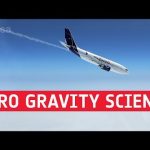
    ESA’s parabolic flight project coordinator Neil Melville explains why 40 researchers working on 12 technologically-advanced experiments are put in an aircraft that flies at maximum thrust in repeated 50° angles at the limits of the Novespace aircraft’s design.

    Parabolic flights offer sessions of 20 seconds of zero gravity giving a total of 10 minutes of weightlessness each flight. The advantage of parabolic flights over other platforms for experimentation in altered gravity is that researchers can join the flight and interact with their experiment – fine tuning hardware, running tests on human subjects or changing parameters on the fly. The experiments are carefully chosen for potential benefits, safety and uniqueness.

    Neil highlights some of the experiments on ESA’s 72nd campaign that covered disciplines as diverse as astronomy, cooling techniques, metallurgy, weather and human physiology.

    The Progra2 experiment is creating clouds of matter and recording how light is scattered by micrometre-sized particles. The carbon-based dust is chosen to resemble the clouds found in our Solar System such as around asteroids and comets. Knowing how light is scattered by these particles in microgravity will help interpret observations made from telescopes and increase our understanding the Universe.

    An experiment from the Université Libre de Bruxelles in Belgium is looking at healing wounds with bio-mimetic materials by submitting them to mechanical stresses typical in weightlessness. The knowledge acquired will pave the way for the development of biophysical models and a have a direct impact on the industrial market of wearable electronics.

    The VIP-GRAN team is looking into how particles behave in reduced gravity to understand the underlying physics in detail. On this flight they investigated the jamming of particles as they flow through small openings. This can be an annoyance on Earth when salt gets stuck in the shaker for example, but the phenomenon is influenced by gravity and the researchers want to know more. This was the ninth flight for the VIP-GRAN team and who are working towards having a version of their experiment fly on the International Space Station with even more weightless time.

    Air Zero-G exterior footage courtesy of Airborne Films and Novespace.

    ★ Subscribe: http://bit.ly/ESAsubscribe and click twice on the bell button to receive our notifications.

    Check out our full video catalog: http://bit.ly/SpaceInVideos
    Follow us on Twitter: http://bit.ly/ESAonTwitter
    On Facebook: http://bit.ly/ESAonFacebook
    On Instagram: http://bit.ly/ESAonInstagram
    On Flickr: http://bit.ly/ESAonFlickr

    We are Europe’s gateway to space. Our mission is to shape the development of Europe’s space capability and ensure that investment in space continues to deliver benefits to the citizens of Europe and the world. Check out http://www.esa.int/ESA to get up to speed on everything space related.

    Copyright information about our videos is available here: http://www.esa.int/spaceinvideos/Terms_and_Conditions

  • Iris: satcom for aviation

    Iris: satcom for aviation

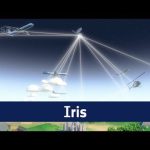
    Iris will provide a safe and secure text-based data link between pilots and air traffic control (ATC) networks using satellite technology.

    The programme is developed under a public-private partnership between ESA and Inmarsat, and will help relieve pressure on the aviation sector’s congested radio frequency communication channels.

    It will so as part of the European Commission’s Single European Sky ATM Research (SESAR) masterplan to modernise Europe’s air traffic management.

    ★ Subscribe: http://bit.ly/ESAsubscribe