A milestone for a NASA astronaut, a plan for the future of the space station, and moving a step closer to an historic mission to the station … a few of the stories to tell you about – This Week at NASA!
NASA is more than astronauts. We are scientists, engineers, IT specialists, human resources specialists, accountants, writers, technicians, and many other kinds of people working together to break barriers to achieve the seemingly impossible.
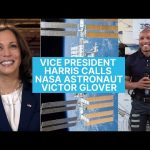
U.S. Vice President Kamala Harris placed a special phone call to space this week when she spoke with astronaut Victor Glover who is aboard the International Space Station.
Glover, a crew member of NASA’s SpaceX Crew-1 mission, is the first African American astronaut to fly on a commercial spacecraft, and the first African American to fly a long-term mission aboard the orbiting laboratory. This is his first spaceflight since being selected as a NASA astronaut in 2013.
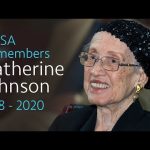
Pioneering NASA mathematician Katherine Johnson has died at the age of 101. Johnson was part of a group of African-American women who worked on critical mathematical calculations in the early days of human spaceflight, as chronicled in the best-selling book and hit movie “Hidden Figures.”
“She was an American hero and her pioneering legacy will never be forgotten,” said NASA Administrator Jim Bridenstine.
Karen Moore shares her story on how her 2018 internship at NASA’s Langley Research Center allowed her to support the Minority University Research and Education Project for American Indian and Alaskan Native STEM Engagement (MAIANSE). The NASA Office of Education’s MAIANSE initiative supports tribal colleges or universities with career development and internship opportunities.
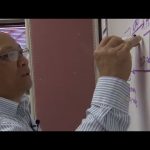
Mark Davis has been with NASA Armstrong Flight Research Center since April 1990, as a Aerodynamics Engineer. Mark Currently leads the Small Business Innovative Research Program working with small businesses that contribute to NASA’s Research goals.
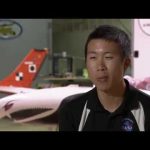
Richard Hang, an electronic engineer, has served as the Chief of Sensors and Systems Development Branch at NASA’s Armstrong Flight Research Center (AFRC) since 2014. He previously served as the Chief of Instrumentation Branch at AFRC from 2012 to 2014. Prior to being selected as Branch Chief, he was a senior instrumentation engineer for design and development of real-time embedded data systems for flight research. He has been a NASA employee since September, 1996.
Alex Chin is an aerospace engineer in the Aerostructures Research Branch at NASA’s Armstrong Flight Research Center in Edwards, California. He is responsible for planning, executing, and analyzing tests to support structural dynamics research at Armstrong.
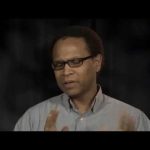
Shawn Goodman is an engineer at NASA’s Jet Propulsion Laboratory in Pasadena, California. He currently serves as the Deputy Division Manager for the Mechanical Systems Fabrication and Test Division. Additionally, he is the Project System Engineer and Engineering Technical Authority for the agency’s Soil Moisture Active Passive (SMAP) Mission. SMAP is the first Earth satellite designed to collect global observations of the vital soil moisture hidden just beneath our feet. Its high resolution space-based measurements will give scientists a new capability to better predict natural hazards of extreme weather, climate change, floods and droughts and improve our understanding of Earth’s water, energy and carbon cycles.
Want to know how it works? Check back on August 25th for the answer! An amazing Optical Illusion using the American Flag. Use this as a cool magic trick on your friends!