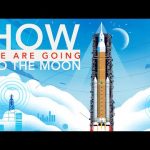
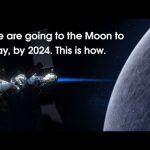
While Apollo placed the first steps on the Moon, Artemis opens the door for humanity to sustainably work and live on another world for the first time. Using the lunar surface as a proving ground for living on Mars, this next chapter in exploration will forever establish our presence in the stars. ✨
We are returning to the Moon – to stay – and this is how we are going!
Actress Kelly Marie Tran of “Star Wars: The Rise of Skywalker” lent her voice to this project.
NASA Spacesuit Engineer Lindsay Aitchison answers the question “How are we going to the Moon?” Comment on this video using #AskNASA with your questions for upcoming episodes! She addresses key questions about our plans to explore the Moon and Mars in the Artemis Program. Lindsay also highlights how the Gateway will help in our missions to Mars.
NASA Chief Scientist Jim Green answers the question “Why are we going to the Moon?” Comment on this video using #AskNASA with your questions for upcoming episodes!
He addresses key questions about our plans to explore the Moon and Mars, including where we will most likely find water on the Moon. Jim shares his extensive background in Planetary Science to explain the significance of returning with international and commercial partners. Jim also highlights how we are currently exploring Mars with the Curiosity rover.
Interventia mea in cadrul emisiunii “Jurnalul de Stiinte” de la Digi TV, in ziua de 10 mai 2019. Emisiunea “Jurnalul de stiinte”, prezentata de Teodora Safta, se poate urmari In fiecare vineri, de la ora 19:00, la Digi World si in reluare sambata, de la ora 15:30, la Digi24.
We’ve taken giant leaps and left our mark in the heavens. Now we’re building the next chapter, returning to the Moon to stay, and preparing to go beyond. We are NASA – and after 60 years, we’re just getting started. Special thanks to Mike Rowe for the voiceover work.
Are Cosmosul mai mult de trei dimensiuni spatiale? Afla, urmarind inregistrarea emisiunii Stiinta in Cuvinte Potrivite, cu Corina Negrea si Dan Manolache, din 11 octombrie. Am discutat despre detectia cu unde gravitationale a fuziunii dintre doua stele neutronice, ce ar scoate la iveala dimensiuni aditionale ale spatiului.
The universe is incredibly old, astoundingly vast and populated by trillions of planets — so where are all the aliens? Astronomer Stephen Webb has an explanation: we’re alone in the universe. In a mind-expanding talk, he spells out the remarkable barriers a planet would need to clear in order to host an extraterrestrial civilization — and makes a case for the beauty of our potential cosmic loneliness. “The silence of the universe is shouting, ‘We’re the creatures who got lucky,’” Webb says.
The TED Talks channel features the best talks and performances from the TED Conference, where the world’s leading thinkers and doers give the talk of their lives in 18 minutes (or less). Look for talks on Technology, Entertainment and Design — plus science, business, global issues, the arts and more.
We don’t know where you’re going, but we do know that Rosetta is about to arrive at comet 67P/Churyumov-Gerasimenko. Join the adventure and share your ‘are we there yet?’ photos to win great prizes.
After a 10-year journey, Rosetta and Philae are impatient to arrive at their destination!
In July 2014, the public were invited to join the “Rosetta, are we there yet?” campaign, a photo contest to support the last leg of the spacecraft’s epic 10-year voyage to comet 67P/Churyumov–Gerasimenko.
Why do we explore? Simply, it is part of who we are, something we’ve done throughout history. NASA’s new video, “We Are the Explorers,” looks at that tradition of reaching for things just beyond our grasp, and how it’s helping lay the foundation for our greatest journeys ahead.