Tag: Ariane 6

  • Ariane 6 launches MetOp-SG-A1 and Sentinel-5

    Ariane 6 launches MetOp-SG-A1 and Sentinel-5

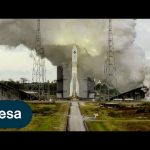
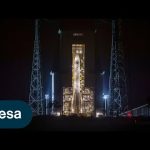
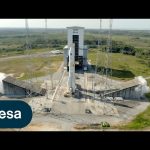
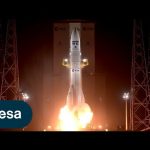
    Europe’s first MetOp Second Generation, MetOp-SG-A1, weather satellite – which hosts the Copernicus Sentinel-5 mission – has launched aboard an Ariane 6 rocket from Europe’s Spaceport in French Guiana. The rocket lifted off on 13 August at 02:37 CEST (12 August 21:37 Kourou time).

    MetOp-SG-A1 is the first in a series of three successive pairs of satellites. The mission as a whole not only ensures the continued delivery of global observations from polar orbit for weather forecasting and climate analysis for more than 20 years, but also offers enhanced accuracy and resolution compared to the original MetOp mission – along with new measurement capabilities to expand its scientific reach.

    This new weather satellite also carries the Copernicus Sentinel-5 mission to deliver daily global data on air pollutants and atmospheric trace gases as well as aerosols and ultraviolet radiation.

    Credit: ESA/CNES/Arianespace

    Access the video on the ESA video library: https://www.esa.int/ESA_Multimedia/Videos/2025/08/MetOp-SG-A1_and_Sentinel-5_launch_on_Ariane_6

    ★ Subscribe: http://bit.ly/ESAsubscribe and click twice on the bell button to receive our notifications.

    Check out our full video catalog: http://bit.ly/SpaceInVideos
    Follow us on Twitter: http://bit.ly/ESAonTwitter
    On Facebook: http://bit.ly/ESAonFacebook
    On Instagram: http://bit.ly/ESAonInstagram
    On LinkedIn: https://bit.ly/ESAonLinkedIn
    On Pinterest: https://bit.ly/ESAonPinterest
    On Flickr: http://bit.ly/ESAonFlickr

    We are Europe’s gateway to space. Our mission is to shape the development of Europe’s space capability and ensure that investment in space continues to deliver benefits to the citizens of Europe and the world. Check out https://www.esa.int/ to get up to speed on everything space related.

    Copyright information about our videos is available here: https://www.esa.int/ESA_Multimedia/Terms_and_Conditions

  • Europe’s future in space transportation

    Europe’s future in space transportation

    Space is huge and essential to humankind, fuelling knowledge, supporting our economies and driving global prosperity. None of this would be possible without reliable access to space.

    Since 1979, Europe has relied on the Ariane rockets and Vega series to launch its missions. Today, with Ariane 6 and Vega-C, ESA ensures Europe’s autonomous and independent access to space. But we are also looking ahead. With the Ariane Smart Transfer and Release In-orbit Ship (ASTRIS), Phoebus, P160C boosters, the MR-10 engine and more, ESA is enhancing its rockets with new innovations that improve cost, performance, capability and sustainability.

    ESA is also leading the way in developing new propulsion systems to power the European launchers of the future. In collaboration with industry, ESA is supporting the development of new technologies to be used on rocket, boosters, upper stages, landers and spacecraft.

    Initiates like Boosters for European Space Transportation (BEST!), Technologies for High-thrust Re-Usable Space Transportation (THRUST!) and Future Innovation and Research in Space Transportation programme (FIRST!), are advancing key technologies for reusable boosters, engines and other innovations crucial for the future of space exploration. ESA’s Space Rider is a reusable spacecraft and robotic laboratory, designed to stay in low Earth-orbit for two months and return payloads to Earth. Themis is a prototype for testing reusable rocket technologies, including vertical takeoff, landing and reuse, powered by the Prometheus engine.

    The future of space transport extends beyond Earth launches, with in-orbit operations, transportation systems to support satellite servicing, orbital refuelling, and payload transfers between orbits.

    To support all of this, ESA is upgrading its ground support and Europe’s Spaceport in French Guiana, to accommodate more launches.

    Through programmes like ‘Boost!’ ESA is empowering the European Space Industry, supporting innovative companies which are creating new launch services. The European Launcher Challenge is shaping a competitive European launch sector for the future, strengthening Europe’s autonomous access to space.

    Credit: European Space Agency (ESA)

    Access the video on the ESA video library: https://www.esa.int/ESA_Multimedia/Videos/2025/06/The_future_of_ESA_Transportation

    ★ Subscribe: http://bit.ly/ESAsubscribe and click twice on the bell button to receive our notifications.

    Check out our full video catalog: http://bit.ly/SpaceInVideos
    Follow us on Twitter: http://bit.ly/ESAonTwitter
    On Facebook: http://bit.ly/ESAonFacebook
    On Instagram: http://bit.ly/ESAonInstagram
    On LinkedIn: https://bit.ly/ESAonLinkedIn
    On Pinterest: https://bit.ly/ESAonPinterest
    On Flickr: http://bit.ly/ESAonFlickr

    We are Europe’s gateway to space. Our mission is to shape the development of Europe’s space capability and ensure that investment in space continues to deliver benefits to the citizens of Europe and the world. Check out https://www.esa.int/ to get up to speed on everything space related.

    Copyright information about our videos is available here: https://www.esa.int/ESA_Multimedia/Terms_and_Conditions
  • The Young Professional Satellite – From Earth to Orbit (episode 3)

    The Young Professional Satellite – From Earth to Orbit (episode 3)

    In this last episode of the Young Professional Satellite docu series, we follow the team’s last steps to make their dream come true: sending their satellite to space.

    After securing the crucial final assembly and battery connection, we take you inside the thermal vacuum tests (TVAC) to see how YPSat is tested under the extreme temperatures of space; through vibration tests to ensure its structural integrity during launch; and electromagnetic compatibility (EMC) tests to prevent interference with the launcher’s systems.

    As we approach the European Space Agency’s traditional Flight Acceptance Review, the satellite is officially certified for flight. With the integration complete and final battery charge applied, control is handed over to the rocket. The only task left for the teams on the ground is to analyse one last time the rocket’s trajectory and await the critical first signal.

    As tension builds up on launch day, watch as the team retrieves YPSat’s data and decodes breathtaking images and videos from its mission.

    —————————————————

    Credits:
    Directed and produced by Chilled Winston: https://chilledwinston.com/ and Emma de Cocker
    Powered by ESA – European Space Agency
    Soundtracks from Epidemic Sound

    —————————————————

    Chapters:
    00:00 – Introduction
    01:30 – Final Assembly
    02:49 – The Test Campaign
    06:42 – Final Launch Preparations
    10:01 – Ariane 6 Launch
    11:38 – Gathering & Decoding the Footage
    15:15 – Unveiling the Footage
    17:08 – Watch at the End

    ★ Subscribe: http://bit.ly/ESAsubscribe and click twice on the bell button to receive our notifications.

    Check out the YPSat LinkedIn page: https://www.linkedin.com/company/ypsat/posts/?feedView=all />For more information about YPSat: https://www.esa.int/Enabling_Support/Space_Engineering_Technology/ESA_Young_Professionals_Satellites

    Check out our full video catalog: http://bit.ly/SpaceInVideos
    Follow us on Twitter: http://bit.ly/ESAonTwitter
    On Facebook: http://bit.ly/ESAonFacebook
    On Instagram: http://bit.ly/ESAonInstagram
    On LinkedIn: https://bit.ly/ESAonLinkedIn
    On Pinterest: https://bit.ly/ESAonPinterest
    On Flickr: http://bit.ly/ESAonFlickr

    We are Europe’s gateway to space. Our mission is to shape the development of Europe’s space capability and ensure that investment in space continues to deliver benefits to the citizens of Europe and the world. Check out https://www.esa.int/ to get up to speed on everything space related.

    Copyright information about our videos is available here: https://www.esa.int/ESA_Multimedia/Te

    #ESA #YPSat #Ariane6

  • How Europe’s biggest rocket came to be: Ariane 6 montage

    How Europe’s biggest rocket came to be: Ariane 6 montage

    The first half of 2024 saw hundreds of people across Europe building, cajoling, shipping, lowering, integrating, securing and protecting the precious pieces and parts that came together to create Ariane 6 – Europe’s new heavy-lift rocket.

    Huge engines, boosters and outer shells met tiny screws, electrical boards and masses of supercooled fuel. All this came together at Europe’s Spaceport in French Guiana, for the spectacular first launch of Ariane 6 on 9 July 2024, restoring Europe’s access to space.

    Get a glimpse at the teamwork, skill and care that went into this moment over many months, in this montage of Ariane 6 images, videos and timelapse photography spanning 30 January to 9 July 2024.

    ★ Subscribe: http://bit.ly/ESAsubscribe and click twice on the bell button to receive our notifications.

    Check out our full video catalog: http://bit.ly/SpaceInVideos
    Follow us on Twitter: http://bit.ly/ESAonTwitter
    On Facebook: http://bit.ly/ESAonFacebook
    On Instagram: http://bit.ly/ESAonInstagram
    On LinkedIn: https://bit.ly/ESAonLinkedIn
    On Pinterest: https://bit.ly/ESAonPinterest
    On Flickr: http://bit.ly/ESAonFlickr

    We are Europe’s gateway to space. Our mission is to shape the development of Europe’s space capability and ensure that investment in space continues to deliver benefits to the citizens of Europe and the world. Check out https://www.esa.int/ to get up to speed on everything space related.

    Copyright information about our videos is available here: https://www.esa.int/ESA_Multimedia/Terms_and_Conditions

    #ESA #Ariane6 #Rocket

  • Ariane 6 first flight highlights

    Ariane 6 first flight highlights

    Europe’s new rocket Ariane 6 powered into space on 9 July 2024 from a newly built dedicated launch pad in French Guiana. Liftoff occurred at 16:00 local time (20:00 BST, 21:00 CEST).

    Europe’s new rocket Ariane 6 powered Europe into space taking with it a varied selection of experiments, satellites, payload deployers and reentry demonstrations that represent thousands across Europe, from students to industry and experienced space actors.

    This inaugural flight, designated VA262, is a demonstration flight to show the capabilities and prowess of Ariane 6 in escaping Earth’s gravity and operating in space. Nevertheless, it had several passengers on board.

    Ariane 6 was built by prime contractor and design authority ArianeGroup. In addition to the rocket, the liftoff demonstrated the functioning of the launch pad and operations on ground at Europe’s Spaceport. The new custom-built dedicated launch zone was built by France’s space agency CNES and allows for a faster turnover of Ariane launches.

    Ariane 6 is Europe’s newest heavy-lift rocket, designed to provide great power and flexibility at a lower cost than its predecessors. The launcher’s configuration – with an upgraded main stage, a choice of either two or four powerful boosters and a new restartable upper stage – will provide Europe with greater efficiency and possibility as it can launch multiple missions into different orbits on a single flight, while its upper stage will deorbit itself at the end of mission.

    ESA’s main roles in the Ariane 6 programme is as contracting authority – managing the budget from Member States participating in the Ariane 6 development programme; and as launch system architect – ensuring that the rocket and launch pad infrastructure work together.

    Ariane 6 is the latest in Europe’s Ariane rocket series, taking over from Ariane 5 featuring a modular and versatile design that can launch missions from low-Earth orbit and farther out to deep space.

    Credits: ESA – European Space Agency

    ★ Subscribe: http://bit.ly/ESAsubscribe and click twice on the bell button to receive our notifications.

    Check out our full video catalog: http://bit.ly/SpaceInVideos
    Follow us on Twitter: http://bit.ly/ESAonTwitter
    On Facebook: http://bit.ly/ESAonFacebook
    On Instagram: http://bit.ly/ESAonInstagram
    On LinkedIn: https://bit.ly/ESAonLinkedIn
    On Pinterest: https://bit.ly/ESAonPinterest
    On Flickr: http://bit.ly/ESAonFlickr

    We are Europe’s gateway to space. Our mission is to shape the development of Europe’s space capability and ensure that investment in space continues to deliver benefits to the citizens of Europe and the world. Check out https://www.esa.int/ to get up to speed on everything space related.

    Copyright information about our videos is available here: https://www.esa.int/ESA_Multimedia/Terms_and_Conditions
    #ESA #Ariane6 #Rocket

  • Erstflug der Ariane 6 (Offizielle Übertragung)

    Erstflug der Ariane 6 (Offizielle Übertragung)

    Liftoff is now scheduled no earlier than 16:00 local time (21:00 CEST), with the live stream starting at 15:30 local time (20:30 CEST).

    This is a big moment for Europe, as the rocket will ensure our guaranteed, autonomous access to space – and all of the science, Earth observation, technology development and commercial possibilities that it entails. With many features brand new to Ariane 6, we’ll be able to carry more and take it further, while sustainably disposing of the launcher’s upper stage to prevent it becoming space debris.

    Phase 1: From ground to orbit

    The first phase of Ariane 6’s flight will launch the rocket off Earth and into space with the thrust from the main stage powered by the Vulcain engine together with the force from the two powerful P120C boosters. Phase 1 includes the separation of the main stage from the upper stage and the first boost of the upper stage’s Vinci engine, which inserts it and its passengers into an elliptical orbit 300 by 700 km above Earth.
    The first flight of Ariane 6 will have three phases, each of which will demonstrate various abilities for Europe’s newest heavy-lift rocket.

    Phase 2: Upper stage reignition and satellite deployment

    The next phase is when Ariane 6’s newest feature is put to the test: reignition of the upper stage. In phase 2, the Vinci engine will re-fire, changing Ariane 6’s orbit from elliptical to circular. This will be followed by the deployment of the rocket’s eight satellites and the activation of its five onboard experiments.

    Phase 3 : Tech demos, deorbiting and capsule separation

    The final phase in Ariane 6’s inaugural flight will be to push the cryogenic upper stage to its limits and validate its ability to perform under microgravity conditions. The final phase will initiate the controlled deorbit of the upper stage back through Earth’s atmosphere over the South Pacific ‘NEMO point’, to prevent it from becoming space debris. Moments later, the two reentry capsules onboard will separate from the upper stage, and all three will make their safe descent back home.

    The launch will be covered in several languages which can be followed at the links below:
    English: https://youtube.com/live/B0oFpOJaIYc?feature=share />French: https://youtube.com/live/AfNPzSOalEU?feature=share />German: https://youtube.com/live/a_87OnvB_fQ?feature=share />A clean feed without commentary is available too: https://youtube.com/live/ogXamYYJpQk?feature=share />
    —————————————————

    Chapters:
    00:00 Stay tuned
    25:13 Beginning of the launch coverage programme
    57:50 Liftoff
    1:00:20 Booster separation
    1:01:40 Fairing separation
    1:05:35 Upper / lower stage separation
    1:05:55 Upper stage ignition
    1:18:25 Stay tuned
    1:53:50 Second boost
    2:02:50 Payload separation
    2:07:50 Success statements
    2:16:25 Stay tuned
    3:32:50 Trajectory in 3rd phase
    3:59:20 Stay tuned
    4:28:15 Press conference
    4:58:20 End of the launch coverage programme

    ★ Subscribe: http://bit.ly/ESAsubscribe and click twice on the bell button to receive our notifications.

    Check out our full video catalog: http://bit.ly/SpaceInVideos
    Follow us on Twitter: http://bit.ly/ESAonTwitter
    On Facebook: http://bit.ly/ESAonFacebook
    On Instagram: http://bit.ly/ESAonInstagram
    On LinkedIn: https://bit.ly/ESAonLinkedIn
    On Pinterest: https://bit.ly/ESAonPinterest
    On Flickr: http://bit.ly/ESAonFlickr

    We are Europe’s gateway to space. Our mission is to shape the development of Europe’s space capability and ensure that investment in space continues to deliver benefits to the citizens of Europe and the world. Check out https://www.esa.int/ to get up to speed on everything space related.

    Copyright information about our videos is available here: https://www.esa.int/ESA_Multimedia/Terms_and_Conditions

    #ESA #Ariane6 #Launch

  • Ariane 6 first flight (Official broadcast)

    Ariane 6 first flight (Official broadcast)

    Liftoff is now scheduled no earlier than 16:00 local time (21:00 CEST), with the live stream starting at 15:30 local time (20:30 CEST).

    This is a big moment for Europe, as the rocket will ensure our guaranteed, autonomous access to space – and all of the science, Earth observation, technology development and commercial possibilities that it entails. With many features brand new to Ariane 6, we’ll be able to carry more and take it further, while sustainably disposing of the launcher’s upper stage to prevent it becoming space debris.

    Phase 1: From ground to orbit

    The first phase of Ariane 6’s flight will launch the rocket off Earth and into space with the thrust from the main stage powered by the Vulcain engine together with the force from the two powerful P120C boosters. Phase 1 includes the separation of the main stage from the upper stage and the first boost of the upper stage’s Vinci engine, which inserts it and its passengers into an elliptical orbit 300 by 700 km above Earth.
    The first flight of Ariane 6 will have three phases, each of which will demonstrate various abilities for Europe’s newest heavy-lift rocket.

    Phase 2: Upper stage reignition and satellite deployment

    The next phase is when Ariane 6’s newest feature is put to the test: reignition of the upper stage. In phase 2, the Vinci engine will re-fire, changing Ariane 6’s orbit from elliptical to circular. This will be followed by the deployment of the rocket’s eight satellites and the activation of its five onboard experiments.

    Phase 3 : Tech demos, deorbiting and capsule separation

    The final phase in Ariane 6’s inaugural flight will be to push the cryogenic upper stage to its limits and validate its ability to perform under microgravity conditions. The final phase will initiate the controlled deorbit of the upper stage back through Earth’s atmosphere over the South Pacific ‘NEMO point’, to prevent it from becoming space debris. Moments later, the two reentry capsules onboard will separate from the upper stage, and all three will make their safe descent back home.

    The launch will be covered in several languages which can be followed at the links below:
    English: https://youtube.com/live/B0oFpOJaIYc?feature=share />French: https://youtube.com/live/AfNPzSOalEU?feature=share />German: https://youtube.com/live/a_87OnvB_fQ?feature=share />A clean feed without commentary is available too: https://youtube.com/live/ogXamYYJpQk?feature=share />
    —————————————————

    Chapters:
    00:00 Stay tuned
    29:18 Beginning of the launch coverage programme
    59:00 Liftoff
    1:01:30 Booster separation
    1:02:50 Fairing separation
    1:06:45 Upper / lower stage separation
    1:07:15 Upper stage ignition
    1:20:25 Stay tuned
    1:55:00 Second boost
    2:05:00 Payload separation
    2:09:00 Success statements
    2:17:35 Stay tuned
    3:34:00 Trajectory in 3rd phase
    4:00:30 Stay tuned
    4:29:15 Press conference
    4:59:30 End of the launch coverage programme

    ★ Subscribe: http://bit.ly/ESAsubscribe and click twice on the bell button to receive our notifications.

    Check out our full video catalog: http://bit.ly/SpaceInVideos
    Follow us on Twitter: http://bit.ly/ESAonTwitter
    On Facebook: http://bit.ly/ESAonFacebook
    On Instagram: http://bit.ly/ESAonInstagram
    On LinkedIn: https://bit.ly/ESAonLinkedIn
    On Pinterest: https://bit.ly/ESAonPinterest
    On Flickr: http://bit.ly/ESAonFlickr

    We are Europe’s gateway to space. Our mission is to shape the development of Europe’s space capability and ensure that investment in space continues to deliver benefits to the citizens of Europe and the world. Check out https://www.esa.int/ to get up to speed on everything space related.

    Copyright information about our videos is available here: https://www.esa.int/ESA_Multimedia/Terms_and_Conditions

    #ESA #Ariane6 #Launch

  • Ariane 6 first flight – clean feed (Official broadcast)

    Ariane 6 first flight – clean feed (Official broadcast)

    Liftoff is now scheduled no earlier than 16:00 local time (21:00 CEST), with the live stream starting at 15:30 local time (20:30 CEST).

    This is a big moment for Europe, as the rocket will ensure our guaranteed, autonomous access to space – and all of the science, Earth observation, technology development and commercial possibilities that it entails. With many features brand new to Ariane 6, we’ll be able to carry more and take it further, while sustainably disposing of the launcher’s upper stage to prevent it becoming space debris.

    Phase 1: From ground to orbit

    The first phase of Ariane 6’s flight will launch the rocket off Earth and into space with the thrust from the main stage powered by the Vulcain engine together with the force from the two powerful P120C boosters. Phase 1 includes the separation of the main stage from the upper stage and the first boost of the upper stage’s Vinci engine, which inserts it and its passengers into an elliptical orbit 300 by 700 km above Earth.
    The first flight of Ariane 6 will have three phases, each of which will demonstrate various abilities for Europe’s newest heavy-lift rocket.

    Phase 2: Upper stage reignition and satellite deployment

    The next phase is when Ariane 6’s newest feature is put to the test: reignition of the upper stage. In phase 2, the Vinci engine will re-fire, changing Ariane 6’s orbit from elliptical to circular. This will be followed by the deployment of the rocket’s eight satellites and the activation of its five onboard experiments.

    Phase 3 : Tech demos, deorbiting and capsule separation

    The final phase in Ariane 6’s inaugural flight will be to push the cryogenic upper stage to its limits and validate its ability to perform under microgravity conditions. The final phase will initiate the controlled deorbit of the upper stage back through Earth’s atmosphere over the South Pacific ‘NEMO point’, to prevent it from becoming space debris. Moments later, the two reentry capsules onboard will separate from the upper stage, and all three will make their safe descent back home.

    The launch will be covered in several languages which can be followed at the links below:
    English: https://youtube.com/live/B0oFpOJaIYc?feature=share />French: https://youtube.com/live/AfNPzSOalEU?feature=share />German: https://youtube.com/live/a_87OnvB_fQ?feature=share />A clean feed without commentary is available too: https://youtube.com/live/ogXamYYJpQk?feature=share />
    —————————————————

    Chapters:
    00:00 Stay tuned
    59:00 Liftoff
    1:01:30 Booster separation
    1:02:50 Fairing separation
    1:06:45 Upper / lower stage separation
    1:07:15 Upper stage ignition
    1:55:00 Second boost
    2:05:00 Payload separation
    2:09:00 Success statements
    3:34:00 Trajectory in 3rd phase
    4:29:15 Press conference

    ★ Subscribe: http://bit.ly/ESAsubscribe and click twice on the bell button to receive our notifications.

    Check out our full video catalog: http://bit.ly/SpaceInVideos
    Follow us on Twitter: http://bit.ly/ESAonTwitter
    On Facebook: http://bit.ly/ESAonFacebook
    On Instagram: http://bit.ly/ESAonInstagram
    On LinkedIn: https://bit.ly/ESAonLinkedIn
    On Pinterest: https://bit.ly/ESAonPinterest
    On Flickr: http://bit.ly/ESAonFlickr

    We are Europe’s gateway to space. Our mission is to shape the development of Europe’s space capability and ensure that investment in space continues to deliver benefits to the citizens of Europe and the world. Check out https://www.esa.int/ to get up to speed on everything space related.

    Copyright information about our videos is available here: https://www.esa.int/ESA_Multimedia/Terms_and_Conditions
    #ESA #Ariane6 #Launch

  • Europe’s new rocket powers into space 🚀 #shorts

    Europe’s new rocket powers into space 🚀 #shorts

    Europe’s new rocket Ariane 6 powered Europe into space taking with it a varied selection of experiments, satellites, payload deployers and reentry demonstrations that represent thousands across Europe, from students to industry and experienced space actors.

    This inaugural flight, designated VA262, is a demonstration flight to show the capabilities and prowess of Ariane 6 in escaping Earth’s gravity and operating in space. Nevertheless, it had several passengers on board.

    Ariane 6 was built by prime contractor and design authority ArianeGroup. In addition to the rocket, the liftoff demonstrated the functioning of the launch pad and operations on ground at Europe’s Spaceport. The new custom-built dedicated launch zone was built by France’s space agency CNES and allows for a faster turnover of Ariane launches.

    Ariane 6 is Europe’s newest heavy-lift rocket, designed to provide great power and flexibility at a lower cost than its predecessors. The launcher’s configuration – with an upgraded main stage, a choice of either two or four powerful boosters and a new restartable upper stage – will provide Europe with greater efficiency and possibility as it can launch multiple missions into different orbits on a single flight, while its upper stage will deorbit itself at the end of mission.

    ESA’s main roles in the Ariane 6 programme is as contracting authority – managing the budget from Member States participating in the Ariane 6 development programme; and as launch system architect – ensuring that the rocket and launch pad infrastructure work together.

    Ariane 6 is the latest in Europe’s Ariane rocket series, taking over from Ariane 5 featuring a modular and versatile design that can launch missions from low-Earth orbit and farther out to deep space.

    ★ Subscribe: http://bit.ly/ESAsubscribe and click twice on the bell button to receive our notifications.

    Check out our full video catalog: http://bit.ly/SpaceInVideos
    Follow us on Twitter: http://bit.ly/ESAonTwitter
    On Facebook: http://bit.ly/ESAonFacebook
    On Instagram: http://bit.ly/ESAonInstagram
    On LinkedIn: https://bit.ly/ESAonLinkedIn
    On Pinterest: https://bit.ly/ESAonPinterest
    On Flickr: http://bit.ly/ESAonFlickr

    We are Europe’s gateway to space. Our mission is to shape the development of Europe’s space capability and ensure that investment in space continues to deliver benefits to the citizens of Europe and the world. Check out https://www.esa.int/ to get up to speed on everything space related.

    Copyright information about our videos is available here: https://www.esa.int/ESA_Multimedia/Terms_and_Conditions

    #ESA #Ariane6 #Rocket

  • Ariane 6 first liftoff

    Ariane 6 first liftoff

    Europe’s new rocket Ariane 6 powered Europe into space taking with it a varied selection of experiments, satellites, payload deployers and reentry demonstrations that represent thousands across Europe, from students to industry and experienced space actors.

    This inaugural flight, designated VA262, is a demonstration flight to show the capabilities and prowess of Ariane 6 in escaping Earth’s gravity and operating in space. Nevertheless, it had several passengers on board.

    Ariane 6 was built by prime contractor and design authority ArianeGroup. In addition to the rocket, the liftoff demonstrated the functioning of the launch pad and operations on ground at Europe’s Spaceport. The new custom-built dedicated launch zone was built by France’s space agency CNES and allows for a faster turnover of Ariane launches.

    Ariane 6 is Europe’s newest heavy-lift rocket, designed to provide great power and flexibility at a lower cost than its predecessors. The launcher’s configuration – with an upgraded main stage, a choice of either two or four powerful boosters and a new restartable upper stage – will provide Europe with greater efficiency and possibility as it can launch multiple missions into different orbits on a single flight, while its upper stage will deorbit itself at the end of mission.

    ESA’s main roles in the Ariane 6 programme is as contracting authority – managing the budget from Member States participating in the Ariane 6 development programme; and as launch system architect – ensuring that the rocket and launch pad infrastructure work together.

    Ariane 6 is the latest in Europe’s Ariane rocket series, taking over from Ariane 5 featuring a modular and versatile design that can launch missions from low-Earth orbit and farther out to deep space.

    ★ Subscribe: http://bit.ly/ESAsubscribe and click twice on the bell button to receive our notifications.

    Check out our full video catalog: http://bit.ly/SpaceInVideos
    Follow us on Twitter: http://bit.ly/ESAonTwitter
    On Facebook: http://bit.ly/ESAonFacebook
    On Instagram: http://bit.ly/ESAonInstagram
    On LinkedIn: https://bit.ly/ESAonLinkedIn
    On Pinterest: https://bit.ly/ESAonPinterest
    On Flickr: http://bit.ly/ESAonFlickr

    We are Europe’s gateway to space. Our mission is to shape the development of Europe’s space capability and ensure that investment in space continues to deliver benefits to the citizens of Europe and the world. Check out https://www.esa.int/ to get up to speed on everything space related.

    Copyright information about our videos is available here: https://www.esa.int/ESA_Multimedia/Terms_and_Conditions

    #ESA #Ariane6 #Rocket

  • The Young Professional Satellite – From Theory to Reality (episode 2)

    The Young Professional Satellite – From Theory to Reality (episode 2)

    In the second episode of this docu series, we take a closer look into what it took to build ESA’s Young Professional Satellite (YPSat). YPSat’s mission objectives are to capture the key moments of Ariane 6’s inaugural flight and take in-orbit pictures of Earth and space. To achieve this, the satellite requires the multiple sub-systems to work in harmony and adhere to a pre-defined mission sequence.

    This episode zooms in four of the sub-systems: the Wake-Up System (WUS), Battery, On-Board Computer (OBC) and Telecommunications.

    Running at ultra low power, the WUS circuit board was designed, tested and manufactured specifically for YPSat. Created to meet Arianespace’s requirement to be operational on the launchpad for 45 days, its function is to wake up the satellite during the launch to record the fairing separation.

    Once the WUS detects the launch, it will signal to the battery to turn on the rest of the satellite. The battery has the challenge to maintain enough charge to power the remainder of the components.

    The On-Board Computer (OBC) then takes the lead to orchestrate the rest of the mission. The OBC acts as the brain of the satellites; it sends commands to all the other sub-systems, including sending the commands to record the videos and pictures.

    Once these are captured, the Telecommunications team takes over to coordinate with the ground stations to send the data back on Earth so it can be decoded into clear images. The challenge is to ensure enough communication between the satellite and Earth so the data is properly retrieved before the YPSat disintegrates upon re-entry.

    One day prior launch, YPSat is now sitting in Ariane 6’s capsule. To get there, the satellite was subject to rigorous tests and certifications to meet the stringent standards of the European Space Agency and Arianespace. Will YPSat accomplish its mission objectives? We’ll find out in the next episode.

    —————————————————

    Credits:
    Directed and produced by Chilled Winston: https://chilledwinston.com/ and Emma de Cocker
    Powered by ESA – European Space Agency
    Music from Epidemic Sound

    —————————————————

    Chapters:
    00:00 – Introduction
    01:12 – The Wake-Up System
    04:20 – The Battery
    07:01 – The On-Board Computer
    08:38 – Telecommunications
    13:12 – Outro

    ★ Subscribe: http://bit.ly/ESAsubscribe and click twice on the bell button to receive our notifications.

    Check out the YPSat LinkedIn page: https://www.linkedin.com/company/ypsat/posts/?feedView=all />For more information about YPSat: https://www.esa.int/Enabling_Support/Space_Engineering_Technology/ESA_Young_Professionals_Satellites

    Check out our full video catalog: http://bit.ly/SpaceInVideos
    Follow us on Twitter: http://bit.ly/ESAonTwitter
    On Facebook: http://bit.ly/ESAonFacebook
    On Instagram: http://bit.ly/ESAonInstagram
    On LinkedIn: https://bit.ly/ESAonLinkedIn
    On Pinterest: https://bit.ly/ESAonPinterest
    On Flickr: http://bit.ly/ESAonFlickr

    We are Europe’s gateway to space. Our mission is to shape the development of Europe’s space capability and ensure that investment in space continues to deliver benefits to the citizens of Europe and the world. Check out https://www.esa.int/ to get up to speed on everything space related.

    Copyright information about our videos is available here: https://www.esa.int/ESA_Multimedia/Te

    #ESA #YPSat #Ariane6

  • This is what Ariane 6 first flight will look like 🚀 #shorts

    This is what Ariane 6 first flight will look like 🚀 #shorts

    Europe’s next launch vehicle is the powerful Ariane 6. The rocket will be bigger, better, and more versatile than its predecessor.

    Ariane 6 is ensuring Europe has continued independent and autonomous access to space.

    You can watch the live broadcast of the first flight from our channel.

    English: https://youtube.com/live/B0oFpOJaIYc?feature=share />French: https://youtube.com/live/AfNPzSOalEU?feature=share />German: https://youtube.com/live/a_87OnvB_fQ?feature=share />Clean feed: https://youtube.com/live/ogXamYYJpQk?feature=share />
    📹 ESA – European Space Agency

    #ESA #Ariane6 #Rocket

  • Europe’s next big rocket in a nutshell

    Europe’s next big rocket in a nutshell

    Ariane 6 is the newest rocket in a series that has, for five decades, been launching Europe towards the stars. Building on all the knowledge, expertise and technology developed over the years, Ariane 6 will be versatile, modular, and European.

    Guaranteeing Europe’s access to space for the next years, Ariane 6 in two versions, with either two or four boosters attached depending on the ‘oomph’ the mission requires. Versatile, its upper stage can reignite multiple times during a single flight, placing any spacecraft into any orbit – including constellations – saving a final boost to return and burn up in Earth’s atmosphere. Modular, it will be continuously adapted to the needs of the future space sector.

    Four organisations take care of the Ariane 6 programme: ESA at the head, ArianeGroup as the main contractor, CNES who designed and built the launchpad and ArianeSpace who sell the launches.

    13 countries contribute, thousands of Europeans have worked on it, and every one of us will benefit from the Earth observation, science, technologies and services it will make possible.

    Credits: ESA – European Space Agency

    ★ Subscribe: http://bit.ly/ESAsubscribe and click twice on the bell button to receive our notifications.

    Check out our full video catalog: http://bit.ly/SpaceInVideos
    Follow us on Twitter: http://bit.ly/ESAonTwitter
    On Facebook: http://bit.ly/ESAonFacebook
    On Instagram: http://bit.ly/ESAonInstagram
    On LinkedIn: https://bit.ly/ESAonLinkedIn
    On Pinterest: https://bit.ly/ESAonPinterest
    On Flickr: http://bit.ly/ESAonFlickr

    We are Europe’s gateway to space. Our mission is to shape the development of Europe’s space capability and ensure that investment in space continues to deliver benefits to the citizens of Europe and the world. Check out https://www.esa.int/ to get up to speed on everything space related.

    Copyright information about our videos is available here: https://www.esa.int/ESA_Multimedia/Terms_and_Conditions
    #ESA #Ariane6 #Launch

  • Why do we launch rockets from the equator? 🚀 #shorts

    Why do we launch rockets from the equator? 🚀 #shorts

    Europe’s new rocket Ariane 6 will take off from Europe’s Spaceport in French Guiana, near the equator, and far from populated areas.

    Why did Europe choose a spaceport on the other side of the world? The main reason is the lack of space. There are hardly any places in Europe where rockets can be launched and fly over unpopulated areas during its initial launch phase. We also need a large area to build the launch pad and operations.

    Europe’s Spaceport is also very close to the equator. As our Earth spins itself, you can get an extra boost if you launch where Earth is widest… at the equator.

    📹 ESA – European Space Agency
    📸 ESA – European Space Agency

    #ESA #Ariane6 #Rocket

  • Europe’s new rocket is on the launch pad and ready for liftoff

    Europe’s new rocket is on the launch pad and ready for liftoff

    On 20 June 2024 the first Ariane 6 rocket to launch into space went through its last full ‘wet dress rehearsal’ at Europe’s Spaceport in French Guiana – it provided an exciting sneak peek of what’s to come, stopping just a few seconds before engine ignition and of course, liftoff.

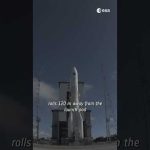
    One of the first steps was to roll back the colossal 90-m tall Ariane 6 mobile gantry building 120 m away from the launch pad – the first moment the complete rocket stood free.

    The first parts of Ariane 6 began arriving in French Guiana from continental Europe in February 2024 via the Canopée ‘spaceship’. In March, the main stage and upper stage were assembled, followed by the transfer of the two powerful P120C boosters in April.

    In May, Ariane 6’s first passengers also arrived in Kourou – a varied selection of experiments, satellites, payload deployers and reentry demonstrations that represent thousands across Europe, from students to industry and experienced space actors NASA and ArianeGroup.

    The payloads were integrated onto the ‘ballast’ at the end of May, and just a few days ago the ballast was fitted onto the top of the rocket and the fairing closed around it – the last time Ariane 6’s cargo would see light.
    From Earth observation to technology demonstrations testing wildlife tracking, 3D printing in open space, open-source software and hardware and science missions looking for the most energetic explosions in the universe, the passengers on Ariane 6’s first flight are a testament to the rocket’s adaptability, complexity, and its role for the future – launching any mission, anywhere.

    Credits: ESA – European Space Agency
    Footage: ESA/ArianeGroup/Arianespace/CNES

    ★ Subscribe: http://bit.ly/ESAsubscribe and click twice on the bell button to receive our notifications.

    Check out our full video catalog: http://bit.ly/SpaceInVideos
    Follow us on Twitter: http://bit.ly/ESAonTwitter
    On Facebook: http://bit.ly/ESAonFacebook
    On Instagram: http://bit.ly/ESAonInstagram
    On LinkedIn: https://bit.ly/ESAonLinkedIn
    On Pinterest: https://bit.ly/ESAonPinterest
    On Flickr: http://bit.ly/ESAonFlickr

    We are Europe’s gateway to space. Our mission is to shape the development of Europe’s space capability and ensure that investment in space continues to deliver benefits to the citizens of Europe and the world. Check out https://www.esa.int/ to get up to speed on everything space related.

    Copyright information about our videos is available here: https://www.esa.int/ESA_Multimedia/Terms_and_Conditions

    #ESA #Ariane6 #Rocket

  • Premier vol d’Ariane 6 (Diffusion officielle)

    Premier vol d’Ariane 6 (Diffusion officielle)

    Ariane 6 is scheduled to launch on 9 July 2024, with a launch window from 15:00-19:00 local time at Europe’s Spaceport in French Guiana (19:00–23:00 BST, 9 July 20:00–10 July 00:00 CEST).

    This is a big moment for Europe, as the rocket will ensure our guaranteed, autonomous access to space – and all of the science, Earth observation, technology development and commercial possibilities that it entails. With many features brand new to Ariane 6, we’ll be able to carry more and take it further, while sustainably disposing of the launcher’s upper stage to prevent it becoming space debris.

    The launch will be covered in several languages which can be followed at the links below:

    English: https://youtube.com/live/B0oFpOJaIYc?feature=share />
    French:
    https://youtube.com/live/AfNPzSOalEU?feature=share />
    German:
    https://youtube.com/live/a_87OnvB_fQ?feature=share />
    A clean feed without commentary is availble too:
    https://youtube.com/live/ogXamYYJpQk?feature=share />
    ★ Subscribe:
    http://bit.ly/ESAsubscribe and click twice on the bell button to receive our notifications.

    Check out our full video catalog: http://bit.ly/SpaceInVideos
    Follow us on Twitter: http://bit.ly/ESAonTwitter
    On Facebook: http://bit.ly/ESAonFacebook
    On Instagram: http://bit.ly/ESAonInstagram
    On LinkedIn: https://bit.ly/ESAonLinkedIn
    On Pinterest: https://bit.ly/ESAonPinterest
    On Flickr: http://bit.ly/ESAonFlickr

    We are Europe’s gateway to space. Our mission is to shape the development of Europe’s space capability and ensure that investment in space continues to deliver benefits to the citizens of Europe and the world. Check out https://www.esa.int/ to get up to speed on everything space related.

    Copyright information about our videos is available here: https://www.esa.int/ESA_Multimedia/Terms_and_Conditions

    #ESA #Ariane6 #Launch

  • The Young Professional Satellite – Dream Big, Start Small (episode 1)

    The Young Professional Satellite – Dream Big, Start Small (episode 1)

    In this first episode of our docu-series, we embark on the exciting journey of the YPSat (Young Professional Satellite), a satellite flying on-board the inaugural flight of Ariane 6, Europe’s new heavy launcher. Two years ago, a team of Young Professionals at ESA, with diverse backgrounds, nationalities and expertise, have come together around one passion and with one ambition; design, manufacture and send their own satellite to space.

    Starting with some trivial ideas, the team matured their mission objectives and won the approval and support of ESA management to kick start the project. YPSat will be ‘the witness’ of Ariane 6: it will record the fairing separation, document the CubeSats deployment and send back beautiful in-orbit images of Earth and space.

    This scaled-down mission has all the ingredients of a large flagship mission; engineering, verification, testing and production assurance; project management, tight schedule, team coordination and communication; failures, crisis situations and successes.
    YPSat is a blueprint for the future of European space exploration. It has been a life changing opportunity for young professionals at ESA to get hands-on experience and experience the process of developing a space mission. But it has also been an eye-opening occasion for the European Space Agency to get inspired by the young generations, bringing in new ideas and technologies.

    This is just the beginning of the adventure for the YPSat team. The next episode will unravel the creativity, ingenuity and determination that the young professionals brought in to achieve the mission’s objectives. What powers the satellite? Who activates the cameras? How is the data transmitted back on Earth?

    —————————————————

    Credits:
    Directed and produced by Chilled Winston: https://chilledwinston.com/ and Emma de Cocker
    Powered by ESA – European Space Agency
    Music from Epidemic Sound
    Footage from Chilled Winston (Chilled Winston – Where Stories Come to Life)

    ★ Subscribe: http://bit.ly/ESAsubscribe and click twice on the bell button to receive our notifications.

    Check out our full video catalog: http://bit.ly/SpaceInVideos
    Follow us on Twitter: http://bit.ly/ESAonTwitter
    On Facebook: http://bit.ly/ESAonFacebook
    On Instagram: http://bit.ly/ESAonInstagram
    On LinkedIn: https://bit.ly/ESAonLinkedIn
    On Pinterest: https://bit.ly/ESAonPinterest
    On Flickr: http://bit.ly/ESAonFlickr

    We are Europe’s gateway to space. Our mission is to shape the development of Europe’s space capability and ensure that investment in space continues to deliver benefits to the citizens of Europe and the world. Check out https://www.esa.int/ to get up to speed on everything space related.

    Copyright information about our videos is available here: https://www.esa.int/ESA_Multimedia/Terms_and_Conditions
    #ESA #YPSat #Ariane6

  • Learn more about Ariane 6 launch pad 🚀 #shorts

    Learn more about Ariane 6 launch pad 🚀 #shorts

    While the Ariane 6 rocket might take much of the focus, the launch pad and infrastructure truely are marvels of human engineering.

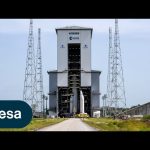
    Built and operated by France’s space agency @CNES, the launch zone – called ELA4 – was built from the ground up at Europe’s Spaceport in French Guiana.

    Building on the success and lessons learnt from the previous launch zones, the new infrastructure allows for quick processing and the launch of one Ariane 6 a month.

    The site for the launch zone was chosen for its deep rocky subsoil capable of supporting the heaviest 900 tonne variant of Ariane 6 and its liftoff and the mobile gantry that surrounds Ariane 6 for final assembly.

    The launch pad was also built to lessen the site’s carbon footprint and preserve local natural resources.

    📹 ESA – European Space Agency
    📸 ESA – European Space Agency

    #ESA #Ariane6 #Rocket

  • How do you restart a rocket that is already in space? 🚀 #shorts

    How do you restart a rocket that is already in space? 🚀 #shorts

    Europe’s newest rocket Ariane 6 has an upper stage engine, Vinci, that can restart up to four more times once in space!

    This allows Ariane 6 to reach a larger range of orbits and deliver multiple payloads on a single launch.

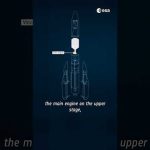
    Vinci does this using an auxiliary propulsion unit that heats up the same liquid oxygen and hydrogen fuel used by the main engine. It then turns it into gas that is expelled from the upper stage to provide a small amount of thrust. The effect is barely noticeable, but the forces are just enough to keep the liquid fuel at the bottom of the tank and ready for reignition.

    📹 ESA – European Space Agency
    📸 ESA – European Space Agency

    #ESA #Ariane6 #Rocket

  • This is how Ariane 6’s boosters work 🚀 #shorts

    This is how Ariane 6’s boosters work 🚀 #shorts

    Europe’s new rocket Ariane 6 has three main stages each with their own engines.

    Ariane 6 uses one of the world’s most powerful single-piece boosters, the P120C boosters, to get off the ground.

    These motors run on 142 000 kg of solid fuel, which is completely consumed in just two minutes, reaching 53 km altitude when they are eventually discarded.

    We can choose to either have two or four boosters per Ariane 6 launch. For many missions two boosters is more than enough to get into space, but if you need to launch heavier satellites or want to reach destinations farther away from Earth four boosters provide the extra kick to do the trick.

    We now have a target launch date! We are currently aiming to get Ariane 6 off the ground on 9th July, be sure to set your reminders and follow along for more updates.

    📹 ESA – European Space Agency

    #ESA #Ariane6 #Rocket

  • 5,4,3,2,1 allumage Vulcain! 🚀 #shorts

    5,4,3,2,1 allumage Vulcain! 🚀 #shorts

    Europe’s new rocket Ariane 6 will soon be launched from Europe’s Spaceport in French Guiana. But how does it get off the launch pad?

    Ignited first at liftoff is the Vulcain 2.1, the rocket motor for the cryogenic main stage. The engine sits at the bottom end of Ariane 6 and fires for up to 8 minutes to help the rocket reach space! The boosters ignite 7 seconds after the Vulcain for liftoff thrust.

    📹 ESA – European Space Agency

    #ESA #Ariane6 #CubeSat

  • Passengers of the first Ariane 6 launch 🚀 #shorts

    Passengers of the first Ariane 6 launch 🚀 #shorts

    Europe’s new rocket Ariane 6 is set to launch soon. 🚀

    On its first flight to space, Ariane 6 is offering a ride to miniature satellites, known as CubeSats.

    ISTSat from Portugal, and ³Cat-4 from Spain, are two of Ariane 6’s passengers.

    Both satellites were developed by students participating in our Fly Your Satellite! programme, one of the several hands-on programmes for university students offered by ESA Education.

    ISTSat is the first Portuguese CubeSat built by students. It will track aircraft from space using a smaller, lower power Automatic Dependent Surveillance Broadcast system, which is the technology that enables websites like Flight Radar.

    ³Cat-4 from the Technical University of Catalonia combines a radiometer, a reflectometer and an Automatic Identification System into one payload that will perform Earth Observation experiments.

    The students visited Exolaunch’s Berlin headquarters to perform the integration of their satellites, where they installed ISTSat-1 and ³Cat-4 into their deployer.

    📹 ESA – European Space Agency

    #ESA #Ariane6 #CubeSat

  • A day in the life of a rocket scientist at ESA 🚀 #shorts

    A day in the life of a rocket scientist at ESA 🚀 #shorts

    🚀 It’s not rocket science… oh wait it is!

    Join Ariane 6 launch system architect, Tina, as she shows us a day in her life.

    Tina has worked on space transport systems for 20 years now. She first worked on the Automated Transfer Vehicle (ATV), then on the Ariane 5 Mid-life Evolution development and now on Europe’s newest launcher Ariane 6.

    How did she become a rocket scientist?

    “I was lucky enough to spend some months in French Guiana as a student for an internship and working there got me hooked – I was determined to come back for my job one day, and here I am: I spent a great part of 2023 in Kourou testing the Ariane 6 propulsion system, together with an amazing team of very skilled professionals.

    I consider myself extremely lucky to have a job and colleagues that make me want to get out of bed and into the office every day – because we love what we do and because the people are simply amazing!”

    📹 ESA – European Space Agency

    #ESA #RocketScience #Ariane6

  • This is how we transport rockets 🚀 #shorts

    This is how we transport rockets 🚀 #shorts

    🛳️ Now that’s a space ship.

    🚀 Have you ever wondered how we transport rockets?

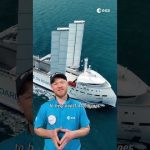
    All the elements that make up Ariane 6 are manufactured in mainland Europe and then transported by this ship, named Canopée.

    It is the first custom-built transporter to use sails, reducing emissions and saving on fuel by up to 30%, and on this trip, it travels for 10 days covering over 7000 km to reach Europe’s Spaceport in French Giuana.

    The hybrid-propulsion vessel is 121 m long and has 37 m tall sails. Canopée rotates continuously between stop-offs to load each Ariane 6 stage and other parts and ship them across the Atlantic Ocean to Europe’s spaceport.

    📹 ESA/Arianegroup

    #ESA #Ariane6 #Rocket

  • How does Europe’s new rocket work 🚀 #shorts

    How does Europe’s new rocket work 🚀 #shorts

    Do you know how rockets are launched? 🚀

    Europe’s new launcher, Ariane 6 uses liquid oxygen and hydrogen as fuel to lift it off the ground and into space. This fuel is chilled to -150°C which allows more propellant to be loaded into the rocket with more fuel from the engine.

    But Ariane would not get far without the boosters that provide the most thrust by far.

    In order to control the direction of Ariane 6 after launch, the nozzles on the boosters and main stage can swivel to keep it on course. This is no easy feat as Ariane 6 is 56 m tall and controlled at the bottom, so it is a careful balancing act.

    📹 ESA – European Space Agency

    #ESA #Ariane6 #Rocket

  • Ariane 6 stands tall for launch

    Ariane 6 stands tall for launch

    Last week, Ariane 6’s central core – the main body of the rocket – was stood tall at the launch zone and connected to its two solid-fuel boosters. This exciting moment means only one thing: it’s the start of the first launch campaign.

    The main stage and upper stage make up the core stage, and they were autonomously driven at 3 km/h from the rocket assembly building to the launch pad, 800 m away. Then lifted by a crane, the Ariane 6 core was stood upright on the launch table.

    The two boosters were transported to the launch pad on a specially designed truck and then configured with the rocket body, now holding it upright.

    Ariane 6 is due to launch in summer 2024. The heavy-lift rocket will inaugurate a new era of autonomous European space transportation, powering Europe into space to realise its ambitions on the world stage. It will lift off from a modern launch complex at Europe’s Spaceport in French Guiana, carrying with it not just a variety of spacecraft, but also European goals for prosperity and autonomy.

    Credits: ESA – European Space Agency

    ★ Subscribe: http://bit.ly/ESAsubscribe and click twice on the bell button to receive our notifications.

    Check out our full video catalog: http://bit.ly/SpaceInVideos
    Follow us on Twitter: http://bit.ly/ESAonTwitter
    On Facebook: http://bit.ly/ESAonFacebook
    On Instagram: http://bit.ly/ESAonInstagram
    On LinkedIn: https://bit.ly/ESAonLinkedIn
    On Pinterest: https://bit.ly/ESAonPinterest
    On Flickr: http://bit.ly/ESAonFlickr

    We are Europe’s gateway to space. Our mission is to shape the development of Europe’s space capability and ensure that investment in space continues to deliver benefits to the citizens of Europe and the world. Check out https://www.esa.int/ to get up to speed on everything space related.

    Copyright information about our videos is available here: https://www.esa.int/ESA_Multimedia/Terms_and_Conditions
    #ESA #Ariane6 #Rocket

  • The basics about Europe’s new rocket 🚀 #shorts

    The basics about Europe’s new rocket 🚀 #shorts

    Europe has a new rocket, and it’s set to launch soon 🚀

    Europe’s next launch vehicle is the powerful Ariane 6. The rocket will be bigger, better, and more versatile than its predecessor.

    Our daily life is becoming increasingly reliant on space to keep people and things connected for communication, banking, transport, weather forecasting and more!

    Ariane 6 is ensuring Europe has continued independent and autonomous access to space.

    Will you be watching the launch this summer?

    📹 ESA – European Space Agency

    #ESA #Ariane6 #Rocket

  • Ariane 6 arrives at the launcher assembly building 🚀 #shorts

    Ariane 6 arrives at the launcher assembly building 🚀 #shorts

    The two central stages for Ariane 6’s first flight are being assembled in the launcher assembly building (BAL) at Europe’s Spaceport. The core stage and the upper stage for Europe’s new rocket Ariane 6 are set to fly in the Summer of 2024. Once assembled, the stages will be transferred to the launch pad.

    On the launch pad, the two stages will be raised into their vertical launch position inside the mobile assembly building. Here the two boosters for Ariane 6’s first flight will be added and then the payloads will be placed on top and be covered by the fairing – Ariane 6’s nose cone that splits vertically in two.

    The stages arrived at Europe’s Spaceport on novel hybrid sail ship Canopée on 21 February after a two-week transatlantic crossing from mainland Europe.

    Ariane 6 is an all-new design, created to succeed Ariane 5 as Europe’s heavy-lift launch system. With Ariane 6’s upper stage restart capability, Europe’s launch capability will be tailored to the needs of multiple payload missions, for example to orbit satellite constellations. This autonomous capability to reach Earth orbit and deep space supports Europe’s navigation, Earth observation, scientific and security programmes. Ongoing development of Europe’s space transportation capabilities is made possible by the sustained dedication of thousands of talented people working in ESA’s 22 Member States.

    Credits: ESA/CNES/Arianespace/Arianegroup

    #ESA #Rocket #Ariane6

  • Ariane 6 arrives at Europe’s Spaceport

    Ariane 6 arrives at Europe’s Spaceport

    The largest components for the first flight model of Europe’s new rocket Ariane 6 arrived at the port of Pariacabo in Kourou, French Guiana on 21 February 2024 via the novel ship, Canopée (canopy in French).

    The Ariane 6 stages and components are all manufactured across Europe. On this trip, Canopée brought the central core for Ariane 6’s first flight. The main engine and the main stage were integrated in Les Mureaux, France, while the upper stage and insulation for the rocket’s exterior were built up in Bremen, Germany.

    The various Ariane 6 components are then offloaded and transported by road to the new Ariane 6 launch vehicle assembly building just a few kilometres away. Here, the launcher stages are unpacked and installed on the assembly line for integration, and finally, liftoff.

    The Ariane 6 boosters are already in Europe’s Spaceport after their production in Italy, they are the same P120C solid propulsion boosters as used for Europe’s Vega-C rocket.

    First the central core will be assembled horizontally after which it is transported to the launchpad. Here it will be lifted into the upright position after which Boosters and the upper stage will be added inside the mobile gantry.

    This summer Flight Model-1 will be ready to let its engine rumble and fly.

    Credits: ESA/CNES/Arianespace/Arianegroup

    ★ Subscribe: http://bit.ly/ESAsubscribe and click twice on the bell button to receive our notifications.

    Check out our full video catalog: http://bit.ly/SpaceInVideos
    Follow us on Twitter: http://bit.ly/ESAonTwitter
    On Facebook: http://bit.ly/ESAonFacebook
    On Instagram: http://bit.ly/ESAonInstagram
    On LinkedIn: https://bit.ly/ESAonLinkedIn
    On Pinterest: https://bit.ly/ESAonPinterest
    On Flickr: http://bit.ly/ESAonFlickr

    We are Europe’s gateway to space. Our mission is to shape the development of Europe’s space capability and ensure that investment in space continues to deliver benefits to the citizens of Europe and the world. Check out https://www.esa.int/ to get up to speed on everything space related.

    Copyright information about our videos is available here: https://www.esa.int/ESA_Multimedia/Terms_and_Conditions
    #ESA #Rocket #Ariane6

  • Ariane 6: Getting ready for inaugural flight

    Ariane 6: Getting ready for inaugural flight

    Teams across Europe and at Europe’s Spaceport in French Guiana, have been tirelessly conducting a test campaign that will, in 2024, end with the first launch of Europe’s newest heavy-lift rocket, Ariane 6.

    In the summer, the mobile gantry was rolled back at the launchpad, revealing the huge rocket to the elements. Then, the main stage’s Vulcain 2.1 engine roared into life in a series of ‘hot fire’ tests for the rocket and entire ground system, including tank filling rehearsals, countdowns, vibration-damping water systems and more.

    Tests continued on the upper-stage reignitable Vinci engine and Auxiliary Power Unit at the German Aerospace Center (DLR) test site in Lampoldshausen.

    Very soon, tests will be complete, and Europe’s heavy-lift rocket will take flight.

    ★ Subscribe: http://bit.ly/ESAsubscribe and click twice on the bell button to receive our notifications.

    Check out our full video catalog: http://bit.ly/SpaceInVideos
    Follow us on Twitter: http://bit.ly/ESAonTwitter
    On Facebook: http://bit.ly/ESAonFacebook
    On Instagram: http://bit.ly/ESAonInstagram
    On LinkedIn: https://bit.ly/ESAonLinkedIn
    On Pinterest: https://bit.ly/ESAonPinterest
    On Flickr: http://bit.ly/ESAonFlickr

    We are Europe’s gateway to space. Our mission is to shape the development of Europe’s space capability and ensure that investment in space continues to deliver benefits to the citizens of Europe and the world. Check out https://www.esa.int/ to get up to speed on everything space related.

    Copyright information about our videos is available here: https://www.esa.int/ESA_Multimedia/Terms_and_Conditions
    #ESA #Ariane6 #Rocket

  • 2023: ESA’s year in space

    2023: ESA’s year in space

    2023’s highlight was the highly anticipated launch of Juice, Europe’s Jupiter Icy Moon Explorer. The Juice spacecraft was placed on course to Jupiter on the second-to-last Ariane 5 launch vehicle in April. After an eight-year journey, Juice will begin observing the giant gas planet and its three large ocean-bearing moons – Ganymede, Calisto and Europa.

    The Euclid space telescope was launched in July with the aim of unravelling the enigmas of ‘dark matter’ and ‘dark energy’. Euclid’s first images were released in November, revealing razor-sharp astronomical images with detail never before seen by a telescope across such a large patch of the sky.

    After almost five years in space, ESA’s Aeolus wind mission was retired. This trailblazing mission was tasked with observing wind patterns from space thereby improving weather forecasts and climate models.. Aeolus data and technology will have an important role to play in the accuracy of future weather forecasting. On 28 July, it burned up in an assisted re-entry – the first assisted re-entry by a mission which was not designed to do so.

    As space debris becomes an increasingly serious issue, ESA is determined to search for solutions. Together with its commercial and institutional partners, ESA has developed the ‘Zero Debris Charter’, launched this year. By signing the Charter, space entities worldwide can register their intent to work together towards the sustainable use of Earth’s orbital environment.

    Earlier in in 2023, MTG-I1, the first of the Meteosat Third Generation missions, sent back its first images. The satellite was launched in 2022 and carries two instruments: a flexible combined imager and a lighting imager. Both instruments performed beyond expectation and a stunning combined image from both was revealed.

    Earth observation is key to keeping our planet and the population as a whole, safe. Today, monitoring earthquakes, forest fires or flooding from space already helps to coordinate rescue response but the data can also be used to better understand phenomena such as climate change and support the IPCC climate reports.

    Last year, NASA’s Dart mission impacted on a small moonlet of the asteroid Didymos, changing its course. We’ll soon be launching ESA’s Hera spacecraft to collect data on the aftermath of this collision. The Hera spacecraft was integrated and underwent testing this year in ESA ESTEC’s test centre in the Netherlands.

    2023 also saw the first hardware tests for the second generation of Galileo satellites but even more importantly the Galileo High Accuracy Service was launched in January. This new service delivers centimetre accuracy from space further cementing Galileo’s reputation as the most accurate satellite navigation system in the world.

    ★ Subscribe: http://bit.ly/ESAsubscribe and click twice on the bell button to receive our notifications.

    Check out our full video catalog: http://bit.ly/SpaceInVideos
    Follow us on Twitter: http://bit.ly/ESAonTwitter
    On Facebook: http://bit.ly/ESAonFacebook
    On Instagram: http://bit.ly/ESAonInstagram
    On LinkedIn: https://bit.ly/ESAonLinkedIn
    On Pinterest: https://bit.ly/ESAonPinterest
    On Flickr: http://bit.ly/ESAonFlickr

    We are Europe’s gateway to space. Our mission is to shape the development of Europe’s space capability and ensure that investment in space continues to deliver benefits to the citizens of Europe and the world. Check out https://www.esa.int/ to get up to speed on everything space related.

    Copyright information about our videos is available here: https://www.esa.int/ESA_Multimedia/Terms_and_Conditions
    #ESA #2023 #Highlights

  • Ariane 6 launch animation

    Ariane 6 launch animation

    Animation of the first launch of the Ariane 6 rocket with two boosters.

    Ariane 6 is an all-new design, created to succeed Ariane 5 as Europe’s heavy-lift launch system. With Ariane 6’s upper stage and its reignitable Vinci engine, Europe’s launch capability will be tailored to the needs of multiple payloads, for example to orbit satellite constellations. This autonomous capability to reach Earth orbit and deep space supports Europe’s navigation, Earth observation, scientific and security programmes. Ongoing development of Europe’s space transportation capabilities is made possible by the sustained dedication of thousands of talented people working in ESA’s 22 Member States.

    At over 60 metres tall, Ariane 6 will weigh almost 900 tonnes when launched with a full payload – roughly equivalent to one and a half Airbus A380 passenger aircraft.

    Vinci, the upper stage engine of Ariane 6 fed by liquid hydrogen and oxygen, can be stopped and restarted multiple times – to place satellites into different orbits and then de-orbit the upper stage, so it is not left behind as hazardous debris in space.

    For the development of Ariane 6, ESA is working with an industrial network of several hundred companies in 13 European countries, led by prime contractor ArianeGroup.

    France’s space agency, CNES, is preparing the Ariane 6 launch facilities at Europe’s Spaceport in French Guiana.

    Credits: ESA – European Space Agency

    ★ Subscribe: http://bit.ly/ESAsubscribe and click twice on the bell button to receive our notifications.

    Check out our full video catalog: http://bit.ly/SpaceInVideos
    Follow us on Twitter: http://bit.ly/ESAonTwitter
    On Facebook: http://bit.ly/ESAonFacebook
    On Instagram: http://bit.ly/ESAonInstagram
    On LinkedIn: https://bit.ly/ESAonLinkedIn
    On Pinterest: https://bit.ly/ESAonPinterest
    On Flickr: http://bit.ly/ESAonFlickr

    We are Europe’s gateway to space. Our mission is to shape the development of Europe’s space capability and ensure that investment in space continues to deliver benefits to the citizens of Europe and the world. Check out https://www.esa.int/ to get up to speed on everything space related.

    Copyright information about our videos is available here: https://www.esa.int/ESA_Multimedia/Terms_and_Conditions

    #ESA
    #Ariane6
    #Rockets

  • Ariane 6 hot-fires: the highlights

    Ariane 6 hot-fires: the highlights

    Cinq, quatre, trois, deux, un. Allumage Vulcain! This is the moment Ariane 6’s main engine was sparked into life, and the entire main stage of the new rocket and the many parts of the launch pad in Kourou, French Guiana, practised for the full duration of a launch. Of course, as planned, the test model did not leave the ground.

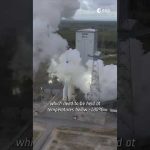
    Without its boosters, instead of piercing the clouds Ariane 6’ created its own on Earth: a clean byproduct of the Vulcain 2.1 engine’s oxygen and hydrogen propellants, which came together to send out impressive swirls of H2O.

    After the almost 150 tonnes of propellant was burnt through and the clouds dispersed, the curtains closed on the successful rehearsal. The data from thousands of monitors around the rocket will be crunched in the coming weeks to learn all that’s needed for Ariane’s next, real, flight.

    Credits: ESA – European Space Agency

    ★ Subscribe: http://bit.ly/ESAsubscribe and click twice on the bell button to receive our notifications.

    Check out our full video catalog: http://bit.ly/SpaceInVideos
    Follow us on Twitter: http://bit.ly/ESAonTwitter
    On Facebook: http://bit.ly/ESAonFacebook
    On Instagram: http://bit.ly/ESAonInstagram
    On LinkedIn: https://bit.ly/ESAonLinkedIn
    On Pinterest: https://bit.ly/ESAonPinterest
    On Flickr: http://bit.ly/ESAonFlickr

    We are Europe’s gateway to space. Our mission is to shape the development of Europe’s space capability and ensure that investment in space continues to deliver benefits to the citizens of Europe and the world. Check out https://www.esa.int/ to get up to speed on everything space related.

    Copyright information about our videos is available here: https://www.esa.int/ESA_Multimedia/Terms_and_Conditions
    #ESA
    #Ariane6
    #Rocket

  • Ariane 6 full stage engine hot-fire test

    Ariane 6 full stage engine hot-fire test

    Watch as Europe’s new Ariane 6 rocket goes through a full-scale rehearsal in preparation for its first flight, when teams from @ArianeGroup, @CnesFrance and ESA on the ground will complete a launch countdown rehearsal. The test includes the ignition of the core stage Vulcain 2.1 engine, followed by 470 seconds of stabilised operation covering the entire core stage flight phase, as it would function on a launch into space.

    Coverage started 19:40 UTC (20:40 CET) on 23 November 2023, 20 minutes before engine ignition and continue five minutes after core stage operation, once the engine burns through all its propellant.

    Timestaps of the video:
    00:00 – 16:18 – Stay tuned
    16:19 – 47:49 – Countdown and stop of countdown
    47:50 – 01:14:19 – Stay tuned
    01:14:20 – 01:30:43 – Restart of countdown and hot-fire test

    For this rehearsal, the boosters were not ignited, so Ariane 6 stayed firmly on the launch pad at Europe’s Spaceport in French Guiana.

    The eight-minute engine-fire trial reenacts how the Ariane 6 core stage will fire during a normal flight into space. The trial, conducted with a test model on the launch pad at Europe’s Spaceport will be the longest ‘full-stack’ run yet for Ariane 6’s lower liquid propulsion module equipped with a Vulcain 2.1 engine.

    The Vulcain 2.1 engine will burn through almost 150 tonnes of propellant supplied from the Ariane 6 core stage tanks – liquid oxygen and liquid hydrogen – supercooled to temperatures below -250°C.

    The Vulcain 2.1 engine is an evolution of the Vulcain 2 engine that made Ariane 5 Europe’s most successful launch system ever. The upgrade has a simplified and cheaper design and features new technology in the engine nozzle, while the ignition system has been moved from the engine to the launch pad to make the core stage perform better and cost less.

    Credits: ESA – European Space Agency

    ★ Subscribe: http://bit.ly/ESAsubscribe and click twice on the bell button to receive our notifications.

    Check out our full video catalog: http://bit.ly/SpaceInVideos
    Follow us on Twitter: http://bit.ly/ESAonTwitter
    On Facebook: http://bit.ly/ESAonFacebook
    On Instagram: http://bit.ly/ESAonInstagram
    On LinkedIn: https://bit.ly/ESAonLinkedIn
    On Pinterest: https://bit.ly/ESAonPinterest
    On Flickr: http://bit.ly/ESAonFlickr

    We are Europe’s gateway to space. Our mission is to shape the development of Europe’s space capability and ensure that investment in space continues to deliver benefits to the citizens of Europe and the world. Check out https://www.esa.int/ to get up to speed on everything space related.

    Copyright information about our videos is available here: https://www.esa.int/ESA_Multimedia/Terms_and_Conditions

    #ESA
    #Ariane6
    #Rocket

  • Hot-fire test of Ariane 6 core stage on launch pad

    Hot-fire test of Ariane 6 core stage on launch pad

    On 5 September 2023, teams from France’s space agency CNES and Arianegroup under the lead of ESA carried out a complete Ariane 6 launch sequence on its launch pad at Europe’s spaceport in French Guiana. The test ended with a hot-fire of the launcher’s core stage and startup of the Vulcain 2.1 engine.

    This is a key step in the test campaign. It follows from initial integration of the Ariane 6 launcher on its launch pad, electrical and fluid system tests and the first launch sequence test run on 18 July 2023.

    This test involved a launch sequence and final countdown representative of a launch, including removal of the Ariane 6 mobile gantry and filling the launcher’s upper and core stage tanks with liquid hydrogen and liquid oxygen. The test ended with the ignition and the startup of the core stage’s Vulcain 2.1 engine, followed by four seconds of firing.

    The next milestone is to complete a core stage long hot-fire test, where the Vulcain 2.1 engine will operate for about 8 minutes.

    Ariane 6 is an all-new design, created to succeed Ariane 5 as Europe’s heavy-lift launch system. With Ariane 6’s upper stage and its reignitable Vinci engine, Europe’s launch capability will be tailored to the needs of multiple payloads, for example to orbit satellite constellations. This autonomous capability to reach Earth orbit and deep space supports Europe’s navigation, Earth observation, scientific and security programmes. Ongoing development of Europe’s space transportation capabilities is made possible by the sustained dedication of thousands of talented people working in ESA’s 22 Member States.

    www.esa.int/ariane

    Credits: ESA/ARIANEGROUP/CNES – Optique vidéo du CSG

    ★ Subscribe: http://bit.ly/ESAsubscribe and click twice on the bell button to receive our notifications.

    Check out our full video catalog: http://bit.ly/SpaceInVideos
    Follow us on Twitter: http://bit.ly/ESAonTwitter
    On Facebook: http://bit.ly/ESAonFacebook
    On Instagram: http://bit.ly/ESAonInstagram
    On LinkedIn: https://bit.ly/ESAonLinkedIn
    On Pinterest: https://bit.ly/ESAonPinterest
    On Flickr: http://bit.ly/ESAonFlickr

    We are Europe’s gateway to space. Our mission is to shape the development of Europe’s space capability and ensure that investment in space continues to deliver benefits to the citizens of Europe and the world. Check out https://www.esa.int/ to get up to speed on everything space related.

    Copyright information about our videos is available here: https://www.esa.int/ESA_Multimedia/Terms_and_Conditions
    #ESA
    #Ariane6
    #Hot-fireTest

  • Ariane 6 | Mobile gantry removal test timelapse

    Ariane 6 | Mobile gantry removal test timelapse

    On 22 June 2023 at Europe’s Spaceport in French Guiana, engineers rolled back the mobile gantry protecting Ariane 6 on its launch pad. The exercise helped validate ground systems and prepare for a series of engine fire tests.

    Credits: ESA ; S. Corvaja, ESA/M. Pédoussaut, Zetapress

    ★ Subscribe: http://bit.ly/ESAsubscribe and click twice on the bell button to receive our notifications.

    Check out our full video catalog: http://bit.ly/SpaceInVideos
    Follow us on Twitter: http://bit.ly/ESAonTwitter
    On Facebook: http://bit.ly/ESAonFacebook
    On Instagram: http://bit.ly/ESAonInstagram
    On LinkedIn: https://bit.ly/ESAonLinkedIn
    On Pinterest: https://bit.ly/ESAonPinterest
    On Flickr: http://bit.ly/ESAonFlickr

    We are Europe’s gateway to space. Our mission is to shape the development of Europe’s space capability and ensure that investment in space continues to deliver benefits to the citizens of Europe and the world. Check out https://www.esa.int/ to get up to speed on everything space related.

    Copyright information about our videos is available here: https://www.esa.int/ESA_Multimedia/Terms_and_Conditions
    #ESA
    #Test
    #Ariane6

  • ESA announces the Zero Debris Charter initiative

    ESA announces the Zero Debris Charter initiative

    ESA DG Josef Aschbacher, accompanied by TAS CEO Hervé Derrey, Airbus DS EVP Jean-Marc Nasr and OHB Board Member Lutz Bertling, among others, will unveil the Zero Debris Charter initiative, an ambitious drive towards European leadership in space debris mitigation and remediation.

    ★ Subscribe: http://bit.ly/ESAsubscribe and click twice on the bell button to receive our notifications.

    Check out our full video catalog: http://bit.ly/SpaceInVideos
    Follow us on Twitter: http://bit.ly/ESAonTwitter
    On Facebook: http://bit.ly/ESAonFacebook
    On Instagram: http://bit.ly/ESAonInstagram
    On LinkedIn: https://bit.ly/ESAonLinkedIn
    On Pinterest: https://bit.ly/ESAonPinterest
    On Flickr: http://bit.ly/ESAonFlickr

    We are Europe’s gateway to space. Our mission is to shape the development of Europe’s space capability and ensure that investment in space continues to deliver benefits to the citizens of Europe and the world. Check out https://www.esa.int/ to get up to speed on everything space related.

    Copyright information about our videos is available here: https://www.esa.int/ESA_Multimedia/Terms_and_Conditions

    #ESA
    #Space
    #ParisAirShow2023

  • Conference on Ariane 6 programme | Paris Air Show 2023

    Conference on Ariane 6 programme | Paris Air Show 2023

    Watch the replay of the live session from the Paris Air Show 2023 to watch the press briefing on space transportation. Speakers will share the current status of the Ariane 6 programme, and the next key milestones towards the inaugural flight.

    ★ Subscribe: http://bit.ly/ESAsubscribe and click twice on the bell button to receive our notifications.

    Check out our full video catalog: http://bit.ly/SpaceInVideos
    Follow us on Twitter: http://bit.ly/ESAonTwitter
    On Facebook: http://bit.ly/ESAonFacebook
    On Instagram: http://bit.ly/ESAonInstagram
    On LinkedIn: https://bit.ly/ESAonLinkedIn
    On Pinterest: https://bit.ly/ESAonPinterest
    On Flickr: http://bit.ly/ESAonFlickr

    We are Europe’s gateway to space. Our mission is to shape the development of Europe’s space capability and ensure that investment in space continues to deliver benefits to the citizens of Europe and the world. Check out https://www.esa.int/ to get up to speed on everything space related.

    Copyright information about our videos is available here: https://www.esa.int/ESA_Multimedia/Terms_and_Conditions
    #ESA
    #Space
    #ParisAirShow2023

  • Europe’s new ambitions for space exploration | Paris Air Show 2023

    Europe’s new ambitions for space exploration | Paris Air Show 2023

    Watch the recording of the live session from the Paris Air Show 2023 for a conference examining Europe’s aspirations in human and robotic space exploration. Speakers include ESA Director General Josef Aschbacher, CNES CEO Philippe Baptiste, Director General of the German Space Agency Walther Pelzer, and President of the Italian Space Agency (ASI) Teodoro Valente. ESA astronauts Thomas Pesquet, Samantha Cristoforetti, and Matthias Maurer will provide their perspectives.

    ★ Subscribe: http://bit.ly/ESAsubscribe and click twice on the bell button to receive our notifications.

    Check out our full video catalog: http://bit.ly/SpaceInVideos
    Follow us on Twitter: http://bit.ly/ESAonTwitter
    On Facebook: http://bit.ly/ESAonFacebook
    On Instagram: http://bit.ly/ESAonInstagram
    On LinkedIn: https://bit.ly/ESAonLinkedIn
    On Pinterest: https://bit.ly/ESAonPinterest
    On Flickr: http://bit.ly/ESAonFlickr

    We are Europe’s gateway to space. Our mission is to shape the development of Europe’s space capability and ensure that investment in space continues to deliver benefits to the citizens of Europe and the world. Check out https://www.esa.int/ to get up to speed on everything space related.

    Copyright information about our videos is available here: https://www.esa.int/ESA_Multimedia/Terms_and_Conditions

    #ESA
    #Space
    #ParisAirShow2023

  • Session on understanding Earth’s water and carbon cycles from space | Paris Air Show 2023

    Session on understanding Earth’s water and carbon cycles from space | Paris Air Show 2023

    By using concrete examples of the water and carbon cycles, the speakers in this session will focus on the grand science questions before us and how we can turn them into answers and solutions most useful to decision-makers at the front line of the climate crisis. Earth is a highly dynamic system where the transport and exchanges of energy and matter are influenced by a multitude of processes and feedback mechanisms. Untangling these complex processes to better understand how Earth works as a system is a major challenge; a challenge that satellites, with their global view, are ideally positioned to tackle. While each mission gives us unique insights, it is by combining their data that makes scientific findings shine the brightest. This, in turn, puts European and international collaboration at the heart of Earth observation today.

    ★ Subscribe: http://bit.ly/ESAsubscribe and click twice on the bell button to receive our notifications.

    Check out our full video catalog: http://bit.ly/SpaceInVideos
    Follow us on Twitter: http://bit.ly/ESAonTwitter
    On Facebook: http://bit.ly/ESAonFacebook
    On Instagram: http://bit.ly/ESAonInstagram
    On Flickr: http://bit.ly/ESAonFlickr

    We are Europe’s gateway to space. Our mission is to shape the development of Europe’s space capability and ensure that investment in space continues to deliver benefits to the citizens of Europe and the world. Check out https://www.esa.int/ to get up to speed on everything space related.

    Copyright information about our videos is available here: https://www.esa.int/ESA_Multimedia/Terms_and_Conditions
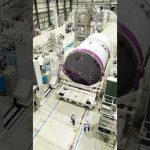
    #ESA
    #Space
    #ParisAirShow2023