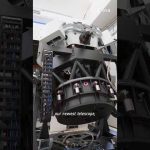
Meet Flyeye — the telescope that sees space like a fly! 🪰
With its very first glimpse of the sky, Flyeye is ready to begin scanning for asteroids that might one day come a little too close to Earth.
Inspired by the compound eye of a fly, it can spot a huge chunk of sky in one go — more than 200 times the area of the full Moon. And it’s designed to do it all automatically, night after night.
It hasn’t found any space rocks yet, but it’s only just opened its eye. This is the first step towards a future network of fly-eyed telescopes keeping watch over our planet.
How did asteroid 2024 YR4 go from being the riskiest asteroid ever detected to posing no real threat? 🌍 ☄️
First spotted in December 2024, its impact risk initially soared to 2.8%, surpassing previous record-holder Apophis. But thanks to refined observations from our Near-Earth Object Coordination Centre and other institutions, its risk quickly dropped to just 0.001% within days.
This dramatic shift follows a well-known pattern—asteroid impact probabilities often rise before plummeting as more data becomes available. Now, nearly all possible impact scenarios have been ruled out, and 2024 YR4 has been safely removed from our risk list.
algoritm:”Analiza mostrelor aduse de pe asteroidul Bennu susține teoria panspermiei și abiogeneza, descoperind aminoacizi și baze azotate, esențiali în formarea vieții. Misiunea NASA OSIRIS-REx a adus dovezi prețioase pentru studiul chimiei prebiotice și originile vieții. Amoniacul, aminoacizii și compușii organici de pe Bennu ar fi putut contribui la apariția vieții pe Pământ. timp de 1m 9s Recentele descoperiri aduse de misiunea OSIRIS‐REx a NASA, care a colectat mostre spațiale de pe asteroidul Bennu, reprezintă o capsulă a timpului ce păstrează chimia prebiotică din sistemul solar de acum 4,5 miliarde de ani. Aceste mostre dezvăluie compuși organici, inclusiv 14 din cei 20 de aminoacizi esențiali pentru sinteza proteinelor, precum și toate cele cinci baze azotate (adenină, timină, guanină, citozină și uracil) ce stau la baza ADN-ului și ARN-ului. Astfel, Bennu devine un laborator natural al chimiei cosmice, confirmând existența ingredientelor de bază ale vieții și susținând ipoteza abiogenezei, conform căreia viața a apărut spontan din materie anorganică.
În plus, analiza moleculelor volatile, precum amoniacul, evidențiază reacții chimice complexe, similare cu experimentul Miller, care a demonstrat formarea aminoacizilor în condiții primordiale. Pe lângă carbon, azot, fosfați și sulfați, Bennu conține aproximativ 16.000 de formule moleculare diferite, oferind o privire detaliată asupra proceselor care au contribuit la evoluția chimică a materiei în mediul cosmic. Aceste descoperiri susțin teoria panspermiei, care presupune că asteroizii ar fi putut aduce ingredientele vieții pe Pământ, contribuind la apariția primelor molecule prebiotice.
Aceste descoperiri aduc o nouă lumină asupra dezbaterilor dintre perspectivele religioase și cele științifice privind originea vieții. În timp ce miturile despre creație susțin intervenția divină, datele din Bennu demonstrează că procesele chimice complexe și reacțiile organice au avut loc natural în univers. Astfel, experimentul Miller și evoluția chimică din sistemul solar se împletesc pentru a explica cum viața a putut să apară din materie simplă, contribuind la evoluția microorganismelor.
În esență, Bennu reprezintă dovada că elementele fundamentale ale vieții – aminoacizi, proteine, baze azotate și molecule volatile – au evoluat și s-au combinat pentru a da naștere vieții pe Pământ, marcând un pas important în înțele”
Material from the asteroid Bennu is revealing that a lost world fostered the building blocks of life… with an unexpected twist.
Join experts on Thursday, January 30, at 3:00 p.m. EST (2000 UTC) as they dive into the recent findings from the asteroid sample NASA’s OSIRIS-REx spacecraft brought to Earth in September 2023.
Have questions? Share them in chat and we’ll answer a few live!
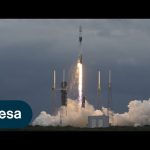
ESA’s Hera mission lifted off on a SpaceX Falcon 9 from Cape Canaveral Space Force Station in Florida, USA, on 7 October at 10:52 local time (16:52 CEST, 14:52 UTC).
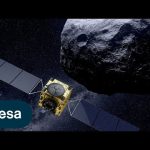
Hera is ESA’s first planetary defence mission. It will fly to a unique target among the 1.3 million asteroids in our Solar System – the only body to have had its orbit shifted by human action – to solve lingering unknowns associated with its deflection.
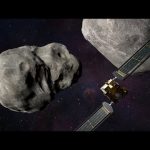
Hera will carry out the first detailed survey of a ‘binary’ – or double-body – asteroid, 65803 Didymos, which is orbited by a smaller body, Dimorphos. Hera’s main focus will be Dimorphos, whose orbit around the main body was previously altered by NASA’s kinetic-impacting DART spacecraft.
By sharpening scientific understanding of this ‘kinetic impact’ technique of asteroid deflection, Hera should turn the experiment into a well-understood and repeatable technique for protecting Earth from an asteroid on a collision course.
We are Europe’s gateway to space. Our mission is to shape the development of Europe’s space capability and ensure that investment in space continues to deliver benefits to the citizens of Europe and the world. Check out https://www.esa.int/ to get up to speed on everything space related.
ESA’s Hera mission lifted off on a SpaceX Falcon 9 from Cape Canaveral Space Force Station in Florida, USA, on 7 October at 10:52 local time (16:52 CEST, 14:52 UTC).
Hera is ESA’s first planetary defence mission. It will fly to a unique target among the 1.3 million asteroids in our Solar System – the only body to have had its orbit shifted by human action – to solve lingering unknowns associated with its deflection.
Hera will carry out the first detailed survey of a ‘binary’ – or double-body – asteroid, 65803 Didymos, which is orbited by a smaller body, Dimorphos. Hera’s main focus will be Dimorphos, whose orbit around the main body was previously altered by NASA’s kinetic-impacting DART spacecraft.
By sharpening scientific understanding of this ‘kinetic impact’ technique of asteroid deflection, Hera should turn the experiment into a well-understood and repeatable technique for protecting Earth from an asteroid on a collision course.
————————————————— 📸 ESA – S. Corvaja Copyright: ESA/SpaceX —————————————————
★ Subscribe: http://bit.ly/ESAsubscribe and click twice on the bell button to receive our notifications.
We are Europe’s gateway to space. Our mission is to shape the development of Europe’s space capability and ensure that investment in space continues to deliver benefits to the citizens of Europe and the world. Check out https://www.esa.int/ to get up to speed on everything space related.
Hera, ESA’s first planetary defence mission, is headed to space.
Hera will fly to a unique target among the 1.3 million known asteroids of our Solar System – the first body to have had its orbit shifted by human action – to probe lingering unknowns related to its deflection.
————————————————— Credits: ESA/SpaceX ————————————————— Chapters: 00:00 Start of ESA WebTV programme – live from ESA’s European Space Operations Centre in Darmstadt, Germany 18:30 SpaceX live broadcast begins 36:15 Hera lift-off 1:53:00 – Hera separates from Falcon 9 launcher: End of SpaceX live broadcast, ESA WebTV programme continues 1:57:20 Acquisition of the first signals from the Hera spacecraft 2:13:26 End of ESA WebTV programme
★ Subscribe: http://bit.ly/ESAsubscribe and click twice on the bell button to receive our notifications.
We are Europe’s gateway to space. Our mission is to shape the development of Europe’s space capability and ensure that investment in space continues to deliver benefits to the citizens of Europe and the world. Check out https://www.esa.int/ to get up to speed on everything space related.
Hera, ESA’s first planetary defence mission, is headed to space.
Hera will fly to a unique target among the 1.3 million known asteroids of our Solar System – the first body to have had its orbit shifted by human action – to probe lingering unknowns related to its deflection.
Hera is scheduled for launch on a SpaceX Falcon 9 rocket from Cape Canaveral Space Force Station in Florida, USA, today, Monday 7 October, at 16:52 CEST / 15:52 BST.
—————————————————
Credits: ESA – European Space Agency
—————————————————
Chapters: 00:00 What is Hera? 01:07 Why do we need to protect our planet? 02:22 How did we pick this asteroid to explore? 03:36 What are we expecting to see on Dimorphos? 05:56 How do we get there? 07:48 What type of technology do we need to inspect an asteroid? 10:49 Conclusion
★ Subscribe: http://bit.ly/ESAsubscribe and click twice on the bell button to receive our notifications.
We are Europe’s gateway to space. Our mission is to shape the development of Europe’s space capability and ensure that investment in space continues to deliver benefits to the citizens of Europe and the world. Check out https://www.esa.int/ to get up to speed on everything space related.
Meet Ian Carnelli, project manager for Hera, our planetary defense mission that will very soon be launched into space.
Hera will be, along with NASA’s DART spacecraft, humankind’s first probe to rendezvous with a binary asteroid system, a little understood class making up around 15% of all known asteroids.
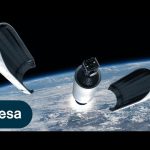
A shoebox-sized spacecraft from our Hera mission that’s about to explore the binary asteroid system of Didymos and its moon, Dimorphos – a space rock the size of the Great Pyramid!
Using its cutting-edge radar system, Juventas will reveal whether Dimorphos is a solid monolith or simply a loose pile of rubble. Plus, it’s going to gently land and measure the asteroid’s gravity—something never done before!
This tiny spacecraft is set to rewrite what we know about asteroids and could one day help protect our planet.
Stay tuned for more on Hera’s thrilling mission!
📸 ESA – European Space Agency 📹 ESA/Science Office
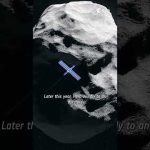
Our Hera spacecraft will soon start its journey to the distant asteroid moon Dimorphos orbiting around its parent body Didymos.
One of the first features Hera will look for is the crater left on Dimorphos by its predecessor mission DART, which impacted the asteroid to deflect its orbit.
Yet, more recent impact simulations suggest no crater will be found. The DART impact is likely to have remodelled the entire body instead – a significant finding for both asteroid science and planetary defence.
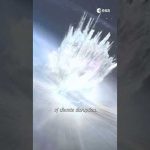
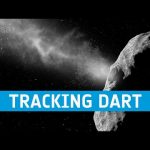
On 26 September 2022, NASA’s approximately half-tonne Double Asteroid Redirect Test (DART) spacecraft impacted the Dimorphos asteroid at an approximate speed of 6.1 km/s, shortening its orbit around Didymos by more than half an hour.
Our Hera spacecraft will be launched this October to reach Dimorphos and perform a close-up ‘crash scene investigation’, gathering data on the asteroid’s mass, structure and make-up to turn this kinetic impact method of planetary defence into a well understood and repeatable technique.
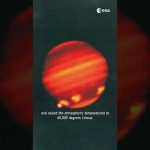
30 years ago, the comet, Shoemaker-Levy 9, pounded into the southern hemisphere of Jupiter, leaving dark scars in the planet’s atmosphere that persisted for several weeks.
The remarkable event was the first direct observation of an extraterrestrial collision in the Solar System.
Huge plumes up to 3 thousand kilometres high were created by the impact and raised the atmospheric temperatures to 40,000 degrees Celsius.
Almost 10 years after the collision, our Herschel telescope found conclusive evidence that Shoemaker-Levy 9 was the origin of water found in Jupiter’s upper atmosphere. Our Juice mission launched last year will map the distribution of Jupiter’s atmospheric ingredients in even greater detail.
This kind of collision was more frequent in the early solar system but today, something as large as Shomaker-Levy impacts Earth only once in a million years.
However, it is important we can protect ourselves from such space hazards which is why we are carrying out several projects dedicated to improving our ability to detect, track and mitigate potentially hazardous asteroids and comets, such as our Hera mission currently planned to launch later this year and our new mission, Ramses, which will to rendezvous with the asteroid Apophis.
📹 ESA – European Space Agency 📸 HA. Weaver, T. ESmith (Space Telescope Science Institute), and NASA/ESA 📸 ESA/Hubble (M. Kornmesser & L. L. Christensen) 📸 H. Hammel, MIT and NASA/ESA 📸 Calar Alto Observatory/Max Planck Institute for Astronomy, Heidelberg, Germany
Twenty years ago, astronomers discovered Apophis, an asteroid once feared to collide with Earth in 2029. Thanks to incredible advancements in science, the threat is now ruled out.
However, Apophis will still pass closer than some satellites currently orbiting Earth and will be visible with the naked eye.
This rare event is a great opportunity to study Apophis up close and prepare for future asteroid encounters.
In its latest test of readiness for space, ESA’s Hera spacecraft for planetary defence is being operated for around three weeks in hard vacuum, while being subjected to the same temperature profiles it will experience during its journey to the Didymos binary asteroid system.
The 1.6 × 1.6 × 1.7 m spacecraft was slid inside the 4.5-m diameter, 11.8-m long Phenix thermal vacuum chamber at ESA’s ESTEC Test Centre in the Netherlands.
“You’re always a bit nervous when your baby gets moved about,” remarks Ian Carnelli, overseeing Hera for ESA. “Right now it’s being shut into a dark airless box for weeks on end, but we have confidence it will perform well.”
Hera can be seen receded into the rectangular ‘thermal tent’ within Phenix. The six copper walls of this internal box can be heated up to 100°C or cooled via piped liquid nitrogen down to –190°C, all independently from each other.
Then, after the main door of the stainless steel Phenix chamber was slid shut, the air within the chamber was pumped out during a lengthy 20 hours process down to approximately one billionth of outside atmospheric pressure. This will allow the Hera team from ESA, European Test Services operating the Test Centre and Hera manufacturer OHB to test the spacecraft’s thermal behaviour as the temperature changes around it.
Space is a place where it is possible to be hot and cold at the same time if one part of your spacecraft is in sunlight and another is in shade. And because there is no air, there is no conduction or convection to lose heat from your spacecraft. Instead thermal experts employ insulation and radiators to keep the body of a spacecraft within carefully chosen temperature limits. In general spacecraft electronics – just like their human makers – work best at room temperature.
“We already have detailed models of the spacecraft’s thermal behaviour, and this spacecraft-level thermal vacuum test lets us correlate these models with reality,” explains Hera’s Product Assurance and Safety manager, Heli Greus.
“More than 400 thermal sensors have been placed in and around Hera to give us precise knowledge of what is going on, and the test is being supervised on a 24/7 basis in case anything anomalous occurs. The spacecraft is now being put through a series of ‘cold plateaus’ and ‘hot plateaus’ representative of its mission, which will allow us to test the thermal limits of each specific unit aboard.”
Hera is Europe’s contribution to an international planetary defence experiment. Following the DART mission’s impact with the Dimorphos asteroid in 2022 – modifying its orbit and sending a plume of debris thousands of kilometres out into space – Hera will return to Dimorphos to perform a close-up survey of the crater left by DART. The mission will also measure Dimorphos’ mass and make-up, along with that of the larger Didymos asteroid that Dimorphos orbits around. Hera is due for launch in October 2024.
The ESTEC Test Centre in the Netherlands is the largest facility of its kind in Europe, providing a complete suite of equipment for all aspects of satellite testing under a single roof.
At some point, statistically speaking, a large asteroid will impact Earth. Whether that’s tomorrow, in ten years, or a problem for our descendants, ESA is getting prepared.
As part of the world’s first test of asteroid deflection, ESA’s Hera mission will perform a detailed post-impact survey of Dimorphos – the 160-metre asteroid struck, and successfully deflected, by NASA’s DART spacecraft.
Hera will soon study the aftermath. Launching in October 2024, Hera will turn this grand-scale experiment into a well-understood and hopefully repeatable planetary defence technique.
But before Hera and its two CubeSats fly, they’re rigorously tested at ESA’s ESTEC test centre in Noordwijk, the Netherlands. From the force and noise of the rocket take-off to the sustained vacuum and temperature extremes of deep space, all aspects of Hera’s functioning are checked before they begin their journey, alone in space.
Credits: ESA – European Space Agency
★ Subscribe: http://bit.ly/ESAsubscribe and click twice on the bell button to receive our notifications.
We are Europe’s gateway to space. Our mission is to shape the development of Europe’s space capability and ensure that investment in space continues to deliver benefits to the citizens of Europe and the world. Check out https://www.esa.int/ to get up to speed on everything space related.
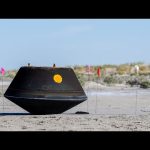
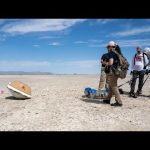
The first asteroid sample collected in space by a U.S. spacecraft and brought to Earth is unveiled to the world at NASA’s Johnson Space Center in Houston on Wednesday, Oct. 11.
The science team from NASA’s OSIRIS-REx (Origins, Spectral Interpretation, Resource Identification and Security – Regolith Explorer) mission will provide results from an initial analysis of the sample, which landed on Sunday, Sept. 24, in the Utah desert. News conference participants include:
• NASA Administrator Bill Nelson • Lori Glaze, NASA Planetary Directorate Science Division Director • Dante Lauretta, OSIRIS-REx principal investigator, University of Arizona, Tucson • Francis McCubbin, OSIRIS-REx Head Astromaterials curator, NASA Johnson • Daniel Glavin, OSIRIS-REx sample analysis lead, NASA Goddard Space Flight Center, Greenbelt
Scientists worldwide will study the bits of asteroid to gather clues about the origin of the solar system and how life may have begun on Earth.
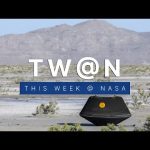
Our first asteroid sample return mission is back on Earth, a record ride in space for a NASA astronaut, and our Artemis II mission is making prelaunch progress … a few of the stories to tell you about – This Week at NASA!
Link to download this video: https://images.nasa.gov/details/Our%20First%20Asteroid%20Sample%20Return%20Mission%20is%20Back%20on%20Earth%20on%20This%20Week%20@NASA%20%E2%80%93%20September%2029,%202023
Video Producer: Andre Valentine Video Editor: Andre Valentine Narrator: Andre Valentine Music: Universal Production Music Credit: NASA
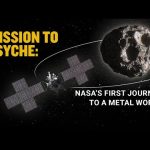
There are millions of asteroids in our solar system, so why is NASA going to the asteroid Psyche? Scientists think this particular asteroid, which orbits the Sun between Mars and Jupiter, could be part of the metal-rich interior of a planetesimal, a building block of the rocky planets in our solar system. Visiting Psyche and studying it up close could help us understand how planets like Mercury, Venus, Earth, and Mars came to be.
Join us on the journey to the first metal-rich asteroid humankind has ever visited. The Psyche mission is set to launch as early as Oct. 12, 2023. Watch live launch commentary at https://www.youtube.com/nasa.
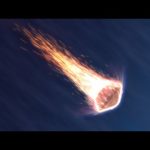
Watch a spacecraft deliver an asteroid sample to Earth! Our OSIRIS-REx (Origins, Spectral Interpretation, Resource Identification, and Security–Regolith Explorer) spacecraft is approaching Earth, and on Sept. 24, 2023, it will release its sample return capsule into the atmosphere on a path to land at the Department of Defense’s Utah Test and Training Range.
The touchdown will mark the end of a seven-year journey to explore asteroid Bennu, collect a sample from its surface, and deliver it to Earth as the U.S’s first pristine asteroid sample. Scientists around the world will study the sample over the coming decades to learn about how our planet and solar system formed, as well as the origin of organics that may have led to life on Earth.
NASA’s Origins, Spectral Interpretation, Resource Identification, Security-Regolith Explorer (OSIRIS-REx) is the first U.S. mission to return samples from an asteroid to Earth. When it lands, the OSIRIS-REx spacecraft will release the sample capsule for a safe landing in the Utah desert. The pristine material from Bennu – rocks and dust collected from the asteroid’s surface in 2020 – will offer generations of scientists a window into the time when the Sun and planets were forming about 4.5 billion years ago.
Watch NASA’s live broadcast on NASA TV, NASA.gov, the NASA app, or on social media (@NASA) starting at 10 a.m. ET on Sunday, Sept. 24.
Experts from NASA’s OSIRIS-REx (Origins, Spectral Interpretation, Resource Identification, and Security–Regolith Explorer) mission give an overview on the asteroid sample capsule’s landing and recovery plans set for Sept. 24, 2023.
News conference participants are:
• Melissa Morris, OSIRIS-REx program executive, NASA Headquarters, Washington • Dante Lauretta, OSIRIS-REx principal investigator, University of Arizona, Tucson • Rich Burns, OSIRIS-REx project manager, NASA’s Goddard Space Flight Center, Greenbelt, Maryland • Sandra Freund, OSIRIS-REx program manager, Lockheed Martin, Littleton, Colorado • Kevin Righter, OSIRIS-REx deputy curation lead, NASA’s Johnson Space Center, Houston
On Sept. 24, the OSIRIS-REx spacecraft will approach Earth and release its sample return capsule into the atmosphere on a path to land at the Department of Defense’s Utah Test and Training Range. The event makes it the first U.S. asteroid sample return.
The touchdown will mark the end of a seven-year journey to explore asteroid Bennu, collect a sample from its surface, and deliver it to Earth for study. Scientists around the world will study the sample over the coming decades to learn about how our planet and solar system formed, as well as the origin of organics that may have led to life on Earth.
The 30th June marks Asteroid Day, which aims to emphasise the importance of asteroids –their role in the formation of our solar system, their impact in space resources and the importance of defending our planet from future impacts. This year we are celebrating along with @UniversalPictures for the release of Wes Anderson’s new movie Asteroid City to bring you all the information you need to know about asteroids and how we protect our planet from them. #AsteroidCityxAsteroidDay #AsteroidDay2023
📹 @EuropeanSpaceAgency
★ Subscribe: http://bit.ly/ESAsubscribe and click twice on the bell button to receive our notifications.
We are Europe’s gateway to space. Our mission is to shape the development of Europe’s space capability and ensure that investment in space continues to deliver benefits to the citizens of Europe and the world. Check out https://www.esa.int/ to get up to speed on everything space related.
Asteroids, like stars, only come out at night. Hidden in the glare of our Sun are an unknown number of asteroids on paths we cannot track, many of which could be heading for Earth, and we just don’t know it.
Our planned NEOMIR mission will be located between Earth and the Sun and will act as an early warning system for asteroids 20 metres and larger that cannot be seen from the ground.
By making observations in the infrared part of the light spectrum, NEOMIR will detect the heat emitted by asteroids themselves, which isn’t drowned out by sunlight. This thermal emission is absorbed by Earth’s atmosphere, but from space NEOMIR will be able to see closer to the Sun than we can currently from Earth.
We are Europe’s gateway to space. Our mission is to shape the development of Europe’s space capability and ensure that investment in space continues to deliver benefits to the citizens of Europe and the world. Check out https://www.esa.int/ to get up to speed on everything space related.
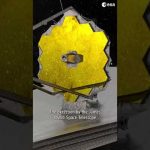
The Webb observations which revealed this small asteroid were not originally designed to hunt for new asteroids — in fact, they were calibration images of the main-belt asteroid (10920) 1998 BC1, which astronomers discovered in 1998, but the calibration team considered them to have failed for technical reasons due to the brightness of the target and an offset telescope pointing. Despite this, the data on asteroid 10920 were used by the team to establish and test a new technique to constrain an object’s orbit and to estimate its size. The validity of the method was demonstrated for asteroid 10920 using Webb observations combined with data from ground-based telescopes and ESA’s Gaia mission.
In the course of the analysis of Webb’s data, the team found the smaller and previously unknown interloper in the same field of view. The team’s results suggest the object measures 100–200 meters, occupies a very low-inclination orbit, and was located in the inner main-belt region at the time of the Webb observations.
We are Europe’s gateway to space. Our mission is to shape the development of Europe’s space capability and ensure that investment in space continues to deliver benefits to the citizens of Europe and the world. Check out https://www.esa.int/ to get up to speed on everything space related.
Gravity is the force that keeps us on our planet by drawing us so powerfully towards its centre. It has much the same effect on everything else floating in the cosmos, as long as it is big enough. All objects in the Universe are subject to their own force of gravity. It is one of the fundamental forces of our Universe.
As gravity pulls matter towards other matter, a sphere forms. Why? Only a sphere allows every point on its surface to have the same distance from the centre, so that no part of the object can further ‘fall’ toward its centre.
Smaller objects in space are spared from the overwhelming power of gravity, which is why we see asteroids that look like pieces of rubble. Why do these bodies have the shape that they have? Their shape arises from a simple electrostatic force.
📹 @EuropeanSpaceAgency
★ Subscribe: http://bit.ly/ESAsubscribe and click twice on the bell button to receive our notifications.
We are Europe’s gateway to space. Our mission is to shape the development of Europe’s space capability and ensure that investment in space continues to deliver benefits to the citizens of Europe and the world. Check out https://www.esa.int/ to get up to speed on everything space related.
Meet Hera, our very own asteroid detective. Together with two CubeSats – Milani the rock decoder and Juventas the radar visionary – Hera is off on an adventure to explore Didymos, a double asteroid system that is typical of the thousands that pose an impact risk to planet Earth.
Suitable for kids and adults alike, this episode of ‘The Incredible Adventures of Hera’ details the miniaturised James-Bond-style technology that Hera and its CubeSats will carry aboard with them to explore their asteroid target.
We are Europe’s gateway to space. Our mission is to shape the development of Europe’s space capability and ensure that investment in space continues to deliver benefits to the citizens of Europe and the world. Check out https://www.esa.int/ to get up to speed on everything space related.
Countdown to impact as NASA’s Double Asteroid Redirection Test (DART) attempts humanity’s first-ever test of planetary defense! The DART spacecraft will intentionally crash into asteroid Dimorphos at 7:14 p.m. ET on Monday, September 26, 2022 to see if kinetic force can change its orbit. Why? If this test is successful, the same technique could be used to deflect an Earth-threatening asteroid in the future, should one ever be discovered.
The #DARTMission’s target asteroid is NOT a threat to Earth before, during or after the impact event.
All eyes are looking up as @NASA intentionally crashes the 550 kg DART spacecraft into an orbiting asteroid at high speed. Our Estrack network of ground stations, Europe’s ‘eyes on the sky’, will be particularly focused on the humanmade impactor, keeping track as it closes in on the 160-metre-wide moving target in the world’s first test of asteroid deflection.
We are Europe’s gateway to space. Our mission is to shape the development of Europe’s space capability and ensure that investment in space continues to deliver benefits to the citizens of Europe and the world. Check out https://www.esa.int/ to get up to speed on everything space related.
On Sept. 26, 2022, NASA’s Double Asteroid Redirection Test (DART) spacecraft will intentionally crash into a small asteroid, Dimorphos, in a first-ever test of planetary defense, should we ever need it. The #DARTMission’s target asteroid is NOT a threat to Earth before, during or after the impact event.
Meet Hera, our very own asteroid detective. Together with two small CubeSats – Milani the rock decoder and Juventas the radar visionary – Hera is off on an adventure to explore Didymos, a double asteroid system that is typical of the thousands that pose an impact risk to planet Earth.
Suitable for space enthusiasts young and old, this episode of ‘The incredible adventures of the Hera mission’ is all about craters. What are they? Why are they important? Why is NASA’s DART spacecraft about to collide with an asteroid to create the Solar System’s newest – and perhaps most important – crater? And why do we need Hera to unveil the secrets of this crater?
We are Europe’s gateway to space. Our mission is to shape the development of Europe’s space capability and ensure that investment in space continues to deliver benefits to the citizens of Europe and the world. Check out https://www.esa.int/ to get up to speed on everything space related.
A 50-metre asteroid out there has lingered at the top of risk lists around the globe. Initial observations showed 2021 QM1 had a chance of striking Earth in 2052, and frustratingly, follow-up observations soon became impossible. Not only was it outshone by the Sun at a pivotal moment, but QM1 has been receding from view as it moves away from Earth in its current orbit.
ESA’s Near-Earth Object Coordination Centre together with the European Southern Observatory made finding and assessing the risk from 2021 QM1 a top priority, and this June they had a chance to capture the risky asteroid as it edged away from the brilliant Sun. Now extremely faint in the sky, it would take one of the best telescopes in the world to spot it, and if they do, it will be the faintest asteroid ever detected. Did the team find our risky asteroid? Will it, one day, find us?
★ Subscribe: http://bit.ly/ESAsubscribe and click twice on the bell button to receive our notifications.
We are Europe’s gateway to space. Our mission is to shape the development of Europe’s space capability and ensure that investment in space continues to deliver benefits to the citizens of Europe and the world. Check out https://www.esa.int/ to get up to speed on everything space related.
Meet Hera, our very own asteroid detective. Together with two CubeSats – Milani the rock decoder and Juventas the radar visionary – Hera is off on an adventure to explore Didymos, a double asteroid system that is typical of the thousands that pose an impact risk to planet Earth.
Suitable for kids and adults alike, this episode tells the story of the discovery of asteroids, in ‘The Curious Case of the Missing Planet’. Astronomers in the 18th century were sure there was a planet in the wide gap between Mars and Jupiter – and even formed a group called the Celestial Police to find it. But eventually it became clear there was no single world out there, just lots and lots of little ones. Fast forward to today and more than a million asteroids have been discovered, and Hera will perform close-up detection on two of them.
We are Europe’s gateway to space. Our mission is to shape the development of Europe’s space capability and ensure that investment in space continues to deliver benefits to the citizens of Europe and the world. Check out https://www.esa.int/ to get up to speed on everything space related.