Tag: asteroid

  • Launching Soon: NASA’s First Asteroid Deflection Test

    Launching Soon: NASA’s First Asteroid Deflection Test

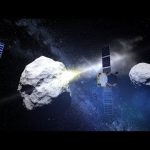
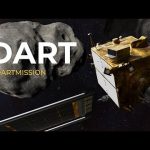
    On Nov. 24, 2021, our Double Asteroid Redirection Test (DART) spacecraft will lift off on a ten-month journey to crash into a distant asteroid – on purpose.

    As a test of NASA’s planetary defense technologies, DART will collide with and slightly change the speed of Dimorphos, a small ‘moonlet’ orbiting the asteroid Didymos. Dimorphos will be over 6 million miles away at the time of impact and does not pose a threat to Earth, either before or after DART’s collision. With nearby satellites and Earth-based telescopes, NASA and our international partners will track DART’s effect on Dimorphos and use this data to help protect Earth from future asteroid impact threats.

    DART’s first launch attempt is scheduled for 1:20 a.m. EST (06:20 UTC) on Nov. 24. Launch coverage starts at 12:30 a.m. EST (05:30 UTC) on NASA TV, the NASA app, and @NASA social media. Be a part of DART’s historic launch day by using the hashtag #DARTMission.

    Producer/Editor: Lacey Young
    Voiceover: Elena Adams, Michelle Chen, Kelly Fast, Andy Rivkin, Justyna Surowiec
    Music: Universal Production Music
  • Lansare NASA 🚀 Urmareste LIVE lansarea sondei Lucy spre asteorizii troieni!

    Lansare NASA 🚀 Urmareste LIVE lansarea sondei Lucy spre asteorizii troieni!

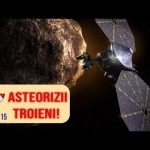
    Maine dupa 12:15 sonda Lucy pleaca pentru 12 ani sa studieze asteroizii troieni, iar eu si Claudiu Tănăselia (parsec.ro) retransmitem lansarea LIVE (link in primul comentariu).

    Asteorizii astia sunt speciali, orbiteaza in jurul Soarelui pe aceeasi orbita ca a lui Jupiter si sinctron cu el, la 60 de grade inapoi si 60 de grade inainte. Intr-un fel, duc trena miresei 🙂 Cu zeci de kilometri diametru, abia ii vedem azi in telescoape.

    In 2025, cand ajunge la ei, Lucy ii va vedea de aproape, cu o camera superperfomanta si cu un spectrometru in infrarosu Nu va fi usor, pentru ca sonda va avea o viteza de aproape zece kilometri pe secunda atunci cand trece pe langa asteorizi, asa ca trebuie sa fie foarte pregatita la fotografiat! (in cei 12 ani, doar 24 de ore in total sunt cele in care se fotografiaza si masoara eficient asteroizii).

    Mai intai Lucy viziteaza asteorizii din fata lui Jupiter, apoi se intoarce spre Pamant, face un “fly by” si se duce la asteroizii din spatele lui Jupiter. Unii, ca Eurybates, sunt gri si bogati in carbon, altii, ca Orus, sunt rosii si bogati in materiale organice. Si da, numele sondei e dat dupa scheletul lui Lucy, o femela care a trait cu 3 milioane de ani in urma.

    Despre toate acestea, si altele, maine in direct pe www.youtube.com/presura si aici pe Facebook! Va asteptam!

  • Presenting Hera | The Incredible Adventures of the Hera mission

    Presenting Hera | The Incredible Adventures of the Hera mission

    Meet Hera, our very own asteroid detective. Together with two CubeSats – Milani the rock decoder and Juventas the radar visionary – Hera is off on an adventure to explore Didymos, a double asteroid system that is typical of the thousands that pose an impact risk to planet Earth.

    Suitable for kids and adults alike, this episode of ‘The Incredible Adventures of Hera’ takes you on a fun and informative journey to visit Didymos together with Hera. Along the way, you will discover who the main characters are, why this mission is so important, what ESA hopes to achieve with Hera and much more.

    Learn more about Hera: https://www.esa.int/hera

    Credit: ESA/Science Office

    ★ Subscribe: http://bit.ly/ESAsubscribe and click twice on the bell button to receive our notifications.

    Check out our full video catalog: http://bit.ly/SpaceInVideos
    Follow us on Twitter: http://bit.ly/ESAonTwitter
    On Facebook: http://bit.ly/ESAonFacebook
    On Instagram: http://bit.ly/ESAonInstagram
    On Flickr: http://bit.ly/ESAonFlickr

    We are Europe’s gateway to space. Our mission is to shape the development of Europe’s space capability and ensure that investment in space continues to deliver benefits to the citizens of Europe and the world. Check out https://www.esa.int/ to get up to speed on everything space related.

    Copyright information about our videos is available here: https://www.esa.int/ESA_Multimedia/Terms_and_Conditions

    #ESA
    #Hera
    #SpaceSafety

  • Samples of an Asteroid are Headed Back to Earth on This Week @NASA – May 14, 2021

    Samples of an Asteroid are Headed Back to Earth on This Week @NASA – May 14, 2021

    Samples of an asteroid are headed back to Earth, a key prelaunch milestone for the Webb space telescope, and adding a third dimension to some cool imagery … a few of the stories to tell you about – This Week at NASA!

    Download Link: https://images.nasa.gov/details-Samples%20of%20an%20Asteroid%20are%20Headed%20Back%20to%20Earth%20on%20This%20Week%20@NASA%20-%20May14,2021

    Producer Credit: Andre Valentine
    Editor: Sonnet Apple
    Music: Universal Production Music/”Another Way of Winning”

  • OSIRIS-REx Departure: Farewell to Asteroid Bennu

    OSIRIS-REx Departure: Farewell to Asteroid Bennu

    Join us live at 4 p.m. EDT, Mon., May 10, as our OSIRIS-REx mission bids farewell to near-Earth asteroid Bennu. At 4:16 p.m., the spacecraft will fire its main thrusters and start its long journey home, carrying precious asteroid material that it will return to Earth in 2023.

    Watch the countdown to engine burn, as mission team members reflect on the challenges and success of studying and sampling Bennu. Members of the science team will also provide a look ahead to retrieving the sample of Bennu, and what it might tell us about the history of the solar system and our own origins.

  • O nouă teorie privind dispariția dinozaurilor ☄

    O nouă teorie privind dispariția dinozaurilor ☄

    Interventie in direct la Digi TV

    🔸 DEVINO MEMBRU ►https://bit.ly/35Q8vXC
    🔸 SPRIJINĂ ►https://patreon.com/cristianpresura

    ❗Discord ► https://www.discord.gg/presura
    ❗Instagram ► https://www.instagram.com/cristianpresura/
    ❗Facebook ► https://www.facebook.com/presura
    ❗Facebook page ► https://www.facebook.com/pg/stiintaclub/posts/
    ❗Asociația “Știinta pentru toți” ► https://www.presura.ro/

    🔊 Spotify Podcast ► https://spoti.fi/3dbvYo6
    🔊 MixCloud Podcas ► https://www.mixcloud.com/StiintaClub/

    📙 Carte ► “O calatorie prin Univers”: https://bit.ly/3pdOfGp
    📙 Carte ► “Fizica Povestita”: https://bit.ly/2YsKaAc
    📙 Carte ► “Care e diferența dintre un copil și un laptop?” https://bit.ly/3h4auLZ

    🔸Distribuie pe Instagram! https://joinsnippet.com

  • Asteroid recoltat in apropierea pământului

    Asteroid recoltat in apropierea pământului

    Distribuie pe Instagram! https://joinsnippet.com/SzLvYP9xG-w
    💰 https://patreon.com/cristianpresura
    🙋 https://www.instagram.com/cristianpresura/
    🙋https://www.facebook.com/presura
    🙋https://www.facebook.com/pg/stiintaclub/posts/
    💻 https://www.discord.gg/presura
    🔊 Spotify Podcast: https://spoti.fi/3dbvYo6
    🔊 MixCloud Podcast: https://www.mixcloud.com/StiintaClub/
    📙 Cartea “O calatorie prin Univers”: t.ly/RkRED
    📙 Cartea “Fizica Povestita”: https://bit.ly/2YsKaAc
    📙 Cartea “Care e diferența dintre un copil și un laptop?” https://tinyurl.com/yxkymwdg
    Alătură-te acestui canal pentru a primi acces la beneficii:
    https://www.youtube.com/channel/UCYaeaGwjN_VHGrudqi-lKDw/join

  • OSIRIS-REx Asteroid Sample Collection Recap and First Images

    OSIRIS-REx Asteroid Sample Collection Recap and First Images

    More than we could have ever imagined… 

    Yesterday, Oct. 20, our OSIRIS-REx spacecraft descended to the surface of asteroid Bennu, touched down and attempted to capture a sample using a “Touch-And-Go,” or TAG, maneuver. Join us at 5 p.m. EDT for a live broadcast with the mission team, as they provide a recap of yesterday’s journey #ToBennuAndBack and reveal first images and videos of this historic event.

  • Our next Mars Rover gets closer to launch on This Week @NASA – July 10, 2020

    Our next Mars Rover gets closer to launch on This Week @NASA – July 10, 2020

    Our next Mars Rover gets closer to launch, a comet spotted from the space station and we’re ready to build a spacecraft to explore a metal-rich asteroid … a few of the stories to tell you about – This Week at NASA!

    Download Link: https://images.nasa.gov/details-Our%20next%20Mars%20Rover%20gets%20closer%20to%20launch%20on%20This%20Week%20@NASA%20%E2%80%93%20July%2010,%202020

  • What You Need To Know About Asteroids and Other Near-Earth Objects

    What You Need To Know About Asteroids and Other Near-Earth Objects

    Have burning questions about asteroids? Our experts have answers!

    (Spoiler Alert: none of them will hit Earth.)

    Our solar system is littered with asteroids and comets and sometimes they get a little close to Earth. When an asteroid or comet looks like it could come near our home planet, we keep close watch to warn of any potential impacts.

    Here’s what you need to know about how we find, track, and monitor these near-Earth objects: https://www.nasa.gov/mission_pages/asteroids/widget/index.html

  • ESA Asteroid Day

    ESA Asteroid Day

    The latest asteroid news and updates from the European Space Agency hosted by award-winning science and space journalist Richard Hollingham. Richard is the presenter of the Space Boffins podcast, space correspondent for BBC Future and an ESA TV launch commentator.

    The programme – hosted from Richard’s home in the East of England – will include features and discussions with leading asteroid experts. Guests include Antarctic meteorite hunter Dr Katie Joy from the University of Manchester, Professor Alan Fitzsimmons – who’s working on ESA’s asteroid intercept mission HERA, Dr Natalie Starkey from the Open University and ESA asteroid tracking expert Dr Detlef Koschny.

    We’ll also hear from astronauts, researchers working on ESA’s new asteroid tracking telescopes and Brian May giving us the low-down on the challenges of asteroid rendezvous.

    You can also find the a local Asteroid Day Programme in the following languages:

    Dutch: https://youtu.be/VG1jNnaQc30
    German: https://youtu.be/qc-f4XlpGQk
    French: https://youtu.be/SJLzZC2dVpg
    Itallian: https://youtu.be/zBXmqJAyGoE
    Spanish: https://youtu.be/jWQHPl14gMs

    *Erratum: at 43:41 it should be Naomi Murdoch, Planetary Scientist at ISAE-SUPAERO instead of Armelle Hubault, Spacecraft Operations Engineer, ESA

    ★ Subscribe: http://bit.ly/ESAsubscribe and click twice on the bell button to receive our notifications.

    Check out our full video catalog: http://bit.ly/SpaceInVideos
    Follow us on Twitter: http://bit.ly/ESAonTwitter
    On Facebook: http://bit.ly/ESAonFacebook
    On Instagram: http://bit.ly/ESAonInstagram
    On Flickr: http://bit.ly/ESAonFlickr

    We are Europe’s gateway to space. Our mission is to shape the development of Europe’s space capability and ensure that investment in space continues to deliver benefits to the citizens of Europe and the world. Check out http://www.esa.int/ESA to get up to speed on everything space related.

    Copyright information about our videos is available here: http://www.esa.int/spaceinvideos/Terms_and_Conditions

    #ESA
    #AsteroidDay
    #Asteroid

  • El Día del Asteroide de la ESA

    El Día del Asteroide de la ESA

    Descubre las últimas noticias y la información más reciente de la Agencia Espacial Europea en una charla moderada por Mariella Graziano, una de las divulgadoras STEM más activas en España y Europa, y directora del departamento de Sistemas Espaciales y Robótica en la multinacional tecnológica española GMV, profundamente implicada en el desarrollo de la misión de defensa planetaria HERA de la ESA. Entre los invitados a la charla habrá divulgadores, científicos, astrónomos y expertos que trabajan para comprender la fascinante ciencia de los asteroides y meteoritos, así como los riesgos potenciales de los asteroides que orbitan cerca de la Tierra (tanto a nivel europeo, como la contribución española). Una sección de este programa contará incluso con la presencia de astronautas que explicarán las razones por las que debemos ser conscientes de los potenciales peligros que los asteroides pueden suponer para nuestro planeta.

    ★ Subscribe: http://bit.ly/ESAsubscribe and click twice on the bell button to receive our notifications.

    Check out our full video catalog: http://bit.ly/SpaceInVideos
    Follow us on Twitter: http://bit.ly/ESAonTwitter
    On Facebook: http://bit.ly/ESAonFacebook
    On Instagram: http://bit.ly/ESAonInstagram
    On Flickr: http://bit.ly/ESAonFlickr

    We are Europe’s gateway to space. Our mission is to shape the development of Europe’s space capability and ensure that investment in space continues to deliver benefits to the citizens of Europe and the world. Check out http://www.esa.int/ESA to get up to speed on everything space related.

    Copyright information about our videos is available here: http://www.esa.int/spaceinvideos/Terms_and_Conditions

    #ESA
    #Asteroid
    #AsteroidDay

  • La giornata mondiale dell’asteroide dell’ESA

    La giornata mondiale dell’asteroide dell’ESA

    Un vivace incontro ospitato da Ettore Perozzi, maggiore esperto di difesa planetaria presso l’Agenzia Spaziale Italiana, ASI. Ospiti di riguardo includono esperti ASI e di Agenzia Spaziale Europea (ESA), INAF, e Minor Planet Center dell’Unione Astronomica Internazionale.

    Rappresentazioni artistiche e di musica dal vivo saranno parte dell’evento, oltre all’astronauta dell’ESA Luca Parmitano che si unirà alla chiacchierata in collegamento da Houston, Texas.

    ★ Subscribe: http://bit.ly/ESAsubscribe and click twice on the bell button to receive our notifications.

    Check out our full video catalog: http://bit.ly/SpaceInVideos
    Follow us on Twitter: http://bit.ly/ESAonTwitter
    On Facebook: http://bit.ly/ESAonFacebook
    On Instagram: http://bit.ly/ESAonInstagram
    On Flickr: http://bit.ly/ESAonFlickr

    We are Europe’s gateway to space. Our mission is to shape the development of Europe’s space capability and ensure that investment in space continues to deliver benefits to the citizens of Europe and the world. Check out http://www.esa.int/ESA to get up to speed on everything space related.

    Copyright information about our videos is available here: http://www.esa.int/spaceinvideos/Terms_and_Conditions

    #ESA
    #Asteroid
    #AsteroidDay

  • Journée des astéroïdes de l’ESA

    Journée des astéroïdes de l’ESA

    Bruce Benamran, l’un des youtubers scientifiques les plus regardés de France, animera une discussion passionnante autour des astéroïdes. Il abordera avec un panel de six experts plusieurs thèmes, dont les missions de défense planétaire et les opportunités futures offertes par l’exploitation des astéroïdes. Ian Carnelli (ESA), Aurélie Moussi (CNES), Patrick Michel (CNRS – Centre National de la Recherche Scientifique), Naomi Murdoch (ISAE-Supaero), Marc Serres (l’Agence spatiale luxembourgeoise) et l’astronaute de l’ESA Léopold Eyharts participeront à cette fascinante conversation; il expliqueront la manière dont les astéroïdes se sont formés et présenteront les découvertes scientifiques récentes et les défis à venir.

    ★ Subscribe: http://bit.ly/ESAsubscribe and click twice on the bell button to receive our notifications.

    Check out our full video catalog: http://bit.ly/SpaceInVideos
    Follow us on Twitter: http://bit.ly/ESAonTwitter
    On Facebook: http://bit.ly/ESAonFacebook
    On Instagram: http://bit.ly/ESAonInstagram
    On Flickr: http://bit.ly/ESAonFlickr

    We are Europe’s gateway to space. Our mission is to shape the development of Europe’s space capability and ensure that investment in space continues to deliver benefits to the citizens of Europe and the world. Check out http://www.esa.int/ESA to get up to speed on everything space related.

    Copyright information about our videos is available here: http://www.esa.int/spaceinvideos/Terms_and_Conditions

    #ESA
    #AsteroidDay
    #JournéeDesAstéroïdes

  • NASA Science Live: Asteroid Close Approach

    NASA Science Live: Asteroid Close Approach

    Have you heard about an asteroid close-approach happening on April 29? Asteroid 1998 OR2 poses no threat to our planet, but we can still learn a lot by studying it. Don’t miss a special Planetary Defense episode of NASA Science Live on Monday, April 27 at 3:00 p.m. EDT to learn how we find, track and monitor asteroids and near-Earth Objects.

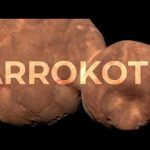
  • Arrokoth: Naming the Kuiper Belt Object Visited by NASA’s New Horizons

    Arrokoth: Naming the Kuiper Belt Object Visited by NASA’s New Horizons

    In a fitting tribute to the farthest flyby ever conducted by spacecraft, the Kuiper Belt object 2014 MU69 has been officially named Arrokoth, a Native American term meaning “sky” in the Powhatan/Algonquian language.

    With consent from Powhatan Tribal elders and representatives, NASA’s New Horizons team – whose spacecraft performed the record-breaking reconnaissance of Arrokoth four billion miles from Earth – proposed the name to the International Astronomical Union and Minor Planets Center, the international authority for naming Kuiper Belt objects. The name was announced at a ceremony at NASA Headquarters in Washington, DC.

    Learn more here: https://www.nasa.gov/feature/far-far-away-in-the-sky-new-horizons-kuiper-belt-flyby-object-officially-named-arrokoth

  • Asteroid impact 2028: Protecting our planet

    Asteroid impact 2028: Protecting our planet

    It’s the year 2028, and we’ve been carefully monitoring a worrying situation: an enormous asteroid is en route to strike Earth, although the exact point of impact is not yet clear.

    National governments are planning to evacuate millions of people, an undertaking that will cause untold human misery and disruption on a gigantic scale. If the asteroid’s impact zone can be fixed, perhaps such chaos can be avoided.

    As precious hours pass, find out how our Planetary Defence Office is able to obtain crucial information on this potential disaster as part of the Agency’s Space Safety and Security activities.

    Back to the present day: Find out more about how we are preparing to protect our pale blue dot, its inhabitants and the vital satellite systems on which we have become so dependent.

    Space Safety & Security at ESA: www.esa.int/spacesafety
    Planetary Defence: www.esa.int/planetarydefence

    ★ Subscribe: http://bit.ly/ESAsubscribe and click twice on the bell button to receive our notifications.

    Check out our full video catalog: http://bit.ly/SpaceInVideos
    Follow ESA on Twitter: http://bit.ly/ESAonTwitter
    On Facebook: http://bit.ly/ESAonFacebook
    On Instagram: http://bit.ly/ESAonInstagram
    On Flickr: http://bit.ly/ESAonFlickr

    ESA is Europe’s gateway to space. Our mission is to shape the development of Europe’s space capability and ensure that investment in space continues to deliver benefits to the citizens of Europe and the world. Check out http://www.esa.int/ESA to get up to speed on everything space related.

    Copyright information about our videos is available here: http://www.esa.int/spaceinvideos/Terms_and_Conditions

    #ESA
    #PlanetaryDefence
    #AsteroidImpact

  • Rare Double Asteroid Revealed by NASA, Observatories

    Rare Double Asteroid Revealed by NASA, Observatories

    Three of the world’s largest radio telescopes team up to show a rare double asteroid. 2017 YE5 is only the fourth binary near-Earth asteroid ever observed in which the two bodies are roughly the same size, and not touching. More: https://go.nasa.gov/2zxrh7U
    This video shows radar images of the pair gathered by Goldstone Solar System Radar, Arecibo Observatory and Green Bank Observatory.

    More information about asteroids and near-Earth objects: https://neo.jpl.nasa.gov https://www.jpl.nasa.gov/asteroidwatch

  • Hera mission

    Hera mission

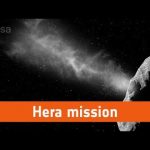
    Hera is the European contribution to an ESA-NASA double-spacecraft mission intended to test whether a kinetic deflection technique can be used to shift the orbit of an asteroid. The target of the mission is a double asteroid system, called Didymos, which will come a comparatively close 11 million km to Earth in 2022. The 800-m diameter main body is orbited by a 170-m moon, informally called ‘Didymoon’.

    In 2022 NASA’s DART spacecraft will first perform a kinetic impact on the smaller of the two bodies, then Hera will follow-up with a detailed post-impact survey that will turn this grand-scale experiment into a well-understood and repeatable planetary defence technique.

    Hera will also gather crucial scientific data on asteroids as a whole by carefully studying the exterior and interior properties of both bodies in the system. The spacecraft will also host two 6-unit cubesats that will be deployed near Didymos to perform, for the first time ever, multi-point measurements in a “mother-daughter” configuration. A novel intersatellite link will be used to establish a flexible communications network supporting the close-proximity operations in very low-gravity conditions, a crucial step for future exploration activities around small bodies.

    Hera, a further optimisation of ESA’s earlier proposed Asteroid Impact Mission, is currently in Phase B1 of mission development in preparation of the Agency’s Council of Ministers at European Level in late 2019.

    ★ Subscribe: http://bit.ly/ESAsubscribe

    Learn more: bit.ly/ESAHera

  • Gaia’s first asteroid survey

    Gaia’s first asteroid survey

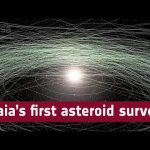
    Animated view of 14 099 asteroids in our Solar System, as viewed by ESA’s Gaia satellite using information from the mission’s second data release. The orbits of the 200 brightest asteroids are also shown, as determined using Gaia data.

    In future data releases, Gaia will also provide asteroid spectra and enable a complete characterisation of the asteroid belt. The combination of dynamical and physical information that is being collected by Gaia provides an unprecedented opportunity to improve our understanding of the origin and the evolution of the Solar System.

    Credit: ESA/Gaia/DPAC, CC BY SA 3.0 IGO

    Acknowledgement: Gaia Data Processing and Analysis Consortium (DPAC); Orbits: Gaia Coordinating Unit 4; P. Tanga, Observatoire de la Côte d’Azur, France; F. Spoto, IMCCE, Observatoire de Paris, France; Animation: Gaia Sky; S. Jordan / T. Sagristà, Astronomisches Rechen-Institut, Zentrum für Astronomie der Universität Heidelberg, Germany

    ★ Subscribe: http://bit.ly/ESAsubscribe

    Learn more: bit.ly/GaiaRickestStarMap

  • NASA Psyche Mission: Journey to a Metal World

    NASA Psyche Mission: Journey to a Metal World

    Psyche is both the name of an asteroid orbiting the Sun between Mars and Jupiter — and the name of a NASA space mission to visit that asteroid, led by Arizona State University. Join the Psyche team to explore why this mission was selected for NASA’s Discovery Program, how we’ll get to the asteroid, what we hope to learn from Psyche, and the importance of scientific discovery.
    Credits: NASA/JPL-Caltech/Arizona State Univ./Peter Rubin/SSL

  • Asteroid 2012 TC4 flyby

    Asteroid 2012 TC4 flyby

    This remarkable footage shows the flyby of asteroid 2012 TC4 during the night of 11/12 October 2017. At the time this was recorded, the estimated 10-20 m-diameter asteroid was approaching Earth. It made its closest approach at 07:41 CEST on 12 October, just 43 782 km away – much closer than the Moon and inside the orbit of some satellites.

    This was captured by astronomers Peter Schlatter and Dominik Bodenmann working at the ZIMLAT telescope at the Swiss Optical Ground Station and Geodynamics Observatory operated by the Astronomical Institute of the University of Bern (AIUB).

    Credit: AIUB http://www.aiub.unibe.ch

  • Asteroid Redirect Mission Briefing on This Week @NASA – September 19, 2016

    Asteroid Redirect Mission Briefing on This Week @NASA – September 19, 2016

    On Sept. 14, officials from the White House and NASA discussed the space agency’s Asteroid Redirect Mission (ARM) during a televised event at NASA’s Goddard Space Flight Center. On the mission, which is targeted for launch in Dec. 2021, NASA plans to send a robotic spacecraft to an asteroid tens of millions of miles from Earth, capture a multi-ton boulder, and bring it to an orbit near the moon for future exploration by astronauts on a following mission aboard NASA’s Orion spacecraft. During the live discussion, John Holdren, assistant to President Obama for Science and Technology, NASA Administrator Charles Bolden and ARM Program Director Michele Gates highlighted the mission’s scientific and technological benefits, how the mission will support NASA’s goal of sending humans to Mars in the 2030s, and how it will demonstrate technology relevant to defending Earth from potentially hazardous asteroids. Also, Astronaut Tim Kopra Visits DC Area, The Warmest August in 136 Years, and 2016 Arctic Sea Ice Minimum Ties 2nd Lowest on Record!

  • Asteroid Sample Return Mission Launches on This Week @NASA – September 9, 2016

    Asteroid Sample Return Mission Launches on This Week @NASA – September 9, 2016

    On Sept. 8, NASA launched the Origins, Spectral Interpretation, Resource Identification, Security – Regolith Explorer, or OSIRIS-REx mission from Cape Canaveral Air Force Station in Florida. OSIRIS-REx, the first U.S. mission to sample an asteroid, is scheduled to arrive at near-Earth asteroid Bennu in 2018. Mission plans call for the spacecraft to survey the asteroid, retrieve a small sample from its surface, and return the sample to Earth for study in 2023. Analysis of that sample is expected to reveal clues about the history of Bennu over the past 4.5 billion years, as well as clues about the evolution of our solar system. Also, Williams’ Record-Breaking Spaceflight Concludes, Next ISS Crew Prepares for Launch, Sample Return Robot Challenge, NASA X-Plane Gets its Wing, and Convergent Aeronautics Solutions Showcase!

  • NASA Uncovering the Secrets of Asteroids

    NASA Uncovering the Secrets of Asteroids

    NASA scientists discussed asteroids, how they relate to the origins of our solar system, and the search for life beyond Earth during this Sept. 7 event at the agency’s Kennedy Space Center, in Florida. The event was held in conjunction with other pre-launch activities related to the Origins Spectral Interpretation Resource Identification Security – Regolith Explorer, or OSIRIS-REx mission. OSIRIS-REx will be the first U.S. mission to sample an asteroid. The spacecraft is targeted to launch Sept. 8 at 7:05 p.m. EDT to the near-Earth asteroid Bennu, arriving in 2018, to survey the surface, retrieve at least 60 grams (2.1 ounces) of surface material, and return it to Earth in 2023 for study. Analysis of the sample will reveal the earliest stages of the solar system’s evolution and the history of Bennu over the past 4.5 billion years.

  • ESA’s Asteroid Impact Mission: the reason why

    ESA’s Asteroid Impact Mission: the reason why

    ESA’s Asteroid Impact Mission, currently under study for launch in 2020 and arrival in 2022, would be humanity’s first probe to a double asteroid system. Targeting an approximately 180-m diameter asteroid – around the same size as the Great Pyramid of Giza – AIM would spend a busy six months gathering data on its surface and inner structure.

    It would then perform before-and-after measurements as the NASA-led Double Asteroid Redirection Test spacecraft impacts straight into it, in an attempt to change the asteroid’s orbital period – marking the very first time that humanity shifts a Solar System object in a measurable way. Success would make it possible to consider carrying out such an operation again if an incoming asteroid ever threatened our planet. The two missions combined are called the Asteroid Impact & Deflection Assessment, or ‘AIDA’ for short.

    But why do we need to plan such a ground-breaking experiment? Astrophysicist and Queen guitarist Brian May, ESA astronaut Luca Parmitano, the UK’s Astronomer Royal Sir Martin Rees and Canadian astronaut Chris Hadfield share their own thoughts.

    For more information on AIM and AIDA, go to http://www.esa.int/AIM

  • Asteroid Impact Mission (Spanish)

    Asteroid Impact Mission (Spanish)

    La misión AIM (Asteroid Impact Mission), candidata a ser desarrollada, actualmente en fase de diseño preliminar.

    AIM se lanzaría en octubre de 2020 y su objetivo es viajar al sistema binario de asteroides Dídimos para estudiar la luna Didymoon. El sistema Didimos cuenta con un cuerpo principal de unos 800 metros de diámetro y una luna que orbita alrededor de este cuerpo principal, de unos 170 metros de diámetro aproximadamente, está luna se la conoce con el nombre de Didymoon. El sistema Didimos se aproximará a 11 millones de kilómetros de la tierra en 2022.

    AIM escaneará la pequeña Didymoon en detalle con su cámara VIS, con imágenes térmicas y un radar de alta resolución para construir mapas detallados de su superficie y estructura interior.

    La nave principal de AIM llevará al menos tres sondas más pequeñas – el módulo de aterrizaje, Mascot-2, desarrollado por el Centro Aeroespacial Alemán (Mascot-1 ya está volando en la misión Hayabusa-2 de JAXA), así como dos o más CubeSats. Así, AIM pondría a prueba las comunicaciones ópticas y los enlaces inter-satelitales en el espacio profundo, una tecnología que será esencial para la exploración futura del espacio.

    Si se aprueba, AIM también será la contribución europea a la misión AIDA, Asteroid Impact and Deflection Assessment. En 2022, la sonda DART (Double-Asteroid Redirection Test), parte dirigida por la NASA, llegará al sistema binario y se estrellará contra Didymoon a una velocidad de unos 6 km/s.

    El impacto será observado por AIM y por sus CubeSats. A través de las imágenes de alta resolución de AIM se evaluará el tamaño y la profundidad del cráter tras el impacto. AIM realizará una segunda fase de mediciones para comparar detalladamente la estructura del objeto, así como su órbita al rededor del asteroide mayor, antes y después del impacto.

    This video is also available in the following languages:
    English: https://youtu.be/h4lpu8HbpFY
    French: https://youtu.be/8GjVhBQsISc
    German: https://youtu.be/Sht_Kmaf5sU

    Credit: ESA/ScienceOffice.org

  • Asteroid Day – ESA experts explain the nature and threat of asteroids

    Asteroid Day – ESA experts explain the nature and threat of asteroids

    If an asteroid were spotted headed towards Earth, what could humanity do about it? On 30 June, world renowned scientists, Nobel laureates, astronauts, technologists and artists join forces for Asteroid Day (http://www.asteroidday.org/), a global awareness movement to spread knowledge about asteroids and ways to protect Earth from such threats. The Day is held on the anniversary of the 1908 Siberian Tunguska event, the largest asteroid to impact our planet in recent history.

    To mark Asteroid Day, ESA experts on Near-Earth Objects (NEO) and asteroids have answered the public’s most insightful questions. Respondents include Ian Carnelli, AIM Project Manager, Detlef Koshny, SSA-NEO Segment Manager and Michael Kueppers, AIM Project Scientist.

    If approved next year by Europe’s space ministers, 2020 will see the launch of ESA’s deep space Asteroid Impact Mission or AIM, as part of AIDA (Asteroid Impact & Deflection Assessment), a larger international effort to investigate planetary defence techniques. AIM will travel to a binary asteroid system – the paired Didymos asteroids, which will come a comparatively close 11 million km to Earth in 2022. After encounter and study, the mission will then witness the asteroid being struck by another spacecraft, returning data to help guide planetary defence strategies.

    Visit AIM (http://www.esa.int/aim) for more information.

    Copyright: ESA

  • Asteroid Impact Mission

    Asteroid Impact Mission

    The Asteroid Impact Mission (AIM) is a candidate mission currently undergoing preliminary design work.

    Launched in October 2020, AIM would travel to a binary asteroid system – the paired Didymos asteroids, which will come a comparatively close 11 million km to Earth in 2022. The 800 m-diameter main body is orbited by a 170 m moon, informally called ‘Didymoon’.

    This smaller body is AIM’s focus: the spacecraft would perform high-resolution visual, thermal and radar mapping of the moon to build detailed maps of its surface and interior structure.

    The main AIM spacecraft is planned to carry at least three smaller spacecraft – the Mascot-2 asteroid lander, being provided by DLR (Mascot-1 is already flying on JAXA’s Hayabusa-2), as well as two or more CubeSats. AIM would test optical communications and inter-satellite links in deep space, essential technology for future exploration.

    If approved, AIM would also be Europe’s contribution to the larger Asteroid Impact & Deflection Assessment mission: AIDA. In late 2022, the NASA-led part of AIDA will arrive: the Double Asteroid Redirection Test, or DART, probe will approach the binary system – then crash straight into the asteroid moon at about 6 km/s.

    AIM is intended to be watching closely as DART hits Didymoon. In the aftermath, it will perform detailed before-and-after comparisons on the structure of the body itself, as well as its orbit, to characterise DART’s kinetic impact and its consequences.

    This video is also available in the following languages:
    French: https://youtu.be/8GjVhBQsISc
    German: https://youtu.be/Sht_Kmaf5sU
    Spanish: https://youtu.be/KpmuzduOjhE

    Credits: ESA/ScienceOffice.org

  • AIDA: Asteroid Impact and Deflection Assessment study

    AIDA: Asteroid Impact and Deflection Assessment study

    The Asteroid Impact and Deflection Assessment (AIDA) study examines ways to potentially deflect asteroids from trajectories that could lead to them impacting Earth. The Johns Hopkins University Applied Physics Laboratory would work with NASA and ESA on the mission, which includes two independent spacecraft: an impactor (to be built by APL for NASA) and an impact monitor (to be built by ESA).

    The target of this mission is the binary asteroid system Didymos. The impactor would strike the smaller secondary of Didymos, while the monitor would observe and measure any change in the relative orbit.

    Learn more:
    http://www.esa.int/Our_Activities/Technology/NEO/Asteroid_Impact_Deflection_Assessment_AIDA_study
    http://neo.jpl.nasa.gov/
    http://www.neoshield.net/en/index.htm

  • NASA Center Renamed on This Week @NASA

    NASA Center Renamed on This Week @NASA

    Two giants of aerospace history were honored at a May 13 ceremony to celebrate the renaming of Dryden Flight Research Center to Armstrong Flight Research Center, after the late Neil Armstrong and the naming of the center’s aeronautical test range after Hugh Dryden. Armstrong was the first person to set foot on the moon and a former research test pilot at the center and Dryden served as NASA’s first deputy administrator. Also, Space Station Crews on the Move, Asteroid Mission Gear Tested, Unstoppable Glacier Melt, Exploring Earth’s Magnetic Fields, Shrinking Great Red Spot, Helicopter Drop Test, Technology Transfer University and more!

  • ESA Euronews: Asteroid wird Erde treffen

    ESA Euronews: Asteroid wird Erde treffen

    Es wird passieren, ob wir wollen oder nicht: Eines Tages wird ein Asteroid die Erde treffen, die Zerstörung könnte enorm sein. Was lässt sich dagegen tun? Im vergangenen Jahr erhielten wir einen kleinen Vorgeschmack, welch zerstörerische Wucht ein Asteroidentreffer auf der Erde haben kann. Über der russischen Stadt Tscheljabinsk explodierte ein solches Himmelsgeschoss. 1500 Menschen wurden verletzt, 7000 Gebäude beschädigt.

    Alan Harris arbeitet am Deutschen Zentrum für Luft- und Raumfahrt in Berlin. Er erinnert sich an Tscheljabinsk: “Das war ein ziemlich heftiges Ereignis, bei dem zum Glück niemand umkam. Doch es zeigte, welche Kraft diese Dinger haben.”

    Vor allem aber hat niemand den Einschlag kommen seien. Mit seinen rund 19 Metern Durchmesser war der Asteroid nicht sonderlich groß, es war praktisch unmöglich, ihn gegen die Sonne zu entdecken. Dabei gibt es tausende deutlich größere Asteroiden in Umlaufbahnen rund um die Erde, und nicht wenige von ihnen könnten zu einer Gefahr für uns werden.

    Harris: “Ein Hundert-Meter-Asteroid wäre noch nicht ein mal sonderlich groß, er würde auf ein Fußballfeld passen, und doch könnte er im schlimmsten Fall eine ganze Großstadt vernichten. Das sind die Dinger, nach denen wir Ausschau halten, und wir müssen Wege finden, mit ihnen umzugehen.”

    *Mensch gegen Meteor*

    Um diese Wege zu finden, wurde am Raumfahrtzentrum der ESA in Darmstadt eine Expertengruppe zur Asteroidenabwehr ins Leben gerufen. An ihr sind Forscher aus den wichtigsten Raumfahrtnationen beteiligt.

  • NASA Announces Asteroid Grand Challenge

    NASA Announces Asteroid Grand Challenge

    NASA announced Tuesday a Grand Challenge focused on finding all asteroid threats to human populations and knowing what to do about them.

    The challenge, which was announced at an asteroid initiative industry and partner day at NASA Headquarters in Washington, is a large-scale effort that will use multi-disciplinary collaborations and a variety of partnerships with other government agencies, international partners, industry, academia, and citizen scientists. It complements NASA’s recently announced mission to redirect an asteroid and send humans to study it.

  • NASA Announces Asteroid Identification, Capture and Sampling Initiative

    NASA Announces Asteroid Identification, Capture and Sampling Initiative

    President Obama’s FY2014 budget request for NASA enables the agency to leverage capabilities in the Human Exploration and Operations, Science and Space Technology Mission Directorates to make significant yet affordable advances in our nation’s capabilities and achieve the space goals set by the Administration. NASA will improve detection and characterization of asteroids, pursue solar electric propulsion demonstration, develop a mechanism to capture an asteroid and redirect it to a stable orbit in the Earth-moon system and begin designing a mission to send humans to it using the Space Launch System rocket and Orion spacecraft.

  • Rosetta’s view of Lutetia, July 2010

    Rosetta’s view of Lutetia, July 2010

    This movie shows a sequence of images taken as ESA’s Rosetta spacecraft flew past the main-belt asteroid (21) Lutetia, during the spacecraft’s 10-year journey towards comet 67P/Churyumov-Gerasimenko.

    The flyby took place on 10 July 2010, when Rosetta flew past the asteroid at a distance of 3168.2 km and at a relative speed of 15 km/s. The first image shown in the sequence was taken nine and a half hours before closest approach, from a distance of 500 000 km to Lutetia; the last image was taken six minutes after closest approach, at 6300 km from the asteroid.

    The OSIRIS camera on board Rosetta has surveyed the part of Lutetia that was visible during the flyby – about half of its entire surface, mostly coinciding with the asteroid’s northern hemisphere. These unique, close-up images have allowed scientists to study the asteroid’s surface morphology, composition and other properties in unprecedented detail.

  • Asteroid News from NASA’s WISE Satellite Headlines the Latest Episode of This week at NASA

    Asteroid News from NASA’s WISE Satellite Headlines the Latest Episode of This week at NASA

    Also: Deputy Administrator Lori Garver delivers keynote at Space Launch System Industry Day; flight teams compete for the title, most fuel-efficient aircraft in the world, James Webb Space Telescope gets a new coat; President Obama visit Ames’ Moffett Field; Casualty Drills at Wallops; Dryden honors shuttle workers; Profile: Astronomer Rosa Diaz, and three 135 crew members visit Glenn.