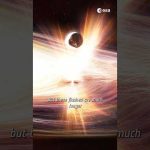
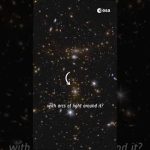
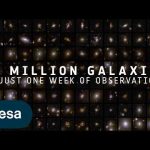
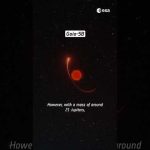
Scientists speculate that the black hole is pulling in gas from nearby space and this has formed a disc of orbiting material around it. Something like a star or small black hole also orbiting around it, is flying through the disc over and over, causing shockwaves and powerful energy bursts.
Watching these repeated eruptions in real time gives scientists a rare chance to study how black holes behave and learn more about these strange, powerful events. But for now, we still have more questions than answers.
For over a decade, ESA’s Gaia mission has mapped our galaxy with stunning precision—rewriting the story of the Milky Way. As its mission enters a new phase, we look back at its most groundbreaking discoveries.
Credit: ESA – European Space Agency
Chapters: 00:23 – Mapping the Milky Way and beyond 00:58 – Structure of the Milky Way 01:40 – Galactic family tree 02:27 – Mapping star-forming regions 03:00 – Ancient star streams 03:19 – Cosmic encounters 04:07 – Black holes and hidden giants
★ Subscribe: http://bit.ly/ESAsubscribe and click twice on the bell button to receive our notifications.
We are Europe’s gateway to space. Our mission is to shape the development of Europe’s space capability and ensure that investment in space continues to deliver benefits to the citizens of Europe and the world. Check out https://www.esa.int/ to get up to speed on everything space related.
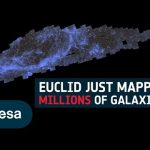
On 19 March 2025, our Euclid mission released its first batch of survey data, including a preview of its deep fields. Here, hundreds of thousands of galaxies in different shapes and sizes take centre stage and show a glimpse of their large-scale organisation in the cosmic web.
📹 ESA – European Space Agency 📸 ESA /Euclid/Euclid Consortium/@NASA, image processing by J.-C. Cuillandre, E. Bertin, G. Anselmi Euclid Deep Field South, 70x zoom: ESA/Euclid/Euclid Consortium/NASA, image processing by J.-C. Cuillandre, E. Bertin, G. Anselmi
From 25 July 2014 to 15 January 2025, the Gaia space observatory performed high-precision measurements of nearly two billion stars from its Lissajous orbit around the L2 Lagrange point, 1.5 million km from Earth.
After 10.5 years of groundbreaking observations, Gaia’s cold gas supply for attitude control has been depleted. On 27 March 2025, Gaia will leave its Lissajous orbit and transition into a stable heliocentric orbit. Soon after, the spacecraft will be passivated, with its instruments and transmitters switched off.
While Gaia will no longer collect new data, its scientific mission is far from over! The team continues working on Gaia Data Release 4 (expected 2026) and the final legacy catalogue (to be published not before the end of 2030), ensuring that Gaia’s discoveries will shape astronomy for decades to come.
This video visualises how Gaia leaves its Lissajous orbit and enters its final heliocentric orbit.
This video was made with Gaia Sky (https://gaiasky.space) by Tiago Nogueira, Toni Sagristà, and Stefan Jordan.
Text: Stefan Jordan, Tiago Nogueira, Tineke Roegiers
The creators would like to thank Alessandro Masat and Ander Martinez from ESA for providing Gaia’s orbit and attitude data.
Credit: ESA/Gaia/DPAC, CC BY-SA 3.0 IGO
★ Subscribe: http://bit.ly/ESAsubscribe and click twice on the bell button to receive our notifications.
We are Europe’s gateway to space. Our mission is to shape the development of Europe’s space capability and ensure that investment in space continues to deliver benefits to the citizens of Europe and the world. Check out https://www.esa.int/ to get up to speed on everything space related.
On 19 March 2025, our Euclid mission released its first batch of survey data, revealing an astonishing view of the cosmic web.
With just one scan of its deep fields, Euclid has already detected 26 million galaxies, some as far as 10.5 billion light-years away! This is just a preview of what’s to come, as Euclid will continue mapping the Universe in unprecedented detail.
What’s in this first release? – Three vast mosaics covering 63 square degrees of the sky – A catalogue of 380 000 galaxies, classified with AI + citizen scientists – 500 new gravitational lens candidates, almost all never seen before – The first hints of Euclid’s full cosmic atlas, which will eventually cover one-third of the sky
This data is a huge leap forward in understanding how galaxies are distributed across the Universe and how dark matter and dark energy shape the cosmos.
Over the next six years, Euclid will revisit these deep fields 30 to 52 times, uncovering billions of galaxies and pushing the astrophysics’ boundaries.
📹 @europeanspaceagency 📸 ESA /Euclid/Euclid Consortium/@NASA, image processing by J.-C. Cuillandre, E. Bertin, G. Anselmi Euclid Deep Field South, 70x zoom: ESA/Euclid/Euclid Consortium/NASA, image processing by J.-C. Cuillandre, E. Bertin, G. Anselmi
The European Space Agency’s Euclid space telescope mission has scouted out the three areas in the sky where it will eventually provide the deepest observations of its mission.
In just one week of observations, with one scan of each region so far, Euclid already spotted 26 million galaxies. The farthest of those are up to 10.5 billion light-years away.
In the coming years, Euclid will pass over these three regions tens of times, capturing many more faraway galaxies, making these fields truly ‘deep’ by the end of the nominal mission in 2030.
The first glimpse of 63 square degrees of the sky, the equivalent area of more than 300 times the full Moon, already gives an impressive preview of the scale of Euclid’s grand cosmic atlas when the mission is complete. This atlas will cover one-third of the entire sky – 14 000 square degrees – in this high-quality detail.
————————————————— Credits: ESA/Euclid/Euclid Consortium/NASA, image processing by J.-C. Cuillandre, E. Bertin, G. Anselmi, M. Walmsley, M. Huertas-Company; ESA/Gaia/DPAC; ESA/Planck Collaboration —————————————————
★ Subscribe: http://bit.ly/ESAsubscribe and click twice on the bell button to receive our notifications.
We are Europe’s gateway to space. Our mission is to shape the development of Europe’s space capability and ensure that investment in space continues to deliver benefits to the citizens of Europe and the world. Check out https://www.esa.int/ to get up to speed on everything space related.
Using data from the European Space Agency’s Gaia mission, scientists have found a huge exoplanet and a brown dwarf. This is the first time a planet has been uniquely discovered by Gaia’s ability to sense the gravitational tug or ‘wobble’ the planet induces on a star. Both the planet and brown dwarf are orbiting low-mass stars, a scenario thought to be extremely rare.
📹 ESA – European Space Agency 📸 ESA/Gaia/DPAC/M. Marcussen
Did you know the Large Magellanic Cloud, one of our galaxy’s closest neighbors, survived a dramatic collision with the Milky Way’s gaseous halo? Despite losing most of its gas, the Large Magellanic Cloud is still forming new stars—a testament to its resilience! Thanks to Hubble Space Telescope, astronomers measured the Large Magellanic Cloud’s halo for the first time, revealing incredible insights about galaxy interactions.
📹 ESA – European Space Agency 📸 NASA, ESA, R. Crawford
In mythology, centaurs are half-human, half-horse creatures, but in space, they’re celestial objects orbiting the Sun between Jupiter and Neptune.
Centaurs are “hybrid” objects in the sense that they share characteristics with trans-Neptunian objects from the Kuiper Belt reservoir and short-period comets. A team of scientists used the James Web Telescope to study Centaur 29P.
While data from previous observations of Centaur 29P showed a carbon monoxide (CO) gas jet pointed toward Earth, Webb parsed the jet’s composition in greater detail, and also detected multiple never-before-seen features of the centaur: two jets of carbon dioxide (CO2) emanating in the north and south directions, and another jet of CO pointing toward the north.
Centaur 29P’s different CO and CO2 abundances suggest that the body may be composed of different pieces that coalesced together during its formation. However, other scenarios to explain Centaur 29P’s outgassing activity are still being considered.
Discover the first page of ESA Euclid’s great cosmic atlas and marvel at millions of stars and galaxies captured in pristine detail, in a huge 208-gigapixel mosaic. The mosaic covers an area of the Southern Sky more than 500 times the area of the full Moon as seen from Earth.
This video takes you through a rare sky dive. Starting from a vast cosmic panorama bedazzled by some 14 million galaxies, a series of ever-deeper zooms brings you to a crisp view of a swirling spiral galaxy, in a final image enlarged 600 times compared to the full mosaic.
Although the scenes are enticing, they are not taken for their beauty, but to help us advance our understanding of the cosmos. Many of the 14 million galaxies in the initial vista will be used to study the hidden influence of dark matter and dark energy on the Universe.
Unveiled as a teaser of the wide survey, the mosaic accounts for 1% of the area that Euclid will cover over six years, and was obtained by combining 260 observations collected in just two weeks.
This first chunk of Euclid’s survey was revealed on 15 October 2024 at the International Astronautical Congress in Milan, Italy, by ESA’s Director General Josef Aschbacher and Director of Science Carole Mundell.
————————————————— Copyright: ESA/Euclid/Euclid Consortium/NASA, CEA Paris-Saclay, image processing by J.-C. Cuillandre, E. Bertin, G. Anselmi; ESA/Gaia/DPAC; ESA/Planck Collaboration —————————————————
★ Subscribe: http://bit.ly/ESAsubscribe and click twice on the bell button to receive our notifications.
We are Europe’s gateway to space. Our mission is to shape the development of Europe’s space capability and ensure that investment in space continues to deliver benefits to the citizens of Europe and the world. Check out https://www.esa.int/ to get up to speed on everything space related.
At present it’s as though the distance ladder observed by Hubble and Webb has firmly set an anchor point on one shoreline of a river, and the afterglow of the Big Bang observed by our Planck mission from the beginning of the Universe is set firmly on the other side. How the Universe’s expansion was changing in the billions of years between these two endpoints has yet to be directly observed.
📹 ESA – European Space Agency 📸 NASA, ESA, CSA, Space Telescope Science Inst., A. Riess (JHU/STScI)
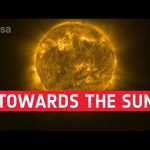
This sequence was taken by Solar Orbiter’s Extreme Ultraviolet Imager using the Full Sun Imager telescope, and shows the Sun at a wavelength of 17 nanometers. This wavelength is emitted by gas in the Sun’s atmosphere with a temperature of around one million degrees. The colour on this image has been artificially added because the original wavelength detected by the instrument is invisible to the human eye.
Credit: ESA & @NASA /Solar Orbiter/EUI Team
★ Subscribe: http://bit.ly/ESAsubscribe and click twice on the bell button to receive our notifications.
We are Europe’s gateway to space. Our mission is to shape the development of Europe’s space capability and ensure that investment in space continues to deliver benefits to the citizens of Europe and the world. Check out https://www.esa.int/ to get up to speed on everything space related.
NOVA has teamed up with Cook’s Illustrated to cook up a recipe for stars and black holes – a culinary “course” on how the most mysterious objects in the universe are created.
In episode #313 of Science Goes to the Movies, author and cosmologist Janna Levin joins the show to talk about mathematics in movies like “The Man Who Knew Infinity”—about the life and work of famous mathematician Srinivasa Ramanujan. Levin shares what it was that drove her to write her two books, “How the Universe Got its Spots and Black Hole Blues,” about Kip Thorne’s wild ambition to record the sound of two black holes colliding. She explains the spirit of generosity that compels scientific research and how a mathematical proof can transcend argument. Also included: Levin’s assessment of how black holes are depicted in the film, “Interstellar,” given the fact that no one has ever seen one.
Stella, an astrophysicist from Estonia, shares her experience as a YGT at ESA working with data provided by the Gaia mission’s team to model the movements of stars.
Scientific notes:
Stellar mass black holes vs. supermassive black holes
* Stellar mass black holes form from the collapse of massive stars at the ends of their lives, so they have roughly the same mass as a star. Supermassive black holes are physically identical to their smaller counterparts, except they are 10 thousand to a billion times the size of the sun. However, their formation is more of a mystery. They may form from the merging of smaller black holes. http://astronomy.swin.edu.au/cosmos/S/Supermassive+Black+Hole
Supermassive black holes at the center of galaxies
* Almost every large galaxy has a supermassive black hole at its center, but researchers are not yet sure (https://jila.colorado.edu/research/astrophysics/black-holes-galaxies) why that’s the case, how they originate, and what their role is in the creation and evolution of galaxies.
Why are stars different colors?
* The color of a star depends on its temperature (http://www.atnf.csiro.au/outreach/education/senior/astrophysics/photometry_colour.html). The hotter a star, the higher energy its light will be. Higher energy/temperature corresponds with the blue end of the visible spectrum and lower energy/temperature corresponds with the red end.
How does dark matter make stars spin faster?
* In the 1960s, astronomers Vera Rubin and Kent Ford noticed that stars at the edges of galaxies were moving just as fast as stars at the center, which surprised them: it appeared that the force of gravity causing stars to orbit the center of the galaxy was not weakening over distance. Their observation implied that something else, distributed throughout the galaxy, was exerting a gravitation pull. We now know that that “something else,” now named dark matter, accounts for about 85% of the matter in the universe. (It existence was inferred in the 1930s, when the astronomer Fritz Zwicky(http://www2.astro.psu.edu/users/rbc/a1/week_10.html) noticed that galaxies in clusters were moving faster than they should.)
Size of the universe
* The universe is only 13.8 billion years old, but has a radius of about 46 billion light-years. If nothing can travel faster than the speed of light, how can that be? The expansion of the universe, driven by dark energy, is causing distances between objects to grow. Note that it is not moving those objects apart; rather, it is increasing the amount of space between them. https://phys.org/news/2015-10-big-universe.html
Cosmic webs
* Galaxies are not distributed randomly (http://skyserver.sdss.org/dr1/en/astro/structures/structures.asp) in space; instead, clusters of galaxies form web-like patterns. These webs consist of filaments, where dark matter and ordinary (baryonic) matter are concentrated, and voids, where galaxies are scarce. Researchers believe that these large-scale structures grew out of minor fluctuations in density at the beginning of the universe.
Composition of the early universe
* Moments after the Big Bang, the universe formed the nuclei for what would be come the universe’s hydrogen and helium atoms, with one helium nucleus for every 10 or 11 hydrogen (http://umich.edu/~gs265/bigbang.htm). When the first stars formed, there were no heavier elements — those elements formed inside stars.
String Theory Landscape
* The String Theory Landscape is a theory that the universe we live in is one of many universes. It attempts to explain how certain constants of nature seem “fine-tuned” for life, which contradicts the anthropic principle, or the notion that we humans hold a special place in the universe. https://www.scientificamerican.com/article/multiverse-the-case-for-parallel-universe/%0A
Disintegration of the universe
* In the future Degenerate Era of the universe, as space-time expands and stars burn up, all of the matter in stars will be consumed by black holes. But even black holes are not forever. Stephen Hawking theorized that black holes will slowly radiate away their mass in what is now called Hawking radiation until they too dissipate away. http://www.nytimes.com/books/first/a/adams-universe.html
______
MEDIA CREDITS:
Music provided by APM
Sound effects: Freesound.org
Additional Animations:
– Galaxy within Universe: Edgeworx;
– Stars at center of Milky Way – NASA/NCSA University of Illinois Visualization by Frank Summers, Space Telescope Science Institute, Simulation by Martin White and Lars Hernquist, Harvard University
What if everything in the universe came to your doorstep…in a box?! What The Physics is BACK! Future episodes will explore the universe—but first, let’s unbox it.
Subscribe: http://youtube.com/whatthephysics?sub…
↓Want more info?↓
SCIENTIFIC NOTES:
Explosive young stars
* The average lifetime of a star is about 10 billion years, but the bigger the star, the shorter its life. One rare type of star, called a hypergiant, can be tens, hundreds, or even a thousand times the mass of our sun. These stars burn out and explode into supernovae in just a few million years. http://www.guide-to-the-universe.com/hypergiant-star.html
Black holes
* Black holes form from the collapse of a massive star at the end of its life, but this only happens in stars about three times as massive as the sun. http://burro.case.edu/Academics/Astr201/EndofSun.pdf
How big is the universe?
* Probably infinite. No one knows the size of the universe for sure, and we may never know, but the latest thinking is that it probably goes on forever. https://map.gsfc.nasa.gov/universe/uni_shape.html
Standard cosmological model
* According to the standard cosmological model, the universe started with a big bang, underwent rapid inflation within the first fraction of a second, and continues to expand, driven by a vacuum energy called dark energy. All of the structure we see in the universe has come from interactions between dark energy and dark matter (which accounts for about 85% of the universe’s matter). This model describes and predicts many phenomena in the universe but is not perfect. https://physics.aps.org/articles/v8/108
False vacuum model
* The false vacuum model is a real, albeit unlikely theory. All the fundamental forces of nature have corresponding fields (e.g., gravitational fields, magnetic fields, etc.), and we generally believe that the universe is at rest in a global minimum of the potentials of those fields. But if we are instead at rest in a local minimum, or a “false vacuum,” the universe could potentially be nudged, catastrophically, into a lower minimum.
Recycling stars into life
* Before the first stars, the universe was all hydrogen and helium. All heavier elements, including the building blocks of life, were forged in stars.
Dark matter and dark energy
* Only 5% of the universe is made up of matter we can see. The “missing mass” later dubbed dark matter was first noticed in the 1930s; dark energy was discovered in the 1990s. In both cases, their existence was inferred by their effect on objects they interact with. However, they are still not directly observable, so nobody knows yet what they are made of.
Leftover light from the Big Bang
* The theory of the Big Bang predicted the existence of cool radiation pervading the universe, left over from its beginning. In an accidental discovery, two New Jersey scientists discovered the cosmic microwave background, a nearly uniform bath of radiation throughout the universe at a temperature of about 3 Kelvin, or -454 degrees Fahrenheit.
Gravitational waves
* Albert Einstein predicted the existence of gravitational waves in his theory of general relativity in 1916. According to his theory, the acceleration of massive objects, like black holes, should send ripples through space-time at the speed of light. A century after his prediction, two merging black holes sent a ripple through space-time that was detected on Earth as a signal that stretched the 4-kilometer arms of a detector by less than 1/1,000 the width of a proton.
Cosmic dust
* Cosmic dust is cast off from stars at the end of their lives and hovers in galaxies as clouds. These clouds of dust absorb ultraviolet and visible light, obscuring much of what lies behind them. This makes it notoriously difficult to study things like the dusty center of our galaxy.
The observable universe
* The universe is 13.8 billion years old. Since the distance we can observe is limited by the time it takes light to travel to Earth, we can only ever observe a fraction of the universe: an expanding sphere around us that is now about 46 billion years in radius. However, the universe is much larger than what we can observe.
CREDITS:
Host, Writer, Producer: Greg Kestin
Animation & Compositing: Danielle Gustitus
Contributing Writers: Lissy Herman, HCSUCS
Filming, Writing, & Editing Contributions from:
Samia Bouzid and David Goodliffe
Creation of Sad Star Image: Drew Ganon
Special thanks:
Julia Cort
Lauren Aguirre
Ari Daniel
Anna Rothschild
Allison Eck
Fernando Becerra
And the entire NOVA team
The LISA Pathfinder mission ends on 18 July 2017 after a successful demonstration of the technology needed to detect gravitational waves in space. These vibrations in spacetime, first predicted by Einstein over a hundred years ago, are produced by huge astronomical events – such as two black holes colliding – and will allow scientists to open new windows into our universe.
The success of the LISA Pathfinder mission has paved the way for the newly selected LISA mission which, when built and launched, will detect gravitational waves from objects up to a million times larger than our Sun.
The film features interview soundbites from Dr Paul McNamara, LISA Pathfinder Project Scientist, at the European Space Agency’s European Technology and Science facility (ESTEC) in The Netherlands.
SPACETIME IS BACK! And with this episode we welcome in Matt O’Dowd as the new host to rigorously take you through the mysteries of space, time, and the nature of reality. We’re starting off this new season with perhaps one of the most mysterious things of all — DARK MATTER. What is it? Where does it come from? And is it even real? Watch this episode of Space Time to find out!
Even if you don’t, watch anyway. Maybe I’ll convince you. And if not, maybe I’ll impart some important skills or perspectives upon you. A lot of what I say can be applied not only to physics, but to other academic disciplines as well.
Here are some resources for learning physics (in order of increasing difficulty)
Amateur (little to no math)
A Briefer History of Time by Stephen Hawking
The Grand Design by Stephen Hawking and Leonard Mlodinow
The Elegant Universe by Brian Greene
Cosmos by Carl Sagan
Fearful Symmetry by Anthony Zee
Recruit (some calculus, maybe a DiffEQ here or there)
University Physics by Roger Freedman
Physics (Vol 1 and 2) by Resnick, Halliday, and Krane
Regular (know calculus cold, and have a good handle on DiffEQs)
An Introduction to Mechanics by Kleppner and Kolenkow
Electricity and Magnetism by Purcell
Classical and Statistical Thermodynamics by Ashley Carter
Hardened (all of the “baby maths” should be second nature to you)
Classical Mechanics by Taylor
Introduction to Electrodynamics by Griffiths
Introduction to Quantum Mechanics by Griffiths
Introduction to Elementary Particles by Griffiths
Veteran (you will not survive)
A Modern Approach to Quantum Mechanics by Townsend
Quantum Field Theory in a Nutshell by Anthony Zee
Studies indicating that studying in pairs is ideal:
Hake, R. R. (1998). Interactive-engagement versus traditional methods: A six-thousand-student survey of mechanics test data for introductory physics courses. American journal of Physics, 66, 64.