ESA’s Proba-3 mission lifted off on its PSLV-XL rocket from Satish Dhawan Space Centre in Sriharikota, India, on Thursday, 5 December, at 11:34 CET (10:34 GMT, 16:04 local time).
📸 ISRO – NSIL
#ESA #Proba-3#Rocket
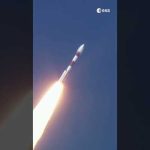
ESA’s Proba-3 mission lifted off on its PSLV-XL rocket from Satish Dhawan Space Centre in Sriharikota, India, on Thursday, 5 December, at 11:34 CET (10:34 GMT, 16:04 local time).
📸 ISRO – NSIL
#ESA #Proba-3#Rocket
NASA will begin coverage of the Orion spacecraft performing the first of two maneuvers to exit lunar orbit, called the distant retrograde orbit departure burn, on Dec. 1 at 4:30 p.m. EST (21:30 UTC). The burn is scheduled to occur at 4:53 p.m. EST (21:53 UTC).
Orion launched aboard the Space Launch System (SLS) rocket at 1:47 a.m. EST (06:47 UTC) on Nov. 16 from historic Launch Complex 39B at NASA’s Kennedy Space Center. Orion entered a distant retrograde orbit on at 4:52 p.m. EST (21:52 UTC) on Nov. 25, where the spacecraft has been testing systems in a deep space environment.
The Artemis I mission is the first integrated test of NASA’s deep space exploration systems: the Orion spacecraft, the SLS rocket, and Kennedy Space Center ground systems.
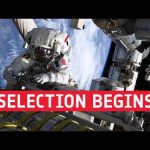
Work is under way to sort and assess applications from more than 22 500 ESA astronaut hopefuls. The rigorous selection process will take around 18 months. Initial screening to ensure that basic criteria are met will be followed by medical and psychological tests, exercises and interviews.
ESA plans to recruit 4-6 new astronauts through this 2021-22 selection round to support the future of European space exploration. This is likely to include missions to the International Space Station as well as the Moon. As part of the selection process, ESA is also assessing the feasibility of flying an astronaut with a physical disability.
More information about the ESA Astronaut Selection is available online at https://esa.int/YourWayToSpace
★ Subscribe: http://bit.ly/ESAsubscribe and click twice on the bell button to receive our notifications.
Check out our full video catalog: http://bit.ly/SpaceInVideos
Follow us on Twitter: http://bit.ly/ESAonTwitter
On Facebook: http://bit.ly/ESAonFacebook
On Instagram: http://bit.ly/ESAonInstagram
On Flickr: http://bit.ly/ESAonFlickr
We are Europe’s gateway to space. Our mission is to shape the development of Europe’s space capability and ensure that investment in space continues to deliver benefits to the citizens of Europe and the world. Check out https://www.esa.int/ to get up to speed on everything space related.
Copyright information about our videos is available here: https://www.esa.int/ESA_Multimedia/Terms_and_Conditions
#ESA
#YourWaytoSpace
#ESArecruits

With our Moon to Mars effort underway, a new administrator takes over to lead the charge, and – oh yeah – we stuck another nearly flawless landing on Mars! All that and more as we look back at what happened This Year @ NASA!
This video is available for download from NASA’s Image and Video Library: https://images.nasa.gov/details-NHQ_2018_1217_NASA%20Begins%20America%E2%80%99s%20New%20Moon%20to%20Mars%20Exploration%20Approach%20in%202018%20-%20The%20Year%20@NASA.html
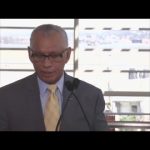
The return of supersonic passenger air travel is one step closer to reality with NASA’s award of a contract for the preliminary design of a “low boom” flight demonstration aircraft. This is the first in a series of ‘X-planes’ in NASA’s New Aviation Horizons initiative, introduced in the agency’s Fiscal Year 2017 budget.
NASA Administrator Charles Bolden announced the award at an event Monday at Ronald Reagan Washington National Airport in Arlington, Virginia.
Participants:
NASA Administrator, Charlie Bolden
Associate Administrator, Jaiwon Shin
David Melcher of the Aeronautic Industry Association
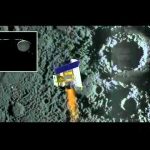
NASA’s MErcury Surface, Space ENvironment, Geochemistry, and Ranging, or MESSENGER spacecraft successfully achieved orbit around Mercury at approximately 9 p.m. EDT Thursday. This marks the first time a spacecraft has accomplished this engineering and scientific milestone at our solar system’s innermost planet. Shown is reaction in MESSENGER mission control at the Johns Hopkins University Applied Physics Laboratory in Laurel, Md., as engineers received telemetry data confirming orbit insertion, plus animated depiction of the event. Among other goals, MESSENGER is expected to detect whether ice exists at Mercury’s poles.