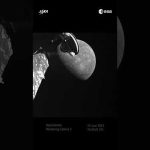
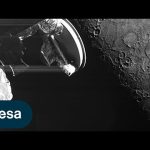
Watch Mercury appear from the shadows as the ESA/JAXA BepiColombo spacecraft sped by the planet’s night side during its 19 June 2023 close flyby, and enjoy a special flyover of geologically rich terrain.
Credits: Image: ESA/BepiColombo/MTM, CC BY-SA 3.0 IGO; Music composed by ILĀ. Shape from shading processing and animation (using Unity) by K. Wohlfarth and M. Tenthoff (TU Dortmund), based on techniques described by Tenthoff et al. (2020) and Domingue et al. (2015) with a global terrain model from Becker et al. (2016).
Music: Tim Garland – Moonlight Mystery
★ Subscribe: http://bit.ly/ESAsubscribe and click twice on the bell button to receive our notifications.
We are Europe’s gateway to space. Our mission is to shape the development of Europe’s space capability and ensure that investment in space continues to deliver benefits to the citizens of Europe and the world. Check out https://www.esa.int/ to get up to speed on everything space related.
Watch Mercury appear from the shadows as the ESA/JAXA BepiColombo spacecraft sped by the planet’s night side during its 19 June 2023 close flyby, and enjoy a special flyover of geologically rich terrain.
The first part of the movie is composed of 217 images captured by BepiColombo’s monitoring camera M-CAM3. The image sequence starts from 19:46:25 UTC on 19 June 2023, at an altitude of 1 789 km above the planet’s surface, and ends at 20:34:25 UTC on 20 June 2023, when BepiColombo was 331 755 km away. The image cadence was roughly once per minute around closest approach, but much slower in the later phases.
The second part of the movie cuts to a flyover of a special region of interest, rotating around features such as the 600 km-long Beagle Rupes curved escarpment and the elongated Sveinsdóttir impact crater that it cuts through. It also features the 218 km-wide Manley Crater and the straight Challenger Rupes scarp. At the end, the animated topography fades out and the projected image used for 3D reconstruction appears. Regions like these will be important for BepiColombo’s main science mission, to learn more about Mercury’s geological history.
Music was composed for the sequence by ILĀ, with the assistance of AI tools developed by the Machine Intelligence for Musical Audio (MIMA) group, University of Sheffield.
Credits: Image: ESA/BepiColombo/MTM, CC BY-SA 3.0 IGO; Music composed by ILĀ. Shape from shading processing and animation (using Unity) by K. Wohlfarth and M. Tenthoff (TU Dortmund), based on techniques described by Tenthoff et al. (2020) and Domingue et al. (2015) with a global terrain model from Becker et al. (2016).
★ Subscribe: http://bit.ly/ESAsubscribe and click twice on the bell button to receive our notifications.
We are Europe’s gateway to space. Our mission is to shape the development of Europe’s space capability and ensure that investment in space continues to deliver benefits to the citizens of Europe and the world. Check out https://www.esa.int/ to get up to speed on everything space related.
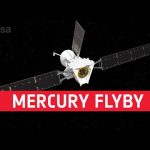
The ESA/ @JAXA-HQ BepiColombo mission has made its second gravity assist of planet Mercury, capturing new close-up images as it steers closer towards Mercury orbit in 2025.
The closest approach took place at 09:44 UTC (11:44 CEST) on 23 June 2022, about 200 km above the planet’s surface. Images from the spacecraft’s three monitoring cameras (MCAM), along with scientific data from a number of instruments, were collected during the encounter.
We are Europe’s gateway to space. Our mission is to shape the development of Europe’s space capability and ensure that investment in space continues to deliver benefits to the citizens of Europe and the world. Check out https://www.esa.int/ to get up to speed on everything space related.
A beautiful sequence of 53 images taken by the monitoring cameras on board the ESA/JAXA BepiColombo mission as the spacecraft made its first close flyby of its destination planet Mercury on 1 October 2021.
The compilation includes images from two of the three Monitoring Cameras (MCAM) onboard the Mercury Transfer Module, which provides black-and-white snapshots at 1024 x 1024 pixel resolution. It is not possible to image with the high-resolution camera suite during the cruise phase. The MCAMs also capture parts of the spacecraft: MCAM-2 sees the medium-gain antenna and magnetometer boom, while the high-gain antenna is in the MCAM-3 field-of-view.
The sequence opens with the closest images acquired by MCAM-2 and MCAM-3, taken at a distance of around 1000 km from the surface of the planet. Closest approach at 199 km took place about five minutes earlier, at 23:34:41 UTC.
During the half hour following the close approach, imaging alternated between the two cameras. In general, MCAM-2 pointed towards the northern hemisphere of Mercury, while MCAM-3 pointed towards the southern hemisphere. Thus the subsequent images show a set of complementary views from each camera in turn, ranging from a distance of about 2420 km to 6140 km from the surface of Mercury. In these relatively close images, it is possible to identify prominent impact craters, scarps, and other geological features that BepiColombo will study in more detail once in orbit around the planet at the end of 2025.
The final part of the compilation illustrates BepiColombo’s departure from Mercury as the spacecraft changed attitude along its trajectory, giving the impression Mercury’s apparent movement changes direction. The final image was taken at 03:03:49 UTC on 2 October from a distance of approximately 93 thousand kilometres. The final departure sequence has been speeded up by a factor of about 900.
Several different exposure times were used throughout the imaging sequence in order to try and capture the rapidly-varying brightness of Mercury, and in some cases the spacecraft and/or the planet are overexposed, particularly in the final departure sequence. Optical and electronic artefacts are also visible in some images.
The gravity assist manoeuvre was the first at Mercury and the fourth of nine flybys overall. During its seven-year cruise to the smallest and innermost planet of the Solar System, BepiColombo makes one flyby at Earth, two at Venus and six at Mercury to help steer it on course to arrive in Mercury orbit in 2025. The Mercury Transfer Module carries two science orbiters: ESA’s Mercury Planetary Orbiter and JAXA’s Mercury Magnetospheric Orbiter. They will operate from complementary orbits to study all aspects of mysterious Mercury from its core to surface processes, magnetic field and exosphere, to better understand the origin and evolution of a planet close to its parent star.
Credit: ESA/BepiColombo/MTM, CC BY-SA 3.0 IGO; Music composed and performed by Anil Sebastian and Ingmar Kamalagharan.
★ Subscribe: http://bit.ly/ESAsubscribe and click twice on the bell button to receive our notifications.
We are Europe’s gateway to space. Our mission is to shape the development of Europe’s space capability and ensure that investment in space continues to deliver benefits to the citizens of Europe and the world. Check out https://www.esa.int/ to get up to speed on everything space related.
Visualisation of BepiColombo flying by Mercury on 1 October 2021. The spacecraft makes nine gravity assist manoeuvres (one of Earth, two of Venus and six of Mercury) before entering orbit around the innermost planet of the Solar System.
The closest approach is at 23:34 UTC on 1 October (01:34 CEST 2 October) at a distance of about 200 km.
BepiColombo is an international collaboration between #ESA and #JAXA.
Credit: ESA/ATG medialab
★ Subscribe: http://bit.ly/ESAsubscribe and click twice on the bell button to receive our notifications.
We are Europe’s gateway to space. Our mission is to shape the development of Europe’s space capability and ensure that investment in space continues to deliver benefits to the citizens of Europe and the world. Check out https://www.esa.int/ to get up to speed on everything space related.
A sonification of data recorded by the Italian Spring Accelerometer (ISA) aboard the BepiColombo Mercury Planetary Orbiter spacecraft during the flyby of Venus on 10 August 2021. The accelerometer data was converted to frequency to be made audible to the human ear. The resulting sound is rich with interesting effects due to the planet’s gravity acting on the spacecraft structure, the response of the spacecraft to the rapid temperature changes, and the change in reaction wheel velocity as they work hard to compensate for these effects.
The audio has been matched to the timing that the images seen in this movie were captured, in the moments after closest approach.
We are Europe’s gateway to space. Our mission is to shape the development of Europe’s space capability and ensure that investment in space continues to deliver benefits to the citizens of Europe and the world. Check out https://www.esa.int/ to get up to speed on everything space related.
A stunning sequence of 89 images taken by the monitoring cameras on board the European-Japanese BepiColombo mission to Mercury, as the spacecraft made a close approach of Venus on 10 August 2021.
The sequence includes images from all three Monitoring Cameras (MCAM) onboard the Mercury Transfer Module, which provides black-and-white snapshots in 1024 x 1024 pixel resolution. It is not possible to image with the high-resolution camera suite during the cruise phase. The images have been lightly processed to enhance contrast and use the full dynamic range. A small amount of optical vignetting is seen in the corners of some of the images.
The first image is from MCAM 1, and was taken at 13:41:02 UTC, prior to close approach. As such, the spacecraft was still on the nightside of the planet, but the dayside can just be seen creeping into view. Part of the spacecraft’s solar array can also be seen.
The second image was taken by MCAM 2 at 13:51:56 UTC, two seconds after closest approach. With the Venus surface just 552 km away, the planet fills the entire field of view. The camera is not able to image detail of the planet’s atmosphere. The image also captures the Mercury Planetary Orbiter’s medium gain antenna and magnetometer boom.
The rest of the sequence is from MCAM 3, while the spacecraft was pointed at Venus, and then as it slews away and gradually recedes from view, covering the time period 13:53:56 UTC on 10 August until 12:21:26 UTC on 11 August. The high gain antenna of the Mercury Planetary Orbiter is also seen changing orientation as it points towards Earth.
The music accompanying the compilation was composed especially for the occasion, by @Anna Phoebe.
The images were captured during the second of two Venus flybys, and the third of nine flybys overall. The flybys are gravity assist manoeuvres needed to help steer the spacecraft on course for Mercury. During its seven-year cruise to the smallest and innermost planet of the Solar System, BepiColombo makes one flyby at Earth, two at Venus and six at Mercury in order to approach the orbit around Mercury. Its first Mercury flyby will take place 1-2 October 2021 from a distance of just 200 km.
BepiColombo, which comprises ESA’s Mercury Planetary Orbiter and the Mercury Magnetospheric Orbiter of @JAXA | 宇宙航空研究開発機構, is scheduled to reach its target orbit around the smallest and innermost planet of the Solar System in 2025. The spacecraft will separate and enter into their respective orbits before starting their science mission in early 2026 .
Credit: ESA/BepiColombo/MTM, CC BY-SA 3.0 IGO
Music composed by Anna Phoebe, with additional soundscapes by Mark McCaughrean
★ Subscribe: http://bit.ly/ESAsubscribe and click twice on the bell button to receive our notifications.
We are Europe’s gateway to space. Our mission is to shape the development of Europe’s space capability and ensure that investment in space continues to deliver benefits to the citizens of Europe and the world. Check out https://www.esa.int/ to get up to speed on everything space related.
With a simple Google Cardboard-style virtual reality (VR) viewer, you can experience how it feels to be a spacecraft hurtling past Earth. This 360-degree VR simulation of a flyby manoeuvre performed by ESA’s Mercury-bound BepiColombo spacecraft takes you on a trip past Earth at the distance of only 12 700 km, closer than the orbit of Europe’s navigational satellites Galileo.
The simulation displays the field of view of two of BepiColombo’s science instruments (MERTIS and PHEBUS) and two of its three MCAM selfie cameras during the gravity-assist flyby at Earth on 10 April 2020.
The simulation was created using the SPICE software developed by NASA’s Jet Propulsion Laboratory and data generated by the European Space and Astronomy Centre (ESAC)in Spain.
BepiColombo, a joint mission of ESA and the Japan Aerospace Exploration Agency (JAXA), is on a seven-year cruise to Mercury, the smallest and innermost planet of the Solar System. Launched in October 2018, BepiColombo follows an intricate trajectory that involves nine gravity-assist flyby manoeuvres. In addition to the flyby at Earth, BepiColombo will perform two flybys at Venus and six at Mercury, its target planet. The manoeuvres slow down the spacecraft as it needs to constantly brake against the gravitational pull of the Sun in order to be able to enter the correct orbit around Mercury in 2025, ahead of commencing science operations in early 2026.
Credit: ESA SPICE Service/RHEA Group.
★ Subscribe: http://bit.ly/ESAsubscribe and click twice on the bell button to receive our notifications.
We are Europe’s gateway to space. Our mission is to shape the development of Europe’s space capability and ensure that investment in space continues to deliver benefits to the citizens of Europe and the world. Check out http://www.esa.int/ESA to get up to speed on everything space related.
This year saw ESA’s science exploration mission BepiColombo begin its seven year cruise to the innermost planet of our Solar System: Mercury. This timelapse recalls some of the preparations that went into readying the mission at Europe’s Spaceport in Kourou, French Guiana.
The mission, a joint endeavour between ESA and JAXA, comprises three spacecraft modules: ESA’s Mercury Planetary Orbiter and JAXA’s Mercury Magnetospheric Orbiter that will study all aspects of Mercury from their complementary orbits around the planet, and ESA’s Mercury Transfer Module that will bring them to the planet using a combination of solar electric propulsion and nine planetary flybys.
The video includes testing of the individual spacecraft units, stacking of the three modules and a protective sunshield into their launch configuration, integration of the spacecraft inside the launcher fairing, roll out to the launch pad, and finally launch itself. The mission lifted off at 01:45:28 GMT on 20 October 2018.
ESA is Europe’s gateway to space. Our mission is to shape the development of Europe’s space capability and ensure that investment in space continues to deliver benefits to the citizens of Europe and the world. Check out http://www.esa.int/ESA to get up to speed on everything space related.
BepiColombo, Europe’s first mission to Mercury, launched on 20 October 2018. The spacecraft began its seven year journey by unfurling antennas and solar arrays, taking a few selfies and deploying a three metre magnetometer boom. The spacecraft, a joint mission between ESA and the Japanese space agency JAXA, will soon engage its solar propulsion engine but meanwhile scientists are busy preparing for BepiColombo’s arrival in 2025.
ESA is Europe’s gateway to space. Our mission is to shape the development of Europe’s space capability and ensure that investment in space continues to deliver benefits to the citizens of Europe and the world. Check out http://www.esa.int/ESA to get up to speed on everything space related.
Highlights from the days up to and including the exciting launch of the ESA-JAXA BepiColombo mission to Mercury.
BepiColombo launched at 01:45 GMT from Europe’s Spaceport in Kourou, French Guiana. It will make a seven year cruise to Mercury, flying by Earth once, Venus twice and Mercury six times before entering orbit.
It is the first European mission to Mercury, the smallest and least explored planet in the inner Solar System, and the first to send two spacecraft to make complementary measurements of the planet and its dynamic environment at the same time. The mission comprises two science orbiters: ESA’s Mercury Planetary Orbiter (MPO) and JAXA’s Mercury Magnetospheric Orbiter (MMO). The ESA-built Mercury Transfer Module (MTM) will carry the orbiters to Mercury using a combination of solar electric propulsion and gravity assist flybys.
ESA is Europe’s gateway to space. Our mission is to shape the development of Europe’s space capability and ensure that investment in space continues to deliver benefits to the citizens of Europe and the world. Check out http://www.esa.int/ESA to get up to speed on everything space related.
Mercury is a planetary misfit, an oddball in the solar system, and this month the BepiColombo mission is setting off to study it in unprecedented detail.
The best images we have of Mercury are from NASA’s MESSENGER mission, which pictured its cratered surface and curious features earlier this decade.
Soon, the joint European and Japanese BepiColombo mission will head there to take an even closer look.
ESA is Europe’s gateway to space. Our mission is to shape the development of Europe’s space capability and ensure that investment in space continues to deliver benefits to the citizens of Europe and the world. Check out http://www.esa.int/ESA to get up to speed on everything space related.
In questo numero di Space andiamo a osservare da vicino uno dei pianeti più misteriosi del Sistema solare: Mercurio. Questo mese un nuovo veicolo spaziale inizia il suo viaggio per andare a studiare il pianeta più vicino al Sole. Abbiamo incontrato alcuni degli scienziati affascinati da quest’enigmatico mondo.
ESA is Europe’s gateway to space. Our mission is to shape the development of Europe’s space capability and ensure that investment in space continues to deliver benefits to the citizens of Europe and the world. Check out http://www.esa.int/ESA to get up to speed on everything space related.
Ebben a hónapban a Space-ben közelről megnézhetjük a Naprendszer egyik legrejtélyesebb szereplőjét, a Merkúrt. Még októberben elindul egy űrhajó, hogy a Naphoz legközelebbi bolygót tanulmányozza. Az Euronews stábja olyan kutatókkal találkozott, akiket elbűvöl ez a különös világ.
A jelenleg létező legjobb felvételeket a Merkúrról a NASA Messenger missziója készített néhány éve. Egy kráterekkel teli bolygó látszik rajtuk, rejtélyes vonásokkal a felszínén. Annak érdekében, hogy ezek ne legyenek annyira rejtélyesek, a közös európai-japán BepiColombo misszió néz a dolgok mélyére.
ESA is Europe’s gateway to space. Our mission is to shape the development of Europe’s space capability and ensure that investment in space continues to deliver benefits to the citizens of Europe and the world. Check out http://www.esa.int/ESA to get up to speed on everything space related.
Une nouvelle mission appelée BepiColombo entame ce mois-ci son voyage pour aller étudier la planète Mercure, l’une des contrées les plus étranges de notre système solaire. Des scientifiques européens notamment tentent d’en percer les mystères.
ESA is Europe’s gateway to space. Our mission is to shape the development of Europe’s space capability and ensure that investment in space continues to deliver benefits to the citizens of Europe and the world. Check out http://www.esa.int/ESA to get up to speed on everything space related.
Meet Bepi, Mio and MTM, three new space explorers about to start an extraordinary journey to Mercury, a planet of extremes and mysteries.
Find out how these bold spacecraft have been preparing for their epic adventure, from space school to flyby practice. Watch as their training covers not only planetary science and space education, but also cultural aspects of their places of origin: Bepi and MTM were born in Europe, while Mio comes from Japan.
Follow Bepi, Mio and MTM as they become fascinated by their destination thanks to the curious discoveries made by their cousin Messenger. Learn about the science questions that Bepi and Mio will investigate, from Mercury’s geology and surface composition to the magnetic field and its interaction with the solar wind.
Finally, walk with them to the launch pad and wish them a great start to a memorable adventure.
ESA is Europe’s gateway to space. Our mission is to shape the development of Europe’s space capability and ensure that investment in space continues to deliver benefits to the citizens of Europe and the world. Check out http://www.esa.int/ESA to get up to speed on everything space related.
BepiColombo is scheduled for launch at 01:45 GMT (03:45 CEST) on 20 October on an Ariane 5 from Europe’s Spaceport in Kourou.
Final assembly of the two orbiters and transfer module has taken place, ready for the spacecraft to be integrated into its Ariane 5 launcher.
BepiColombo is Europe’s first mission to Mercury, the smallest and least explored planet in the inner Solar System. It is a joint endeavour between ESA and the Japan Aerospace Exploration Agency, JAXA, and consists of two scientific orbiters: ESA’s Mercury Planetary Orbiter (MPO) and JAXA’s Mercury Magnetospheric Orbiter (MMO). The mission will study all aspects of Mercury, from the structure and dynamics of its magnetosphere and how it interacts with the solar wind, to its internal structure with its large iron core, and the origin of the planet’s magnetic field.
ESA is Europe’s gateway to space. Our mission is to shape the development of Europe’s space capability and ensure that investment in space continues to deliver benefits to the citizens of Europe and the world. Check out http://www.esa.int/ESA to get up to speed on everything space related.
Enjoy this animation visualising BepiColombo’s launch and cruise to Mercury. Some aspects have been simplified for the purpose of this animation.
The joint ESA-JAXA mission comprises the European Mercury Planetary Orbiter and Japan’s Mercury Magnetospheric Orbiter, which will be transported to the innermost planet by the Mercury Transfer Module. The animation highlights several key milestones, including the solar array and antenna deployments once in space, through to the arrival at Mercury seven years later. When approaching Mercury, the transfer module will separate and the two science orbiters, still together, will be captured into orbit around the planet. Their altitude will be adjusted until the Magnetospheric Orbiter’s desired orbit is reached. Then the Planetary Orbiter will separate and descend to its lower orbit, and the two craft will begin their scientific exploration of Mercury and its environment.
Meet our new space explorers, the spacecraft of the BepiColombo mission, as they begin their adventure to planet Mercury. But first, they have to navigate through Amsterdam Schiphol airport to reach Europe’s spaceport in Kourou, French Guiana.
The spacecraft really do depart from Schiphol; along with essential ground-support equipment they are scheduled to fly in a series of Antonov aircraft during the last week of April and first week of May. Upon arrival at Kourou, an intensive six-months of preparations will prepare the mission for launch. The launch window opens 5 October until 29 November 2018.
Find out more about the BepiColombo mission on esa.int/bepicolombo
Mercury has always been something of a puzzle for planetary scientists. Its close position to the Sun means it is very difficult to observe, but now a series of satellites is getting up close to this fascinating planet. The European Space Agency’s BepiColombo mission is among them, and it will offer an unprecedented level of information about the mysterious world of Mercury.