How big is space? It’s one of the most mind-bending questions we can ask because the deeper we look, the more the universe keeps going. We’ve measured billions of light-years in every direction and still haven’t reached the edge.
A NASA scientists explains what we know — and don’t know — about the size of the cosmos.
Ariane 6 is the newest rocket in a series that has, for five decades, been launching Europe towards the stars. Building on all the knowledge, expertise and technology developed over the years, Ariane 6 will be versatile, modular, and European.
Guaranteeing Europe’s access to space for the next years, Ariane 6 in two versions, with either two or four boosters attached depending on the ‘oomph’ the mission requires. Versatile, its upper stage can reignite multiple times during a single flight, placing any spacecraft into any orbit – including constellations – saving a final boost to return and burn up in Earth’s atmosphere. Modular, it will be continuously adapted to the needs of the future space sector.
Four organisations take care of the Ariane 6 programme: ESA at the head, ArianeGroup as the main contractor, CNES who designed and built the launchpad and ArianeSpace who sell the launches.
13 countries contribute, thousands of Europeans have worked on it, and every one of us will benefit from the Earth observation, science, technologies and services it will make possible.
Credits: ESA – European Space Agency
★ Subscribe: http://bit.ly/ESAsubscribe and click twice on the bell button to receive our notifications.
We are Europe’s gateway to space. Our mission is to shape the development of Europe’s space capability and ensure that investment in space continues to deliver benefits to the citizens of Europe and the world. Check out https://www.esa.int/ to get up to speed on everything space related.
#stiinta #fizica #science #tehnologie #technology #cristianpresura algoritm:”Explorarea originii Universului și a ceea ce a precedat Big Bang-ul reprezintă o provocare majoră pentru mintea umană, limitată de percepțiile biologice și neuronale. De-a lungul timpului, o serie de teorii fizice au încercat să răspundă la întrebarea fundamentală despre existența anterioară a Universului, sugerând posibilități diverse și adesea revoluționare.
Una dintre ideile prevalente este că Big Bang-ul nu a fost un început absolut, ci mai degrabă un episod dintr-o succesiune de evenimente cosmice. Lee Smolin propune că fiecare gaură neagră poate naște un nou univers, sugerând o perpetuă renaștere și expansiune. Alternativ, Roger Penrose vorbește despre universuri ciclice, unde fiecare Big Bang succede un sfârșit termic al unui univers anterior. Teoria inflației cosmice, promovată de Andrei Linde și Alan Guth, imaginează universurile emergând unele din altele într-o expansiune supraluminică, similar cu popcornul care sare într-un vas.
Aceste ipoteze aduc în discuție nu doar structura și dinamica universurilor, ci și natura timpului, spațiului și materiei. Ele sugerează că legile fizicii ar putea varia de la un univers la altul, deși principiile fundamentale rămân constante. Acest lucru deschide posibilitatea ca universurile anterioare să fi fost guvernate de seturi diferite de reguli, permițând existența vieții și civilizațiilor în condiții diferite de ale noastre.
Speculațiile se extind și asupra ideii că civilizațiile avansate din universurile anterioare ar fi putut lăsa mesaje sau influențe în structura actuală a Universului nostru. Acest concept ridică întrebări profunde despre relația dintre cauzalitate, timp și existența noastră în contextul mai larg al cosmosului.
Pe lângă acestea, se contemplă și posibilitatea că Big Bang-ul nu a fost un act de creație din nimic, ci transformarea unui preexistent “nimic” în tot ceea ce este astăzi. Această idee, care are rădăcini filozofice în dialogurile lui Platon, precum și în lucrările lui Stephen Hawking, sugerează că timpul, spațiul și materia au emergent simultan cu Big Bang-ul, redefinind noțiunea de creație în termeni fizici, nu divini.
Aceste teorii, deși speculative, nu sunt departe de a fi considerate științific valide și reprezintă punctul de plecare pentru noi cercetări în fizica teoretică și cosmologie. Eforturile continue de a înțelege universul și originile sale ne pot aduce mai aproape de răspunsuri, chiar dacă acestea pot rămâne mereu parțial neclare din cauza limitărilor noastre fundamentale ca ființe umane. Pe măsură ce știința avansează, perspectivele asupra cosmosului se lărgesc, promițând revelații despre natura realității care ar putea depăși cele mai sălbatice imaginații.”
In October 2023, NASA is launching the Heliophysics Big Year – a global celebration of solar science and the Sun’s influence on Earth, our solar system, and beyond.
Modeled after the “Big Year” concept from citizen scientists in the bird-watching community, the Heliophysics Big Year challenges everyone to get involved with fun Sun-related activities.
Credits: Music: “Rise Now Our Hero” by Dan Thiessen [BMI] via Universal Production Music Video credit: NASA’s Goddard Space Flight Center Beth Anthony (KBRwyle): Producer
This video can be freely shared and downloaded at https://svs.gsfc.nasa.gov/14428. While the video in its entirety can be shared without permission, the music and some individual imagery may have been obtained through permission and may not be excised or remixed in other products. Specific details on such imagery may be found here: https://svs.gsfc.nasa.gov/14428.
Mulțumim Surfshark pentru sponsorizarea acestui videoclip. Introdu codul “Presura” pentru primele 3 luni gratuite și 83% reducere la lunile următoare.👇 https://surfshark.deals/presura 00:00:00 – Cine a descoperit Big Bang-ul?! 00:00:53 – Condiția umană. 00:02:08 – Cuvânt pentru sponsor 00:02:58 – Ploaie de stele la comandă!! 00:03:51 – Frumusețile planetei Marte!! 00:04:32 – Calculatoarele cuantice. 00:05:30 – Despre formarea unei planete noi!! 00:06:12 – Dâră de stele!! 00:07:05 – Loviți de o gaură neagră.
We are Europe’s gateway to space. Our mission is to shape the development of Europe’s space capability and ensure that investment in space continues to deliver benefits to the citizens of Europe and the world. Check out https://www.esa.int/ to get up to speed on everything space related.
Am fost din nou invitatul lui Ionut Cristache la emisiunea Romania 9 de la TVR. Vizionare placuta si La multi ani! Tot ce va doriti pentru anul care vine, si mai mult decat atat.
Va astept si pe canalul nostru de Discord: https://discordapp.com/invite/presura In fiecare luni si joi, avem cu totii dezbateri de la ora 20:00, iar in fiecare zi lucratoare de la 19:00 raspund la intrebarile voastre.
Raspuns catre senatorul Șerban Nicolae, care a declarat că nu crede în Big Bang: https://www.hotnews.ro/stiri-educatie-22698474-video-fizicianul-cristian-presur-spunde-senatorului-erban-nicolae-care-declarat-nu-crede-big-bang-face-confuzie-care-facem-poate-mul-dintre-noi-imagin-big-bang-explozie-obi-nuit.htm
Miercuri, 12 septembrie 2018:
Fizicianul Cristian Presură explică pe larg teoria Big Bang-ului, după ce Șerban Nicolae a declarat că nu crede în teoria marii explozii. “Nu am întâlnit nicăieri în lume, în nicio ipostază, o explozie care să fie creat ceva”, a spus senatorul, care a adăugat, în susținerea legii care interzice căsătoriile homosexuale, că el crede că există Dumnezeu. Într-o înregistrare video publicată pe contul său de Facebook, fizicianul Cristian Presură spune că senatorul “face o confuzie”: își imaginează Big Bang-ul ca o explozie într-un spațiu care există deja. “Ori, adevărul este că Big Bang-ul are de-a face mai mult cu expansiunea spațiului, decât cu a materiei”, explică fizicianul
No matter what team you’re rooting for, our technology is helping you play the game. Our discoveries off the planet have developed all sorts of equipment on the field — from shock-absorbent foam in helmets to retractable stadium roofs. 🏈 Go NASA!
NASA tested the largest, most powerful booster ever built for flight for the agency’s new rocket, the Space Launch System(SLS) on June 28 at Orbital ATK Aerospace System’s test facility in Promontory, Utah. SLS and NASA’s Orion spacecraft will launch astronauts on missions to explore multiple destinations on the journey to Mars.
This was the second two-minute, full duration qualification test for the booster, and will provide NASA with critical data to support booster qualification for flight. This second test measured the booster’s performance at the colder end of the accepted propellant temperature range, a targeted 40 degrees Fahrenheit. It was also the last time the booster will be fired in a test environment before the first flight of SLS and Orion in 2018.
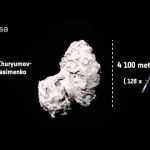
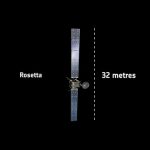
This short animation explains the relative sizes of the Rosetta spacecraft and comet 67P/Churyumov–Gerasimenko. Rosetta is 32 m from tip to tip of the solar wings. The comet measures 4.1 km along its longest length, 128 times the width of Rosetta.
Unlike typical artist’s impressions, this image is scaled to convey the vast difference in size between Rosetta and the comet, even when the spacecraft is in a close 10 km orbit, as depicted here.
Rosetta reached 10 km distance from the comet centre by October 2014.
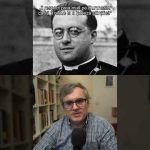
With ATV-5 George Lemaitre soon to be launched to the ISS from Europe’s Spaceport in Kourou, ESA pays tribute to George Lemaitre, the Belgian cleric and professor who was the first to conceive the idea of a big bang.
The name of the man who proposed the prevailing ‘expansion’ theory on the beginning of the universe was proposed by Belgium’s delegation to ESA.
This video explains who was Georges Lemaitre and how he contributed to modern Cosmology. It includes an interview in English and French with Professor Dominique Lambert, Theoretical physics – University of Namur
This short animation explains the relative sizes of the Rosetta spacecraft and comet 67P/Churyumov–Gerasimenko.
Rosetta is 32 m from tip to tip of the solar wings. Assuming the comet measures about 4 km across, that’s 125 times the width of Rosetta.
Unlike typical artist’s impressions, this image is scaled to convey the vast difference in size between Rosetta and the comet, even when the spacecraft is in a close 10 km orbit, as depicted here.
Rosetta arrives at the comet at an altitude of 100 km in the first week of August, and will move progressively closer over the following two months, with the intention to orbit at an altitude of just 10 km, depending on the comet’s activity. For Philae’s deployment in November, Rosetta will come to within a few kilometres of the surface.
The comet depicted in this animation is an artist’s impression.
Segíthetnek-e a gravitációs hullámok megérteni az univerzum kezdetét? Ez még mindig nagy kérdés, ezért izgatják annyira az elsődleges gravitációs hullámok a tudósokat.
Πώς δημιουργήθηκε το σύμπαν; Πρόκειται για ένα αιώνιο ερώτημα, με απαντήσεις που ξεπερνούν κάθε φαντασία. Όλοι μιλούν για το περίφημο Big Bang. Τι είναι όμως αυτό; Τι ακριβώς συνέβη;
Ακόμα και οι επιστήμονες διαφωνούν. “Το Big Bang με τον σημερινό τρόπο σκέψης είναι κάτι σαν το σημείο εκκίνησης, η στιγμή που δημιουργήθηκε το σύμπαν”, λέει ένας, αλλά διευκρινίζει: “Πώς συνέβη αυτό και τι ακριβώς υπήρχε εκείνη τη χρονική στιγμή εκεί, είναι κάτι που δεν είναι ακόμη απόλυτα γνωστό”. Ωστόσο ένας άλλος επισημαίνει: “Το Big Bang θα έλεγα ότι είναι μια ιδέα. Δεν είναι μια χρονική στιγμή”.
Εάν είναι δύσκολο να περιγράψει κανείς αυτή καθεαυτή την έννοια του Big Bang, είναι ακόμα πιο δύσκολο να την μελετήσει με επιστημονικά πειράματα. Αλλά αυτό ακριβώς έχουν σκοπό να κάνουν δύο μεγάλα πειράματα της εποχής μας. Το ένα από αυτά είναι στη Γη, το άλλο στο διάστημα.
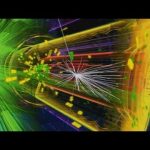
Στις εγκαταστάσεις του CERN, κοντά στην Γενεύη, έχει δημιουργηθεί ο Μεγάλος Επιταχυντής Αδρονίων. Εκεί ανακαλύφθηκε πέρυσι το μποζόνιο Χιγκς, το σωματίδιο που δίνει μάζα στην ύλη και αποδεικνύει την ύπαρξη του πεδίου Χιγκς. “Εάν δείτε το επίπεδο ενέργειας στο οποίο φτάνουμε και το είδος των μαζών που μπορούμε να δημιουργήσουμε με αυτό το πείραμα, θα πρέπει να πηγαίνουμε σε ένα σημείο, κάτι σαν ένα δισεκατομμυριοστό του δευτερολέπτου μετά το Big Bang, επομένως κοντά, πολύ κοντά στο Big Bang”, εξηγούν οι επιστήμονες του CERN.
Ενώ στο CERN συγκρούονται μικροσκοπικά σωματίδια, ο δορυφόρος Planck της Ευρωπαϊκής Υπηρεσίας Διαστημικής, προσπαθεί σε μια επική αναζήτηση να ανιχνεύσει τα απομεινάρια του φωτός από το Big Bang. Την άνοιξη η ομάδα του Planck δημοσιοποίησε αυτό που θεωρείται ως ο απόλυτος χάρτης της κοσμικής μικροκυματικής ακτινοβολίας.Δείχνει πώς ήταν το σύμπαν μόλις 380.000 χρόνια μετά το Big Bang.
Το φως που ταξιδεύει σε εμάς από την έναρξη του σύμπαντος και τα σωματίδια που σπάνε σε έναν γιγάντιο επιταχυντή είναι οι μαρτυρίες στις οποίες βασιζόμαστε για να αντιληφθούμε την θεωρία του Big Bang και όσων το ακολούθησαν. Αλλά λένε αυτές οι μαρτυρίες τα ίδια πράγματα; ή μήπως καταλήγουν σε διαφορετικά συμπεράσματα;
Η εικόνα μας για το πρώιμο σύμπαν απέχει ωστόσο ακόμα από το να είναι πλήρης. Υπάρχουν πολλά εκκρεμή ζητήματα και ανωμαλίες. Και αυτό είναι ένα ζήτημα στο οποίο ακόμα και οι ίδιοι οι επιστήμονες σε ορισμένες περιπτώσεις σηκώνουν τα χέρια ψηλά…